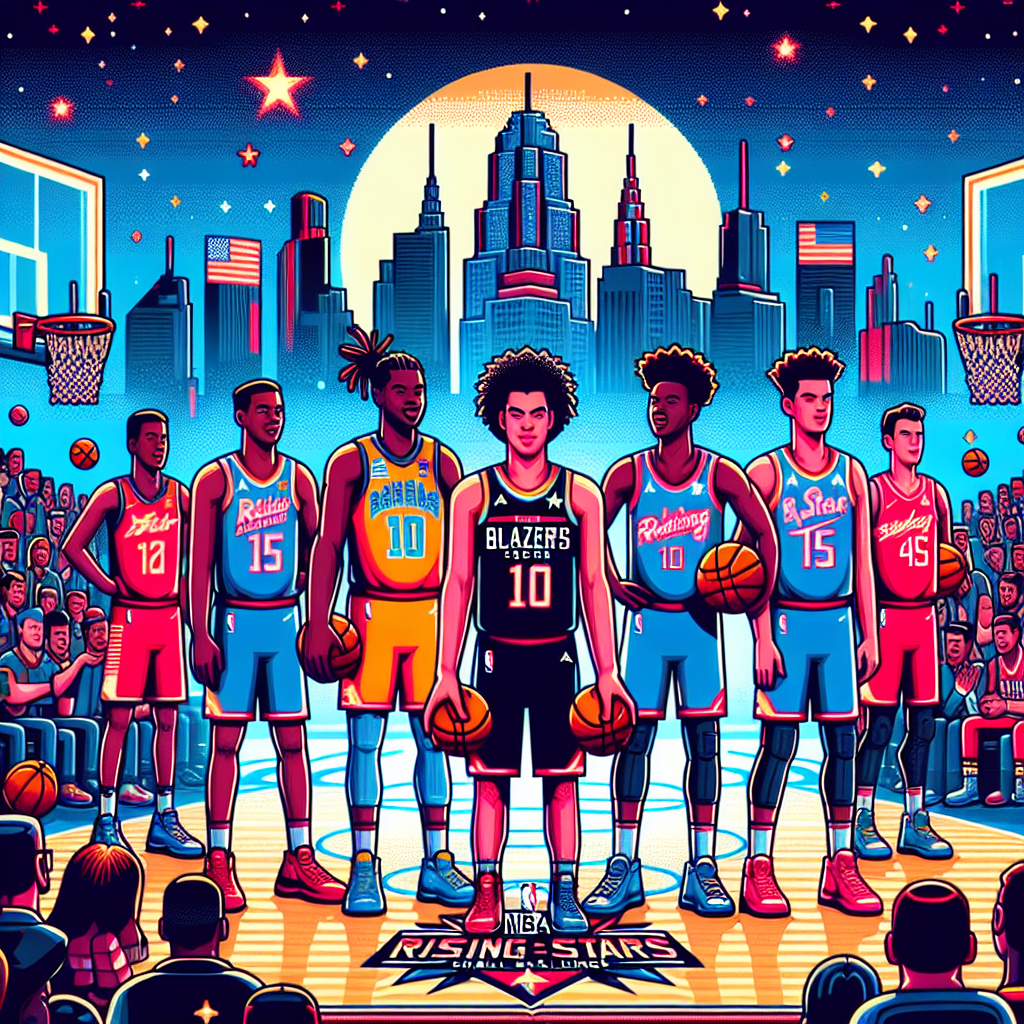
Two Trail Blazers Stood Tall at All‑Star Weekend
The Rising Stars Challenge at the 2026 NBA All‑Star Weekend wasn’t just another playground for prospects — it was a stage where Portland’s young frontcourt made a case. Watching Donovan Clingan and Yang Hansen trade highlights felt like a snapshot of a team that’s quietly building a new identity: physical, hungry, and not afraid to show personality on a national stage.
Setting the scene
- Event: Castrol Rising Stars Challenge during NBA All‑Star Weekend, Feb 13–15, 2026 (Intuit Dome, Inglewood, CA).
- Format: Mini‑tournament — two semis (race to 40) and a final (first to 25), with NBA rookies/sophomores and a G League team mixed across squads.
- Portland representation: Donovan Clingan (Team Melo) and Yang Hansen (Team Austin, representing Rip City Remix / G League).
This wasn’t a conventional box‑score night for the Blazers’ bigs so much as a collection of memorable moments — pump‑fakes, pull‑up threes, and a defensive presence that still has opponents guessing.
What jumped out
- Clingan’s physicality and confidence. He opened things aggressively — winning the tip, scoring the first seven points for Team Melo in the semi, and finishing the semi with nine points. He carried that energy into the final, hitting two early threes and finishing as a presence on defense even when the offense dried up. (Blazer’s Edge)(blazersedge.com)
- Hansen’s poise and versatility. The 7‑footer (and G‑League standout) came off the bench and immediately changed the flow: a made three, a classic three‑point play, and a highlight drive where he sold a shoulder fake on Clingan before gliding to the rim. He shot efficiently (80% in the semi) and played every minute after checking in. (Blazer’s Edge, ClutchPoints)(blazersedge.com)
- The human moment that matters. Hansen faking out Clingan and finishing at the rim is the kind of play that does more than move the scoreboard — it gives fans and teammates something to tweet about, laugh about, and remember. It’s chemistry in public. (ClutchPoints)(clutchpoints.com)
- Results and context. Team Melo advanced from the semis 40–34 (Clingan and Reed Sheppard led with nine apiece), but Team Vince ultimately won the tournament. Still, both Portland players left a national mark — notching minutes, highlights, and useful tape that matters for how teams and fans perceive them. (NBA.com, LA Times, Blazer’s Edge)(nba.com)
Why this matters for Portland
- Validation of frontcourt investment. Portland has invested draft capital and development time in size and rim protection. Seeing two recent bigs perform — in different contexts (Clingan in the NBA rookie/sophomore mix, Hansen representing the G League) — suggests the frontcourt pipeline is producing tangible returns.
- Developmental signals. Hansen’s efficiency and comfort with multiple actions (three, drive, free throws) hint at a high upside if coached and given reps. Clingan’s willingness to step out and attempt threes shows a modern center’s toolkit, even if it wasn’t all falling on this stage.
- Fan and locker‑room momentum. Small moments — a smirk after a highlight, a teammate sold on a move — translate into confidence that carries back to regular‑season minutes.
Quick stat snapshot
- Donovan Clingan: semi — 9 points, 2 rebounds, 1 block; final — early 6 points (two threes), ended with limited counting numbers but notable defensive contest on the final play. (Blazer’s Edge)(blazersedge.com)
- Yang Hansen: semi (Team Austin) — 10 points, 2 rebounds, 80% shooting in his minutes; key plays included a three and a three‑point play after a drive. (Blazer’s Edge, NBA summary)(blazersedge.com)
My take
All‑Star exhibitions can be silly, but they’re also a rare live audition with a national audience and simpler scouting tape. Clingan looks like a menacing, modern rim protector who’s learning to stretch the floor; Hansen looks like a fast‑rising two‑way project with legitimate touch and instincts. For Portland fans wondering how the team’s long‑term blueprint will take shape, these two moments — one a pump‑fake‑and‑drive, the other a contested block and early threes — are part of the same story: a team leaning into size, versatility, and a new generation of identity.
Final thoughts
The Rising Stars Challenge wasn’t the definitive answer to everything about the Blazers’ future, but it was an encouraging footnote. Both Donovan Clingan and Yang Hansen left Inglewood with more than highlights — they left with momentum. If the season ahead is about growth, those little flashes at All‑Star Weekend become the kindling.
Sources
Related update: We recently published an article that expands on this topic: read the latest post.
Bright screens, bolder colors: the five TVs that stole CES 2026
There’s a special kind of electricity on the CES show floor when TVs hit the stage — that combination of showroom dazzle and honest engineering that hints at how we’ll watch movies, play games, and decorate our living rooms for the next few years. This year felt like a color-and-brightness arms race: OLEDs getting punchier, Mini‑LEDs evolving into RGB light sources, 130‑inch conversation pieces, and the return of the ultra‑thin “wallpaper” TV. Here’s a clear, human take on the five TVs The Verge — and many other reviewers — flagged as the best of CES 2026. (muckrack.com)
What changed at CES 2026 (quick context)
- Big brands leaned into two competing ideas: push OLED brightness and black‑level performance, or chase insane peak brightness and color volume with advanced Mini‑LED / SQD / RGB backlights. (techradar.com)
- Several companies showed commercial‑sized and conceptual displays (including a 130‑inch Micro RGB prototype from Samsung), signaling both consumer and “statement” ambitions. (muckrack.com)
- The showroom theme: more vivid color, more nit peaks, and more attention to reflection control and design (wallpaper‑thin sets are back). (interestingengineering.com)
Quick highlights
- LG’s OLED evolutions: brighter OLEDs, new Primary RGB Tandem panels, and a revived Wallpaper W6. (interestingengineering.com)
- TCL’s X11L SQD Mini‑LED: headline numbers (10,000 nits, huge dimming zones) aimed at HDR supremacy. (interestingengineering.com)
- Samsung’s Micro RGB and S95H OLED: bigger brightness and bold color solutions, plus the 130‑inch spectacle. (tomsguide.com)
- Hisense and other challengers pushed RGB Mini‑LED variations and color coverage that narrow the gap to premium brands. (techradar.com)
Highlights that matter (SEO-friendly bullets)
- CES 2026 TVs: brighter OLEDs, RGB Mini‑LED color, and huge display sizes.
- Brands to watch: LG, Samsung, TCL, Hisense (and the way they borrow ideas from each other).
- Why it matters: better HDR, less blooming, and lifestyle design returning (wallpaper TVs).
The five standouts (what they are and why they matter)
- LG W6 Wallpaper OLED — style with substance
- Why it stood out: LG brought back its ultra‑thin Wallpaper approach with modern OLED tech and a wireless Zero Connect box that actually aims to make a near‑invisible TV practical again. This is lifestyle TV that doesn’t compromise on picture quality. (muckrack.com)
- Who it’s for: design‑first buyers who want the thinnest aesthetic without settling for inferior display tech.
- LG G6 / C6 family — OLED brightness and reflection control
- Why it stood out: LG’s Primary RGB Tandem 2.0 panels and Brightness Booster tech pushed OLED peak luminance higher, while Reflection Free finishes target glare — a meaningful real‑world improvement for bright rooms. (interestingengineering.com)
- Who it’s for: cinephiles who want deep blacks but live in sunlit living rooms.
- TCL X11L SQD‑Mini LED — go‑big spec sheet for HDR
- Why it stood out: TCL doubled down on peak brightness (up to ~10,000 nits claim), a staggering count of local dimming zones, and an UltraColor / SQD system aimed at broad BT.2020 color coverage — a show‑stopping Mini‑LED that challenges OLED’s HDR highlights. (interestingengineering.com)
- Who it’s for: HDR obsessives and gamers who want blinding highlights and strong contrast without OLED burn‑in concerns.
- Samsung S95H and Micro RGB family — new color architecture
- Why it stood out: Samsung continued its Micro RGB push (tiny RGB light sources instead of white LEDs plus a filter) to get purer color and more brilliant highlights. The S95H OLED also pushed brightness while keeping Samsung’s matte anti‑glare approach. And yes, the 130‑inch Micro RGB prototype stole showroom attention. (tomsguide.com)
- Who it’s for: buyers after the loudest, most colorful pictures and those who want a range from compact to jaw‑dropping sizes.
- Hisense and other challengers — RGB mini‑LED that narrows the gap
- Why it stood out: Hisense and similarly aggressive makers showed RGB Mini‑LED variants (and tweaks like adding cyan) to expand gamut and color volume — proof that mid‑market brands are closing the performance gap with household names. (techradar.com)
- Who it’s for: value seekers who want near‑flagship performance without flagship prices.
What the specs actually mean for real viewers
- Peak brightness (nits): It matters for HDR punch — highlights like sun glints, explosions, and specular reflections will genuinely pop on TVs that reach 2,000+ nits, and TCL’s push toward 10,000 nits is about extreme HDR headroom. But showroom claims must be validated in real use. (interestingengineering.com)
- Color volume and BT.2020 coverage: RGB micro/mini‑LED approaches change light generation and can produce richer, more saturated hues than traditional white‑LED plus color filter designs. That’s especially noticeable on vivid HDR content. (tomsguide.com)
- Reflection control: You can have high brightness and great blacks, but if your living room floods the screen with glare, none of it matters. LG’s anti‑reflection focus is a pragmatic advancement. (interestingengineering.com)
The practical caveats
- Show‑floor lighting can make displays look better than they will in your living room. Always wait for in‑home reviews and measured testing before buying. (techradar.com)
- Extreme peak brightness claims are compelling marketing, but power consumption, tone mapping, and real‑world HDR source material will shape the visible difference. (interestingengineering.com)
- New display tech raises price uncertainty and potential early‑production quirks — expect staggered rollouts and model‑by‑model variance.
Buying takeaways
- If you want design first: consider LG’s Wallpaper W6. (muckrack.com)
- If you want HDR highlight intensity: TCL’s X11L is a spec monster worth watching. (androidauthority.com)
- If you want the most vivid colors across sizes: Samsung’s Micro RGB family is pushing what an LED‑backlit TV can do. (tomsguide.com)
- If you want the best balance of deep blacks and improved brightness for bright rooms: LG’s G6/C6 series is promising. (interestingengineering.com)
My take
CES 2026 didn’t produce a single universal “best TV” — it produced directions. LG doubled down on refining OLED for real‑home conditions; Samsung doubled down on color via Micro RGB; TCL chased HDR spectacle with SQD Mini‑LED; and challengers like Hisense kept the pressure on value and performance. For consumers, that’s a win: a broader set of genuinely different choices means you can prioritize design, HDR peak, color fidelity, or value. Wait for measured reviews and pricing, but get excited — TVs are getting interesting again.
Sources
Related update: We recently published an article that expands on this topic: read the latest post.