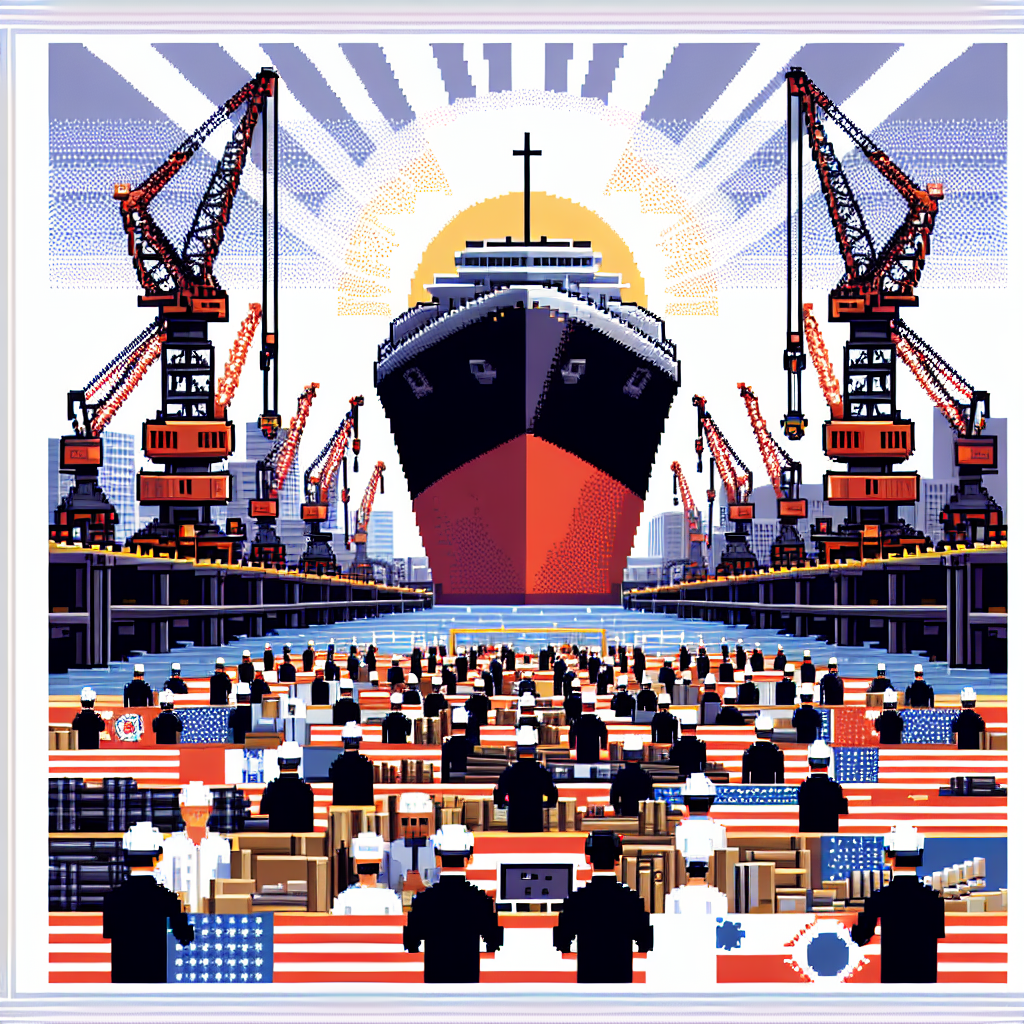
South Korea’s Shipbuilding Surge: A Strategic Move in U.S.-Korea Relations
Have you ever thought about the ships that carry goods across oceans, or the vessels that protect our shores? Shipbuilding is more than just a niche industry; it’s an integral part of national security and economic power. As the global stage shifts, South Korea is stepping up its shipbuilding game, creating ripples in the delicate balance of U.S.-Korea relations. In a move that may resonate with the “Make America Great Again” mantra, a South Korean shipbuilding conglomerate is positioning itself as a key player in President Donald Trump’s ambitious plan to revitalize America’s maritime fleet.
The Context: A New Era in Shipbuilding
Historically, the U.S. has maintained a robust shipbuilding industry, crucial for both military and commercial purposes. However, over the decades, this sector has faced significant challenges, including increased competition from abroad, budget constraints, and shifting priorities. Enter South Korea, a nation known for its advanced shipbuilding capabilities, which has seen a resurgence in its maritime industry thanks to innovative technology and strategic investments.
As President Trump sought to enhance American military strength and reduce dependency on foreign vessels, he initiated talks that sought to boost the domestic shipbuilding industry. This is where the South Korean conglomerate steps in, not just as a competitor but as a potential ally in a broader strategy to modernize and expand the U.S. fleet.
The growing partnership has implications beyond mere economics; it touches on themes of national security, trade, and geopolitical alliances. With North Korea’s ongoing provocations and China’s assertive maritime expansion, a strong U.S. fleet is crucial—not just for America, but for its allies in the region.
Key Takeaways
– Strategic Collaboration: South Korea’s shipbuilding conglomerate is aligning its goals with U.S. interests, potentially enhancing military and commercial maritime capabilities.
– Economic Impact: The partnership could lead to job creation in both countries, revitalizing the U.S. shipbuilding industry while bolstering South Korea’s maritime economy.
– Geopolitical Significance: Strengthening ties between the U.S. and South Korea in shipbuilding could serve as a counterbalance to regional threats, particularly from North Korea and China.
– Technological Advancements: South Korean firms bring cutting-edge technology and innovative designs, which could be integral to modernizing the aging U.S. fleet.
– Trade Dynamics: This partnership highlights the importance of trade negotiations that could redefine the U.S.-Korea alliance, emphasizing mutual benefits over competition.
Reflecting on the Future
As the world watches this unfolding narrative, it’s clear that the dynamics of shipbuilding are not just about steel and water; they are about power, partnerships, and the very future of international relations. The collaboration between South Korea and the U.S. in shipbuilding can serve as a model for how industries can evolve in the face of shifting geopolitical landscapes. It’s a reminder that sometimes, innovation and cooperation can steer nations toward a brighter horizon.
In the end, whether you’re a maritime enthusiast or just a casual observer, it’s fascinating to see how these alliances can reshape not just industries, but the very fabric of global relations.
Sources
– “Make American Shipbuilding Great Again”: Korea leans into shipbuilding as it woos Trump – Politico. [Politico](https://www.politico.com)
By examining these developments, we can better understand the intricate dance of diplomacy and commerce at play—and what it means for the future of global trade and security.
Related update: We recently published an article that expands on this topic: read the latest post.