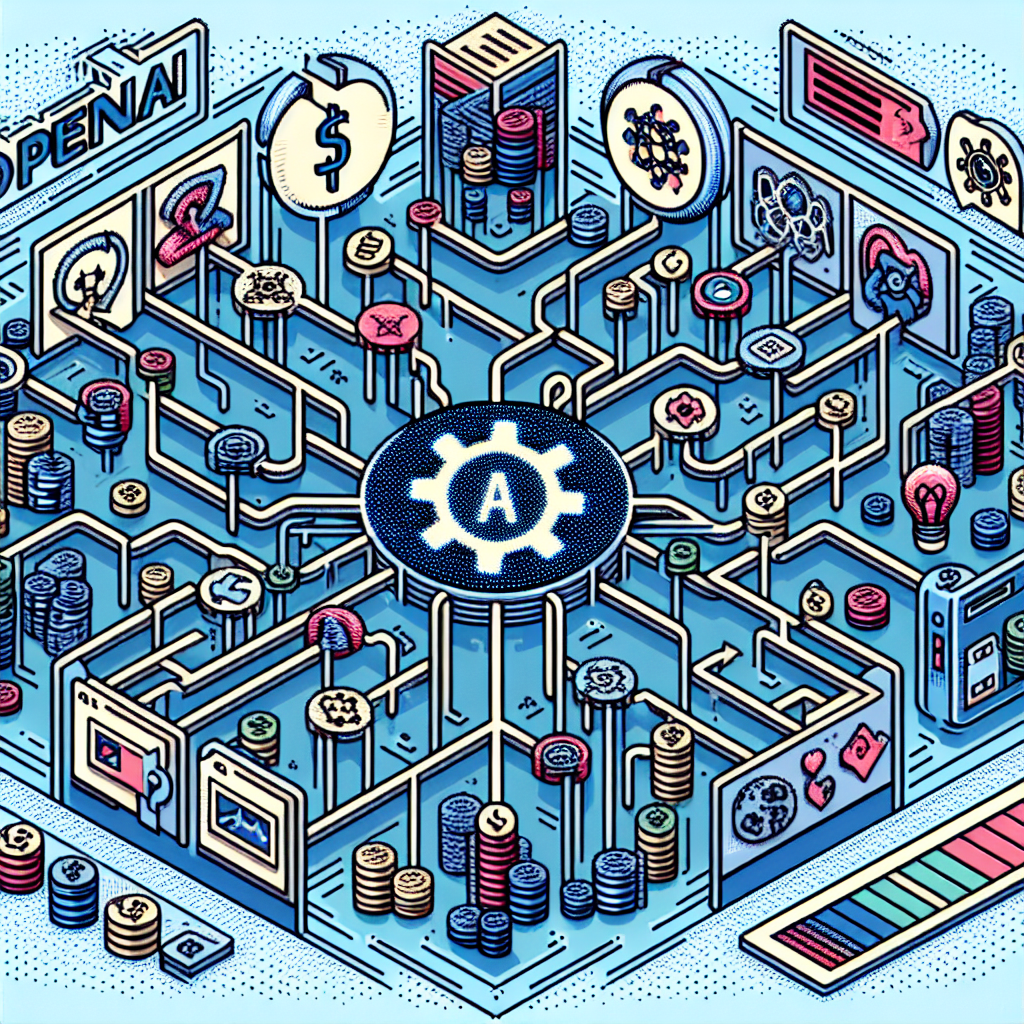
OpenAI: The $1 Trillion AI Dealmaker | Analysis by Brian Moineau

OpenAI: The Epicenter of a $1 Trillion AI Network

In the ever-evolving landscape of artificial intelligence, few stories are as captivating as that of OpenAI. With the launch of ChatGPT, this innovative company has not only changed the way we interact with technology but has also positioned itself as a linchpin in a burgeoning $1 trillion network of deals. But how did OpenAI become the go-to partner for tech giants, and what does this mean for the future of AI? Let’s dive in.

The Rise of OpenAI: A Brief Background

Founded in December 2015, OpenAI set out with a mission to ensure that artificial general intelligence (AGI) benefits all of humanity. Its commitment to safety and ethical considerations in AI has resonated with stakeholders across various industries. However, it was the introduction of ChatGPT in late 2022 that propelled OpenAI into the spotlight. The demand for conversational AI surged, and suddenly, companies recognized the value of integrating OpenAI’s technology into their operations.

Fast forward to today, and OpenAI has entered into strategic partnerships with major players like Microsoft, Google, and others, creating a complex web of financial dependencies. According to a recent Financial Times article, these collaborations have placed OpenAI at the center of a $1 trillion network, significantly shaping the AI ecosystem.

Key Events Shaping OpenAI’s Dominance

1. Strategic Investments: Microsoft’s multibillion-dollar investment in OpenAI has not just provided financial backing; it’s allowed Microsoft to integrate OpenAI’s models into its products, enhancing offerings like Azure and Office 365. This partnership has effectively positioned both companies as leaders in AI solutions.

2. Collaborations and Licensing: OpenAI has entered into licensing agreements with various companies, allowing them to build their own applications on top of OpenAI’s technology. This has created a ripple effect, driving innovation while also generating revenue.

3. Growing Ecosystem: As more companies leverage OpenAI’s capabilities, there’s a growing reliance on its technology, which fosters a network effect. The more companies that use and depend on OpenAI, the stronger its position in the market becomes.

4. Focus on Ethics and Safety: OpenAI’s commitment to ethical AI development has attracted partnerships with organizations that prioritize responsible technology use, further solidifying its reputation in the industry.

5. Market Influence: OpenAI’s leadership in AI technology has led to increased competition, prompting other companies to invest heavily in AI to keep pace. This has created an environment ripe for innovation and growth across the sector.

Key Takeaways

OpenAI has positioned itself as a central player in the AI landscape, signing lucrative partnerships with major tech companies. – Financial dependencies are shaping the future of AI development, creating a network that enhances collaboration and innovation. – Ethics and safety are paramount for OpenAI, attracting partners focused on responsible AI use. – The competitive landscape is evolving, with OpenAI’s influence driving other firms to invest more in AI capabilities.

Reflecting on OpenAI’s Future

As OpenAI continues to extend its reach within the tech industry, its impact on the future of artificial intelligence cannot be overstated. The company’s ability to foster collaboration while emphasizing ethical standards sets a precedent for how AI can be developed and utilized responsibly. The next few years will undoubtedly be pivotal in determining not only OpenAI’s trajectory but also the broader implications of AI technology on society.

With the stakes this high, it’s clear that OpenAI isn’t just a player in the game; it’s becoming the game itself.

Sources

– Financial Times. “How OpenAI put itself at the centre of a $1tn network of deals.” [Financial Times](https://www.ft.com/content/openai-network-deals) – OpenAI Official Website. [OpenAI](https://openai.com) – Microsoft Official Blog. [Microsoft AI](https://blogs.microsoft.com/ai)

By keeping an eye on OpenAI and its network of alliances, we can better understand the transformative power of AI in our everyday lives. Whether you’re a tech enthusiast or a business leader, the unfolding narrative around OpenAI is one to watch closely.


Related update: We recently published an article that expands on this topic: read the latest post.

OpenAI lawyers question Meta’s role in Elon Musk’s $97B takeover bid – TechCrunch | Analysis by Brian Moineau

OpenAI lawyers question Meta’s role in Elon Musk’s $97B takeover bid - TechCrunch | Analysis by Brian Moineau

Title: The Billion-Dollar Chess Game: Elon Musk, Meta, and the Future of AI

In a world where technology giants are constantly vying for dominance, the latest plot twist involves none other than Elon Musk, Mark Zuckerberg, and OpenAI. According to a recent TechCrunch article, OpenAI has raised eyebrows by questioning Meta's involvement in Elon Musk's audacious $97 billion takeover bid of the ChatGPT-maker. While this might sound like a subplot from a futuristic drama, it's a real-life business maneuver that has captured the attention of tech enthusiasts and skeptics alike.

The Players in the Game

Elon Musk, known for his avant-garde approach to technology and innovation, is no stranger to ambitious projects. From Tesla's electric vehicles to SpaceX's Mars missions, Musk's ventures often seem to defy the bounds of reality. Now, with his sights set on OpenAI, the billionaire seems to be readying himself for yet another leap into the unknown. But why OpenAI? Perhaps it's the allure of artificial intelligence's untapped potential or the strategic advantage of having a hand in shaping the future of AI technologies.

On the other side of this chessboard sits Mark Zuckerberg, CEO of Meta, the company formerly known as Facebook. Zuckerberg's pivot toward the Metaverse has been nothing short of audacious, reflecting his vision of a connected digital universe. But what role does Meta play in Musk's bid for OpenAI? The details remain murky, but the prospect of two tech titans collaborating—or competing—adds an intriguing layer to this unfolding narrative.

Connecting the Dots

This isn't the first time Musk and Zuckerberg have crossed paths. Their past interactions have ranged from polite exchanges to public disagreements, especially around the topics of AI safety and regulation. Musk has been vocal about his concerns regarding AI, famously calling it "our biggest existential threat." He even co-founded OpenAI with the mission of ensuring that artificial intelligence benefits all of humanity. However, he departed the organization in 2018, citing differences in vision.

In contrast, Zuckerberg has maintained a more optimistic stance on AI and its potential to improve lives. Given these differing perspectives, their recent meeting over OpenAI's future is particularly fascinating. Could it signal a new chapter of collaboration, or is it merely another chapter in their ongoing rivalry?

The Bigger Picture

This potential acquisition also raises questions about the broader implications for the tech industry and AI development. As AI continues to evolve, the ethical considerations surrounding its use become more pressing. With companies like OpenAI at the forefront, the pressure is on to ensure that advancements are made responsibly.

Additionally, this development comes at a time when global tech regulations are tightening. The European Union's AI Act and similar initiatives worldwide are attempting to create frameworks that safeguard against the misuse of AI technologies. How Musk's potential acquisition of OpenAI would align with these regulatory efforts remains to be seen.

Final Thoughts

The saga of Elon Musk, Mark Zuckerberg, and OpenAI is a testament to the ever-evolving landscape of technology and its intricate power dynamics. Whether this will lead to a groundbreaking collaboration or fuel further competition, only time will tell. As spectators in this grand game, we can only hope that the future of AI is guided by principles that prioritize humanity's collective well-being.

In the meantime, perhaps we should take a page from Musk and Zuckerberg's playbook and dare to imagine a world where technology serves as a bridge rather than a barrier. After all, in the words of Isaac Asimov, "The saddest aspect of life right now is that science gathers knowledge faster than society gathers wisdom." Let's hope that wisdom prevails in this high-stakes game.

Read more about AI in Business

Read more about Latest Sports Trends

Read more about Technology Innovations

Google will let you make AI podcasts from Gemini’s Deep Research – The Verge | Analysis by Brian Moineau

Google will let you make AI podcasts from Gemini’s Deep Research - The Verge | Analysis by Brian Moineau

Title: Embracing the AI Wave: Google’s New Podcasting Venture with Gemini’s Deep Research

In the ever-evolving world of technology, where yesterday’s innovations become today’s norms, Google has once again pushed the boundaries, this time by launching a new feature that allows users to generate AI-driven podcast-like conversations through Gemini’s Deep Research. This development, as reported by [The Verge](https://www.theverge.com), marks a significant leap in how we consume and create content, hinting at a future where AI not only assists but actively participates in our daily dialogues.

The Dawn of AI-Powered Conversations

For those of us who have been following the trajectory of AI, this move by Google is both exciting and inevitable. AI has been making waves across various sectors, from enhancing customer service with AI chatbots to revolutionizing the creative industry with AI-generated art and music. Now, with Gemini’s Deep Research, AI is stepping into the realm of podcasting, promising a new era of content creation that is both innovative and accessible.

Imagine being able to input a topic of your choice, and voila! An AI-generated conversation unfolds, rich with insights and perspectives derived from deep research. This tool doesn't just democratize podcasting; it redefines it. No longer are we confined to the traditional roles of host and guest. Now, AI can be both, creating dialogues that are informed, engaging, and, perhaps most importantly, available on-demand.

Connections to the Broader AI Landscape

This breakthrough is not happening in isolation. The AI landscape is bustling with developments that echo this theme of AI integration into everyday life. Take, for instance, the recent advancements in AI-driven writing assistants like OpenAI’s ChatGPT, which have become invaluable tools for writers, educators, and businesses alike. Similarly, Google's initiative with AI podcasts underscores a broader trend: the blending of AI with human creativity to produce content that is both innovative and intuitive.

Moreover, the ethical considerations surrounding AI-generated content are increasingly becoming a focal point of discussion. As AI becomes more prevalent in content creation, questions about authenticity, bias, and intellectual property arise. Google and other tech giants are navigating these waters carefully, ensuring that AI serves as a tool for enhancement rather than a replacement for genuine human interaction and creativity.

A Light-Hearted Look at AI’s Role in Creativity

While the implications of AI in podcasting are profound, let’s not forget the lighter side of this technological evolution. Imagine the possibilities: a podcast featuring a debate between AI personas on the merits of pineapple on pizza, or a whimsical discussion on the latest cat meme trends. The opportunities for humor, exploration, and creativity are boundless, bringing a fresh and dynamic flavor to the podcasting world.

Final Thoughts: Embracing Innovation with Caution

As we embrace this new frontier of AI-generated podcasts, it’s essential to balance enthusiasm with caution. While the technology opens up exciting avenues for content creation, it also challenges us to consider the ethical and societal impacts of AI’s growing role in our lives. As listeners and creators, we must remain vigilant, ensuring that AI enhances rather than diminishes the richness of human conversation.

In the end, Google's venture into AI podcasting through Gemini’s Deep Research is a testament to the incredible potential of technology to reshape our world. It invites us to explore new ways of engaging with content and challenges us to think critically about the role of AI in our creative endeavors. Whether you’re a tech enthusiast or a casual listener, one thing is certain: the future of podcasting is here, and it’s powered by AI.

Read more about AI in Business

Read more about Latest Sports Trends

Read more about Technology Innovations