‘A race to the bottom’: SEC’s planned pullback on decades-old rules draws backlash – Politico | Analysis by Brian Moineau

‘A race to the bottom’: SEC’s planned pullback on decades-old rules draws backlash – Politico | Analysis by Brian Moineau

Title: Navigating the SEC’s Regulatory Tightrope: Balancing Transparency and Overhaul

In a world where business headlines are often dominated by soaring stock prices and market volatility, a subtler but significant shift is gripping the financial world—what some are calling a “race to the bottom” in regulatory standards. The SEC’s (Securities and Exchange Commission) proposed pullback on decades-old regulations has stirred a hornet’s nest of controversy, drawing ire from pension funds and investor advocacy groups alike. But why all the fuss, and what does it mean for the everyday investor?

The Crux of the Controversy

At the heart of this regulatory shakeup lies the SEC’s ambition to roll back rules that have been the backbone of financial transparency for decades. The changes aim to simplify compliance for public companies but have sparked concerns that critical information might slip through the cracks. Pension funds, which rely heavily on detailed corporate disclosures to make informed investment decisions, are particularly vocal in their opposition. The fear? A lack of transparency could lead to ill-informed investments, ultimately impacting retirees who depend on these funds for their livelihoods.

The SEC’s Internal Struggle

Interestingly, the discord isn’t just external; it’s happening within the SEC itself. The agency, which has long been the guardian of market integrity, is experiencing its own internal divisions. Commissioners are split on whether these rollbacks will streamline business or undermine investor protections. It’s a classic case of weighing the scales of efficiency against those of transparency.

Drawing Parallels: Global Regulatory Trends

This isn’t just an isolated incident. Around the world, regulatory bodies are grappling with similar challenges. The European Union, for instance, has been tightening its grip with regulations like GDPR, focusing on data protection and privacy. Meanwhile, the UK is navigating the post-Brexit regulatory landscape, attempting to strike a balance between competitiveness and consumer protection. These global movements underscore the delicate dance regulators must perform, balancing the needs of businesses with those of consumers and investors.

A Lighthearted Look at Serious Business

While the topic might seem dense, it’s worth remembering that business, much like life, benefits from a little levity. Think of the SEC’s dilemma as a high-stakes episode of “The Great British Bake Off.” The goal is to create a perfectly balanced cake—where too much relaxation in rules is like too much baking powder, causing the cake to collapse, while overly stringent regulations make it dense and unpalatable. The key is finding that sweet spot where everyone can enjoy a slice.

Final Thoughts: The Path Forward

As the SEC embarks on this regulatory revamp, it’s crucial to keep the dialogue open. Perhaps the answer lies not in a complete rollback or a strict adherence to old rules, but in a nuanced approach that incorporates the best of both worlds. Investor education and advocacy will play a crucial role in shaping this landscape, ensuring that transparency remains a cornerstone of the financial markets.

In the end, whether you’re a seasoned investor or a casual observer, understanding these changes empowers you to navigate the financial world with a discerning eye. After all, in the marketplace of ideas, being well-informed is the ultimate currency.

Read more about AI in Business

Read more about Latest Sports Trends

Read more about Technology Innovations


Related update: We recently published an article that expands on this topic: read the latest post.
Flight Attendant Weighs in on Video of Man Vaping in Plane Bathroom – TODAY.com | Analysis by Brian Moineau

Flight Attendant Weighs in on Video of Man Vaping in Plane Bathroom - TODAY.com | Analysis by Brian Moineau

Up in Smoke: The Airplane Vaping Saga


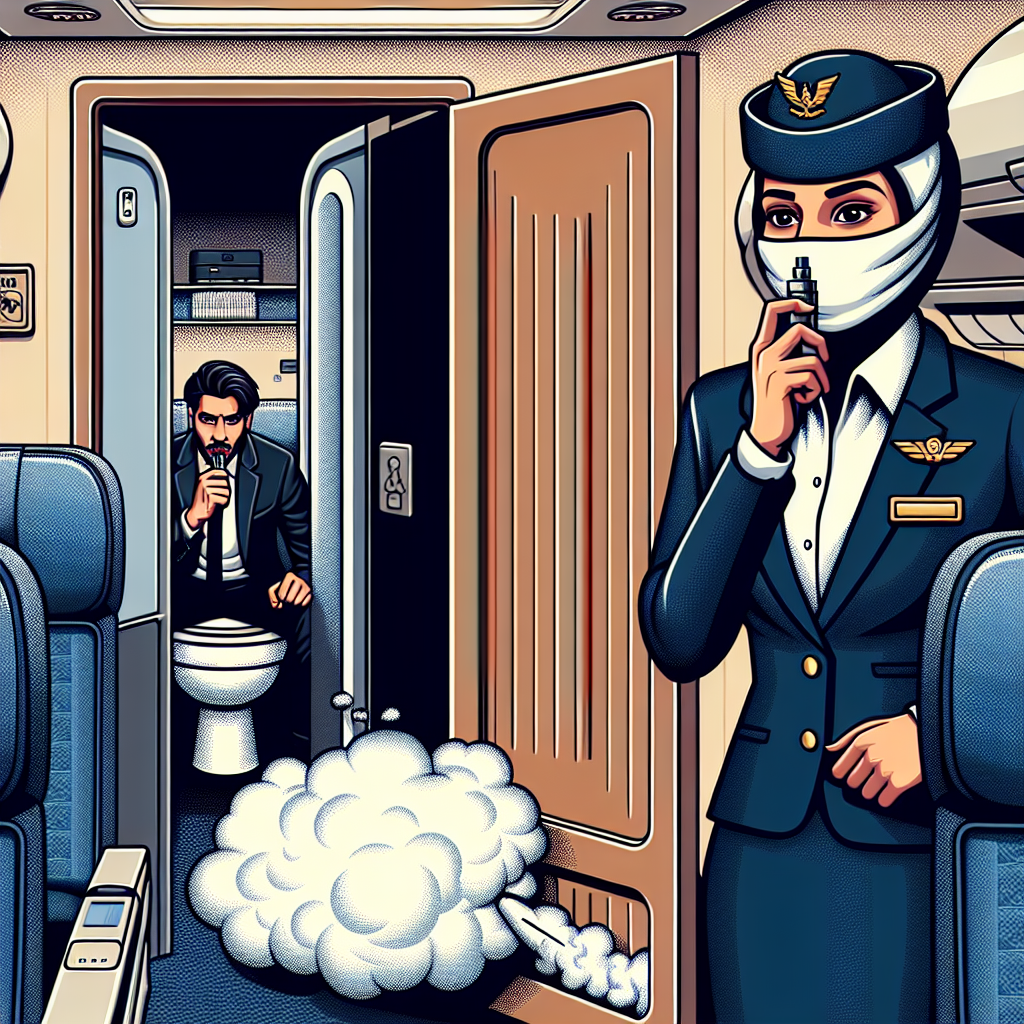
In a world where the skies are vast and air safety is paramount, there are still those moments when rules are bent, nudged, or outright flouted. Recently, on an American Airlines flight, a passenger by the name of Kobe Peter “Twoey King” Nguyen found himself in a not-so-luxurious spotlight. The reason? Vaping in the plane’s bathroom.

The Incident: A Smoky Affair


A video circulating online shows Nguyen engaging in a heated exchange with flight attendants after being caught vaping mid-flight. The cabin crew, as expected, were far from amused, and it's not hard to imagine why. Vaping on a plane isn't just against airline policy; it's a safety concern. Airplanes are essentially pressurized metal tubes hurtling through the sky, and anything that can potentially compromise safety is a big no-no.

A flight attendant who witnessed the scene later explained that the situation was handled following standard procedures. The crew had to ensure the safety of all passengers, and that meant enforcing the no-smoking (or vaping) rule strictly.

Vaping: A Global Perspective


This incident isn't just an isolated case of flouting rules. It ties into the broader discussion about vaping regulations, which have been tightened in various parts of the world. For instance, in Australia, vaping laws are stringent, requiring prescriptions for nicotine vapes, while in the UK, public health officials have advocated for vaping as a tool to quit smoking but with controls.

The skies have their own sets of rules and regulations, and for good reason. The Federal Aviation Administration (FAA) in the United States has clear guidelines prohibiting smoking and vaping on flights. The reasons are simple: fire hazards and the potential for health issues among passengers, especially those with respiratory sensitivities.

The People Behind the Clouds


Nguyen, or "Twoey King" as he's known, is now unwittingly part of a growing list of individuals who've learned the hard way that some rules aren't meant to be broken. While incidents like this can often lead to fines or bans from airlines, they also serve as a reminder of the need for personal responsibility in shared spaces.

Flight attendants, often the unsung heroes of the skies, have to manage not only the safety protocols but also the comfort and well-being of all passengers. Their job is not just about serving drinks and snacks; it's about ensuring that everyone arrives safely at their destination, even if it means confronting uncomfortable situations.

A Broader Connection: Air Travel and Behavior


Nguyen’s case is a microcosm of the larger issue of passenger behavior on flights. With air travel rebounding post-pandemic, there's been a noticeable uptick in unruly passengers. The International Air Transport Association (IATA) has reported increased incidents of disruptive behavior, ranging from mask disputes to physical altercations. This stresses the importance of clear communication and firmer penalties for those who choose to ignore the rules.

Final Thoughts: Flying with Consideration


As we continue to navigate the skies, it's essential to remember that air travel is a privilege that comes with responsibilities. Whether it's vaping, adhering to safety instructions, or simply being courteous to fellow passengers and crew, each of us plays a part in ensuring a safe and pleasant journey.

For Nguyen, this incident might be a momentary lapse in judgment, but it serves as a valuable lesson for all travelers. The next time you board a flight, remember: the rules are there for a reason, and a little consideration can go a long way in keeping the friendly skies just that—friendly.

Read more about AI in Business

Read more about Latest Sports Trends

Read more about Technology Innovations

Fact Sheet: President Donald J. Trump Guarantees Fair Banking for All Americans – The White House (.gov) | Analysis by Brian Moineau

Fact Sheet: President Donald J. Trump Guarantees Fair Banking for All Americans – The White House (.gov) | Analysis by Brian Moineau

Title: Banking for All: President Trump’s Executive Order and Its Ripple Effects

In a move that echoes his administration’s commitment to ensuring equitable access to financial services, President Donald J. Trump recently signed an Executive Order titled “Fair Banking for All Americans.” This order aims to prohibit politicized or unlawful debanking practices, ensuring that Federal regulators maintain neutrality and fairness in the banking sector.

The signing of this order is not just a bureaucratic measure; it reflects a broader sentiment that financial access should be a right, not a privilege. In today’s diverse and globalized world, where financial transactions are increasingly digital, ensuring that all Americans have fair access to banking services is more crucial than ever.

A Closer Look at the Executive Order

At its core, this Executive Order is about holding financial institutions accountable. It mandates that regulators should not use their positions to promote political agendas or engage in the debanking of any individual or group on unlawful grounds. This is a significant step, especially in an era where financial institutions are under scrutiny for their role in social and political issues.

The financial industry is no stranger to controversy. From the 2008 financial crisis to recent debates over cryptocurrency regulations, banks and financial institutions often find themselves at the center of public discourse. By signing this order, President Trump is attempting to remove political bias from the equation, thereby reassuring Americans that their access to banking services won’t be determined by their political beliefs or affiliations.

Connecting the Dots: Global Trends and Implications

Globally, financial inclusivity is a hot topic. In many parts of the world, populations are still struggling to access basic banking services. According to the World Bank, approximately 1.7 billion adults remain unbanked, highlighting a significant global challenge. President Trump’s order can be seen as part of a broader movement towards ensuring financial services are accessible to all, not just in the U.S. but worldwide.

Interestingly, this move parallels discussions in the European Union, where regulations like the General Data Protection Regulation (GDPR) are setting benchmarks for fairness and transparency. While GDPR focuses on data privacy, the underlying principle of protecting individuals from unjust practices resonates with Trump’s Executive Order.

A Brief Commentary on President Trump

Love him or loathe him, Donald Trump is a figure who never fails to grab headlines. His presidency was marked by bold, often polarizing decisions, and this Executive Order is no different. In the realm of finance, Trump has often positioned himself as a champion of deregulation, believing that less government interference leads to a more robust economy.

His approach to governance has always been about breaking the mold, and this order is another example of how he aims to redefine norms, for better or worse. Whether this Executive Order will have the desired impact remains to be seen, but it certainly adds another layer to Trump’s complex legacy.

Final Thought

In an increasingly digital and interconnected world, access to banking services is as essential as ever. President Trump’s Executive Order is a step towards ensuring that these services remain fair and impartial. As we move forward, it will be interesting to see how this order influences both national and global banking practices. The ultimate goal is clear: a financial system that serves everyone, devoid of bias and political influence. Whether Trump’s vision will be realized is a story that only time will tell.

Read more about AI in Business

Read more about Latest Sports Trends

Read more about Technology Innovations


Related update: We recently published an article that expands on this topic: read the latest post.
‘Contaminated’ cupboard staple recalled over ‘life-threatening fungi’ hidden inside – children are especially at risk – The US Sun | Analysis by Brian Moineau

'Contaminated' cupboard staple recalled over 'life-threatening fungi' hidden inside - children are especially at risk - The US Sun | Analysis by Brian Moineau

The Fungus Among Us: When Household Staples Turn Hazardous

In a world where we're more conscious than ever about what we consume, the news of a household staple being recalled due to contamination with life-threatening fungi is both alarming and a sobering reminder of the importance of product safety. According to a recent article by The US Sun, an essential item in many homes—swabs—has been urgently removed from shelves after officials found it was tainted with dangerous fungi. Particularly concerning is the risk this poses to children, who are more vulnerable to infections.

A Fungal Fiasco

The issue at hand is not just about a faulty product; it’s about the potential health risks posed by these fungi. Fungal infections can sometimes be underestimated, but they can lead to serious health complications, especially in immunocompromised individuals. It’s a stark reminder of the invisible threats that can lurk in everyday items. This situation echoes past recalls and health scares, such as the 2015 Blue Bell ice cream listeria outbreak, which similarly highlighted the importance of rigorous health and safety standards in food production and household goods.

Global Implications

This incident also parallels global concerns about food and product safety. In recent years, we've seen increased attention on supply chain transparency, not just for food items but also for everyday products like cosmetics and cleaning supplies. The European Union, for example, has stringent regulations on product safety, which often serve as a benchmark for other countries. The recall of these contaminated swabs might prompt a reevaluation of safety protocols in manufacturing processes around the world.

The Role of Technology

In combating such issues, technology can play a pivotal role. Advances in AI and machine learning are already being utilized to detect contaminants and ensure quality control in production lines. Moreover, blockchain technology is being explored to enhance traceability in supply chains, offering a more robust way to track products from manufacturing to store shelves. These technologies could be instrumental in preventing future incidents that put public health at risk.

Final Thoughts

While the recall of contaminated swabs is indeed concerning, it serves as an important reminder of the need for vigilance in product safety. As consumers, staying informed and cautious about the products we bring into our homes is essential. For manufacturers, this incident underscores the necessity of stringent quality control measures and the potential of technology to safeguard public health. In a world where health is paramount, ensuring the safety of household staples is not just a regulatory requirement but a responsibility to the public.

For now, as the saying goes, "forewarned is forearmed." Let’s hope that this recall prompts a broader conversation about product safety and inspires actions that prevent future scares. After all, when it comes to protecting our loved ones, especially our children, there’s no such thing as being too careful.

Read more about AI in Business

Read more about Latest Sports Trends

Read more about Technology Innovations