
Sex advice: Whenever men get a glimpse of my naked body, I never hear from them again. – Slate | Analysis by Brian Moineau

Sex advice: Whenever men get a glimpse of my naked body, I never hear from them again. - Slate | Analysis by Brian Moineau

Navigating the Digital Dating Jungle: The Naked Truth

In today's digital age, where swipes decide our romantic fate and emojis replace handwritten love letters, the quest for connection has transformed into a tech-driven adventure. Amidst the sea of apps promising true love lies a personal tale from Slate's Technology section, intriguingly titled: "Sex advice: Whenever men get a glimpse of my naked body, I never hear from them again." The title itself is a siren call for introspection into how modern dating practices impact self-perception and relationships.

The article narrates the journey of a woman who feels a profound disconnect between the vulnerability of revealing her physical self and the subsequent evaporating interest from potential partners. Her concern, "I'm going to end up alone," resonates with many who have dared to open their hearts (and profiles) to the world, only to encounter silence in return.

This narrative is not just a personal lament; it echoes a broader societal shift. Our world is increasingly visual, with platforms like Instagram and TikTok celebrating the curated, filtered self. The pressure to present an idealized image can be overwhelming. In this context, the rawness of real-life encounters, stripped of digital enhancements, can be jarring.

Interestingly, the phenomenon extends beyond personal relationships into professional realms. Consider the rise of remote work, where virtual meetings have replaced in-person interactions. The digital divide can create a disconnect between online personas and real-life counterparts, much like the dating world described in the article.

Moreover, the insecurities surrounding physical appearance aren't exclusive to any gender. Studies have shown that social media can exacerbate body image issues across the board. Platforms that were once meant to connect us are now breeding grounds for comparison and self-doubt. It's a reminder that behind every profile is a person grappling with their unique set of insecurities and desires.

The woman's story also intersects with broader conversations about body positivity and acceptance. Movements like

BodyPositivity and campaigns by brands such as Dove advocate for embracing all body types and challenging traditional beauty standards. These initiatives are crucial in reshaping perceptions and encouraging inclusivity.


But what about the men who vanish after a glimpse of vulnerability? It's essential to consider that they, too, might be victims of societal expectations. The pressure to conform to an idealized notion of masculinity can be as stifling as that faced by women. Encouraging open dialogue and empathy could bridge the gap between perceived and real expectations.

In a world where technology governs our interactions, the hope lies in reclaiming authenticity. Whether it's through dating apps or social media, the goal should be to connect as whole individuals, not just curated avatars. As we navigate this digital jungle, let's remember that behind the screens are human beings seeking genuine connection.

So, to the woman who fears ending up alone, take heart. The journey to love is not a solitary one; it's shared by countless others navigating the same digital waters. Embrace your authentic self, and remember that true connection transcends the pixels on a screen.

Final Thought: In the ever-evolving landscape of digital relationships, it's crucial to foster empathy, authenticity, and understanding. By doing so, we can transform the tech-driven dating jungle into a haven for genuine human connection.

Read more about AI in Business
Read more about Latest Sports Trends

Read more about Technology Innovations

Tech industry tried reducing AI’s pervasive bias. Now Trump wants to end its ‘woke AI’ efforts – AP News | Analysis by Brian Moineau

Tech industry tried reducing AI’s pervasive bias. Now Trump wants to end its ‘woke AI’ efforts – AP News | Analysis by Brian Moineau

Title: Navigating the Crossroads: AI, Bias, and the Quest for Balance

In a world where technology intertwines with every facet of our lives, the journey towards creating equitable AI systems has become a central narrative. Recently, the debate has taken a new turn with former President Donald Trump’s opposition to what he calls “woke AI” efforts, potentially shifting the tech industry’s direction. This development is reminiscent of a world on the brink of a technological crossroads, where the balance between innovation and ethics is more crucial than ever.

Artificial intelligence, once a fantastical concept, is now a tangible part of our everyday lives. From voice-activated assistants to personalized content recommendations, AI’s reach is extensive. However, the technology’s pervasive bias has been a point of contention, as highlighted in a recent article from AP News. The piece discusses how industry leaders, like Google, have made strides towards inclusivity by collaborating with experts, such as sociologist Ellis Monk, to ensure AI products serve a diverse global population. This drive for inclusivity isn’t just a moral imperative but also a business necessity in a world where nearly two-thirds of the population comprises people of color.

Yet, as with many progressive initiatives, resistance has emerged. Former President Trump’s call to end “woke AI” efforts reflects a broader cultural and political pushback against initiatives perceived as overly progressive or pandering to political correctness. This sentiment echoes a recurring theme in global politics, where technological advancements are scrutinized through the lenses of ideological belief.

The tech industry’s battle with bias isn’t new. As AI systems learn from vast datasets, they inadvertently mirror the prejudices embedded in those data. A well-documented example is the facial recognition technology that performs better on lighter skin tones than darker ones. This discrepancy has led to wrongful arrests and misidentifications, stirring public outcry and legislative scrutiny. It’s a reminder of the profound impact AI can have when it fails to account for diversity.

The significance of addressing AI bias extends beyond tech circles. In healthcare, biased algorithms can lead to disparities in treatment recommendations. In finance, they can affect loan approvals. The ripple effect of unaddressed bias in AI systems can perpetuate systemic inequalities, making the quest for fair AI not just a tech issue but a societal one.

Parallel to the tech world, the entertainment industry has faced similar reckonings. Hollywood, for instance, has been under pressure to diversify its storytelling and representation, recognizing the power of media to shape societal norms. The recent success of films like “Black Panther” and “Crazy Rich Asians” showcases the commercial viability of inclusivity, mirroring the tech industry’s realization that diversity drives innovation and growth.

Returning to Ellis Monk, his role in this narrative is crucial. As a sociologist and a voice for inclusivity, his contributions are a testament to the interdisciplinary approach needed to tackle AI bias. His work underscores the importance of blending social sciences with technological development to create systems that are not only efficient but also equitable.

As we stand at this technological crossroads, it’s essential to consider the broader implications of halting efforts to make AI more inclusive. While the debate over “woke AI” continues, it serves as a reminder of the delicate balance between innovation and ethics. The tech industry’s challenge is not just to create smarter systems but to ensure those systems work for everyone.

In conclusion, the journey towards inclusive AI is far from over. It requires a concerted effort from technologists, policymakers, and society at large to navigate the complexities of bias and ensure technology serves as a force for good. As we move forward, let us remember that the true measure of progress is not just in the sophistication of our technology but in its ability to uplift and empower all individuals, regardless of their background.

Read more about AI in Business

Read more about Latest Sports Trends

Read more about Technology Innovations


Related update: We recently published an article that expands on this topic: read the latest post.

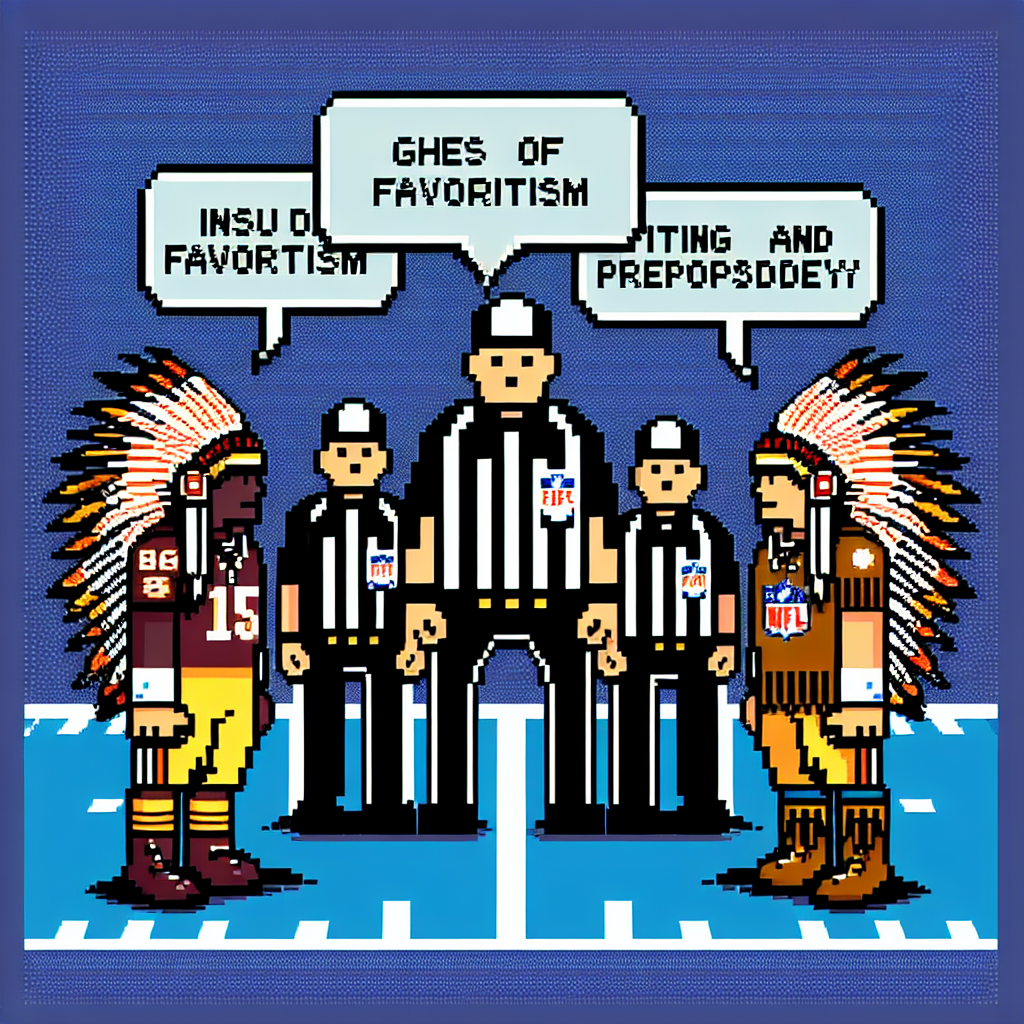
NFL Referees Association calls claims of alleged Chiefs favoritism ‘insulting and preposterous’ – CBS Sports | Analysis by Brian Moineau

NFL Referees Association calls claims of alleged Chiefs favoritism 'insulting and preposterous' - CBS Sports | Analysis by Brian Moineau

Title: Whistleblower Woes: Debunking the Chiefs Conspiracy Theory

Ah, the Kansas City Chiefs—perennial powerhouses of the NFL, darlings of barbeque aficionados around the world, and, apparently, the new bad boys of the conspiracy theorist playbook. As accusations of favoritism towards the Chiefs swirl around like autumn leaves on the Arrowhead Stadium turf, the NFL Referees Association has stepped in to call these claims "insulting and preposterous." Scott Green, the executive director of the association, isn't just blowing a whistle on the field; he's blowing the whistle on the critics.

Scott Green, an experienced arbiter of fairness, has officiated numerous high-stakes games, and his understanding of the game is as intricate as a well-executed Andy Reid play. It's no wonder he's stepping up to address these claims. After all, referees are the unsung custodians of sports integrity, ensuring that the gladiatorial contests we love are fair. Green's defense of his crew is a reminder that, while referees aren't perfect, a bias for one team over another is not part of their playbook.

This isn't the first time a sports team has been accused of receiving special treatment. Remember when the New England Patriots were often suspected of getting favorable calls? It's almost a rite of passage for successful teams to be scrutinized under the conspiratorial microscope. The Chiefs, with their dazzling offense led by Patrick Mahomes, have become the latest victims of this phenomenon. When a team consistently outperforms, it's tempting to assign their success to something nefarious rather than to the sheer brilliance of their play.

But let's pause here and take a wider look at the world. Conspiracy theories aren't unique to the NFL. They're part of a broader societal trend where misinformation can spread faster than a Tyreek Hill sprint. In today's digital age, where social media amplifies every whisper into a shout, sports are just another arena for these narratives to thrive. It's essential to approach such claims with a healthy dose of skepticism and critical thinking.

Back to the Chiefs. Led by head coach Andy Reid, a man known not just for his coaching genius but also for his unparalleled collection of Hawaiian shirts, the team's success is a testament to strategic brilliance and raw talent. Reid's career, spanning decades, is a masterclass in adapting and evolving—a trait that trickles down to his players.

As the Chiefs continue their campaign this season, it's crucial for fans and pundits alike to remember the human element behind the stripes. Referees are tasked with making split-second decisions in high-pressure situations, and while errors may occur, the notion of an orchestrated favoritism belittles the integrity of the sport.

In the end, sports, like life, is about passion, unpredictability, and the joy of competition. Let's focus on celebrating the excellence on the field rather than getting lost in baseless allegations. After all, every Sunday, the NFL offers a stage for extraordinary athletes to showcase their talents, and that, dear readers, is where our attention should lie.

Final Thought: As we indulge in the spectacle of the NFL season, let's remember to appreciate the game for what it is—a beautiful, chaotic dance of strategy and skill. Let's cheer for our teams, question the calls, but ultimately, respect the game and those who make it possible.

Read more about AI in Business

Read more about Latest Sports Trends

Read more about Technology Innovations