Bobby Wagner: From Tackles to Service | Analysis by Brian Moineau

Bobby Wagner’s Moment: From Tackles to True Impact

There’s a scene I keep replaying: Bobby Wagner, eyes steady, voice low but shaking with gratitude, honoring the woman whose memory has shaped his life and work. On the evening the NFL handed out its Walter Payton Man of the Year award, the on-field legend who’s piled up tackles for more than a decade reminded everyone that greatness isn’t just measured in stats — it’s measured in service.

Why this matters right now

  • The Walter Payton NFL Man of the Year is the league’s highest honor for character and community impact, given to a player who combines on-field excellence with meaningful off-field contributions.
  • Bobby Wagner — a veteran linebacker now with the Washington Commanders — was named the 2025 Walter Payton Man of the Year during NFL Honors on February 5–6, 2026.
  • Wagner has been a finalist multiple times; this recognition crowns years of sustained community work and a personal campaign to turn family tragedy into public good.

Quick highlights from the night

  • Wagner accepted the award at NFL Honors and spoke about his mother, Phenia Mae, who died from stroke complications and inspired his charitable focus.
  • His FAST54 / Phenia Mae Fund partners with hospitals and health systems to raise stroke awareness, support patients, and provide resources for families.
  • The award includes a significant donation to the nonprofit of the winner’s choice, amplifying Wagner’s existing community investment.

The backstory: how tackles turned into a platform

Bobby Wagner’s football résumé is familiar to anyone who watches the league: multiple Pro Bowls and All-Pro nods, seasons stacked with 100-plus tackles, and a reputation as one of the most consistent linebackers of his generation. But the Man of the Year award spotlights a different arc — one that begins with a personal loss.

Wagner’s mother died young from stroke complications. He’s used that experience to build FAST54 and the Phenia Mae Fund, working with medical partners (including prominent children’s hospitals and health systems) to educate communities about stroke signs, provide financial assistance and increase access to care. Over time, his off-field initiatives expanded to include work on mental health, social justice, and local community programming in Washington, D.C., and beyond.

Repeated nominations for the Walter Payton award show this wasn’t a sudden pivot; it’s the long-tail effect of consistent engagement. Being a finalist multiple times before finally winning only reinforced the sense that Wagner’s community work had become as durable as his play on the field.

What the award signals for the league and the Commanders

  • It reinforces the NFL’s push to promote player-led social impact initiatives — not as PR moments, but as long-term investments linked to real partners and measurable outcomes.
  • For the Commanders, Wagner’s profile elevates the franchise’s community presence and connects fans to the human stories behind the roster.
  • For younger players, it sets a template: leverage visibility for causes with personal meaning, partner with credible institutions, and commit long-term.

Lessons in leadership from Wagner’s journey

  • Authenticity wins: Wagner’s work is rooted in personal experience, which gives the initiatives credibility and staying power.
  • Consistency matters: Small, repeated acts of service build toward recognition and, more importantly, real impact.
  • Use the platform: Athletic achievement creates access — Wagner turns that access into funding, awareness, and institutional partnerships.

What to watch next

  • The concrete effects of the prize donation — which nonprofit Wagner designates will receive the award’s funds, and how that money gets used locally.
  • How the Commanders amplify and scale Wagner’s initiatives within the D.C. area and in partnership with the NFL’s community programs.
  • Whether more veteran players follow Wagner’s model of sustained, personally rooted philanthropy rather than one-off campaigns.

My take

There’s something quietly radical about a superstar linebacker winning the NFL’s character award. It flips a stereotype: the game’s bruising, physical side and its softer side are not opposites but complements. Bobby Wagner’s story is a reminder that elite athletes can be fierce competitors and deeply committed civic leaders at once. That duality is increasingly the new standard — and Wagner earning the Walter Payton Man of the Year shows how far that standard has come.

Notable takeaways

  • Wagner was named the 2025 Walter Payton NFL Man of the Year during NFL Honors on Feb. 5–6, 2026.
  • His FAST54 / Phenia Mae Fund focuses on stroke awareness and patient support, born from the loss of his mother.
  • The award recognizes long-term, credible community impact paired with professional excellence.

Sources


Related update: We recently published an article that expands on this topic: read the latest post.

Related update: We recently published an article that expands on this topic: read the latest post.

Prada, Kolhapuri Deal Sparks IP Debate | Analysis by Brian Moineau

A luxury sandal, a centuries‑old craft, and the price of inspiration

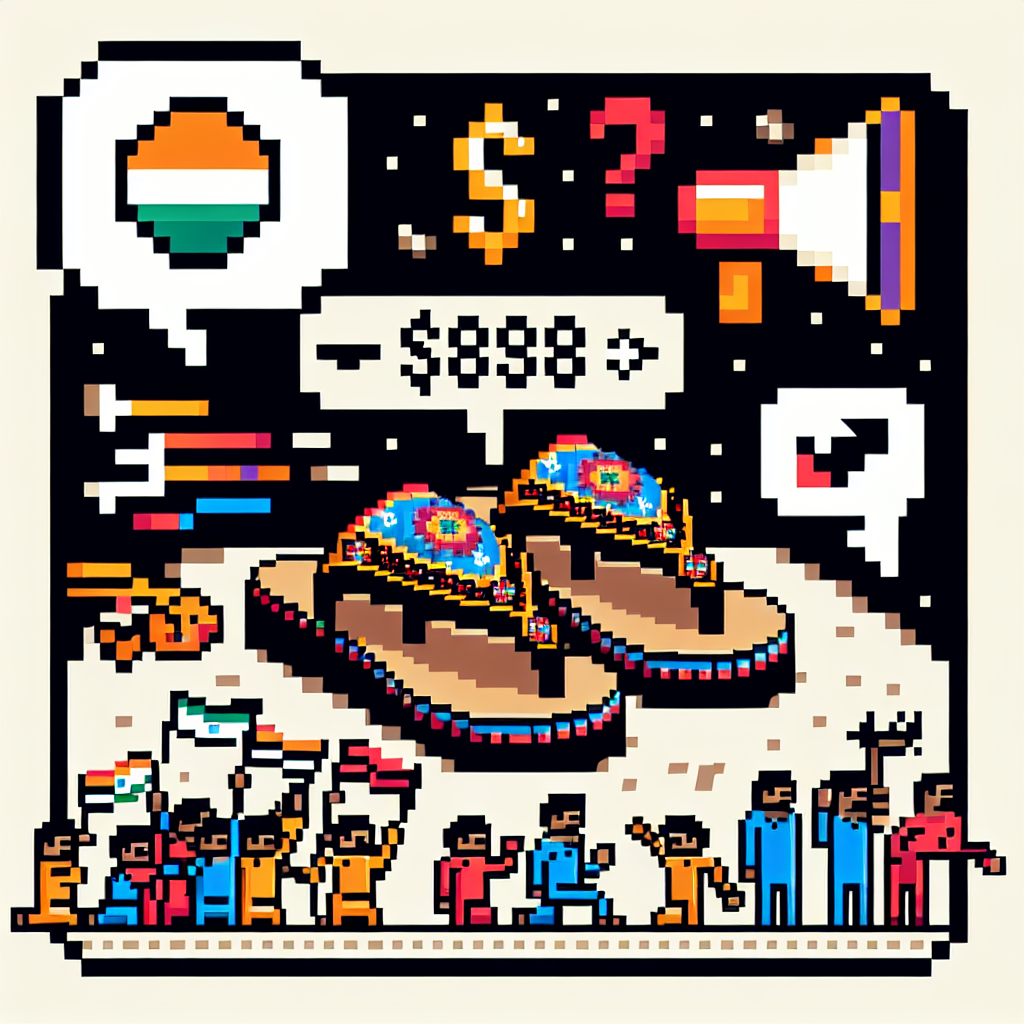
Prada's decision to sell a limited run of "Made in India" Kolhapuri‑style sandals for about $930 has reignited a conversation the fashion world keeps circling back to: where does inspiration end and appropriation begin? What started this year as a pair of tan leather sandals on a Milan runway—briefly billed as simply "leather footwear"—became a flashpoint after Indian artisans and commentators pointed out the clear resemblance to Kolhapuri chappals, the handmade sandals from Maharashtra and Karnataka. Prada has since acknowledged the Indian roots of the design and struck a deal to make 2,000 pairs in collaboration with state‑backed artisan bodies, with plans to sell them globally in February 2026. (feeds.bbci.co.uk)

Quick takeaways

  • Prada showcased sandals in Milan that closely resembled traditional Kolhapuri chappals, prompting accusations of cultural appropriation. (feeds.bbci.co.uk)
  • The brand responded by acknowledging the inspiration and signing agreements with two Indian, state‑backed leather development corporations to produce a limited run made in India — 2,000 pairs priced at roughly €800–€930 each — for global sale in February 2026. (reuters.com)
  • The collaboration promises artisan training, short residencies at Prada's academy, and an investment Prada says will run into "several million euros," but questions remain about profit sharing, pricing parity, and long‑term benefits for the craftspeople. (reuters.com)

Why this matters beyond a single product drop

Kolhapuri chappals are not a trendy motif invented last season. They have a long cultural history, a specific geographic origin (GI protection in India since 2019), and are made by artisans from marginalised communities who rely on this craft for livelihoods. When a global luxury house reproduces that aesthetic and ships it out of context—then prices it at nearly 100 times the local market value—voices in India rightly asked for attribution, accountability and a share of the upside. The debate touches on:

  • Cultural heritage and intellectual property: designs tied to communities and places raise questions about recognition and rights. (dw.com)
  • Economic fairness: local Kolhapuri chappals sell for a few dollars in India; Prada’s versions are priced like collectible luxury items. That gap fuels the sense of extraction. (livemint.com)
  • The power dynamics of taste: global brands can amplify or erase origin stories depending on how they choose to tell them. (feeds.bbci.co.uk)

What Prada has done — and what's still missing

The facts Prada and its critics are pointing to are straightforward:

  • Prada publicly acknowledged the Indian inspiration after the backlash and entered talks with local bodies. (feeds.bbci.co.uk)
  • It signed memoranda of understanding with two government‑linked leather industry corporations in Maharashtra and Karnataka to produce 2,000 pairs locally and to run training programs and exchanges. Prada says the project spans three years and includes artisan residencies in Italy. (reuters.com)
  • The launch is slated for February 2026 across 40 Prada stores and online, with each pair priced around €800–€930 (about $930). (reuters.com)

But several sticky issues remain:

  • Profit sharing and pricing: early reporting indicates artisans are being paid better for production work, yet initial agreements reportedly do not include a formal profit‑sharing clause. That leaves open whether artisans will see long‑term revenue proportional to the value their craft helps create. (timesofindia.indiatimes.com)
  • Attribution vs. agency: attribution alone—acknowledging that a design was inspired by Kolhapuri chappals—is not the same as centring the artisans’ perspectives or ceding decision‑making power about how their craft is represented and sold. (dw.com)
  • Scale and authenticity: producing luxury variants for a global market can raise interest and demand, but it can also shift the meaning of a craft and price out local buyers unless carefully managed. (livemint.com)

A timeline to keep in mind

  • June 2025: Prada presented sandals during Milan Fashion Week that reminded many observers of Kolhapuri chappals; social media outcry and industry criticism followed. (feeds.bbci.co.uk)
  • July–December 2025: Prada acknowledged the Indian inspiration and entered talks with Indian artisan bodies and the Maharashtra Chamber of Commerce. Reporting over late 2025 shows the company formalising agreements and planning the limited run and training programs. (feeds.bbci.co.uk)
  • February 2026: Planned global sale of the 2,000 "Made in India" sandals through 40 Prada stores and Prada.com. (reuters.com)

(Those are the dates reported by news outlets; some implementation details and legal agreements may be updated as the project proceeds.)

The broader industry lesson

Big fashion houses will continue to find inspiration in global crafts; the issue is governance. Brands can handle cultural sources in ways that either replicate extractive patterns or help sustain cultural economies. Meaningful models often include:

  • Co‑design and co‑ownership models that give artisans a seat at the table.
  • Transparent, long‑term revenue arrangements (royalties, profit‑shares, co‑brands).
  • Capacity building that respects local production rhythms and markets, not just upscale retooling for export. (timesofindia.indiatimes.com)

Prada’s announced training programs and residencies are notable steps — they could be transformative if implemented with clear, enforceable commitments to artisans’ economic rights and community representation. Without legally binding profit‑share or co‑ownership terms, though, such initiatives risk being framed as goodwill optics rather than structural change. (timesofindia.indiatimes.com)

My take

This moment is a test case. The optics of a heritage craft going from village markets to luxury boutiques—priced at hundreds of times its local value—will always make people uneasy. What matters is whether this ends as a story of appropriation amended with PR, or as a genuine transfer of value and visibility to the communities who stewarded the craft for generations. Prada’s move toward collaboration is better than silence or denial, but the proof will be in published, enforceable terms: transparent payments, profit‑sharing, design credit, and meaningful decision‑making by artisans and their organisations.

If brands want to borrow cultural capital, they must be prepared to share economic capital and power too. That’s not just ethical—it's smart business for a future in which consumers increasingly expect provenance, fairness, and traceability.

Final thoughts

Heritage crafts entering the global luxury ecosystem can create opportunity, but only when reciprocity is institutionalised rather than optional. We should watch the Prada‑Kolhapuri rollout closely between now and February 2026: will the partnership deliver durable income, training that translates into demand for local makers, and formal obligations to share value? If the answer is yes, this could be a model; if not, it will be another reminder that apology and attribution without structural change aren’t enough.

Sources

(Where paywalls or regional access apply, I prioritized reporting from Reuters and BBC for clarity and accessibility.)