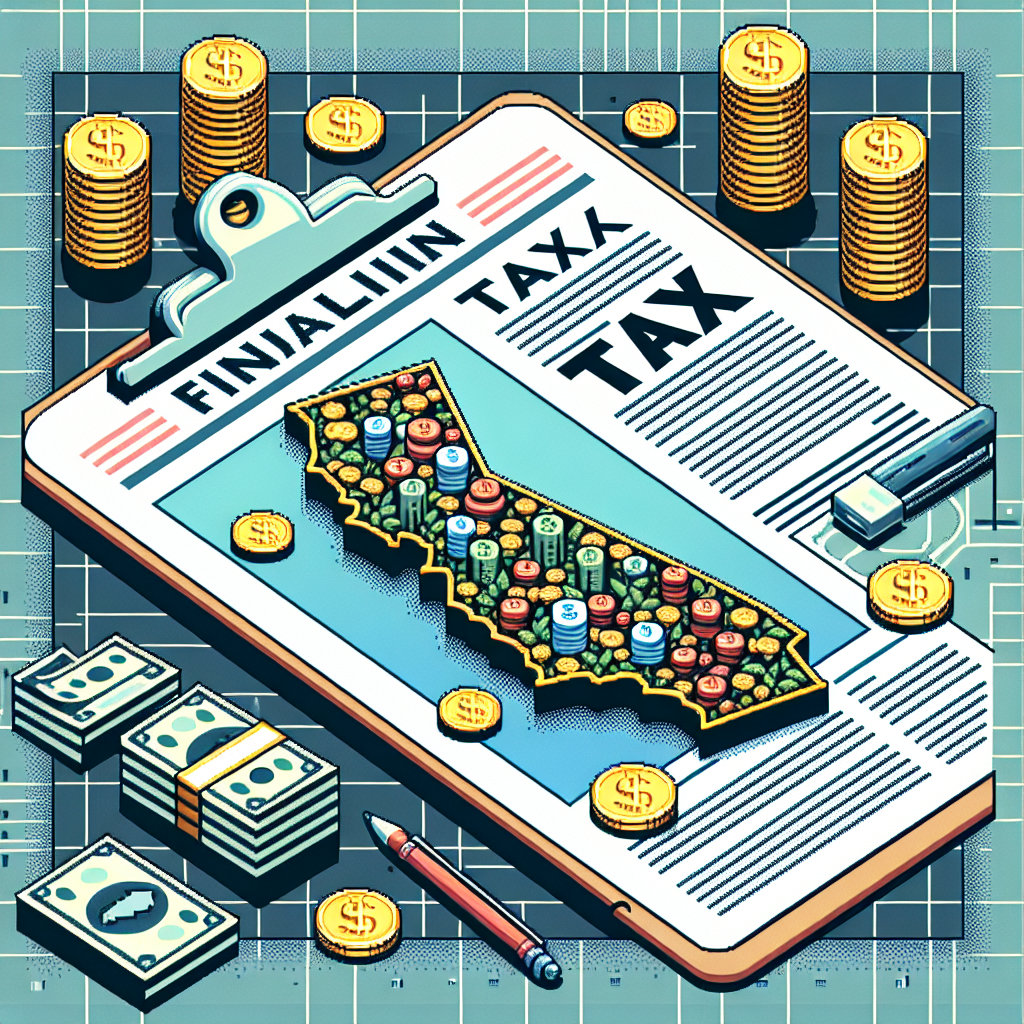
California’s billionaire tax: a rebellion in the heart of Silicon Valley
An audacious idea landed in Sacramento’s inbox and the reaction was immediate: outrage, delight, opportunism and a scramble to change addresses. A proposed one-time levy on billionaires—aimed at people with nine-figure and higher net worths who live in California—has ripped open debates about fairness, economic growth and the political future of the state that invents so much of the modern tech economy.
This post untangles the politics, the likely economic fallout, and why the proposal has split Democrats and rattled Silicon Valley in equal measure.
Quick snapshot
- What: A proposed “billionaire tax” — a one-time 5% levy on net worth above $1 billion, with stiffer fixed amounts for ultra-wealthy tiers (the initiative was filed for the 2026 ballot by SEIU-UHW).
- Why now: Supporters say it would raise roughly $100 billion to shore up healthcare, food assistance and education after federal cuts; opponents warn it will chase away the state’s richest residents and damage growth.
- Political reaction: Progressive leaders like Bernie Sanders endorsed it; Governor Gavin Newsom and many business leaders oppose it. Some billionaires publicly threatened to leave; at least a few have already rearranged domiciles or offices.
Why the idea landed and why it resonates
California is a place of extremes: world-class wealth next to deeply stressed public services. That contrast fuels political energy.
- Rising inequality and the visibility of nine-figure fortunes make a targeted wealth tax emotionally and politically compelling for many voters.
- The immediate goal—raising money to replace lost federal funding for healthcare and shore up safety-net programs—gives the proposal a concrete use-case beyond abstract redistribution.
- The union behind the filing argues the tax focuses only on the ultra-rich and won’t touch the middle class.
In short: it’s a focused ask with a dramatic headline number, and in politics, dramatic asks tend to move the needle.
Why Silicon Valley is panicking (and why some aren’t)
The reaction among the ultra-wealthy has not been uniform, but loud and visible.
- Many tech figures portrayed the proposal as an existential threat: if taxes rise on paper wealth (stock holdings, unliquidated shares), founders and investors say they could be forced to sell stakes or move. Some have publicly announced moves to Florida or Texas; offices and legal addresses have shifted in ways that critics say preempt the levy.
- Opponents argue that a state-level tax on worldwide assets creates enforcement and constitutional headaches, and that wealthy people are mobile—so revenue estimates may be optimistic if people pack up and leave.
- Not everyone in the top tier sees it as catastrophic. Some billionaires have publicly shrugged, noting they chose California for talent and infrastructure and won’t be chased off by a one-time levy.
The net effect: a mix of bluster, legal posturing, real relocations and a publicity fight that will shape public opinion.
The political split inside the Democratic coalition
This proposal has exposed a rare public split among Democrats:
- Progressive leaders frame the levy as moral and practical: wealthy Californians benefit from public goods (education, infrastructure, legal stability) and the state needs revenue for essential services. Some Democrats see it as a way to regain political legitimacy amid affordability crises.
- Moderate Democrats and many elected officials worry about the state’s tax base. California already depends heavily on high-income taxpayers; if a number of the richest leave or shelter assets, revenues could fall. The governor’s opposition signals that the establishment wing is worried about economic consequences and political optics.
This isn’t just an intra-party debate about tax policy; it’s a fight over political identity—whether California leans into aggressive redistribution or prioritizes a stable business climate.
Economic and legal realities to watch
- Revenue estimates are uncertain. Ballpark figures like $100 billion assume most targeted people remain in-state and that valuation and collection are enforceable. Past experiences suggest aggressive taxes can trigger behavioral responses that reduce expected receipts.
- Valuation complexity. Taxing unrealized gains or illiquid assets (private company stock, art, intellectual property) is administratively hard and prone to legal challenge.
- Mobility matters. The very wealthy can—and sometimes do—change residency or restructure holdings. Even the appearance of tax risk can spur preemptive moves.
- Constitutional, interstate and federal issues could surface. State-level wealth taxes are uncommon in the U.S., and legal fights over retroactivity, apportionment, and interstate effects are likely.
All of that means the practical outcome will be shaped as much in courtrooms and tax counsels’ offices as at the ballot box.
What happens next
- Signature drive and ballot placement. The initiative needs enough valid signatures to qualify for the November ballot (the filing targeted 2026). If it makes the ballot, the public debate will intensify.
- Counter-campaigning. Expect deep-pocketed opposition, ad spending, messaging about jobs and innovation, and union-backed pro-tax campaigns framing the tax as funding essential services.
- Potential legal challenges even before election day, and numerous legislative and advocacy responses aimed at shaping public perception and technicalities.
Something to keep in mind
Policies like this don’t play out in a single election cycle. Even if a ballot measure fails, the conversation nudges policy options and political narratives for years—about taxation, corporate responsibility, and the balance between wealth creation and social stability.
What the headlines miss
- The debate isn’t only about punishing success. It’s about how a state dependent on a handful of mega-wealthy taxpayers secures long-term funding for services most residents rely on.
- It’s also a test of political branding: can progressives convert anger at inequality into durable policy without triggering capital flight that undermines the tax base?
Key takeaways
- The billionaire tax proposal crystallizes a larger question: who pays for California’s public goods when wealth is increasingly concentrated?
- Economic estimates are uncertain and vulnerable to behavioral changes—residency shifts and asset structuring could shrink expected revenues.
- The split among Democrats shows this is as much a political and cultural contest as a fiscal one.
- Expect years of litigation, lobbying and relocation strategies regardless of the ballot outcome.
My take
There’s a moral clarity to asking the ultra-rich for more when public systems are strained—but the mechanics matter. A smart approach would pair targeted revenue aims with careful legal design and federal coordination to avoid making California a test-case for unintended consequences. Whether through state action or renewed federal attention to wealth taxation, the core problem—extreme concentration of wealth amid crumbling public infrastructure—needs durable solutions, not just headline-grabbing measures.
Sources
-
“Billionaire tax proposal sparks soul-searching for Californians,” Los Angeles Times.
https://www.latimes.com/business/story/2026-01-02/billionaire-tax-proposal-sparks-soul-searching-for-californians -
“Can A 5% Wealth Tax On 200 Billionaires Save—Or Sink—California?” Forbes.
https://www.forbes.com/sites/nathangoldman/2025/11/14/can-a-5-wealth-tax-on-200-billionaires-save-or-sink-california/ -
“Jensen Huang Says He’s ‘Perfectly Fine’ With California’s Billionaire Tax,” Forbes.
https://www.forbes.com/sites/zacharyfolk/2026/01/06/jensen-huang-says-hes-perfectly-fine-with-californias-billionaire-tax-breaking-with-other-tech-billionaires/ -
“Silicon Valley Billionaires Panic Over California’s Proposed Wealth Tax,” Wired.
https://www.wired.com/story/backchannel-silicon-valley-billionaires-california-taxes -
“California ‘Billionaire Tax’—Which Isn’t Even On The Ballot Yet—Causes Ultra-Rich Panic,” Forbes.
https://www.forbes.com/sites/tylerroush/2025/12/27/possible-california-wealth-tax-causes-billionaire-freakout-page-thiel-threaten-to-leave/
Related update: We recently published an article that expands on this topic: read the latest post.