GMs HQ Marries Detroit Past and Future | Analysis by Brian Moineau

A new kind of HQ: GM stitches Detroit history into a modern workplace

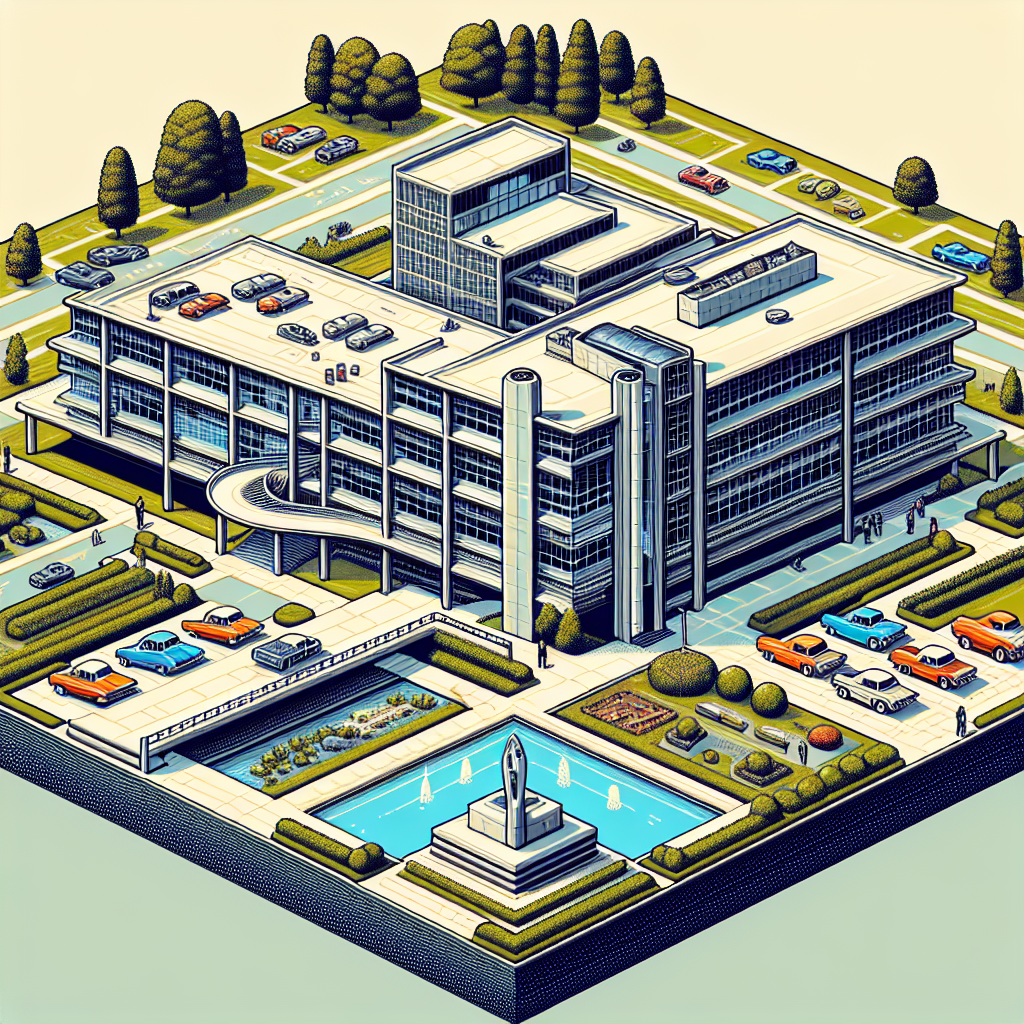
Step inside GM’s new world headquarters in downtown Detroit and you don’t just see offices — you walk through a curated narrative. Vintage artifacts sit beside prototypes, midcentury design cues mingle with cutting‑edge workplace features, and little “Easter eggs” wink at the company’s long, complicated story. It’s an HQ meant to be both museum and living room: a place that honors the past while trying to shape how a global automaker works in the future.

Why this matters now

  • GM’s move from the sprawling Renaissance Center to a smaller footprint in Hudson’s Detroit signals a shift in corporate culture and real estate strategy.
  • The design choices — art, artifacts, and built-in references to GM history — are intended to do more than decorate: they’re meant to anchor identity, inspire designers and engineers, and attract employees back to a post‑pandemic office rhythm.
  • For Detroit, the project is another chapter in the city’s rebirth narrative: global auto icon reconnects physically and symbolically to the Motor City.

What the space says (without saying it)

GM occupies roughly four floors in the Hudson’s Detroit building, and the interior is deliberately layered with meaning:

  • Design lineage: The lobby and executive areas borrow stylistic elements from Eero Saarinen’s GM Global Technical Center — warm wood, golden metallic finishes, clean lines with soft curves — signaling continuity with a storied design tradition.
  • Visible history: From a 1963 Chevrolet truck temporarily displayed to a new Silverado EV, to blueprints of the design dome and a McCormick speed‑form wind‑tunnel model, the artifacts map GM’s evolution from internal combustion icon to electric future.
  • Playful touches: A wall of cassette tape cases — some referencing songs that mention GM vehicles and others cheekily customized for executives — and “Easter eggs” tied to Detroit streets or corporate personalities keep the tone human and local.
  • Salvaged midcentury art: The return and installation of a once‑lost Harry Bertoia sculpture adds cultural heft; it’s a tangible link to Detroit’s midcentury modernist moment and GM’s history of commissioning public art. (archive.ph)

Design meets workplace strategy

This HQ isn’t just about looks. It embodies how modern corporations think about office space:

  • Smaller footprint, higher intention: Moving from the RenCen’s multi‑million square feet to about 200,000 square feet across four floors reflects a pivot away from the “city within a city” headquarters model toward integration with urban life.
  • Hybrid reality: GM’s in‑office policy (employees scheduled Tuesday–Thursday, but with flexibility) and the layout’s emphasis on collaboration spaces aim to make coming in meaningful rather than mandatory.
  • Symbolic headquarters: Executives largely use shared or unassigned offices, with only a handful permanently reserved — a design choice and cultural signal intended to flatten hierarchies and encourage mobility. (archive.ph)

The storytelling details that stick

Small design decisions often speak the loudest:

  • Patent wallpaper: Graphics highlighting roughly 300 patents (from a portfolio of tens of thousands) remind visitors that GM’s identity is technical as well as cultural.
  • Sound‑wave sculptures: Engine and EV tones turned into three‑dimensional art translate engineering into visceral, even poetic, forms.
  • Local roots: References to Detroit streets, framed maps of testing grounds and pieces of design history visually tether the company to its place of origin.
  • Public conversation: By showcasing artifacts and artworks, the HQ becomes a civic touchpoint — a physical message that GM still belongs in and to Detroit. (archive.ph)

What this suggests about GM’s future

  • Identity as strategy: By interweaving heritage and innovation, GM is using corporate identity as a strategic tool — to recruit, to retain, and to build public goodwill.
  • Design-led messaging: The HQ reinforces that design (material, visual, acoustic) is central to how GM wants to be perceived: modern, creative, and respectful of legacy.
  • Urban engagement: Choosing a prominent downtown site and installing public‑facing art signals a willingness to be part of Detroit’s cultural and economic ecosystem again. (archive.ph)

Highlights to remember

  • GM moved from the Renaissance Center to a smaller, more intentional HQ at Hudson’s Detroit, focused on collaboration and flexibility. (archive.ph)
  • The space blends midcentury modern influences with contemporary design, and includes artifacts and “Easter eggs” that celebrate GM’s history and culture. (archive.ph)
  • A rediscovered Harry Bertoia sculpture was restored and installed, tying the new HQ to Detroit’s artistic and design heritage. (news.gm.com)

My take

GM’s HQ feels like a careful balancing act: a company deeply aware of its past using that past to make the present more resonant. There’s a risk of nostalgia performing as a substitute for substantive change, but the blend of artifacts, intentional workplace design, and public art suggests GM is trying to do something subtler — use physical space to influence culture. If the offices help cross‑pollinate teams, spur design conversations, and strengthen ties with Detroit, the building will have earned more than its aesthetic wins.

Sources


Related update: We recently published an article that expands on this topic: read the latest post.

Related update: We recently published an article that expands on this topic: read the latest post.

No Man’s Sky update adds city-builder elements and Switch 2 compatibility – Polygon | Analysis by Brian Moineau

No Man’s Sky update adds city-builder elements and Switch 2 compatibility - Polygon | Analysis by Brian Moineau

The Ever-Evolving Cosmos of "No Man’s Sky": Now with City-Building and Switch 2 Compatibility!


Greetings, interstellar explorers and pixel architects! If you thought the universe of "No Man's Sky" couldn't get any more expansive, think again. The beloved game, which first graced our screens nine years ago, is rolling out yet another ambitious update. This time, it's introducing city-building elements and a free upgrade for the upcoming Nintendo Switch 2, adding fresh dynamics to its already rich tapestry.

A Universe in Flux

"No Man’s Sky" has always been a testament to the power of perseverance and growth in the gaming industry. Initially launched in 2016 with a turbulent reception, it has since transformed into a beloved staple for explorers and creators alike. Each update has added layers of depth, and this latest one is no exception. The city-building feature not only allows players to cultivate bustling metropolises on distant planets but also echoes the growing trend of integrating complex societal mechanics in open-world games, akin to those seen in titles like "Cities: Skylines" and "SimCity."

Switch 2 Compatibility: A New Frontier

With the gaming community abuzz over the anticipated Nintendo Switch 2, "No Man’s Sky" is cleverly positioning itself as a must-have title for the new console. The free Switch 2 Edition for existing players underscores Hello Games' commitment to its community, ensuring that the transition to new hardware is seamless and rewarding. This move mirrors similar strategies seen in the industry, such as CD Projekt Red's free next-gen upgrade for "The Witcher 3," which was warmly received by fans.

Building Bridges Beyond Gaming

This update is more than just a new set of features; it's a reflection of a broader trend in the gaming industry toward creating interconnected experiences. As the digital and physical worlds continue to converge, games like "No Man’s Sky" are pushing the boundaries of what's possible. The city-building elements could serve as a virtual testing ground for urban planning ideas, much like how simulations are used in real-world scenarios to predict outcomes and foster innovation.

Furthermore, the timing of this update is particularly relevant as the world grapples with urbanization challenges. According to the United Nations, by 2050, 68% of the world's population is expected to live in urban areas. Games that incorporate city-building mechanics offer a unique platform for players to engage with the intricacies of urban development, sustainability, and community building in ways that are both educational and entertaining.

A Final Thought: The Sky’s Not the Limit

"No Man’s Sky" continues to defy expectations, proving that a game can rise from a rocky start to become a beloved, ever-evolving universe. This latest update not only enriches the gameplay experience but also invites players to ponder the complexities of building and sustaining life, both in the game and in reality. As we await the launch of the Nintendo Switch 2, one thing is clear: the sky's not the limit—it's just the beginning.

So, whether you're a seasoned spacefarer or a budding city planner, "No Man's Sky" offers a galaxy of possibilities. Dive in, explore, and remember: in this universe, every atom is yours to reshape. Happy building!

Read more about AI in Business

Read more about Latest Sports Trends

Read more about Technology Innovations

Scientists Reveal Satellite Swarm That Can Watch The Whole World in Just 35 Minutes – The Daily Galaxy | Analysis by Brian Moineau

Scientists Reveal Satellite Swarm That Can Watch The Whole World in Just 35 Minutes - The Daily Galaxy | Analysis by Brian Moineau

Title: A New Era of Earth Observation: The Satellite Swarm Revolution

In a world where technological advances often outpace our ability to comprehend their full implications, a new chapter is being written in the annals of Earth observation. A groundbreaking satellite mega constellation, as reported by The Daily Galaxy, promises to capture high-resolution images of the entire planet every 35 minutes. This ambitious project could transform how we understand and interact with our world, providing unprecedented opportunities and challenges.

Imagine a network of satellites so advanced that it can monitor everything from the bustling streets of New York to the serene landscapes of the Amazon rainforest in near real-time. This is not the stuff of science fiction, but rather the vision of scientists who are on the brink of launching this mega constellation into orbit. The potential applications are as vast as the globe it will observe.

High-Resolution Images: A Game Changer

The ability to capture high-resolution images with such frequency holds a myriad of possibilities. From tracking climate change and natural disasters to aiding in urban planning and agriculture, the data collected by these satellites could provide insights that were previously impossible to obtain. Consider the impact on disaster response: with real-time imagery, emergency services could respond more effectively to events like hurricanes, floods, and wildfires, potentially saving lives and reducing damages.

Moreover, in the realm of environmental science, this technology could offer new tools for monitoring deforestation, glacial melting, and oceanic changes. With climate change at the forefront of global issues, having a reliable eye on the Earth's systems is not just beneficial; it is essential.

Drawing Parallels: The Global Connectivity Boom

This satellite initiative parallels the global push for connectivity seen in projects like SpaceX's Starlink. Just as Starlink aims to provide global internet coverage, this satellite swarm intends to offer a comprehensive view of our planet. Both projects reflect a trend towards global accessibility and transparency, albeit in different domains.

In a similar vein, the rise of smart cities around the world underscores the importance of such technological advances. Cities like Singapore and Barcelona are already leveraging data-driven solutions to improve urban living. The introduction of these high-resolution satellite images could further enhance such efforts by providing city planners and policymakers with detailed, up-to-date information about urban dynamics.

Challenges and Ethical Considerations

However, with great power comes great responsibility. The ability to monitor the entire planet raises questions about privacy and data security. Who will have access to this data, and how will it be used? These are critical considerations that need to be addressed to prevent misuse and ensure that the benefits of this technology are equitably distributed.

Furthermore, the environmental impact of launching and maintaining such a large constellation of satellites should not be overlooked. As we reach for the stars, we must remain mindful of the potential consequences for our own planet.

Final Thoughts: Embracing the Future

As we stand on the cusp of this new era in Earth observation, the potential for positive impact is immense. This satellite swarm represents a leap forward in our ability to understand and protect our planet. By embracing this technology with a sense of responsibility and foresight, we can harness its power to create a more informed and connected world.

In the end, this technological marvel is a testament to human ingenuity and our relentless pursuit of knowledge. As we gaze up at the night sky, it is comforting to know that, somewhere above, a watchful eye is helping us better understand the planet we call home.

Read more about AI in Business

Read more about Latest Sports Trends

Read more about Technology Innovations

Civilization VII review: A major overhaul solves Civ’s oldest problems – Ars Technica | Analysis by Brian Moineau

Civilization VII review: A major overhaul solves Civ’s oldest problems - Ars Technica | Analysis by Brian Moineau

**Civilization VII: A New Dawn in Strategic Gaming**

Ah, the sweet symphony of a new Civilization game launch! For those of us who have spent countless hours meticulously planning empires, brokering peace deals, and waging strategic wars, the arrival of Civilization VII feels like a much-anticipated festival. Ars Technica’s review, "Civilization VII review: A major overhaul solves Civ’s oldest problems," hints at an exciting evolution in the franchise that both honors its legacy and challenges its past.

### A Brave New World

Civilization VII doesn’t just polish the old—it reinvents. This iteration introduces a series of ambitious changes that promise to address long-standing issues. The game’s developers have taken bold steps to overhaul mechanics that, while beloved, had begun to feel like relics of a bygone era. This brings to mind the reinvention seen in other iconic franchises, such as the transformation of Zelda with "Breath of the Wild," where traditional elements were reimagined to breathe new life into the experience.

Not all changes will be universally adored, and that's perfectly fine. Innovation often stirs the pot, and much like the recent global trend towards remote work, adaptation is key. Just as companies are rethinking how work is done, Civilization VII challenges players to rethink their strategies and approach.

### Building Bridges to the Future

One of the most significant updates in Civilization VII is its approach to diplomacy and city-building. In a world where international relations are as complex as ever, the game mirrors real-world nuances more closely than before. This is reminiscent of the diplomatic dance we see on the global stage, such as climate agreements and trade negotiations, where outcomes are never black and white.

Furthermore, the game’s reimagined city-building mechanics reflect the real-world push towards sustainable urban planning. As cities globally strive to become greener and smarter, Civ VII encourages players to think about the long-term impacts of their urban designs.

### A New Age of Gaming

This launch comes at an interesting time in the gaming world. With the rise of AI and machine learning, games are becoming smarter, offering more personalized experiences. Civilization VII’s AI enhancements promise a more challenging and unpredictable opponent, akin to playing against a seasoned human strategist rather than a predictable algorithm.

In a broader context, this is reflective of how AI is reshaping industries—from healthcare to finance—forcing established practices to evolve. The gaming industry is no exception, and Civ VII’s AI advancements are a testament to that.

### Final Thoughts

Civilization VII is a testament to the idea that even the most cherished traditions can benefit from a little disruption. It’s a reminder of the importance of innovation and reinvention, not just in gaming, but in life. While not every change will appeal to every player, the game offers a fresh canvas for strategy enthusiasts to paint their own masterpieces.

So, whether you're a seasoned emperor or a budding tactician, Civilization VII invites you to embark on a new journey. Embrace the changes, explore the possibilities, and remember: every great civilization started with a single idea. What will yours be?

Read more about AI in Business

Read more about Latest Sports Trends

Read more about Technology Innovations