Drive‑Thru Violence Shakes Fast‑Food | Analysis by Brian Moineau

A chaotic night at Wendy’s: what the Ewing Township drive-thru video tells us about public safety and fast-food flashpoints

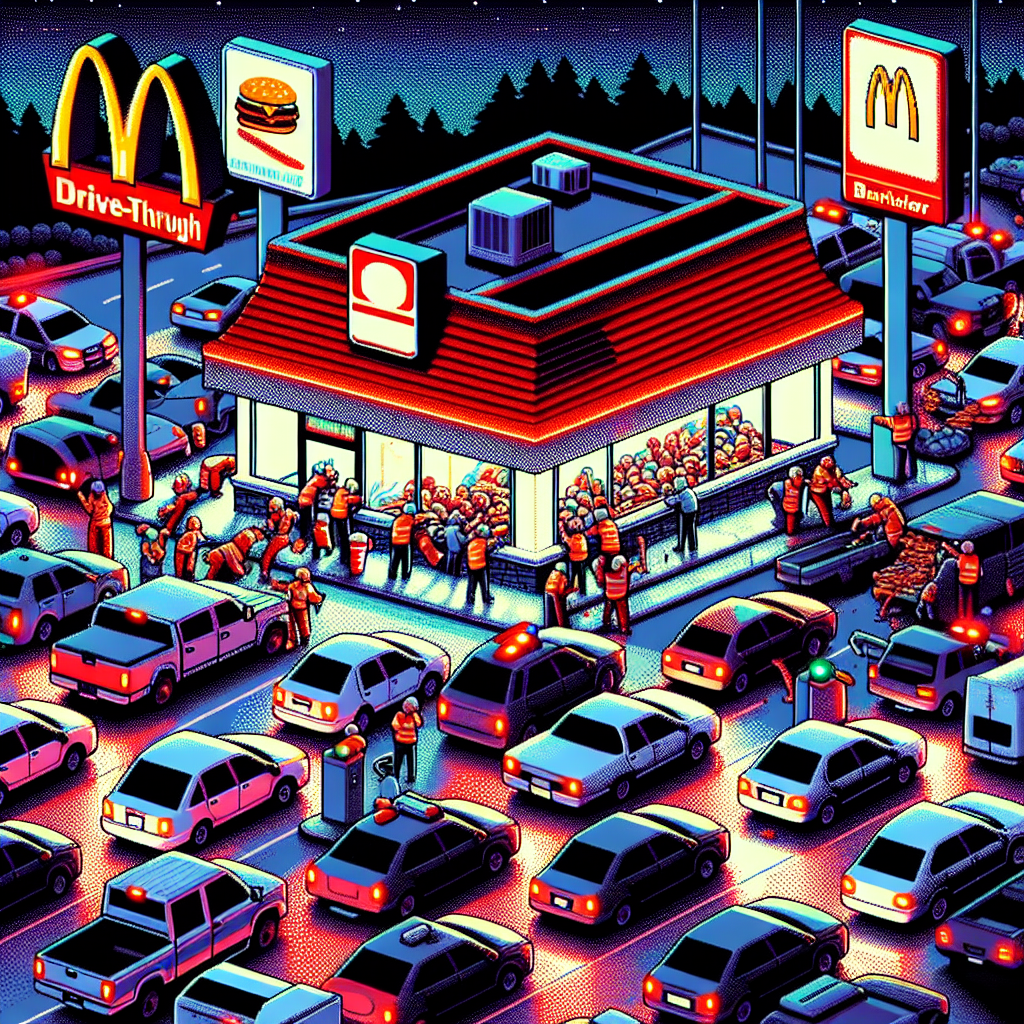
A viral video of violence at a Wendy’s drive-thru in Ewing Township, New Jersey, landed in people’s feeds and raised the same uneasy question: how did a late-night trip for fries and a Frosty turn into breaking windows and attempted assaults? The footage — and the police account that followed — feel like a snapshot of broader tensions playing out in public, commercial and late-night spaces.

What happened (the essentials)

  • Date and place: The incident occurred in the early hours of February 21, 2026, at the Wendy’s on the 1700 block of Olden Avenue in Ewing Township, New Jersey.
  • Who: Police identified three people from Trenton — 23-year-old Honesty Harrison, 18-year-old Saniyah Brittingham and 19-year-old Leah Williford Stevens.
  • Police account: Investigators say the trio damaged property inside the restaurant and attempted to assault employees with various items just before 3 a.m. Two of the suspects face burglary, criminal mischief and unlawful possession of a weapon charges; the third faces burglary and criminal mischief charges. Two turned themselves in; police were asking the public for help locating the third. (Published February 28, 2026). (6abc.com)

Why the video resonated

  • Violence in plain sight: Fast-food restaurants are public, highly visible spaces. Surveillance and phone video make it easy for incidents to spread quickly, sparking community alarm and online debate.
  • Late-night dynamics: After-hours shifts, reduced staffing, and customers under stress (fatigue, alcohol, conflict) can create conditions where small disputes escalate. The Wendy’s video taps into a pattern we’ve unfortunately seen in other fast-food altercations across the country. (cbsnews.com)
  • Emotional response: Viewers don’t only react to the specific actors in the clip — they react to the vulnerability of workers and the breakdown of ordinary civility where people expect quick service and little drama.

Broader context and patterns

  • Not an isolated phenomenon: Incidents at drive-thrus and fast-food locations — from assaults to robberies to crashes into buildings — recur in local news. Those stories highlight vulnerabilities: 24/7 operations, limited security presence late at night, and the physical layout of drive-thrus that can funnel conflict into tight spaces. (cbsnews.com)
  • Worker safety as a policy issue: The footage revives policy questions about protection for frontline employees — from better lighting and barriers to panic buttons, clearer late-night staffing protocols, and collaboration with local police.
  • Social-media ripple effects: Viral video can accelerate investigations (public IDs, tips) but also inflame speculation. Responsible reporting and community restraint help ensure investigations proceed fairly.

What to watch next

  • Legal outcomes: Charges listed in early reports may change as prosecutors review evidence and surveillance is formally entered into court records. Expect updates from local law enforcement and county prosecutors. (6abc.com)
  • Business and community response: Restaurants often respond with temporary closures, revised opening hours, or added security measures after violent incidents. Community leaders may call for interventions to address root causes (youth outreach, mental health supports, curfews).
  • The missing suspect: As of the report, one person had not been located; public tips to police were encouraged. That kind of public lead can be decisive in fast-moving local investigations. (6abc.com)

What this means for customers and workers

  • For customers: Keep interactions calm, especially late at night. If you witness violence, prioritize safety — get to a safe place, call 911, and preserve video only for law enforcement if you're asked to share it.
  • For workers: If your workplace lacks emergency procedures, raise the issue with management. Small protections — training on de-escalation, clear lockup procedures, access to a manager or dispatcher — can make a big difference.
  • For businesses: Reassess late-night staffing, lighting, camera coverage, and partnerships with local police. Investing in safety is both a moral and a business imperative.

Key takeaways

  • The February 21, 2026 Wendy’s incident in Ewing Township shows how quickly late-night disagreements can escalate into property damage and attempted assaults. (6abc.com)
  • Fast-food locations remain vulnerable because of hours of operation, limited security, and layouts that concentrate conflict. (cbsnews.com)
  • Video can spur rapid public reaction and aid investigations, but it also requires careful handling to avoid rushed judgments and misinformation.

My take

The clip is jarring, partly because it strips away the mundane expectation of a frictionless, anonymous late-night purchase. It’s a reminder that public safety and civility depend on small systems — sensible operating policies, visible deterrents, and community supports — not just individual good behavior. Protecting workers and customers doesn’t require grand gestures; it requires practical, often inexpensive steps plus clear communication and community cooperation.

Sources

Séance of Blake Manor: A Haunting | Analysis by Brian Moineau

The Séance of Blake Manor: A Halloween detective that’s already haunting my bookmarks

Turnips! Everywhere! As far as the eye can see! Well, not quite — but that cheeky image from Eurogamer’s piece captures the game’s mix of whimsy and creeping dread perfectly. The Séance of Blake Manor is the kind of spooky, intelligent detective game that slips into your brain the way a good ghost story slips under a door: slow, deliberate, and impossible to shake once it’s inside.

Why this one feels special

  • It’s a first-person detective mystery set on All Hallows’ Eve, 1897, in a remote Irish manor full of mystics, secrets, and theatrical supernatural trappings.
  • You play Declan Ward, a private investigator racing against time to find Evelyn Deane before a grand séance – and every action nudges the clock forward.
  • The game blends interrogation, deduction, and environmental exploration with a layered narrative that leans into Irish folklore and folk horror rather than cheap jump-scares.
  • The tone oscillates between wry and unsettling: characterful guest interactions, moral ambiguity, and symbolic artifacts (yes, including turnips and other evocative props) that root the hauntings in cultural and historical context.

Key takeaways

  • The game nails atmosphere: ornate, graphic-novel-inspired visuals and a dynamic soundtrack that supports the mood rather than hogging it.
  • Investigation systems reward curiosity: note-taking, cross-referencing clues, and interrogations let players feel like actual sleuths rather than passive observers.
  • The narrative aims beyond thrills: themes of cultural appropriation, colonial legacies, and trauma are woven into the mystery, giving the scares weight and relevance.
  • Short, focused design: with a clear 48-hour time framing, the game promises tension and pacing that suit a Halloween playthrough.
  • Positive early reception: demos and early reviews show strong player and critic enthusiasm, positioning it as a standout indie release this autumn.

What I love (and what might ruffle you)

  • Atmosphere and craft: The manor is a character in its own right. Rooms, objects, and lighting are composed with purpose — you’ll pause in hallways just to take it all in.
  • Detective pleasures: The game puts deduction front and center. There’s delight in stitching together testimony, forensic details, and subtle environmental hints to build a coherent case.
  • Narrative ambition: Tackling topics like diaspora and historical injustice within a gothic context is bold for a game of this scale, and when it lands, it adds meaningful depth to otherwise familiar spooky tropes.
  • Time-pressure trade-off: The 48-hour countdown creates urgency, but that same constraint can feel tense in a way some players might find frustrating—especially if you like long, leisurely investigations.
  • Balance of supernatural and rational: The line between eerie atmosphere and outright horror is carefully walked; players expecting nonstop scares may instead find slow-burn unease and philosophical payoffs.

How it fits the season (and your library)

If you love detective games with character-driven narratives (think Return of the Obra Dinn, The Vanishing of Ethan Carter, or narrative-led indie mysteries) and also crave a game that leans into autumnal vibes, this is tailor-made for late-October gaming sessions. Shorter playtime and a single-location setting make it ideal for a focused weekend run — perfect for Halloween night with a cup of something warm and a dim lamp.

SEO-friendly reasons to care:

  • “The Séance of Blake Manor” offers a mix of folk horror and detective gameplay that taps into current interest in narrative-driven indie games.
  • It’s developer Spooky Doorway’s ode to gothic storytelling, backed by publisher Raw Fury — names that indie fans watch closely.
  • Steam demo impressions were positive, and launch coverage suggests the game already resonates with critics and players.

A short reflection

There’s something quietly radical about a game that invites you to interrogate more than suspects: interrogate assumptions. The Séance of Blake Manor uses the trappings of séance theatrics and haunted manors to point at deeper cultural questions, while still delivering the immediate satisfaction of solving puzzles and unmasking half-truths. It’s the sort of experience that lingers after you close the game: not just which twist you missed, but which stories get told and why.

Sources


Related update: We recently published an article that expands on this topic: read the latest post.


Related update: We recently published an article that expands on this topic: read the latest post.

Apple Cinemas responds to Apple lawsuit – The Verge | Analysis by Brian Moineau

Apple Cinemas responds to Apple lawsuit - The Verge | Analysis by Brian Moineau

Apple Cinemas vs. Apple Inc.: A Cinematic Showdown


In the latest twist of corporate drama worthy of its own blockbuster, Apple Cinemas finds itself in a legal skirmish with tech giant Apple Inc. over trademark rights. The spotlight falls on a small cinema chain as it stands its ground, declaring, “We are committed to defending our brand, our history, and our continued right to operate as Apple Cinemas.” But what’s at the core of this legal showdown, and why does it matter? Let’s dive into the story, and explore the broader implications, all while keeping it light.

A Tale of Two Apples


On one side, we have Apple Inc., a behemoth in the tech industry known for its sleek gadgets and innovative technology. On the other, Apple Cinemas, a beloved regional movie theater chain that’s been bringing Hollywood's magic to the big screen. The crux of the lawsuit rests on trademark infringement, with Apple Inc. claiming that the cinema's use of “Apple” could confuse consumers and dilute its brand.

The irony? Despite their shared namesake, the two Apples operate in distinctly different realms. One could argue that the likelihood of someone confusing an iPhone purchase with a cinema ticket is as rare as finding a golden ticket in a chocolate bar à la Willy Wonka.

Navigating the Trademark Tango


Trademark disputes in the business world are as common as popcorn at the movies. Companies fiercely protect their brand images, and Apple Inc. is no stranger to this arena. Remember when it took on Samsung over smartphone designs? Or the time it faced off against a small meal prep company over the use of a pear logo?

Yet, in a world where we’re seeing collaborations like Crocs teaming up with fast-food chain KFC for fried chicken-themed clogs, one might wonder if there’s room for a peaceful co-existence between the technology titan and the cinema chain. After all, both brands evoke a sense of innovation and enjoyment in their respective fields.

The Broader Context


This legal spat comes at a time when the film industry is facing its own upheaval. The pandemic accelerated the shift towards streaming services, leaving cinema chains grappling with how to draw audiences back to theaters. Apple Cinemas’ fight for its brand is not just about a name; it’s about preserving a piece of cultural history and the shared experience of movie-going.

Interestingly, the case unfolds against a backdrop of increasing scrutiny over big tech companies’ influence and market power. Just as Apple Inc. defends its trademark, it’s also navigating ongoing antitrust investigations and debates over digital privacy. Could this legal battle with a cinema chain further shape public perception of the tech giant?

Final Thoughts


As the curtain rises on this legal drama, it’s easy to get caught up in the spectacle. Yet, at its heart, the case is a reminder of the importance of brand identity and the lengths to which companies will go to protect it. Whether David can hold his own against Goliath remains to be seen, but one thing is clear: Apple Cinemas is not going quietly into the night.

As we await the next chapter in this saga, let’s appreciate the simpler things—like catching a film with friends, popcorn in hand, knowing that somewhere, both Apples are striving to offer us the best of their worlds. Who knows, maybe one day, they’ll find a way to collaborate and bring us an Apple-themed cinematic experience. Until then, stay tuned for the sequel.

Read more about AI in Business

Read more about Latest Sports Trends

Read more about Technology Innovations