Tesla EV Sales Are Struggling But Elon Musk Looks To The Future For Value – Investor’s Business Daily | Analysis by Brian Moineau

Tesla EV Sales Are Struggling But Elon Musk Looks To The Future For Value - Investor's Business Daily | Analysis by Brian Moineau

Tesla's Current Struggles and Elon Musk's Visionary Future


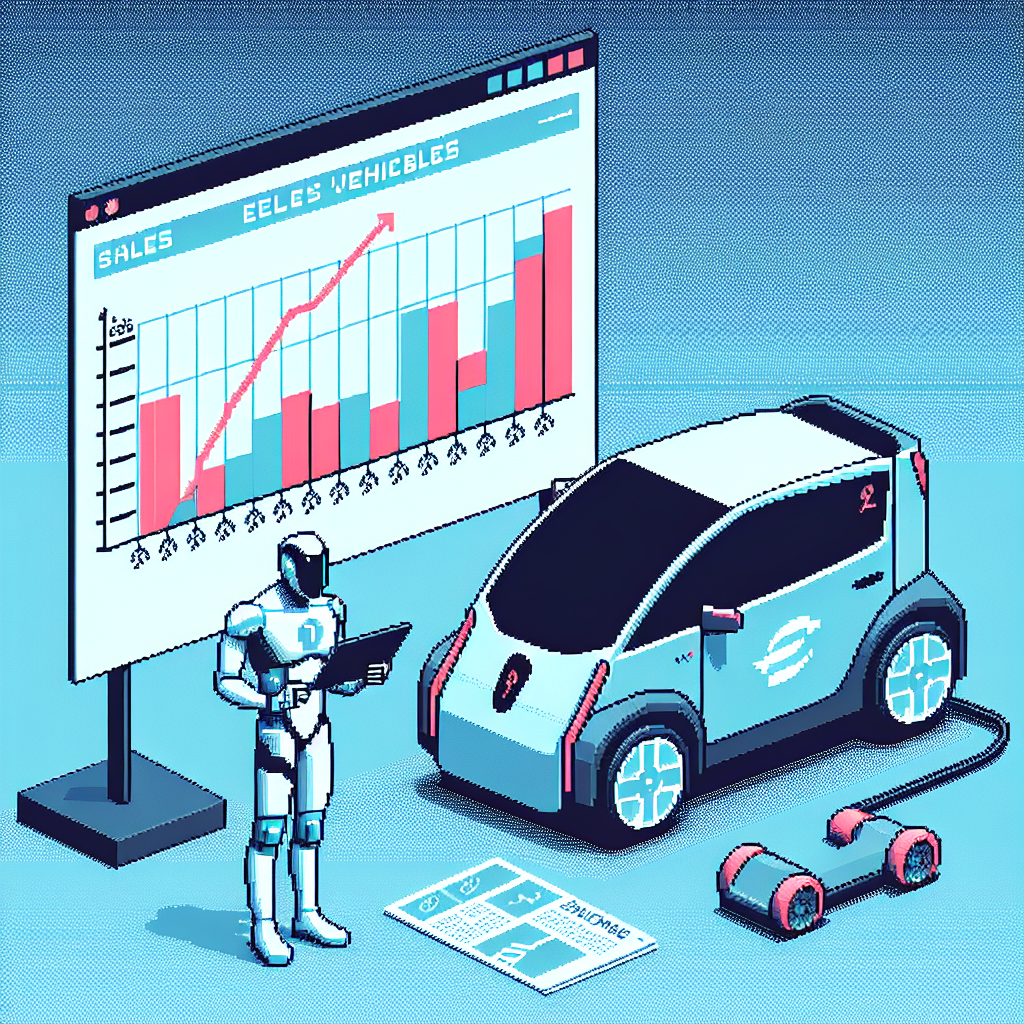
In the dynamic world of electric vehicles (EVs), Tesla has long been a trailblazer, capturing the imagination of consumers and investors alike. However, recent reports from Investor's Business Daily suggest a shift in Tesla's market dominance. The article, "Tesla EV Sales Are Struggling But Elon Musk Looks To The Future For Value," highlights a significant drop in Tesla's U.S. market share, which has now plummeted to its lowest level in nearly eight years. But as we've come to know, when it comes to Elon Musk, there's always more than meets the eye.

The Decline in Market Share: A Natural Evolution?


Tesla's declining market share can be seen as a natural evolution in a maturing market. With the increasing demand for EVs, other automakers have entered the fray, offering competitive models that cater to diverse consumer needs. Companies like Ford, General Motors, and newcomers like Rivian and Lucid Motors have introduced EVs that challenge Tesla's dominance. This democratization of the EV market is a positive sign for a green future, where a variety of options cater to different preferences and budgets.

Elon Musk: The Eternal Optimist


Elon Musk's approach to these challenges is predictably forward-looking. Musk is no stranger to adversity; he's the kind of visionary who thrives in uncertainty, often using it as a launching pad for innovation. He has been known for his ambitious goals, some of which seem straight out of a science fiction novel. From SpaceX's Mars colonization plans to Neuralink's brain-machine interfaces, Musk is always pushing the envelope.

Despite the current sales slump, Musk's focus is on the long-term value of Tesla. In recent years, Tesla has been investing heavily in battery technology, autonomous driving, and expanding its manufacturing capabilities with Gigafactories around the world. These moves are geared toward maintaining its position as a leader in the industry and ensuring its sustainability in the face of increased competition.

Connections to the Wider World


Tesla's current situation is reflective of broader trends in the tech and automotive industries. Just as Apple faced challenges when competitors caught up with the iPhone, Tesla is now in a similar position with its EVs. However, like Apple, Tesla has built a strong brand and a loyal customer base that could help it navigate these turbulent waters.

Moreover, Tesla's challenges come at a time when global climate policies are pushing for a rapid transition to sustainable energy. Governments worldwide are setting ambitious targets for reducing carbon emissions, which plays directly into Tesla's mission of accelerating the world's transition to sustainable energy. This alignment with global environmental goals might be Musk's ace in the hole, as public and private sectors increasingly invest in green technologies.

A Final Thought


In the grand tapestry of technological innovation and market dynamics, Tesla's current struggles might just be a temporary blip in its journey. Elon Musk's ability to look beyond the present and focus on future opportunities is his hallmark trait. As Tesla continues to innovate and adapt, it could very well regain its footing and continue to drive the EV revolution forward. Just as Musk has repeatedly defied the odds, the future may hold new triumphs for Tesla that we can't yet imagine. In the ever-evolving saga of Tesla and Musk, one thing is certain: the story is far from over, and the best chapters may still lie ahead.

Read more about AI in Business
Read more about Latest Sports Trends

Read more about Technology Innovations

Auto groups lobby Trump administration against parts tariffs in rare unified message – CNBC | Analysis by Brian Moineau

Auto groups lobby Trump administration against parts tariffs in rare unified message - CNBC | Analysis by Brian Moineau

Title: The Auto Industry's Unusual Alliance: When Competitors Rally for a Common Cause

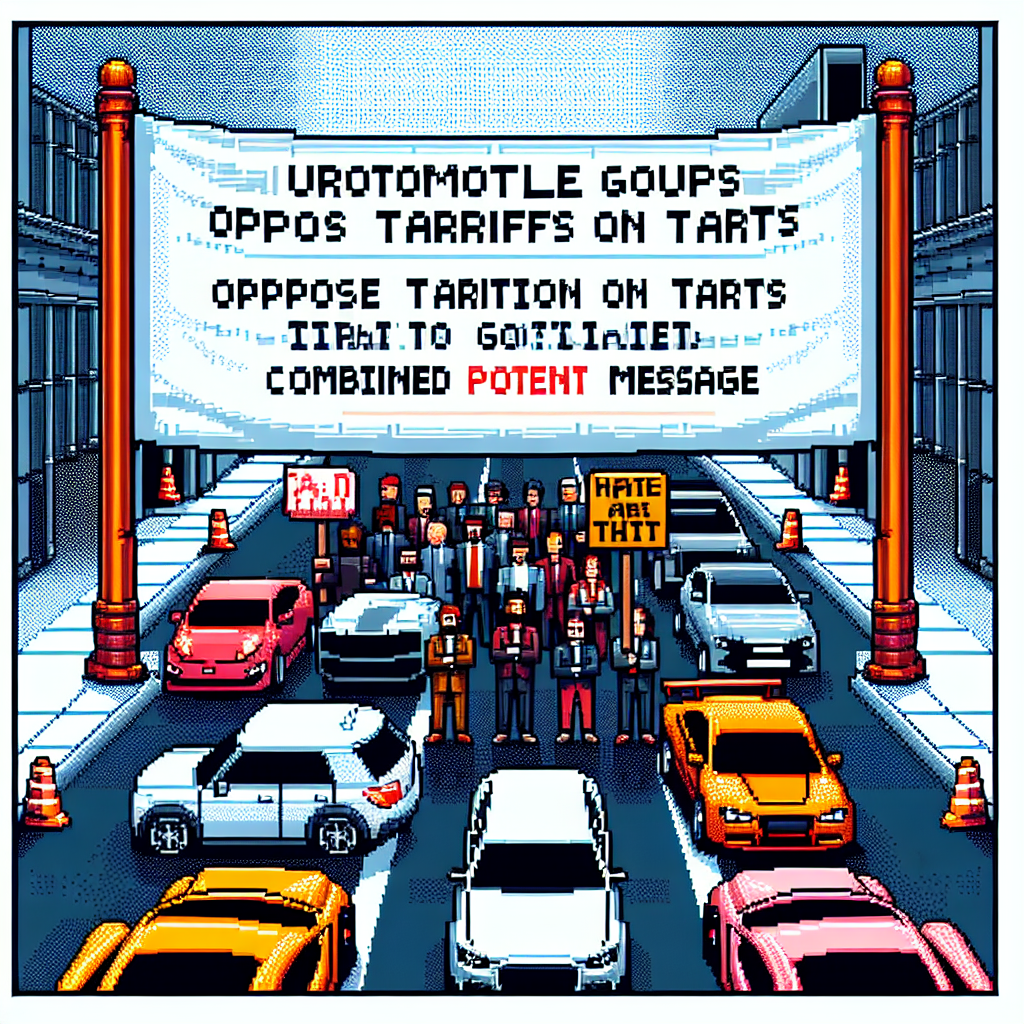
In a rare show of unity, automotive giants and their allies have come together to send a loud and clear message to the Trump administration: tariffs on auto parts could spell trouble for U.S. automotive production. It’s not every day you see franchised dealers, suppliers, and nearly all major automakers singing the same tune, but these are no ordinary times.

Driving in the Same Lane

The proposed tariffs have driven these industry titans to form an alliance typically reserved for the racetrack rather than the boardroom. Facing the prospect of increased costs that could stifle innovation and lead to higher prices for consumers, the industry has collectively decided that enough is enough.

It's reminiscent of the time when Ford and General Motors, despite their fierce rivalry, joined forces during World War II to support the war effort. Today, it seems that the enemy is the potential economic fallout from tariffs, which could disrupt supply chains and increase production costs, ultimately driving vehicle prices higher and putting American jobs at risk.

A Global Perspective

The auto industry isn't just a domestic affair; it's a global network intricately woven together. The imposition of tariffs could lead to retaliatory measures from other countries, echoing the trade tensions we've seen in recent years. For instance, the trade war between the U.S. and China taught us that tit-for-tat tariffs can have widespread repercussions, from agricultural products to technology.

Furthermore, the auto industry is undergoing a transformative era with the rise of electric vehicles (EVs) and autonomous driving technology. Companies are investing billions in a race to dominate the future of transportation. Tariffs could slow down these advancements by diverting resources away from innovation and into dealing with increased costs.

Lessons from the Past

Historically, tariffs have been a double-edged sword. The Smoot-Hawley Tariff Act of 1930, for example, was intended to protect American industries during the Great Depression but instead contributed to a global economic downturn. While it's important to protect domestic industries, history has shown that isolationist policies can backfire, leading to unintended consequences.

Connecting the Dots

As the world grapples with challenges like climate change and the transition to renewable energy, the automotive industry plays a crucial role in reducing carbon emissions. The imposition of tariffs could hinder progress in this area, as companies may find it more difficult to invest in cleaner technologies.

Moreover, the global pandemic has already disrupted supply chains, highlighting the need for resilience and cooperation. Just as the world came together to develop vaccines and address COVID-19, the auto industry is demonstrating that collaboration is key to overcoming challenges.

Final Thoughts

The unified stance of the auto industry against parts tariffs is a testament to the power of collaboration in the face of adversity. It serves as a reminder that sometimes, even fierce competitors must come together to safeguard their collective future. As we navigate an ever-changing global landscape, the lessons learned from this alliance could serve as a blueprint for other industries facing similar challenges.

In the end, whether it's on the production line or the global stage, cooperation and open dialogue are essential for steering the world toward a prosperous and sustainable future. As the auto industry shifts gears, one thing is clear: together, they are stronger, and their message is one we should all heed.

Read more about AI in Business

Read more about Latest Sports Trends

Read more about Technology Innovations

Porsche’s next Taycan gets an infotainment upgrade — but no new CarPlay – The Verge | Analysis by Brian Moineau

Porsche’s next Taycan gets an infotainment upgrade — but no new CarPlay - The Verge | Analysis by Brian Moineau

Revving Up the Infotainment Game: Porsche's 2026 Taycan and the Age of Intelligent Autos

In a world where the line between automobiles and technology continues to blur, Porsche is shifting gears with its 2026 Taycan, 911, Panamera, and Cayenne models. The German automaker is set to launch a revitalized infotainment system, featuring Apps and Alexa integration. While it's a leap forward in the quest for a more connected driving experience, some enthusiasts might be left pondering why the new CarPlay hasn't made the cut.

Porsche, a brand synonymous with luxury and performance, is no stranger to innovation. The introduction of Alexa, Amazon's virtual assistant, into its lineup is a testament to the growing trend of voice-activated technologies in vehicles. As smart home devices become more prevalent, it was only a matter of time before the automotive industry followed suit. Alexa's integration will enable drivers to control their smart home devices, check the weather, or even manage their shopping lists—all without taking their hands off the wheel or their eyes off the road.

This shift towards a more digital driving experience is not just a Porsche phenomenon. Across the industry, manufacturers are racing to enhance their infotainment systems, often serving as a battleground for technological supremacy. Take Tesla, for instance, which has been a pioneer in equipping its vehicles with large touchscreen displays and over-the-air updates that keep their software fresh. Similarly, Ford's partnership with Google to infuse its vehicles with Android's ecosystem speaks volumes about this tech-driven arms race.

However, Porsche's decision to sidestep a new CarPlay integration raises questions. Apple's CarPlay is a beloved feature for many drivers, offering seamless connectivity to iPhones. It's possible that Porsche is holding its cards close to its chest, perhaps waiting for a more robust version of CarPlay, rumored to feature deeper integration with car hardware, to emerge.

The timing of Porsche's announcement is intriguing, given the broader context of the automotive world. We're witnessing an era where electric vehicles (EVs) are no longer niche, and autonomous driving is no longer a distant dream. As EV giants like Tesla, Rivian, and Lucid Motors continue to make headlines with their cutting-edge innovations, Porsche's move is a strategic effort to remain competitive in this rapidly evolving market.

Moreover, the inclusion of Alexa could be seen as a strategic alignment with Amazon, a company that has ventured into the auto industry through partnerships with companies like Rivian, to whom it has supplied delivery vans. This alliance hints at a future where automotive experiences are fully integrated with our digital lives, making the transition between home and car virtually seamless.

As we steer into this new frontier of intelligent automobiles, one can't help but wonder what the future holds. Will we see cars that are not only smart but also capable of learning and adapting to our habits? Perhaps the infotainment systems of tomorrow will be powered by AI, predicting our routes, preferences, and needs before we even realize them ourselves.

In conclusion, Porsche's infotainment upgrade is a reflection of the broader technological renaissance within the auto industry. While some may lament the absence of a new CarPlay, the integration of Alexa is a promising step towards a more connected and intuitive driving experience. As technology continues to accelerate at breakneck speed, it's an exciting time to be both a driver and a tech enthusiast. Here's to the road ahead—may it be as smart as it is thrilling.

Read more about AI in Business

Read more about Latest Sports Trends

Read more about Technology Innovations