
Comcept Shutters: End of Mighty No.9 | Analysis by Brian Moineau

The end of an era: Comcept, the studio behind Mighty No. 9, has shut down

It’s hard not to feel a little nostalgic — and a touch vindicated — when an old industry story finally reaches a tidy, bureaucratic end. On January 13, 2026, Comcept, the studio founded by Mega Man veteran Keiji Inafune, was officially dissolved by a shareholders’ resolution. The notice appeared in Japan’s government gazette and was reported widely on January 29, 2026. For many, the Comcept name will always be tangled with one project in particular: Mighty No. 9 — the crowdfunded “spiritual successor” to Mega Man that became an object lesson in what can go wrong when ambition, expectations and execution fall out of sync.

Quick snapshot

  • Company: Comcept (founded December 2010 by Keiji Inafune)
  • Official dissolution date announced by shareholders: January 13, 2026
  • Public reporting of the notice: January 29, 2026
  • Best-known projects: Mighty No. 9, contributions to Soul Sacrifice and ReCore, and later collaboration with Level-5 as LEVEL5 comcept

Why this matters (and why it still stings)

Mighty No. 9 was more than a struggling platformer; it became a touchstone for debates about crowdfunding, reputation, and the relationship between creators and fans. The game’s Kickstarter success in 2013 raised hopes and millions of dollars, but its rocky development and uneven release left a vocal fraction of backers angry and wary. That controversy shadowed Comcept’s story for years.

But the studio’s arc is more than one failed title. Comcept began as a creative offshoot for one of Capcom’s key designers, produced ideas that influenced other teams, and eventually entered a partnership with Level-5 in 2017. Over the last few years Comcept was gradually folded into Level-5 operations — a process that culminated in the official legal dissolution earlier this month.

This closure signals the formal end of a company that, for better or worse, loomed large in discussions about modern game development culture: author-driven creativity, the promise (and peril) of crowdfunding, and what happens when a studio’s brand can’t escape a single, infamous project.

Background and timeline

  • 2010: Keiji Inafune leaves Capcom and founds Comcept.
  • 2013: Mighty No. 9 Kickstarter launches and meets fundraising goals, becoming a high-profile crowdfunded game.
  • 2016: Mighty No. 9 releases to mixed-to-negative critical reception and frustrated backers. Several promised ports (notably 3DS and Vita) never materialize.
  • 2017: Comcept forms LEVEL5 comcept in collaboration with Level-5; corporate structure begins to change.
  • 2024–2025: Keiji Inafune departs the Level-5 arrangement; Level-5 integrates the teams into its Osaka office and the LEVEL5 comcept subsidiary is wound down.
  • January 13, 2026: Comcept is dissolved by shareholders (published in the Kanpo gazette). Public reports surface on January 29, 2026.

Lessons for creators, backers and studios

  • Crowdfunding is not a guarantee of quality or of accountability; even high-profile figures can struggle to shepherd a complex project to a satisfactory finish.
  • Brand and reputation matter long after a single product ships. A studio’s public legacy can hinge on a single high-profile success or failure.
  • Corporate absorption — mergers, acquisitions, and internal restructurings — can leave a company nominally in existence long after its team, projects, and identity have been subsumed. The legal dissolution of Comcept merely formalizes what many observers considered already true: the company had, in practice, been absorbed.

A few takeaways

  • Comcept was officially dissolved following a shareholders’ resolution on January 13, 2026, with public notices appearing January 29, 2026.
  • Mighty No. 9’s troubled history is a defining chapter for the studio and a case study in crowdfunding expectations versus delivery.
  • The Comcept name had effectively faded before the formal dissolution, following its integration with Level-5 and Inafune’s exit in 2024–2025.

My take

Comcept’s closure reads like a tidy epilogue to a messy story. The studio’s start was ambitious and creative — a chance for a well-known creator to strike out independently — but the Mighty No. 9 saga exposed how delicate the trust between creators and communities can be. Today’s legal notice doesn’t change the feelings of backers who were disappointed, nor does it erase the games that came from Comcept’s work. What it does do is close a chapter, and offer a reminder: reputation in this industry takes years to build and can be eroded very quickly. For game developers aiming to crowdfund or to pivot between independent and partner-backed models, Comcept’s story still has practical lessons about transparency, project scope, and follow-through.

Sources


Related update: We recently published an article that expands on this topic: read the latest post.

Related update: We recently published an article that expands on this topic: read the latest post.


Related update: We recently published an article that expands on this topic: read the latest post.

Apple Stores Unveil New MagSafe Chargers | Analysis by Brian Moineau

The MagSafe Revolution: Apple Stores Adapt to the iPhone 17 Launch

With every new iPhone launch, there's a buzz that electrifies tech enthusiasts and everyday users alike. This year's iPhone 17 rollout was no exception, but it was accompanied by some unexpected drama—dubbed 'scratchgate'—that had customers raising eyebrows and Apple responding swiftly. Amidst this backdrop, Apple Store employees are now equipped with innovative MagSafe chargers featuring silicone rings, adding an intriguing twist to the iPhone demo experience.

The Context: What Happened with iPhone 17?

The iPhone 17 launch was met with excitement, but it quickly turned into a mixed bag of reactions when reports of scratches appearing on the devices started surfacing. Customers were quick to voice their concerns on social media, leading to discussions about potential quality control issues. In response to this 'scratchgate' controversy, Apple took proactive measures to ensure that their demo units were presented in the best possible light—both aesthetically and functionally.

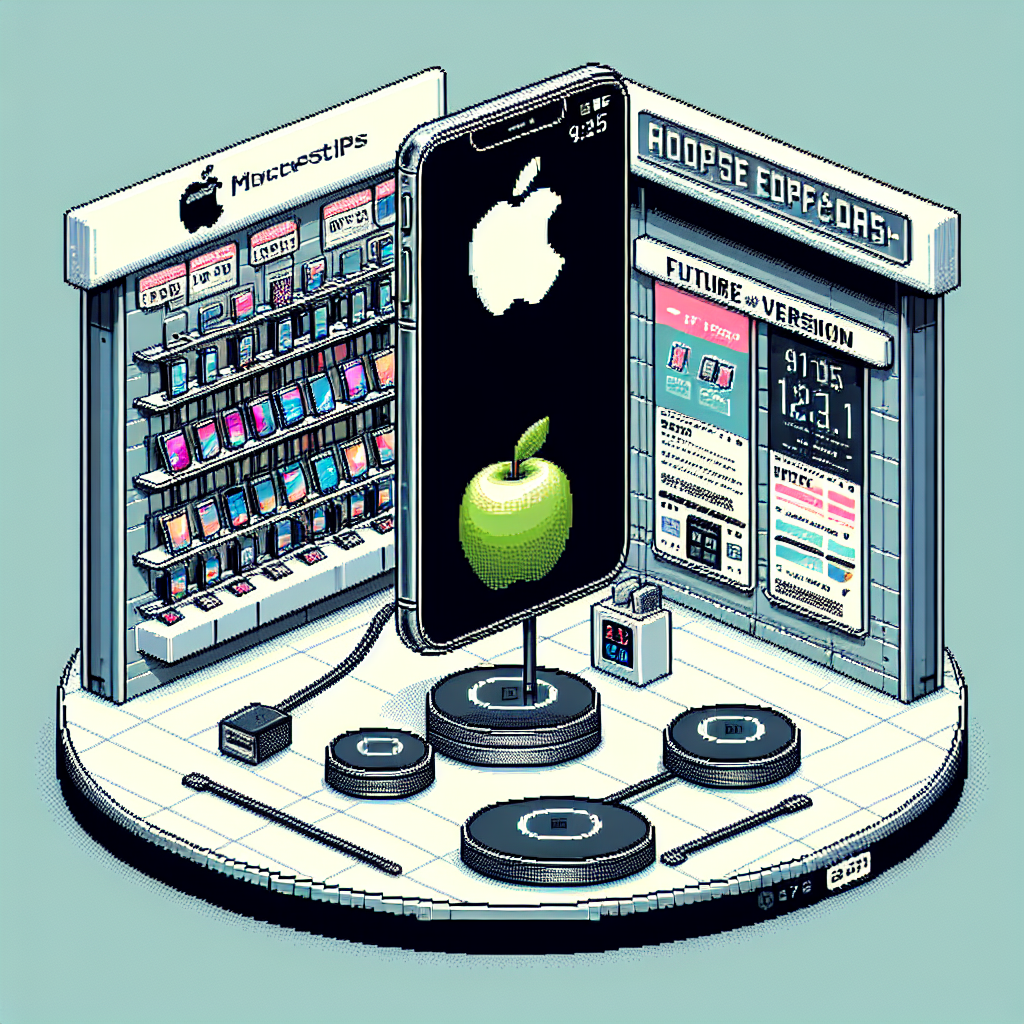
One of the standout initiatives was the introduction of new MagSafe chargers with silicone rings designed specifically for demo units of the iPhone 17. These chargers not only offer a secure connection but also protect the devices from scratches that might occur during customer interactions. This thoughtful design change reflects Apple's commitment to maintaining a premium experience, even amidst criticism.

Key Takeaways

- Customer Concerns: The 'scratchgate' controversy highlighted potential quality control issues with the iPhone 17, prompting a swift response from Apple to address customer feedback.

- Innovative Solutions: Apple Stores are now using MagSafe chargers with silicone rings to protect demo units, ensuring that devices remain pristine for potential buyers.

- Enhanced Demo Experience: The new chargers not only safeguard the devices but also enhance the overall demonstration experience, allowing customers to engage with the new features worry-free.

- Brand Reputation: Apple's quick action reinforces its dedication to brand integrity and customer satisfaction, showcasing how the company adapts to feedback in real-time.

- Community Engagement: The 'scratchgate' incident has sparked conversations among users, highlighting the importance of customer voices in shaping product quality and company practices.

Reflecting on the Future of iPhone Experience

As we look ahead, Apple's adaptive strategies—like the introduction of silicone-ringed MagSafe chargers—demonstrate a broader commitment to consumer satisfaction and innovation in retail environments. By swiftly addressing concerns and enhancing the customer experience, Apple not only mitigates potential backlash but also reinforces its position as a leader in the tech industry. The iPhone 17 may have had a rocky start, but with thoughtful adjustments, Apple is steering the narrative back to what matters most: the user experience.

Sources

- 9to5Mac: [Apple Stores are using new MagSafe chargers with silicone rings for iPhone 17 demo units](https://9to5mac.com/2023/10/01/iphone-17-magsafe-charger-silicone-rings/)

In the world of technology, how companies respond to challenges often defines their legacy. As Apple continues to innovate and adapt, we can only imagine what exciting developments lie ahead.

President Trump ‘Not Happy’ With His Golf Nickname – Yahoo Sports | Analysis by Brian Moineau

President Trump 'Not Happy' With His Golf Nickname - Yahoo Sports | Analysis by Brian Moineau

The Golfing Chronicles: President Trump and the Art of the Nickname

In the world of golf, where swings are scrutinized and scores are sacred, nicknames often carry a weighty significance. For President Donald Trump, the latest moniker to emerge from the fairway has not been met with applause. According to a Yahoo Sports article, President Trump is "not happy" with his new golf nickname, a sentiment echoed by his supporters. As the world watches this latest chapter in the storied life of Donald Trump, one can't help but wonder: what's in a name?

The Power of the Nickname

Nicknames in sports often reflect a player's personality, prowess, or an infamous incident. Think "The Great One" for Wayne Gretzky or "Air Jordan" for Michael Jordan. However, when it comes to Trump, whose persona is as large as his skyscrapers, the nickname game is a little more complex. Known for bestowing colorful monikers on opponents and allies alike (remember "Crooked Hillary" or "Sleepy Joe"?), Trump is no stranger to the power of a name. Yet, when the tables turn, it's clear that not all nicknames are welcome.

A Historical Journey on the Green

Golf has been a constant in Trump's life, long before his political ascent. With properties like the Trump National Golf Club gracing various states, his love for the sport is evident. Yet, like many public figures, Trump's time on the course has not been without controversy. Reports of alleged score tampering and preferential treatment have dogged him, painting a complex picture of a man who prizes winning above all.

Drawing Parallels with the World Stage

This nickname kerfuffle arrives at a time when the world is rife with conversations about identity and reputation. In a culture where social media can amplify a single word into a viral sensation, the significance of a nickname should not be underestimated. Brands, celebrities, and even political figures are constantly battling to maintain control over their narrative. Just as Elon Musk's tweets can shift stock prices overnight, a nickname can shape public perception in an instant.

The Man Behind the Name

Beyond the golf course, Trump remains one of the most polarizing figures in recent history. His presidency, marked by both fervent support and staunch opposition, has left an indelible mark on the American political landscape. Known for his unyielding confidence and brash rhetoric, Trump's reaction to his golf nickname is a reminder of the delicate balance between public persona and personal pride.

Final Thoughts

In the grand tapestry of sports and politics, the story of Trump's golf nickname is a small, albeit intriguing, thread. It serves as a reminder of the human element behind public figures and the intricate dance between identity and perception. As the world continues to navigate the complexities of modern communication, one thing remains clear: whether on the golf course or the global stage, the power of a name is undeniable.

For those interested in exploring the world of Trump and golf further, Yahoo Sports offers more insights and updates. In the meantime, let's keep our swing steady and our nicknames light—after all, it's just a game, right?

Read more about AI in Business

Read more about Latest Sports Trends

Read more about Technology Innovations

Harrods latest retailer to be hit by cyber attack after M&S and Co-op – BBC | Analysis by Brian Moineau

Harrods latest retailer to be hit by cyber attack after M&S and Co-op - BBC | Analysis by Brian Moineau

Title: Navigating the Digital Age: Harrods Under Cyber Siege

In the ever-evolving digital landscape, cyber attacks have become as inevitable as the passage of time. Once again, the retail world finds itself in the crosshairs of cybercriminals, with Harrods being the latest high-profile target. Following in the footsteps of M&S and Co-op, the iconic luxury department store has restricted internet access in its stores due to an attempted cyber attack, as reported by the BBC.

This isn't just a Harrods issue; it's a digital age dilemma that has been knocking at the doors of corporations globally. Companies today are grappling with the dual challenge of providing seamless digital experiences for their customers while safeguarding sensitive data from nefarious actors. The fact that a renowned establishment like Harrods, a beacon of luxury shopping, isn't immune to such threats underscores the ubiquity and persistence of cyber threats.

The Ripple Effect of Cyber Attacks


The implications of these cyber threats extend beyond just immediate financial losses. They erode consumer trust, damage brand reputation, and introduce operational disruptions. The retail sector, which is increasingly dependent on digital infrastructure for everything from supply chain management to customer engagement, is particularly vulnerable.

Consider the 2013 Target data breach, which compromised the credit card information of over 40 million customers. The retailer faced not only financial penalties but also a significant drop in profits and a tarnished brand image. Harrods, a stalwart of British retail since 1849, must now navigate these treacherous waters with caution and resilience.

Drawing Parallels: A Global Concern


The Harrods incident resonates with a broader global narrative. Just recently, MGM Resorts faced a similar predicament when a cyber attack led to operational disruptions across its properties, including the disabling of digital room keys and slot machines. This incident was a stark reminder that no industry is immune. From healthcare to entertainment, cyber threats are an omnipresent risk.

Moreover, the geopolitical landscape is not without its share of digital tension. With state-sponsored cyber activities on the rise, nations are scrambling to bolster their cyber defenses. The recent efforts by the European Union to establish a cyber unit to combat threats collectively highlight the scale of this digital arms race.

A Call for Robust Cybersecurity Measures


In light of these events, it becomes imperative for businesses, regardless of their size or industry, to invest in robust cybersecurity infrastructure. This includes regular security audits, employee training programs on phishing and other threats, and a strong incident response strategy.

For Harrods, this could be an opportunity to set a precedent in cybersecurity excellence. By turning this challenge into a showcase of their commitment to customer safety, they can reinforce trust and loyalty among their clientele.

Final Thoughts


As we continue to embrace the conveniences of the digital age, it's crucial to remember that with great connectivity comes great responsibility. The cyber attack on Harrods serves as a timely reminder of the vulnerabilities that accompany digital transformation. While the road ahead may be fraught with challenges, it also presents an opportunity for businesses to innovate and strengthen their defenses.

In the end, the key to navigating the digital age lies in being proactive rather than reactive. As cyber threats continue to evolve, so must our strategies to combat them. After all, in the words of the great strategist Sun Tzu, "In the midst of chaos, there is also opportunity." Let's hope Harrods and others facing similar challenges find theirs.

Read more about AI in Business

Read more about Latest Sports Trends

Read more about Technology Innovations