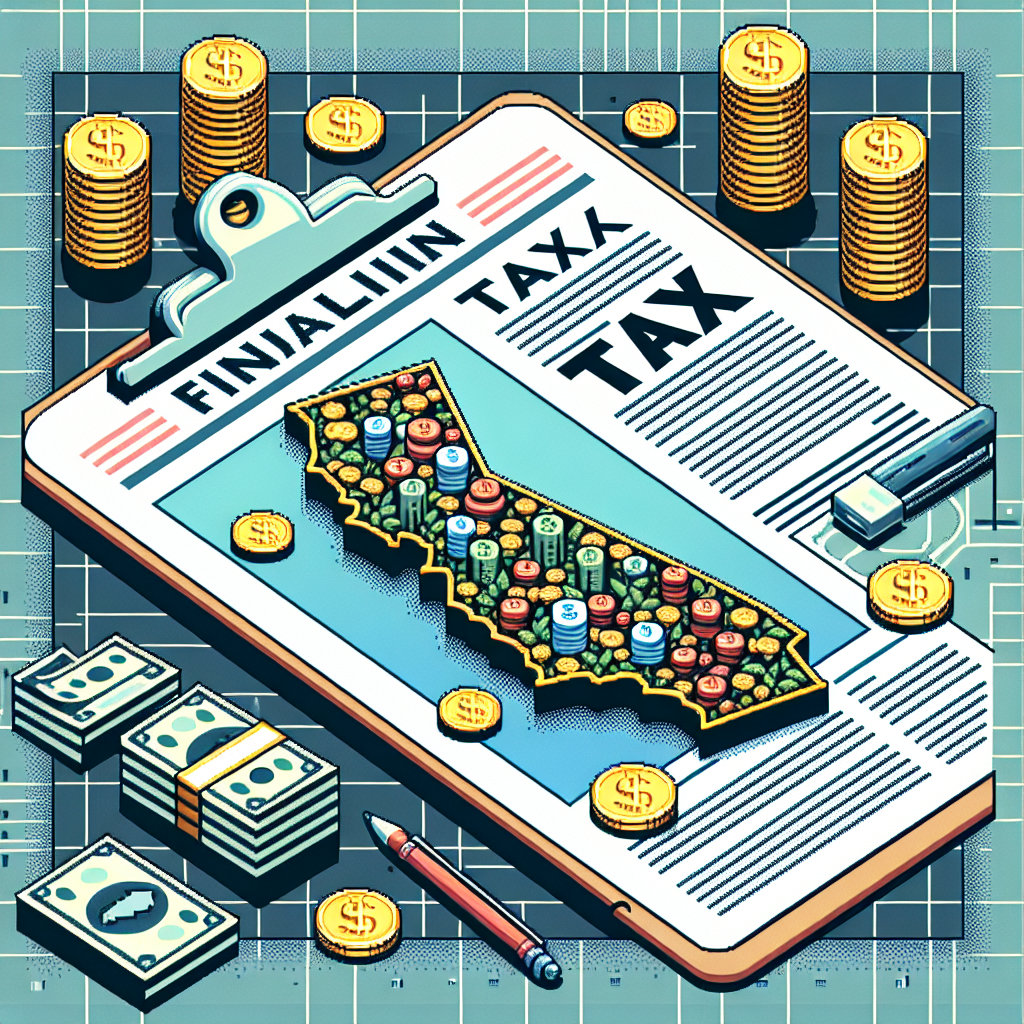
California’s Billionaire Tax Sparks Rift | Analysis by Brian Moineau

California’s billionaire tax: a rebellion in the heart of Silicon Valley

An audacious idea landed in Sacramento’s inbox and the reaction was immediate: outrage, delight, opportunism and a scramble to change addresses. A proposed one-time levy on billionaires—aimed at people with nine-figure and higher net worths who live in California—has ripped open debates about fairness, economic growth and the political future of the state that invents so much of the modern tech economy.

This post untangles the politics, the likely economic fallout, and why the proposal has split Democrats and rattled Silicon Valley in equal measure.

Quick snapshot

  • What: A proposed “billionaire tax” — a one-time 5% levy on net worth above $1 billion, with stiffer fixed amounts for ultra-wealthy tiers (the initiative was filed for the 2026 ballot by SEIU-UHW).
  • Why now: Supporters say it would raise roughly $100 billion to shore up healthcare, food assistance and education after federal cuts; opponents warn it will chase away the state’s richest residents and damage growth.
  • Political reaction: Progressive leaders like Bernie Sanders endorsed it; Governor Gavin Newsom and many business leaders oppose it. Some billionaires publicly threatened to leave; at least a few have already rearranged domiciles or offices.

Why the idea landed and why it resonates

California is a place of extremes: world-class wealth next to deeply stressed public services. That contrast fuels political energy.

  • Rising inequality and the visibility of nine-figure fortunes make a targeted wealth tax emotionally and politically compelling for many voters.
  • The immediate goal—raising money to replace lost federal funding for healthcare and shore up safety-net programs—gives the proposal a concrete use-case beyond abstract redistribution.
  • The union behind the filing argues the tax focuses only on the ultra-rich and won’t touch the middle class.

In short: it’s a focused ask with a dramatic headline number, and in politics, dramatic asks tend to move the needle.

Why Silicon Valley is panicking (and why some aren’t)

The reaction among the ultra-wealthy has not been uniform, but loud and visible.

  • Many tech figures portrayed the proposal as an existential threat: if taxes rise on paper wealth (stock holdings, unliquidated shares), founders and investors say they could be forced to sell stakes or move. Some have publicly announced moves to Florida or Texas; offices and legal addresses have shifted in ways that critics say preempt the levy.
  • Opponents argue that a state-level tax on worldwide assets creates enforcement and constitutional headaches, and that wealthy people are mobile—so revenue estimates may be optimistic if people pack up and leave.
  • Not everyone in the top tier sees it as catastrophic. Some billionaires have publicly shrugged, noting they chose California for talent and infrastructure and won’t be chased off by a one-time levy.

The net effect: a mix of bluster, legal posturing, real relocations and a publicity fight that will shape public opinion.

The political split inside the Democratic coalition

This proposal has exposed a rare public split among Democrats:

  • Progressive leaders frame the levy as moral and practical: wealthy Californians benefit from public goods (education, infrastructure, legal stability) and the state needs revenue for essential services. Some Democrats see it as a way to regain political legitimacy amid affordability crises.
  • Moderate Democrats and many elected officials worry about the state’s tax base. California already depends heavily on high-income taxpayers; if a number of the richest leave or shelter assets, revenues could fall. The governor’s opposition signals that the establishment wing is worried about economic consequences and political optics.

This isn’t just an intra-party debate about tax policy; it’s a fight over political identity—whether California leans into aggressive redistribution or prioritizes a stable business climate.

Economic and legal realities to watch

  • Revenue estimates are uncertain. Ballpark figures like $100 billion assume most targeted people remain in-state and that valuation and collection are enforceable. Past experiences suggest aggressive taxes can trigger behavioral responses that reduce expected receipts.
  • Valuation complexity. Taxing unrealized gains or illiquid assets (private company stock, art, intellectual property) is administratively hard and prone to legal challenge.
  • Mobility matters. The very wealthy can—and sometimes do—change residency or restructure holdings. Even the appearance of tax risk can spur preemptive moves.
  • Constitutional, interstate and federal issues could surface. State-level wealth taxes are uncommon in the U.S., and legal fights over retroactivity, apportionment, and interstate effects are likely.

All of that means the practical outcome will be shaped as much in courtrooms and tax counsels’ offices as at the ballot box.

What happens next

  • Signature drive and ballot placement. The initiative needs enough valid signatures to qualify for the November ballot (the filing targeted 2026). If it makes the ballot, the public debate will intensify.
  • Counter-campaigning. Expect deep-pocketed opposition, ad spending, messaging about jobs and innovation, and union-backed pro-tax campaigns framing the tax as funding essential services.
  • Potential legal challenges even before election day, and numerous legislative and advocacy responses aimed at shaping public perception and technicalities.

Something to keep in mind

Policies like this don’t play out in a single election cycle. Even if a ballot measure fails, the conversation nudges policy options and political narratives for years—about taxation, corporate responsibility, and the balance between wealth creation and social stability.

What the headlines miss

  • The debate isn’t only about punishing success. It’s about how a state dependent on a handful of mega-wealthy taxpayers secures long-term funding for services most residents rely on.
  • It’s also a test of political branding: can progressives convert anger at inequality into durable policy without triggering capital flight that undermines the tax base?

Key takeaways

  • The billionaire tax proposal crystallizes a larger question: who pays for California’s public goods when wealth is increasingly concentrated?
  • Economic estimates are uncertain and vulnerable to behavioral changes—residency shifts and asset structuring could shrink expected revenues.
  • The split among Democrats shows this is as much a political and cultural contest as a fiscal one.
  • Expect years of litigation, lobbying and relocation strategies regardless of the ballot outcome.

My take

There’s a moral clarity to asking the ultra-rich for more when public systems are strained—but the mechanics matter. A smart approach would pair targeted revenue aims with careful legal design and federal coordination to avoid making California a test-case for unintended consequences. Whether through state action or renewed federal attention to wealth taxation, the core problem—extreme concentration of wealth amid crumbling public infrastructure—needs durable solutions, not just headline-grabbing measures.

Sources


Related update: We recently published an article that expands on this topic: read the latest post.


$20 Fast‑Food Wage: Hype vs. Reality | Analysis by Brian Moineau

How a $20 fast‑food wage became a political punchline — and what the data actually shows

Who doesn’t love a good one‑liner? When former President Trump said California’s $20-per-hour fast‑food minimum wage was “hurting businesses,” the quote fit neatly into a familiar story: big wage hike → shuttered restaurants → unhappy voters. But real life, as usual, refuses to be tidy. The first year after California’s sectoral wage increase has produced a muddled mix of headlines, studies and anecdotes — and the truth sits somewhere in the middle.

What happened and why it mattered

  • In September 2023 California passed AB 1228, creating a Fast Food Council and setting a $20 minimum wage for fast‑food workers at chains with 60+ locations nationwide, effective April 1, 2024. (gov.ca.gov)
  • The policy targeted roughly half a million workers and was one of the largest sector‑specific wage hikes in recent U.S. history.
  • Opponents warned of rapid price inflation, job losses, reduced hours and store closures. Supporters argued workers needed a living wage and that higher pay could reduce turnover and boost consumer demand.

Headlines vs. data: why simple answers don’t fit

Political rhetoric loves certainty, but economists use careful comparisons. Since April 2024 the evidence has been mixed:

  • Studies and analyses finding minimal negative effects:

    • Research from UC Berkeley’s Institute for Research on Labor and Employment and related teams report that wages rose substantially, employment held steady, and menu price impacts were modest (single‑digit percent increases for typical items). These studies emphasize higher worker earnings without detectable job losses in the fast‑food sector. (irle.berkeley.edu)
    • Other academic teams (Harvard Kennedy School / UCSF) reached similar conclusions about pay gains and limited staffing impacts. (gov.ca.gov)
  • Studies and analyses finding measurable job declines:

    • Working papers using Bureau of Labor Statistics payroll data (Quarterly Census of Employment and Wages) — and critiques from policy groups like the Cato Institute — estimate a small but nontrivial reduction in fast‑food employment in California relative to other states, translating into thousands of jobs potentially lost or displaced. These analyses point to a 2–4% differential decline in sector employment in the year after the law passed. (nber.org)
  • Industry and media snapshots added color (and noise):

    • Chains and franchisee groups announced price increases and operational changes; some local closures and staffing adjustments were reported in the press and by trade groups. At the same time, state officials pointed to jobs data showing growth in fast‑food employment in some months. Media outlets highlighted both anecdotes of closures and studies showing limited harm. (cnbc.com)

The upshot: different data sources, time frames, and methods yield different estimates. Short‑run payroll snapshots can show dips that later rebound; survey‑based and restaurant‑level pricing studies can miss informal shifts (delivery volume, operating hours, mix of part‑time vs full‑time). Context, timing and research design matter.

Four reasons the debate stayed messy

  • The policy was sectoral and targeted. It applied only to large chains (60+ locations), leaving many small restaurants out of scope — which complicates comparisons and “one‑size” conclusions. (gov.ca.gov)
  • Timing and price pass‑through. Chains can respond by raising prices, squeezing profits, automating, or changing franchise decisions. Price increases were modest on average per some studies, but consumer behavior and foot traffic patterns varied across markets. (irle.berkeley.edu)
  • Geographic and local wage baselines differ. Many California cities already had higher local wages, so the bite of a statewide $20 floor varied by city and region. (cnbc.com)
  • Data source differences. Administrative payroll counts, operator surveys, foot‑traffic trackers and economist regressions each capture different slices of reality. Survey respondents tend to report the most painful anecdotes; large administrative datasets smooth over firm‑level churn but can lag. (nber.org)

What the evidence implies for workers, employers and voters

  • Workers: Many fast‑food employees saw meaningful pay bumps. For low‑paid workers, a reliable raise can improve household finances and reduce turnover — which itself can save restaurants hiring and training costs. Several academic teams documented substantial wage gains. (irle.berkeley.edu)
  • Employers: Large national chains and well‑capitalized operators can typically absorb or pass through costs more easily than small franchisees and mom‑and‑pop operators. Some franchisees reported tightening margins or operational shifts. Franchise structure therefore matters for who feels the pain. (cnbc.com)
  • Consumers: Menu prices rose in many places but, according to some detailed price studies, by relatively modest amounts for common items. Still, for price‑sensitive customers, even small increases can change visit frequency over time. (irle.berkeley.edu)
  • Policy makers: The California experiment shows that sectoral wage rules are feasible and politically potent — but also that they require monitoring, local nuance and careful evaluation to spot unintended consequences.

What to watch next

  • Updated employment and payroll reports for 2024–2025 (BLS QCEW, state employment dashboards).
  • Fast‑food council adjustments: the law created a Fast Food Council that can change wage floors going forward — any upward tweaks will reignite debates. (gov.ca.gov)
  • New peer‑reviewed studies that reconcile firm‑level evidence with state administrative data. The early literature includes conflicting working papers; later, more refined analyses will matter for policy learning. (nber.org)

Key points to remember

  • Big, immediate headlines are tempting, but the empirical record is mixed — some rigorous studies find little harm to employment, others find modest job declines.
  • The distribution of effects matters: workers gained wages, while some operators (especially small franchisees) faced higher costs and operational strain.
  • Policy design (who is covered, how enforcement works, and whether wages are phased or sudden) shapes outcomes as much as headline wage numbers do.

My take

Policies that push wages up for low‑paid workers deserve scrutiny, not sloganeering. California’s $20 experiment shows that meaningful wage increases can lift paychecks without catastrophic collapse — but they are not costless. The right takeaway is pragmatic: expect tradeoffs, design for local differences, measure outcomes rigorously, and be ready to adjust. Political one‑liners make for headlines; careful evidence makes for better policy.

Sources


Related update: We recently published an article that expands on this topic: read the latest post.


Related update: We recently published an article that expands on this topic: read the latest post.

Brian Schottenheimer on finishing camp in Oxnard, who will play vs. Ravens – Dallas Cowboys | Analysis by Brian Moineau

Brian Schottenheimer on finishing camp in Oxnard, who will play vs. Ravens – Dallas Cowboys | Analysis by Brian Moineau

Blog Post: California Dreamin’ – The Cowboys Wrap Up in Oxnard

Ah, Oxnard. Known for its idyllic beaches, strawberry fields, and now, the place where the Dallas Cowboys fine-tuned their playbooks and strategies for the upcoming NFL season. The Cowboys’ training camp in California has officially come to a close, and head coach Brian Schottenheimer has given fans a glimpse into what the team has achieved during their sun-soaked stay.

California Vibes and Football Drives

There’s something about the West Coast that just screams rejuvenation. Maybe it’s the Pacific breeze or the sprawling landscapes, but Oxnard has been a beloved retreat for the Cowboys. Under the guidance of Schottenheimer, the team has taken full advantage of their time away from the Texas heat, focusing on building camaraderie and honing their skills. Schottenheimer, who brings with him a rich legacy of football wisdom passed down from his father, Marty Schottenheimer, has been instrumental in cultivating a robust team spirit. His approach is not just about X’s and O’s; it’s about creating an environment where players can thrive both on and off the field.

Preseason Preview: Cowboys vs. Ravens

As the Cowboys prepare to face off against the Ravens in their second preseason game, fans are eager to see how the training camp’s efforts will manifest on the field. Schottenheimer, ever the strategist, has been tight-lipped about exactly who will play, but he has hinted at a mix of veterans and newcomers getting a chance to shine. This game will be a litmus test for many players aspiring to secure their spots on the team roster.

Connecting the Dots: Sports and the World Beyond

While the Cowboys were perfecting their game in Oxnard, the world outside was buzzing with its own set of events. The FIFA Women’s World Cup wrapped up in Australia and New Zealand, showcasing the global appeal and power of sports to unite and inspire. In a similar vein, the Cowboys’ time in California was not just about football; it was about building a community and strengthening bonds. Much like the World Cup’s ability to bring together diverse cultures, the Cowboys’ camp was a melting pot of talents and dreams.

A Little More on Schottenheimer

Brian Schottenheimer is not just another coach; he is part of a football dynasty. With a career that has spanned various teams and roles, his depth of experience is invaluable to the Cowboys. Known for his offensive prowess, Schottenheimer has a knack for developing quarterbacks and orchestrating dynamic plays. This season, he is tasked with ensuring that the Cowboys’ offense is not just competitive but formidable.

Final Thoughts: Until Next Year, Oxnard

As the Cowboys pack up their gear and head back to Dallas, fans can rest assured that the team has made the most of their Californian escapade. The lessons learned and the strategies developed in Oxnard will be put to the test as the season unfolds. In the end, training camp is just the prologue to what promises to be an exciting season for the Cowboys. And who knows? Maybe next year, Oxnard will once again serve as the backdrop for another chapter in the Cowboys’ storied history.

Until then, we say goodbye to the sun, surf, and strategy of Oxnard, eagerly anticipating the gridiron battles to come. Go Cowboys!

Read more about AI in Business

Read more about Latest Sports Trends

Read more about Technology Innovations


Related update: We recently published an article that expands on this topic: read the latest post.