Microsofts AI Ultimatum: Humanity First | Analysis by Brian Moineau

When a Tech Giant Says “We’ll Pull the Plug”: Microsoft’s Humanist Spin on Superintelligence

The image is striking: a company with one of the deepest pockets in tech quietly promising to shut down its own creations if they ever become an existential threat. It sounds like science fiction, but over the past few weeks Microsoft’s AI chief, Mustafa Suleyman, has been saying precisely that — and doing it in a way that tries to reframe the whole conversation about advanced AI.

Below I unpack what he said, why it matters, and what the move reveals about where big players want AI to go next.

Why this moment matters

  • Leaders at the largest AI firms are no longer just debating features and market share; they’re arguing about the future of humanity.
  • Microsoft is uniquely positioned: deep cloud, vast compute, a close-but-separate relationship with OpenAI, and now an explicit public pledge to prioritize human safety in its superintelligence ambitions.
  • Suleyman’s language — calling unchecked superintelligence an “anti-goal” and promoting a “humanist superintelligence” instead — reframes the technical race as a values problem, not merely an engineering one.

What Mustafa Suleyman actually said

  • He warned that autonomous superintelligence — systems that can set their own goals and self-improve without human constraint — would be very hard to contain and align with human values.
  • He described such systems as an “anti-goal”: powerful for the sake of power is not a positive vision.
  • Microsoft could halt development if AI risk escalated to a point that threatens humanity; Suleyman framed this as a real responsibility, not PR theater.
  • Rather than chasing unconstrained autonomy, Microsoft says it will pursue a “humanist superintelligence” — designed to be subordinate to human interests, controllable, and explicitly aimed at augmenting people (healthcare, learning, science, productivity).

(Sources linked below reflect his interviews, blog posts, and coverage across outlets.)

The investor and industry dilemma

  • Pressure for performance: Investors and customers expect tangible returns from AI investments (products like Copilot, cloud revenue, optimization). Slowing the pace for safety can be costly.
  • Risk of competitive leak: If one major player decelerates while others keep pushing, the safety-first company may lose market position or influence over standards.
  • Yet reputational and regulatory risk is real: companies seen as reckless invite stricter rules, public backlash, and long-term damage.

Microsoft’s stance reads like a bet that establishing a safety-first brand and norms will pay off — both ethically and strategically — even if it means moving more carefully.

Is Suleyman’s “humanist superintelligence” feasible?

  • Technically, the idea of heavily constrained, human-centered models is plausible: you can limit autonomy, add human-in-the-loop controls, and prioritize interpretability and robustness.
  • The big challenge is alignment at scale: ensuring complex, highly capable systems reliably follow human values in edge cases remains unsolved in research.
  • There’s also the governance question: who decides the threshold for “shut it down”? Internal boards, regulators, or multi-stakeholder panels? The answer matters enormously.

The wider debate: democracy, regulation, and narrative

  • Suleyman’s rhetoric pushes back on two trends: (1) a competitive “whoever builds the smartest system wins” race, and (2) a cultural drift toward anthropomorphizing AIs (calling them conscious or deserving rights).
  • He argues anthropomorphism is dangerous — it can mislead users and blur responsibility. That perspective has supporters and critics across academia and industry.
  • This conversation will influence policy. Public commitments by heavyweight companies make it easier for regulators to design realistic oversight because they signal which controls the industry might accept.

Practical implications for businesses and developers

  • Expect more emphasis on safety engineering, red teams, and orchestration platforms that keep humans in control.
  • Companies building on advanced models will likely face stronger documentation, audit expectations, and questions about fallback/shutdown plans.
  • For developers: design for graceful degradation, explainability, and human oversight. Those are features that will count commercially and legally.

Signs to watch next

  • Specific governance mechanisms from Microsoft: independent audits, kill-switch designs, escalation protocols.
  • How Microsoft defines the threshold for existential risk in operational terms.
  • Reactions from competitors and regulators — cooperation or competitive divergence will reveal whether this is a new norm or a lone ethical stance.
  • Research milestones and whether Microsoft pauses or limits certain capabilities in public models.

A few caveats

  • Promises matter, but incentives and execution matter more. Words don’t equal action unless paired with transparent governance and technical controls.
  • “Shutting down” an advanced model is nontrivial in distributed systems and in ecosystems that mirror models across many deployments.
  • The broader AI ecosystem includes many players (open, academic, state actors). Microsoft’s choice matters — but it cannot by itself eliminate global risk.

Things that give me hope

  • Public-facing commitments like this push the safety conversation into boardrooms and legislatures — a prerequisite for collective action.
  • Building human-first systems can deliver valuable benefits (healthcare, climate, education) while constraining dangerous uses.
  • The debate is maturing: more voices are recognizing that capability progress and safety must be coupled.

Final thoughts

Hearing a major AI leader say “we’ll walk away if it gets too dangerous” is morally reassuring and strategically savvy. It signals a shift from bravado to responsibility. But the hard work lies ahead: translating this ethic into rigorous technical limits, transparent governance, and multilateral agreements so that “pulling the plug” isn’t just a slogan but a real, enforceable safeguard.

We’re in an era where the decisions of a few large firms will shape the technology that shapes everyone’s lives. If Suleyman and Microsoft make good on their stance, they could help create a model where innovation and caution coexist — and that’s a narrative worth following closely.

Quick takeaways

  • Microsoft’s AI head frames unconstrained superintelligence as an “anti-goal” and promotes a “humanist superintelligence.”
  • The company says it would halt development if AI posed an existential risk.
  • The pledge is significant but must be backed by clear governance, technical controls, and broader cooperation to be effective.

Sources

USC vs. Notre Dame: A Rivalry at Risk | Analysis by Brian Moineau

The USC-Notre Dame Rivalry: A Century of Passion and Memories

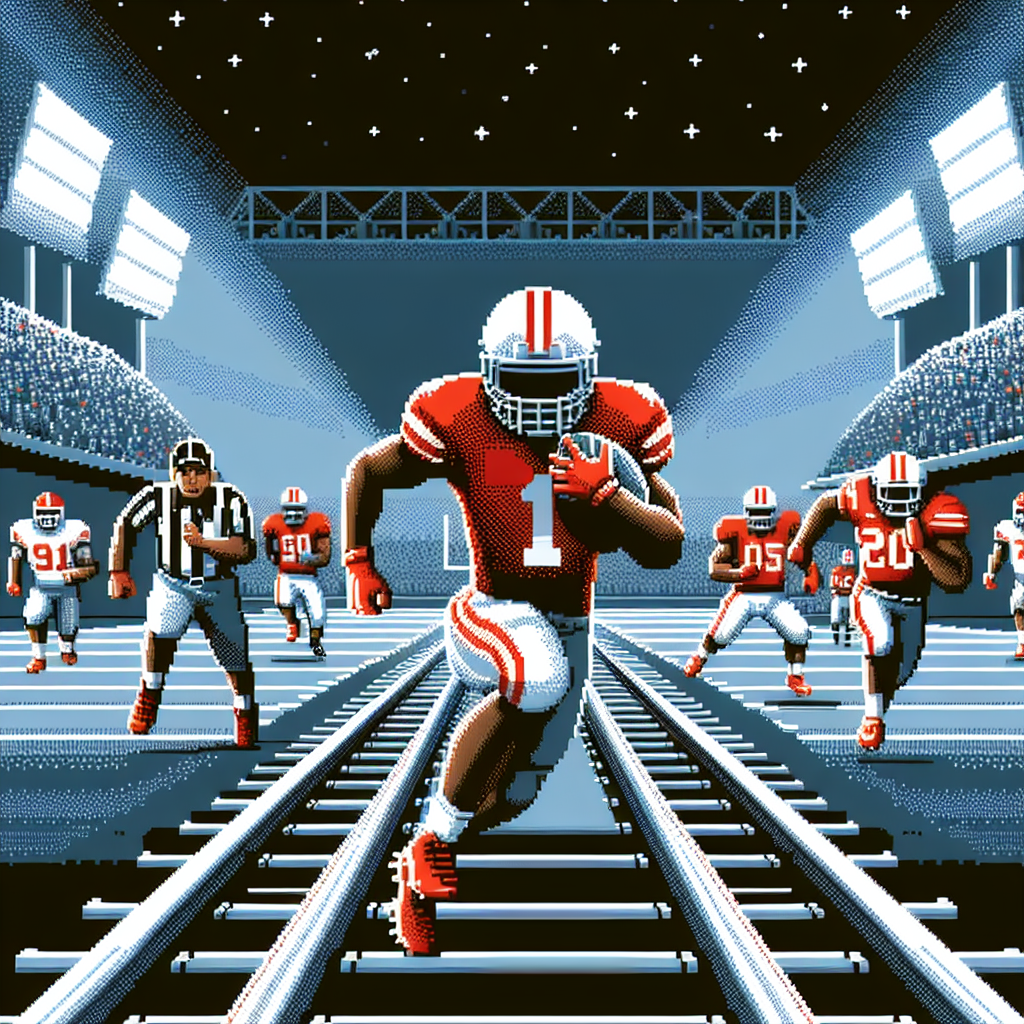
As the leaves begin to turn and football season kicks into full gear, one of college football’s most storied rivalries looms on the horizon: the clash between the University of Southern California (USC) and the University of Notre Dame. This rivalry, steeped in tradition and history, is more than just a matchup; it’s a celebration of athleticism, school spirit, and unforgettable moments. However, it’s facing an uncertain future, and that’s a conversation worth having.

A Rich History of Competition

The USC-Notre Dame rivalry dates back to 1926 and has since produced some of college football’s most thrilling games. These two powerhouse programs have battled it out on the gridiron for over a century, creating memories that resonate with fans and players alike. From the electric atmosphere of packed stadiums to legendary performances by athletes like Reggie Bush, the rivalry has showcased the very best of college football.

However, as the landscape of college athletics evolves with conference realignment and the introduction of the College Football Playoff, the future of this historic rivalry hangs in the balance. Will the USC-Notre Dame matchup remain a staple of college football, or will it fade into obscurity like so many other traditions?

Memorable Moments That Defined the Rivalry

Throughout the years, the USC-Notre Dame rivalry has produced unforgettable moments that are etched into the annals of college football history. Who could forget Reggie Bush’s spectacular 2005 performance, where he dazzled fans with his explosive plays and showcased why he was a Heisman Trophy winner? Or the dramatic finishes that left fans on the edge of their seats, such as the 1974 game where USC’s last-second touchdown secured a thrilling victory.

These games have brought together generations of fans, with families often divided in their loyalties. The intensity of the rivalry not only fuels the players on the field but also ignites the passion of the fans who support their teams through thick and thin.

Key Takeaways

Historical Significance: The USC-Notre Dame rivalry has spanned over 95 years, making it one of the longest-running rivalries in college football. – Iconic Games: From Reggie Bush’s legendary performances to nail-biting finishes, this rivalry has produced countless memorable moments. – Evolving Landscape: As college football faces changes in conference alignments and playoff structures, the future of this cherished rivalry is uncertain. – Fan Passion: The intensity of the rivalry ignites fierce loyalty among fans, often dividing families and communities. – Cultural Impact: The USC-Notre Dame games transcend football, representing a unique cultural intersection of tradition, competition, and camaraderie.

Reflecting on the Rivalry’s Future

As we look forward to the upcoming seasons, it’s crucial to cherish the moments that define the USC-Notre Dame rivalry. Whether it’s the thrill of a last-minute touchdown or the camaraderie shared among fans, this rivalry embodies the spirit of college football. It’s a reminder of why we love this sport in the first place.

Let’s hope that the powers that be recognize the importance of preserving this historic matchup, allowing future generations to experience the excitement and camaraderie that comes with every USC-Notre Dame game.

Sources

– ESPN: [From train rides to Reggie Bush: The best games in the USC-Notre Dame rivalry](https://www.espn.com/college-football/story/_/id/32547669/best-games-usc-notre-dame-rivalry)

In the world of sports, some rivalries are built on a foundation of history, passion, and unforgettable moments. The USC-Notre Dame rivalry is one such treasure that deserves to be celebrated for years to come.


Related update: We recently published an article that expands on this topic: read the latest post.


Related update: We recently published an article that expands on this topic: read the latest post.

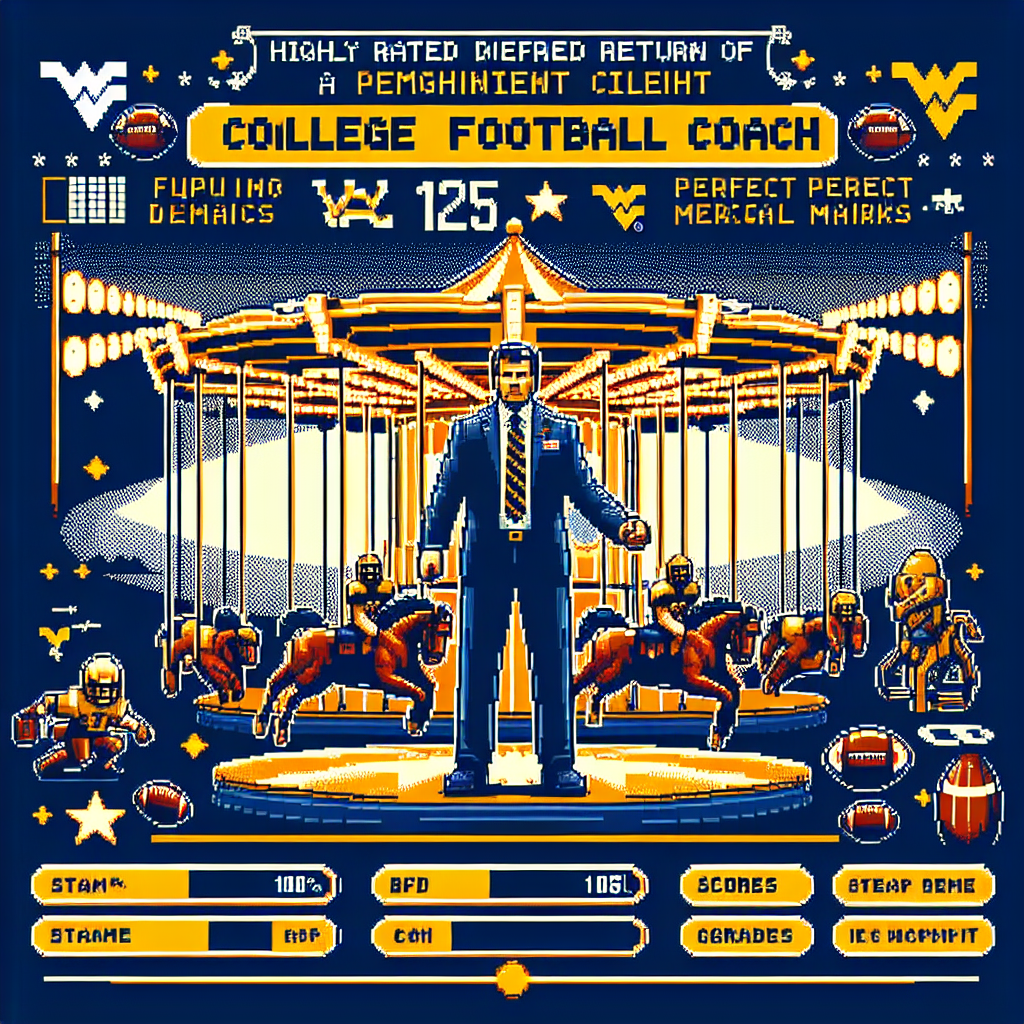
2025 college football coaching carousel grades: Rich Rodriguez’s return to West Virginia earns perfect mark – CBS Sports | Analysis by Brian Moineau

2025 college football coaching carousel grades: Rich Rodriguez's return to West Virginia earns perfect mark - CBS Sports | Analysis by Brian Moineau

### Rolling Back the Years: A Light Take on the 2025 College Football Coaching Carousel

Ah, the coaching carousel in college football—it's like the Oscars of the gridiron world, an annual event that never fails to entertain with its unexpected plot twists and star-studded cast. As we look at the 2025 edition, two names jump out with the kind of intrigue that could rival a Hollywood blockbuster: Rich Rodriguez and Bill Belichick. These two coaching titans have taken the plunge into new ventures, and it's already making waves.

#### Rich Rodriguez: A Homecoming Fit for a King

First up, we have Rich Rodriguez, a name that is synonymous with high-octane offenses and a bit of controversy—hey, who doesn't love a good comeback story? With his return to West Virginia, Rodriguez has earned himself a perfect mark, and for good reason. It's as if the Mountaineers have opened a time capsule and brought back the maestro who orchestrated their rise to national prominence in the mid-2000s.

Rodriguez's tenure at West Virginia from 2001-2007 was nothing short of transformative. Under his leadership, the Mountaineers became a force to be reckoned with, culminating in a stunning Sugar Bowl victory in 2006. His innovative spread offense left defenses bewildered and fans thrilled, creating a legacy that still resonates in Morgantown.

But, like any compelling drama, Rodriguez's story had its ups and downs. His departure to Michigan left a bitter taste, but hey, time heals all wounds, right? Fast-forward to 2025, and the prodigal son has returned. It's like a classic rock band reuniting for one last tour—nostalgic, exciting, and filled with promise.

#### Bill Belichick: The NFL Legend Turns Tar Heel

Meanwhile, Bill Belichick's transition to college football at North Carolina has been met with an 'A-' grade. Belichick, the mastermind behind the New England Patriots dynasty, needs no introduction. With six Super Bowl rings and a reputation for turning the mundane into the magical, his move to the collegiate ranks is akin to Shakespeare deciding to dabble in children's literature.

It's a bold move for the Tar Heels, and one that has the college football world buzzing. Belichick's approach is famously meticulous, and his ability to adapt will be put to the test. However, if there's one thing we've learned from his NFL career, it's to never underestimate the man in the hoodie.

His arrival at UNC feels like a chess grandmaster taking up checkers—will his strategic brilliance translate to the college game? Early signs are promising, but as with any great narrative, only time will tell.

#### Connecting the Dots: Football and Beyond

This year's coaching carousel isn't just about football; it mirrors broader trends in the world. Just as companies are pivoting post-pandemic, with leaders taking on new challenges and industries, so too are these coaches embracing fresh opportunities. It's a reminder of the ever-evolving landscape of sports and business alike, where adaptability and vision are key.

Moreover, this shift in coaching dynamics comes at a time when college football itself is undergoing significant changes, with conference realignments and NIL (Name, Image, Likeness) deals reshaping the sport. Coaches like Rodriguez and Belichick are not just navigating a new environment—they're helping redefine it.

#### Final Thoughts

In the grand tapestry of college football, 2025's coaching carousel is a vibrant, unpredictable stroke of genius. Rich Rodriguez's return to West Virginia is a heartwarming homecoming, while Bill Belichick's venture into North Carolina adds a layer of intrigue that only a seasoned legend can provide. As fans, we're in for a season of surprises, strategies, and hopefully, scintillating success.

So here’s to the new chapters in these storied careers—may they be filled with touchdowns, triumphs, and a touch of the unexpected. After all, that's what makes college football, and life, so wonderfully unpredictable.

Read more about AI in Business

Read more about Latest Sports Trends

Read more about Technology Innovations