Shutdown Shock: Airspace Cuts Hit Economy | Analysis by Brian Moineau

The day airspace shrank and sentiment soured: what the shutdown means now

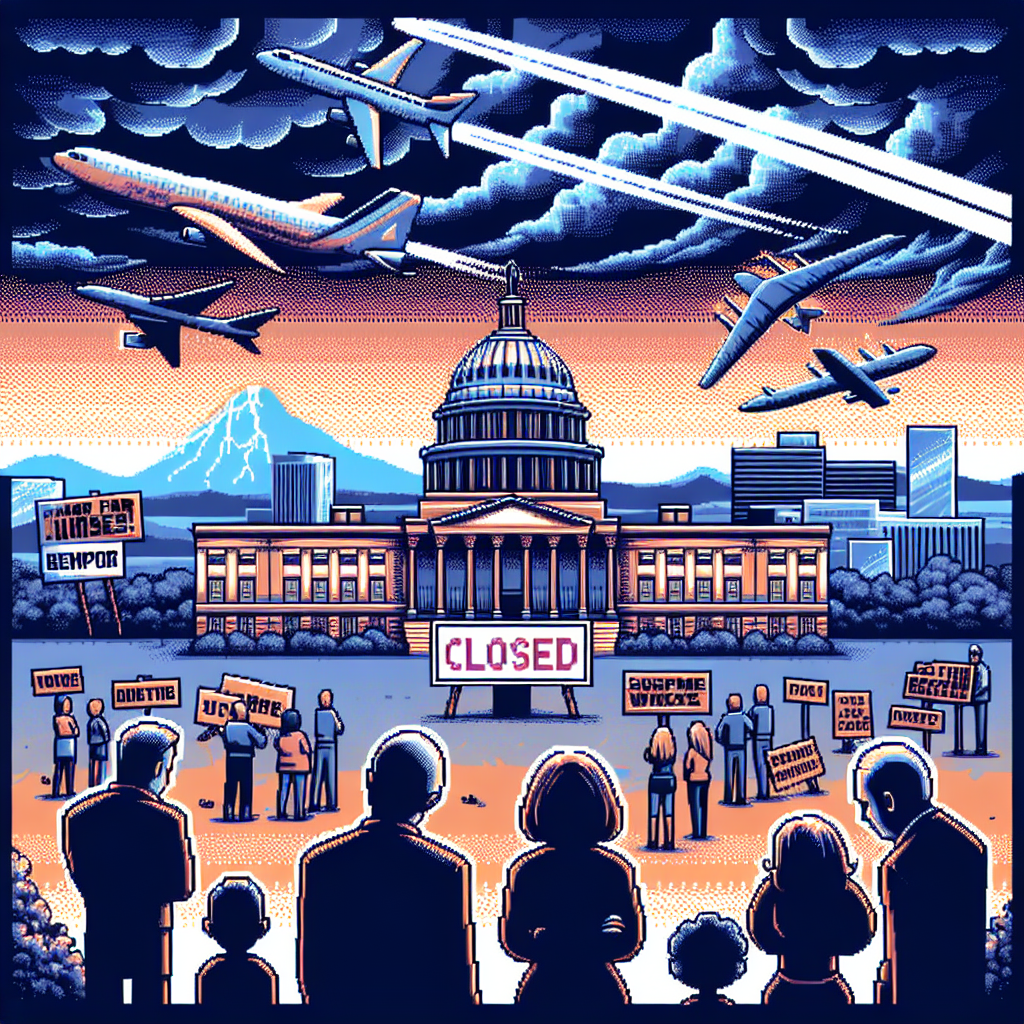
The headlines this week felt like they were written for a thriller: parts of U.S. airspace being intentionally reduced, major carriers trimming flights, and consumer mood slipping to multi-year lows. But this isn’t fiction — it’s the real-world fallout of a prolonged federal government shutdown that began on October 1, 2025 and stretched into November. The question for travelers, investors and everyday Americans is simple: how bad could this get before it gets fixed?

What just happened

  • On November 7, 2025 the Federal Aviation Administration began cutting scheduled flights at about 40 major U.S. airports to reduce controller workload and preserve safety as staffing gaps worsened. Initial cuts were modest (around 4% on the first day) with plans to scale to roughly 10% across the busiest markets and the possibility of larger reductions if conditions deteriorate. (apnews.com)
  • The shutdown — which started October 1, 2025 — has left hundreds of thousands of federal workers furloughed or working without pay and pushed the federal workforce and certain benefits into operational limbo. That disruption is rippling through travel, construction and other sectors. (en.wikipedia.org)
  • Consumer sentiment slid sharply in November, hitting its weakest point in about three years in University of Michigan polling, with many households growing more pessimistic about jobs and prices. Economists warn that the longer the stalemate lasts, the more likely temporary strains become persistent damage. (home.saxo)

Why reducing flights is more than an inconvenience

Cutting flights isn’t just about fewer seats for travelers. It’s a safety-management lever.

  • Air traffic controllers have been stretched thin: many are working unpaid, others have taken leave, and fatigue and absences increase operational risk. Reducing traffic in high-volume centers buys time and reduces stress on the system. (apnews.com)
  • Airlines respond quickly by cutting schedules — that produces cancellations, rebookings and lost revenue for carriers, airports, hotels and the broader travel ecosystem (rental cars, restaurants, even local retail). A string of canceled legs can ripple into lost bookings weeks out. (entrepreneur.com)
  • If cuts escalate to the scale government officials have warned about (up to 20% in the worst-case messaging), we could see cascading disruptions that push the travel sector into a short-term downturn. White House advisers have said the economic impact is “far worse than expected” already. (reuters.com)

The economic picture in plain terms

  • Consumer mood is a leading short-term indicator. When households are pessimistic about jobs or expect higher unemployment, they cut discretionary spending (dining out, travel, home projects) — which cools growth. University of Michigan sentiment data moved notably lower in early November. (home.saxo)
  • The Congressional Budget Office and other forecasters have warned that output lost during a shutdown is often unrecoverable in the short term; construction delays, paused federal contracts, and disrupted benefits aren’t simply “made up” later. Several analysts estimate meaningful hits to Q4 growth if the standoff persists. (entrepreneur.com)
  • Financial markets can look past short-term shocks, but prolonged uncertainty raises volatility. Stocks may temporarily rally on hopes of a legislative solution, while the real economy — payrolls, small business receipts, travel spending — reflects the lived pain.

Who’s feeling it most

  • Travel and leisure: airlines, airports, hotels and ancillary services face immediate demand shocks. Cancellations and rebookings create operational costs and lost revenue. (apnews.com)
  • Lower- and middle-income households: delayed benefits and furloughs hit these groups first and hardest, worsening the consumer split between higher-income households who still benefit from asset gains and everyone else. (entrepreneur.com)
  • State and local governments and contractors: delayed federal payments and paused permits slow construction and local projects, which can feed into job losses in affected sectors. (reuters.com)

The political and practical constraints

  • Fixing a shutdown requires Congress and the White House to agree on funding. Political incentives make compromises difficult, and each day of delay increases the economic bill and the human costs (missed paychecks, delayed benefits).
  • Operationally, some agencies can’t simply “turn back on” overnight. Even if appropriations pass tomorrow, it may take time to restore normal staffing, release backlogged payments, and normalize schedules in complex systems like aviation. (apnews.com)

Signals markets and travelers should watch

  • FAA notices and airline schedule reductions (daily): increasing planned cut percentages and cancellations signal growing systemic stress. (apnews.com)
  • Consumer confidence and survey data (University of Michigan, Conference Board): sharp declines presage weaker consumer spending. (home.saxo)
  • Official economic releases that are delayed or resumed: gaps in data flow complicate policymaking and investor assessments. (en.wikipedia.org)

What this means for you (practical tips)

  • If you have upcoming travel, expect more last-minute changes and factor buffer time; consider refundable or flexible tickets and double-check carrier communications.
  • If you’re a small business or contractor that depends on federal contracts or permits, document impacts carefully — that helps with recovery and any appeals for relief.
  • For investors: consider the difference between short-term headline-driven volatility and long-term fundamentals. Prolonged shutdowns raise real risks to growth, but markets often look forward to resolution.

Main takeaways

  • Flight reductions that started November 7, 2025 are a direct safety response to staffing shortages caused by the shutdown and risk becoming more severe if the stalemate continues. (apnews.com)
  • Consumer sentiment has tumbled to a multi-year low, signaling weaker spending ahead and amplifying the economic cost beyond the immediate federal payroll disruptions. (home.saxo)
  • The shutdown’s economic effects are already being described by administration advisers as “far worse than expected”; prolonged disruption could push travel and local economies into near-term downturns. (reuters.com)

My take

This shutdown feels different because a real-time safety system — the national airspace — is being throttled to prevent an accident born of understaffing and fatigue. That’s a stark, visceral sign that budget fights aren’t abstract political theater; they can change whether you get home for Thanksgiving or whether a paycheck arrives on time. The economic math is straightforward: the longer the pause, the harder recovery becomes. Fixing this means not just passing funding but stabilizing operations that have been frayed day by day.

Sources

(Note: URLs above point to non-paywalled reporting used to synthesize this post.)


Related update: We recently published an article that expands on this topic: read the latest post.
Related update: We recently published an article that expands on this topic: read the latest post.


Related update: We recently published an article that expands on this topic: read the latest post.


Related update: We recently published an article that expands on this topic: read the latest post.


Related update: We recently published an article that expands on this topic: read the latest post.

Declining Cardboard Demand: A Warning Sign | Analysis by Brian Moineau

The Slump in Cardboard-Box Demand: What It Means for Our Economy

In a world where e-commerce continues to dominate and sustainability becomes a growing concern, you might think that the demand for cardboard boxes would be booming. However, recent data suggests otherwise. The Wall Street Journal recently reported that the demand for cardboard boxes is slumping at an alarming rate, leading to the closure of several mills that produce corrugated packaging materials. This decline is not just a blip on the radar; it could have significant implications for the economy at large.

Understanding the Context

Cardboard boxes have long been the backbone of the shipping and packaging industries. They serve as a crucial link between manufacturers and consumers, providing a sturdy, cost-effective solution for transporting goods. However, the landscape of consumer behavior and market dynamics is shifting. After the pandemic-induced surge in online shopping, which drove up demand for packaging, the market is now experiencing a correction.

Several factors are contributing to this downturn:

1. E-commerce Stabilization: The exponential growth seen during the pandemic has begun to plateau. As consumers return to shopping in physical stores, the frenzy of online purchases is easing, leading to decreased demand for shipping materials.

2. Inflation and Economic Uncertainty: Rising costs and economic instability have forced many consumers to cut back on spending. When people tighten their wallets, the ripple effect impacts manufacturers and retailers, ultimately leading to less need for packaging.

3. Sustainability Trends: There is a growing push for sustainability, with many companies looking to reduce packaging waste. This shift could mean a transition to alternative packaging solutions, further reducing the demand for cardboard boxes.

4. Technological Innovations: Advancements in packaging technology might lead companies to explore options beyond traditional cardboard, which could further contribute to the decline.

As a result, mills that produce corrugated cardboard are closing at an unprecedented pace this year, raising concerns about job losses and economic repercussions.

Key Takeaways

Declining Demand: The demand for cardboard boxes is decreasing, leading to the closure of multiple mills that produce these essential materials. – Economic Ripple Effects: The slump in cardboard demand signifies broader economic challenges, such as inflation and reduced consumer spending. – Shifting Consumer Behavior: The stabilization of e-commerce growth post-pandemic plays a critical role in the reduced need for packaging materials. – Sustainability and Technology: A move towards sustainable packaging and advancements in technology may further diminish the reliance on traditional cardboard boxes.

Final Thoughts

The decline in cardboard-box demand is more than just a manufacturing issue; it serves as an indicator of larger economic trends. As we navigate this complex landscape, it’s crucial for businesses and consumers alike to adapt to changing market dynamics. The closure of mills may be a sign of necessary transformation in the packaging industry, but it also highlights the interconnectedness of consumer habits, economic conditions, and sustainability efforts. As we look ahead, it will be interesting to see how these shifts will shape the future of packaging and, by extension, the broader economy.

Sources

– “Cardboard-Box Demand Is Slumping. Why That’s Bad News for the Economy.” The Wall Street Journal. [Link](https://www.wsj.com/articles/cardboard-box-demand-is-slumping-why-thats-bad-news-for-the-economy-11694749801) (Note: This link may lead to a paywalled article.)

Feel free to share your thoughts on the cardboard box industry’s future in the comments below!


Related update: We recently published an article that expands on this topic: read the latest post.

Auto groups lobby Trump administration against parts tariffs in rare unified message – CNBC | Analysis by Brian Moineau

Auto groups lobby Trump administration against parts tariffs in rare unified message - CNBC | Analysis by Brian Moineau

Title: The Auto Industry's Unusual Alliance: When Competitors Rally for a Common Cause

In a rare show of unity, automotive giants and their allies have come together to send a loud and clear message to the Trump administration: tariffs on auto parts could spell trouble for U.S. automotive production. It’s not every day you see franchised dealers, suppliers, and nearly all major automakers singing the same tune, but these are no ordinary times.

Driving in the Same Lane

The proposed tariffs have driven these industry titans to form an alliance typically reserved for the racetrack rather than the boardroom. Facing the prospect of increased costs that could stifle innovation and lead to higher prices for consumers, the industry has collectively decided that enough is enough.

It's reminiscent of the time when Ford and General Motors, despite their fierce rivalry, joined forces during World War II to support the war effort. Today, it seems that the enemy is the potential economic fallout from tariffs, which could disrupt supply chains and increase production costs, ultimately driving vehicle prices higher and putting American jobs at risk.

A Global Perspective

The auto industry isn't just a domestic affair; it's a global network intricately woven together. The imposition of tariffs could lead to retaliatory measures from other countries, echoing the trade tensions we've seen in recent years. For instance, the trade war between the U.S. and China taught us that tit-for-tat tariffs can have widespread repercussions, from agricultural products to technology.

Furthermore, the auto industry is undergoing a transformative era with the rise of electric vehicles (EVs) and autonomous driving technology. Companies are investing billions in a race to dominate the future of transportation. Tariffs could slow down these advancements by diverting resources away from innovation and into dealing with increased costs.

Lessons from the Past

Historically, tariffs have been a double-edged sword. The Smoot-Hawley Tariff Act of 1930, for example, was intended to protect American industries during the Great Depression but instead contributed to a global economic downturn. While it's important to protect domestic industries, history has shown that isolationist policies can backfire, leading to unintended consequences.

Connecting the Dots

As the world grapples with challenges like climate change and the transition to renewable energy, the automotive industry plays a crucial role in reducing carbon emissions. The imposition of tariffs could hinder progress in this area, as companies may find it more difficult to invest in cleaner technologies.

Moreover, the global pandemic has already disrupted supply chains, highlighting the need for resilience and cooperation. Just as the world came together to develop vaccines and address COVID-19, the auto industry is demonstrating that collaboration is key to overcoming challenges.

Final Thoughts

The unified stance of the auto industry against parts tariffs is a testament to the power of collaboration in the face of adversity. It serves as a reminder that sometimes, even fierce competitors must come together to safeguard their collective future. As we navigate an ever-changing global landscape, the lessons learned from this alliance could serve as a blueprint for other industries facing similar challenges.

In the end, whether it's on the production line or the global stage, cooperation and open dialogue are essential for steering the world toward a prosperous and sustainable future. As the auto industry shifts gears, one thing is clear: together, they are stronger, and their message is one we should all heed.

Read more about AI in Business

Read more about Latest Sports Trends

Read more about Technology Innovations

Reports: JCPenney to close stores nationwide. Here’s the list – KFVS | Analysis by Brian Moineau

Reports: JCPenney to close stores nationwide. Here’s the list - KFVS | Analysis by Brian Moineau

### A Farewell to Fitting Rooms: JCPenney's Store Closures and the Changing Retail Landscape

In a world where convenience is king and digital innovation reigns supreme, the recent announcement that JCPenney will be closing several stores nationwide by mid-year should come as no surprise. What was once a retail giant is now bowing to the pressures of a rapidly evolving marketplace, a trend we've seen echoed across the industry as traditional department stores navigate the waters of modern commerce.

#### The End of an Era

For many, JCPenney has been more than just a store; it’s been a part of family traditions, a go-to for back-to-school shopping, and a reliable source of holiday gifts. However, the retail landscape is changing. According to reports by KFVS, this latest round of closures marks another chapter in JCPenney's ongoing struggle to remain relevant in an era dominated by e-commerce giants like Amazon and fast-fashion retailers such as Zara and H&M.

#### A Broader Trend

JCPenney’s decision is hardly an isolated event. In recent years, other well-known retailers such as Sears, Macy's, and even Neiman Marcus have faced similar challenges, with many closing stores or filing for bankruptcy. The shift from brick-and-mortar stores to online shopping has been accelerated by the pandemic, as consumers have become more comfortable with making purchases from the comfort of their own homes.

This transformation is not just affecting traditional retailers. Companies that started online, like Warby Parker and Bonobos, are also opening physical locations, but with a twist—they’re offering experiences and services that can’t be replicated online. This hybrid approach is something JCPenney and others have struggled to emulate effectively.

#### The Bigger Picture

Beyond the retail industry, JCPenney's closures are reflective of a larger economic trend: the shift in consumer behavior. As technology advances, the demand for convenience continues to grow. We’re seeing this trend not just in shopping, but also in food delivery, transportation, and even healthcare. Companies that embrace technology and adapt to these changes are the ones that are likely to thrive.

Moreover, the closures bring attention to the economic impact on communities. Many of these stores are anchors in shopping malls, and their closure can lead to reduced foot traffic, affecting smaller businesses and, by extension, local economies.

#### A Glimmer of Resilience

While the news may seem bleak, it's important to recognize the resilience of the retail industry. JCPenney itself has been trying to reinvent by revamping its product lines, improving its online presence, and exploring new business models. The brand’s journey is a testament to the necessity of adaptability in today’s world.

#### Final Thoughts

As JCPenney prepares to shutter more of its stores, it’s a poignant reminder of the impermanence and ever-changing nature of the business world. Yet, it also presents an opportunity for innovation and growth. Retailers must continue to evolve, meeting customers where they are—whether that’s online, in-store, or somewhere in between.

In the end, while we might miss wandering through JCPenney’s aisles, searching for the perfect pair of jeans or a last-minute gift, we can also look forward to what the future holds for retail. After all, change is the only constant, and with change comes the chance to create something new and exciting.

Read more about AI in Business

Read more about Latest Sports Trends

Read more about Technology Innovations