The Fourth of July Is Close. Here Are the Trading Hours for Today. – Barron’s | Analysis by Brian Moineau

The Fourth of July Is Close. Here Are the Trading Hours for Today. – Barron’s | Analysis by Brian Moineau

Title: Fireworks and Finance: Navigating Trading Hours on the Fourth of July

Ah, the Fourth of July—a day where the aroma of barbecue fills the air, fireworks light up the night sky, and we take a moment to celebrate the independence of the United States. But amid all the festivities, there’s a little detail that investors and traders need to keep in mind: how the holiday impacts financial markets.

As we prepare to don our red, white, and blue, let’s take a look at what happens on the trading floors. Barron’s recently highlighted the changes in trading hours surrounding Independence Day. Typically, financial markets, including the New York Stock Exchange and NASDAQ, close early on the day before the Fourth and remain closed on the holiday itself. This year is no different, with markets closing their doors early to allow traders to join the celebrations.

While this might be a minor inconvenience for those who eat, sleep, and breathe stock tickers, it’s the perfect opportunity to step back and reflect on the bigger picture. After all, even the most seasoned investors need a break. As Warren Buffett wisely said, “The stock market is designed to transfer money from the Active to the Patient.” So, take a breath, enjoy a hot dog, and let your portfolio take a nap.

Interestingly, this holiday doesn’t just affect the U.S. markets. Global markets keep a close eye on Wall Street, and a pause in American trading can create ripples across the globe. Investors in London, Tokyo, and beyond might find themselves with a little extra time on their hands, pondering whether they should dive into a summer read or perhaps binge-watch a new series.

Speaking of global connections, the Fourth of July isn’t just about America. This holiday reminds us of the myriad of independence celebrations worldwide—each with its own history, culture, and market impact. For instance, Bastille Day in France on July 14th similarly halts trading in Paris, as the French commemorate their own historic fight for liberty.

In the spirit of celebration and reflection, let’s shift our focus from the hustle and bustle of Wall Street to the joyous clamor of fireworks and family gatherings. It’s a time to appreciate the freedoms we enjoy, not just in our personal lives but also in the economic opportunities that allow us to invest, trade, and grow our wealth.

So, what’s the takeaway from this blend of finance and festivities? While the market may pause for a day, the spirit of independence and the pursuit of happiness remain in full swing. Whether you’re an investor, a trader, or someone simply enjoying a day off, remember to embrace the pause, savor the moment, and let the fireworks ignite your inspiration.

As we watch the sky come alive with color and light, let us celebrate not just our nation’s past, but also the possibilities of the future. Happy Fourth of July to all, and may your investments be as bright and promising as the fireworks above!

Read more about AI in Business

Read more about Latest Sports Trends

Read more about Technology Innovations


Related update: We recently published an article that expands on this topic: read the latest post.
The Fourth of July Is Close. Here Are the Trading Hours for Today. – Barron’s | Analysis by Brian Moineau

The Fourth of July Is Close. Here Are the Trading Hours for Today. – Barron’s | Analysis by Brian Moineau

Title: “Fireworks and Finance: Navigating the Fourth of July Trading Hours”

As the Fourth of July approaches, Americans are preparing for a day filled with fireworks, barbecues, and a celebration of freedom. But before the festivities kick off, there’s a different kind of spark in the air: the hustle and bustle of the financial markets adjusting to holiday trading hours. While the average person might be more focused on perfecting their grilling technique or picking out the perfect spot to watch fireworks, traders and investors are keenly aware of the shortened trading schedules.

Timing is Everything

The Fourth of July, like other major holidays, causes a ripple effect in the financial markets. The New York Stock Exchange (NYSE) and the Nasdaq typically close early on July 3rd, allowing traders to wrap up their business and join in the holiday festivities. The bond market often follows a similar pattern, closing early to accommodate for the holiday. For traders, this means adjusting their strategies and closing out positions in anticipation of the pause in trading activities.

But why all the fuss about trading hours, you might ask? It’s simple: the financial markets are a finely tuned operation where timing is everything. A shift in hours can impact trading volumes and liquidity, ultimately affecting market dynamics. The Fourth of July holiday is a reminder of the delicate balance between work and leisure, even in the fast-paced world of finance.

Beyond Wall Street

Interestingly, the Fourth of July isn’t only a time for financial adjustments in the U.S. It’s also a period when global markets take note. While American traders may be stepping away from their screens, international markets continue to operate, leading to potential shifts in global trading patterns. The interconnectedness of today’s financial landscape means that even a national holiday can have international implications.

In a broader context, the Fourth of July highlights the unique way different countries handle public holidays in relation to their financial markets. For instance, the Tokyo Stock Exchange in Japan operates under its own set of rules for holiday trading, as does the London Stock Exchange in the UK. Each country balances its cultural significance with the practicalities of market operations, creating a fascinating tapestry of global financial practices.

A Time to Reflect

While the focus here is on trading hours, the Fourth of July is also a time for reflection and gratitude. In the spirit of independence, it’s an opportunity to appreciate the freedoms we often take for granted, including the freedom to participate in and benefit from financial markets. It’s a time to remember that the independence celebrated on this day extends beyond just political freedom—it encompasses economic freedom and the opportunities it brings.

As we fire up our grills and prepare for an evening of spectacular fireworks, let’s take a moment to appreciate the intricate dance of the financial markets and the people who keep it running smoothly, even on the cusp of a national holiday.

Final Thoughts

In the end, the Fourth of July serves as a poignant reminder of the balance between work and play. While traders adjust their schedules and strategize around shortened trading hours, the rest of us can enjoy the holiday knowing that the market will be there, ready to resume its rhythm after the last firework fades from the sky. So, here’s to a happy and safe Fourth of July—may your grills be hot, your fireworks dazzling, and your investments ever in your favor.

Read more about AI in Business

Read more about Latest Sports Trends

Read more about Technology Innovations


Related update: We recently published an article that expands on this topic: read the latest post.

Japan’s bond market ignites fears of outflows from U.S., carry trade unwind and market turmoil – CNBC | Analysis by Brian Moineau

Japan's bond market ignites fears of outflows from U.S., carry trade unwind and market turmoil - CNBC | Analysis by Brian Moineau

Title: The Rising Tide of Japan's Bond Market: A Tsunami for Global Investments?

In the ever-dynamic world of global finance, a new ripple is making waves. As Japan's government bond yields climb, investors around the globe are holding their breath, anticipating a potential capital shift that could make or break markets. If you've been watching the financial headlines lately, you might have come across CNBC's coverage of these brewing concerns. Higher yields in Japan could trigger a capital repatriation, pulling funds from the U.S. and setting off a chain reaction that could unwind the famed "carry trade" and stir up market turmoil.

But before we jump to conclusions, let's take a step back and explore what this means in layman's terms. For years, Japanese investors have taken advantage of the lower interest rates at home to invest in higher-yielding assets abroad, particularly in the U.S. This strategy, known as the carry trade, has been a lucrative venture, providing steady returns with relatively low risk. However, with Japan's bond yields on the rise, the equation might be changing.

Imagine a Japanese investor who once enjoyed a pleasant stroll on a beach with a gentle tide (low yields at home and high yields abroad). Suddenly, the tide turns, and they find themselves knee-deep in water as yields rise back home. Naturally, they might consider retreating back to safer, drier ground—repatriating their capital to Japan. This could mean a massive outflow of funds from U.S. markets, which would send shockwaves through global finance.

To put this in perspective, it's akin to the global sensation of Taylor Swift's concerts causing seismic shifts in local economies. Just as the "Swift effect" can boost a city's revenue and tourism, a shift in investment flows can dramatically impact financial markets. However, unlike a concert, financial markets thrive on stability and predictability, and unexpected shifts can lead to volatility and uncertainty.

But this isn't just a story about numbers and percentages. It's also a tale woven into the fabric of our interconnected world. For example, the U.S. is currently navigating its own set of challenges, from inflation concerns to political debates about fiscal policy. A sudden capital outflow could add pressure to an already strained economic system. Moreover, this scenario is reminiscent of the 1997 Asian Financial Crisis, where rapid capital movements led to economic turmoil in several Asian economies.

Meanwhile, across the globe, investors are also keeping an eye on Europe, where the European Central Bank is navigating its own challenges. The eurozone is experiencing slow growth and geopolitical tensions, which further complicate the investment landscape. In this global chess game, every move counts, and Japan's bond market shift is a significant one.

In conclusion, while the prospect of capital repatriation from the U.S. due to rising Japanese bond yields is a serious concern, it's essential to maintain perspective. Financial markets are complex, and myriad factors are at play. Investors and policymakers must remain vigilant and adaptable, much like a surfer riding unpredictable waves. After all, in the world of finance, as in life, change is the only constant. Let's hope that as the tide rises, we'll all be ready to ride the wave rather than be swept away. 🌊

---

Final Thought: As Japan's bond market dynamics continue to unfold, it's a reminder of the delicate balance in global finance. Investors must stay informed and agile, ready to pivot with the tides. Just as in nature, financial ecosystems thrive on adaptability and resilience. Here's to navigating the waves with both caution and curiosity.

Read more about AI in Business

Read more about Latest Sports Trends

Read more about Technology Innovations

Trump’s crypto dinner cost over $1 million per seat, on average – NBC News | Analysis by Brian Moineau

Trump's crypto dinner cost over $1 million per seat, on average - NBC News | Analysis by Brian Moineau

Title: Crypto, Cuisine, and the Cost of Influence: A Million-Dollar Meal with Trump

In a world where blockchain is the new black and digital currencies are the latest gold rush, it seems everything has a price tag—even dinner with the former President. According to NBC News, this Thursday, more than 200 affluent, primarily anonymous crypto aficionados are set to gather in Washington, D.C., to break bread with none other than Donald Trump himself. And what's the price of admission to this exclusive soirée? A staggering $1 million per seat, on average. You read that right—enough to make even the most decadent of Michelin-starred meals look like mere hors d'oeuvres.

A Pricey Plate and Powerful Palate

The allure of dining with Trump, a polarizing figure who has remained a staple of American politics even after his presidency, is undeniable. Known for his business acumen and flair for the dramatic, Trump has always been a magnet for controversy and conversation. His ventures into the crypto world, however, are relatively nascent. Historically, Trump has been critical of cryptocurrencies, famously tweeting in 2019 that he is "not a fan of Bitcoin and other Cryptocurrencies" and warning of their volatile and unregulated nature.

Yet, as the old adage goes, money talks. And in this case, it seems to be speaking the language of blockchain. This dinner represents more than just a meal; it's a confluence of power, wealth, and the digital frontier—a chance for crypto tycoons to gain influence and for Trump to perhaps reassess his stance on digital currencies.

Cryptocurrency’s Continued Ascent

Cryptocurrencies have been steadily climbing the ladder of legitimacy. While still volatile, the crypto market has become a fixture in both the financial world and popular culture. From El Salvador's bold decision to adopt Bitcoin as legal tender to major corporations like Tesla and Square investing heavily in digital currencies, the crypto narrative is evolving rapidly.

Moreover, the recent rise of NFTs (Non-Fungible Tokens) has further cemented the cryptosphere's status as a transformative force. These unique digital assets have captured the imagination of artists and investors alike, with sales reaching astronomical figures. In a way, this million-dollar dinner mirrors the broader crypto trend: high stakes, high rewards, and high intrigue.

A Global Stage

This event also highlights the global nature of cryptocurrency. While the dinner is taking place in Washington, the implications are worldwide. Countries across the globe are grappling with how to regulate and integrate digital currencies into their economies. The European Union has been working on comprehensive crypto regulations, while China's recent crackdown on crypto mining has sent ripples through the market.

Final Thoughts: Bon Appétit à la Blockchain

In the end, the dinner is emblematic of the times we live in—where technology, wealth, and politics intertwine in increasingly complex ways. For Trump, this dinner is an opportunity to remain relevant in the ever-evolving political and financial landscape. For the crypto enthusiasts, it's a chance to influence a former leader and perhaps sway the narrative in their favor.

While the million-dollar price tag may raise eyebrows, it also underscores the value placed on access and influence in today's world. As the guests tuck into their lavish meal, one can't help but wonder: what will be the real outcome of this culinary convergence? Will it result in a change of heart for Trump or perhaps a new chapter in the saga of cryptocurrency?

Whatever the case, this dinner is sure to be a feast for both the stomach and the imagination. Bon appétit, indeed.

Read more about AI in Business

Read more about Latest Sports Trends

Read more about Technology Innovations

How much has Elon Musk’s Doge cut from US government spending? – BBC | Analysis by Brian Moineau

How much has Elon Musk’s Doge cut from US government spending? – BBC | Analysis by Brian Moineau

Title: The Tale of Doge: How Elon Musk’s Financial Wizardry and a Meme Coin Affected US Government Spending

In a world where cryptocurrencies are as unpredictable as a cat on catnip, Elon Musk’s involvement with Dogecoin has once again sparked a wave of intrigue and speculation. BBC Verify recently delved into the audacious claim that Musk’s “Doge” might have somehow contributed to a reduction in US government spending. While the headline reads like a satirical piece from The Onion, experts have weighed in, offering a clearer picture of this curious financial narrative.

The Doge Factor: A Paw in Government Spending?

For those unacquainted, Dogecoin started as a joke—a meme coin featuring the Shiba Inu dog from a popular meme. However, with Musk’s penchant for Twitter antics and his public endorsements, Dogecoin has surged in popularity, leading to wild fluctuations in its value.

BBC Verify’s investigation into the claims of Dogecoin’s influence on government spending reveals a complex web of economic and psychological factors. On one hand, the speculative nature of cryptocurrencies like Dogecoin can lead to increased consumer spending, driven by the illusion of newfound wealth when the coin’s value rises. This, in turn, can boost tax revenues, theoretically allowing for more government spending without increasing deficits.

On the other hand, experts argue that attributing any substantial reduction in government spending to Dogecoin is a stretch. The US government’s fiscal policies are primarily driven by macroeconomic factors far beyond the influence of a single cryptocurrency, meme or not.

Elon Musk: The Modern-Day Midas of Memes

Elon Musk, CEO of Tesla and SpaceX, and self-proclaimed “Dogefather,” has a knack for turning the seemingly absurd into financial gold. His tweets alone have been known to send markets into a frenzy, illustrating the powerful confluence of social media influence and financial markets in the 21st century.

Outside the realm of cryptocurrencies, Musk’s ventures continue to shape the world. Tesla’s electric vehicles are accelerating the transition to sustainable energy, while SpaceX’s missions are pioneering the future of space travel. Despite his eccentric online persona, Musk’s impact on technology and the economy is undeniably profound.

A World of Financial Whimsy

Musk’s involvement with Dogecoin is just one example of the broader trend of internet culture intersecting with finance. In recent years, we’ve witnessed the rise of retail investors on platforms like Robinhood, the meme stock phenomenon with companies like GameStop, and the NFT craze—all fueled by the digital age’s democratization of information and market access.

These trends reflect a shifting landscape where traditional financial systems are being challenged and reimagined by a new generation of investors who are as comfortable with Reddit threads as they are with stock tickers.

Final Thoughts: A Memetic Legacy

While the idea of Dogecoin single-handedly slashing US government spending may be more fiction than fact, it encapsulates the whimsical yet impactful nature of modern finance. Elon Musk’s role in this narrative highlights the unpredictable power of influential figures in shaping economic discourse.

As we continue to navigate this brave new world, one thing is clear: the lines between finance, technology, and culture are becoming increasingly blurred. Whether Dogecoin will continue to hold its place in the spotlight or fade into meme history remains to be seen. Meanwhile, we can all sit back, enjoy the spectacle, and perhaps invest in a little Dogecoin—just for the fun of it.

Read more about AI in Business

Read more about Latest Sports Trends

Read more about Technology Innovations


Related update: We recently published an article that expands on this topic: read the latest post.

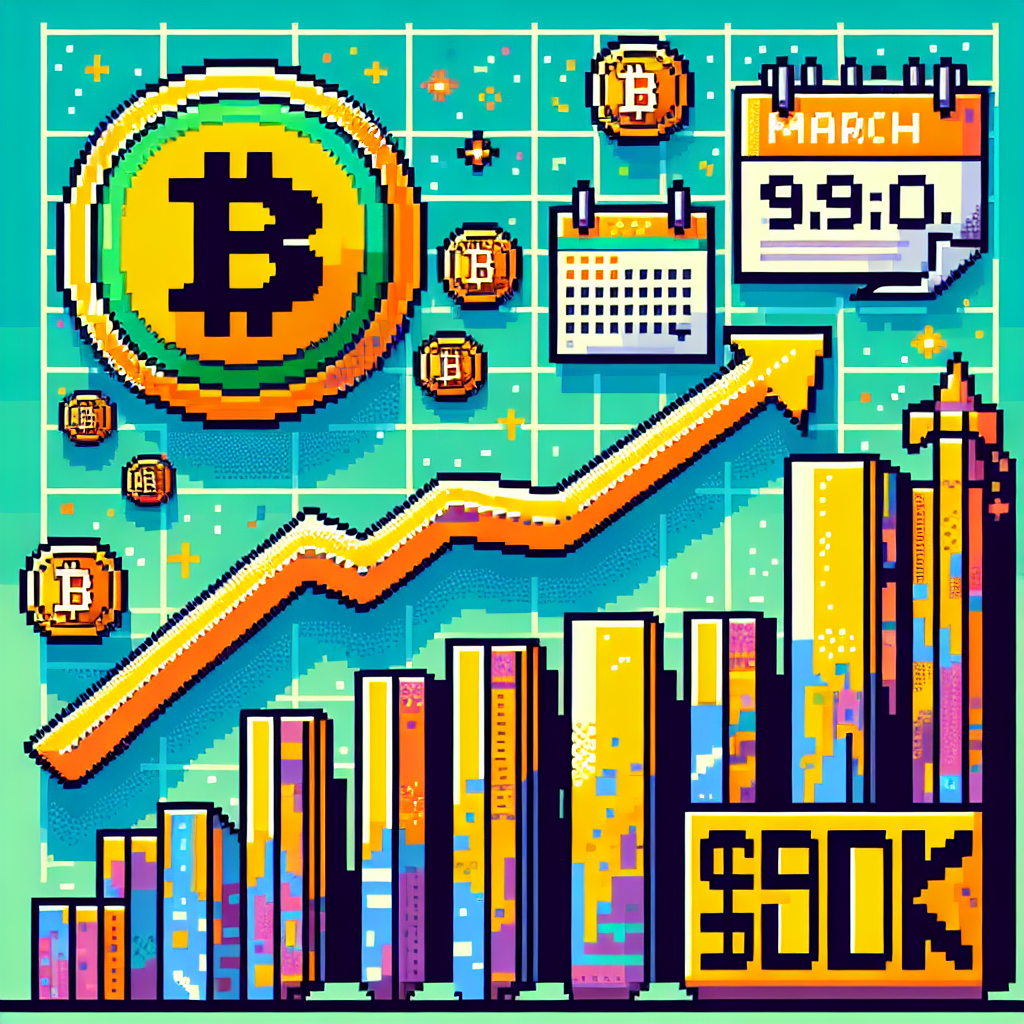
Bitcoin Rises to $90K for the First Time Since Early March – CoinDesk | Analysis by Brian Moineau

Bitcoin Rises to $90K for the First Time Since Early March - CoinDesk | Analysis by Brian Moineau

Bitcoin Hits $90K: A Cryptocurrency Comeback and Market Momentum

In a dazzling display of financial fireworks, Bitcoin has surged to $90,000, a level not seen since early March. The cryptocurrency's rise has coincided with a rally in U.S. equities, which gained over 1% on what traders are calling "Turnaround Tuesday." This harmonious dance between traditional markets and digital currencies highlights a renewed optimism in the financial landscape, but what exactly is fueling this upbeat atmosphere?

The backdrop to Bitcoin’s breakout is an intriguing tapestry of global economic factors. For one, the Federal Reserve's recent dovish stance has eased fears of aggressive interest rate hikes, providing a supportive environment for risk assets. Additionally, the U.S. economy has shown signs of resilience, with recent employment data surpassing expectations. These developments have buoyed investor sentiment, creating a ripple effect across various markets, including cryptocurrencies.

But Bitcoin's rise isn't just about macroeconomic trends. The digital currency has seen growing institutional interest, further cemented by the increasing integration of blockchain technology in mainstream financial systems. Companies like BlackRock and Fidelity continue to explore Bitcoin ETFs, a move that could usher in a new wave of investment from traditional sectors. This institutional confidence lends Bitcoin a credibility that was once elusive, especially during its earlier, more volatile years.

Outside the financial sphere, Bitcoin's resurgence mirrors a broader shift in global dynamics. For instance, the ongoing advancements in digital currencies have forced governments worldwide to consider their own central bank digital currencies (CBDCs). Countries like China are racing ahead with their digital yuan, while the European Central Bank is actively exploring a digital euro. These developments indicate that the world is inching closer to a future where digital currencies play a pivotal role in everyday transactions.

In the realm of technology, the rise of Bitcoin aligns with the growing interest in decentralized finance (DeFi) and non-fungible tokens (NFTs). These innovations have captured the imagination of both tech enthusiasts and investors, further blurring the lines between finance and technology. The boom in NFTs, for instance, has shown how blockchain technology can revolutionize industries beyond finance, including art, music, and entertainment.

While the cryptocurrency market is notorious for its volatility, this recent rally feels different. It reflects a maturation of the space, with Bitcoin acting as a bellwether for broader trends. Yet, as with any investment, caution is warranted. The road ahead may be paved with both opportunities and obstacles, as regulatory scrutiny intensifies and the global economic landscape continues to evolve.

In conclusion, Bitcoin's rise to $90,000 is more than just a headline – it's a testament to the shifting paradigms in finance and technology. As we navigate this brave new world, one thing is certain: the future of money is digital, and Bitcoin is leading the charge. Whether you're a seasoned investor or a curious onlooker, the unfolding narrative of cryptocurrency is one worth watching. After all, in the words of the legendary investor Warren Buffett, "Someone is sitting in the shade today because someone planted a tree a long time ago." Bitcoin's journey is just beginning, and its branches are reaching ever higher.

*For more insights on the intersection of finance and technology, stay tuned and keep exploring the possibilities that the digital future holds.*

Read more about AI in Business

Read more about Latest Sports Trends

Read more about Technology Innovations

Major analysts revamp gold price targets after historic rally – TheStreet | Analysis by Brian Moineau

Major analysts revamp gold price targets after historic rally - TheStreet | Analysis by Brian Moineau

Title: Glint of Gold: What Lies Ahead in 2025?

Ah, gold—one of the most fascinating and enduring assets in the financial world. It’s been around for millennia, symbolizing wealth, power, and sometimes a little bit of luck. Recently, gold has been glittering in the spotlight again as major analysts have revamped their price targets following a historic rally. But what's in store for this precious metal in 2025? Let’s take a look at the golden horizon with a twinkle in our eyes.

A Golden Rally: What's Happening?


In the financial world, gold often acts as a safe haven, a comforting shiny rock in tumultuous times. Over the past few years, amid global uncertainties—think trade wars, pandemics, and geopolitical tensions—investors have flocked to gold, driving its price to unprecedented highs. According to TheStreet, major analysts are now adjusting their targets to reflect this historic rally, and many are optimistic about the metal's continued ascent.

Why the Sudden Increase?


A cocktail of factors has contributed to gold's recent rally. Low-interest rates and quantitative easing policies across the globe have made traditional savings less attractive, pushing investors toward gold. The dollar's fluctuations have also played a role; typically, when the dollar weakens, gold strengthens. Additionally, there's a growing sentiment that gold is a hedge against inflation, which is increasingly on everyone's lips as economies recover and spend post-pandemic.

Connections to the Wider World


Gold's rise isn't happening in a vacuum. Consider the broader economic and political context. The global push for green energy and technology is reshaping industries and economies, potentially affecting traditional markets. For instance, the increasing demand for precious metals like lithium and copper for electric vehicles might influence investor behavior toward metals, including gold.

Moreover, geopolitical uncertainties, like the ongoing tensions in the South China Sea and trade dynamics between major powers, continue to make gold an attractive investment. As the world becomes more interconnected, the ripples of one region's instability can quickly spread, prompting a move to safer assets.

What About 2025?


So, what might we expect in 2025? While crystal balls tend to be hazy, there are a few scenarios to consider. If inflation continues to rise, driven by economic recovery and stimulus spending, gold could remain appealing as a protective asset. Technological advancements and the green transition could also alter the landscape, potentially increasing demand for gold in electronics and renewable technologies.

On the flip side, if global tensions ease and economies stabilize, we might see a shift back to equities and other riskier assets, potentially cooling gold's rally. However, given the unpredictable nature of global politics and economics, gold's role as a hedge will likely keep it in the investment conversation.

Final Thoughts


Gold's allure is timeless, and its role in the financial ecosystem continues to evolve. While predicting its exact trajectory by 2025 remains speculative, the factors influencing its price are clear and interconnected with broader global trends. Whether you're a seasoned investor or just someone who appreciates the shimmer of potential, gold will likely continue to captivate and challenge us in the years to come. Keep an eye on the gold market—it might just surprise you!

In the end, whether gold continues to rally or stabilizes, it serves as a reminder of the intricate dance between economies, politics, and human behavior. As we watch these dynamics unfold, let's not forget to appreciate the beauty of the journey—after all, life is too short not to enjoy a little glitter along the way!

Read more about AI in Business

Read more about Latest Sports Trends

Read more about Technology Innovations

Stock markets lurch on false Trump tariff pause report – Axios | Analysis by Brian Moineau

Stock markets lurch on false Trump tariff pause report - Axios | Analysis by Brian Moineau

Title: The Stock Market Tango: Dancing to the Tune of Fake News

Welcome to the world of stock markets, where the only constant is change—and sometimes confusion. In a recent twist, the stock market took a rollercoaster ride, all thanks to a report about a pause in Trump's tariffs that turned out to be as genuine as a three-dollar bill. According to Axios, this latest episode of "Market Mayhem" was sparked by a false report claiming a halt in tariffs, which the White House swiftly dismissed as "fake news" in a statement to CNBC.

The Anatomy of Market Volatility


Let's take a moment to dissect this. The stock market is a complex beast, influenced by a myriad of factors from economic indicators to geopolitical events. But perhaps one of its most peculiar quirks is its susceptibility to news—both real and imagined. This incident serves as a reminder of how the mere whisper of policy change can send traders into a frenzy, much like a cat spotting a laser pointer.

A Trump Card in the Market Game


Donald Trump, former President of the United States, has long been a polarizing figure, not just in politics but also in economics. His tenure was marked by a series of tariffs, particularly targeting China, which sent ripples through global markets. While some applauded these measures as necessary for protecting American industries, others criticized them for sparking trade wars and market instability. The recent false report of a tariff pause highlights how Trump's policies continue to cast a long shadow over market behavior, even after his presidency.

Global Connections: When Markets Sneezed


This isn't the first time markets have reacted dramatically to news. In fact, it's reminiscent of the "Taper Tantrum" of 2013, when mere hints of the Federal Reserve dialing back its bond-buying program sent shockwaves through financial markets worldwide. Similarly, in our interconnected global economy, a hiccup in one part of the world can trigger a sneeze everywhere else. This underscores the interconnectedness of modern markets and the importance of reliable information.

The Role of Media: A Double-Edged Sword


In today's digital age, the media wields significant power. With a single tweet or headline capable of moving markets, the responsibility for accuracy is immense. Yet, as this incident shows, misinformation can spread like wildfire, with the potential to cause real-world consequences. This calls to mind the age-old adage: trust, but verify. Investors and consumers alike must remain vigilant and discerning, sifting through the noise to find the truth.

Final Thoughts: Navigating the Noise


As we navigate the ever-changing landscape of global markets, it's crucial to maintain a level head and a healthy dose of skepticism. While the stock market's reaction to the false tariff pause report serves as a cautionary tale, it's also a testament to the dynamic nature of finance. In the end, markets will continue to ebb and flow, influenced by a complex web of factors. The key is to remain informed, adaptable, and perhaps most importantly, to take a deep breath and remember that not all headlines are what they seem.

In the words of Warren Buffett, "The stock market is designed to transfer money from the Active to the Patient." So, let's embrace the ride, stay patient, and keep our eyes on the long-term horizon. After all, in the world of stocks, it's often the tortoise, not the hare, that wins the race.

Read more about AI in Business

Read more about Latest Sports Trends

Read more about Technology Innovations

Hedge funds capitulate, investors brace for margin calls in market rout – Yahoo Finance | Analysis by Brian Moineau

Hedge funds capitulate, investors brace for margin calls in market rout - Yahoo Finance | Analysis by Brian Moineau

Navigating the Storm: Hedge Funds, Trade Wars, and the Market's Rollercoaster

Ah, the financial markets—a place where fortunes can be made, lost, or simply evaporate like a mist on a sunny morning. The recent news from the world of hedge funds is a testament to the latter. According to a gripping piece by Yahoo Finance, several hedge funds are throwing in the towel, unloading stocks faster than you can say "market rout." As U.S. President Donald Trump's trade war continues to cast a long shadow over global markets, these financial giants find themselves grappling with the tumultuous seas of economic uncertainty.

The Hedge Fund Exodus: A Closer Look

Hedge funds have always been the adrenaline junkies of the financial world, taking on risks that others shy away from. Yet, even they have their limits. The trade war, initiated by former President Trump, was like an unexpected plot twist in a financial thriller, leaving hedge funds in a precarious position. Many are now offloading their holdings, anticipating the dreaded margin calls that could spell financial ruin.

In the world of finance, a margin call is akin to the unwelcome guest at a party—inevitable but unpleasant. When investors borrow money to buy stocks, they do so with the expectation that the value of their investments will rise. But when markets falter, as they have been recently, those borrowed funds can turn into a financial albatross.

A Global Perspective: Trade Wars and Market Waves

While the hedge funds are busy recalibrating their strategies, the rest of us are left to ponder the broader implications. The trade war, which began over tariffs and has since snowballed into a full-blown economic conflict, is not just a U.S.-China affair. It’s a global phenomenon, sending ripples through economies worldwide.

Countries like Germany, heavily reliant on exports, are feeling the pinch. Even emerging markets that were once the darlings of global investors are now seen as risky bets. It's a classic case of how interconnected our world has become—a butterfly flaps its wings in Washington D.C., and a typhoon develops in Hong Kong.

Drawing Parallels: Financial Markets and Climate Change

Interestingly, the uncertainty in financial markets mirrors another pressing issue: climate change. Both are global problems requiring coordinated efforts and innovative solutions. While hedge funds grapple with market volatility, governments and businesses worldwide are facing pressure to address environmental changes before they become irreversible.

The idea of "capitulation" is not just a financial term; it can also apply to how we handle environmental and social challenges. Just as hedge funds are rethinking their strategies, perhaps it's time for global leaders to rethink how we address climate change, embracing sustainability as a long-term investment in the planet's future.

Final Thoughts: Weathering the Market Tempest

As hedge funds navigate this financial storm, investors are left bracing for impact. The market, much like the weather, is ever-changing and unpredictable. Yet, within this uncertainty lies opportunity—for those willing to adapt and innovate.

In the words of Warren Buffett, "Be fearful when others are greedy and greedy when others are fearful." As the financial world holds its breath, perhaps the next wave of opportunity is just around the corner, waiting for the bold to seize it. Until then, keep your seatbelt fastened and your eyes on the horizon—it's going to be a bumpy ride.

For those interested in the original article, you can read more on Yahoo Finance. And for a broader understanding of how trade wars can affect global markets, consider exploring related material on economic policies and their impacts on global trade dynamics.

Read more about AI in Business

Read more about Latest Sports Trends

Read more about Technology Innovations

Tracking Trump: Tariff threats send stocks tumbling; fallout from the Trump-Zelensky meeting; and more – The Washington Post | Analysis by Brian Moineau

Tracking Trump: Tariff threats send stocks tumbling; fallout from the Trump-Zelensky meeting; and more - The Washington Post | Analysis by Brian Moineau

**Title: Navigating the Trump Effect: Markets, Meetings, and More**

Ah, the whirlwind world of politics and economics! Just when you think the waters are calming, a new ripple—or in this case, a wave—comes along, courtesy of President Donald Trump. In the first 100 days of Trump's presidency, the markets experienced a rollercoaster ride, largely thanks to his unpredictable policy announcements. For instance, recent tariff threats have left stocks tumbling, creating a ripple effect akin to dropping a boulder into a pond. But what exactly is happening here, and how does it connect to the broader world stage?

**The Tariff Tango**

Let's start with tariffs. Trump's aggressive stance on trade, particularly with China, has been a hallmark of his administration. By threatening tariffs, he aims to level the playing field for American businesses, but this approach often sends the stock market into a frenzy. Investors are left holding their breath, unsure of the next move in this high-stakes game of economic chess. The Dow Jones Industrial Average, for instance, often fluctuates wildly with each new announcement.

But Trump's approach isn't without precedent. Remember the Smoot-Hawley Tariff Act of 1930? It aimed to protect American businesses during the Great Depression but instead led to a trade war and worsened the economic downturn. History, it seems, has a way of echoing through the ages.

**Diplomatic Drama: The Trump-Zelensky Meeting**

In another episode of international intrigue, fallout from the Trump-Zelensky meeting has captured global attention. This meeting, which led to a controversial phone call, became a linchpin in the impeachment inquiry against Trump. The conversation allegedly involved Trump pressuring Ukrainian President Volodymyr Zelensky to investigate Joe Biden, a potential political rival.

The diplomatic dance here is reminiscent of the Cold War era, where every conversation had the potential to shift the geopolitical landscape. And while the world watched, it became clear that Trump's presidency was as much about the art of the deal as it was about the art of diplomacy—or lack thereof.

**Trump's Unconventional Approach**

Love him or loathe him, Trump's style is anything but conventional. His presidency has been marked by a break from tradition, whether it's engaging directly with world leaders via Twitter or hosting impromptu press conferences. This unpredictability keeps both supporters and critics on their toes, creating a political climate that's as invigorating as it is exhausting.

Outside of the specifics of tariffs and meetings, Trump's presidency aligns with a global trend of populist leaders rising to power. Figures like Jair Bolsonaro in Brazil and Boris Johnson in the UK reflect a broader shift in politics—a move towards leaders who position themselves as outsiders willing to shake up the status quo.

**Final Thoughts**

As we track the tremors of Trump's first 100 days, it's essential to recognize that we're witnessing a unique chapter in American history. The ripple effects of his policies and interactions are felt not only on Wall Street but across the globe. Whether this approach ultimately benefits or hinders the US and the world remains to be seen.

In the meantime, let's grab some popcorn and watch the show unfold. After all, in the world of Trump, the only certainty is uncertainty itself. And who knows? In this ever-evolving narrative, the next plot twist could be just around the corner.

Read more about AI in Business

Read more about Latest Sports Trends

Read more about Technology Innovations

Is Cardano ready for a breakout? Key data suggests… – AMBCrypto News | Analysis by Brian Moineau

Is Cardano ready for a breakout? Key data suggests… - AMBCrypto News | Analysis by Brian Moineau

**Is Cardano on the Brink of a Breakout? Exploring the Crypto Landscape**

As the world of cryptocurrency continues to evolve, one name has been making waves with its potential for a major comeback: Cardano. According to a recent article from AMBCrypto News, Cardano is showing promising signs of a rebound, with key technical indicators suggesting an imminent breakout. But what does this mean for investors, and how does it fit into the larger crypto narrative?

### The Technical Lowdown

Cardano, often hailed as one of the most sophisticated blockchain platforms, is no stranger to the rollercoaster ride that is the cryptocurrency market. The article highlights that key technical indicators, such as moving averages and volume patterns, are aligning in a way that suggests a bullish phase might be on the horizon for ADA, Cardano's native token.

This potential breakout is not just about numbers on a chart. It's about the consistent effort by Cardano’s team to build a robust ecosystem. The platform, known for its emphasis on scalability and sustainability, has been gaining traction with various development updates and partnerships. Cardano's focus on peer-reviewed research and a layered architecture sets it apart from many of its competitors.

### A Global Context

The buzz around Cardano comes at a time when the global financial landscape is in flux. With traditional stock markets facing volatility due to geopolitical tensions and economic uncertainties, cryptocurrencies are increasingly being seen as alternative investment avenues. Cardano’s potential breakout could therefore attract not just seasoned crypto traders, but also newcomers looking for opportunities outside the conventional finance realm.

Moreover, the rising interest in decentralized finance (DeFi) and non-fungible tokens (NFTs) places Cardano in a sweet spot. As a platform with smart contract capabilities, it has the infrastructure to support a wide array of decentralized applications, potentially driving further demand for ADA.

### Drawing Parallels

Cardano's situation can be compared to the broader trend of technological resurgence seen in other industries. For instance, the electric vehicle (EV) sector, led by companies like Tesla, has experienced its own series of ups and downs. Yet, the underlying technology and commitment to innovation have kept investor interest alive. Similarly, Cardano's focus on research-driven development echoes the strategic patience seen in successful tech enterprises.

### The Road Ahead

While it's exciting to speculate about a Cardano breakout, it's essential to approach such predictions with cautious optimism. The crypto world is notoriously unpredictable, and even the most promising indicators can sometimes lead to unexpected outcomes. Investors should remain informed and consider diversifying their portfolios to mitigate risks.

In conclusion, Cardano's potential for a breakout is certainly a topic to watch in the coming months. Whether you're a crypto enthusiast or a casual observer, the developments within the Cardano ecosystem could offer intriguing insights into the future of digital currencies. As we continue to navigate this dynamic landscape, it's clear that Cardano's journey is just one part of a broader narrative of innovation and transformation in the financial world.

So, keep your eyes on the charts and stay curious—because in the world of crypto, change is always just around the corner.

Read more about AI in Business

Read more about Latest Sports Trends

Read more about Technology Innovations