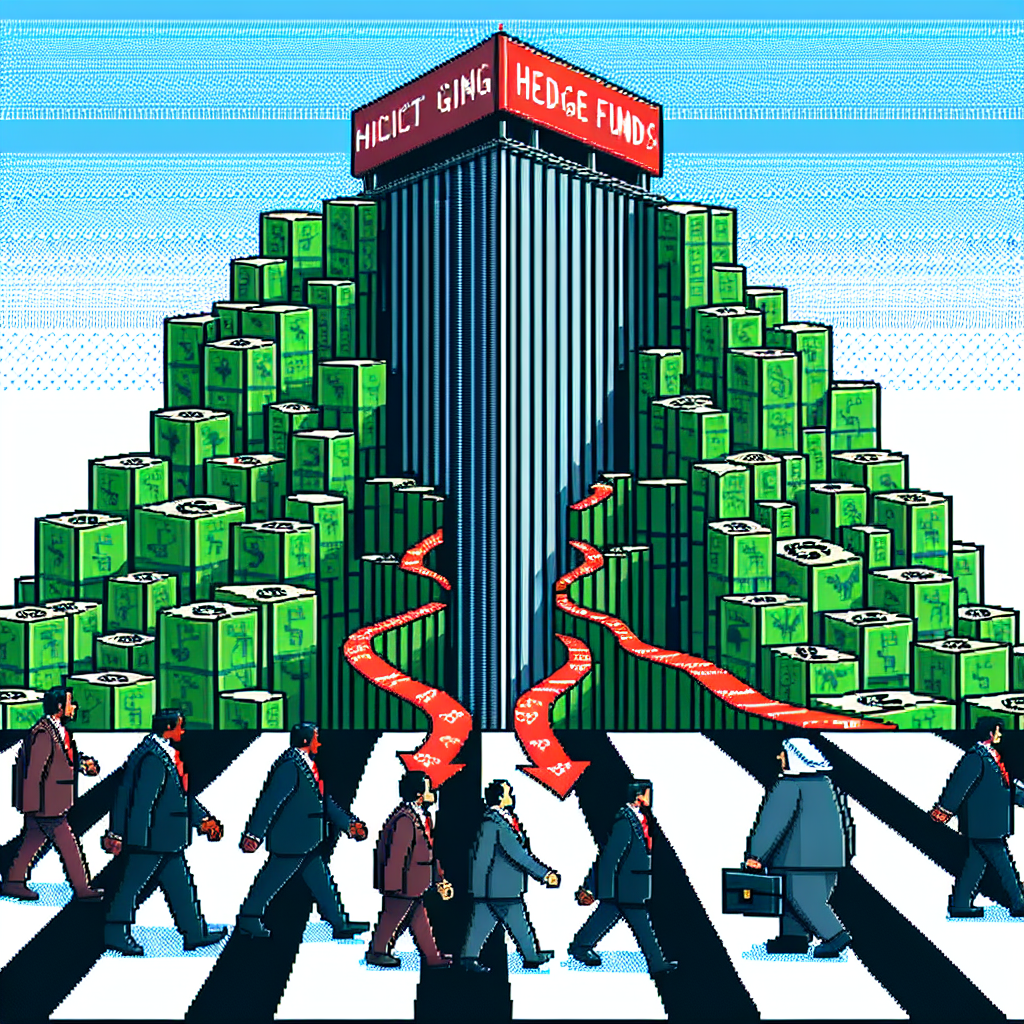
Traders Flee Giants to Forge Leaner Funds | Analysis by Brian Moineau

Traders Are Ditching Giant Hedge Funds to Set Their Own Terms

Introduction

There’s a quietly disruptive migration on Wall Street: traders are leaving giant hedge funds and starting smaller shops that let them “set their own terms.” That phrase — set their own terms — captures the new calculus for many market veterans: give up multimillion-dollar pay packages and access to billions in firepower, in exchange for autonomy, simpler economics and the freedom to run strategies on their timetable.

This trend shows up everywhere from proprietary desks spinning out to senior portfolio managers taking a smaller balance sheet but a bigger slice of the upside. It feels less like a rush to become celebrities and more like a return-to-basics: control risk, keep the upside, cut the bureaucracy.

Why traders are walking away

  • Pay structure friction. Big multi-strategy firms can offer juicy headline compensation today, but they also centralize profits, allocate capital across many teams, and use internal performance hurdles. Starting their own shop lets traders control fee splits, carry and vesting — even if the dollar amount initially looks smaller.
  • Cultural and operational drag. Giant firms have layers of compliance, comms, and process. For a trader whose alpha relies on quick decisions and nimble positioning, that drag can erode returns and morale.
  • Technology and infrastructure are cheaper. Cloud providers, third-party execution/prime services, and low-latency platforms have lowered the fixed cost of operating a fund. That makes it feasible to run a boutique with professional infrastructure but far lighter governance.
  • Brand and investor appetite. Institutional allocators who once preferred big brands are more willing to back small, high-performing teams — if they can show a clean track record and robust risk controls.
  • Risk appetite and diversification. Some traders want to focus on a single niche (event-driven, macro, relative value) rather than being shoehorned into a multi-strategy firm’s allocation mix. Running a boutique lets them concentrate on what worked for them historically.

A different bargain

Leaving a giant firm is not simply a lifestyle choice; it’s a new deal structure. Traders who spin out tend to renegotiate three things:

  • Capital: Instead of hundreds of millions or billions, they may start with tens of millions raised from seed investors, family offices, or former colleagues.
  • Economics: Boutiques often offer founders a larger share of management fees and carry, and they can tailor compensation or clawback terms to attract talent.
  • Governance: Less committee oversight, fewer reporting layers, and a direct line between desk performance and compensation.

That bargain isn’t risk-free. Boutique founders shoulder fundraising, investor relations, and operational headaches. They must buy or rent prime broker relationships, set up compliance, and often put more of their personal capital at stake. But for many, that trade-off — greater upside per dollar and less internal friction — is worth it.

Context matters: why now?

This movement isn’t brand-new. Over decades, regulatory shifts (think post-crisis reforms) and the growth of multi-strategy giants nudged talent toward or away from different platforms. What’s changing now is the combination of investor sophistication and low-cost infrastructure.

  • Allocators are more discerning. Due diligence has gotten more standardized; investors can evaluate small teams quickly and scale allocations if performance persists.
  • Tech lowers barriers. Outsourced trading systems, cloud data, and institutional service providers let small teams run complex strategies without building everything in-house.
  • The market’s scale paradox. Some strategies don’t scale well to billions; they generate alpha only at modest sizes. That structural reality makes small, nimble shops more attractive for certain approaches.

Examples and early results

  • Some boutique launches have been quietly successful, growing from a seed allocation to several hundred million AUM in a few years by sticking to their playbook and preserving risk discipline.
  • Other spinoffs stumble on fundraising or operational missteps — a reminder that skill at trading doesn’t automatically translate to running a business.

Lessons for firms and allocators

  • For large firms: retaining top traders may require reassessing how capital and carry are allocated, and where bureaucracy can be trimmed without sacrificing controls.
  • For allocators: diversification via small, specialized managers can offer exposures that large funds cannot supply — but it requires operational diligence and realistic sizing.
  • For traders: the decision to leave should account not only for potential upside, but also for the commitment to raise capital, negotiate service providers, and manage investor relationships.

What success looks like

Successful boutiques share a few traits:

  • A clear, defensible strategy that doesn’t rely on scale to produce alpha.
  • Strong, transparent risk management.
  • Reasonable initial capitalization and a credible plan for growth.
  • Discipline in investor communications and realistic performance expectations.

Transitioning smoothly often means partnering with experienced ops people or third-party providers who can shoulder the back-office load while founders focus on trading.

My take

The shift toward smaller, trader-led shops is less a revolt than a rebalancing. Big firms still matter for massive, diversified mandates and infrastructure-heavy strategies. But the market is making room for focused operators who trade less to chase headline AUM and more to preserve edge.

For traders, the choice comes down to trade-offs: security and scale versus speed and upside alignment. For investors, the opportunity is to access targeted alpha if they’re willing to do the homework.

Either way, the headline — traders ditching giant hedge funds to set their own terms — captures a deeper market evolution: the democratization of fund infrastructure and a renewed focus on alignment between decision-makers and owners.

Final thoughts

Expect more of this mosaic: big funds remain, boutiques proliferate, and allocators stitch exposures together. The winners will be traders who understand not only markets, but the operational and investor-relations work that turns trading skill into a durable business. The smart ones aren’t just leaving — they’re building a different kind of platform.

Sources


Related update: We recently published an article that expands on this topic: read the latest post.
Related update: We recently published an article that expands on this topic: read the latest post.

Fed Split Drives Sudden Market Rally | Analysis by Brian Moineau

Stocks Rally as Rate-cut Odds Soar: Why a Single Fed Voice Moved Markets

Markets can be moody, and on November 21, 2025 they were downright fickle. One speech from a senior Fed official — New York Fed President John Williams — was enough to flip investor sentiment, send stocks higher and reprice the odds of a rate cut at the Fed’s December meeting. But the story isn’t just about a single quote; it’s about how fragile market expectations have become and why investors now have to navigate a Fed that sounds increasingly divided.

An attention-grabbing moment

  • In prepared remarks delivered at a Central Bank of Chile event on November 21, 2025, John Williams said he “still see[s] room for a further adjustment in the near term” to move policy closer to neutral.
  • Markets reacted fast: major indexes rallied intraday (the Dow, S&P 500 and Nasdaq all jumped), bond yields fell and CME Group’s FedWatch tool sharply increased the probability priced in for a 25-basis-point cut at the December 9–10 Fed meeting. (forbes.com)

That single dovish tilt — from a Fed official who sits permanently on the Federal Open Market Committee — was enough to reverse a recent shift toward pausing further easing. But Williams’ view wasn’t unanimous inside the Fed: other officials publicly backed holding rates steady for now, keeping uncertainty high. (forbes.com)

Why Wall Street cared so much

  • Expectations rule short-term flows. Futures and options markets move quickly when a credible policymaker signals a change. Williams is influential; his willingness to countenance another cut pushed traders to reprice December odds aggressively. (forbes.com)
  • Rate-sensitive sectors react fast. Homebuilders, gold, and consumer discretionary names — equities that benefit when borrowing costs fall — saw notable gains as investors positioned for easier policy. Technology and cyclical names that had previously weathered a hawkish Fed also saw rotations. (investopedia.com)
  • Bond markets set the backdrop. Treasury yields fell on the news, reflecting both the revised odds of policy easing and a quick move toward safer, lower-yield pricing. That in turn supports equity valuations by lowering discount rates for future earnings. (mpamag.com)

The Fed’s internal tension

  • Williams emphasized the labor market softness and said upside inflation risks had “lessened somewhat,” arguing there’s room to nudge policy toward neutral. But other officials and many market analysts remained cautious, pointing to still-elevated inflation readings and patchy labor data as reasons to hold steady. (forbes.com)
  • The result is a split Fed narrative: a powerful, market-moving voice saying “near-term cut possible,” and several colleagues advocating patience. That split creates whipsaw risk — big moves when each new datapoint or comment arrives.

What investors should watch next

  • The December 9–10 FOMC meeting calendar date. Markets have reweighted odds, but a true signal will come from Fed communications and incoming data between now and the meeting. (investopedia.com)
  • Labor-market indicators. Williams flagged downside risks to employment; if payrolls and wage growth weaken, the Fed’s tolerance for cuts grows. Conversely, stronger-than-expected job prints or stubborn inflation would swing the pendulum back. (forbes.com)
  • Fed rhetoric cohesion. Look for whether other Fed officials echo Williams’ tone or double-down on restraint. If the Fed’s public messaging becomes more uniform, the market’s volatility should ease. If the split persists, expect continued intra-day reversals. (finance.yahoo.com)

What this means practically:

  • Portfolio positioning may tilt toward rate-sensitive sectors if cuts look probable, but the risk of being wrong is real — a single stronger data release could flush those positions.
  • Volatility will remain elevated while the Fed’s internal debate plays out and the economic data stream remains mixed.

Quick takeaway points

  • A single influential Fed official can materially shift market expectations; John Williams’ “near-term” comment on Nov 21, 2025 did exactly that. (forbes.com)
  • Markets now price a much higher chance of a December rate cut, but the Fed is not united — several officials have favored maintaining current rates. (reuters.com)
  • Incoming labor and inflation data, plus the Fed’s subsequent communications, will determine whether this rally has legs or is a short-lived repricing.

My take

This episode is a reminder that markets trade not only on data but on narratives. A narrative shift — in this case, that the Fed might ease sooner — can drive swift, meaningful reallocation across assets. For investors, the sensible middle path is to respect the potential for policy easing while protecting against the opposite outcome. In practice, that means balancing exposure to assets that benefit from looser policy with hedges or sizing discipline in case the Fed leans back into restraint.

Sources

(Note: the Forbes story that prompted this piece ran on November 21, 2025; Reuters and Investopedia provide non-paywalled coverage and context cited above.)


Related update: We recently published an article that expands on this topic: read the latest post.


Related update: We recently published an article that expands on this topic: read the latest post.

Hedge funds capitulate, investors brace for margin calls in market rout – Yahoo Finance | Analysis by Brian Moineau

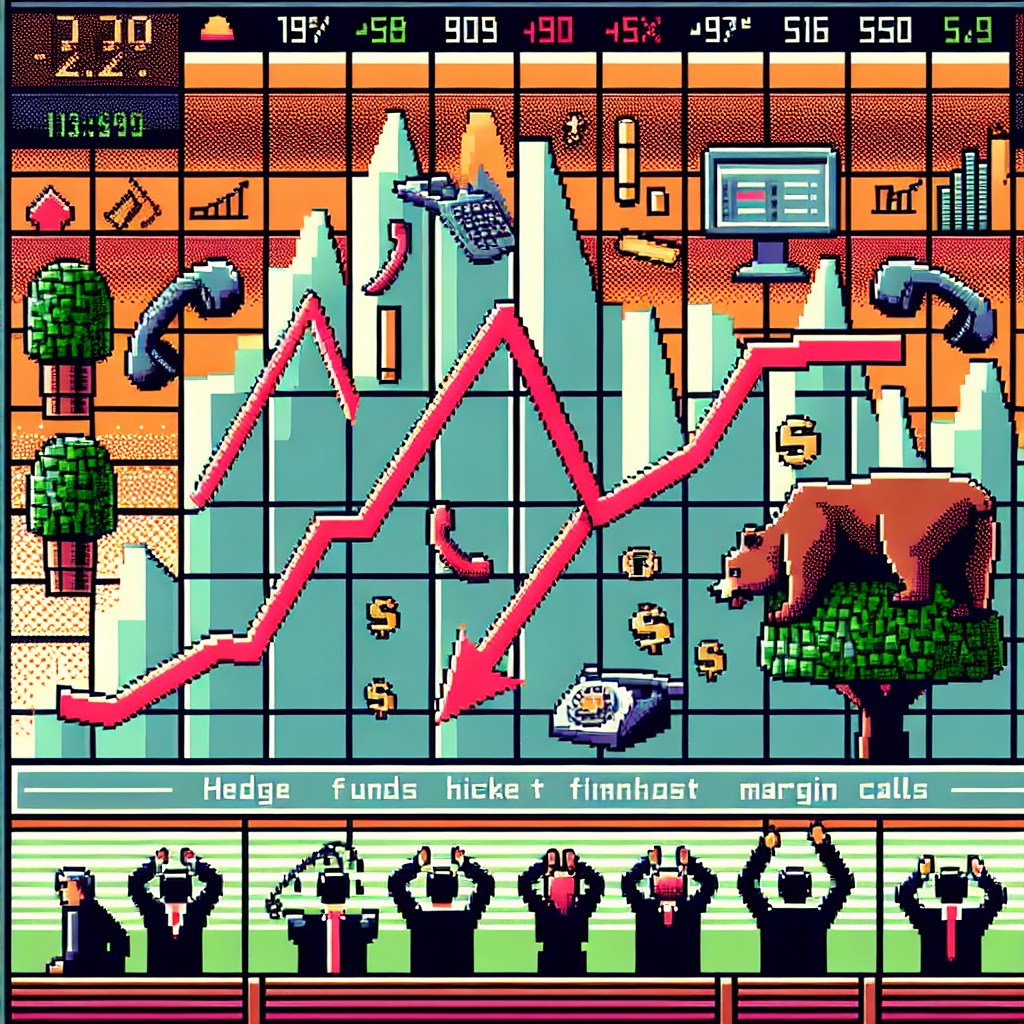
Hedge funds capitulate, investors brace for margin calls in market rout - Yahoo Finance | Analysis by Brian Moineau

Navigating the Storm: Hedge Funds, Trade Wars, and the Market's Rollercoaster

Ah, the financial markets—a place where fortunes can be made, lost, or simply evaporate like a mist on a sunny morning. The recent news from the world of hedge funds is a testament to the latter. According to a gripping piece by Yahoo Finance, several hedge funds are throwing in the towel, unloading stocks faster than you can say "market rout." As U.S. President Donald Trump's trade war continues to cast a long shadow over global markets, these financial giants find themselves grappling with the tumultuous seas of economic uncertainty.

The Hedge Fund Exodus: A Closer Look

Hedge funds have always been the adrenaline junkies of the financial world, taking on risks that others shy away from. Yet, even they have their limits. The trade war, initiated by former President Trump, was like an unexpected plot twist in a financial thriller, leaving hedge funds in a precarious position. Many are now offloading their holdings, anticipating the dreaded margin calls that could spell financial ruin.

In the world of finance, a margin call is akin to the unwelcome guest at a party—inevitable but unpleasant. When investors borrow money to buy stocks, they do so with the expectation that the value of their investments will rise. But when markets falter, as they have been recently, those borrowed funds can turn into a financial albatross.

A Global Perspective: Trade Wars and Market Waves

While the hedge funds are busy recalibrating their strategies, the rest of us are left to ponder the broader implications. The trade war, which began over tariffs and has since snowballed into a full-blown economic conflict, is not just a U.S.-China affair. It’s a global phenomenon, sending ripples through economies worldwide.

Countries like Germany, heavily reliant on exports, are feeling the pinch. Even emerging markets that were once the darlings of global investors are now seen as risky bets. It's a classic case of how interconnected our world has become—a butterfly flaps its wings in Washington D.C., and a typhoon develops in Hong Kong.

Drawing Parallels: Financial Markets and Climate Change

Interestingly, the uncertainty in financial markets mirrors another pressing issue: climate change. Both are global problems requiring coordinated efforts and innovative solutions. While hedge funds grapple with market volatility, governments and businesses worldwide are facing pressure to address environmental changes before they become irreversible.

The idea of "capitulation" is not just a financial term; it can also apply to how we handle environmental and social challenges. Just as hedge funds are rethinking their strategies, perhaps it's time for global leaders to rethink how we address climate change, embracing sustainability as a long-term investment in the planet's future.

Final Thoughts: Weathering the Market Tempest

As hedge funds navigate this financial storm, investors are left bracing for impact. The market, much like the weather, is ever-changing and unpredictable. Yet, within this uncertainty lies opportunity—for those willing to adapt and innovate.

In the words of Warren Buffett, "Be fearful when others are greedy and greedy when others are fearful." As the financial world holds its breath, perhaps the next wave of opportunity is just around the corner, waiting for the bold to seize it. Until then, keep your seatbelt fastened and your eyes on the horizon—it's going to be a bumpy ride.

For those interested in the original article, you can read more on Yahoo Finance. And for a broader understanding of how trade wars can affect global markets, consider exploring related material on economic policies and their impacts on global trade dynamics.

Read more about AI in Business

Read more about Latest Sports Trends

Read more about Technology Innovations