SpaceX IPO Hype: Investors, Beware | Analysis by Brian Moineau

The SpaceX IPO Is Coming — But Don't Let FOMO Lift You Off Without a Parachute

SpaceX IPO chatter is back in headlines, and this time the conversation feels different: the company that disrupted rocket manufacturing is reportedly preparing to file for an initial public offering, and big private-holders — from Cathie Wood’s ARK Venture Fund to smaller interval funds — look ready to ride the rocket. The idea of owning a sliver of Elon Musk’s aerospace empire is intoxicating, and headlines that suggest valuations in the trillions have retail and institutional investors rethinking how to get exposure.

But before you let excitement drive your allocation, pause. There are real reasons prices for funds holding private SpaceX stakes jumped on the news — and equally real reasons to read the fine print.

What just happened

  • Late 2025 and early 2026 reporting from several outlets said SpaceX is weighing a 2026 IPO and has taken steps such as permitting insider share sales and lining up banks. Reports suggested the offering could be enormous: raising tens of billions and valuing the company at well over $1 trillion. (investing.com)
  • Investors that already had private stakes (for example, interval/venture-style funds that can hold unlisted securities) saw inflows and NAV bumps as the prospect of a public exit became plausible. Cathie Wood’s ARK Venture Fund — which lists SpaceX among its private holdings — was highlighted frequently as a retail-accessible route to SpaceX exposure. (fortune.com)
  • The chatter intensified when Musk and SpaceX actions (including corporate moves like acquiring xAI) added coherence to the narrative that a public listing could be part of a broader strategy. (apnews.com)

Transitioning from rumor to reality, however, is often slippery in the private-company-to-IPO pipeline. SpaceX has long resisted going public; the timing, size, and structure (full company vs. Starlink spun-out, percentage of float, pricing strategy) will materially shape outcomes.

Why funds that own SpaceX stakes surged

  • Liquidity hope: Many closed-end and interval funds that can legally hold private shares (ARK Venture Fund, certain boutique private-shares funds) became a de facto retail-friendly on-ramp. News of an IPO converts theoretical private-value into a near-term liquidity catalyst. (finance.yahoo.com)
  • Revaluation effects: When major outlets report an impending IPO or insider share sale at a higher implied valuation, NAV estimates for funds holding those private securities often jump. That attracts inflows and media attention, which feeds the loop. (investing.com)
  • Narrative momentum: Firms like ARK sell a vision — Starlink, AI integration, and eventual Mars-scale markets — and investors who buy that future will pile into any vehicle that promises access. That narrative inflow can amplify price movements beyond fundamentals. (fortune.com)

The investor dilemma

  • Small float risk: Early indications suggest SpaceX might only sell a modest portion of equity in an IPO. If true, public investors could end up paying sky-high prices for shares that still trade thinly, while large shareholders retain control and most upside. Thin public floats can mean high volatility and poor price discovery at first. (investing.com)
  • Valuation stretches: Trillion-dollar valuations are headline-grabbing but hinge on optimistic revenue scenarios for Starlink, future data-center-in-space projects, and other ventures. Execution risk is real — regulatory hurdles, competition, and capital intensity all matter. (theguardian.com)
  • Fund mechanics differ: Buying an interval fund that holds SpaceX is not the same as buying a stock. Fee structures, redemption windows, NAV-to-market price discrepancies, and concentration limits can make these funds behave very differently from public equities. Investors should read prospectuses closely. (finance.yahoo.com)

How savvy investors should think about this

  • Differentiate access from value. Buying an ARK-like fund gives access to SpaceX as a private asset in a managed vehicle; it doesn’t guarantee easy, immediate liquidity at IPO pricing. Understand how much of the fund is actually exposed and what the fund’s redemption mechanics are. (cnbc.com)
  • Anticipate structure and timing. Watch for details: will SpaceX file confidentially, will it spin out Starlink, how much new equity will it issue, and when will insiders be allowed to sell? These choices determine whether the IPO is a capital-raising event, a liquidity event for insiders, or both. (investing.com)
  • Keep portfolio sizing conservative. Even if you believe in the long-term upside, a sensible allocation caps the downside from valuation shock or early trading volatility. Treat any pre-IPO exposure as a high-conviction but higher-risk sleeve of a portfolio.
  • Expect headline volatility. Media coverage will swing funds and related public names (chip suppliers, launch partners). If you trade on headlines, plan for whipsaw. (heygotrade.com)

SpaceX IPO: short-term winners and longer-term questions

  • Winners in the near term are likely to be funds that already held private stakes and firms providing supply-chain exposure (e.g., satellite components, launch-parter suppliers). Those positions can re-rate quickly when an IPO looks imminent. (observer.com)
  • Longer-term, the critical questions remain: can Starlink scale profitably in a competitive orbital-internet market? Will capital needs for AI-in-space or mega-data-centers justify the lofty price tags? And how much governance and insider control will public investors actually get? These questions determine whether the IPO is a historic market event or a short-lived media spectacle.

My take

An impending SpaceX IPO is a landmark moment for markets and technology investing — if it happens at the reported scale, it will change index composition and investor access to the satellite-and-rocket economy. That excitement is understandable. But the prudent move is not to chase headlines; it’s to study structure, read fund disclosures, and size positions to reflect both the upside and a meaningful chance of early disappointment. For most investors, indirect exposure through diversified vehicles or modest allocations makes more sense than concentrated bets on a single private company during an emotionally charged run-up.

Sources

(Note: the original Barron’s piece you referenced influenced the framing for this post; the reporting above synthesizes multiple open sources that covered the potential SpaceX IPO and the flows into funds holding private stakes.)


Related update: We recently published an article that expands on this topic: read the latest post.
Related update: We recently published an article that expands on this topic: read the latest post.

Traders Flee Giants to Forge Leaner Funds | Analysis by Brian Moineau

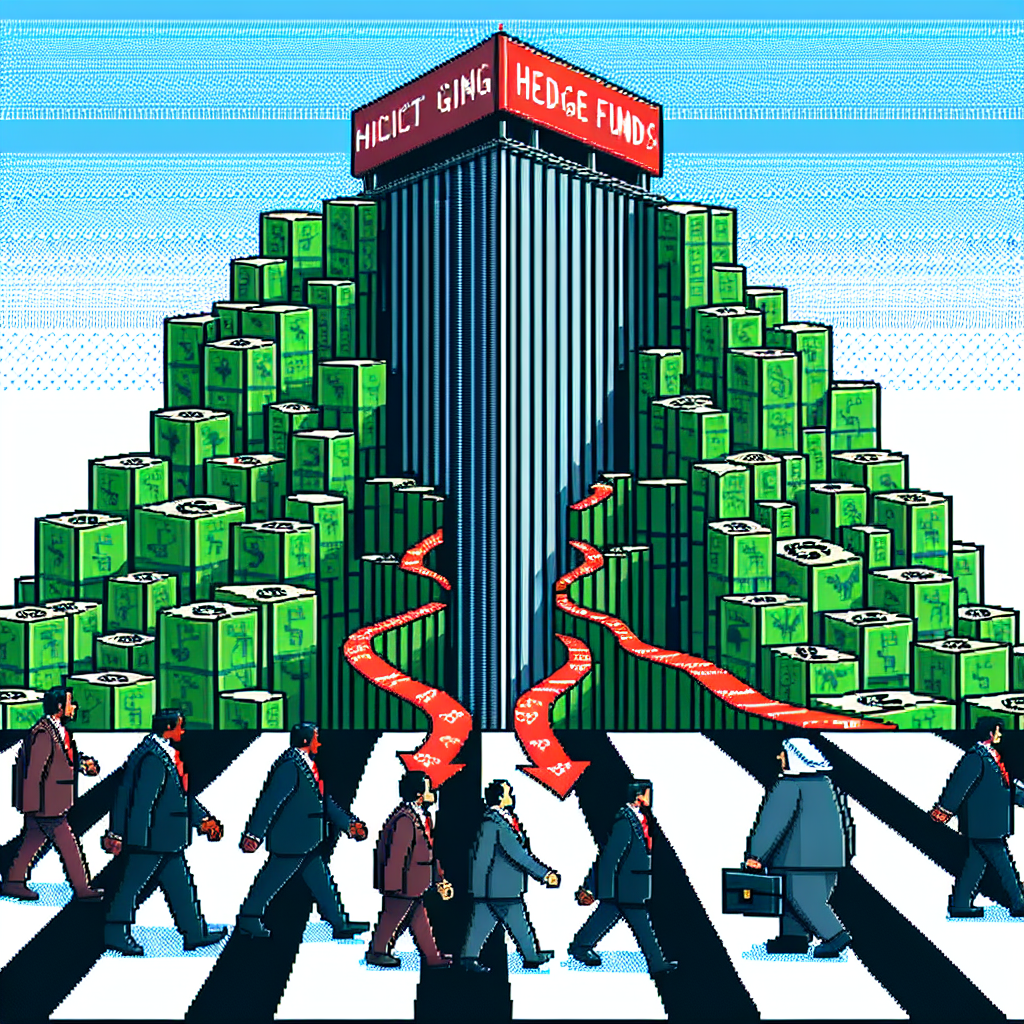
Traders Are Ditching Giant Hedge Funds to Set Their Own Terms

Introduction

There’s a quietly disruptive migration on Wall Street: traders are leaving giant hedge funds and starting smaller shops that let them “set their own terms.” That phrase — set their own terms — captures the new calculus for many market veterans: give up multimillion-dollar pay packages and access to billions in firepower, in exchange for autonomy, simpler economics and the freedom to run strategies on their timetable.

This trend shows up everywhere from proprietary desks spinning out to senior portfolio managers taking a smaller balance sheet but a bigger slice of the upside. It feels less like a rush to become celebrities and more like a return-to-basics: control risk, keep the upside, cut the bureaucracy.

Why traders are walking away

  • Pay structure friction. Big multi-strategy firms can offer juicy headline compensation today, but they also centralize profits, allocate capital across many teams, and use internal performance hurdles. Starting their own shop lets traders control fee splits, carry and vesting — even if the dollar amount initially looks smaller.
  • Cultural and operational drag. Giant firms have layers of compliance, comms, and process. For a trader whose alpha relies on quick decisions and nimble positioning, that drag can erode returns and morale.
  • Technology and infrastructure are cheaper. Cloud providers, third-party execution/prime services, and low-latency platforms have lowered the fixed cost of operating a fund. That makes it feasible to run a boutique with professional infrastructure but far lighter governance.
  • Brand and investor appetite. Institutional allocators who once preferred big brands are more willing to back small, high-performing teams — if they can show a clean track record and robust risk controls.
  • Risk appetite and diversification. Some traders want to focus on a single niche (event-driven, macro, relative value) rather than being shoehorned into a multi-strategy firm’s allocation mix. Running a boutique lets them concentrate on what worked for them historically.

A different bargain

Leaving a giant firm is not simply a lifestyle choice; it’s a new deal structure. Traders who spin out tend to renegotiate three things:

  • Capital: Instead of hundreds of millions or billions, they may start with tens of millions raised from seed investors, family offices, or former colleagues.
  • Economics: Boutiques often offer founders a larger share of management fees and carry, and they can tailor compensation or clawback terms to attract talent.
  • Governance: Less committee oversight, fewer reporting layers, and a direct line between desk performance and compensation.

That bargain isn’t risk-free. Boutique founders shoulder fundraising, investor relations, and operational headaches. They must buy or rent prime broker relationships, set up compliance, and often put more of their personal capital at stake. But for many, that trade-off — greater upside per dollar and less internal friction — is worth it.

Context matters: why now?

This movement isn’t brand-new. Over decades, regulatory shifts (think post-crisis reforms) and the growth of multi-strategy giants nudged talent toward or away from different platforms. What’s changing now is the combination of investor sophistication and low-cost infrastructure.

  • Allocators are more discerning. Due diligence has gotten more standardized; investors can evaluate small teams quickly and scale allocations if performance persists.
  • Tech lowers barriers. Outsourced trading systems, cloud data, and institutional service providers let small teams run complex strategies without building everything in-house.
  • The market’s scale paradox. Some strategies don’t scale well to billions; they generate alpha only at modest sizes. That structural reality makes small, nimble shops more attractive for certain approaches.

Examples and early results

  • Some boutique launches have been quietly successful, growing from a seed allocation to several hundred million AUM in a few years by sticking to their playbook and preserving risk discipline.
  • Other spinoffs stumble on fundraising or operational missteps — a reminder that skill at trading doesn’t automatically translate to running a business.

Lessons for firms and allocators

  • For large firms: retaining top traders may require reassessing how capital and carry are allocated, and where bureaucracy can be trimmed without sacrificing controls.
  • For allocators: diversification via small, specialized managers can offer exposures that large funds cannot supply — but it requires operational diligence and realistic sizing.
  • For traders: the decision to leave should account not only for potential upside, but also for the commitment to raise capital, negotiate service providers, and manage investor relationships.

What success looks like

Successful boutiques share a few traits:

  • A clear, defensible strategy that doesn’t rely on scale to produce alpha.
  • Strong, transparent risk management.
  • Reasonable initial capitalization and a credible plan for growth.
  • Discipline in investor communications and realistic performance expectations.

Transitioning smoothly often means partnering with experienced ops people or third-party providers who can shoulder the back-office load while founders focus on trading.

My take

The shift toward smaller, trader-led shops is less a revolt than a rebalancing. Big firms still matter for massive, diversified mandates and infrastructure-heavy strategies. But the market is making room for focused operators who trade less to chase headline AUM and more to preserve edge.

For traders, the choice comes down to trade-offs: security and scale versus speed and upside alignment. For investors, the opportunity is to access targeted alpha if they’re willing to do the homework.

Either way, the headline — traders ditching giant hedge funds to set their own terms — captures a deeper market evolution: the democratization of fund infrastructure and a renewed focus on alignment between decision-makers and owners.

Final thoughts

Expect more of this mosaic: big funds remain, boutiques proliferate, and allocators stitch exposures together. The winners will be traders who understand not only markets, but the operational and investor-relations work that turns trading skill into a durable business. The smart ones aren’t just leaving — they’re building a different kind of platform.

Sources


Related update: We recently published an article that expands on this topic: read the latest post.


Related update: We recently published an article that expands on this topic: read the latest post.

Anthropic’s Faster Path to Profitability | Analysis by Brian Moineau

Anthropic’s Fast Track to Profit: Why the AI Arms Race Just Got More Interesting

Introduction hook

The AI duel between Anthropic and OpenAI has never been just about which chatbot is cleverer — it’s about who can build a durable business model around increasingly expensive models and cloud infrastructure. Recent reporting suggests Anthropic may reach profitability years sooner than OpenAI, and that gap matters for investors, product teams, and regulators alike.

Why this matters now

  • Large language models are expensive to train and serve. Companies that convert heavy compute into steady enterprise revenue faster stand a better chance of surviving the next downturn.
  • The strategic choices — enterprise-first pricing, code-generation focus, and tighter cost control — can materially change how fast an AI company reaches break-even.
  • If Anthropic truly expects to break even sooner, that influences funding dynamics, partner negotiations (cloud credits, hardware deals), and the wider market’s expectations for AI valuations.

Where the reporting comes from

Several outlets have summarized internal projections and investor presentations that suggest Anthropic’s path to profitability is steeper (i.e., faster) than OpenAI’s. Those reports emphasize Anthropic’s enterprise-heavy revenue mix and a business model less committed to massive investments in specialized data centers and multimedia model expansion — both of which are major cost drivers for rivals.

What Anthropic seems to be doing differently

  • Enterprise-first revenue mix
    • A higher share of revenue from enterprise API and product contracts means larger, stickier deals and lower customer acquisition costs per dollar of revenue.
  • Focused product set (coding and business workflows)
    • Tools like Claude Code and tailored business assistants are high-value use cases with clear ROI, making enterprise adoption faster and monetization easier.
  • Operational restraint on capital-intensive bets
    • Reports suggest Anthropic has avoided or delayed very large commitments to custom data centers and massive multimodal infrastructure — at least relative to some peers.
  • Pricing and margins
    • Prioritizing profitable API pricing and enterprise SLAs can lift gross margins quicker than consumer subscription-led growth.

The investor dilemma

  • For investors who value near-term cash generation, Anthropic’s path looks favorable: lower relative cash burn and earlier break-even are compelling.
  • For long-term growth investors, OpenAI’s aggressive capitalization on consumer adoption and potential scale advantages remain attractive, especially if those scale advantages translate to superior model performance or moat.
  • The real comparison isn’t just “who profits first” but “who captures the more valuable long-term economic position” — faster profitability reduces funding risk; broader adoption may create durable platform effects.

A few caveats to keep in mind

  • Projections are projections. Internal documents and pitch decks are optimistic by nature; execution risk is real.
  • Annualized revenue run-rates can be misleading (extrapolating one month’s revenue out to a year inflates confidence).
  • Market dynamics remain volatile: enterprise budgets, regulation, and compute prices (NVIDIA GPUs and cloud pricing) can swing outcomes materially.
  • Competitive responses (pricing, new models from other players, or strategic partnerships) could alter both companies’ trajectories.

What this could mean for customers and partners

  • Enterprise buyers: more choice and potentially better pricing/terms as competition for enterprise AI deals intensifies.
  • Cloud providers: negotiating leverage changes — Anthropic’s efficiency could mean smaller cloud commitments, while OpenAI’s larger infrastructure bets are very attractive to cloud partners seeking volume.
  • Developers and startups: access to multiple high-quality models and pricing tiers may accelerate embedding AI into software, with potentially better cost predictability.

A pragmatic view of the likely scenarios

  • Best-case for Anthropic: continued enterprise traction, stable margins, and steady reduction in net cash burn — profitability in the reported timeframe.
  • Best-case for OpenAI: continued consumer momentum and scale advantages justify higher spend; longer horizon to profitability but with a much larger revenue base when it arrives.
  • Wildcards: a sudden drop/increase in GPU supply costs, a major regulatory intervention, or a breakthrough that dramatically changes model efficiency.

Essential points to remember

  • Profitability timelines are only one axis; scale, product stickiness, and moat matter too.
  • Anthropic’s more conservative, enterprise-focused approach reduces short-term risk and could make it an attractive partner for regulated industries.
  • OpenAI’s strategy is higher-risk, higher-reward: if scale translates to superior capabilities and market dominance, the payoff could be massive — but it comes with bigger funding and execution risk.

Notable implications for the AI industry

  • A faster-profitable Anthropic could shift investor appetite toward companies that prioritize sustainable economics over headline-grabbing scale.
  • Customers may demand clearer unit economics (cost per query, latency, reliability) as they embed LLMs into mission-critical systems.
  • Competition should lower costs for end users, but also increase pressure to demonstrate real ROI from AI projects.

A condensed takeaway

  • Anthropic appears to be threading the needle between strong revenue growth and tighter cost control, aiming to convert AI innovation into a profitable business sooner than some rivals. That positioning matters not just for investors, but for the entire ecosystem that’s banking on AI to transform workflows and software.

Final thoughts

My take: this isn’t just a two-horse race about model features. It’s a financial and strategic test of how to scale compute-hungry technology into a reliable, profitable business. Anthropic’s apparent playbook — enterprise-first, efficiency-conscious, and product-focused — is a sensible path when compute costs and customer ROI matter. But success will come down to execution, customer retention, and how the cost curve for LLMs evolves. Expect more twists: funding moves, pricing experiments, and possibly quicker optimization breakthroughs that change today’s arithmetic.

Meta description (SEO-friendly)

Anthropic’s latest financial roadmap suggests it could reach profitability years sooner than OpenAI. Explore what that means for investors, enterprise customers, and the broader AI market — from revenue mix and compute costs to strategic trade-offs and industry implications.

Sources


Related update: We recently published an article that expands on this topic: read the latest post.


Related update: We recently published an article that expands on this topic: read the latest post.