
USPS Halts Pension Contributions Amid | Analysis by Brian Moineau

Hook: when a 250‑year‑old institution flips a switch

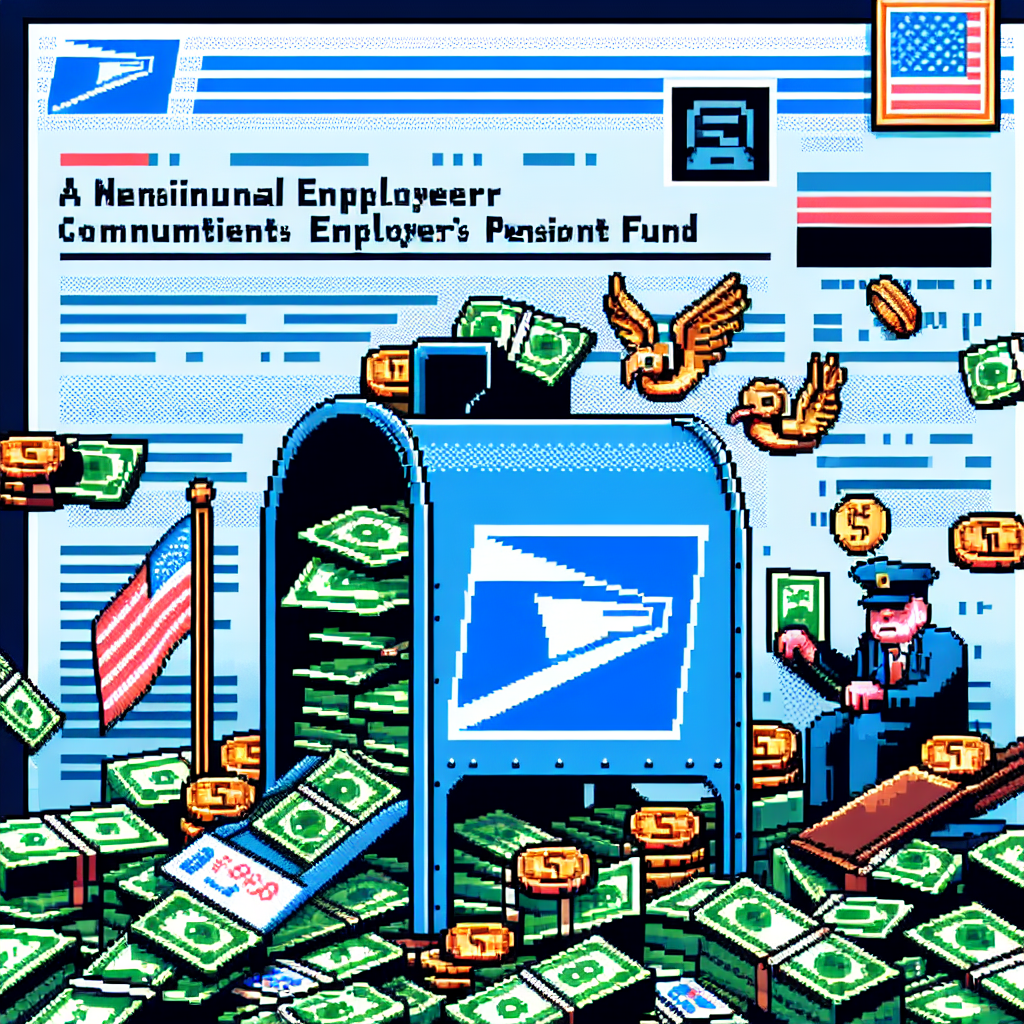
The news that the US Postal Service to suspend employer pay to workers’ pensions landed like a shock—and yet, in a way, it felt inevitable. On April 9, 2026, USPS notified federal officials it would temporarily stop making its biweekly employer contributions to the Federal Employees Retirement System (FERS) to conserve cash. The move—effective April 10, 2026—was framed as a short‑term measure to keep trucks moving, pay employees and vendors, and avoid an even worse liquidity crisis. (apnews.com)

What happened and why it matters

  • The Postal Service told the Office of Personnel Management it will pause employer contributions to the defined‑benefit portion of FERS, which covers the vast majority of career postal employees. The suspension was described as temporary and aimed at preserving cash amid what USPS calls an “ongoing, severe financial crisis.” (apnews.com)
  • Officials have warned the USPS could run out of cash by around February 2027 without changes such as a higher borrowing cap or increased postage revenue. To buy time, the agency also filed for a postage rate increase that would raise the cost of a First‑Class stamp from 78¢ to 82¢. (apnews.com)
  • Importantly, USPS leaders say current and future retirees will not be immediately impacted by the suspension; employee payroll deductions and other retirement mechanisms remain in place. Still, the optics and long‑term risk to pension funding have alarmed unions, lawmakers, and retirees' advocates. (apnews.com)

Moving from headline to consequence, the decision is less about pensions vanishing overnight and more about a cashflow triage in an agency that delivers essentials while operating under unique legal and financial constraints.

The context: a federal agency in a fiscal vise

The Postal Service isn’t a private company—it’s an independent federal agency that depends on postage revenue and a limited ability to borrow. A decades‑old statutory $15 billion borrowing cap, pre‑1990 rules on pension funding, and steep declines in first‑class mail volume have all contributed to recurring budget shortfalls. In recent months, the postmaster general warned Congress the agency could run out of cash within a year unless lawmakers act. (apnews.com)

Historically, USPS has used temporary suspensions before—most notably in 2011—only to resume payments and repay what it owed. The current environment is different, though: inflation, higher operating costs, and a tighter borrowing ceiling make today’s risk feel more pressing. (federalnewsnetwork.com)

US Postal Service to suspend employer pay to workers’ pensions — what that looks like day to day

  • Payroll: Employees will continue to receive their paychecks; employee contributions to retirement plans are still being processed. The suspension affects only the employer’s share of FERS defined‑benefit funding. (nbcwashington.com)
  • Service: USPS framed the decision as necessary to keep mail and package delivery running without interruption. The agency argued that insufficient liquidity would be more harmful to the public than a temporary pause in employer pension contributions. (apnews.com)
  • Uncertainty: The suspension raises questions about long‑term pension health, bargaining dynamics with unions, and congressional willingness to change the borrowing cap or pension rules. Lawmakers on both sides of the aisle may now face pressure to respond more quickly. (apnews.com)

Transitioning from immediate logistics to long‑term consequences, the central tension is clear: prioritize day‑to‑day operations or prioritize steady pension funding. USPS chose the former for now.

How employees and retirees should think about this

First, breathe: the agency and Office of Personnel Management say current and future retirees aren’t immediately affected. Service credit for pension calculations isn’t erased by a temporary employer payment pause; the mechanics of your FERS annuity—years of service, salary history, and benefit formulas—remain intact. (myfederalretirement.com)

Nevertheless, this is a wake‑up call:

  • Employees should review their paystubs and retirement account statements to confirm employee deductions are still being taken and recorded.
  • Retirees and near‑retirees should monitor official USPS and OPM communications for timelines and any required catch‑up payments.
  • Union leaders and members will likely press for safeguards—contractual or legislative—that limit the length of any future suspensions or ensure prompt reimbursement.

The broader policy puzzle

This episode spotlights a policy conundrum: the USPS sits at the intersection of public service and fiscal discipline. Policymakers must weigh taxpayer exposure, the social value of universal mail service, and the financial realities of 21st‑century logistics.

Possible policy responses include:

  • Raising the statutory borrowing cap (currently $15 billion) so USPS can smooth liquidity crises. (apnews.com)
  • Reforming pension funding rules to allow more flexibility in how USPS invests or times its contributions. (federalnewsnetwork.com)
  • Approving modest postage increases that reflect rising costs while balancing the political sensitivity of mail rate hikes. (apnews.com)

Each option has tradeoffs. Quick fixes risk temporary relief without structural change; deep reforms require political capital and may take years to implement.

My take

This move by USPS is a blunt instrument—but perhaps the only practical one left in the short term. Temporarily suspending employer pension contributions to avoid an immediate liquidity collapse is a painful but defensible choice if it truly preserves service and pays employees and vendors. Still, it should be a catalyst, not an endpoint.

Congress, regulators, and USPS leadership now face a simple test: turn this scramble into a strategic reset. That means transparent timelines for resuming pension funding, clearer contingency plans for cash shortfalls, and a realistic debate about funding the public good of universal mail service in a radically altered marketplace.

Final thoughts

The act of pausing employer payments to pensions doesn’t strip away decades of earned benefits overnight. But it does raise the bar for political courage and policy imagination. If nothing else, April 2026 should remind us that institutions—even venerable ones—require constant reinvention to meet changing economic realities.

Sources


Related update: We recently published an article that expands on this topic: read the latest post.
Related update: We recently published an article that expands on this topic: read the latest post.

Prediction Markets vs. Sportsbooks | Analysis by Brian Moineau

When prediction markets and sportsbooks collide: who’s really playing, and who’s trading?

Imagine scrolling your phone between the box score and a live order book — one tap lets you buy a contract that pays $1 if Team A covers the spread, the next shows the market price drifting like a stock after a big piece of news. That tension — between “betting” and “trading” — is where prediction markets and sportsbooks are currently duking it out, and Kalshi’s CEO gave a crisp take on the differences that helps explain why both regulators and bettors are paying attention.

Prediction markets and sportsbooks have similar mechanics on the surface: both let people put money on outcomes. But Kalshi’s CEO, Tarek Mansour, argues the two operate on fundamentally different business models, risk profiles, and regulatory logics — and those differences are reshaping how we think about wagering on sports, politics, and real-world events. (Kalshi’s remarks were summarized in NBC Sports and discussed on The Axios Show.) (nbcsports.com)

What the Kalshi CEO said about prediction markets and sportsbooks

  • Mansour frames sportsbooks as “designed for customers to lose.” The house sets prices and collects a vigorish; if customers win too often, sportsbooks may limit them or use promotions to keep them engaged. That’s the classic casino model: your losses are the operator’s inventory. (nbcsports.com)

  • By contrast, prediction markets like Kalshi run peer-to-peer exchanges. Users trade contracts against one another; the platform facilitates the trades and collects fees rather than underwriting the risk itself. In Mansour’s view, that makes prediction markets functionally closer to a regulated financial market than a betting shop. (nbcsports.com)

  • Those structural differences fuel an ongoing legal and regulatory debate: are outcome-based contracts sports wagering (state-regulated) or financial derivatives (federal oversight via the CFTC)? Recent coverage shows both courts and state attorneys general grappling with the question. (apnews.com)

Transitioning from the CEO’s soundbites to real-world impact helps make sense of why this matters beyond tech press talk.

Why the distinction matters

First, user experience and incentives change the moment you move from a sportsbook to an exchange.

  • On a sportsbook, odds and lines come from the house; promotions, limits, and loyalty schemes are tools to manage customers’ behavior. The business has skin in the game. That can create adversarial dynamics: winners get limited; losers get promotions. (nbcsports.com)

  • On an exchange, the platform’s profit comes from fees and liquidity provision. Successful traders don’t get blocked by the operator because the operator isn’t the counterparty. That can encourage more active, short-term participants who treat outcomes like assets to buy and sell. (nbcsports.com)

Second, regulation and consumer protections follow different tracks.

  • State gaming commissions historically regulate sportsbooks. Their mandates include consumer protection, problem-gambling measures, and enforcing gaming laws. States vary widely in their rules and prohibitions. (apnews.com)

  • Federally, if prediction markets qualify as derivatives, they fall under Commodity Futures Trading Commission (CFTC) oversight. That triggers a different toolkit — market surveillance, reporting standards, and a framework used for futures and options rather than localized gambling statutes. The legal line is blurry and actively litigated. (nbcsports.com)

Finally, market integrity and insider-risk profiles change.

  • Sportsbooks worry about match-fixing, wagers by those with insider knowledge, and the integrity of the game itself. Regulation and monitoring focus on those harms.

  • Prediction exchanges expand into politics, economics, and entertainment — arenas where insider trading risk looks more like securities fraud than sports corruption. Operators have started policing who can trade certain markets; lawmakers are already proposing rules in response. (apnews.com)

How participants behave differently

If you’ve ever used a sportsbook, you’ve probably hidden an app during halftime and kept chasing a parlay. In prediction markets, activity looks more like day trading:

  • Traders watch prices move on news and adjust positions quickly.
  • Liquidity (other traders willing to take the opposite side) matters more than a house’s willingness to pay.
  • Strategies include hedging, scalping, and event-driven trades rather than single-wager parlays.

That shift attracts a different crowd — people who want to monetize information or viewpoints, not just root for a team. It also creates a more intense regulatory spotlight because those information asymmetries resemble the conditions that financial regulators police. (si.com)

Broader context and recent events

Prediction markets grew fast in 2025–2026, with Kalshi and rivals handling billions in volume and expanding beyond U.S.-only users. That growth pushed debates into public view: courts have weighed whether the CFTC has exclusive jurisdiction over sports-related contracts; state attorneys general have filed suits alleging illegal gambling operations; and exchanges have begun tightening insider-trading rules themselves. The energy is real, and it’s pulling in investors, lawmakers, and sporting institutions. (fortune.com)

These clashes are both economic and philosophical: is prediction trading a market for information and risk transfer, or a form of wagering that should be limited by state gambling laws? Expect more court decisions and legislation that try to draw that line.

What to watch next

  • Legal rulings that clarify whether event contracts fall under federal derivatives law or state gambling statutes.
  • How major leagues, the NCAA, and sports governing bodies respond to exchanges listing sports-related markets.
  • Operational changes by exchanges — stricter anti-insider rules, geofencing, and transparency tools — that attempt to blunt regulators’ arguments and shore up legitimacy.

Key takeaways

  • Prediction markets and sportsbooks both let people put money on outcomes, but their business models differ: sportsbooks typically underwrite bets; prediction markets facilitate peer-to-peer trading and collect fees. (nbcsports.com)
  • Regulation is at the heart of the battle: state gambling laws versus federal derivatives oversight (CFTC). Court rulings and enforcement actions will shape the industry’s future. (nbcsports.com)
  • Participant behavior shifts from betting to trading — bringing different risks (insider trading, market manipulation) and attracting different user types. (si.com)

My take

This isn’t just a turf war between industries — it’s a test of how we classify financial risk and human behavior in an era where apps blur old boundaries. Prediction markets can democratize price discovery on events that matter, but they also import the hard problems of surveillance, regulation, and ethics that come with financial markets. If operators, regulators, and sports leagues can align incentives around integrity and transparency, the result could be a new, regulated information marketplace. If they don’t, expect fragmented rules, more litigation, and markets that bounce between innovation and prohibition.

Sources


Related update: We recently published an article that expands on this topic: read the latest post.

Related update: We recently published an article that expands on this topic: read the latest post.


Related update: We recently published an article that expands on this topic: read the latest post.
Wall Street Eyes Your 401(k): Risk Shift | Analysis by Brian Moineau

Hook: Why your 401(k) might suddenly look more like a hedge fund

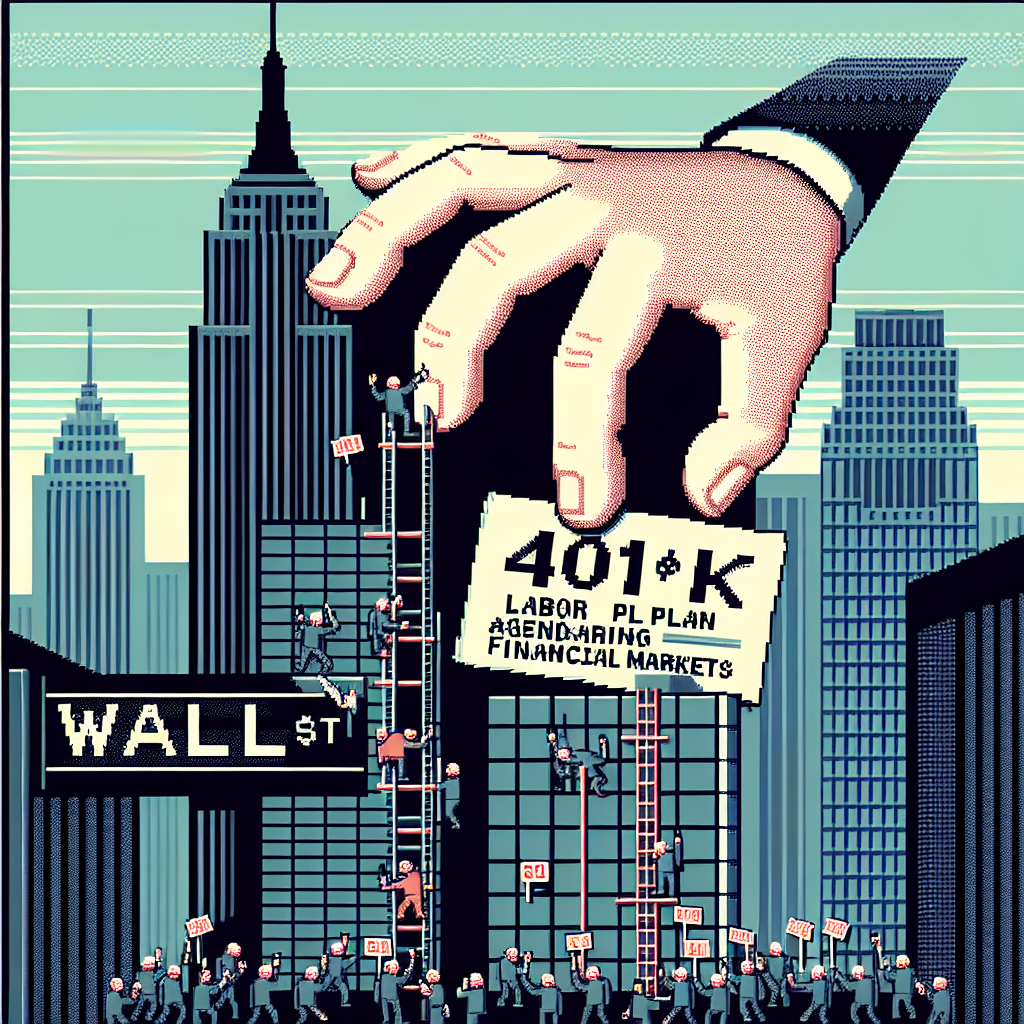
The Labor Department wants to give Wall Street firms greater access to a lucrative market — your 401(k). That sentence sounds alarming because it is: a recent push from the administration and the Department of Labor aims to ease rules so retirement plans can more easily add “alternative” investments (private equity, private credit, cryptocurrencies, structured notes and the like) to workplace retirement menus. The pitch is familiar — more access, more diversification, potentially higher returns — but the delivery may shift risk and fees onto everyday savers who rely on 401(k)s for retirement security.

What’s changing and why it matters

For decades, 401(k) plans have been dominated by mutual funds and index funds that are relatively liquid, transparent, and cheap. The new policy direction encourages plan sponsors and recordkeepers to include alternatives as standard options. Proponents argue alternatives can boost returns and broaden investment choices beyond public equities and bonds.

But alternatives are different beasts: they’re often expensive, hard to value, and illiquid. That matters inside a workplace retirement plan because participants — not just wealthy accredited investors — would be exposed. What looks like added choice on paper can become complexity, conflicts of interest, and higher costs for workers who neither asked for nor understand these products.

The investor dilemma: complexity vs. choice

  • Alternatives may offer high headline returns in certain market cycles, but they come with opaque fee structures (management fees, performance fees, transaction costs).
  • They can be difficult to price daily; many require quarterly or annual valuations, which undermines transparency and can mislead savers about the true state of their accounts.
  • Illiquidity is a real problem. If the plan or participant needs to rebalance or redeem during a market crash, these investments may be impossible or extremely costly to sell.
  • Plan fiduciaries might face pressure (or legal exposure) when they add risky products to broadly offered plan menus, while brokers and Wall Street firms stand to earn substantial new revenue.

Transitioning to these offerings without robust investor protections and plain-language disclosures risks turning retirement savings into a new profit center for asset managers — at workers’ expense.

How we got here: policy moves and political framing

The current push builds on an executive order and subsequent DOL guidance that frame alternatives as “democratizing access” to investment opportunities historically reserved for wealthy investors. Administrations often paint this as leveling the playing field: why should only the rich get private equity’s outsized returns?

But policy details matter. When rules change to reduce hurdles for offering alternatives, the market actors who package and sell these products — investment banks, private equity firms, broker-dealers and large recordkeepers — gain a massive addressable market: the roughly $12 trillion in U.S. retirement assets. Critics warn the change lets Wall Street market sophisticated, high-fee products to a population that may lack the information and resources to evaluate them.

The Washington Post column that spurred this conversation calls the plan “a massive 401(k) greed grab for Wall Street.” That blunt framing captures the core concern: structural incentives may steer savers into costly strategies that enrich intermediaries but don’t meaningfully improve retirement outcomes for most workers.

Real-world risks: fees, conflicts, and lawsuits

  • Higher fees. Alternatives frequently charge higher management fees and performance-based fees that erode long-term compounding. Over a 30-year horizon, even modest extra fees can reduce retirement balances dramatically.
  • Conflicts of interest. Broker-dealers and advisors who receive commissions or trail fees have incentives that may conflict with participant best interests.
  • Legal exposure for plan sponsors. Many plan sponsors historically avoid including complex alternatives precisely because of litigation risk: if participants lose money and sue, fiduciaries can be held accountable. Changing rules may not eliminate that exposure; it could shift liability in unpredictable ways.
  • Disparate impact. Lower-income or less financially literate workers are likelier to be harmed if defaults or target-date funds include poorly understood alternatives.

These are not hypothetical — there are precedents where complex financial products sold to retail or retirement accounts led to outsized losses and investigations. Relaxing guardrails without simultaneous consumer protections is a risky policy cocktail.

What protections would make a difference

If alternatives are going to be offered more widely, policymakers and plan sponsors should demand stronger safeguards:

  • Plain-language fee and liquidity disclosures tailored to non-expert plan participants.
  • Strict valuation rules and third-party custody to reduce conflicts and mark-to-market manipulation.
  • Fee limits and caps on performance-based compensation within default options like target-date funds.
  • Enhanced fiduciary duties and clearer ERISA guidance so plan sponsors understand liabilities and best practices.
  • Limits on which alternatives can be offered as default options for auto-enrolled participants.

Without structural protections like these, the balance of power favors institutions that design and distribute complex products — not the savers in the plan.

What workers should watch for now

  • Review your plan’s default and target-date funds. Watch for language that adds “private” or “alternative” exposure.
  • Check fees on your statements and ask HR or the plan administrator for plain-English explanations of any new options.
  • Be skeptical of marketing that implies “access” equals “better outcomes.” Diversification is useful, but only when paired with transparency and reasonable costs.
  • If offered complex products, ask whether they’re available as an opt-in, not part of an automatic default.

Transition words matter here: more options can be beneficial — but only when they’re genuinely accessible and appropriately regulated.

What this means for the broader retirement system

If policies succeed in making alternatives common in 401(k) menus, we could see a structural shift in how retirement assets are managed. That could mean higher profits for asset managers and more concentrated ownership of private companies by retirement funds. It could also mean greater tail-risk for everyday savers, and rising disparities in retirement outcomes.

Policymakers should ask a central question: do these changes improve the core mission of 401(k)s — steady, reliable retirement income for workers — or do they open a new revenue stream for financial intermediaries under the banner of “choice”?

My take

The idea of broadening investment choices in retirement plans isn’t inherently bad. Innovation can create value. But the devil is in the implementation. Without stronger consumer protections, mandatory disclosures, and fiduciary clarity, this push looks less like expanding opportunity and more like funneling predictable retirement flows into higher-fee, less-transparent vehicles. That’s a recipe for profits at the top and disappointment at the bottom.

Policymakers and plan sponsors should prioritize safeguards that protect savers’ long-term compounding power. Otherwise, the “democratization” of alternatives will read like a polite sales pitch for Wall Street.

Further reading

  • The Washington Post column analyzing the policy and implications.
  • The Guardian’s reporting on risks faced by small investors in expanded retirement options.
  • Analysis from labor and union groups highlighting concerns about fees and fiduciary duty.

Sources


Related update: We recently published an article that expands on this topic: read the latest post.
SpaceX IPO Hype: Investors, Beware | Analysis by Brian Moineau

The SpaceX IPO Is Coming — But Don't Let FOMO Lift You Off Without a Parachute

SpaceX IPO chatter is back in headlines, and this time the conversation feels different: the company that disrupted rocket manufacturing is reportedly preparing to file for an initial public offering, and big private-holders — from Cathie Wood’s ARK Venture Fund to smaller interval funds — look ready to ride the rocket. The idea of owning a sliver of Elon Musk’s aerospace empire is intoxicating, and headlines that suggest valuations in the trillions have retail and institutional investors rethinking how to get exposure.

But before you let excitement drive your allocation, pause. There are real reasons prices for funds holding private SpaceX stakes jumped on the news — and equally real reasons to read the fine print.

What just happened

  • Late 2025 and early 2026 reporting from several outlets said SpaceX is weighing a 2026 IPO and has taken steps such as permitting insider share sales and lining up banks. Reports suggested the offering could be enormous: raising tens of billions and valuing the company at well over $1 trillion. (investing.com)
  • Investors that already had private stakes (for example, interval/venture-style funds that can hold unlisted securities) saw inflows and NAV bumps as the prospect of a public exit became plausible. Cathie Wood’s ARK Venture Fund — which lists SpaceX among its private holdings — was highlighted frequently as a retail-accessible route to SpaceX exposure. (fortune.com)
  • The chatter intensified when Musk and SpaceX actions (including corporate moves like acquiring xAI) added coherence to the narrative that a public listing could be part of a broader strategy. (apnews.com)

Transitioning from rumor to reality, however, is often slippery in the private-company-to-IPO pipeline. SpaceX has long resisted going public; the timing, size, and structure (full company vs. Starlink spun-out, percentage of float, pricing strategy) will materially shape outcomes.

Why funds that own SpaceX stakes surged

  • Liquidity hope: Many closed-end and interval funds that can legally hold private shares (ARK Venture Fund, certain boutique private-shares funds) became a de facto retail-friendly on-ramp. News of an IPO converts theoretical private-value into a near-term liquidity catalyst. (finance.yahoo.com)
  • Revaluation effects: When major outlets report an impending IPO or insider share sale at a higher implied valuation, NAV estimates for funds holding those private securities often jump. That attracts inflows and media attention, which feeds the loop. (investing.com)
  • Narrative momentum: Firms like ARK sell a vision — Starlink, AI integration, and eventual Mars-scale markets — and investors who buy that future will pile into any vehicle that promises access. That narrative inflow can amplify price movements beyond fundamentals. (fortune.com)

The investor dilemma

  • Small float risk: Early indications suggest SpaceX might only sell a modest portion of equity in an IPO. If true, public investors could end up paying sky-high prices for shares that still trade thinly, while large shareholders retain control and most upside. Thin public floats can mean high volatility and poor price discovery at first. (investing.com)
  • Valuation stretches: Trillion-dollar valuations are headline-grabbing but hinge on optimistic revenue scenarios for Starlink, future data-center-in-space projects, and other ventures. Execution risk is real — regulatory hurdles, competition, and capital intensity all matter. (theguardian.com)
  • Fund mechanics differ: Buying an interval fund that holds SpaceX is not the same as buying a stock. Fee structures, redemption windows, NAV-to-market price discrepancies, and concentration limits can make these funds behave very differently from public equities. Investors should read prospectuses closely. (finance.yahoo.com)

How savvy investors should think about this

  • Differentiate access from value. Buying an ARK-like fund gives access to SpaceX as a private asset in a managed vehicle; it doesn’t guarantee easy, immediate liquidity at IPO pricing. Understand how much of the fund is actually exposed and what the fund’s redemption mechanics are. (cnbc.com)
  • Anticipate structure and timing. Watch for details: will SpaceX file confidentially, will it spin out Starlink, how much new equity will it issue, and when will insiders be allowed to sell? These choices determine whether the IPO is a capital-raising event, a liquidity event for insiders, or both. (investing.com)
  • Keep portfolio sizing conservative. Even if you believe in the long-term upside, a sensible allocation caps the downside from valuation shock or early trading volatility. Treat any pre-IPO exposure as a high-conviction but higher-risk sleeve of a portfolio.
  • Expect headline volatility. Media coverage will swing funds and related public names (chip suppliers, launch partners). If you trade on headlines, plan for whipsaw. (heygotrade.com)

SpaceX IPO: short-term winners and longer-term questions

  • Winners in the near term are likely to be funds that already held private stakes and firms providing supply-chain exposure (e.g., satellite components, launch-parter suppliers). Those positions can re-rate quickly when an IPO looks imminent. (observer.com)
  • Longer-term, the critical questions remain: can Starlink scale profitably in a competitive orbital-internet market? Will capital needs for AI-in-space or mega-data-centers justify the lofty price tags? And how much governance and insider control will public investors actually get? These questions determine whether the IPO is a historic market event or a short-lived media spectacle.

My take

An impending SpaceX IPO is a landmark moment for markets and technology investing — if it happens at the reported scale, it will change index composition and investor access to the satellite-and-rocket economy. That excitement is understandable. But the prudent move is not to chase headlines; it’s to study structure, read fund disclosures, and size positions to reflect both the upside and a meaningful chance of early disappointment. For most investors, indirect exposure through diversified vehicles or modest allocations makes more sense than concentrated bets on a single private company during an emotionally charged run-up.

Sources

(Note: the original Barron’s piece you referenced influenced the framing for this post; the reporting above synthesizes multiple open sources that covered the potential SpaceX IPO and the flows into funds holding private stakes.)


Related update: We recently published an article that expands on this topic: read the latest post.


Related update: We recently published an article that expands on this topic: read the latest post.

Dimon: Market Complacency Raises Risk | Analysis by Brian Moineau

Markets are Too Calm — and That’s the Problem, Says Jamie Dimon

There’s a peculiar kind of silence in markets right now — one that sounds less like confidence and more like complacency. That was the blunt message from JPMorgan CEO Jamie Dimon in recent interviews and appearances: asset prices are high, credit spreads are tight, and investors seem to be shrugging off a long list of risks. When one of Wall Street’s most prominent risk-watchers warns that “people feel pretty good,” it’s worth listening.

What happened and why it matters

  • Jamie Dimon has repeatedly warned investors that markets are underestimating risk — from rising inflation to geopolitical flashpoints and stretched credit conditions.
  • His comments have come in public forums (investor days, conferences, TV interviews) over the past year as global headlines — tariffs, geopolitical clashes, and credit concerns — made rounds. Recent press coverage highlighted his concern that markets are acting complacently even after shocks such as renewed geopolitical tensions that lifted oil prices. (marketwatch.com)

Why this matters:

  • Complacency can mask the build-up of systemic risk: elevated valuations and narrow credit spreads mean there is less cushion when a real shock hits.
  • If inflation reaccelerates or a credit cycle worsens, central banks may have less room to respond without causing deeper market dislocations. Dimon explicitly flagged higher inflation risk and a potentially “worse than normal” credit cycle as threats. (benzinga.com)

The investor dilemma: optimism vs. realism

  • Markets have rallied and volatility has fallen — and with that recovery comes a tendency to treat downside scenarios as unlikely. That’s the classic optimism bias at work.
  • Dimon’s argument is the opposite: when valuations look rich and policy levers are constrained (big deficits, limited central-bank flexibility), the probability of a sharper correction or a prolonged tougher patch rises. (cnbc.com)

Practical implications:

  • Earnings expectations may still be too sanguine. If profits disappoint, equity multiples could compress. (cnbc.com)
  • Credit markets are deceptively calm. Narrow spreads don’t reflect borrower weakness or a future tightening in liquidity conditions. (benzinga.com)

Signs that Dimon’s warning isn’t just noise

  • Historical precedent: periods of sustained policy stimulus and low rates have pushed asset prices up before sharp corrections followed (think pre-2008 dynamics). Dimon has drawn attention to how many market participants today lack firsthand experience with a real credit cycle. (benzinga.com)
  • Market reactions to geopolitical events have been muted compared with price moves in commodities (e.g., oil spikes), suggesting investors are selectively ignoring channels that can feed into inflation. Recent coverage showed oil moving while stocks barely flinched. (marketwatch.com)

How investors (and policymakers) might respond

  • Reassess risk budgets:
    • Expect lower forward returns if valuations are high — adjust position sizing accordingly.
    • Stress-test portfolios for higher inflation, wider credit spreads, and slower growth.
  • Watch liquidity and credit indicators closely:
    • Monitor funding costs, loan defaults, covenant loosening, and secondary-market liquidity as early warning signs.
  • Factor geopolitics into scenario planning:
    • Energy shocks, trade disruptions, and cyber/terror risks can transmit rapidly into inflation and supply chain stress.
  • For policymakers: communicate limits. Central banks and fiscal authorities should be candid about trade-offs and constraints to avoid fostering false reassurance.

Quick wins for individual investors

  • Trim concentrated positions and rebalance toward diversified exposures.
  • Maintain a short list of high-quality, liquid assets to lean on if markets reprice.
  • Consider inflation-protected instruments or real assets as partial hedges if inflation risk appears underpriced.
  • Avoid chasing yield in low-quality credit just because spreads are narrow.

What the coverage shows (context)

  • MarketWatch highlighted Dimon’s recent comments noting the disconnect between oil moves and muted equity reactions after a geopolitical spike. (marketwatch.com)
  • CNBC and Bloomberg have traced Dimon’s warnings back through 2025, where he flagged tariffs, deficits, and complacent central banks as sources of risk. (cnbc.com)
  • Analysts and commentators pick up the framing that many market participants haven’t lived through a deep credit downturn and may underestimate how fast conditions can change. (benzinga.com)

My read of those sources: Dimon isn’t trying to be a constant Cassandra. He’s reminding an upbeat market that risk is asymmetric right now — upside may be limited while downside remains meaningful.

A few sharper questions worth watching

  • Will inflation settle back near policymakers’ targets, or will renewed energy or supply shocks re-accelerate prices?
  • How would central banks respond if inflation and growth diverged (stagflation)?
  • Are credit standards loosening quietly in leveraged lending or other pockets that could transmit losses rapidly?
  • How do fiscal dynamics (large deficits) limit policy options in a stress scenario?

Final thoughts

Complacency is seductive: calm markets feel good and reward short-term risk-taking. But markets don’t owe investors perpetually rising prices. Jamie Dimon’s warnings are a useful reality check — not a prediction of imminent doom, but a call to re-evaluate assumptions. For investors, that means humility, active risk management, and scenario planning for outcomes that the market currently underprices.

Sources


Related update: We recently published an article that expands on this topic: read the latest post.

China Frenzy Sparks Silver Market Meltdown | Analysis by Brian Moineau

When silver forgot the rules: how a China-fueled frenzy blew the top off precious metals

The screens went white. For weeks, traders had been riding one of the most aggressive precious‑metals rallies in decades — then in less than twenty hours silver gave back roughly $40 an ounce and plunged in a way few had seen before. That violent reversal exposed how a cocktail of Chinese retail speculation, strained physical markets and technical safeguards (margins, algorithms, exchange rules) can turn a smoke‑and‑mirrors rally into a sudden market unwind.

Below I unpack what happened, why it got so extreme, and what investors should keep in mind going forward.

How the rally got out of hand

  • Parabolic move first. Silver staged an extraordinary rally through 2025 and into January 2026, propelled by a mix of industrial demand, geopolitical fears and speculative momentum. What starts as rational buying (industry, ETFs, central‑bank flows) can become self‑reinforcing when retail and leveraged players pile in. (Think: more buyers, less paper required per contract, and an expectation that prices only go up.) (m.economictimes.com)

  • A big Chinese footprint. Chinese traders and retail platforms played an outsized role in the surge. Heavy retail participation in China — often through leveraged products and exchange‑linked accounts — amplified volatility and expanded the “paper” exposure to silver beyond what physical supply could cover. When that speculative flow begins to reverse, the effect is amplified. (businessinsider.com)

  • Physical vs. paper stress. Tight physical inventories and frictions in cross‑border flows made the market fragile. When buyers started demanding physical delivery or when exporters tightened exports, the disconnect between the futures (paper) market and actual bullion intensified. That mismatch can sustain rallies — but it also primes the market for violent corrections if leveraged holders are forced to liquidate. (thestreet.com)

  • Margin hikes and forced selling. Exchanges (notably CME) raised margin requirements as volatility surged. Higher margins squeezed leveraged traders and funds, forcing rapid sell orders into already thin markets — a mechanical feedback loop that turned a correction into a crash. (thestreet.com)

  • Macro news as the spark. A shift in macro expectations — for example, a hawkish signal on U.S. monetary policy — strengthened the U.S. dollar and reduced the appeal of non‑yielding assets like gold and silver. That change in sentiment provided the trigger that turned fragile positioning into mass liquidation. (ft.com)

Why this felt different from past pullbacks

  • Speed and leverage. The crash happened faster than many historic drops because leverage today is higher and execution is electronic. Automated systems, program trading and margin‑sensitive accounts can force outsized flows in minutes rather than days.

  • China’s policy layer. Recent Chinese moves affecting metals exports and trading channels added a nation‑level source of uncertainty. That made liquidity in global physical markets more brittle and increased the chance that local Chinese flows would have outsized global effects. (astreka.com)

  • Cross‑market contagion. Silver’s drop didn’t happen in isolation — other industrial metals and gold were affected too. Where previously commodities could absorb shocks, the breadth of positioning (and the prevalence of leveraged retail exposure) made the systemwide reaction sharper. (ft.com)

Lessons for investors and traders

  • What matters more than you think: market plumbing. Supply and demand fundamentals matter — but so do margin rules, exchange interventions, delivery mechanics and who holds the risk. In leveraged, thinly‑liquid markets these mechanics can dominate fundamentals for a while.

  • Know your counterparty risk and leverage exposure. Retail platforms that offer cheap leverage can create asymmetric risks for clients. When you’re long with high leverage, even a small policy or macro surprise becomes dangerous.

  • Distinguish physical from paper exposure. Owning a bar in a vault and owning a futures contract are different bets. When the paper‑to‑physical ratio becomes extreme, prices can diverge quickly and painfully.

  • Expect whipsaw conditions around policy news. Monetary and geopolitical headlines can flip the narrative quickly. Position sizing and stop‑loss discipline aren’t optional in these markets.

What to remember

  • The January 2026 crash was a structural warning: rapid, leveraged flows from China plus strained physical markets and margin hikes equal the recipe for explosive reversals. (businessinsider.com)

  • Margin rules and exchange interventions can be the market’s circuit breakers — and sometimes the accelerants. (thestreet.com)

  • Ownership matters: physical metal, ETFs, futures and leveraged retail products behave differently in stress. (thestreet.com)

My take

We’ve been through narrative cycles before — short squeezes, retail mania, and commodity panics — but the 2025–2026 episode highlights how globalization and digitization of trading magnify those dynamics. Speculation in one major market (China) can now ripple through exchanges and vaults worldwide in a single trading session. For disciplined investors, that means re‑anchoring strategies to fundamentals, minding leverage, and treating liquidity risk as a first‑class concern.

For traders who thrive on volatility, this environment offers opportunity — but only if you respect the mechanics that turned a rally into a rout. For institutions and regulators, it’s a reminder that market structure evolves and that safeguards (margins, position limits, clearer delivery rules) must keep pace.

Sources


Related update: We recently published an article that expands on this topic: read the latest post.


Related update: We recently published an article that expands on this topic: read the latest post.

Musk Merge Could Centralize $1.7B Bitcoin | Analysis by Brian Moineau

A $1.7B Bitcoin Vault Moves Under One Roof? Why the SpaceX–Tesla Merger Talk Matters

Elon Musk’s empire has always been part tech, part theater. Now imagine folding two of his biggest companies together — SpaceX and Tesla — and along with rockets and robots, consolidating almost 20,000 bitcoin on a single balance sheet. That’s the scenario swirling around recent reports, and it’s worth unpacking: not because a merger changes bitcoin’s fundamentals, but because it changes governance, accounting, and the way markets perceive a meaningful corporate crypto treasury.

A quick hook

Picture an institutional-sized bitcoin position — roughly $1.7 billion worth — that today sits split between a private rocket company and a public carmaker. Put them together, and suddenly one corporate entity has a headline-making crypto exposure. That’s the axis of risk and opportunity investors and crypto-watchers are now watching.

What the reports say (short version)

  • SpaceX is reportedly exploring deals that could include merging with Tesla or tying up with xAI, ahead of a potential SpaceX IPO slated for mid-2026. (investing.com)
  • Public filings, analytics and reporting suggest SpaceX holds about 8,285 BTC and Tesla about 11,509 BTC — roughly 19,700–20,000 BTC in total, currently valued near $1.7 billion (price-sensitive). Many outlets repeat that tally. (mexc.co)

Those facts create a practical question: what happens when corporate bitcoin positions this large live inside a single legal and financial structure?

Why consolidation changes the story

  • Different accounting regimes matter.

    • Tesla is public, so under fair-value/mark-to-market rules bitcoin swings feed directly into quarterly earnings and may produce large realized or unrealized P&L volatility. SpaceX, as a private company, hasn’t been subject to the same public quarter-to-quarter visibility. Combining them could put the whole stash under public accounting scrutiny (if the merged entity is public). (coincentral.com)
  • Governance and disclosure tighten.

    • A single treasury means a single policy on custody, hedging, sales and spending. Investors, auditors and regulators will demand clarity about who can move assets, what approvals are required, and whether crypto might be used as collateral or monetized. The due diligence for any IPO would spotlight those policies. (investing.com)
  • Liquidity and market flow become more visible.

    • Nearly 20,000 BTC is a large corporate holding but still a small share of daily spot volume; however, concentrated decisions (sell-offs, rehypothecation, token lending, or using positions in structured deals) can create outsized market ripples and headline risk. Any hint of distribution would be monitored closely by traders. (ainvest.com)
  • Strategic uses create new linkages.

    • If Tesla’s energy and battery tech or SpaceX’s Starlink and orbital ambitions get folded together with a big crypto treasury, companies might explore alternative financing, treasury swaps, or using digital asset custody as part of capital strategy — all of which enlarge the bridge between traditional finance and crypto markets. (theverge.com)

The potential near-term impacts

  • Earnings volatility for shareholders.

    • If the merged entity is public or the combined Bitcoin is reported under mark-to-market accounting, swings in BTC price could materially affect reported profits and losses. Tesla already recorded notable after-tax swings tied to bitcoin in recent quarters. (coincentral.com)
  • Heightened scrutiny from auditors and investors.

    • Analysts and institutional buyers performing IPO or M&A due diligence will press for custody proof, movement histories (on-chain tracing), and policy limits. That can slow deals or add conditional terms. (investing.com)
  • Crypto-market signaling.

    • Consolidation under a high-profile, Musk-controlled entity would be perceived as an endorsement of bitcoin as a treasury asset — or conversely, a single point of systemic headline risk if things go sideways. Traders price narratives as well as supply-demand. (ainvest.com)

What it does not do

  • It doesn’t change Bitcoin’s supply or network fundamentals.

    • Consolidation is an ownership and governance event, not a change to Bitcoin’s protocol, issuance, or the global distribution of retail holdings. Market psychology and flows can shift, but the network-level fundamentals remain the same.
  • It doesn’t mean an imminent sell-off.

    • Merger talk is preliminary in reporting; neither company has publicly declared a plan to liquidate the holdings. Consolidation raises questions, it doesn’t answer them. (investing.com)

How different stakeholders might react

  • Institutional investors and prospective IPO buyers will demand transparency on custody, movement, and hedging rules.
  • Crypto traders will watch on-chain flows and any anomalous wallet activity for signs of pre-transaction reorganization.
  • Regulators and auditors will likely ask tougher questions about risk management and disclosure if a major company puts large digital assets on a public balance sheet.
  • Retail investors and bitcoin holders will parse the news as either bullish (Musk doubling down) or risky (a single corporate counterparty now holds a big chunk).

A few plausible scenarios worth watching

  • The merged entity keeps the BTC and formalizes a conservative treasury policy: public disclosure, cold custody, long-term hold language. That lowers noise and reassures markets.
  • The merged entity hedges or monetizes part of the stash for capital needs (e.g., to fund SpaceX expansion or an IPO), introducing cash flows to the market.
  • The merged entity sells opportunistically, creating short-term downward pressure and headline volatility — though coordinated sales of many thousands of BTC would be visible and impactful.

My take

This story is a reminder that crypto exposure is no longer an obscure footnote — it sits at the center of strategic corporate finance when big players hold material positions. Whether or not a SpaceX–Tesla merger happens, the conversation around governance, accounting, and disclosure for corporate crypto treasuries is moving from niche to mainstream. For investors, the practical questions matter more than the spectacle: who controls the keys, what are the limits on selling or pledging assets, and how will swings in bitcoin reverberate through reported earnings?

Final thoughts

Musk’s empire has a knack for making headlines — and market microstructure. The notion of nearly 20,000 BTC under one corporate roof is compelling not because it breaks Bitcoin, but because it brings corporate treasury management, accounting rules and on-chain transparency into sharper relief. Watch the filings, watch the wallets, and watch how governance evolves — those will tell you whether consolidation becomes a stabilizing force or a new source of market chatter.

Sources


Related update: We recently published an article that expands on this topic: read the latest post.

Europe Pauses After Stoxx 600 Record | Analysis by Brian Moineau

A quiet wobble after a sprint: Europe opens lower into a short trading week

The bell rang on a new, slightly cooler mood in European markets after a blistering session that pushed the STOXX Europe 600 to fresh heights. Investors who had been riding last week’s momentum found themselves pausing — not out of panic, but because the calendar and a handful of data points demanded caution. With holiday-thinned volumes and a packed macro calendar ahead, markets nudged lower at the open, trading a little more like someone checking their rear‑view mirror than sprinting into the next leg.

Why this matters right now

  • The STOXX Europe 600 recently made headlines by touching record intraday levels, a sign of broad-based risk appetite that had been building across sectors.
  • That optimism collides with thin liquidity during a holiday-shortened week, and with high-impact U.S. data on the horizon that can reshape expectations for Fed policy and cross‑border capital flows.
  • When markets are at or near record highs, small news or low-volume trading can create outsized moves — a recipe for early-session weakness even if the longer-term trend stays intact.

Quick takeaways for traders and observers

    • Recent market highs don’t eliminate short-term volatility; they often amplify it when trading is light.
    • A holiday-shortened week typically lowers volumes, increases bid-ask spreads, and makes index moves less reliable as trend signals.
    • U.S. macro prints (GDP, jobs, inflation) and central-bank commentary are the main event drivers this week; Europe is trading in their shadows.

What drove the record — and why the pullback?

The STOXX Europe 600’s recent peak reflected several overlapping positives: cooling U.S. inflation readings that revived hopes of earlier or larger rate cuts from the Federal Reserve, solid corporate news in parts of the market (notably healthcare and select industrials), and central bank commentary in Europe that’s been interpreted as less hawkish than earlier in the year.

But those tailwinds can be fickle. On the first trading day of the shortened week, market participants pulled back:

  • Liquidity effects: Many institutional desks run lighter books around holidays. When fewer players are in the market, even modest sell orders can nudge indices downward.
  • Event risk: With major U.S. releases and a slew of central bank-watch headlines imminent, traders often prefer to pare risk rather than add it into potential surprise prints.
  • Profit-taking: After record or near-record sessions, some investors lock in gains — a normal reassessment rather than an alarm bell.

These dynamics explain why markets can “open negative” even after an upbeat close: the intra-day rhythm shifted from buying-led momentum to cautious repositioning.

Sector and stock dynamics to watch

  • Healthcare: Recent regulatory and earnings wins have powered some of the index’s advance; any reversal here would be notable because healthcare has been a leadership pocket.
  • Banks: Banking stocks have been market movers this year. Their direction tends to reflect both macro expectations for rates and deal flow (M&A, capital activity).
  • Commodities and miners: Moves in gold, copper and oil continue to bleed into related stocks — and commodity strength can reinforce confidence in cyclicals.

The investor dilemma

Investors face a classic year-end tradeoff: hang on for the potential of more gains (momentum and year-end flows can keep pushing indices up) or step aside until the macro picture — especially U.S. growth and Fed guidance — clears up. Both choices are rational; the right one depends on risk tolerance, time horizon and liquidity needs.

  • Short-term traders: Consider tighter stops and smaller sizing because thin markets can quickly exaggerate moves.
  • Longer-term investors: Use dips as opportunities to rebalance rather than panic-sell; the underlying macro picture and corporate earnings trends remain the better compass for multi‑month positioning.

Market psychology matters more when volume is thin

When the market is crowded on one side, and liquidity is low, sentiment can swing quickly. That means:

  • Headlines around trade, regulation, or a single large stock (for example, big moves in healthcare or energy names) can produce index-level noise.
  • Volatility metrics and option-implied skew may be better gauges of market sentiment than plain price action in a holiday week.

My take

A negative open into a short trading week shouldn’t be overinterpreted. Think of it as a market taking a breath — recalibrating after a run and preparing for the next round of news. The record intraday highs tell you that the bull case has traction, but the current environment rewards patience and discipline. If you’re tactical, tighten exposure and keep an eye on macro releases. If you’re strategic, use small pullbacks to rebalance toward long-term themes rather than trying to time every short-term jitter.

Sources


Related update: We recently published an article that expands on this topic: read the latest post.


Related update: We recently published an article that expands on this topic: read the latest post.

Fed’s Small Cut, Big Year of Uncertainty | Analysis by Brian Moineau

A small cut, big questions: why the Fed’s December move matters more than the math

The Federal Reserve is set to act this week — widely expected to shave 25 basis points off its policy rate at the December 9–10 meeting — but the decision feels less like a crisp policy pivot and more like a weather forecast for a very foggy year ahead. Markets are pricing the cut as likely, yet Fed officials remain sharply divided about what comes next. That tension is the real story: a “hawkish cut” that eases today while signaling caution about tomorrow. (finance.yahoo.com)

Why this cut is different

  • It’s small and tactical: officials are likely to cut by 0.25 percentage points — a modest easing intended to support a slowing labor market rather than to ignite growth. (finance.yahoo.com)
  • It’s politically and institutionally noisy: unusually high numbers of dissents and public disagreement among Fed officials have surfaced, weakening the usual appearance of consensus. (wsj.com)
  • It’s defensive, not directional: the messaging is expected to emphasize that further cuts are not guaranteed and will depend on incoming data, especially payrolls and inflation signals. That is the essence of a “hawkish cut.” (finance.yahoo.com)

What led the Fed to this crossroads

Over the past year the Fed has moved from aggressive tightening (to fight high inflation) to cautious easing as jobs growth cooled and signs of economic slowing mounted. With inflation still above target in some measures and the labor market showing cracks, policymakers face two conflicting risks: easing too much could reignite inflation; easing too little could let a slowdown deepen into a recession. That trade-off explains why the Fed looks divided going into the meeting. (wbtv.com)

  • Labor market softness has become a central worry — slowing hiring and rising unemployment risk a broader slowdown. (wbtv.com)
  • Inflation remains a lingering concern, meaning many officials are reluctant to commit to a path of multiple cuts. (wbtv.com)

How markets will read the move

Expect three distinct market reactions depending on the Fed's communication:

  1. “Hawkish cut” narrative — Fed cuts now but signals a pause: short-term yields fall, risk assets rally modestly, but the rally is contained because the door for further easing is left mostly shut. This is the scenario many strategists expect. (finance.yahoo.com)
  2. Clear easing path signaled — Fed telegraphs additional cuts: bond yields and the dollar drop further, and equities get a stronger lift. Unlikely given current internal divisions but possible if data deteriorates. (reuters.com)
  3. Mixed message or large dissent — uncertainty spikes, volatility rises, and markets trade on headline interpretation rather than on concrete guidance. The Fed’s historic preference for consensus makes any multi-dissent outcome notable. (wsj.com)

CME Fed funds futures currently put a high probability on a 25 bps cut this week, but the outlook for January and beyond is much murkier — traders assign materially lower odds to a sustained easing cycle. That mismatch between near-term pricing and medium-term uncertainty is what creates the “year of unknowns.” (finance.yahoo.com)

What to watch in the Fed’s statement and Powell’s press conference

  • Language around “neutral” or “restrictive” policy: small wording shifts will be parsed for signs of more cuts. (wsj.com)
  • References to the labor market and downside risks to employment: clear talk of deterioration would open the door to additional easing. (wbtv.com)
  • Any explicit guidance on the balance sheet or Treasury bill purchases: the Fed might use Reserve Management Purchases (RMP) or other tools to manage liquidity — an outcome that could surprise markets beyond the headline rate cut. (reuters.com)

What this means for everyday borrowers, savers, and investors

  • Borrowers: A 25 bps cut can ease some short-term borrowing costs (credit cards, some variable-rate loans), but mortgage rates and longer-term borrowing are more sensitive to broader yield moves and inflation expectations, so homeowners may see only modest relief. (finance.yahoo.com)
  • Savers: Any improvement in savings rates will likely be gradual; banks don’t always pass every Fed cut through to deposit rates. (finance.yahoo.com)
  • Investors: Volatility is the likely constant. Strategies that focus on quality, cash flow, and duration management will generally fare better than high-beta short-term plays in an uncertain policy regime. (finance.yahoo.com)

Quick wins for readers who want to navigate the uncertainty

  • Keep an eye on jobs, inflation, and Fed communications — those three datapoints will steer the odds for any further cuts. (wbtv.com)
  • Reassess duration exposure in fixed-income portfolios: small cuts can lower short-term yields quickly but have a less predictable effect on long-term rates. (reuters.com)
  • For households, prioritize emergency savings and fixed-rate borrowing if you expect rates to drift unpredictably. (finance.yahoo.com)

Final thoughts

A rate cut this week would be a pragmatic, defensive step: the Fed is trying to support a labor market that looks wobbly without declaring a new era of accommodative policy. But the split among policymakers matters. When a central bank is divided, its future path is harder to forecast — and that uncertainty can ripple through markets and everyday decisions more than the quarter-point itself. In short: the math of a 25 bps cut is simple; the message the Fed sends afterward is what will determine whether 2026 becomes steadier or more unsettled. (finance.yahoo.com)

What I’m watching next

  • The Fed’s statement and Chair Powell’s December 10 press conference for clues about the January meeting and balance-sheet tools. (finance.yahoo.com)
  • December labor-market releases and inflation prints for signs that could prompt either more easing or a pause. (wbtv.com)

Notes for readers

  • The Fed meeting dates are December 9–10, 2025; markets and commentators are highly focused on both the rate decision and the tone of the Fed’s forward guidance. (finance.yahoo.com)

Sources


Related update: We recently published an article that expands on this topic: read the latest post.


Related update: We recently published an article that expands on this topic: read the latest post.

The Fourth of July Is Close. Here Are the Trading Hours for Today. – Barron’s | Analysis by Brian Moineau

The Fourth of July Is Close. Here Are the Trading Hours for Today. – Barron’s | Analysis by Brian Moineau

Title: “Fireworks and Finance: Navigating the Fourth of July Trading Hours”

As the Fourth of July approaches, Americans are preparing for a day filled with fireworks, barbecues, and a celebration of freedom. But before the festivities kick off, there’s a different kind of spark in the air: the hustle and bustle of the financial markets adjusting to holiday trading hours. While the average person might be more focused on perfecting their grilling technique or picking out the perfect spot to watch fireworks, traders and investors are keenly aware of the shortened trading schedules.

Timing is Everything

The Fourth of July, like other major holidays, causes a ripple effect in the financial markets. The New York Stock Exchange (NYSE) and the Nasdaq typically close early on July 3rd, allowing traders to wrap up their business and join in the holiday festivities. The bond market often follows a similar pattern, closing early to accommodate for the holiday. For traders, this means adjusting their strategies and closing out positions in anticipation of the pause in trading activities.

But why all the fuss about trading hours, you might ask? It’s simple: the financial markets are a finely tuned operation where timing is everything. A shift in hours can impact trading volumes and liquidity, ultimately affecting market dynamics. The Fourth of July holiday is a reminder of the delicate balance between work and leisure, even in the fast-paced world of finance.

Beyond Wall Street

Interestingly, the Fourth of July isn’t only a time for financial adjustments in the U.S. It’s also a period when global markets take note. While American traders may be stepping away from their screens, international markets continue to operate, leading to potential shifts in global trading patterns. The interconnectedness of today’s financial landscape means that even a national holiday can have international implications.

In a broader context, the Fourth of July highlights the unique way different countries handle public holidays in relation to their financial markets. For instance, the Tokyo Stock Exchange in Japan operates under its own set of rules for holiday trading, as does the London Stock Exchange in the UK. Each country balances its cultural significance with the practicalities of market operations, creating a fascinating tapestry of global financial practices.

A Time to Reflect

While the focus here is on trading hours, the Fourth of July is also a time for reflection and gratitude. In the spirit of independence, it’s an opportunity to appreciate the freedoms we often take for granted, including the freedom to participate in and benefit from financial markets. It’s a time to remember that the independence celebrated on this day extends beyond just political freedom—it encompasses economic freedom and the opportunities it brings.

As we fire up our grills and prepare for an evening of spectacular fireworks, let’s take a moment to appreciate the intricate dance of the financial markets and the people who keep it running smoothly, even on the cusp of a national holiday.

Final Thoughts

In the end, the Fourth of July serves as a poignant reminder of the balance between work and play. While traders adjust their schedules and strategize around shortened trading hours, the rest of us can enjoy the holiday knowing that the market will be there, ready to resume its rhythm after the last firework fades from the sky. So, here’s to a happy and safe Fourth of July—may your grills be hot, your fireworks dazzling, and your investments ever in your favor.

Read more about AI in Business

Read more about Latest Sports Trends

Read more about Technology Innovations


Related update: We recently published an article that expands on this topic: read the latest post.