Wall Street Eyes Your 401(k): Risk Shift | Analysis by Brian Moineau

Hook: Why your 401(k) might suddenly look more like a hedge fund

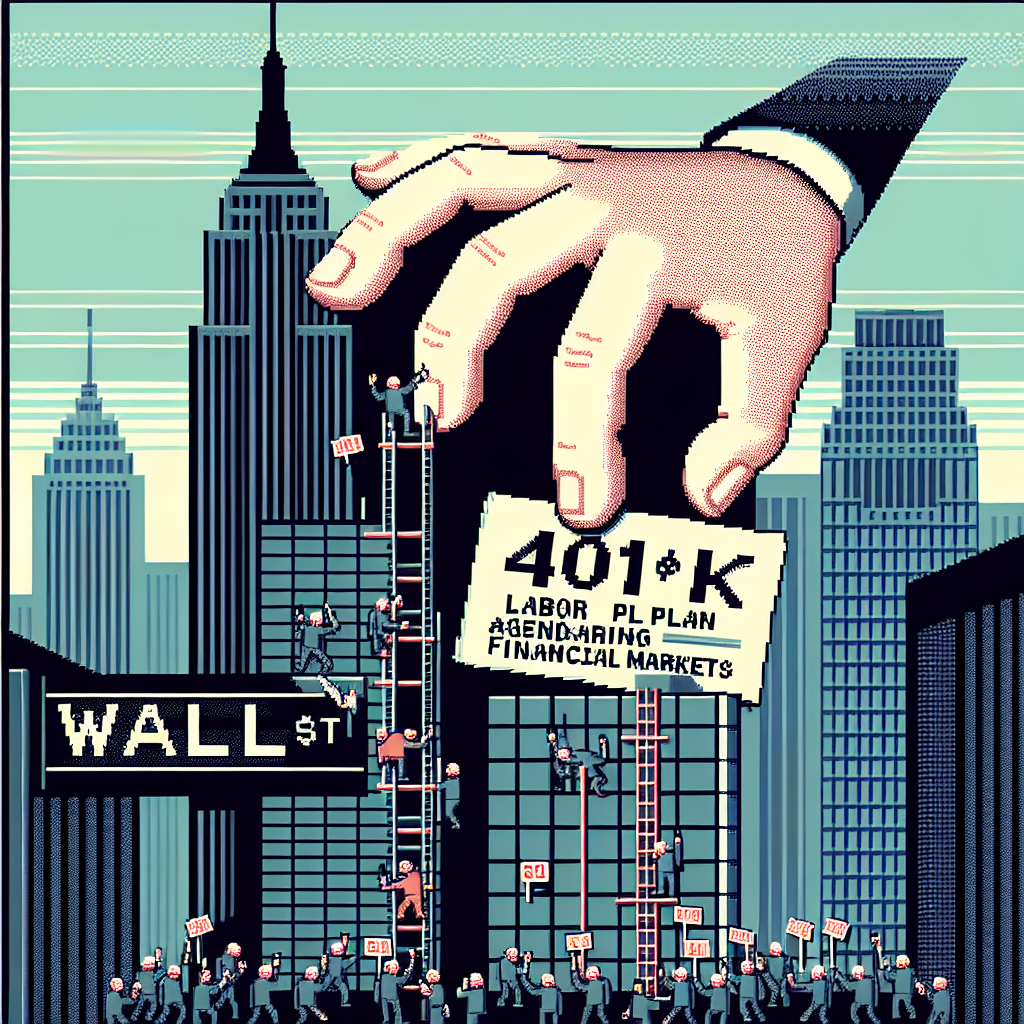
The Labor Department wants to give Wall Street firms greater access to a lucrative market — your 401(k). That sentence sounds alarming because it is: a recent push from the administration and the Department of Labor aims to ease rules so retirement plans can more easily add “alternative” investments (private equity, private credit, cryptocurrencies, structured notes and the like) to workplace retirement menus. The pitch is familiar — more access, more diversification, potentially higher returns — but the delivery may shift risk and fees onto everyday savers who rely on 401(k)s for retirement security.

What’s changing and why it matters

For decades, 401(k) plans have been dominated by mutual funds and index funds that are relatively liquid, transparent, and cheap. The new policy direction encourages plan sponsors and recordkeepers to include alternatives as standard options. Proponents argue alternatives can boost returns and broaden investment choices beyond public equities and bonds.

But alternatives are different beasts: they’re often expensive, hard to value, and illiquid. That matters inside a workplace retirement plan because participants — not just wealthy accredited investors — would be exposed. What looks like added choice on paper can become complexity, conflicts of interest, and higher costs for workers who neither asked for nor understand these products.

The investor dilemma: complexity vs. choice

  • Alternatives may offer high headline returns in certain market cycles, but they come with opaque fee structures (management fees, performance fees, transaction costs).
  • They can be difficult to price daily; many require quarterly or annual valuations, which undermines transparency and can mislead savers about the true state of their accounts.
  • Illiquidity is a real problem. If the plan or participant needs to rebalance or redeem during a market crash, these investments may be impossible or extremely costly to sell.
  • Plan fiduciaries might face pressure (or legal exposure) when they add risky products to broadly offered plan menus, while brokers and Wall Street firms stand to earn substantial new revenue.

Transitioning to these offerings without robust investor protections and plain-language disclosures risks turning retirement savings into a new profit center for asset managers — at workers’ expense.

How we got here: policy moves and political framing

The current push builds on an executive order and subsequent DOL guidance that frame alternatives as “democratizing access” to investment opportunities historically reserved for wealthy investors. Administrations often paint this as leveling the playing field: why should only the rich get private equity’s outsized returns?

But policy details matter. When rules change to reduce hurdles for offering alternatives, the market actors who package and sell these products — investment banks, private equity firms, broker-dealers and large recordkeepers — gain a massive addressable market: the roughly $12 trillion in U.S. retirement assets. Critics warn the change lets Wall Street market sophisticated, high-fee products to a population that may lack the information and resources to evaluate them.

The Washington Post column that spurred this conversation calls the plan “a massive 401(k) greed grab for Wall Street.” That blunt framing captures the core concern: structural incentives may steer savers into costly strategies that enrich intermediaries but don’t meaningfully improve retirement outcomes for most workers.

Real-world risks: fees, conflicts, and lawsuits

  • Higher fees. Alternatives frequently charge higher management fees and performance-based fees that erode long-term compounding. Over a 30-year horizon, even modest extra fees can reduce retirement balances dramatically.
  • Conflicts of interest. Broker-dealers and advisors who receive commissions or trail fees have incentives that may conflict with participant best interests.
  • Legal exposure for plan sponsors. Many plan sponsors historically avoid including complex alternatives precisely because of litigation risk: if participants lose money and sue, fiduciaries can be held accountable. Changing rules may not eliminate that exposure; it could shift liability in unpredictable ways.
  • Disparate impact. Lower-income or less financially literate workers are likelier to be harmed if defaults or target-date funds include poorly understood alternatives.

These are not hypothetical — there are precedents where complex financial products sold to retail or retirement accounts led to outsized losses and investigations. Relaxing guardrails without simultaneous consumer protections is a risky policy cocktail.

What protections would make a difference

If alternatives are going to be offered more widely, policymakers and plan sponsors should demand stronger safeguards:

  • Plain-language fee and liquidity disclosures tailored to non-expert plan participants.
  • Strict valuation rules and third-party custody to reduce conflicts and mark-to-market manipulation.
  • Fee limits and caps on performance-based compensation within default options like target-date funds.
  • Enhanced fiduciary duties and clearer ERISA guidance so plan sponsors understand liabilities and best practices.
  • Limits on which alternatives can be offered as default options for auto-enrolled participants.

Without structural protections like these, the balance of power favors institutions that design and distribute complex products — not the savers in the plan.

What workers should watch for now

  • Review your plan’s default and target-date funds. Watch for language that adds “private” or “alternative” exposure.
  • Check fees on your statements and ask HR or the plan administrator for plain-English explanations of any new options.
  • Be skeptical of marketing that implies “access” equals “better outcomes.” Diversification is useful, but only when paired with transparency and reasonable costs.
  • If offered complex products, ask whether they’re available as an opt-in, not part of an automatic default.

Transition words matter here: more options can be beneficial — but only when they’re genuinely accessible and appropriately regulated.

What this means for the broader retirement system

If policies succeed in making alternatives common in 401(k) menus, we could see a structural shift in how retirement assets are managed. That could mean higher profits for asset managers and more concentrated ownership of private companies by retirement funds. It could also mean greater tail-risk for everyday savers, and rising disparities in retirement outcomes.

Policymakers should ask a central question: do these changes improve the core mission of 401(k)s — steady, reliable retirement income for workers — or do they open a new revenue stream for financial intermediaries under the banner of “choice”?

My take

The idea of broadening investment choices in retirement plans isn’t inherently bad. Innovation can create value. But the devil is in the implementation. Without stronger consumer protections, mandatory disclosures, and fiduciary clarity, this push looks less like expanding opportunity and more like funneling predictable retirement flows into higher-fee, less-transparent vehicles. That’s a recipe for profits at the top and disappointment at the bottom.

Policymakers and plan sponsors should prioritize safeguards that protect savers’ long-term compounding power. Otherwise, the “democratization” of alternatives will read like a polite sales pitch for Wall Street.

Further reading

  • The Washington Post column analyzing the policy and implications.
  • The Guardian’s reporting on risks faced by small investors in expanded retirement options.
  • Analysis from labor and union groups highlighting concerns about fees and fiduciary duty.

Sources


Related update: We recently published an article that expands on this topic: read the latest post.

Fastest Payout Online Casino 2025: Lucky Creek Hailed Best Instant Withdrawal Casino – GlobeNewswire | Analysis by Brian Moineau

Fastest Payout Online Casino 2025: Lucky Creek Hailed Best Instant Withdrawal Casino - GlobeNewswire | Analysis by Brian Moineau

Lucky Creek Casino: Raising the Stakes in the World of Instant Gratification


In a world where convenience and speed are king, it seems only fitting that the online casino industry is racing to meet players' demands for instant gratification. Lucky Creek Casino has recently made headlines, as reported by GlobeNewswire, for setting a new industry benchmark in 2025 with the fastest payouts and instant withdrawals. For many players, waiting to access their winnings can be a frustrating experience, akin to waiting for the next season of a binge-worthy series. Lucky Creek has effectively eliminated this hurdle, ensuring that the thrill of the win doesn't fizzle out in wait time.

The Era of Instant Everything


Lucky Creek’s achievement is not just a win for casino enthusiasts but also a microcosm of a broader societal shift towards immediacy. Whether it’s food delivery apps promising meals at your door in under 30 minutes, or streaming services dropping entire seasons in one go, instant access is no longer a luxury but an expectation. The casino’s move reflects this trend, offering players not just games of chance but an end-to-end experience that respects their time.

The Technical Wizardry Behind Instant Withdrawals


Behind the scenes, achieving such rapid payouts is no small feat. It involves a seamless integration of advanced payment gateways, meticulous financial management, and robust cybersecurity measures, ensuring that transactions are not only fast but secure. This technical prowess is reminiscent of the innovations in fintech, where companies are constantly pushing the envelope to provide faster and more reliable services. Just as fintech has revolutionized the way we handle money, Lucky Creek's approach might redefine the standard for online casinos.

Connections to the Digital World


As we peer into other sectors, the push for speed and efficiency is palpable. Consider the rise of cryptocurrencies like Bitcoin and Ethereum, which promise rapid, decentralized transactions. While not without their challenges, they represent a shift towards quicker financial interactions that parallel what Lucky Creek is achieving within the casino realm. Moreover, the gaming industry, in general, is no stranger to these advancements, with esports and online gaming platforms continually optimizing to reduce latency and enhance player experience.

A Lighthearted Take on the Gambling Landscape


While the business side of things is undeniably impressive, one can't help but imagine the colorful characters who might frequent such a casino. Picture a suave secret agent cashing out his winnings after a high-stakes poker game, or a lucky amateur who finally hit the jackpot and is now living in a state of disbelief as their winnings land in their account before they finish their victory dance.

Final Thoughts


Lucky Creek Casino’s leap into the limelight as the fastest payout online casino of 2025 is a testament to the ever-evolving landscape of digital entertainment and financial technology. As industries continue to innovate and cater to our desire for speed, it will be fascinating to see which other sectors follow suit. Just like a well-played hand, timing is everything, and Lucky Creek seems to have hit the jackpot. Whether you're a seasoned gambler or a casual player, this development is sure to enhance the gaming experience, making the future of online casinos an exciting one to watch.

In the end, whether your game is blackjack, roulette, or slots, one thing is certain: Lucky Creek is dealing a new hand in the world of online gaming, and it’s a winning one.

Read more about AI in Business

Read more about Latest Sports Trends

Read more about Technology Innovations

Spain’s Second Largest Bank Gets Green Light to Offer Bitcoin and Ether Trading: Report – CoinDesk | Analysis by Brian Moineau

Spain's Second Largest Bank Gets Green Light to Offer Bitcoin and Ether Trading: Report - CoinDesk | Analysis by Brian Moineau

**Title: Spanish Banking Giants and the Crypto Revolution: A New Era for Bitcoin and Ether**

In a world where technology and finance are inextricably intertwined, the financial landscape is undergoing a rapid transformation. The latest development? Spain's second-largest bank has received the green light to venture into the world of cryptocurrencies, specifically offering Bitcoin and Ether trading. This move marks a significant milestone not only for Spain but also for the broader European banking sector.

For context, Spain's banking industry has long been a pillar of stability in Europe. The nation’s financial institutions have a reputation for cautious innovation, carefully balancing traditional banking with modern technological advancements. So, when a powerhouse like Spain's second-largest bank makes a strategic pivot towards cryptocurrencies, it’s worth noting. This development is a testament to the growing legitimacy and acceptance of digital currencies in mainstream finance.

**The Crypto Renaissance in Europe**

This isn’t an isolated event. Across Europe, there has been a noticeable shift in how financial institutions perceive cryptocurrencies. Countries like Switzerland have already positioned themselves as crypto-friendly hubs, with banks offering a plethora of digital asset services. Spain’s decision to follow suit signals a broader acceptance that cryptocurrencies are here to stay.

This move by the Spanish bank aligns with the European Central Bank's (ECB) cautious yet optimistic approach towards digital currencies. The ECB has been exploring the potential of a digital euro, which further underscores the continent's shift towards innovative financial solutions. The timing seems almost serendipitous, as the world grapples with the potential of blockchain technology and decentralized finance.

**A Broader Global Context**

Globally, the crypto market has been on a rollercoaster ride. From Bitcoin's meteoric rise to Ethereum's constant evolution with updates like Ethereum 2.0, digital currencies are in a constant state of flux. Interestingly, this Spanish bank's move comes on the heels of the U.S. Securities and Exchange Commission (SEC) intensifying its focus on regulating the crypto space. While the U.S. grapples with regulatory challenges, Europe appears to be taking a more balanced approach, fostering innovation while ensuring robust regulatory frameworks.

Moreover, this is happening at a time when traditional financial markets are experiencing volatility due to geopolitical tensions and post-pandemic economic recovery efforts. Cryptocurrencies, often seen as a hedge against traditional market fluctuations, are gaining traction among investors looking for alternative asset classes.

**A Lighthearted Take on the Future**

Imagine walking into your local bank and, alongside mortgage consultations and savings accounts, you have a crypto trading desk. It's a future that seemed far-fetched a decade ago, but now it's within reach. Perhaps we'll soon see "Crypto Fridays," where banking staff dress up as their favorite cryptocurrencies—expect lots of Bitcoin and Ethereum logos!

Jokes aside, this development highlights the importance of adaptability in the financial sector. Banks that once viewed digital currencies with skepticism are now embracing them, not just as a necessity, but as an opportunity to evolve and thrive in a digital-first world.

**Final Thoughts**

As Spain's second-largest bank embarks on its crypto journey, it's a reminder that the future of finance is dynamic and ever-changing. This move could pave the way for other European banks to follow suit, fostering a more inclusive and innovative financial ecosystem. Whether you’re a crypto enthusiast or a traditionalist, one thing is clear: the world of finance is transforming, and it's an exciting time to be a part of it. As we watch these developments unfold, one can only wonder—what's next on the horizon for the financial world?

In the end, it's not just about Bitcoin or Ether. It's about reimagining the possibilities of what finance can be. So, whether you're trading crypto or just watching from the sidelines, enjoy the ride—it's bound to be an interesting one!

Read more about AI in Business

Read more about Latest Sports Trends

Read more about Technology Innovations

Block Q4 Earnings, Revenue Miss Estimates. Square Stock Falls. – Investor’s Business Daily | Analysis by Brian Moineau

Block Q4 Earnings, Revenue Miss Estimates. Square Stock Falls. - Investor's Business Daily | Analysis by Brian Moineau

**Title: Navigating the Choppy Waters of Block's Q4 Earnings: A Light-Hearted Look at Financial Forecasting**

In the ever-evolving world of fintech, surprises are the only constant. Recently, Block Inc., the parent company of Square, released its Q4 earnings and revenue report, which, unfortunately, didn't quite hit the bullseye. As reported by Investor's Business Daily, the numbers fell short of analysts' expectations, causing Square's stock to take a bit of a nosedive. But before we start sounding the alarm bells, let's take a moment to put things into perspective.

Block's mixed results aren't an isolated incident in today's economic landscape. In fact, many companies have been grappling with the unpredictability brought on by the pandemic, fluctuating consumer behavior, and global supply chain disruptions. It's a bit like trying to sail through a storm with a compass that occasionally decides to spin around just for fun.

While the earnings miss might have spooked some investors, it's essential to remember that the stock market is a long game. Remember the wise words of Warren Buffett: "The stock market is designed to transfer money from the Active to the Patient." In other words, a single quarter's performance isn't the end of the world.

Block isn't the only financial player feeling the heat. Over in the world of cryptocurrencies, we've seen similar volatility. Bitcoin, for instance, has been on a rollercoaster ride, reflecting the broader uncertainty in the financial market. As fintech companies like Block continue to innovate and expand into crypto and other digital services, they're bound to encounter a few bumps in the road.

Looking beyond the numbers, it's fascinating to see how companies like Block are adapting to the changing financial ecosystem. Their efforts to integrate more services and expand globally are commendable. It's a bit like watching a team of chefs whipping up a new recipe while the ingredients keep changing. Sometimes the dish turns out perfectly, and other times, it's back to the drawing board.

As we mull over Block's recent earnings report, it's worth reflecting on the broader trends shaping the financial industry. Fintech companies are pushing the boundaries, challenging traditional banking models, and paving the way for a more digital future. It's an exciting time to watch these companies innovate and evolve, even when they occasionally stumble.

In conclusion, while Block's Q4 earnings and revenue might have missed the mark, it's crucial to keep the bigger picture in mind. The world of finance is a dynamic one, full of unexpected twists and turns. Instead of panicking, let's embrace the journey and keep an eye on how Block and other fintech giants continue to shape the future.

Final Thought: Just as sailors adjust their sails to navigate rough seas, investors and companies must adapt to the ever-changing financial landscape. With resilience, innovation, and a dash of humor, we can weather any storm that comes our way.

Read more about AI in Business

Read more about Latest Sports Trends

Read more about Technology Innovations