
Wall Street Eyes Your 401(k): Risk Shift | Analysis by Brian Moineau

Hook: Why your 401(k) might suddenly look more like a hedge fund

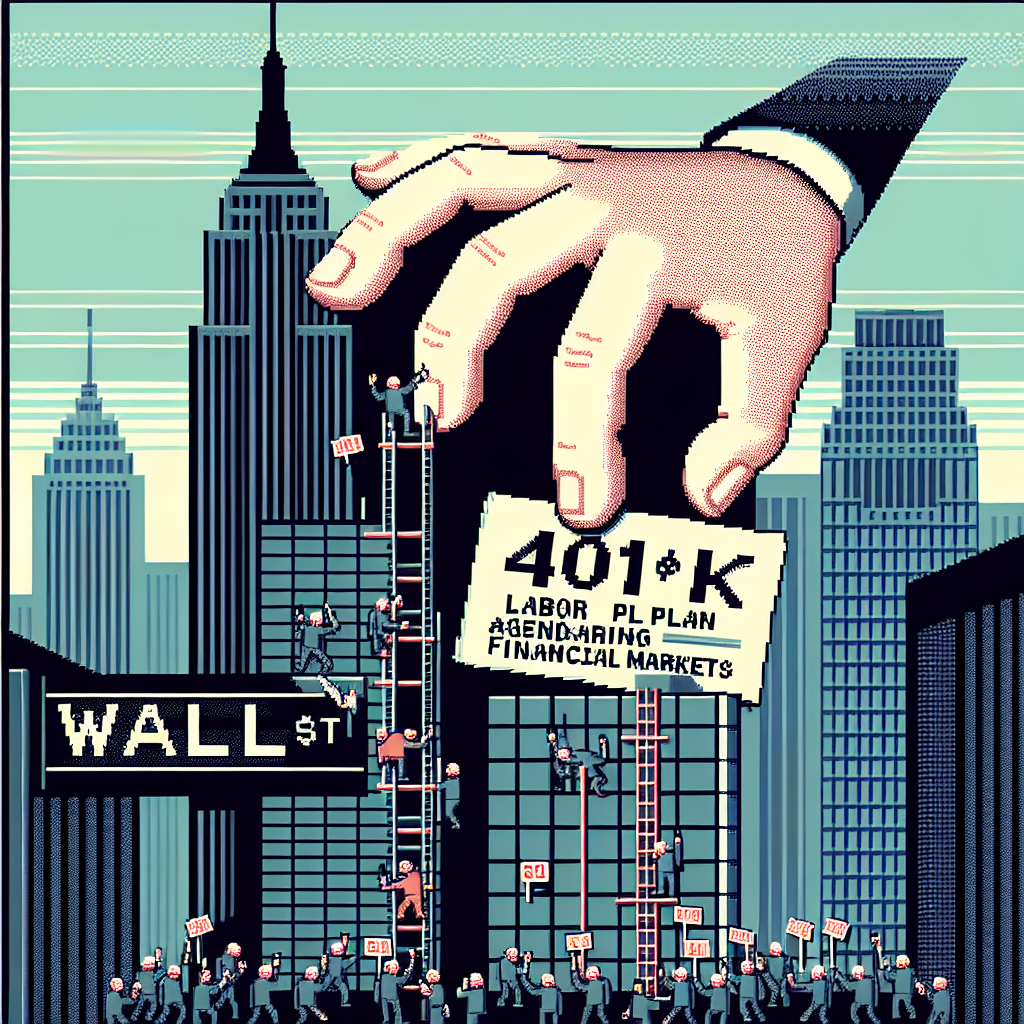
The Labor Department wants to give Wall Street firms greater access to a lucrative market — your 401(k). That sentence sounds alarming because it is: a recent push from the administration and the Department of Labor aims to ease rules so retirement plans can more easily add “alternative” investments (private equity, private credit, cryptocurrencies, structured notes and the like) to workplace retirement menus. The pitch is familiar — more access, more diversification, potentially higher returns — but the delivery may shift risk and fees onto everyday savers who rely on 401(k)s for retirement security.

What’s changing and why it matters

For decades, 401(k) plans have been dominated by mutual funds and index funds that are relatively liquid, transparent, and cheap. The new policy direction encourages plan sponsors and recordkeepers to include alternatives as standard options. Proponents argue alternatives can boost returns and broaden investment choices beyond public equities and bonds.

But alternatives are different beasts: they’re often expensive, hard to value, and illiquid. That matters inside a workplace retirement plan because participants — not just wealthy accredited investors — would be exposed. What looks like added choice on paper can become complexity, conflicts of interest, and higher costs for workers who neither asked for nor understand these products.

The investor dilemma: complexity vs. choice

  • Alternatives may offer high headline returns in certain market cycles, but they come with opaque fee structures (management fees, performance fees, transaction costs).
  • They can be difficult to price daily; many require quarterly or annual valuations, which undermines transparency and can mislead savers about the true state of their accounts.
  • Illiquidity is a real problem. If the plan or participant needs to rebalance or redeem during a market crash, these investments may be impossible or extremely costly to sell.
  • Plan fiduciaries might face pressure (or legal exposure) when they add risky products to broadly offered plan menus, while brokers and Wall Street firms stand to earn substantial new revenue.

Transitioning to these offerings without robust investor protections and plain-language disclosures risks turning retirement savings into a new profit center for asset managers — at workers’ expense.

How we got here: policy moves and political framing

The current push builds on an executive order and subsequent DOL guidance that frame alternatives as “democratizing access” to investment opportunities historically reserved for wealthy investors. Administrations often paint this as leveling the playing field: why should only the rich get private equity’s outsized returns?

But policy details matter. When rules change to reduce hurdles for offering alternatives, the market actors who package and sell these products — investment banks, private equity firms, broker-dealers and large recordkeepers — gain a massive addressable market: the roughly $12 trillion in U.S. retirement assets. Critics warn the change lets Wall Street market sophisticated, high-fee products to a population that may lack the information and resources to evaluate them.

The Washington Post column that spurred this conversation calls the plan “a massive 401(k) greed grab for Wall Street.” That blunt framing captures the core concern: structural incentives may steer savers into costly strategies that enrich intermediaries but don’t meaningfully improve retirement outcomes for most workers.

Real-world risks: fees, conflicts, and lawsuits

  • Higher fees. Alternatives frequently charge higher management fees and performance-based fees that erode long-term compounding. Over a 30-year horizon, even modest extra fees can reduce retirement balances dramatically.
  • Conflicts of interest. Broker-dealers and advisors who receive commissions or trail fees have incentives that may conflict with participant best interests.
  • Legal exposure for plan sponsors. Many plan sponsors historically avoid including complex alternatives precisely because of litigation risk: if participants lose money and sue, fiduciaries can be held accountable. Changing rules may not eliminate that exposure; it could shift liability in unpredictable ways.
  • Disparate impact. Lower-income or less financially literate workers are likelier to be harmed if defaults or target-date funds include poorly understood alternatives.

These are not hypothetical — there are precedents where complex financial products sold to retail or retirement accounts led to outsized losses and investigations. Relaxing guardrails without simultaneous consumer protections is a risky policy cocktail.

What protections would make a difference

If alternatives are going to be offered more widely, policymakers and plan sponsors should demand stronger safeguards:

  • Plain-language fee and liquidity disclosures tailored to non-expert plan participants.
  • Strict valuation rules and third-party custody to reduce conflicts and mark-to-market manipulation.
  • Fee limits and caps on performance-based compensation within default options like target-date funds.
  • Enhanced fiduciary duties and clearer ERISA guidance so plan sponsors understand liabilities and best practices.
  • Limits on which alternatives can be offered as default options for auto-enrolled participants.

Without structural protections like these, the balance of power favors institutions that design and distribute complex products — not the savers in the plan.

What workers should watch for now

  • Review your plan’s default and target-date funds. Watch for language that adds “private” or “alternative” exposure.
  • Check fees on your statements and ask HR or the plan administrator for plain-English explanations of any new options.
  • Be skeptical of marketing that implies “access” equals “better outcomes.” Diversification is useful, but only when paired with transparency and reasonable costs.
  • If offered complex products, ask whether they’re available as an opt-in, not part of an automatic default.

Transition words matter here: more options can be beneficial — but only when they’re genuinely accessible and appropriately regulated.

What this means for the broader retirement system

If policies succeed in making alternatives common in 401(k) menus, we could see a structural shift in how retirement assets are managed. That could mean higher profits for asset managers and more concentrated ownership of private companies by retirement funds. It could also mean greater tail-risk for everyday savers, and rising disparities in retirement outcomes.

Policymakers should ask a central question: do these changes improve the core mission of 401(k)s — steady, reliable retirement income for workers — or do they open a new revenue stream for financial intermediaries under the banner of “choice”?

My take

The idea of broadening investment choices in retirement plans isn’t inherently bad. Innovation can create value. But the devil is in the implementation. Without stronger consumer protections, mandatory disclosures, and fiduciary clarity, this push looks less like expanding opportunity and more like funneling predictable retirement flows into higher-fee, less-transparent vehicles. That’s a recipe for profits at the top and disappointment at the bottom.

Policymakers and plan sponsors should prioritize safeguards that protect savers’ long-term compounding power. Otherwise, the “democratization” of alternatives will read like a polite sales pitch for Wall Street.

Further reading

  • The Washington Post column analyzing the policy and implications.
  • The Guardian’s reporting on risks faced by small investors in expanded retirement options.
  • Analysis from labor and union groups highlighting concerns about fees and fiduciary duty.

Sources


Related update: We recently published an article that expands on this topic: read the latest post.

CFTC vs. States: Battle Over Prediction | Analysis by Brian Moineau

A new round in the turf war: CFTC sues three states over prediction markets

The modern sports betting industry emerged after the states won a legal battle with the federal government. But that tidy narrative is fraying at the edges as the Commodity Futures Trading Commission (CFTC) this week sued Arizona, Connecticut and Illinois, asserting exclusive federal jurisdiction over prediction markets and calling state crackdowns unconstitutional. The clash reads like a sequel to the last big gambling fight — only this time the battlefield is markets that let people trade event-outcome contracts, from election results to whether a quarterback throws a touchdown.

This fight matters because prediction markets sit at an odd legal intersection: they look and feel like betting to many state regulators, yet the CFTC treats them as regulated derivatives. Consequently, what happens next will shape whether prediction platforms operate under uniform federal rules, or whether states can treat them like local sportsbooks and enforce a patchwork of gambling laws.

How we got here

First, a quick refresher. Over the last decade states largely reclaimed control of sports betting after a 2018 Supreme Court decision (Murphy v. NCAA) allowed states to legalize and regulate wagering. That victory let states design licensing regimes, tax rates and consumer protections tailored to local politics and markets.

Meanwhile, prediction-market startups like Kalshi and Polymarket pursued a different route: they registered, or sought to register, with the CFTC as trading platforms for event-based contracts. The CFTC’s view is straightforward — markets that let users buy and sell contracts on future events belong under federal commodities law and the Commodity Exchange Act. States, by contrast, have stepped in asserting that many prediction-market offerings are unlicensed gambling within their borders.

Tensions escalated last year. Several states issued cease-and-desist letters, and Arizona even filed criminal charges against an operator. The CFTC responded by filing an enforcement advisory, then moved to sue three states on April 2, 2026, seeking declaratory relief and injunctive remedies to stop what it calls overreach.

Why the CFTC is fighting the states

  • The CFTC says Congress gave it exclusive authority to regulate designated contract markets (DCMs). From its perspective, state actions that would ban or penalize CFTC-regulated swaps and exchange activity are preempted by federal law.
  • The agency is worried about regulatory fragmentation: if each state can impose its own rules, the result could be inconsistent supervision, higher compliance costs and legal uncertainty for firms and users.
  • Politically, the CFTC has a vested interest in protecting the regulatory model it has overseen for decades — and in defending the firms that have built business plans around federal authorization.

That said, states argue they’re protecting residents from unlicensed wagering and preserving the integrity of local gambling regimes. For regulators in Illinois, Connecticut and Arizona, offering sports and political markets without state licensing looks like the same public-policy problem as illegal sportsbooks.

The practical implications for bettors and platforms

  • Platforms: A federal win would likely solidify a national framework for event contracts, making it easier for operators to scale nationally without navigating dozens of state licensing regimes. A state victory — or a prolonged patchwork of injunctions and prosecutions — would fragment the market and raise compliance risk.
  • Consumers: Under federal oversight, there may be consistent disclosure and market integrity rules, but state-level consumer protections (e.g., problem-gambling programs, local licensing standards) could be harder to enforce. Conversely, state control could mean stronger local safeguards where lawmakers push for them.
  • Sports industry: Leagues and operators have mixed incentives. They want legal clarity and integrity protections, but they also benefit from state-level partnerships and revenue-sharing deals tied to local regulation.

The legal stakes and likely path forward

Court battles over preemption of state law by federal statutes can be messy and slow. Expect:

  • Motion practice over jurisdiction and whether federal court should decide the limits of CFTC authority.
  • Parallel suits and private litigation from platforms pushing back against state cease-and-desist orders — many of which are already underway.
  • Possible appeals that could bring this issue to higher courts, potentially clarifying the scope of the Commodity Exchange Act and what Congress intended when it created the CFTC’s exclusive jurisdiction.

Along the way, policymakers on both sides will press their cases in public. Given the political attention — and the economic stakes — Congress could also be tempted to weigh in with statutory fixes or clarifying legislation. That would be the cleanest route, but one that requires bipartisan agreement in a moment when Congress moves slowly on complex tech and gambling issues.

What to watch next

  • Court filings and preliminary injunction decisions in the CFTC’s suits against Arizona, Connecticut and Illinois.
  • Any new state enforcement actions or criminal charges targeting prediction-market operators.
  • Congressional hearings or bills that attempt to clarify federal versus state authority over event-based markets.

What this means for the broader betting landscape

Prediction markets are more than novelty sportsbooks; they’re experiments in pricing information. Traders price the likelihood of events in real time, and those prices often reflect collective intelligence. If the CFTC prevails, those markets will stay squarely in the commodities/regulatory camp — potentially opening capital, institutional participation, and derivative-style safeguards.

On the other hand, if states carve out authority, we’ll likely see a splintered marketplace where firms must either obtain dozens of state licenses or geofence users — reducing liquidity and user experience. That could push more activity offshore or into gray-market offerings, ironically making enforcement harder.

My take

The modern sports betting industry emerged after the states won a legal battle with the federal government, proving that regulatory clarity matters. Today’s dispute over prediction markets is the next chapter in that long story: it’s less about ideology and more about practical governance. Uniform federal oversight could provide predictability and scale, but only if it also delivers consumer protections that states have prioritized. Conversely, unchecked state power risks choking innovation and splintering markets.

In short, what we need is not a winner-takes-all ruling, but smarter coordination: federal baseline rules that ensure market integrity, combined with state-level public-interest safeguards that address local concerns. Until courts or Congress draw that line, operators and bettors will be left navigating uncertain terrain.

Sources


Related update: We recently published an article that expands on this topic: read the latest post.



Related update: We recently published an article that expands on this topic: read the latest post.

DOJ Lets Live Nation Keep Monopoly | Analysis by Brian Moineau

Live Nation Gets To Keep Its Monopoly Thanks To Trump’s Department Of Justice — a closer look

On March 9, 2026, the Department of Justice announced a tentative settlement in its long‑running antitrust case against Live Nation and Ticketmaster — the very same case that threatened to break up one of the most dominant companies in live entertainment. Live Nation Gets To Keep Its Monopoly Thanks To Trump’s Department Of Justice — that was the blunt framing in the Defector piece that lit the internet on fire, and it’s worth unpacking why so many people felt blindsided by the deal and what it actually does (and doesn’t) change.

The headlines matter because this felt like a rare moment when the federal government might actually pry open a tightly closed market. Instead, the settlement largely preserves the combined Live Nation/Ticketmaster structure while imposing conditions that some states and consumer advocates call insufficient.

Why this felt like a tipping point

  • The DOJ’s 2024 complaint accused Live Nation of building an illegal monopoly by tying promotion, venue ownership, management, and ticketing into a single competitive chokehold.
  • For years, consumers watched Ticketmaster’s platform issues and rising fees while independent promoters and venues complained about locked‑in exclusivity deals.
  • A breakup would have been a clear, structural remedy: separate promotion/venue ownership from ticketing. That possibility is what made the 2026 trial so consequential.

Yet the March 2026 settlement stops short of a full breakup. Instead, it requires divestitures of some amphitheaters, caps on certain fees at specific venues, and changes intended to let rival ticket sellers access Ticketmaster’s platform. Live Nation also agreed to a monetary fund to settle claims with states. Live Nation insists the deal improves competition — and crucially, keeps Ticketmaster under its corporate umbrella. (Live Nation’s statement is posted on its newsroom.) (newsroom.livenation.com)

What the settlement actually does

  • Opens Ticketmaster technology to some rivals and places limits on certain exclusive contracts.
  • Forces the sale of a limited number of amphitheaters (reported as up to 13), not a wholesale divestiture.
  • Creates a monetary settlement pool (reported around $280 million) to resolve state claims and civil penalties.
  • Imposes behavioral and structural remedies that regulators claim will increase access for competing sellers.

Those changes are not nothing. Opening platform access and limiting long‑term exclusivity could help smaller promoters and alternative ticket sellers. But critics argue these measures are incremental and leave the core market power intact. Reports from March 2026 show many state attorneys general refused to join the DOJ’s agreement and vowed to continue their own cases. (latimes.com)

Why people called this “keeps the monopoly”

Transitioning now to the political and practical angles: the timing and personnel surrounding the settlement fed the narrative that the case had been softened. The antitrust division’s leadership shifted under the current administration, and the negotiator who brokered the deal took over shortly before the settlement was announced. For many observers — consumer groups, independent venues, and some state AGs — that raised reasonable concerns about political influence and whether a tough structural remedy was ever on the table. Media coverage captured both the surprise and the skepticism. (news.bloombergtax.com)

From a market perspective, “keep the monopoly” is shorthand. Live Nation keeps control of Ticketmaster and the vertically integrated business model remains. The company avoids the disruption of a full corporate separation, which would have been the clearest path to eliminating systemic conflicts that critics say distort the marketplace. Instead, the settlement leans on regulated access and limited divestitures — approaches that often require vigilant enforcement to actually deliver competition.

The practical winners and losers

  • Winners
    • Live Nation/Ticketmaster: They remain intact, likely avoiding the operational and financial headaches of a breakup.
    • Artists and big promoters who want a stable platform and broad reach may prefer the predictability of a single giant.
  • Losers
    • Independent promoters and smaller ticketing platforms that need more than API access to compete on equal footing.
    • Consumers, if fee caps and venue-specific remedies don’t translate into lower prices or better service.
    • Several state attorneys general and public‑interest advocates who wanted structural remedies.

The stakes go beyond one company. This case is a test of whether antitrust enforcement in the United States will favor blunt, structural breakups for entrenched monopolies — or whether behavioral fixes and limited divestitures will be the norm.

What happens next

Dozens of states have their own suits and many have declined to sign onto the DOJ deal, so litigation will continue in multiple forums. Judges and state AGs can still force more aggressive remedies. Meanwhile, enforcement will hinge on monitoring: will the DOJ and state regulators actively police Ticketmaster’s new obligations? Or will violations be met with slow civil litigation that fails to change market incentives?

Recent reporting indicates the trial didn’t end; it shifted. Some states pressed forward and the federal judge urged settlement, but a full consensus wasn’t reached. That means this story will keep developing in courtrooms and in public debate. (apnews.com)

What this means for music fans and the live industry

If you buy concert tickets, expect incremental changes before sweeping improvements. You might see more listings from rivals on Ticketmaster, some venue fee caps, and a handful of amphitheaters under new ownership. But fundamental incentives — the desire to lock in exclusive deals and monetize fan data and fees — largely remain. Meaningful competition would require deeper, structural separation or robust enforcement that changes those incentives across the industry.

Final thoughts

There’s a reasonable argument on both sides here. The settlement could open modest breathing room for rivals and create some consumer protections. But if your yardstick for success is dismantling concentrated power so new competitors can thrive, this deal looks like a compromise that preserves the status quo more than it transforms it.

Antitrust choices are political and technical. This settlement shows how messy that mix gets: legal leverage, administrative change, and public outrage all collided. The next chapters — state lawsuits, judicial rulings, and possibly tougher remedies — will tell us whether the industry gets real competitive relief or simply a reshaped monopoly.

Sources

10% Card Rate Cap: Relief or Risk | Analysis by Brian Moineau

Hook: A 10% cap, a political spark, and a household bill that won't wait

President Trump’s call to cap credit card interest rates at 10% for one year landed with a thud in boardrooms and a cheer (or wary optimism) in living rooms. The idea is simple enough to fit on a ballot sign: stop “usurious” rates and give struggling households breathing room. The reaction, though, revealed a knot of trade-offs—between relief and access, between political theater and durable policy—that deserves a calm, clear look.

Why this matters right now

  • U.S. credit card balances are at record highs and months of elevated living costs have left many households dependent on revolving credit.
  • The average card APR in late 2025 hovered north of 20%, while millions of consumers carry balances month-to-month.
  • A 10% cap is attractive politically because it promises immediate savings for people carrying balances; it worries bankers because it would compress a major revenue stream.

The short history and the new flashpoint

  • Interest-rate caps and usury limits are hardly new—states and federal debates have wrestled with them for decades. Modern card markets, though, are built around tiered pricing: low rates for prime borrowers, high rates (and higher revenue) for higher-risk accounts.
  • Bipartisan efforts to limit credit-card APRs existed before the latest push; senators from across the aisle introduced proposals in 2025 that echoed this idea. President Trump announced a one‑year 10% cap beginning January 20, 2026, a move that triggered immediate industry pushback and fresh public debate. (See coverage in CBS News and The Guardian.)

The arguments: who says what

  • Supporters say:

    • A 10% cap would directly reduce interest burdens and could save consumers tens of billions of dollars per year (a Vanderbilt analysis estimated roughly $100 billion annually under a 10% cap).
    • It would be a visible sign policymakers are tackling affordability and could force banks to rethink pricing and rewards structures that often favor wealthier cardholders.
  • Opponents say:

    • Banks and industry groups warn that a blunt cap would force issuers to tighten underwriting, shrink credit to riskier borrowers, raise fees, or pull products—leaving vulnerable households with fewer options.
    • Some economists caution the cap could push consumers toward payday lenders, “buy now, pay later” schemes, or other less-regulated credit sources that are often costlier or predatory.

How the mechanics could play out (real-world trade-offs)

  • Reduced interest revenue → banks respond by:

    • Raising annual fees or penalty fees; or
    • Tightening approvals and lowering credit limits; or
    • Reducing rewards and perks that effectively subsidize some consumers’ costs.
  • Net effect on a typical borrower:

    • If you carry a balance today at ~24% APR, a 10% cap would lower monthly interest payments substantially—real savings for households who can still access cards.
    • For those who lose access to traditional cards because issuers retreat, the result could be worse credit choices or no access when emergencies hit.

What the data and studies say

  • Vanderbilt University researchers modeled a 10% cap and found large aggregate interest savings for consumers, even after accounting for likely industry adjustments. (This is the key pro-cap, evidence-based counterbalance to industry warnings.)
  • Industry analyses emphasize the scale of credit-card losses and default risk: compressing APRs without alternative risk-pricing tools can make lending to subprime customers unprofitable, pushing issuers to change behavior.

Possible middle paths worth considering

  • Targeted caps or sliding caps tied to credit scores, rather than a one-size 10% ceiling.
  • Time-limited caps combined with enhanced consumer supports: mandatory hardship programs, strengthened oversight of fees, and incentives for low-cost lending alternatives.
  • Strengthening the Consumer Financial Protection Bureau and enforcement of transparent pricing so consumers can comparison-shop more effectively.
  • Encouraging market experiments—fintechs or banks offering low-APR products voluntarily for a year (some firms have already signaled creative moves after the announcement).

A few examples of immediate market responses

  • Major banks and trade groups issued warnings that a 10% cap would reduce credit availability and could harm the very people the policy intends to help.
  • Fintech and challenger firms publicly signaled willingness to test below-market APR products—evidence that market innovation can sometimes respond faster than legislation.

What to watch next

  • Will the administration pursue legislation, an executive action, or voluntary industry commitments? Each route has different legal and practical constraints.
  • How will card issuers adjust product lines, fee schedules, and underwriting if pressured to lower APRs?
  • Whether policymakers pair any cap with protections (limits on fee increases, requirements for alternative credit access) that blunt the worst trade-offs.

A few glances at fairness and politics

This is policy where economics and perception collide. A low cap is emotionally and politically compelling: Americans feel nickel-and-dimed by high rates. But the deeper question is structural: do we want a consumer-credit system that prices risk through APRs, or one that channels public policy to broaden access to safe, low-cost credit and stronger safety nets? The answer will shape not just card statements but who gets to weather a job loss, a medical bill, or a housing emergency.

My take

A blunt, across-the-board 10% cap is an attention-grabbing start to a conversation, but it’s not a silver-bullet fix. The potential consumer savings are real and politically resonant, yet the risks to access and unintended migration to fringe lenders are real, too. A more durable approach blends targeted rate relief with guardrails—limits on fee-shifting, stronger consumer protections, and incentives for low-cost lending options. Policy should aim to reduce harm without creating new holes in the safety net.

Final thoughts

Credit-card interest caps spotlight something larger: the fragility of many household finances. Whatever happens with the 10% proposal, the core challenge remains—how to give people reliable access to affordable credit while protecting them from exploitative pricing. That will take a mixture of smarter regulation, market innovation, and policies that address root causes—stagnant wages, high housing and healthcare costs, and inadequate emergency savings—not just headline-grabbing caps.

Sources


Related update: We recently published an article that expands on this topic: read the latest post.


Related update: We recently published an article that expands on this topic: read the latest post.

DOJ Moves to Cut Real Estate Commissions | Analysis by Brian Moineau

Why the DOJ’s New Statement on Real-Estate Competition Matters More Than Your Agent’s Business Card

The Department of Justice just stepped into a corner of American life that affects nearly everyone who ever thinks about owning a home: how real-estate brokers compete — and how much that competition (or lack of it) costs buyers and sellers. The Antitrust Division filed a statement of interest on December 19, 2025, backing claims that industry practices and trade-association rules have suppressed competition and helped keep U.S. broker commissions stubbornly high. That legal posture may seem arcane, but its consequences ripple across home prices, agent business models, and how homes are marketed.

Why this is catching people’s attention

  • Buying a home is the largest purchase most Americans make. Small percentage points in commission structures can equal thousands of dollars.
  • U.S. broker commissions have long lingered around 5–6% — roughly double or triple what buyers pay in many other developed countries.
  • The DOJ is no longer sitting on the sidelines. Its statement of interest signals regulators are prepared to treat trade-association rules and brokerage practices as potential antitrust problems.

If you follow housing headlines, this is part of a steady drumbeat: lawsuits, regulatory probes, and court rulings over the last several years have put the National Association of Realtors (NAR), MLS rules, and various local listing practices under sustained scrutiny. The DOJ’s filing doesn’t decide a case — but it frames how the courts and the public should view the competitive stakes.

What the DOJ filing says (plain English)

  • The Antitrust Division told a federal court that competition among real-estate brokerages is “critical” for protecting homebuyers.
  • It emphasized that trade-association rules can — and should — be subject to antitrust scrutiny when they have the effect of limiting competition (for example, if they facilitate price-setting or discourage lower-cost business models).
  • The filing clarifies that such association rules aren’t automatically exempt from horizontal price-fixing rules under the Sherman Act.

Put another way: the DOJ is reminding courts that rules made by associations of businesses — even long-standing industry norms — can be unlawful when they restrain competition.

The backstory you should know

  • Plaintiffs and plaintiffs’ lawyers have sued brokerages and MLS operators in multiple high-profile cases alleging that sellers have been pressured (directly or indirectly) to pay buyer-agent commissions, keeping listing commissions artificially high.
  • NAR faced a landmark $1.8 billion jury verdict in earlier litigation, followed by proposed settlements and continued investigations. The DOJ has previously criticized some proposed settlements as inadequate and has even withdrawn support when it believed consumer protections were insufficient.
  • Courts have reopened and re-examined the DOJ’s authority to investigate NAR and related policies, and regulators (including the FTC in earlier years) have published studies on competition in the brokerage industry.
  • Specific rules such as the “Clear Cooperation Policy” and MLS compensation disclosure practices have been lightning rods — regulators worry these can limit alternative business models and private/alternative listing platforms.

All of this reflects an ongoing shake-up: traditional ways of buying and selling homes are colliding with new platforms, discount brokerages, and regulators pushing for clearer competition.

Who wins and who loses if the DOJ’s view carries the day

  • Winners

    • Consumers (potentially): stronger competition could mean lower effective commissions, better transparency, and more choice in how to buy/sell homes.
    • Alternative brokerages and technology platforms: if association rules that favor legacy models are curtailed, disruptive or low-cost models get room to grow.
    • Innovators who offer à la carte services or flat-fee models.
  • Losers

    • Incumbent brokers and large brokerages that rely on the status quo and network effects in MLS systems.
    • Trade associations or cooperative rules that restrict how members offer or disclose compensation.

Expect incumbents to push back — through legal defenses, lobbying, and tweaking business practices — while challengers and consumer advocates press for change.

What this could mean for buyers, sellers, and agents

  • Buyers and sellers might see more transparent commission arrangements and increased availability of low-fee alternatives, especially in competitive markets.
  • Sellers could gain more explicit control over how their listings are marketed and how buyer-agent compensation is offered or disclosed.
  • Agents may have to adapt by differentiating services (rather than relying on commission norms), experimenting with pricing models, or specializing more to justify higher fees.

Change won’t be instantaneous: court cases move slowly, and industry practices are embedded. But the DOJ’s statement accelerates a momentum that’s been building for years.

Things to watch next

  • How courts treat the DOJ’s statement of interest in the Davis et al. v. Hanna Holdings case and related litigation.
  • Any changes to MLS rules or to NAR policies negotiated as part of litigation or settlement agreements.
  • Legislative or regulatory steps at the state or federal level aimed at commission disclosure, MLS practices, or antitrust enforcement in real estate.
  • Market responses: will brokerages voluntarily offer new pricing structures, or will they double down on traditional models?

Key takeaways

  • The DOJ is explicitly framing real-estate brokerage rules as an antitrust issue — not a marginal industry debate.
  • Longstanding commission norms in the U.S. are a major target because they have substantial consumer cost implications.
  • If courts and regulators press reforms, consumers could gain more pricing options and transparency; incumbents may see their business models disrupted.

My take

This is an important pivot in how we think about housing-market fairness. Real-estate brokerage hasn’t been treated like other competitive markets in part because tradition and local practices insulated it. The DOJ’s recent posture signals that tradition alone won’t defend practices that suppress competition or keep consumers paying more than they otherwise might. For buyers and sellers, the promise is more choice and clearer pricing. For agents, the challenge is to prove value beyond a commission number — or adapt their pricing.

The change won’t be painless; entrenched systems and powerful networks don’t unwind quickly. But a marketplace where brokers compete on price, service quality, and transparency — rather than on opaque norms — is better for most consumers. That’s worth watching, and potentially worth celebrating.

Sources

Instacart $60M Settlement Exposes Fees | Analysis by Brian Moineau

A delivery fee that wasn’t really free: why Instacart’s $60M FTC settlement matters

The headline is crisp: Instacart will pay $60 million in consumer refunds to settle allegations from the Federal Trade Commission that it misled shoppers about fees, refunds and subscription trials. But the story beneath the dollar figure is about trust, the fine print of digital commerce, and how big platforms nudge behavior — sometimes at consumers’ expense.

Why this feels familiar

  • App-first shopping promised convenience and transparency. Instead, many consumers discovered surprise service fees, hard-to-find refund options, and automatic subscription charges after “free” trials.
  • Regulators have been sharpening their focus on online marketplaces and subscription rollovers for years. This enforcement action is a continuation of that trend — and a reminder that “free” often comes with strings.

Quick takeaways

  • The FTC’s settlement requires Instacart to refund $60 million to affected customers and to stop making misleading claims about delivery costs, satisfaction guarantees, and free-trial enrollment practices. (ftc.gov)
  • The agency found consumers were often charged mandatory “service fees” (up to ~15%) even when pages advertised “free delivery,” and refund options were buried so customers received credits instead of full refunds. (ftc.gov)
  • The ruling highlights broader scrutiny of gig-economy and platform pricing tactics, including questions about how personalized pricing or A/B experiments can affect fairness and transparency. (apnews.com)

What the FTC said, in plain language

According to the FTC, Instacart used three main tactics that harmed shoppers:

  • Advertising “free delivery” for first orders while still charging mandatory service fees that increased total cost. (ftc.gov)
  • Promoting a “100% satisfaction guarantee” that rarely produced full refunds; instead customers typically received small credits and the real refund option was hard to find. (ftc.gov)
  • Enrolling consumers into paid Instacart+ memberships after free trials without adequately disclosing automatic renewal and refund restrictions. Hundreds of thousands were allegedly billed without receiving benefits or refunds. (ftc.gov)

Instacart denies wrongdoing in public statements, but agreed to the settlement terms to resolve the case and move forward. Media coverage notes the company faces additional scrutiny about dynamic-pricing tools. (reuters.com)

Ripples beyond one company

  • Consumer protection implications: The decision reinforces that platform marketing and UI flows are subject to consumer-protection rules. “Free” claims, subscription opt-ins, and refund pathways must be clear and conspicuous.
  • Competitive implications: When fees are hidden or refunds hard to obtain, the advertised prices don’t reflect true cost — skewing how users compare services and potentially disadvantaging competitors who are more transparent.
  • Product and design lessons: Companies that rely on A/B tests, progressive disclosure, or dark-pattern-like flows should expect regulators to scrutinize whether those designs mislead consumers or obscure costs.

For shoppers and product teams: practical lessons

  • Shoppers: Read the total cost at checkout, not the headline promise. Watch free-trial end dates and whether a membership will auto-enroll you. Look for full-refund options rather than platform credits.
  • Product teams: Make price components and membership rollovers explicit in UI text and flows. If refunds differ from credits, state it plainly. If you use experiments or personalization that affect price, document and vet them for fairness and clarity.

My take

This settlement is less about a single headline number and more about the power imbalance in platform commerce. Apps can design paths that nudge behavior, and when transparency lags, that nudge becomes a money-making lever. Regulators stepping in signals a larger cultural shift: consumers and watchdogs expect platform economics to be auditable and understandable. For companies, that means honesty in marketing and user flows isn’t just ethical — it’s a business risk-management imperative.

Sources


Related update: We recently published an article that expands on this topic: read the latest post.
FSOC Reset: Deregulation for Growth | Analysis by Brian Moineau

A watchdog reborn for growth: What Scott Bessent’s FSOC reset means for markets and regulators

A policy about protecting the financial system just got a makeover. When Treasury Secretary Scott Bessent told the Financial Stability Oversight Council (FSOC) to stop thinking “prophylactically” and start hunting for rules that choke growth, the room changed from risk-management to rule‑rewriting. That pivot — part managerial, part ideological — will ripple across banks, fintech, investors and anyone who cares how Washington balances safety and dynamism.

Quick takeaways

  • Bessent has directed FSOC to prioritize economic growth and target regulations that impose “undue burdens,” signaling a clear deregulatory tilt.
  • The council will form working groups on market resilience, household resilience, and the effects of artificial intelligence on finance.
  • Supporters say loosening unnecessary rules can revive credit flow and innovation; critics warn that weakening post‑2008 safeguards risks rekindling systemic vulnerabilities.
  • Practical effects will depend on how FSOC’s new priorities influence independent regulators (Fed, SEC, OCC, CFPB) and whether Congress or courts push back.

Why this matters now

FSOC was born from the 2008 crisis under the Dodd‑Frank framework to sniff out risks that cross institutions or markets. For nearly two decades the accepted default for many regulators has been: better safe than sorry — build buffers, tighten oversight, and prevent contagion before it starts.

Bessent is asking the council to change the default. In a letter accompanying FSOC’s annual report (December 11, 2025), he framed overregulation as a stability risk in its own right — arguing that rules that slow growth, limit credit or choke technological adoption can produce stagnation that undermines resilience. He wants FSOC to spotlight where rules are excessive or duplicative and to shepherd work that reduces those burdens, including in emerging areas such as AI. (politico.com)

That’s a big philosophical and operational shift. Instead of primarily preventing tail risks (a “prophylactic” posture), FSOC will add an explicit mission: identify regulatory frictions that constrain growth and recommend easing them.

What the new FSOC playbook looks like

  • Recenter mission: Treat economic growth and household well‑being as core inputs to stability, not as tradeoffs. (home.treasury.gov)
  • Working groups: Create specialized teams for market resilience, household financial resilience (credit, housing), and AI’s role in finance. These groups will evaluate where policy might be recalibrated. (reuters.com)
  • “Undue burden” lens: Systematically review rules for duplication, cost‑benefit imbalance, or barriers to innovation — and highlight candidates for rollback or harmonization. (apnews.com)

What's at stake — the upside and the downside

  • Upside:

    • Faster capital flow and potential credit expansion if unnecessary frictions are removed.
    • More rapid adoption of financial technology (including AI) that could improve services and lower costs.
    • Reduced compliance costs for smaller banks and nonbank financial firms that often bear disproportionate burdens. (mpamag.com)
  • Downside:

    • Diminished guardrails could increase systemic risk if stress scenarios are underestimated or regulations that prevented contagion are untethered. Critics point to recent corporate bankruptcies and market stress as reasons to be cautious. (apnews.com)
    • FSOC’s influence is largely convening and coordinating; it cannot unilaterally rewrite rules. The real test will be whether independent agencies adopt the new tone or resist.
    • Political and legal pushback is likely from consumer‑protection advocates, some Democrats in Congress, and watchdog groups who argue loosened rules will favor financial firms at consumers’ expense. (politico.com)

How markets and stakeholders will likely respond

  • Big banks and fintech: Encouraged. They’ll press for reduced compliance burdens and clearer pathways for novel products (AI models, alternative credit scoring).
  • Regional/community banks: Mixed. Lower compliance costs could help, but loosening supervision can also allow larger firms to expand risky products that affect smaller lenders indirectly.
  • Consumer advocates and progressive lawmakers: Vocal opposition, emphasizing consumer protections, transparency, and stress‑test rigor.
  • Investors: Watchful. Market participants tend to welcome pro‑growth signals but will price in increased tail‑risk if oversight is perceived as weakened.

The real constraint: FSOC’s powers and the regulatory ecosystem

FSOC chairs and convenes — it doesn’t replace independent regulators. The Fed, SEC, OCC and CFPB set and enforce many of the rules Bessent has in mind. That means:

  • FSOC can recommend, coordinate, and spotlight problem areas; it can’t, by itself, decree deregulation.
  • The policy route will often run through agency rulemakings, litigation, and Congress — all places where the deregulatory push can be slowed, shaped, or blocked. (reuters.com)

Put simply: this is a strategic reorientation more than an instant policy rewrite. Its potency depends on persuasion and leverage across the regulatory web.

My take

There’s a reasonable middle path here. Financial rules that are genuinely duplicative or outdated deserve scrutiny — especially where technology has changed how services are delivered. Yet dismantling prophylactic measures wholesale risks repeating a painful lesson: stability is often the fruit of constraints that look costly in calm times.

The best outcome would be surgical reform: use FSOC’s platform to clean up inefficiencies, increase transparency, and direct agencies to modernize rules — while preserving the stress‑testing, capital, and resolution tools that limit contagion. The danger is rhetorical: calling prophylaxis “burdensome” can become a pretext for rolling back protections that matter when markets turn.

Final thoughts

Bessent’s reset reframes a central policy debate: is stability best secured primarily by stricter rules or by stronger growth? The answer isn’t binary. Markets thrive when rules are sensible, targeted, and adapted to new technologies — but don’t disappear when they make mistakes. Over the coming months expect vigorous fights over concrete rulemakings, not just rhetoric. How FSOC translates this new mission into action will tell us whether this shift produces smarter regulation — or just a lighter touch at the expense of resilience.

Sources


Related update: We recently published an article that expands on this topic: read the latest post.


Related update: We recently published an article that expands on this topic: read the latest post.

Instacart’s Algorithm Inflates Grocery | Analysis by Brian Moineau

The grocery price you see might not be the grocery price someone else sees

Imagine loading your cart with the same staples you always buy — eggs, peanut butter, cereal — and watching the total quietly climb depending on who’s logged into the app. That’s the unsettling picture painted by a new investigation into Instacart’s pricing experiments. The findings suggest algorithmic pricing on grocery delivery platforms is no longer hypothetical: it’s affecting the bills people pay for essentials.

Why this matters right now

  • Grocery affordability is a top concern for many households in the U.S., and small percentage differences compound quickly.
  • The findings come from a coordinated investigation by Groundwork Collaborative, Consumer Reports, and labor group More Perfect Union that tested live prices across hundreds of Instacart users in multiple cities.
  • The study’s headline figure — that average pricing variation could cost a four-person household roughly $1,200 a year — is what turned heads and spurred debate about transparency, fairness, and the role of algorithmic experiments in everyday commerce.

What the investigation found

  • Across tests in four U.S. cities, nearly three-quarters of items showed multiple prices to different shoppers for the exact same product at the exact same store and time. (groundworkcollaborative.org)
  • Price differences for individual items were often sizable — the highest price was as much as 23% above the lowest for the same SKU. Examples included peanut butter, deli turkey and eggs. (groundworkcollaborative.org)
  • Average basket totals for identical carts differed by about 7% in the study’s sample. Using Instacart’s own estimates of household grocery spending, that swing could translate to roughly $1,200 extra per year for a household of four exposed to the typical price variance observed. (consumerreports.org)

How it works (the mechanics, in plain language)

  • Instacart and some retailers use dynamic pricing tools and experimentation platforms (including technology Instacart acquired in 2022) to run price tests.
  • These systems can show different “original” or “sale” prices and can test multiple price points simultaneously across users to see what increases purchases or revenue.
  • The troubling element isn’t experimentation per se — price testing exists in physical stores too — but the lack of disclosure and the fact that shoppers trying to comparison-shop or budget are effectively excluded from seeing consistent prices. (consumerreports.org)

Responses and pushback

  • Instacart has acknowledged running pricing experiments in some cases but has asserted it does not use personal or demographic data to set prices and that most retailers do not use their pricing tools. The company also said it had stopped running experiments for some retailers named in coverage. (consumerreports.org)
  • Retail partners gave mixed reactions: some distanced themselves or said they were not involved, while others did not comment. Lawmakers and consumer advocates have seized on the report to call for clearer disclosures or limits on “surveillance pricing.” (consumerreports.org)

Broader implications

  • Algorithmic pricing can amplify existing inequalities if certain groups are more likely to be exposed to higher-priced experiments — even if a company insists it’s not using demographic targeting. The opacity of models and the complexity of A/B tests make oversight difficult. (consumerreports.org)
  • The grocery sector is already under regulatory and public scrutiny for price transparency. States and federal policymakers are beginning to consider rules about algorithmic price disclosures and “surveillance pricing” bans. Expect legislative activity and watchdog attention to grow. (wcvb.com)
  • For consumers, the convenience of home delivery may now come with a hidden premium that is not obvious at checkout.

What shoppers can do now

  • Compare with in-store prices when possible. If an item looks markedly higher in the app, check the store shelf price or call the store before completing a large order. (wcvb.com)
  • Use price-tracking habits: keep receipts, note repeated price differences, and report discrepancies to the retailer or Instacart. Consumer complaints create records that regulators and journalists can use.
  • Consider pickup (if available) or buying directly through a retailer’s own online service when price transparency matters most. Some retailers still control and publish consistent prices on their own platforms. (wcvb.com)

My take

Algorithmic testing can be a useful business tool — it can tune pricing to demand, clear inventory, or optimize promotions. But when the item is a family’s food staples, the ethical and practical bar for transparency should be higher. Consumers budgeting for essentials need predictable, comparable prices. If pricing experiments are going to be run on grocery purchases, they should be disclosed clearly, limited in scope for essentials, and subject to guardrails so that convenience doesn’t become a stealth surcharge.

Sources


Related update: We recently published an article that expands on this topic: read the latest post.

EU hits Apple and Meta with €700m of fines – BBC | Analysis by Brian Moineau

EU hits Apple and Meta with €700m of fines - BBC | Analysis by Brian Moineau

Tech Giants vs. The EU: A Tale of Fines and Fury


In a move that has sent ripples across the tech world, the European Union has slapped a hefty €700 million fine on two of the biggest tech behemoths: Apple and Meta. The EU's decision to levy these fines stems from ongoing concerns over privacy violations and anti-competitive practices. However, the tech giants are not taking this lying down, accusing the EU of unfairly targeting US companies in a bid to stifle their innovation and market dominance.

The EU's Stance: A Struggle for Fairness or a Power Play?


The EU has long been perceived as a regulatory giant when it comes to tech companies, especially those hailing from the United States. This latest move is just one in a series of actions aimed at reining in what the EU sees as monopolistic behavior and privacy infringements. The General Data Protection Regulation (GDPR), which came into effect in 2018, was a landmark policy shift that has since been a thorn in the side of many tech companies.

From the EU's perspective, these fines are a necessary measure to protect European consumers and ensure a level playing field. The EU argues that large tech companies have long exploited their dominant market positions to the detriment of smaller competitors and consumer privacy. Critics of the EU's approach, however, argue that this might be more about power dynamics than consumer protection.

Tech Giants' Fury: Unjust Targeting or Necessary Regulation?


Apple and Meta's reactions have been predictably indignant. They claim that the EU is unfairly singling them out while turning a blind eye to European companies engaging in similar practices. This sentiment isn't entirely new. For years, American tech companies have voiced concerns that European regulators are more interested in extracting large fines than fostering innovation.

In response to the fines, a spokesperson for Apple remarked, "We believe these actions are unjust and reflect a misunderstanding of our business practices." Meta echoed similar sentiments, emphasizing their commitment to safeguarding user data and promoting healthy competition.

Wider Implications: A Global Trend?


The EU's actions are part of a broader global trend where regulators are increasingly scrutinizing Big Tech. Countries across the globe, including the United States and China, are ramping up their regulatory frameworks to address concerns over data privacy, market competition, and misinformation. This is not merely a European phenomenon but rather a reflection of growing global unease with the power wielded by tech giants.

For instance, in the United States, the Federal Trade Commission (FTC) has been actively pursuing antitrust cases against major tech companies. Meanwhile, China has also taken a hard stance against its own tech giants, with Alibaba and Tencent facing significant regulatory challenges.

Final Thoughts: Walking the Regulatory Tightrope


As we witness this unfolding saga, it's clear that the relationship between tech companies and regulators is at a critical juncture. On one hand, there is a valid need for regulation to protect consumers and foster competition. On the other, there's a risk that overly stringent regulations could stifle innovation and hinder the growth of the digital economy.

Ultimately, finding a balance between regulation and innovation is the key challenge facing policymakers today. While the fines imposed on Apple and Meta may seem like a victory for consumer rights, they also spotlight the complex and often contentious relationship between tech giants and the regulators who seek to control them. It remains to be seen how this will play out in the long term, but one thing is certain: the dialogue between tech companies and regulators is far from over.

Read more about AI in Business

Read more about Latest Sports Trends

Read more about Technology Innovations