Prediction Markets vs. Sportsbooks | Analysis by Brian Moineau

When prediction markets and sportsbooks collide: who’s really playing, and who’s trading?

Imagine scrolling your phone between the box score and a live order book — one tap lets you buy a contract that pays $1 if Team A covers the spread, the next shows the market price drifting like a stock after a big piece of news. That tension — between “betting” and “trading” — is where prediction markets and sportsbooks are currently duking it out, and Kalshi’s CEO gave a crisp take on the differences that helps explain why both regulators and bettors are paying attention.

Prediction markets and sportsbooks have similar mechanics on the surface: both let people put money on outcomes. But Kalshi’s CEO, Tarek Mansour, argues the two operate on fundamentally different business models, risk profiles, and regulatory logics — and those differences are reshaping how we think about wagering on sports, politics, and real-world events. (Kalshi’s remarks were summarized in NBC Sports and discussed on The Axios Show.) (nbcsports.com)

What the Kalshi CEO said about prediction markets and sportsbooks

  • Mansour frames sportsbooks as “designed for customers to lose.” The house sets prices and collects a vigorish; if customers win too often, sportsbooks may limit them or use promotions to keep them engaged. That’s the classic casino model: your losses are the operator’s inventory. (nbcsports.com)

  • By contrast, prediction markets like Kalshi run peer-to-peer exchanges. Users trade contracts against one another; the platform facilitates the trades and collects fees rather than underwriting the risk itself. In Mansour’s view, that makes prediction markets functionally closer to a regulated financial market than a betting shop. (nbcsports.com)

  • Those structural differences fuel an ongoing legal and regulatory debate: are outcome-based contracts sports wagering (state-regulated) or financial derivatives (federal oversight via the CFTC)? Recent coverage shows both courts and state attorneys general grappling with the question. (apnews.com)

Transitioning from the CEO’s soundbites to real-world impact helps make sense of why this matters beyond tech press talk.

Why the distinction matters

First, user experience and incentives change the moment you move from a sportsbook to an exchange.

  • On a sportsbook, odds and lines come from the house; promotions, limits, and loyalty schemes are tools to manage customers’ behavior. The business has skin in the game. That can create adversarial dynamics: winners get limited; losers get promotions. (nbcsports.com)

  • On an exchange, the platform’s profit comes from fees and liquidity provision. Successful traders don’t get blocked by the operator because the operator isn’t the counterparty. That can encourage more active, short-term participants who treat outcomes like assets to buy and sell. (nbcsports.com)

Second, regulation and consumer protections follow different tracks.

  • State gaming commissions historically regulate sportsbooks. Their mandates include consumer protection, problem-gambling measures, and enforcing gaming laws. States vary widely in their rules and prohibitions. (apnews.com)

  • Federally, if prediction markets qualify as derivatives, they fall under Commodity Futures Trading Commission (CFTC) oversight. That triggers a different toolkit — market surveillance, reporting standards, and a framework used for futures and options rather than localized gambling statutes. The legal line is blurry and actively litigated. (nbcsports.com)

Finally, market integrity and insider-risk profiles change.

  • Sportsbooks worry about match-fixing, wagers by those with insider knowledge, and the integrity of the game itself. Regulation and monitoring focus on those harms.

  • Prediction exchanges expand into politics, economics, and entertainment — arenas where insider trading risk looks more like securities fraud than sports corruption. Operators have started policing who can trade certain markets; lawmakers are already proposing rules in response. (apnews.com)

How participants behave differently

If you’ve ever used a sportsbook, you’ve probably hidden an app during halftime and kept chasing a parlay. In prediction markets, activity looks more like day trading:

  • Traders watch prices move on news and adjust positions quickly.
  • Liquidity (other traders willing to take the opposite side) matters more than a house’s willingness to pay.
  • Strategies include hedging, scalping, and event-driven trades rather than single-wager parlays.

That shift attracts a different crowd — people who want to monetize information or viewpoints, not just root for a team. It also creates a more intense regulatory spotlight because those information asymmetries resemble the conditions that financial regulators police. (si.com)

Broader context and recent events

Prediction markets grew fast in 2025–2026, with Kalshi and rivals handling billions in volume and expanding beyond U.S.-only users. That growth pushed debates into public view: courts have weighed whether the CFTC has exclusive jurisdiction over sports-related contracts; state attorneys general have filed suits alleging illegal gambling operations; and exchanges have begun tightening insider-trading rules themselves. The energy is real, and it’s pulling in investors, lawmakers, and sporting institutions. (fortune.com)

These clashes are both economic and philosophical: is prediction trading a market for information and risk transfer, or a form of wagering that should be limited by state gambling laws? Expect more court decisions and legislation that try to draw that line.

What to watch next

  • Legal rulings that clarify whether event contracts fall under federal derivatives law or state gambling statutes.
  • How major leagues, the NCAA, and sports governing bodies respond to exchanges listing sports-related markets.
  • Operational changes by exchanges — stricter anti-insider rules, geofencing, and transparency tools — that attempt to blunt regulators’ arguments and shore up legitimacy.

Key takeaways

  • Prediction markets and sportsbooks both let people put money on outcomes, but their business models differ: sportsbooks typically underwrite bets; prediction markets facilitate peer-to-peer trading and collect fees. (nbcsports.com)
  • Regulation is at the heart of the battle: state gambling laws versus federal derivatives oversight (CFTC). Court rulings and enforcement actions will shape the industry’s future. (nbcsports.com)
  • Participant behavior shifts from betting to trading — bringing different risks (insider trading, market manipulation) and attracting different user types. (si.com)

My take

This isn’t just a turf war between industries — it’s a test of how we classify financial risk and human behavior in an era where apps blur old boundaries. Prediction markets can democratize price discovery on events that matter, but they also import the hard problems of surveillance, regulation, and ethics that come with financial markets. If operators, regulators, and sports leagues can align incentives around integrity and transparency, the result could be a new, regulated information marketplace. If they don’t, expect fragmented rules, more litigation, and markets that bounce between innovation and prohibition.

Sources


Related update: We recently published an article that expands on this topic: read the latest post.



Related update: We recently published an article that expands on this topic: read the latest post.


Related update: We recently published an article that expands on this topic: read the latest post.

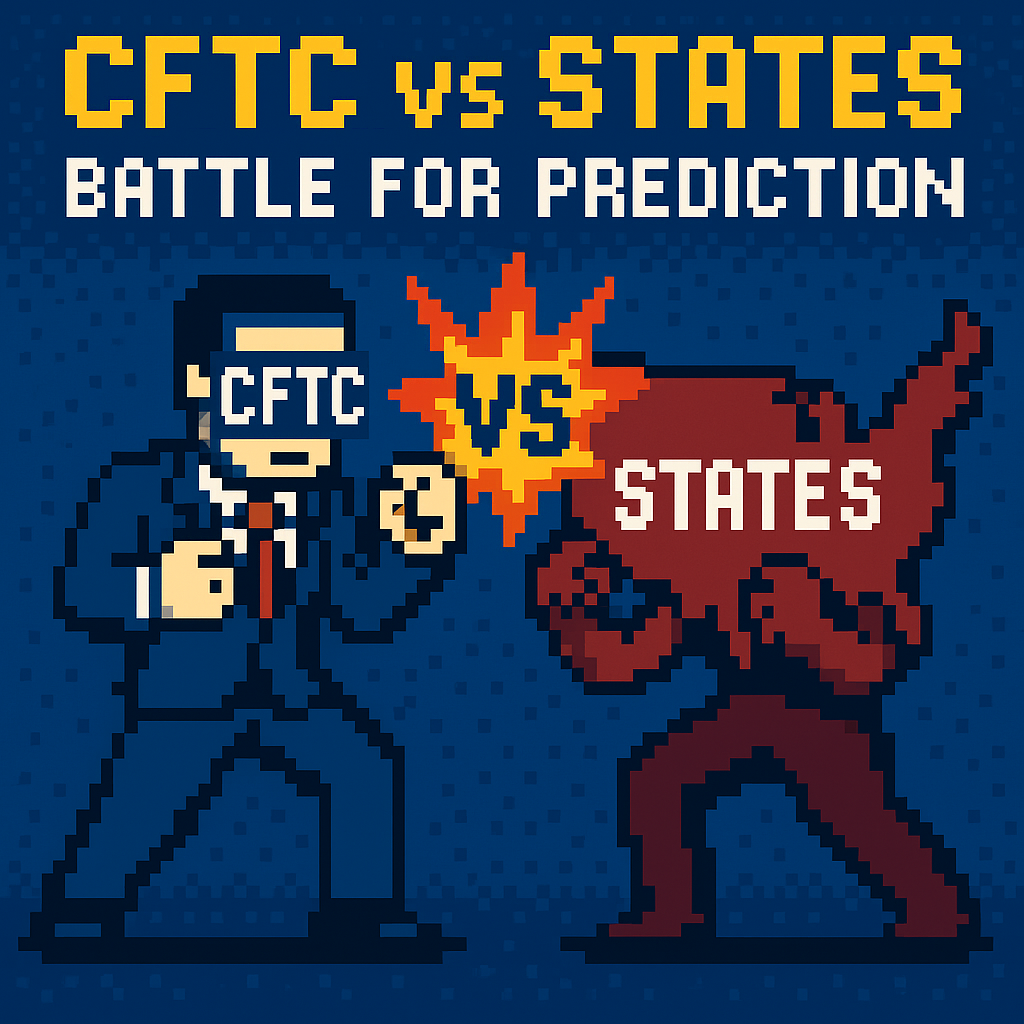
CFTC vs. States: Battle Over Prediction | Analysis by Brian Moineau

A new round in the turf war: CFTC sues three states over prediction markets

The modern sports betting industry emerged after the states won a legal battle with the federal government. But that tidy narrative is fraying at the edges as the Commodity Futures Trading Commission (CFTC) this week sued Arizona, Connecticut and Illinois, asserting exclusive federal jurisdiction over prediction markets and calling state crackdowns unconstitutional. The clash reads like a sequel to the last big gambling fight — only this time the battlefield is markets that let people trade event-outcome contracts, from election results to whether a quarterback throws a touchdown.

This fight matters because prediction markets sit at an odd legal intersection: they look and feel like betting to many state regulators, yet the CFTC treats them as regulated derivatives. Consequently, what happens next will shape whether prediction platforms operate under uniform federal rules, or whether states can treat them like local sportsbooks and enforce a patchwork of gambling laws.

How we got here

First, a quick refresher. Over the last decade states largely reclaimed control of sports betting after a 2018 Supreme Court decision (Murphy v. NCAA) allowed states to legalize and regulate wagering. That victory let states design licensing regimes, tax rates and consumer protections tailored to local politics and markets.

Meanwhile, prediction-market startups like Kalshi and Polymarket pursued a different route: they registered, or sought to register, with the CFTC as trading platforms for event-based contracts. The CFTC’s view is straightforward — markets that let users buy and sell contracts on future events belong under federal commodities law and the Commodity Exchange Act. States, by contrast, have stepped in asserting that many prediction-market offerings are unlicensed gambling within their borders.

Tensions escalated last year. Several states issued cease-and-desist letters, and Arizona even filed criminal charges against an operator. The CFTC responded by filing an enforcement advisory, then moved to sue three states on April 2, 2026, seeking declaratory relief and injunctive remedies to stop what it calls overreach.

Why the CFTC is fighting the states

  • The CFTC says Congress gave it exclusive authority to regulate designated contract markets (DCMs). From its perspective, state actions that would ban or penalize CFTC-regulated swaps and exchange activity are preempted by federal law.
  • The agency is worried about regulatory fragmentation: if each state can impose its own rules, the result could be inconsistent supervision, higher compliance costs and legal uncertainty for firms and users.
  • Politically, the CFTC has a vested interest in protecting the regulatory model it has overseen for decades — and in defending the firms that have built business plans around federal authorization.

That said, states argue they’re protecting residents from unlicensed wagering and preserving the integrity of local gambling regimes. For regulators in Illinois, Connecticut and Arizona, offering sports and political markets without state licensing looks like the same public-policy problem as illegal sportsbooks.

The practical implications for bettors and platforms

  • Platforms: A federal win would likely solidify a national framework for event contracts, making it easier for operators to scale nationally without navigating dozens of state licensing regimes. A state victory — or a prolonged patchwork of injunctions and prosecutions — would fragment the market and raise compliance risk.
  • Consumers: Under federal oversight, there may be consistent disclosure and market integrity rules, but state-level consumer protections (e.g., problem-gambling programs, local licensing standards) could be harder to enforce. Conversely, state control could mean stronger local safeguards where lawmakers push for them.
  • Sports industry: Leagues and operators have mixed incentives. They want legal clarity and integrity protections, but they also benefit from state-level partnerships and revenue-sharing deals tied to local regulation.

The legal stakes and likely path forward

Court battles over preemption of state law by federal statutes can be messy and slow. Expect:

  • Motion practice over jurisdiction and whether federal court should decide the limits of CFTC authority.
  • Parallel suits and private litigation from platforms pushing back against state cease-and-desist orders — many of which are already underway.
  • Possible appeals that could bring this issue to higher courts, potentially clarifying the scope of the Commodity Exchange Act and what Congress intended when it created the CFTC’s exclusive jurisdiction.

Along the way, policymakers on both sides will press their cases in public. Given the political attention — and the economic stakes — Congress could also be tempted to weigh in with statutory fixes or clarifying legislation. That would be the cleanest route, but one that requires bipartisan agreement in a moment when Congress moves slowly on complex tech and gambling issues.

What to watch next

  • Court filings and preliminary injunction decisions in the CFTC’s suits against Arizona, Connecticut and Illinois.
  • Any new state enforcement actions or criminal charges targeting prediction-market operators.
  • Congressional hearings or bills that attempt to clarify federal versus state authority over event-based markets.

What this means for the broader betting landscape

Prediction markets are more than novelty sportsbooks; they’re experiments in pricing information. Traders price the likelihood of events in real time, and those prices often reflect collective intelligence. If the CFTC prevails, those markets will stay squarely in the commodities/regulatory camp — potentially opening capital, institutional participation, and derivative-style safeguards.

On the other hand, if states carve out authority, we’ll likely see a splintered marketplace where firms must either obtain dozens of state licenses or geofence users — reducing liquidity and user experience. That could push more activity offshore or into gray-market offerings, ironically making enforcement harder.

My take

The modern sports betting industry emerged after the states won a legal battle with the federal government, proving that regulatory clarity matters. Today’s dispute over prediction markets is the next chapter in that long story: it’s less about ideology and more about practical governance. Uniform federal oversight could provide predictability and scale, but only if it also delivers consumer protections that states have prioritized. Conversely, unchecked state power risks choking innovation and splintering markets.

In short, what we need is not a winner-takes-all ruling, but smarter coordination: federal baseline rules that ensure market integrity, combined with state-level public-interest safeguards that address local concerns. Until courts or Congress draw that line, operators and bettors will be left navigating uncertain terrain.

Sources


Related update: We recently published an article that expands on this topic: read the latest post.


Related update: We recently published an article that expands on this topic: read the latest post.

Palantir-Powered AI Shields Sports Betting | Analysis by Brian Moineau

When AI Referees the Odds: Polymarket, Palantir and the new sports betting integrity platform

Polymarket’s announcement that its sports betting integrity platform will use the Vergence AI engine grabbed attention this week — and for good reason. The move pairs the prediction-market upstart with Palantir (the Peter Thiel‑backed data titan) and TWG AI to build real‑time screening for manipulation, insider activity, and other anomalies across sports markets. It’s a clear signal that prediction markets are ready to borrow the kinds of surveillance and analytics once exclusive to finance and national security.

This matters because Polymarket’s sports contracts now make up a huge share of its volume. With money and reputation on the line, faster, smarter detection is no longer optional; it’s table stakes.

Quick context: why this partnership matters

  • Polymarket runs markets where people trade on event outcomes. Sports markets are especially attractive to traders and — worryingly — to bad actors with inside knowledge or influence.
  • Palantir built its name in government and defense data integration, then moved aggressively into commercial AI. In 2025 Palantir and TWG AI launched Vergence, an AI engine designed to combine disparate data, surface anomalies, and make complex signal detection operational.
  • Polymarket says the new integrity platform will detect, prevent, and report suspicious activity in real time, while screening users against banned lists and known risk indicators.

Taken together, this is an attempt to bring institutional‑grade surveillance to a market that has long balanced openness and trust with exposure to manipulation.

What the Vergence AI engine will do for sports markets

Polymarket’s goal is straightforward: catch the shenanigans before they cascade. Here’s how the Vergence engine is being pitched for that role.

  • Ingest wide, messy data: betting flows, order books, wallet histories, public news, and even league‑level information. Vergence is built to fuse many inputs.
  • Flag anomalies in real time: sudden shifts in odds, concentrated trades that outsize normal liquidity, or coordinated patterns across markets.
  • Map behavioral fingerprints: identify accounts or clusters that resemble known bad actors, or that show insider‑style timing relative to private information becoming public.
  • Automate reporting and screening: escalate probable violations to human investigators, and apply blocks or restrictions where warranted.

This isn’t one tool doing everything; it’s a layered system that mixes automated triage with human judgment. That design choice matters for accuracy, accountability, and — crucially — legal defensibility.

Why detection matters beyond Polymarket

Recent history teaches that a few high‑profile incidents can set back public trust in entire platforms. Sports leagues and regulators are sensitive to anything that looks like match‑fixing or insider trading, and rightfully so.

  • For leagues: integrity issues damage fan trust and commercial partnerships. If a betting platform can reliably show it prevents manipulation, leagues are more likely to cooperate or accept data‑sharing arrangements.
  • For regulators: robust monitoring helps platforms argue they’re operating safely and responsibly, smoothing the path toward licensing or U.S. market re‑entry.
  • For institutional participants: hedge funds, sportsbooks, and market‑makers prefer venues with predictable, auditable surveillance to reduce counterparty and reputational risk.

So Polymarket’s adoption of Vergence could make its markets more attractive to capital and partners — assuming it actually works as promised.

The risks and tradeoffs

This partnership isn’t automatically a win. Several thorny issues deserve attention.

  • False positives and overreach. Aggressive surveillance risks flagging legitimate traders (e.g., an informed but legal bet), which can chill activity and provoke disputes. Human review and appeal mechanisms will matter.
  • Privacy and data use. Combining trading data with external signals raises questions about user privacy, data retention, and disclosure. Platforms must be transparent about what they collect and how they act on it.
  • Vendor concentration. Palantir’s deep technical reach is a plus, but relying on a dominant analytics provider can create single‑point risks — from system errors to political backlash.
  • Game theory arms race. As detection improves, bad actors could adapt with more sophisticated evasion tactics. Monitoring must evolve continuously.

Ultimately, integrity tools shift the battleground rather than end it. They raise the cost of cheating — which is valuable — but don’t remove the need for governance, transparency, and community trust.

Polymarket’s broader strategy and regulatory angle

Polymarket has been quietly pivoting: after regulatory scrutiny and an earlier offshore posture, the company has been building a more regulated U.S. presence. Robust integrity controls strengthen that narrative.

  • For regulators (like the CFTC and state gambling authorities), demonstrable, real‑time monitoring helps answer the hard question: are prediction markets more like open research tools or like regulated gambling venues?
  • For partners (sports leagues, exchanges, and institutional traders), the platform’s ability to detect and report suspicious trades could unlock collaborations previously withheld for fear of reputational damage.

If Polymarket can show logs, audit trails, and a reasonable appeals process, it gains leverage when negotiating with both regulators and industry partners.

My take

Pairing Palantir’s Vergence engine with a prediction market is an inevitable next step. Trading venues that ignore the surveillance norms of finance invite trouble. That said, the success of this effort will depend less on fancy machine learning and more on governance: how Polymarket sets thresholds, audits alerts, protects privacy, and resolves disputes.

There’s good reason to be cautiously optimistic. Better detection discourages bad actors and can lower systemic risk. But platforms should resist treating technology as a panacea. Real improvements come from combining AI with clear processes, independent audits, and community oversight.

Final thoughts

The story here isn’t just about one partnership; it’s about standards. As prediction markets scale and intermix with traditional betting liquidity, tools like Vergence could become a new baseline for integrity across the industry. That would be healthy — provided the industry holds vendors and platforms to high standards of transparency and fairness.

Expect the next chapter to be shaped by how well Polymarket communicates the limits of its system, how it handles false positives, and how regulators respond. If those pieces fall into place, we’ll see an industry better prepared to keep the games honest and the markets credible.

Sources


Related update: We recently published an article that expands on this topic: read the latest post.


Related update: We recently published an article that expands on this topic: read the latest post.


Related update: We recently published an article that expands on this topic: read the latest post.


Related update: We recently published an article that expands on this topic: read the latest post.


Related update: We recently published an article that expands on this topic: read the latest post.

Commanders Ready to Spend Big in Free | Analysis by Brian Moineau

Washington’s all-in moment: why the Commanders are expected to spend big in free agency

There’s an energy around the Washington Commanders that feels different this winter — not the slow-burn rebuild whispers of past years, but a louder, bolder hum that says: let’s win now. With ample cap space and clear holes on the roster, Washington is widely expected to be aggressive in free agency, targeting edge rushers, wide receivers and cornerbacks to give Dan Quinn’s defense and the offense immediate, high-impact upgrades. (espn.com)

Why this off-season matters

  • The Commanders enter the offseason with meaningful salary-cap flexibility and a front office that signaled a willingness to spend to accelerate the team’s timeline. That combination naturally points to heavy activity in March’s free-agent market. (washingtonpost.com)
  • The roster has glaring needs where veteran, top-of-market signings can move the needle quickly: an edge rusher who consistently pressures quarterbacks, a reliable outside receiver to complement the existing weapons, and a starting-caliber corner to stabilize pass defense. These are precisely the positions most analysts expect Washington to pursue. (espn.com)
  • Free agency lets a team buy proven production immediately — crucial for a franchise that has burned draft capital in recent years and now needs results rather than long-term projects. Expect the Commanders to target players who can contribute Week 1. (espn.com)

What the Commanders need, in plain terms

  • Edge rusher: A true consistent pass-rush presence to relieve pressure on the secondary and flip game-planning for opponents. A high-end edge signing would change opposing protections and help the entire defense perform better. (espn.com)
  • Wide receiver: A reliable outside threat who can draw coverage, create separation and finish contested catches — an upgrade that would open the field for the offense. (fanduel.com)
  • Cornerback: Either a veteran lockdown option or a versatile starter who can coexist with the team’s other corners and simplify defensive matchups. (washingtonpost.com)

How Washington might spend — scenarios to watch

  • Top-of-market move(s): With cap space, the Commanders could pursue one or two marquee free agents (for example, a high-grade edge rusher and a starting corner), accepting premium contracts to land immediate difference-makers. That’s the “splash” approach many pundits expect. (espn.com)
  • Mix of veteran signings + draft: Another path is signing one or two proven veterans and using the draft to fill complementary roles, balancing cost and roster depth. This reduces risk but still upgrades key spots. (fanduel.com)
  • Targeted bargains: If the market inflates and bidding wars push prices sky-high, Washington could pivot to younger, cheaper free agents with upside — trading immediate star power for more manageable long-term cap flexibility. Recent coverage notes both the temptation and the danger of overpaying in an inflated market. (atozsports.com)

The ripple effects on roster construction

  • Spending big at edge or corner affects draft strategy. If the Commanders lock up a premier pass rusher in free agency, their first-round pick could go to offense or to a different defensive need. Conversely, staying conservative in free agency would increase pressure to draft impact players early. (espn.com)
  • Financially, committing large sums to veteran free agents shortens flexibility in future windows. That’s fine if the signings push the team into contention; it’s risky if the players underperform or suffer injuries — a classic win-now tradeoff. (washingtonpost.com)
  • Culture and coaching fit matter. Dan Quinn’s scheme values pass rush and tight corner play; bringing in players who fit the scheme and locker-room culture will be as important as raw stats. Analysts have emphasized that the front office appears ready to prioritize scheme fits this offseason. (espn.com)

Possible names and market dynamics

  • The actual targets will depend on who reaches the market and how bidding wars unfold. Names have circulated in mock lists and local coverage — from established edge talents to starting corners and mid-level receiver options — but the bigger story is the Commanders’ willingness to be “top of market” for players who can make an immediate impact. Expect competition from other teams with similar needs, which tends to drive up contract values. (sportsnaut.com)

A few practical betting points to follow as the window opens:

  • Watch whether Washington bids aggressively early or dials in offers late — early splashes suggest confidence in a championship window; late buys suggest opportunism. (espn.com)
  • Track cap moves and restructures — they reveal how committed the front office is to spending now versus preserving flexibility. (washingtonpost.com)
  • Pay attention to positional signings league-wide; a handful of high-priced deals at edge or corner will define the market and affect Washington’s ability to land targets. (atozsports.com)

A quick snapshot for fans (TL;DR)

  • The Commanders have money and urgency. Expect big swings in free agency, particularly for edge rushers, wide receivers and cornerbacks. (espn.com)
  • The team could chase one or two marquee veterans or combine a couple of high-impact signings with draft solutions. (fanduel.com)
  • Outcomes will hinge on market inflation, bidding wars and whether Washington prioritizes immediate results over long-term flexibility. (atozsports.com)

My take

If Washington truly wants to pivot from hopeful rebuild to legitimate contender, this is the offseason to stop nibbling at the edges and invest where it counts. An elite edge rusher and a dependable boundary corner can transform the defense overnight; a consistent outside receiver can change the offense’s play-calling balance. Smart deals that emphasize fit — not just star power — will matter most. The risk of overpaying exists, but so does the upside of vaulting into contention. For fans, buckle up: the next few weeks should be lively.

Sources


Related update: We recently published an article that expands on this topic: read the latest post.


Related update: We recently published an article that expands on this topic: read the latest post.

NCAA Seeks Halt to College Prediction | Analysis by Brian Moineau

When prediction markets meet college sports: who should hit pause?

The headline landed like a buzzer-beater nobody asked for: on January 14, 2026, the NCAA asked the Commodity Futures Trading Commission (CFTC) to suspend prediction markets from offering trades on college sports until stronger guardrails are put in place. That request — delivered in a letter from NCAA president Charlie Baker and amplified at the NCAA Convention — pulls into sharp focus a fast-moving collision between financial innovation, fan engagement, and the fragile integrity of amateur athletics.

This isn't just a regulatory squabble. It touches students, coaches, parents, regulators, market operators and every fan who cares whether a game is decided on the field or by outside incentives.

What happened and why it matters

  • The NCAA formally asked the CFTC on January 14, 2026 to pause collegiate sports markets operated by prediction-market platforms. (espn.com)
  • Prediction markets let users buy and sell contracts on yes/no outcomes (for example: “Will Player X enter the transfer portal?”). They are federally regulated by the CFTC, and many platforms argue they are distinct from state-licensed sportsbooks. (espn.com)
  • The NCAA’s key concerns include:
    • Age and advertising restrictions (prediction markets are often available to 18+ users nationwide, unlike sportsbooks where many jurisdictions set 21+). (espn.com)
    • Stronger integrity monitoring and mandatory incident reporting (sportsbooks in many states must report suspicious activity; the NCAA argues prediction markets lack comparable requirements). (espn.com)
    • Banning or limiting prop-style markets tied to individual athletes (increasing risk of manipulation or harassment). (espn.com)
    • Anti-harassment measures and harm-reduction tools. (ncaa.org)

Why it matters: college athletes are not paid employees in the traditional sense (despite NIL changes), they’re still students whose careers and mental health can be affected by gambling-driven incentives and abuse. Prediction markets—accessible nationally and to younger bettors—create a different risk profile than regulated sportsbooks operating under state gaming laws.

The players on the court

  • NCAA: Focused on athlete welfare and competition integrity; willing to work with the CFTC to design safeguards. (ncaa.org)
  • Prediction market companies (e.g., Kalshi, Polymarket and others): Regulated by the CFTC and argue they operate as financial exchanges offering contracts between traders, not traditional wagering against a house. They have begun adding integrity partners and monitoring tools. (espn.com)
  • CFTC: The federal regulator for event contracts. Historically has allowed event markets but has been cautious about drawing hard lines around sports-related markets. The NCAA’s request asks the agency to take a more active stance. (espn.com)
  • State gaming regulators: Some have moved to restrict or challenge prediction markets, arguing those products violate state wagering laws. Recent enforcement actions and cease-and-desist letters show the state-federal regulatory boundary is contested. (barrons.com)

The core tensions

  • Jurisdiction and labeling
    • Are binary event contracts “financial products” under federal CFTC oversight, or are they sports betting that falls under state gambling laws? The answer determines who writes the rules. (barrons.com)
  • Age and accessibility
    • Many prediction platforms accept 18-year-olds nationwide; sportsbooks in many states restrict college-sports betting to older age groups or ban in-state college betting entirely. That gap concerns the NCAA. (espn.com)
  • Types of markets and harm
    • Prop markets or player-specific questions (transfer portal, injuries, playing time) can create perverse incentives and increase risk of manipulation, harassment, or targeted abuse. (espn.com)
  • Speed of innovation vs. pace of regulation
    • Prediction markets have evolved quickly; regulators and sports governing bodies are scrambling to adapt. That mismatch often leaves safeguards trailing innovation. (barrons.com)

What a workable compromise might look like

  • Temporary moratorium: A pause limited in time that gives regulators and the NCAA room to draft specific safeguards tied to college athletics.
  • Harmonized minimums: Federal rules requiring age verification (21+ for college sports?), targeted advertising restrictions, and robust geolocation enforcement for in-state protections.
  • Integrity reporting: Mandatory, standardized reporting of suspicious activity and cooperation channels between prediction-market operators, leagues, the NCAA and law enforcement.
  • Limits on player-level markets: A ban or strict controls on markets tied to individual athletes’ discrete actions (transfers, injuries, disciplinary outcomes), with exceptions only under university/athlete consent.
  • Independent monitoring and penalties: Third-party integrity firms with transparent methodologies and enforcement mechanisms that include suspensions or delisting of risky markets.

Those steps would mirror many safeguards already required of licensed sportsbooks while recognizing the structural differences of exchange-style prediction products.

How this could play out

  • The CFTC could accept the NCAA’s request and issue a temporary ban or guidance — an outcome that would quickly shape operator behavior and possibly defuse state-level enforcement actions.
  • If the CFTC declines to act, states may intensify enforcement, producing a patchwork of restrictions that platforms must navigate, or litigate — a costly, slow path with inconsistent protections for athletes.
  • Operators might self-impose stricter controls to avoid reputational and legal risk, especially if major leagues and associations amplify their objections.

Either route raises costs and complexity for prediction markets, but also pushes the industry toward clearer rules and stronger athlete protections.

What fans and college communities should watch

  • Will the CFTC respond with emergency measures or a formal rulemaking? Watch for agency statements or action following the NCAA letter (dated January 14, 2026). (espn.com)
  • Are states preparing enforcement actions, or crafting laws specifically addressing prediction markets and college-sports exposure? Recent history suggests more state attention is likely. (barrons.com)
  • How platforms adjust: whether they pull college markets voluntarily, raise minimum ages, or harden integrity controls.

Something only partly covered in the headlines

Prediction markets aren’t inherently villainous: they can provide price discovery for political events, economic forecasts and even fan engagement when done responsibly. The core issue is context. College sports involve unpaid (in the employment sense) student-athletes, academic obligations and developmental stakes that make the same market structure riskier than in professional sports. That nuance should shape tailored rules, not blanket acceptance or reflexive bans.

My take

The NCAA’s ask is forceful but reasonable: when a new market intersects with young athletes’ careers and safety, regulators and operators should err on the side of stronger protections. A coordinated approach led by the CFTC — working with the NCAA and state regulators — that sets baseline safeguards (age, integrity reporting, limits on individual-player markets) would protect athletes without crushing innovation. If regulators balk, expect a messy, uneven landscape of state responses and legal fights that ultimately does more harm than a short, well-scoped pause would.

Where this leaves us

We’re at a crossroads where technology, finance and sports culture clash. The right answer will balance consumer innovation and market freedom with clear protections for vulnerable participants. The NCAA’s letter forced the conversation into the open on January 14, 2026. The next moves from the CFTC, prediction-market operators and state regulators will determine whether college sports get a pragmatic safety net — or whether the growth of prediction markets continues to outpace the rules meant to keep play fair and players safe. (ncaa.org)

Sources


Related update: We recently published an article that expands on this topic: read the latest post.


Related update: We recently published an article that expands on this topic: read the latest post.


Related update: We recently published an article that expands on this topic: read the latest post.


Related update: We recently published an article that expands on this topic: read the latest post.


Related update: We recently published an article that expands on this topic: read the latest post.


Related update: We recently published an article that expands on this topic: read the latest post.

Emmanuel Clase Placed On Administrative Leave Amid MLB’s Sports-Betting Investigation – MLB Trade Rumors | Analysis by Brian Moineau

Emmanuel Clase Placed On Administrative Leave Amid MLB’s Sports-Betting Investigation - MLB Trade Rumors | Analysis by Brian Moineau

Title: Navigating the Curveball: Emmanuel Clase and the MLB Betting Investigation

In the ever-evolving world of professional sports, where athletic prowess meets the spectacle of competition, there's never a dull moment. This week, the MLB world was caught off guard when news broke that Emmanuel Clase, the Cleveland Guardians' fireball-throwing closer, was placed on administrative leave amid an investigation into sports-betting allegations. As fans and analysts alike try to piece together what this means for the Guardians and Clase's future, let's take a step back, add some perspective, and keep things a bit light-hearted.

Emmanuel Clase: The Man Behind the Fastball

Emmanuel Clase has become a household name for baseball aficionados, not only for his role as a crucial closer for the Guardians but also for his lightning-fast pitches. Clase, with his triple-digit fastballs, has been a beacon of hope for Cleveland's bullpen, especially during tight games. The young Dominican pitcher, known for his calm demeanor on the mound and an arsenal that leaves batters flailing, was seen as a potential trade asset for the Guardians, potentially reshaping their roster for the future.

The Betting Investigation: A Sign of the Times?

The MLB's investigation into sports betting isn't happening in a vacuum. Sports betting has become a hot topic globally, with numerous states in the U.S. legalizing it and the industry booming with new platforms. This shift has brought about a wave of both excitement and concern. While fans enjoy the added thrill, leagues and teams must navigate the murky waters of maintaining integrity and preventing any form of game manipulation.

Clase's situation is particularly poignant as it echoes a broader narrative seen in other sports. Recall the NBA's Tim Donaghy scandal or the NFL's own hurdles with betting controversies. Each incident serves as a reminder of the fine line athletes and officials must walk in this new era of sports betting.

Connecting the Dots: A Global Perspective

Interestingly, the sports-betting conversation is not limited to the U.S. This year, the UK saw its own share of controversies, with high-profile soccer players facing scrutiny for their involvement in betting. The global sports community continues to grapple with these issues, pushing for tighter regulations and education for athletes and staff.

Final Thoughts: The Game Must Go On

As the investigation unfolds, it's essential to remember that Emmanuel Clase, like all athletes, is human. The pressure and scrutiny faced by professional players can be immense. While the outcome of this investigation remains to be seen, it's crucial for fans and the media to approach with empathy and patience.

Whether Clase returns to the mound for the Guardians or finds a new chapter elsewhere, his story is a reminder of the complex interplay between sports, media, and the evolving landscape of betting. In the end, baseball, like life, often throws us unexpected curveballs. How we handle them defines not just the players but the game itself.

For more detailed updates, you can follow the ongoing coverage on [MLB Trade Rumors](https://www.mlbtraderumors.com/). Let's hope for a fair resolution and, as always, play ball!

Read more about AI in Business

Read more about Latest Sports Trends

Read more about Technology Innovations