Prediction Markets vs. Sportsbooks | Analysis by Brian Moineau

When prediction markets and sportsbooks collide: who’s really playing, and who’s trading?

Imagine scrolling your phone between the box score and a live order book — one tap lets you buy a contract that pays $1 if Team A covers the spread, the next shows the market price drifting like a stock after a big piece of news. That tension — between “betting” and “trading” — is where prediction markets and sportsbooks are currently duking it out, and Kalshi’s CEO gave a crisp take on the differences that helps explain why both regulators and bettors are paying attention.

Prediction markets and sportsbooks have similar mechanics on the surface: both let people put money on outcomes. But Kalshi’s CEO, Tarek Mansour, argues the two operate on fundamentally different business models, risk profiles, and regulatory logics — and those differences are reshaping how we think about wagering on sports, politics, and real-world events. (Kalshi’s remarks were summarized in NBC Sports and discussed on The Axios Show.) (nbcsports.com)

What the Kalshi CEO said about prediction markets and sportsbooks

  • Mansour frames sportsbooks as “designed for customers to lose.” The house sets prices and collects a vigorish; if customers win too often, sportsbooks may limit them or use promotions to keep them engaged. That’s the classic casino model: your losses are the operator’s inventory. (nbcsports.com)

  • By contrast, prediction markets like Kalshi run peer-to-peer exchanges. Users trade contracts against one another; the platform facilitates the trades and collects fees rather than underwriting the risk itself. In Mansour’s view, that makes prediction markets functionally closer to a regulated financial market than a betting shop. (nbcsports.com)

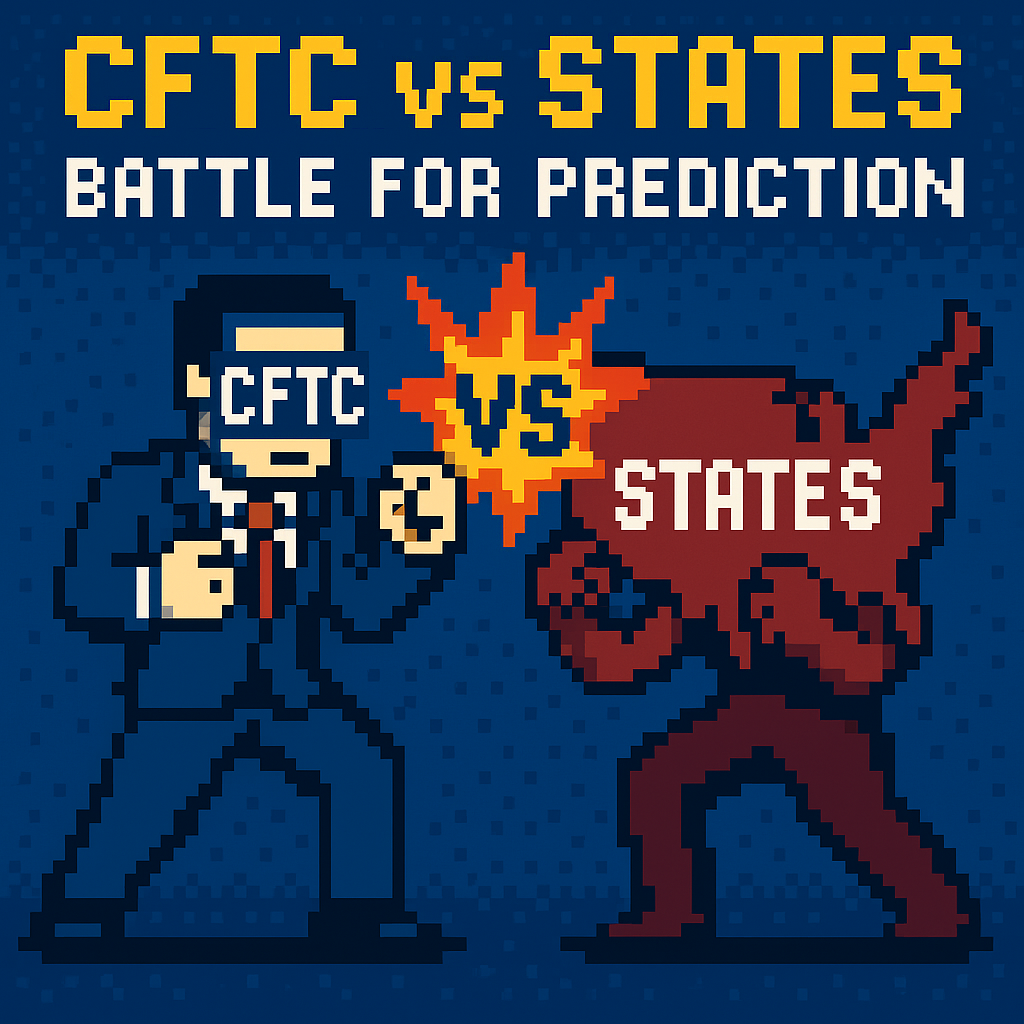
  • Those structural differences fuel an ongoing legal and regulatory debate: are outcome-based contracts sports wagering (state-regulated) or financial derivatives (federal oversight via the CFTC)? Recent coverage shows both courts and state attorneys general grappling with the question. (apnews.com)

Transitioning from the CEO’s soundbites to real-world impact helps make sense of why this matters beyond tech press talk.

Why the distinction matters

First, user experience and incentives change the moment you move from a sportsbook to an exchange.

  • On a sportsbook, odds and lines come from the house; promotions, limits, and loyalty schemes are tools to manage customers’ behavior. The business has skin in the game. That can create adversarial dynamics: winners get limited; losers get promotions. (nbcsports.com)

  • On an exchange, the platform’s profit comes from fees and liquidity provision. Successful traders don’t get blocked by the operator because the operator isn’t the counterparty. That can encourage more active, short-term participants who treat outcomes like assets to buy and sell. (nbcsports.com)

Second, regulation and consumer protections follow different tracks.

  • State gaming commissions historically regulate sportsbooks. Their mandates include consumer protection, problem-gambling measures, and enforcing gaming laws. States vary widely in their rules and prohibitions. (apnews.com)

  • Federally, if prediction markets qualify as derivatives, they fall under Commodity Futures Trading Commission (CFTC) oversight. That triggers a different toolkit — market surveillance, reporting standards, and a framework used for futures and options rather than localized gambling statutes. The legal line is blurry and actively litigated. (nbcsports.com)

Finally, market integrity and insider-risk profiles change.

  • Sportsbooks worry about match-fixing, wagers by those with insider knowledge, and the integrity of the game itself. Regulation and monitoring focus on those harms.

  • Prediction exchanges expand into politics, economics, and entertainment — arenas where insider trading risk looks more like securities fraud than sports corruption. Operators have started policing who can trade certain markets; lawmakers are already proposing rules in response. (apnews.com)

How participants behave differently

If you’ve ever used a sportsbook, you’ve probably hidden an app during halftime and kept chasing a parlay. In prediction markets, activity looks more like day trading:

  • Traders watch prices move on news and adjust positions quickly.
  • Liquidity (other traders willing to take the opposite side) matters more than a house’s willingness to pay.
  • Strategies include hedging, scalping, and event-driven trades rather than single-wager parlays.

That shift attracts a different crowd — people who want to monetize information or viewpoints, not just root for a team. It also creates a more intense regulatory spotlight because those information asymmetries resemble the conditions that financial regulators police. (si.com)

Broader context and recent events

Prediction markets grew fast in 2025–2026, with Kalshi and rivals handling billions in volume and expanding beyond U.S.-only users. That growth pushed debates into public view: courts have weighed whether the CFTC has exclusive jurisdiction over sports-related contracts; state attorneys general have filed suits alleging illegal gambling operations; and exchanges have begun tightening insider-trading rules themselves. The energy is real, and it’s pulling in investors, lawmakers, and sporting institutions. (fortune.com)

These clashes are both economic and philosophical: is prediction trading a market for information and risk transfer, or a form of wagering that should be limited by state gambling laws? Expect more court decisions and legislation that try to draw that line.

What to watch next

  • Legal rulings that clarify whether event contracts fall under federal derivatives law or state gambling statutes.
  • How major leagues, the NCAA, and sports governing bodies respond to exchanges listing sports-related markets.
  • Operational changes by exchanges — stricter anti-insider rules, geofencing, and transparency tools — that attempt to blunt regulators’ arguments and shore up legitimacy.

Key takeaways

  • Prediction markets and sportsbooks both let people put money on outcomes, but their business models differ: sportsbooks typically underwrite bets; prediction markets facilitate peer-to-peer trading and collect fees. (nbcsports.com)
  • Regulation is at the heart of the battle: state gambling laws versus federal derivatives oversight (CFTC). Court rulings and enforcement actions will shape the industry’s future. (nbcsports.com)
  • Participant behavior shifts from betting to trading — bringing different risks (insider trading, market manipulation) and attracting different user types. (si.com)

My take

This isn’t just a turf war between industries — it’s a test of how we classify financial risk and human behavior in an era where apps blur old boundaries. Prediction markets can democratize price discovery on events that matter, but they also import the hard problems of surveillance, regulation, and ethics that come with financial markets. If operators, regulators, and sports leagues can align incentives around integrity and transparency, the result could be a new, regulated information marketplace. If they don’t, expect fragmented rules, more litigation, and markets that bounce between innovation and prohibition.

Sources


Related update: We recently published an article that expands on this topic: read the latest post.



Related update: We recently published an article that expands on this topic: read the latest post.


Related update: We recently published an article that expands on this topic: read the latest post.

Polymarket Probes: Guarding Markets | Analysis by Brian Moineau

When prediction markets smell like insider trading: why it matters and what we can do

We all like a good contrarian bet. But when those bets land suspiciously often, alarm bells should ring. Insider trading is a big problem. But how do you protect against it? That question has become urgent after a spate of high-dollar, well-timed wagers on Polymarket — bets that drew attention from researchers, journalists and even prosecutors. The headlines (and the chatter on crypto X threads) suggest prediction markets have moved from quirky forecasting tools into a new frontier for potential misuse.

Prediction markets like Polymarket let people trade on real-world events — everything from product launches to military actions. They promise two things: profit for savvy traders, and better aggregated forecasts for everyone. Trouble starts when the “savvy” traders are actually insiders with access to nonpublic information. When that happens, the markets stop being information aggregators and start functioning as clandestine profit machines that erode trust.

What happened on Polymarket and why people are worried

In recent months, researchers and journalists flagged a pattern: a small number of accounts placing large bets just before major developments — from a Venezuelan leadership change to U.S. military actions — and cashing out handsomely. Gizmodo chronicled how analytics tools and observers began tracking these suspiciously accurate trades and turning them into signals other traders copied. Meanwhile, mainstream outlets reported platforms hurriedly rewriting rules to ban trading on privileged or influenceable information. Those changes came after public pressure, congressional interest and regulators’ renewed attention. (gizmodo.com)

Why is this different from normal “edge” trading? Two important factors:

  • Scale and timing. When bets cluster immediately before an event that wasn’t publicly signaled, it’s a classic red flag for nonpublic knowledge.
  • Anonymity and on-chain plumbing. Many prediction markets allow crypto wallets and opaque account setups that make linking trades to specific insiders difficult. That obfuscation both invites and hides wrongdoing. (gizmodo.com)

The result: users who expect a fair marketplace begin to doubt the platform, lawmakers consider curbs, and regulators ask whether enforcement or new rules are necessary.

Insider trading is not just illegal finance — it’s an integrity problem

Insider trading on public securities is illegal for good reasons: it undermines investor fairness, distorts prices, and erodes confidence in markets. Prediction markets feel different to some because they’re often framed as “gambling” or opinion aggregation rather than finance. But the core harm is the same — privileged knowledge producing private gain at others’ expense and skewing the informational value of the market.

When insiders can monetize leaks or policy moves, two harms follow:

  • Immediate unfairness: ordinary users lose against someone who had secret knowledge.
  • Secondary harms to public goods: markets can become misinformation vectors (for example, traders leaking plans or manipulating headlines to move prices), or they can create incentives to suppress information for profit. (gizmodo.com)

Because prediction markets can touch on national security or high-stakes political events, the stakes can be higher than for a biotech earnings surprise — which is why you’re seeing state and federal attention.

How prediction markets and regulators are responding

Platforms and policymakers have started to act, and their approaches fall into two buckets:

  • Platform-side changes. Polymarket and others have updated rules to forbid trading on markets where participants have confidential information or the ability to influence outcomes. They’re also deploying surveillance tools to flag suspicious trades and freezing accounts while investigating. Some exchanges have signed integrity pacts with third parties (sports leagues, for instance) to manage conflicts of interest. (apnews.com)
  • Regulatory and legislative pressure. Congress and state regulators are scrutinizing whether prediction markets should be treated like gambling or regulated derivatives, and whether existing agencies (especially the CFTC) have the authority and will to police insider-like behavior on these platforms. The CFTC’s growing role in recent months has already reshaped how big prediction-market players operate in the U.S. (coindesk.com)

Those moves help, but they’re imperfect. Rule changes are only as good as enforcement, and enforcement is tricky when wallets, VPNs, and coordinated account-splitting hide who is trading.

Practical ways to guard against insider trading on prediction markets

Platforms, regulators and users each have roles to play. Here are practical defenses — some technical, some policy — that could reduce the problem.

  • Stronger identity and KYC measures. Requiring verified identities for significant trades or suspicious markets makes it harder for insiders to hide behind anonymous wallets. It also creates audit trails for investigators.
  • Transaction monitoring and anomaly detection. Use on-chain analytics and behavioral models to flag patterns like wallet splitting, concentrated buys minutes before event resolution, or repeated alpha from a single cluster of accounts.
  • Position limits and resolution safeguards. Caps on single-account exposure and clearer rules for how and when markets resolve reduce the incentive to exploit nonpublic moves.
  • Whistleblower incentives and disclosure rules. Create safe channels and rewards for insiders who report misuse, and consider requiring employees of sensitive institutions to recuse themselves from trading related contracts.
  • Cross-platform cooperation. Markets should share suspicious-activity signals with each other and with regulators to avoid moving abuse from one platform to another.
  • Clear legal penalties and public transparency. Legislatures and regulators can spell out consequences for abusing privileged knowledge on these platforms — making deterrence real, not theoretical. (apnews.com)

None of these steps are silver bullets. But layered, coordinated defenses — technical detection + identity + legal teeth — make it much costlier to profit from insider knowledge.

The investor dilemma

There’s a paradox at the heart of prediction markets. Their value comes from aggregating diverse private opinions; that same openness makes them vulnerable to cloaked insiders. For regular users who prize honest, reliable signals, the path forward is to demand higher standards: transparency about anti-abuse systems, public reporting when suspicious trades are investigated, and platform accountability when rules are broken.

My take

Prediction markets can be powerful forecasting tools — when they’re fair. But fairness requires tradeoffs: less anonymity for big bets, smarter monitoring, and stronger legal frameworks. If platforms, regulators and users don’t make those tradeoffs, we risk turning a useful experiment in collective intelligence into a playground for the well-connected.

If you care about the integrity of markets — whether security-sensitive events or the next product launch — push for transparency and enforcement. The future of prediction markets depends on building trust that profits should reward insight, not secrecy.

Sources


Related update: We recently published an article that expands on this topic: read the latest post.


Related update: We recently published an article that expands on this topic: read the latest post.

Palantir-Powered AI Shields Sports Betting | Analysis by Brian Moineau

When AI Referees the Odds: Polymarket, Palantir and the new sports betting integrity platform

Polymarket’s announcement that its sports betting integrity platform will use the Vergence AI engine grabbed attention this week — and for good reason. The move pairs the prediction-market upstart with Palantir (the Peter Thiel‑backed data titan) and TWG AI to build real‑time screening for manipulation, insider activity, and other anomalies across sports markets. It’s a clear signal that prediction markets are ready to borrow the kinds of surveillance and analytics once exclusive to finance and national security.

This matters because Polymarket’s sports contracts now make up a huge share of its volume. With money and reputation on the line, faster, smarter detection is no longer optional; it’s table stakes.

Quick context: why this partnership matters

  • Polymarket runs markets where people trade on event outcomes. Sports markets are especially attractive to traders and — worryingly — to bad actors with inside knowledge or influence.
  • Palantir built its name in government and defense data integration, then moved aggressively into commercial AI. In 2025 Palantir and TWG AI launched Vergence, an AI engine designed to combine disparate data, surface anomalies, and make complex signal detection operational.
  • Polymarket says the new integrity platform will detect, prevent, and report suspicious activity in real time, while screening users against banned lists and known risk indicators.

Taken together, this is an attempt to bring institutional‑grade surveillance to a market that has long balanced openness and trust with exposure to manipulation.

What the Vergence AI engine will do for sports markets

Polymarket’s goal is straightforward: catch the shenanigans before they cascade. Here’s how the Vergence engine is being pitched for that role.

  • Ingest wide, messy data: betting flows, order books, wallet histories, public news, and even league‑level information. Vergence is built to fuse many inputs.
  • Flag anomalies in real time: sudden shifts in odds, concentrated trades that outsize normal liquidity, or coordinated patterns across markets.
  • Map behavioral fingerprints: identify accounts or clusters that resemble known bad actors, or that show insider‑style timing relative to private information becoming public.
  • Automate reporting and screening: escalate probable violations to human investigators, and apply blocks or restrictions where warranted.

This isn’t one tool doing everything; it’s a layered system that mixes automated triage with human judgment. That design choice matters for accuracy, accountability, and — crucially — legal defensibility.

Why detection matters beyond Polymarket

Recent history teaches that a few high‑profile incidents can set back public trust in entire platforms. Sports leagues and regulators are sensitive to anything that looks like match‑fixing or insider trading, and rightfully so.

  • For leagues: integrity issues damage fan trust and commercial partnerships. If a betting platform can reliably show it prevents manipulation, leagues are more likely to cooperate or accept data‑sharing arrangements.
  • For regulators: robust monitoring helps platforms argue they’re operating safely and responsibly, smoothing the path toward licensing or U.S. market re‑entry.
  • For institutional participants: hedge funds, sportsbooks, and market‑makers prefer venues with predictable, auditable surveillance to reduce counterparty and reputational risk.

So Polymarket’s adoption of Vergence could make its markets more attractive to capital and partners — assuming it actually works as promised.

The risks and tradeoffs

This partnership isn’t automatically a win. Several thorny issues deserve attention.

  • False positives and overreach. Aggressive surveillance risks flagging legitimate traders (e.g., an informed but legal bet), which can chill activity and provoke disputes. Human review and appeal mechanisms will matter.
  • Privacy and data use. Combining trading data with external signals raises questions about user privacy, data retention, and disclosure. Platforms must be transparent about what they collect and how they act on it.
  • Vendor concentration. Palantir’s deep technical reach is a plus, but relying on a dominant analytics provider can create single‑point risks — from system errors to political backlash.
  • Game theory arms race. As detection improves, bad actors could adapt with more sophisticated evasion tactics. Monitoring must evolve continuously.

Ultimately, integrity tools shift the battleground rather than end it. They raise the cost of cheating — which is valuable — but don’t remove the need for governance, transparency, and community trust.

Polymarket’s broader strategy and regulatory angle

Polymarket has been quietly pivoting: after regulatory scrutiny and an earlier offshore posture, the company has been building a more regulated U.S. presence. Robust integrity controls strengthen that narrative.

  • For regulators (like the CFTC and state gambling authorities), demonstrable, real‑time monitoring helps answer the hard question: are prediction markets more like open research tools or like regulated gambling venues?
  • For partners (sports leagues, exchanges, and institutional traders), the platform’s ability to detect and report suspicious trades could unlock collaborations previously withheld for fear of reputational damage.

If Polymarket can show logs, audit trails, and a reasonable appeals process, it gains leverage when negotiating with both regulators and industry partners.

My take

Pairing Palantir’s Vergence engine with a prediction market is an inevitable next step. Trading venues that ignore the surveillance norms of finance invite trouble. That said, the success of this effort will depend less on fancy machine learning and more on governance: how Polymarket sets thresholds, audits alerts, protects privacy, and resolves disputes.

There’s good reason to be cautiously optimistic. Better detection discourages bad actors and can lower systemic risk. But platforms should resist treating technology as a panacea. Real improvements come from combining AI with clear processes, independent audits, and community oversight.

Final thoughts

The story here isn’t just about one partnership; it’s about standards. As prediction markets scale and intermix with traditional betting liquidity, tools like Vergence could become a new baseline for integrity across the industry. That would be healthy — provided the industry holds vendors and platforms to high standards of transparency and fairness.

Expect the next chapter to be shaped by how well Polymarket communicates the limits of its system, how it handles false positives, and how regulators respond. If those pieces fall into place, we’ll see an industry better prepared to keep the games honest and the markets credible.

Sources


Related update: We recently published an article that expands on this topic: read the latest post.


Related update: We recently published an article that expands on this topic: read the latest post.


Related update: We recently published an article that expands on this topic: read the latest post.


Related update: We recently published an article that expands on this topic: read the latest post.


Related update: We recently published an article that expands on this topic: read the latest post.