Prediction Markets vs. Sportsbooks | Analysis by Brian Moineau

When prediction markets and sportsbooks collide: who’s really playing, and who’s trading?

Imagine scrolling your phone between the box score and a live order book — one tap lets you buy a contract that pays $1 if Team A covers the spread, the next shows the market price drifting like a stock after a big piece of news. That tension — between “betting” and “trading” — is where prediction markets and sportsbooks are currently duking it out, and Kalshi’s CEO gave a crisp take on the differences that helps explain why both regulators and bettors are paying attention.

Prediction markets and sportsbooks have similar mechanics on the surface: both let people put money on outcomes. But Kalshi’s CEO, Tarek Mansour, argues the two operate on fundamentally different business models, risk profiles, and regulatory logics — and those differences are reshaping how we think about wagering on sports, politics, and real-world events. (Kalshi’s remarks were summarized in NBC Sports and discussed on The Axios Show.) (nbcsports.com)

What the Kalshi CEO said about prediction markets and sportsbooks

  • Mansour frames sportsbooks as “designed for customers to lose.” The house sets prices and collects a vigorish; if customers win too often, sportsbooks may limit them or use promotions to keep them engaged. That’s the classic casino model: your losses are the operator’s inventory. (nbcsports.com)

  • By contrast, prediction markets like Kalshi run peer-to-peer exchanges. Users trade contracts against one another; the platform facilitates the trades and collects fees rather than underwriting the risk itself. In Mansour’s view, that makes prediction markets functionally closer to a regulated financial market than a betting shop. (nbcsports.com)

  • Those structural differences fuel an ongoing legal and regulatory debate: are outcome-based contracts sports wagering (state-regulated) or financial derivatives (federal oversight via the CFTC)? Recent coverage shows both courts and state attorneys general grappling with the question. (apnews.com)

Transitioning from the CEO’s soundbites to real-world impact helps make sense of why this matters beyond tech press talk.

Why the distinction matters

First, user experience and incentives change the moment you move from a sportsbook to an exchange.

  • On a sportsbook, odds and lines come from the house; promotions, limits, and loyalty schemes are tools to manage customers’ behavior. The business has skin in the game. That can create adversarial dynamics: winners get limited; losers get promotions. (nbcsports.com)

  • On an exchange, the platform’s profit comes from fees and liquidity provision. Successful traders don’t get blocked by the operator because the operator isn’t the counterparty. That can encourage more active, short-term participants who treat outcomes like assets to buy and sell. (nbcsports.com)

Second, regulation and consumer protections follow different tracks.

  • State gaming commissions historically regulate sportsbooks. Their mandates include consumer protection, problem-gambling measures, and enforcing gaming laws. States vary widely in their rules and prohibitions. (apnews.com)

  • Federally, if prediction markets qualify as derivatives, they fall under Commodity Futures Trading Commission (CFTC) oversight. That triggers a different toolkit — market surveillance, reporting standards, and a framework used for futures and options rather than localized gambling statutes. The legal line is blurry and actively litigated. (nbcsports.com)

Finally, market integrity and insider-risk profiles change.

  • Sportsbooks worry about match-fixing, wagers by those with insider knowledge, and the integrity of the game itself. Regulation and monitoring focus on those harms.

  • Prediction exchanges expand into politics, economics, and entertainment — arenas where insider trading risk looks more like securities fraud than sports corruption. Operators have started policing who can trade certain markets; lawmakers are already proposing rules in response. (apnews.com)

How participants behave differently

If you’ve ever used a sportsbook, you’ve probably hidden an app during halftime and kept chasing a parlay. In prediction markets, activity looks more like day trading:

  • Traders watch prices move on news and adjust positions quickly.
  • Liquidity (other traders willing to take the opposite side) matters more than a house’s willingness to pay.
  • Strategies include hedging, scalping, and event-driven trades rather than single-wager parlays.

That shift attracts a different crowd — people who want to monetize information or viewpoints, not just root for a team. It also creates a more intense regulatory spotlight because those information asymmetries resemble the conditions that financial regulators police. (si.com)

Broader context and recent events

Prediction markets grew fast in 2025–2026, with Kalshi and rivals handling billions in volume and expanding beyond U.S.-only users. That growth pushed debates into public view: courts have weighed whether the CFTC has exclusive jurisdiction over sports-related contracts; state attorneys general have filed suits alleging illegal gambling operations; and exchanges have begun tightening insider-trading rules themselves. The energy is real, and it’s pulling in investors, lawmakers, and sporting institutions. (fortune.com)

These clashes are both economic and philosophical: is prediction trading a market for information and risk transfer, or a form of wagering that should be limited by state gambling laws? Expect more court decisions and legislation that try to draw that line.

What to watch next

  • Legal rulings that clarify whether event contracts fall under federal derivatives law or state gambling statutes.
  • How major leagues, the NCAA, and sports governing bodies respond to exchanges listing sports-related markets.
  • Operational changes by exchanges — stricter anti-insider rules, geofencing, and transparency tools — that attempt to blunt regulators’ arguments and shore up legitimacy.

Key takeaways

  • Prediction markets and sportsbooks both let people put money on outcomes, but their business models differ: sportsbooks typically underwrite bets; prediction markets facilitate peer-to-peer trading and collect fees. (nbcsports.com)
  • Regulation is at the heart of the battle: state gambling laws versus federal derivatives oversight (CFTC). Court rulings and enforcement actions will shape the industry’s future. (nbcsports.com)
  • Participant behavior shifts from betting to trading — bringing different risks (insider trading, market manipulation) and attracting different user types. (si.com)

My take

This isn’t just a turf war between industries — it’s a test of how we classify financial risk and human behavior in an era where apps blur old boundaries. Prediction markets can democratize price discovery on events that matter, but they also import the hard problems of surveillance, regulation, and ethics that come with financial markets. If operators, regulators, and sports leagues can align incentives around integrity and transparency, the result could be a new, regulated information marketplace. If they don’t, expect fragmented rules, more litigation, and markets that bounce between innovation and prohibition.

Sources


Related update: We recently published an article that expands on this topic: read the latest post.


Related update: We recently published an article that expands on this topic: read the latest post.


Related update: We recently published an article that expands on this topic: read the latest post.

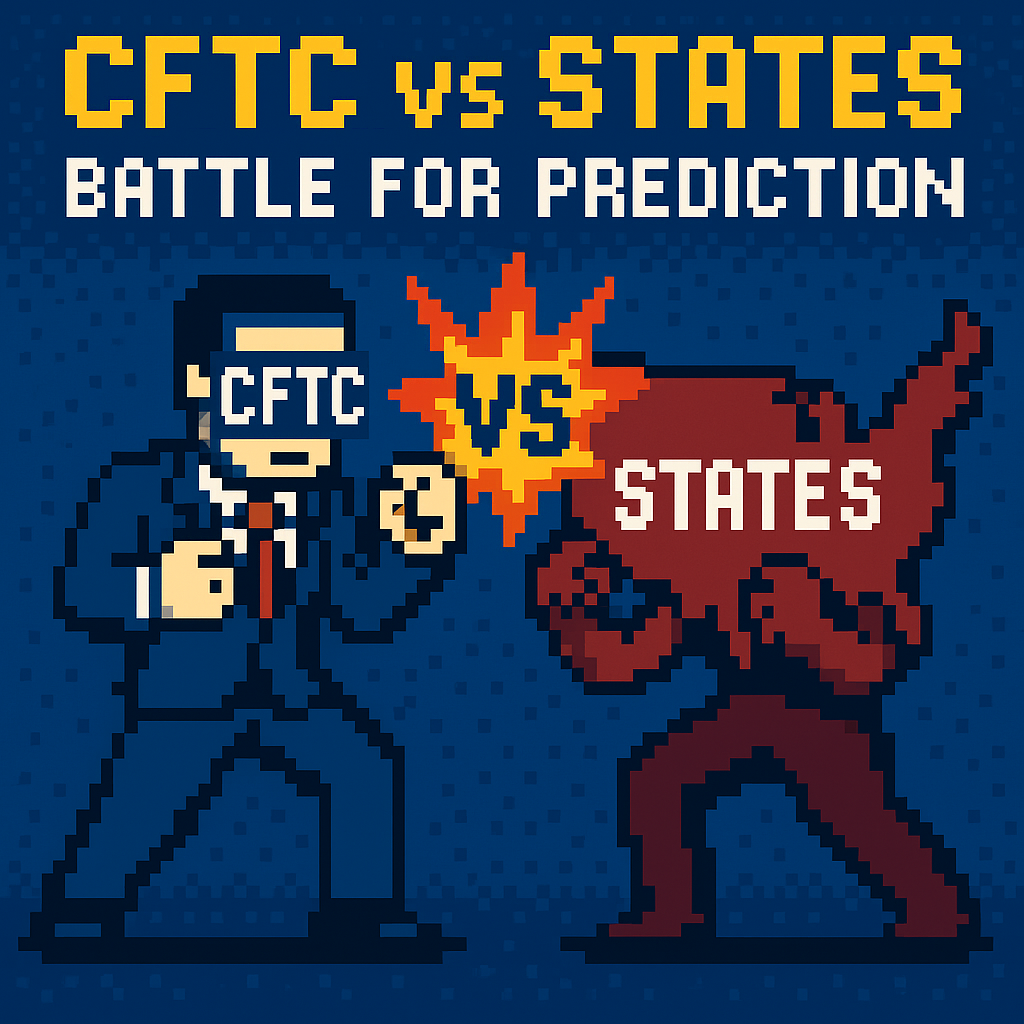
CFTC vs. States: Battle Over Prediction | Analysis by Brian Moineau

A new round in the turf war: CFTC sues three states over prediction markets

The modern sports betting industry emerged after the states won a legal battle with the federal government. But that tidy narrative is fraying at the edges as the Commodity Futures Trading Commission (CFTC) this week sued Arizona, Connecticut and Illinois, asserting exclusive federal jurisdiction over prediction markets and calling state crackdowns unconstitutional. The clash reads like a sequel to the last big gambling fight — only this time the battlefield is markets that let people trade event-outcome contracts, from election results to whether a quarterback throws a touchdown.

This fight matters because prediction markets sit at an odd legal intersection: they look and feel like betting to many state regulators, yet the CFTC treats them as regulated derivatives. Consequently, what happens next will shape whether prediction platforms operate under uniform federal rules, or whether states can treat them like local sportsbooks and enforce a patchwork of gambling laws.

How we got here

First, a quick refresher. Over the last decade states largely reclaimed control of sports betting after a 2018 Supreme Court decision (Murphy v. NCAA) allowed states to legalize and regulate wagering. That victory let states design licensing regimes, tax rates and consumer protections tailored to local politics and markets.

Meanwhile, prediction-market startups like Kalshi and Polymarket pursued a different route: they registered, or sought to register, with the CFTC as trading platforms for event-based contracts. The CFTC’s view is straightforward — markets that let users buy and sell contracts on future events belong under federal commodities law and the Commodity Exchange Act. States, by contrast, have stepped in asserting that many prediction-market offerings are unlicensed gambling within their borders.

Tensions escalated last year. Several states issued cease-and-desist letters, and Arizona even filed criminal charges against an operator. The CFTC responded by filing an enforcement advisory, then moved to sue three states on April 2, 2026, seeking declaratory relief and injunctive remedies to stop what it calls overreach.

Why the CFTC is fighting the states

  • The CFTC says Congress gave it exclusive authority to regulate designated contract markets (DCMs). From its perspective, state actions that would ban or penalize CFTC-regulated swaps and exchange activity are preempted by federal law.
  • The agency is worried about regulatory fragmentation: if each state can impose its own rules, the result could be inconsistent supervision, higher compliance costs and legal uncertainty for firms and users.
  • Politically, the CFTC has a vested interest in protecting the regulatory model it has overseen for decades — and in defending the firms that have built business plans around federal authorization.

That said, states argue they’re protecting residents from unlicensed wagering and preserving the integrity of local gambling regimes. For regulators in Illinois, Connecticut and Arizona, offering sports and political markets without state licensing looks like the same public-policy problem as illegal sportsbooks.

The practical implications for bettors and platforms

  • Platforms: A federal win would likely solidify a national framework for event contracts, making it easier for operators to scale nationally without navigating dozens of state licensing regimes. A state victory — or a prolonged patchwork of injunctions and prosecutions — would fragment the market and raise compliance risk.
  • Consumers: Under federal oversight, there may be consistent disclosure and market integrity rules, but state-level consumer protections (e.g., problem-gambling programs, local licensing standards) could be harder to enforce. Conversely, state control could mean stronger local safeguards where lawmakers push for them.
  • Sports industry: Leagues and operators have mixed incentives. They want legal clarity and integrity protections, but they also benefit from state-level partnerships and revenue-sharing deals tied to local regulation.

The legal stakes and likely path forward

Court battles over preemption of state law by federal statutes can be messy and slow. Expect:

  • Motion practice over jurisdiction and whether federal court should decide the limits of CFTC authority.
  • Parallel suits and private litigation from platforms pushing back against state cease-and-desist orders — many of which are already underway.
  • Possible appeals that could bring this issue to higher courts, potentially clarifying the scope of the Commodity Exchange Act and what Congress intended when it created the CFTC’s exclusive jurisdiction.

Along the way, policymakers on both sides will press their cases in public. Given the political attention — and the economic stakes — Congress could also be tempted to weigh in with statutory fixes or clarifying legislation. That would be the cleanest route, but one that requires bipartisan agreement in a moment when Congress moves slowly on complex tech and gambling issues.

What to watch next

  • Court filings and preliminary injunction decisions in the CFTC’s suits against Arizona, Connecticut and Illinois.
  • Any new state enforcement actions or criminal charges targeting prediction-market operators.
  • Congressional hearings or bills that attempt to clarify federal versus state authority over event-based markets.

What this means for the broader betting landscape

Prediction markets are more than novelty sportsbooks; they’re experiments in pricing information. Traders price the likelihood of events in real time, and those prices often reflect collective intelligence. If the CFTC prevails, those markets will stay squarely in the commodities/regulatory camp — potentially opening capital, institutional participation, and derivative-style safeguards.

On the other hand, if states carve out authority, we’ll likely see a splintered marketplace where firms must either obtain dozens of state licenses or geofence users — reducing liquidity and user experience. That could push more activity offshore or into gray-market offerings, ironically making enforcement harder.

My take

The modern sports betting industry emerged after the states won a legal battle with the federal government, proving that regulatory clarity matters. Today’s dispute over prediction markets is the next chapter in that long story: it’s less about ideology and more about practical governance. Uniform federal oversight could provide predictability and scale, but only if it also delivers consumer protections that states have prioritized. Conversely, unchecked state power risks choking innovation and splintering markets.

In short, what we need is not a winner-takes-all ruling, but smarter coordination: federal baseline rules that ensure market integrity, combined with state-level public-interest safeguards that address local concerns. Until courts or Congress draw that line, operators and bettors will be left navigating uncertain terrain.

Sources


Related update: We recently published an article that expands on this topic: read the latest post.


Related update: We recently published an article that expands on this topic: read the latest post.

Polymarket Probes: Guarding Markets | Analysis by Brian Moineau

When prediction markets smell like insider trading: why it matters and what we can do

We all like a good contrarian bet. But when those bets land suspiciously often, alarm bells should ring. Insider trading is a big problem. But how do you protect against it? That question has become urgent after a spate of high-dollar, well-timed wagers on Polymarket — bets that drew attention from researchers, journalists and even prosecutors. The headlines (and the chatter on crypto X threads) suggest prediction markets have moved from quirky forecasting tools into a new frontier for potential misuse.

Prediction markets like Polymarket let people trade on real-world events — everything from product launches to military actions. They promise two things: profit for savvy traders, and better aggregated forecasts for everyone. Trouble starts when the “savvy” traders are actually insiders with access to nonpublic information. When that happens, the markets stop being information aggregators and start functioning as clandestine profit machines that erode trust.

What happened on Polymarket and why people are worried

In recent months, researchers and journalists flagged a pattern: a small number of accounts placing large bets just before major developments — from a Venezuelan leadership change to U.S. military actions — and cashing out handsomely. Gizmodo chronicled how analytics tools and observers began tracking these suspiciously accurate trades and turning them into signals other traders copied. Meanwhile, mainstream outlets reported platforms hurriedly rewriting rules to ban trading on privileged or influenceable information. Those changes came after public pressure, congressional interest and regulators’ renewed attention. (gizmodo.com)

Why is this different from normal “edge” trading? Two important factors:

  • Scale and timing. When bets cluster immediately before an event that wasn’t publicly signaled, it’s a classic red flag for nonpublic knowledge.
  • Anonymity and on-chain plumbing. Many prediction markets allow crypto wallets and opaque account setups that make linking trades to specific insiders difficult. That obfuscation both invites and hides wrongdoing. (gizmodo.com)

The result: users who expect a fair marketplace begin to doubt the platform, lawmakers consider curbs, and regulators ask whether enforcement or new rules are necessary.

Insider trading is not just illegal finance — it’s an integrity problem

Insider trading on public securities is illegal for good reasons: it undermines investor fairness, distorts prices, and erodes confidence in markets. Prediction markets feel different to some because they’re often framed as “gambling” or opinion aggregation rather than finance. But the core harm is the same — privileged knowledge producing private gain at others’ expense and skewing the informational value of the market.

When insiders can monetize leaks or policy moves, two harms follow:

  • Immediate unfairness: ordinary users lose against someone who had secret knowledge.
  • Secondary harms to public goods: markets can become misinformation vectors (for example, traders leaking plans or manipulating headlines to move prices), or they can create incentives to suppress information for profit. (gizmodo.com)

Because prediction markets can touch on national security or high-stakes political events, the stakes can be higher than for a biotech earnings surprise — which is why you’re seeing state and federal attention.

How prediction markets and regulators are responding

Platforms and policymakers have started to act, and their approaches fall into two buckets:

  • Platform-side changes. Polymarket and others have updated rules to forbid trading on markets where participants have confidential information or the ability to influence outcomes. They’re also deploying surveillance tools to flag suspicious trades and freezing accounts while investigating. Some exchanges have signed integrity pacts with third parties (sports leagues, for instance) to manage conflicts of interest. (apnews.com)
  • Regulatory and legislative pressure. Congress and state regulators are scrutinizing whether prediction markets should be treated like gambling or regulated derivatives, and whether existing agencies (especially the CFTC) have the authority and will to police insider-like behavior on these platforms. The CFTC’s growing role in recent months has already reshaped how big prediction-market players operate in the U.S. (coindesk.com)

Those moves help, but they’re imperfect. Rule changes are only as good as enforcement, and enforcement is tricky when wallets, VPNs, and coordinated account-splitting hide who is trading.

Practical ways to guard against insider trading on prediction markets

Platforms, regulators and users each have roles to play. Here are practical defenses — some technical, some policy — that could reduce the problem.

  • Stronger identity and KYC measures. Requiring verified identities for significant trades or suspicious markets makes it harder for insiders to hide behind anonymous wallets. It also creates audit trails for investigators.
  • Transaction monitoring and anomaly detection. Use on-chain analytics and behavioral models to flag patterns like wallet splitting, concentrated buys minutes before event resolution, or repeated alpha from a single cluster of accounts.
  • Position limits and resolution safeguards. Caps on single-account exposure and clearer rules for how and when markets resolve reduce the incentive to exploit nonpublic moves.
  • Whistleblower incentives and disclosure rules. Create safe channels and rewards for insiders who report misuse, and consider requiring employees of sensitive institutions to recuse themselves from trading related contracts.
  • Cross-platform cooperation. Markets should share suspicious-activity signals with each other and with regulators to avoid moving abuse from one platform to another.
  • Clear legal penalties and public transparency. Legislatures and regulators can spell out consequences for abusing privileged knowledge on these platforms — making deterrence real, not theoretical. (apnews.com)

None of these steps are silver bullets. But layered, coordinated defenses — technical detection + identity + legal teeth — make it much costlier to profit from insider knowledge.

The investor dilemma

There’s a paradox at the heart of prediction markets. Their value comes from aggregating diverse private opinions; that same openness makes them vulnerable to cloaked insiders. For regular users who prize honest, reliable signals, the path forward is to demand higher standards: transparency about anti-abuse systems, public reporting when suspicious trades are investigated, and platform accountability when rules are broken.

My take

Prediction markets can be powerful forecasting tools — when they’re fair. But fairness requires tradeoffs: less anonymity for big bets, smarter monitoring, and stronger legal frameworks. If platforms, regulators and users don’t make those tradeoffs, we risk turning a useful experiment in collective intelligence into a playground for the well-connected.

If you care about the integrity of markets — whether security-sensitive events or the next product launch — push for transparency and enforcement. The future of prediction markets depends on building trust that profits should reward insight, not secrecy.

Sources


Related update: We recently published an article that expands on this topic: read the latest post.


Related update: We recently published an article that expands on this topic: read the latest post.

Palantir-Powered AI Shields Sports Betting | Analysis by Brian Moineau

When AI Referees the Odds: Polymarket, Palantir and the new sports betting integrity platform

Polymarket’s announcement that its sports betting integrity platform will use the Vergence AI engine grabbed attention this week — and for good reason. The move pairs the prediction-market upstart with Palantir (the Peter Thiel‑backed data titan) and TWG AI to build real‑time screening for manipulation, insider activity, and other anomalies across sports markets. It’s a clear signal that prediction markets are ready to borrow the kinds of surveillance and analytics once exclusive to finance and national security.

This matters because Polymarket’s sports contracts now make up a huge share of its volume. With money and reputation on the line, faster, smarter detection is no longer optional; it’s table stakes.

Quick context: why this partnership matters

  • Polymarket runs markets where people trade on event outcomes. Sports markets are especially attractive to traders and — worryingly — to bad actors with inside knowledge or influence.
  • Palantir built its name in government and defense data integration, then moved aggressively into commercial AI. In 2025 Palantir and TWG AI launched Vergence, an AI engine designed to combine disparate data, surface anomalies, and make complex signal detection operational.
  • Polymarket says the new integrity platform will detect, prevent, and report suspicious activity in real time, while screening users against banned lists and known risk indicators.

Taken together, this is an attempt to bring institutional‑grade surveillance to a market that has long balanced openness and trust with exposure to manipulation.

What the Vergence AI engine will do for sports markets

Polymarket’s goal is straightforward: catch the shenanigans before they cascade. Here’s how the Vergence engine is being pitched for that role.

  • Ingest wide, messy data: betting flows, order books, wallet histories, public news, and even league‑level information. Vergence is built to fuse many inputs.
  • Flag anomalies in real time: sudden shifts in odds, concentrated trades that outsize normal liquidity, or coordinated patterns across markets.
  • Map behavioral fingerprints: identify accounts or clusters that resemble known bad actors, or that show insider‑style timing relative to private information becoming public.
  • Automate reporting and screening: escalate probable violations to human investigators, and apply blocks or restrictions where warranted.

This isn’t one tool doing everything; it’s a layered system that mixes automated triage with human judgment. That design choice matters for accuracy, accountability, and — crucially — legal defensibility.

Why detection matters beyond Polymarket

Recent history teaches that a few high‑profile incidents can set back public trust in entire platforms. Sports leagues and regulators are sensitive to anything that looks like match‑fixing or insider trading, and rightfully so.

  • For leagues: integrity issues damage fan trust and commercial partnerships. If a betting platform can reliably show it prevents manipulation, leagues are more likely to cooperate or accept data‑sharing arrangements.
  • For regulators: robust monitoring helps platforms argue they’re operating safely and responsibly, smoothing the path toward licensing or U.S. market re‑entry.
  • For institutional participants: hedge funds, sportsbooks, and market‑makers prefer venues with predictable, auditable surveillance to reduce counterparty and reputational risk.

So Polymarket’s adoption of Vergence could make its markets more attractive to capital and partners — assuming it actually works as promised.

The risks and tradeoffs

This partnership isn’t automatically a win. Several thorny issues deserve attention.

  • False positives and overreach. Aggressive surveillance risks flagging legitimate traders (e.g., an informed but legal bet), which can chill activity and provoke disputes. Human review and appeal mechanisms will matter.
  • Privacy and data use. Combining trading data with external signals raises questions about user privacy, data retention, and disclosure. Platforms must be transparent about what they collect and how they act on it.
  • Vendor concentration. Palantir’s deep technical reach is a plus, but relying on a dominant analytics provider can create single‑point risks — from system errors to political backlash.
  • Game theory arms race. As detection improves, bad actors could adapt with more sophisticated evasion tactics. Monitoring must evolve continuously.

Ultimately, integrity tools shift the battleground rather than end it. They raise the cost of cheating — which is valuable — but don’t remove the need for governance, transparency, and community trust.

Polymarket’s broader strategy and regulatory angle

Polymarket has been quietly pivoting: after regulatory scrutiny and an earlier offshore posture, the company has been building a more regulated U.S. presence. Robust integrity controls strengthen that narrative.

  • For regulators (like the CFTC and state gambling authorities), demonstrable, real‑time monitoring helps answer the hard question: are prediction markets more like open research tools or like regulated gambling venues?
  • For partners (sports leagues, exchanges, and institutional traders), the platform’s ability to detect and report suspicious trades could unlock collaborations previously withheld for fear of reputational damage.

If Polymarket can show logs, audit trails, and a reasonable appeals process, it gains leverage when negotiating with both regulators and industry partners.

My take

Pairing Palantir’s Vergence engine with a prediction market is an inevitable next step. Trading venues that ignore the surveillance norms of finance invite trouble. That said, the success of this effort will depend less on fancy machine learning and more on governance: how Polymarket sets thresholds, audits alerts, protects privacy, and resolves disputes.

There’s good reason to be cautiously optimistic. Better detection discourages bad actors and can lower systemic risk. But platforms should resist treating technology as a panacea. Real improvements come from combining AI with clear processes, independent audits, and community oversight.

Final thoughts

The story here isn’t just about one partnership; it’s about standards. As prediction markets scale and intermix with traditional betting liquidity, tools like Vergence could become a new baseline for integrity across the industry. That would be healthy — provided the industry holds vendors and platforms to high standards of transparency and fairness.

Expect the next chapter to be shaped by how well Polymarket communicates the limits of its system, how it handles false positives, and how regulators respond. If those pieces fall into place, we’ll see an industry better prepared to keep the games honest and the markets credible.

Sources


Related update: We recently published an article that expands on this topic: read the latest post.


Related update: We recently published an article that expands on this topic: read the latest post.


Related update: We recently published an article that expands on this topic: read the latest post.


Related update: We recently published an article that expands on this topic: read the latest post.


Related update: We recently published an article that expands on this topic: read the latest post.

NewsGuard Sues FTC Over Ad Market Control | Analysis by Brian Moineau

A ratings service says the FTC is trying to strangle it — and the First Amendment is now part of the fight

The headline reads like a legal thriller: a company that assigns "trust scores" to news websites has sued the Federal Trade Commission, accusing the agency of weaponizing regulatory power to cut it out of the advertising ecosystem. It's NewsGuard versus the FTC, fronted by Chairman Andrew Ferguson — and the dispute raises three big questions: who gets to police the media marketplace, when does regulation become censorship, and how much power do ad buyers and agencies hold over what counts as “acceptable” news?

Why this matters (hook)

  • Advertisers funnel billions of dollars through a handful of ad agencies. If those agencies can't or won't buy inventory adjacent to particular outlets, the outlets' survival and audiences are affected.
  • Independent evaluators like NewsGuard say they help brands avoid reputational risk and help readers assess reliability. Critics say these ratings can be subjective or politically skewed.
  • When a regulator uses merger remedies or investigations that have the effect of freezing a ratings company out of the market, the stakes shift from commercial competition to free-speech and due-process questions.

Quick takeaways

  • NewsGuard filed a lawsuit in early February 2026 alleging the FTC burdened it with sweeping document demands and inserted merger conditions that effectively bar major ad agencies from using its ratings. (Filed Feb. 6, 2026.) (washingtonpost.com)
  • The contested merger remedy arose in the Omnicom–Interpublic transaction; the FTC’s order reportedly prevents those ad holding companies from basing ad buys on “journalistic standards or ethics” set by third parties — language NewsGuard says was crafted to target it. (washingtonpost.com)
  • NewsGuard argues the FTC’s actions violate the First and Fourth Amendments and amount to government censorship of a private service. The FTC and some conservatives argue NewsGuard has a political slant and has inflicted commercial harm on certain outlets. (washingtonpost.com)

What NewsGuard does and why advertisers use it

NewsGuard, launched in 2018 by media veterans including Steven Brill and Gordon Crovitz, uses human journalists to score sites on nine transparency and credibility criteria and publishes a “nutrition label” explaining each score. Brands and agencies have used these ratings to reduce ad placement near sites they judge risky, and browser extensions surface those trust scores to consumers. NewsGuard emphasizes transparency in its methodology and publishes the criteria it applies. (newsguardtech.com)

Why advertisers care:

  • Brand safety concerns: running ads next to fraudulent, extreme, or disinformation-filled content can cause reputational damage.
  • Liability and client pressure: large advertisers increasingly demand oversight tools to demonstrate they’re avoiding harmful placements.
  • Centralized buying power: big holding companies and ad agencies set de facto industry norms for what’s acceptable.

The FTC’s actions that sparked the lawsuit

According to NewsGuard’s complaint and reporting by The Washington Post, two lines of FTC activity prompted the suit:

  • An extensive information demand: the FTC ordered broad disclosures of NewsGuard’s client lists, ratings deliberations, communications, and financials — an investigation NewsGuard says is so sweeping it chills its business and violates privacy and press protections. (washingtonpost.com)

  • A merger condition in Omnicom–Interpublic approval: the FTC’s order included language preventing the combined agency from directing ad buys based on “adherence to journalistic standards or ethics established or set by a third party.” NewsGuard argues that language functions as a ban on companies using its ratings, effectively blacklisting the service. Newsmax and other conservative outlets publicly urged the FTC to broaden the language, which NewsGuard says revealed intent. (washingtonpost.com)

NewsGuard’s legal team frames these moves as retaliation driven by political disagreement, pointing to prior public criticism of the company by now-FTC Chair Ferguson. The company has asked a federal court to block enforcement of the merger condition and the investigative demand. (mediapost.com)

The competing narratives

  • NewsGuard’s story: a neutral, transparent ratings firm is being targeted for its editorial judgments. The FTC is overreaching by using merger remedies and investigations to hobble a private business whose work touches on public discourse. That, NewsGuard says, raises free-speech and due-process problems. (newsguardtech.com)

  • The FTC and critics’ story: regulators and some conservative outlets argue NewsGuard exercises editorial power that has real commercial effects and that its judgments may be politically biased. From this angle, the FTC’s scrutiny is about market power and potential exclusionary conduct — not censorship per se. Public comments from outlets like Newsmax influenced how the merger language was revised, suggesting industry players saw the remedy as relevant. (washingtonpost.com)

Both sides point to market realities: when ratings influence ad placement, they affect revenue flows. The novel legal wrinkle is whether a regulator may lawfully condition a merger or investigate a small ratings firm in a way that some regard as singling out protected speech.

Broader implications

  • The case could reshape how third-party content evaluators operate in advertising markets. If agencies are barred from relying on such ratings, advertisers lose one tool for brand protection; if regulators are limited, they may be less able to police potential collusion or exclusionary tactics in ad buying.
  • There’s a constitutional debate at the center: does the First Amendment protect the editorial judgments of a private ratings firm from regulatory interference? Conversely, do regulators have the authority to step in when a ratings product materially affects market competition or harms specific outlets?
  • The dispute exposes how intertwined advertising, editorial judgments, and platform economics have become. A private score can effectively act like a traffic light for publishers; when government action changes who can see or use that traffic light, the ripple effects are political, commercial, and civic.

My take

This lawsuit sits at the intersection of market structure and speech. NewsGuard’s methodology is transparent and human-driven — that matters in an era of opaque algorithmic moderation — but its influence on advertisers gives its judgments real economic weight. Regulators worried about arbitrary exclusion in ad markets have a legitimate role; at the same time, wielding merger conditions or sweeping investigative powers in ways that single out a small player risks the appearance (and perhaps the reality) of viewpoint-based regulation.

The healthier path would be clearer rules and neutral standards for ad buyers and ratings services: transparent criteria (which NewsGuard publishes), robust appeals and correction processes for rated outlets, and merger remedies narrowly targeted at anticompetitive conduct rather than broad language that could be read as a blacklist. These guardrails would protect both market fairness and free expression.

Final thoughts

At stake is not only one company’s business but the architecture of trust in the information ecosystem. When ratings, advertisers, and regulators collide, the outcome will shape how audiences find reliable information and how publishers — of whatever stripe — survive. Courts will now have to weigh whether the FTC crossed a constitutional line or acted within its mandate to police markets. Either way, the case underscores that in today’s media economy, the line between commerce and speech is increasingly hard to draw.

Sources


Related update: We recently published an article that expands on this topic: read the latest post.


Related update: We recently published an article that expands on this topic: read the latest post.


Related update: We recently published an article that expands on this topic: read the latest post.


Related update: We recently published an article that expands on this topic: read the latest post.

Regulators or Editors: NewsGuard vs FTC | Analysis by Brian Moineau

Hook: When regulators look like editors, what happens to the newsroom of the internet?

The suit filed by NewsGuard against the Federal Trade Commission feels like a story ripped from a legal drama: a small company that grades news outlets accuses the chairman of the U.S. regulator of using merger conditions and investigations to choke off its business—because he dislikes its editorial judgments. But this is real, it’s happening now, and its consequences stretch beyond a single vendor or deal. (washingtonpost.com)

Why this matters now

  • NewsGuard says the FTC, led by Chairman Andrew Ferguson, demanded sweeping documents and inserted language into a $13 billion ad‑agency merger order that effectively bars the largest holding company from hiring NewsGuard-style services—blocking a big client and chilling others. (washingtonpost.com)
  • The company frames the agency’s moves as censorship and a politically motivated campaign that violates its First and Fourth Amendment rights. (newsguardtech.com)
  • The dispute sits at the crossroads of advertising, platform safety, journalistic standards, and government power—raising questions about when a regulator’s concern about alleged “collusion” becomes government interference in private editorial tools. (washingtonpost.com)

Quick context and timeline

  • NewsGuard launched in 2018 to assign "reliability" scores to news sites and sells those ratings to readers, platforms and advertisers. Its founders include Steven Brill and L. Gordon Crovitz. (washingtonpost.com)
  • In 2024–2025 tensions escalated: then‑Commissioner Andrew Ferguson publicly criticized NewsGuard for allegedly leading ad boycotts and for perceived bias, and after his appointment as FTC chair, the agency opened an investigation and later included restrictive language in its approval of Omnicom’s merger with Interpublic Group. NewsGuard says the language was crafted to single it out. (mediapost.com)
  • On February 6, 2026, NewsGuard filed suit in federal district court seeking to block the FTC from enforcing its demands and the merger condition. (newsguardtech.com)

Key takeaways

  • NewsGuard frames the FTC’s actions as an unconstitutional attempt to suppress a private entity’s journalistic judgments; the company is seeking a judicial declaration and injunction. (newsguardtech.com)
  • The FTC says it acted to prevent “potentially unlawful collusion” in the ad industry and to curb what it sees as a campaign to deny advertising to certain outlets—an argument that turns a market‑conduct issue into a speech and editorial one. (washingtonpost.com)
  • This dispute highlights a slippery slope: regulators policing ad‑safety tools could end up shaping which voices survive economically, even if the stated aim is market integrity. (mediapost.com)

The legal and normative tug‑of‑war

At stake are two competing principles that rarely sit side‑by‑side without fraying: the government’s interest in preventing anticompetitive behavior and the constitutional guardrails that stop the state from penalizing particular viewpoints.

  • NewsGuard’s legal angle: the FTC’s broad subpoenas and a merger condition that bars ad agencies from using third‑party “journalistic standards” to guide buys have tangible business effects—losing Omnicom as a client and scaring off others—and amount to viewpoint discrimination. The company says this is classic First Amendment territory. (newsguardtech.com)
  • The FTC’s (and supporters’) angle: ad‑safety measures can be used as a chokepoint to direct advertising away from publishers for ideological reasons; the agency argues it must act to stop coordinated industry conduct that could harm competition or distort markets. The language in the Omnicom order was, per the FTC, aimed at preventing “potentially unlawful collusion.” (washingtonpost.com)

Which side the courts favor will depend on fine factual questions—was there unlawful collusion or a legitimate competition concern, and did the agency’s actions single out one company because of disagreement over its editorial judgments? The law treats government action that burdens speech differently depending on motive and effect; NewsGuard is betting it can show both a retaliatory motive and a suppressive effect.

The industry ripple effects

  • Advertisers want brand safety; ad agencies want predictable rules. Ratings firms like NewsGuard filled a real market need by telling brands where their ads might appear next to misinformation or extreme content. (washingtonpost.com)
  • If regulators begin to limit which third‑party evaluators ad buyers can use, advertisers might retreat into safer—but less transparent—systems, or the market could concentrate around a few vetted vendors, reducing choice and potentially embedding new forms of bias. (mediapost.com)
  • Conversely, critics argue that some ratings services have been weaponized in the past to economically punish specific outlets—so the FTC’s concern about a "censorship‑industrial complex" is not purely theoretical. That worry is part of why the agency intervened. (washingtonpost.com)

My take

This fight reveals a messy truth: tools built to improve information ecosystems can easily become tools of influence. NewsGuard may have legitimate grievances if an independent regulator reshaped merger remedies to sideline a single company, but the company’s role in nudging advertiser behavior—sometimes against outlets with partisan followings—invites scrutiny too. The healthier path for advertisers and the public is clearer standards, transparent methods, and marketplace competition among evaluators—not regulatory fiat that risks swapping one kind of filter for another.

Regulation should police anticompetitive conduct, not adjudicate editorial judgments. At the same time, transparency about how rating firms score outlets and how advertisers use those scores would reduce the politics around this work. If ratings are defensible on disclosed criteria and buyers choose them for reputational reasons, that should be allowed in a free market; if ratings are coordinated to freeze out dissenting publishers, that should be investigated under competition law—carefully and evenly.

Final thoughts

What happens next—whether courts curb the FTC or uphold its authority to set merger conditions—will matter widely. The case is about NewsGuard, but it’s also a test of how the U.S. will balance marketplace rules, the First Amendment, and the private ordering of information in an era when ad dollars can make or break media outlets. Watch the litigation for its legal reasoning, but also watch the marketplace for how advertisers and agencies react: the practical answers will show up first in contracts, not just court opinions. (washingtonpost.com)

Sources


Related update: We recently published an article that expands on this topic: read the latest post.


Related update: We recently published an article that expands on this topic: read the latest post.

GOP-Only Crypto Draft Tests Bipartisan | Analysis by Brian Moineau

A GOP-only crypto draft lands on the Hill — and the bipartisan dream frays

The Senate’s crypto drama just entered a new act. One week after bipartisan talks produced hope for a market-structure bill that would give clearer oversight to digital assets, Senate Agriculture Chair John Boozman’s office circulated a GOP-only draft ahead of a committee markup. The move has industry lobbyists, Democratic negotiators and investors watching closely — because it changes the political math for how (and whether) the U.S. writes rules for crypto markets.

Why this matters now

  • The Senate Agriculture, Nutrition, and Forestry Committee has been the focal point for sweeping crypto market-structure legislation that would, among other things, clarify which regulator oversees which digital assets and set rules for exchanges, custodians and decentralized finance.
  • Lawmakers spent months negotiating a bipartisan discussion draft. That draft left several hot-button areas bracketed, signaling ongoing compromise. But tensions over core policy choices — jurisdictional lines between the Commodity Futures Trading Commission and the SEC, treatment of decentralized finance, and ethics provisions around lawmakers and stablecoins — kept a final agreement out of reach.
  • Facing those unresolved issues, Committee Chair Boozman (R-Ark.) released a Republican-only draft to be considered in an upcoming markup. Boozman’s camp framed the move as necessary to keep the process moving; Democrats portrayed it as a retreat from bipartisan compromise.

Early reactions and the politics beneath the headlines

  • A Senate Agriculture spokesperson told reporters there are “a handful of policy differences” but “many areas of agreement,” and that Boozman “appreciates the good-faith effort to reach a bipartisan compromise.” That phrasing signals two things: Republicans want to show openness to negotiation while also defending a decision to advance their own text. (mexc.com)
  • Democrats — led in these talks by Sen. Cory Booker (D‑N.J.) on the Ag panel — have described continued conversations but remain reluctant to back the GOP-only package if core protections and balance-of-power provisions are missing. Industry players and some bipartisan supporters worry that a partisan markup could produce a bill that’s easier to block in the Senate or that would trigger a messy reconciliation with banking committee efforts. (archive.ph)
  • For crypto businesses, the stakes are practical: clarity and safe harbor. Too much delay or partisan infighting risks leaving unclear custody, listing and compliance rules that keep legitimate firms from offering products and leave consumers exposed.

What’s at stake in the policy fight

  • Regulator jurisdiction: Who gets primary authority over which types of tokens — the CFTC, the SEC, or a newly delineated regime — is the biggest technical and political dispute. This determines enforcement posture, registration requirements and litigation risk.
  • DeFi and developer liability: Whether noncustodial protocols and their developers get exemptions or face new liabilities will shape innovation incentives in decentralized finance.
  • Stablecoin rules and yields: Rules around issuer reserves, permitted activities and how yield-on-stablecoin products are treated could reshape the on‑ramps between traditional finance and crypto.
  • Ethics and quorum issues: Proposals to limit officials’ ability to profit from digital assets, and changes to agency quorum rules, have caused friction because they touch lawmakers’ personal interests and how independent agencies operate.

What this GOP-only draft means practically

  • Moving forward without bipartisan signoff increases the odds the Senate Agriculture Committee will vote on a Republican text that Democrats don’t support. That can expedite a timetable but risks another legislative stalemate on the floor — or a competing bill from the Senate Banking Committee.
  • The GOP draft may signal priorities Republicans think are nonnegotiable — e.g., clearer roles for the CFTC, tougher rules on stablecoin operations, or narrower protections for DeFi developers. For industry players, that’s a cue to mobilize for amendments or for outreach to Democratic offices to restore bipartisan language.
  • For markets, uncertainty often beats clarity short-term. The prospect of competing texts or protracted floor fights could keep firms cautious about product launches or migrations that depend on statutory safe harbors.

Practical timeline notes

  • The Agriculture Committee has postponed and rescheduled markups in recent weeks as talks moved back and forth. At the time this draft circulated, committee leadership signaled a markup was scheduled later in January (committee calendars have shifted during the negotiations). Watch the committee’s public calendar and press statements for firm markup dates. (agriculture.senate.gov)

Key takeaways for readers watching crypto policy

    • The release of a GOP-only draft does not end bipartisan talks, but it does raise the political temperature and shortens the runway for compromise.
    • Regulatory jurisdiction and treatment of DeFi remain the most consequential sticking points for both lawmakers and industry.
    • A partisan committee vote could speed a bill through committee but makes final passage harder unless leaders from both parties find an off-ramp or trading ground elsewhere in the Senate.

My take

This episode is classic Congress: momentum from earnest, cross‑party drafting collides with raw politics. Boozman’s GOP draft is both a procedural nudge and a negotiating move — it forces issues into the open rather than letting them linger in bracketed text. That can be healthy if it clarifies choices and prompts serious amendment work. But if the result is two competing, partisan bills (Agriculture vs. Banking), we could be stuck with months of legal ambiguity instead of clear rules that businesses and consumers need.

For the crypto industry, the best outcome remains a durable, bipartisan statute that clearly assigns jurisdiction, protects consumers, and leaves room for innovation. If lawmakers want to claim wins on both consumer protection and responsible innovation, they’ll need to make meaningful concessions — and fast.

Final thoughts

Lawmakers are juggling technical complexity, industry pressure, and electoral politics. The path to effective crypto law will be messy, but insisting on clarity and enforceability should stay front and center. Watch for amendments during markup and any outreach from mixed House–Senate working groups — those will tell you whether this draft is a negotiating step or the start of partisan trench warfare.

Sources


Related update: We recently published an article that expands on this topic: read the latest post.


Related update: We recently published an article that expands on this topic: read the latest post.


Related update: We recently published an article that expands on this topic: read the latest post.


Related update: We recently published an article that expands on this topic: read the latest post.

NCAA Seeks Halt to College Prediction | Analysis by Brian Moineau

When prediction markets meet college sports: who should hit pause?

The headline landed like a buzzer-beater nobody asked for: on January 14, 2026, the NCAA asked the Commodity Futures Trading Commission (CFTC) to suspend prediction markets from offering trades on college sports until stronger guardrails are put in place. That request — delivered in a letter from NCAA president Charlie Baker and amplified at the NCAA Convention — pulls into sharp focus a fast-moving collision between financial innovation, fan engagement, and the fragile integrity of amateur athletics.

This isn't just a regulatory squabble. It touches students, coaches, parents, regulators, market operators and every fan who cares whether a game is decided on the field or by outside incentives.

What happened and why it matters

  • The NCAA formally asked the CFTC on January 14, 2026 to pause collegiate sports markets operated by prediction-market platforms. (espn.com)
  • Prediction markets let users buy and sell contracts on yes/no outcomes (for example: “Will Player X enter the transfer portal?”). They are federally regulated by the CFTC, and many platforms argue they are distinct from state-licensed sportsbooks. (espn.com)
  • The NCAA’s key concerns include:
    • Age and advertising restrictions (prediction markets are often available to 18+ users nationwide, unlike sportsbooks where many jurisdictions set 21+). (espn.com)
    • Stronger integrity monitoring and mandatory incident reporting (sportsbooks in many states must report suspicious activity; the NCAA argues prediction markets lack comparable requirements). (espn.com)
    • Banning or limiting prop-style markets tied to individual athletes (increasing risk of manipulation or harassment). (espn.com)
    • Anti-harassment measures and harm-reduction tools. (ncaa.org)

Why it matters: college athletes are not paid employees in the traditional sense (despite NIL changes), they’re still students whose careers and mental health can be affected by gambling-driven incentives and abuse. Prediction markets—accessible nationally and to younger bettors—create a different risk profile than regulated sportsbooks operating under state gaming laws.

The players on the court

  • NCAA: Focused on athlete welfare and competition integrity; willing to work with the CFTC to design safeguards. (ncaa.org)
  • Prediction market companies (e.g., Kalshi, Polymarket and others): Regulated by the CFTC and argue they operate as financial exchanges offering contracts between traders, not traditional wagering against a house. They have begun adding integrity partners and monitoring tools. (espn.com)
  • CFTC: The federal regulator for event contracts. Historically has allowed event markets but has been cautious about drawing hard lines around sports-related markets. The NCAA’s request asks the agency to take a more active stance. (espn.com)
  • State gaming regulators: Some have moved to restrict or challenge prediction markets, arguing those products violate state wagering laws. Recent enforcement actions and cease-and-desist letters show the state-federal regulatory boundary is contested. (barrons.com)

The core tensions

  • Jurisdiction and labeling
    • Are binary event contracts “financial products” under federal CFTC oversight, or are they sports betting that falls under state gambling laws? The answer determines who writes the rules. (barrons.com)
  • Age and accessibility
    • Many prediction platforms accept 18-year-olds nationwide; sportsbooks in many states restrict college-sports betting to older age groups or ban in-state college betting entirely. That gap concerns the NCAA. (espn.com)
  • Types of markets and harm
    • Prop markets or player-specific questions (transfer portal, injuries, playing time) can create perverse incentives and increase risk of manipulation, harassment, or targeted abuse. (espn.com)
  • Speed of innovation vs. pace of regulation
    • Prediction markets have evolved quickly; regulators and sports governing bodies are scrambling to adapt. That mismatch often leaves safeguards trailing innovation. (barrons.com)

What a workable compromise might look like

  • Temporary moratorium: A pause limited in time that gives regulators and the NCAA room to draft specific safeguards tied to college athletics.
  • Harmonized minimums: Federal rules requiring age verification (21+ for college sports?), targeted advertising restrictions, and robust geolocation enforcement for in-state protections.
  • Integrity reporting: Mandatory, standardized reporting of suspicious activity and cooperation channels between prediction-market operators, leagues, the NCAA and law enforcement.
  • Limits on player-level markets: A ban or strict controls on markets tied to individual athletes’ discrete actions (transfers, injuries, disciplinary outcomes), with exceptions only under university/athlete consent.
  • Independent monitoring and penalties: Third-party integrity firms with transparent methodologies and enforcement mechanisms that include suspensions or delisting of risky markets.

Those steps would mirror many safeguards already required of licensed sportsbooks while recognizing the structural differences of exchange-style prediction products.

How this could play out

  • The CFTC could accept the NCAA’s request and issue a temporary ban or guidance — an outcome that would quickly shape operator behavior and possibly defuse state-level enforcement actions.
  • If the CFTC declines to act, states may intensify enforcement, producing a patchwork of restrictions that platforms must navigate, or litigate — a costly, slow path with inconsistent protections for athletes.
  • Operators might self-impose stricter controls to avoid reputational and legal risk, especially if major leagues and associations amplify their objections.

Either route raises costs and complexity for prediction markets, but also pushes the industry toward clearer rules and stronger athlete protections.

What fans and college communities should watch

  • Will the CFTC respond with emergency measures or a formal rulemaking? Watch for agency statements or action following the NCAA letter (dated January 14, 2026). (espn.com)
  • Are states preparing enforcement actions, or crafting laws specifically addressing prediction markets and college-sports exposure? Recent history suggests more state attention is likely. (barrons.com)
  • How platforms adjust: whether they pull college markets voluntarily, raise minimum ages, or harden integrity controls.

Something only partly covered in the headlines

Prediction markets aren’t inherently villainous: they can provide price discovery for political events, economic forecasts and even fan engagement when done responsibly. The core issue is context. College sports involve unpaid (in the employment sense) student-athletes, academic obligations and developmental stakes that make the same market structure riskier than in professional sports. That nuance should shape tailored rules, not blanket acceptance or reflexive bans.

My take

The NCAA’s ask is forceful but reasonable: when a new market intersects with young athletes’ careers and safety, regulators and operators should err on the side of stronger protections. A coordinated approach led by the CFTC — working with the NCAA and state regulators — that sets baseline safeguards (age, integrity reporting, limits on individual-player markets) would protect athletes without crushing innovation. If regulators balk, expect a messy, uneven landscape of state responses and legal fights that ultimately does more harm than a short, well-scoped pause would.

Where this leaves us

We’re at a crossroads where technology, finance and sports culture clash. The right answer will balance consumer innovation and market freedom with clear protections for vulnerable participants. The NCAA’s letter forced the conversation into the open on January 14, 2026. The next moves from the CFTC, prediction-market operators and state regulators will determine whether college sports get a pragmatic safety net — or whether the growth of prediction markets continues to outpace the rules meant to keep play fair and players safe. (ncaa.org)

Sources


Related update: We recently published an article that expands on this topic: read the latest post.


Related update: We recently published an article that expands on this topic: read the latest post.


Related update: We recently published an article that expands on this topic: read the latest post.


Related update: We recently published an article that expands on this topic: read the latest post.


Related update: We recently published an article that expands on this topic: read the latest post.


Related update: We recently published an article that expands on this topic: read the latest post.