USPS Halts Pension Contributions Amid | Analysis by Brian Moineau

Hook: when a 250‑year‑old institution flips a switch

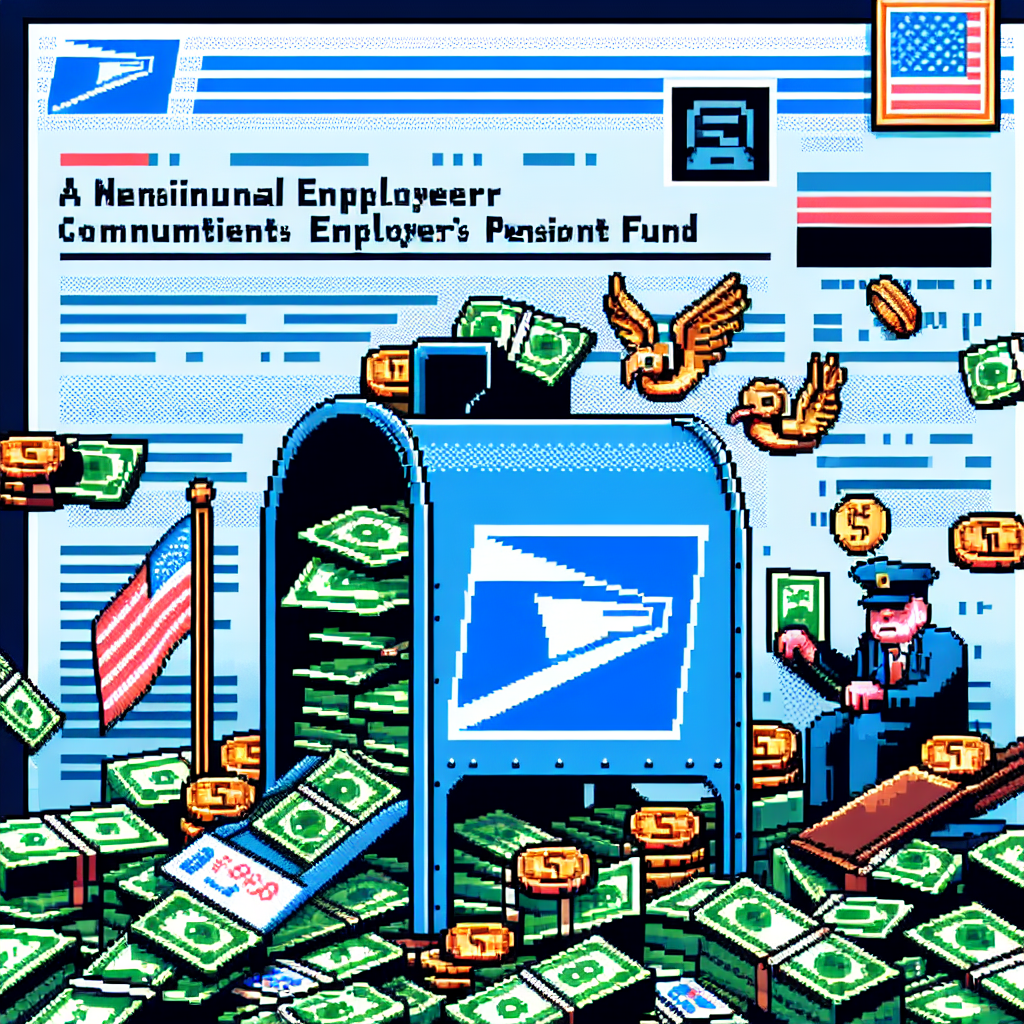
The news that the US Postal Service to suspend employer pay to workers’ pensions landed like a shock—and yet, in a way, it felt inevitable. On April 9, 2026, USPS notified federal officials it would temporarily stop making its biweekly employer contributions to the Federal Employees Retirement System (FERS) to conserve cash. The move—effective April 10, 2026—was framed as a short‑term measure to keep trucks moving, pay employees and vendors, and avoid an even worse liquidity crisis. (apnews.com)

What happened and why it matters

  • The Postal Service told the Office of Personnel Management it will pause employer contributions to the defined‑benefit portion of FERS, which covers the vast majority of career postal employees. The suspension was described as temporary and aimed at preserving cash amid what USPS calls an “ongoing, severe financial crisis.” (apnews.com)
  • Officials have warned the USPS could run out of cash by around February 2027 without changes such as a higher borrowing cap or increased postage revenue. To buy time, the agency also filed for a postage rate increase that would raise the cost of a First‑Class stamp from 78¢ to 82¢. (apnews.com)
  • Importantly, USPS leaders say current and future retirees will not be immediately impacted by the suspension; employee payroll deductions and other retirement mechanisms remain in place. Still, the optics and long‑term risk to pension funding have alarmed unions, lawmakers, and retirees' advocates. (apnews.com)

Moving from headline to consequence, the decision is less about pensions vanishing overnight and more about a cashflow triage in an agency that delivers essentials while operating under unique legal and financial constraints.

The context: a federal agency in a fiscal vise

The Postal Service isn’t a private company—it’s an independent federal agency that depends on postage revenue and a limited ability to borrow. A decades‑old statutory $15 billion borrowing cap, pre‑1990 rules on pension funding, and steep declines in first‑class mail volume have all contributed to recurring budget shortfalls. In recent months, the postmaster general warned Congress the agency could run out of cash within a year unless lawmakers act. (apnews.com)

Historically, USPS has used temporary suspensions before—most notably in 2011—only to resume payments and repay what it owed. The current environment is different, though: inflation, higher operating costs, and a tighter borrowing ceiling make today’s risk feel more pressing. (federalnewsnetwork.com)

US Postal Service to suspend employer pay to workers’ pensions — what that looks like day to day

  • Payroll: Employees will continue to receive their paychecks; employee contributions to retirement plans are still being processed. The suspension affects only the employer’s share of FERS defined‑benefit funding. (nbcwashington.com)
  • Service: USPS framed the decision as necessary to keep mail and package delivery running without interruption. The agency argued that insufficient liquidity would be more harmful to the public than a temporary pause in employer pension contributions. (apnews.com)
  • Uncertainty: The suspension raises questions about long‑term pension health, bargaining dynamics with unions, and congressional willingness to change the borrowing cap or pension rules. Lawmakers on both sides of the aisle may now face pressure to respond more quickly. (apnews.com)

Transitioning from immediate logistics to long‑term consequences, the central tension is clear: prioritize day‑to‑day operations or prioritize steady pension funding. USPS chose the former for now.

How employees and retirees should think about this

First, breathe: the agency and Office of Personnel Management say current and future retirees aren’t immediately affected. Service credit for pension calculations isn’t erased by a temporary employer payment pause; the mechanics of your FERS annuity—years of service, salary history, and benefit formulas—remain intact. (myfederalretirement.com)

Nevertheless, this is a wake‑up call:

  • Employees should review their paystubs and retirement account statements to confirm employee deductions are still being taken and recorded.
  • Retirees and near‑retirees should monitor official USPS and OPM communications for timelines and any required catch‑up payments.
  • Union leaders and members will likely press for safeguards—contractual or legislative—that limit the length of any future suspensions or ensure prompt reimbursement.

The broader policy puzzle

This episode spotlights a policy conundrum: the USPS sits at the intersection of public service and fiscal discipline. Policymakers must weigh taxpayer exposure, the social value of universal mail service, and the financial realities of 21st‑century logistics.

Possible policy responses include:

  • Raising the statutory borrowing cap (currently $15 billion) so USPS can smooth liquidity crises. (apnews.com)
  • Reforming pension funding rules to allow more flexibility in how USPS invests or times its contributions. (federalnewsnetwork.com)
  • Approving modest postage increases that reflect rising costs while balancing the political sensitivity of mail rate hikes. (apnews.com)

Each option has tradeoffs. Quick fixes risk temporary relief without structural change; deep reforms require political capital and may take years to implement.

My take

This move by USPS is a blunt instrument—but perhaps the only practical one left in the short term. Temporarily suspending employer pension contributions to avoid an immediate liquidity collapse is a painful but defensible choice if it truly preserves service and pays employees and vendors. Still, it should be a catalyst, not an endpoint.

Congress, regulators, and USPS leadership now face a simple test: turn this scramble into a strategic reset. That means transparent timelines for resuming pension funding, clearer contingency plans for cash shortfalls, and a realistic debate about funding the public good of universal mail service in a radically altered marketplace.

Final thoughts

The act of pausing employer payments to pensions doesn’t strip away decades of earned benefits overnight. But it does raise the bar for political courage and policy imagination. If nothing else, April 2026 should remind us that institutions—even venerable ones—require constant reinvention to meet changing economic realities.

Sources


Related update: We recently published an article that expands on this topic: read the latest post.


Related update: We recently published an article that expands on this topic: read the latest post.
Trump’s Golden Dome Push Shakes Policy | Analysis by Brian Moineau

A peek behind the curtain: what “Golden Dome” momentum actually means

The Golden Dome has gone from an Oval Office slogan to a working program — or at least that’s the picture emerging from recent reporting. Within the first 100 words: the Golden Dome is being pushed forward with prototype contracts and a public timeline that has pundits, scientists, and allies raising eyebrows. The Bloomberg scoop that Gizmodo summarized gives us a rare glimpse into how a highly secretive, contested national-security idea is turning into action.

The revelation matters because this isn’t a small procurement tweak. It’s an attempt to knit together space-based sensors, interceptors, and layered defenses into a single, nation-wide shield. That’s ambitious. It’s expensive. And it will change how the U.S. thinks about deterrence, arms control, and space security.

What the recent reporting actually says

  • Anonymous sources told Bloomberg that the Pentagon has picked companies to build prototypes for key Golden Dome technologies.
  • Gizmodo’s April 5, 2026 piece highlights those Bloomberg details and places them against previous reporting that estimates long timelines and enormous costs.
  • Official statements from last year set an aggressive political timeline (a multi-year target tied to the administration’s term) and a headline price tag in the hundreds of billions, though independent analyses have suggested far larger lifetime costs and technical obstacles.

Put simply: decisions are being made to move from concept to hardware development, even though major technical and fiscal questions remain unanswered.

Why the timeline is so jarring

First, the administration publicly set a short, politically attractive timeline. Then, independent bodies such as the Congressional Budget Office and think tanks flagged that building a truly nationwide, space-anchored missile shield could take decades and cost far more than initial estimates.

That gap — between political promise and engineering reality — creates two pressures at once. One, it forces program managers to accelerate procurement and contracting. Two, it invites scrutiny from scientists, military planners, and Congress over feasibility, cost growth, and strategic impact.

Consequently, the timeline itself becomes a political and technical driver: it shapes who gets contracts, how tests are scheduled, and how much money gets requested — often before the system is proven.

The technical and strategic potholes

  • Space-based interceptors remain largely theoretical at the scale implied by Golden Dome. Building reliable sensors, kill mechanisms, and command-and-control for global coverage is an engineering mountain.
  • Adversaries can adapt. More interceptors could spur countermeasures, decoys, or even new classes of delivery systems.
  • Cost escalation is likely. Early estimates—even when headline figures look huge—often undercount lifecycle, sustainment, and operational costs for systems that combine space and terrestrial assets.
  • Arms-control and diplomatic fallout. Deploying weapons in space or a perceived nationwide shield could provoke strategic competition with Russia and China and complicate treaties and informal norms.

In short: the program risks becoming a catalyst for instability if it’s treated as a magic bullet rather than a hard, iterative program of research, testing, and restraint.

Golden Dome: who’s building the prototypes

According to the recent reporting summarized by Gizmodo, a mix of defense and commercial space firms are involved in early prototype work. That combination reflects a modern procurement pattern: legacy contractors and agile startups competing to deliver novel capabilities fast.

This approach has upsides: speed, innovation, and private capital. Yet it carries downsides: immature supply chains, unclear integration paths, and a tendency to over-promise on timelines when commercial marketing meets national security deadlines.

A politics-shaped program

Policies tied to big, dramatic names — think “Golden Dome” — have a different lifecycle than ordinary defense programs. They become campaign messaging, diplomatic leverage, and a magnet for lobbying. That dynamic can mean:

  • Rapid public funding pushes that don’t resolve technical risk.
  • Greater secrecy, which reduces external peer review and critique.
  • A rush to demonstrate results in highly visible ways (tests before thorough validation).

When politics outpace technical feasibility, programs either collapse, balloon in cost, or become long-term institutional commitments that outlast the promises that birthed them.

What to watch next

  • Public contracting milestones: who wins awards, and how those contracts are scoped.
  • Test schedules and declassified results: prototypes either validate claims or expose gaps.
  • Budget requests and congressional pushback: Congress will decide whether to fund scaled rollout or demand more evidence.
  • Diplomatic reactions: how China, Russia, and allies frame their responses to a U.S. push for space-based defenses.

Taken together, these indicators will tell us whether Golden Dome becomes a sustained program of careful development or an expensive, risky sprint.

My take

I’m skeptical of any program that promises an “ironclad” solution in a politically convenient window. The Golden Dome idea aims at an understandably attractive goal — protecting the homeland — but national security is rarely solved by a single flashy initiative. Real progress will require transparent testing, realistic timelines, and international engagement to prevent escalation in space.

That said, pushing innovation in missile warning and tracking can yield useful benefits even if the full architecture proves elusive. The smartest path forward is cautious: fund rigorous R&D, insist on independent technical assessments, and separate campaign messaging from engineering milestones.

Final thoughts

Ambitious defense ideas have their place, especially when new threats emerge. But converting a high-stakes vision like Golden Dome into a responsible program means acknowledging uncertainty, budgeting honestly, and assuming the long game. Otherwise, we risk paying a very high price for a promise that can’t be delivered on the timetable that sounds best on TV.

Sources


Related update: We recently published an article that expands on this topic: read the latest post.


Related update: We recently published an article that expands on this topic: read the latest post.

Related update: We recently published an article that expands on this topic: read the latest post.


Related update: We recently published an article that expands on this topic: read the latest post.


Related update: We recently published an article that expands on this topic: read the latest post.


Related update: We recently published an article that expands on this topic: read the latest post.

CFTC vs. States: Battle Over Prediction | Analysis by Brian Moineau

A new round in the turf war: CFTC sues three states over prediction markets

The modern sports betting industry emerged after the states won a legal battle with the federal government. But that tidy narrative is fraying at the edges as the Commodity Futures Trading Commission (CFTC) this week sued Arizona, Connecticut and Illinois, asserting exclusive federal jurisdiction over prediction markets and calling state crackdowns unconstitutional. The clash reads like a sequel to the last big gambling fight — only this time the battlefield is markets that let people trade event-outcome contracts, from election results to whether a quarterback throws a touchdown.

This fight matters because prediction markets sit at an odd legal intersection: they look and feel like betting to many state regulators, yet the CFTC treats them as regulated derivatives. Consequently, what happens next will shape whether prediction platforms operate under uniform federal rules, or whether states can treat them like local sportsbooks and enforce a patchwork of gambling laws.

How we got here

First, a quick refresher. Over the last decade states largely reclaimed control of sports betting after a 2018 Supreme Court decision (Murphy v. NCAA) allowed states to legalize and regulate wagering. That victory let states design licensing regimes, tax rates and consumer protections tailored to local politics and markets.

Meanwhile, prediction-market startups like Kalshi and Polymarket pursued a different route: they registered, or sought to register, with the CFTC as trading platforms for event-based contracts. The CFTC’s view is straightforward — markets that let users buy and sell contracts on future events belong under federal commodities law and the Commodity Exchange Act. States, by contrast, have stepped in asserting that many prediction-market offerings are unlicensed gambling within their borders.

Tensions escalated last year. Several states issued cease-and-desist letters, and Arizona even filed criminal charges against an operator. The CFTC responded by filing an enforcement advisory, then moved to sue three states on April 2, 2026, seeking declaratory relief and injunctive remedies to stop what it calls overreach.

Why the CFTC is fighting the states

  • The CFTC says Congress gave it exclusive authority to regulate designated contract markets (DCMs). From its perspective, state actions that would ban or penalize CFTC-regulated swaps and exchange activity are preempted by federal law.
  • The agency is worried about regulatory fragmentation: if each state can impose its own rules, the result could be inconsistent supervision, higher compliance costs and legal uncertainty for firms and users.
  • Politically, the CFTC has a vested interest in protecting the regulatory model it has overseen for decades — and in defending the firms that have built business plans around federal authorization.

That said, states argue they’re protecting residents from unlicensed wagering and preserving the integrity of local gambling regimes. For regulators in Illinois, Connecticut and Arizona, offering sports and political markets without state licensing looks like the same public-policy problem as illegal sportsbooks.

The practical implications for bettors and platforms

  • Platforms: A federal win would likely solidify a national framework for event contracts, making it easier for operators to scale nationally without navigating dozens of state licensing regimes. A state victory — or a prolonged patchwork of injunctions and prosecutions — would fragment the market and raise compliance risk.
  • Consumers: Under federal oversight, there may be consistent disclosure and market integrity rules, but state-level consumer protections (e.g., problem-gambling programs, local licensing standards) could be harder to enforce. Conversely, state control could mean stronger local safeguards where lawmakers push for them.
  • Sports industry: Leagues and operators have mixed incentives. They want legal clarity and integrity protections, but they also benefit from state-level partnerships and revenue-sharing deals tied to local regulation.

The legal stakes and likely path forward

Court battles over preemption of state law by federal statutes can be messy and slow. Expect:

  • Motion practice over jurisdiction and whether federal court should decide the limits of CFTC authority.
  • Parallel suits and private litigation from platforms pushing back against state cease-and-desist orders — many of which are already underway.
  • Possible appeals that could bring this issue to higher courts, potentially clarifying the scope of the Commodity Exchange Act and what Congress intended when it created the CFTC’s exclusive jurisdiction.

Along the way, policymakers on both sides will press their cases in public. Given the political attention — and the economic stakes — Congress could also be tempted to weigh in with statutory fixes or clarifying legislation. That would be the cleanest route, but one that requires bipartisan agreement in a moment when Congress moves slowly on complex tech and gambling issues.

What to watch next

  • Court filings and preliminary injunction decisions in the CFTC’s suits against Arizona, Connecticut and Illinois.
  • Any new state enforcement actions or criminal charges targeting prediction-market operators.
  • Congressional hearings or bills that attempt to clarify federal versus state authority over event-based markets.

What this means for the broader betting landscape

Prediction markets are more than novelty sportsbooks; they’re experiments in pricing information. Traders price the likelihood of events in real time, and those prices often reflect collective intelligence. If the CFTC prevails, those markets will stay squarely in the commodities/regulatory camp — potentially opening capital, institutional participation, and derivative-style safeguards.

On the other hand, if states carve out authority, we’ll likely see a splintered marketplace where firms must either obtain dozens of state licenses or geofence users — reducing liquidity and user experience. That could push more activity offshore or into gray-market offerings, ironically making enforcement harder.

My take

The modern sports betting industry emerged after the states won a legal battle with the federal government, proving that regulatory clarity matters. Today’s dispute over prediction markets is the next chapter in that long story: it’s less about ideology and more about practical governance. Uniform federal oversight could provide predictability and scale, but only if it also delivers consumer protections that states have prioritized. Conversely, unchecked state power risks choking innovation and splintering markets.

In short, what we need is not a winner-takes-all ruling, but smarter coordination: federal baseline rules that ensure market integrity, combined with state-level public-interest safeguards that address local concerns. Until courts or Congress draw that line, operators and bettors will be left navigating uncertain terrain.

Sources


Related update: We recently published an article that expands on this topic: read the latest post.


Related update: We recently published an article that expands on this topic: read the latest post.

Trumps 10% Card Rate Shakes Bank Stocks | Analysis by Brian Moineau

When a Truth Social Post Moves Markets: Credit-card Stocks Tumble After Trump’s 10% Pitch

It took a few sentences on Truth Social to send a jolt through Wall Street. On Jan. 10–12, 2026, shares of card-heavy lenders—Capital One among them—slid sharply after President Donald Trump called for a one‑year cap on credit‑card interest rates at 10%, saying he would “no longer let the American Public be ‘ripped off’ by Credit Card Companies.” The market reaction was immediate: card issuers and some big banks saw double‑digit intraday swings in premarket and regular trading as investors tried to price political risk into credit businesses. (cbsnews.com)

The scene in the trading pit

  • Capital One, which leans heavily on credit‑card interest, was among the hardest hit—dropping roughly 6–9% in early trading depending on the snapshot—while other card issuers and big banks also fell. Payment processors such as Visa and Mastercard slipped too, though their business models are less dependent on interest income. (rttnews.com)
  • Traders didn’t just react to the headline; they reacted to uncertainty: Would this be a voluntary squeeze, an executive action, or an actual law? Most analysts pointed out that a 10% cap would require congressional legislation to be enforceable and could be difficult to implement quickly. (politifact.com)

Why markets panicked (and why the panic might be overdone)

  • Credit cards are a high‑margin, unsecured loan product. Banks price risk into APRs; slicing those rates dramatically would compress profits and force repricing or pullback in lending to riskier customers. Analysts warned of a “material hit” to card economics if 10% became reality. (reuters.com)
  • But there’s a big legal and political gap between a president’s call on social media and an enforceable nationwide interest cap. An executive decree cannot rewrite federal usury rules or contractual APRs without Congress—or sweeping regulatory authority that doesn’t presently exist. That makes the proposal politically potent but legally fragile. (politifact.com)
  • Markets hate uncertainty. Even improbable policy moves can shave multiples from stock valuations when they threaten a core revenue stream. That’s why even companies like Visa and Mastercard dipped: a hit to consumer spending or card usage patterns could ripple into transaction volumes. (barrons.com)

Who wins and who loses if a 10% cap actually happened

  • Losers
    • Pure‑play card issuers and lenders with big portfolios of higher‑risk card balances (e.g., Capital One, Synchrony) would see margins squeezed and might exit segments of the market. (rttnews.com)
    • Rewards programs and cardholder perks could be reduced as banks seek to cut costs that were previously subsidized by interest income. (investopedia.com)
  • Winners (conditional)
    • Consumers who carry balances could see immediate relief in interest payments if the cap were enacted and applied broadly.
    • Payment networks could potentially benefit from increased transaction volumes if lower borrowing costs stimulated spending, though network revenue isn’t directly tied to APRs. Analysts are divided. (barrons.com)

The investor dilemma

  • Short term: stocks price in political risk fast. If you’re an investor, the selloff can create buying opportunities—especially if you think the cap is unlikely to pass or would be watered down. Some strategists flagged this as a dip to consider adding to core positions. (barrons.com)
  • Medium term: watch credit metrics. If a cap—or even credible legislative movement toward one—appears likely, expect a repricing of credit spreads, tightened underwriting, and lower return assumptions for card portfolios.
  • For conservative portfolios: prefer diversified banks with strong deposit franchises and diversified fee income over mono‑line card lenders. For risk seekers: sharp selloffs can be entry points if you accept policy risk and can hold through noise. (axios.com)

Context and background you should know

  • Credit card interest rates have been unusually high in recent years—average APRs have been around or above 20%—driven by higher Fed policy rates and the risk profile of revolving balances. That’s why the idea of a 10% cap resonates politically: it’s easy to sell to voters frustrated by the cost of everyday credit. (reuters.com)
  • The mechanics matter: imposing a blanket cap raises thorny questions about existing contracts, late fees, penalty APRs, and whether banks could offset lost interest with higher fees or reduced credit access. Policymakers and consumer advocates debate tradeoffs between lower rates and potential credit rationing for vulnerable borrowers. (reuters.com)

Angle for business and consumer readers

  • For business readers: policy headlines can create volatility—think through scenario planning, stress‑test margins under lower APR assumptions, and model customer credit migration or fee adjustments.
  • For consumers: a political promise is different from a law. While the headline offers hope, practical steps—improving credit scores, shopping for lower APR offers, and negotiating with issuers—remain the most reliable ways to lower your rate today. (washingtonpost.com)

My take

The episode is a textbook example of modern politics meeting modern markets: a high‑impact, low‑information social‑media policy push that forces quick repricing. The risk to banks is real if Congress moves, but the legal and logistical hurdles are substantial—so the smarter read for many investors is to separate near‑term market panic from long‑term structural risk. For consumers, the promise is attractive; for firms, it’s a reminder that political headlines are now a permanent driver of volatility.

Sources


Related update: We recently published an article that expands on this topic: read the latest post.


Related update: We recently published an article that expands on this topic: read the latest post.

Trump’s 10% Credit Cap: Feasible | Analysis by Brian Moineau

Will a 10% Cap on Credit Card Interest Rates Fly? A look at Trump's latest push

A punchy Truth Social post — and a bold promise: a one-year cap on credit card interest at 10% starting January 20, 2026. It reads like a populist balm for households drowning in high-rate debt, but the announcement raised an immediate and obvious question: how would it actually work? The president offered no enforcement details, no legislative text and no clear path to make banks comply. That gap is where the real story lives.

Why this matters right now

  • U.S. credit card balances and interest burdens are headline issues for many households; credit-card APRs averaged near 20% in recent years.
  • Capping rates at 10% would materially reduce interest payments for millions of cardholders — and compress revenues for card issuers that rely on interest income.
  • Any abrupt regulatory change could alter credit availability, lending pricing models, rewards programs and the broader consumer finance market.

What the announcement said — and what it didn't

  • The president called for a one-year cap at 10% and said it would take effect January 20, 2026. (reuters.com)
  • He did not provide implementing details: no executive order text, no proposed statute, no explanation of enforcement mechanisms, and no guidance about exemptions (e.g., business cards, store cards, secured cards). (reuters.com)

A quick reality check: legal and practical hurdles

  • Federal law and regulatory authority: Major changes to interest-rate limits generally require legislation or changes to existing regulatory rules. An administrative unilateral cap across all card issuers — imposed overnight — would face constitutional, statutory and logistical obstacles. Congress is the usual route for rate caps affecting private contracts. (reuters.com)
  • Market reactions: Banks and card issuers earn substantial net interest income from high-rate cards. A 10% cap would squeeze margins, likely triggering responses such as:
    • Tighter underwriting (fewer cards for lower-score borrowers).
    • Higher fees in other areas (annual fees, origination or late fees).
    • Reduced rewards and perks tied to interchange or interest spread.
    • Potential exit or consolidation in riskier business lines. (washingtonpost.com)
  • Consumer access trade-off: Historical and state examples show interest caps can improve affordability for existing borrowers but may reduce credit access for subprime or thin-file consumers. That trade-off is central to the policy debate. (washingtonpost.com)

Who would win and who might lose

  • Potential winners
    • Existing cardholders who carry balances would likely pay much less interest while the cap is in place.
    • Consumers in the middle of the credit spectrum might see near-term relief if banks keep accounts open and pricing stable.
  • Potential losers
    • Subprime borrowers or applicants with low credit scores could face reduced access as issuers reprice risk or pull back.
    • Investors in major card issuers could see profit hit and volatility in bank stocks.
    • Small merchants and consumers who depend on card rewards could lose benefits if issuers cut programs to offset lost interest revenue. (barrons.com)

Politics and timing

  • The proposal dovetails with political messaging about affordability and “taking on” big financial firms — a resonant theme in an election-year environment. It echoes earlier bipartisan bills and activist pressure from lawmakers such as Senators Bernie Sanders and Josh Hawley, who previously backed a similar 10% idea. (theguardian.com)
  • Industry groups quickly criticized the move, warning of reduced credit access and unintended consequences; some lawmakers praised the idea but noted it requires legislation. The president’s lack of detailed implementation planning drew skepticism from both critics and some supporters. (washingtonpost.com)

What implementation might realistically look like

  • Congressional path: A statute that amends consumer lending rules or establishes a temporary rate cap is the most straightforward legal path — it would require votes in the House and Senate and reconciliation with existing federal and state usury laws. (reuters.com)
  • Regulatory tools: Agencies (e.g., CFPB, Fed, Treasury) can issue rules or guidance, but imposing a across-the-board APR ceiling without Congress is legally risky and likely to be litigated. Any regulatory approach would also need to reconcile federal preemption and state usury regimes.
  • Phased or targeted design: A more politically viable and economically nuanced approach could target specific practices (penalty APRs, junk fees, or certain high-cost “store cards”) rather than a blunt across-the-board APR cap, reducing shock to credit markets.

How consumers should think about it now

  • Short term: Expect headlines, political theater and statements from banks. Actual change — if any — will take time and likely require legislative action or complex regulatory steps.
  • If you carry card debt: Focus on basics — shop rates, consider balance transfers where feasible (watch fees and limits), and prioritize paying down high-interest balances.
  • Watch the details: Any real policy will hinge on exemptions, definitions (APR vs. retroactive rates), and enforcement mechanisms — those details will determine winners, losers and the depth of impact.

My take

The 10% cap is a bold, attention-grabbing proposal that taps real consumer pain around credit-card interest. But without a clear path to implementation, it’s more a political signal than an immediate fix. If policymakers want durable, pro-consumer change, the conversation needs to move from headlines to crafted policy design: targeted statutory language, guardrails to preserve safe access to credit, and attention to how issuers might shift costs. Done thoughtfully, lowering excessive consumer-costs is achievable; done abruptly, it risks pushing vulnerable borrowers into riskier alternatives.

Further reading

  • For reporting on the announcement and early responses, see Reuters and The Guardian (non-paywalled summaries and context). (reuters.com)

Sources


Related update: We recently published an article that expands on this topic: read the latest post.


Related update: We recently published an article that expands on this topic: read the latest post.


Related update: We recently published an article that expands on this topic: read the latest post.

FSOC Reset: Deregulation for Growth | Analysis by Brian Moineau

A watchdog reborn for growth: What Scott Bessent’s FSOC reset means for markets and regulators

A policy about protecting the financial system just got a makeover. When Treasury Secretary Scott Bessent told the Financial Stability Oversight Council (FSOC) to stop thinking “prophylactically” and start hunting for rules that choke growth, the room changed from risk-management to rule‑rewriting. That pivot — part managerial, part ideological — will ripple across banks, fintech, investors and anyone who cares how Washington balances safety and dynamism.

Quick takeaways

  • Bessent has directed FSOC to prioritize economic growth and target regulations that impose “undue burdens,” signaling a clear deregulatory tilt.
  • The council will form working groups on market resilience, household resilience, and the effects of artificial intelligence on finance.
  • Supporters say loosening unnecessary rules can revive credit flow and innovation; critics warn that weakening post‑2008 safeguards risks rekindling systemic vulnerabilities.
  • Practical effects will depend on how FSOC’s new priorities influence independent regulators (Fed, SEC, OCC, CFPB) and whether Congress or courts push back.

Why this matters now

FSOC was born from the 2008 crisis under the Dodd‑Frank framework to sniff out risks that cross institutions or markets. For nearly two decades the accepted default for many regulators has been: better safe than sorry — build buffers, tighten oversight, and prevent contagion before it starts.

Bessent is asking the council to change the default. In a letter accompanying FSOC’s annual report (December 11, 2025), he framed overregulation as a stability risk in its own right — arguing that rules that slow growth, limit credit or choke technological adoption can produce stagnation that undermines resilience. He wants FSOC to spotlight where rules are excessive or duplicative and to shepherd work that reduces those burdens, including in emerging areas such as AI. (politico.com)

That’s a big philosophical and operational shift. Instead of primarily preventing tail risks (a “prophylactic” posture), FSOC will add an explicit mission: identify regulatory frictions that constrain growth and recommend easing them.

What the new FSOC playbook looks like

  • Recenter mission: Treat economic growth and household well‑being as core inputs to stability, not as tradeoffs. (home.treasury.gov)
  • Working groups: Create specialized teams for market resilience, household financial resilience (credit, housing), and AI’s role in finance. These groups will evaluate where policy might be recalibrated. (reuters.com)
  • “Undue burden” lens: Systematically review rules for duplication, cost‑benefit imbalance, or barriers to innovation — and highlight candidates for rollback or harmonization. (apnews.com)

What's at stake — the upside and the downside

  • Upside:

    • Faster capital flow and potential credit expansion if unnecessary frictions are removed.
    • More rapid adoption of financial technology (including AI) that could improve services and lower costs.
    • Reduced compliance costs for smaller banks and nonbank financial firms that often bear disproportionate burdens. (mpamag.com)
  • Downside:

    • Diminished guardrails could increase systemic risk if stress scenarios are underestimated or regulations that prevented contagion are untethered. Critics point to recent corporate bankruptcies and market stress as reasons to be cautious. (apnews.com)
    • FSOC’s influence is largely convening and coordinating; it cannot unilaterally rewrite rules. The real test will be whether independent agencies adopt the new tone or resist.
    • Political and legal pushback is likely from consumer‑protection advocates, some Democrats in Congress, and watchdog groups who argue loosened rules will favor financial firms at consumers’ expense. (politico.com)

How markets and stakeholders will likely respond

  • Big banks and fintech: Encouraged. They’ll press for reduced compliance burdens and clearer pathways for novel products (AI models, alternative credit scoring).
  • Regional/community banks: Mixed. Lower compliance costs could help, but loosening supervision can also allow larger firms to expand risky products that affect smaller lenders indirectly.
  • Consumer advocates and progressive lawmakers: Vocal opposition, emphasizing consumer protections, transparency, and stress‑test rigor.
  • Investors: Watchful. Market participants tend to welcome pro‑growth signals but will price in increased tail‑risk if oversight is perceived as weakened.

The real constraint: FSOC’s powers and the regulatory ecosystem

FSOC chairs and convenes — it doesn’t replace independent regulators. The Fed, SEC, OCC and CFPB set and enforce many of the rules Bessent has in mind. That means:

  • FSOC can recommend, coordinate, and spotlight problem areas; it can’t, by itself, decree deregulation.
  • The policy route will often run through agency rulemakings, litigation, and Congress — all places where the deregulatory push can be slowed, shaped, or blocked. (reuters.com)

Put simply: this is a strategic reorientation more than an instant policy rewrite. Its potency depends on persuasion and leverage across the regulatory web.

My take

There’s a reasonable middle path here. Financial rules that are genuinely duplicative or outdated deserve scrutiny — especially where technology has changed how services are delivered. Yet dismantling prophylactic measures wholesale risks repeating a painful lesson: stability is often the fruit of constraints that look costly in calm times.

The best outcome would be surgical reform: use FSOC’s platform to clean up inefficiencies, increase transparency, and direct agencies to modernize rules — while preserving the stress‑testing, capital, and resolution tools that limit contagion. The danger is rhetorical: calling prophylaxis “burdensome” can become a pretext for rolling back protections that matter when markets turn.

Final thoughts

Bessent’s reset reframes a central policy debate: is stability best secured primarily by stricter rules or by stronger growth? The answer isn’t binary. Markets thrive when rules are sensible, targeted, and adapted to new technologies — but don’t disappear when they make mistakes. Over the coming months expect vigorous fights over concrete rulemakings, not just rhetoric. How FSOC translates this new mission into action will tell us whether this shift produces smarter regulation — or just a lighter touch at the expense of resilience.

Sources


Related update: We recently published an article that expands on this topic: read the latest post.


Related update: We recently published an article that expands on this topic: read the latest post.

Trump’s pro-crypto stance splits congress: Why & what next? – AMBCrypto | Analysis by Brian Moineau

Trump’s pro-crypto stance splits congress: Why & what next? - AMBCrypto | Analysis by Brian Moineau

Title: The Trump Card: Cryptocurrencies in Politics and the Great Divide in Congress

The cryptocurrency world is no stranger to controversy and intrigue, and the latest headline-grabbing news involves none other than Donald Trump. According to a recent article from AMBCrypto, Trump's pro-crypto stance has become a point of contention in Congress. With his team reportedly holding 80% of the TRUMP coin, lawmakers are raising eyebrows and questions: Is this a genuine push for innovation, or merely a power play dressed up in the guise of digital currency?

Crypto and Politics: Strange Bedfellows?


The fusion of politics and cryptocurrency isn't entirely new. Digital currencies have long been hailed by some as the financial revolution we've all been waiting for, offering decentralization and freedom from traditional financial institutions. However, the involvement of high-profile political figures, particularly ones as polarizing as Trump, introduces a whole new dynamic.

The concern among lawmakers seems to stem from the potential for manipulation and concentration of power. If a significant portion of a cryptocurrency is controlled by a single entity, it begs the question of whether true decentralization—and thus one of the core tenets of cryptocurrency—is being undermined. This is reminiscent of concerns in the tech industry, where a few major players hold substantial control over social media platforms, leading to debates about censorship and free speech.

Trump: The Unlikely Crypto Advocate


Donald Trump is a figure who has always managed to stay in the limelight, whether through his real estate ventures, reality TV show, or tumultuous presidency. His foray into the world of cryptocurrency might seem unexpected, particularly considering his past comments dismissing Bitcoin and other digital assets. However, Trump has a knack for leveraging the next big thing to his advantage, and perhaps he's seen the potential for cryptocurrency to bolster his influence and financial empire.

This isn't the first time a politician's involvement with cryptocurrency has raised questions. Earlier this year, Miami's mayor, Francis Suarez, made headlines for his enthusiastic embrace of Bitcoin, even proposing to pay city employees in the digital currency. Such moves have sparked debates about the role of cryptocurrency in governance and finance at large.

The Wider World of Crypto


While the U.S. grapples with these issues, other nations are forging their paths in the crypto realm. El Salvador, for instance, made Bitcoin legal tender in 2021, a move that was both applauded and criticized globally. The country's experiment has been watched closely as a potential blueprint for wider adoption of cryptocurrencies in national economies.

Similarly, China has taken a starkly different approach, implementing stringent regulations and outright bans on cryptocurrency mining and transactions. The global landscape is a patchwork of differing attitudes and policies, reflecting the complex and often contentious nature of digital currencies.

Final Thoughts


As Congress remains divided over Trump's pro-crypto stance, it's clear that cryptocurrencies are more than just a technological innovation—they're a political and economic force to be reckoned with. Whether this will lead to greater acceptance and integration of digital currencies into mainstream finance or result in increased regulation and oversight remains to be seen.

For now, the world watches with bated breath as the drama unfolds in the halls of Congress, with Trump once again at the center of a national debate. In the end, the future of cryptocurrency may be shaped as much by political maneuvering as by technological advancements. Let's just hope the digital revolution continues to prioritize transparency and equality, avoiding the pitfalls of centralized power that it initially set out to disrupt.

Read more about AI in Business

Read more about Latest Sports Trends

Read more about Technology Innovations