Hook: when a 250‑year‑old institution flips a switch
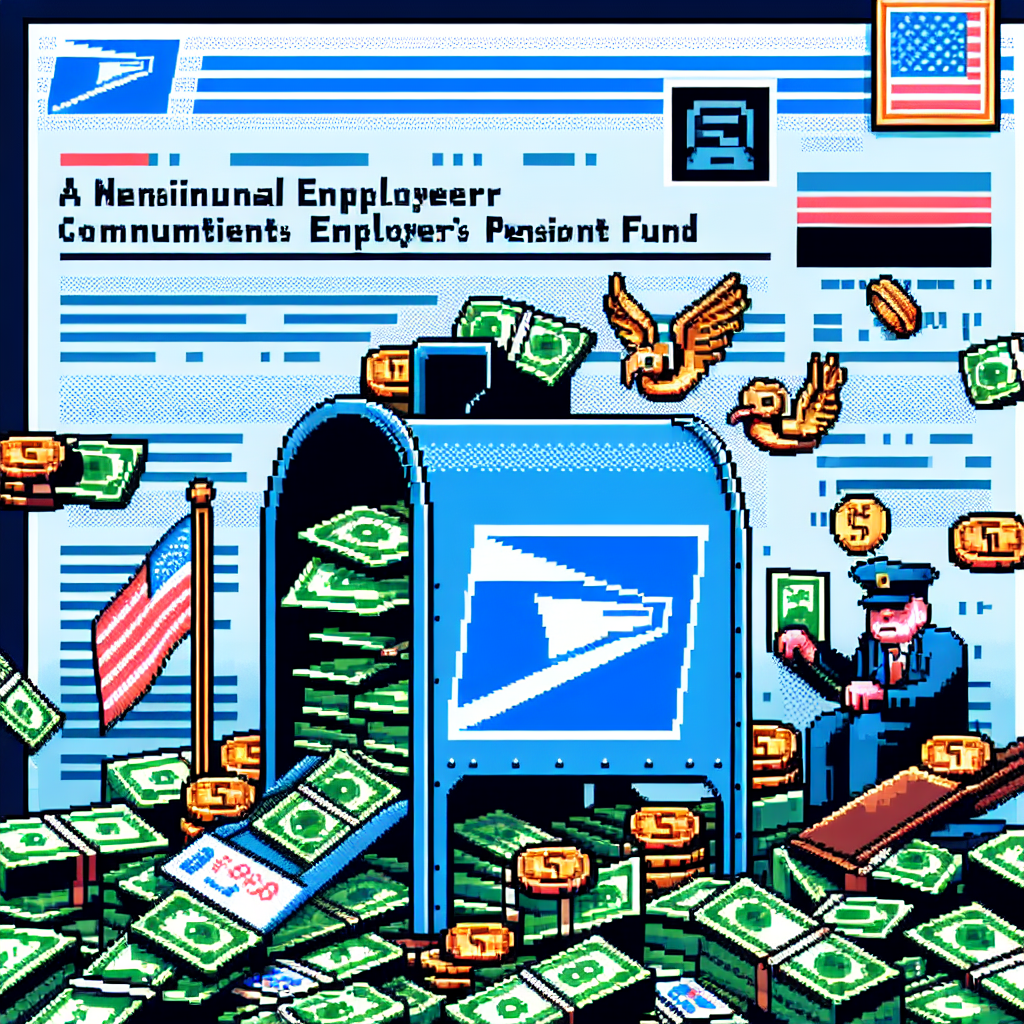
The news that the US Postal Service to suspend employer pay to workers’ pensions landed like a shock—and yet, in a way, it felt inevitable. On April 9, 2026, USPS notified federal officials it would temporarily stop making its biweekly employer contributions to the Federal Employees Retirement System (FERS) to conserve cash. The move—effective April 10, 2026—was framed as a short‑term measure to keep trucks moving, pay employees and vendors, and avoid an even worse liquidity crisis. (apnews.com)
What happened and why it matters
- The Postal Service told the Office of Personnel Management it will pause employer contributions to the defined‑benefit portion of FERS, which covers the vast majority of career postal employees. The suspension was described as temporary and aimed at preserving cash amid what USPS calls an “ongoing, severe financial crisis.” (apnews.com)
- Officials have warned the USPS could run out of cash by around February 2027 without changes such as a higher borrowing cap or increased postage revenue. To buy time, the agency also filed for a postage rate increase that would raise the cost of a First‑Class stamp from 78¢ to 82¢. (apnews.com)
- Importantly, USPS leaders say current and future retirees will not be immediately impacted by the suspension; employee payroll deductions and other retirement mechanisms remain in place. Still, the optics and long‑term risk to pension funding have alarmed unions, lawmakers, and retirees' advocates. (apnews.com)
Moving from headline to consequence, the decision is less about pensions vanishing overnight and more about a cashflow triage in an agency that delivers essentials while operating under unique legal and financial constraints.
The context: a federal agency in a fiscal vise
The Postal Service isn’t a private company—it’s an independent federal agency that depends on postage revenue and a limited ability to borrow. A decades‑old statutory $15 billion borrowing cap, pre‑1990 rules on pension funding, and steep declines in first‑class mail volume have all contributed to recurring budget shortfalls. In recent months, the postmaster general warned Congress the agency could run out of cash within a year unless lawmakers act. (apnews.com)
Historically, USPS has used temporary suspensions before—most notably in 2011—only to resume payments and repay what it owed. The current environment is different, though: inflation, higher operating costs, and a tighter borrowing ceiling make today’s risk feel more pressing. (federalnewsnetwork.com)
US Postal Service to suspend employer pay to workers’ pensions — what that looks like day to day
- Payroll: Employees will continue to receive their paychecks; employee contributions to retirement plans are still being processed. The suspension affects only the employer’s share of FERS defined‑benefit funding. (nbcwashington.com)
- Service: USPS framed the decision as necessary to keep mail and package delivery running without interruption. The agency argued that insufficient liquidity would be more harmful to the public than a temporary pause in employer pension contributions. (apnews.com)
- Uncertainty: The suspension raises questions about long‑term pension health, bargaining dynamics with unions, and congressional willingness to change the borrowing cap or pension rules. Lawmakers on both sides of the aisle may now face pressure to respond more quickly. (apnews.com)
Transitioning from immediate logistics to long‑term consequences, the central tension is clear: prioritize day‑to‑day operations or prioritize steady pension funding. USPS chose the former for now.
How employees and retirees should think about this
First, breathe: the agency and Office of Personnel Management say current and future retirees aren’t immediately affected. Service credit for pension calculations isn’t erased by a temporary employer payment pause; the mechanics of your FERS annuity—years of service, salary history, and benefit formulas—remain intact. (myfederalretirement.com)
Nevertheless, this is a wake‑up call:
- Employees should review their paystubs and retirement account statements to confirm employee deductions are still being taken and recorded.
- Retirees and near‑retirees should monitor official USPS and OPM communications for timelines and any required catch‑up payments.
- Union leaders and members will likely press for safeguards—contractual or legislative—that limit the length of any future suspensions or ensure prompt reimbursement.
The broader policy puzzle
This episode spotlights a policy conundrum: the USPS sits at the intersection of public service and fiscal discipline. Policymakers must weigh taxpayer exposure, the social value of universal mail service, and the financial realities of 21st‑century logistics.
Possible policy responses include:
- Raising the statutory borrowing cap (currently $15 billion) so USPS can smooth liquidity crises. (apnews.com)
- Reforming pension funding rules to allow more flexibility in how USPS invests or times its contributions. (federalnewsnetwork.com)
- Approving modest postage increases that reflect rising costs while balancing the political sensitivity of mail rate hikes. (apnews.com)
Each option has tradeoffs. Quick fixes risk temporary relief without structural change; deep reforms require political capital and may take years to implement.
My take
This move by USPS is a blunt instrument—but perhaps the only practical one left in the short term. Temporarily suspending employer pension contributions to avoid an immediate liquidity collapse is a painful but defensible choice if it truly preserves service and pays employees and vendors. Still, it should be a catalyst, not an endpoint.
Congress, regulators, and USPS leadership now face a simple test: turn this scramble into a strategic reset. That means transparent timelines for resuming pension funding, clearer contingency plans for cash shortfalls, and a realistic debate about funding the public good of universal mail service in a radically altered marketplace.
Final thoughts
The act of pausing employer payments to pensions doesn’t strip away decades of earned benefits overnight. But it does raise the bar for political courage and policy imagination. If nothing else, April 2026 should remind us that institutions—even venerable ones—require constant reinvention to meet changing economic realities.
Sources
-
USPS to suspend pension contributions, seeks 4‑cent stamp price hike — Associated Press. https://apnews.com/article/da601e2b88f3420898757dbdb09fa518. (apnews.com)
-
USPS to suspend pension contributions, seeks 4‑cent stamp price hike — The Washington Post. https://www.washingtonpost.com/national/2026/04/09/mail-usps-pensions-financial-crisis/88006004-3437-11f1-b85b-2cd751275c1d_story.html. (washingtonpost.com)
-
US Postal Service expects to run out of cash in a year without help from Congress — Associated Press. https://apnews.com/article/d44d9d156aad4aefb9b867cd415cd5ac. (apnews.com)
-
USPS suspends contributions to pension plan to delay running out of cash — Federal News Network. https://federalnewsnetwork.com/management/2026/04/usps-suspends-contributions-to-pension-plan-to-delay-running-out-of-cash/. (federalnewsnetwork.com)
Related update: We recently published an article that expands on this topic: read the latest post.
Related update: We recently published an article that expands on this topic: read the latest post.
Related update: We recently published an article that expands on this topic: read the latest post.