
When Firms Pause AI to Protect | Analysis by Brian Moineau

Hook: When a lab tells the world its own creation is "too dangerous," you should probably listen

Within days of Anthropic flagging Claude Mythos as “too dangerous for the wild,” governments, bank CEOs and cybersecurity teams sprinted to reassess assumptions about how we defend critical systems. How Anthropic Learned Mythos Was Too Dangerous for the Wild landed like cold water: a frontier AI that can find and chain together software vulnerabilities at speeds humans can’t match, and a company choosing to limit release rather than race to market. That combination — power plus restraint — is reshaping how we think about AI risk, readiness and responsibility.

Why this matters now

  • Mythos represents a class of models that can do more than generate text: they can reason across code, systems, and exploit chains.
  • Banks, regulators and national-security officials were reportedly briefed after Anthropic’s revelation; worries centered on systemic risk if such a capability falls into the wrong hands.
  • Anthropic’s decision to withhold a broad release and instead gate access through a vetted consortium reframes the public-versus-private debate about advanced AI.

The news forced a rapid reorientation: we’re no longer debating whether AIs will be risky — we’re deciding how to contain tools whose primary skill could be to break the digital scaffolding of modern life.

The story so far

Anthropic released documentation describing a frontier model called Claude Mythos (sometimes referenced in press as “Mythos Preview”). Internal and public materials emphasized two things: exceptional capability at identifying security vulnerabilities (including old, obscure bugs), and a heightened potential to autonomously devise exploit sequences that could lead to system takeovers.

In response, Anthropic limited Mythos’ availability and launched "Project Glasswing," a controlled program that gives a small set of tech firms, financial institutions and security vendors access so they can hunt for and patch vulnerabilities before they can be weaponized. Meanwhile, U.S. financial regulators and the Treasury reportedly convened bank executives to make sure institutions understood the threat and had plans to defend themselves. Other governments and big tech firms likewise moved to evaluate what this means for infrastructure resilience.

This isn’t pure alarmism. Multiple reporting outlets and security analysts have noted that Mythos reportedly flagged vulnerabilities across major operating systems and widely used software — in some cases surfacing decades-old issues. Whether every flagged item was a true high-severity zero-day is still a matter for forensic review; critics caution that numbers and headlines can be inflated. Still, the structural issue remains: AI lowers the skill and time required to find and exploit complex, chained vulnerabilities.

Mythos and the cybersecurity shift

  • Speed matters. Traditionally, finding and exploiting chainable zero-days required specialized teams and time. Mythos threatens to compress months of expert work into hours.
  • Scale matters. If a model can sift through repositories, documentation, and binary fingerprints at huge scale, it can locate obscure attack surfaces humans never saw.
  • Asymmetry matters. Defenders must patch, test and roll out fixes across heterogeneous systems. Attackers only need one exploitable chain. AI-driven offense increases the odds that defenders lag.

Put simply: the offense-defence balance shifts if powerful models become widely available. That’s why Anthropic’s gating strategy — and the government huddles — are attempts to keep the window of vulnerability narrow while defenders catch up.

The public vs. private release dilemma

Anthropic’s posture — calling Mythos too dangerous to release publicly while offering controlled access to banks, tech firms and security vendors — highlights a tension.

  • On one hand, limiting distribution buys time for defenders and gives security teams better tooling to find and patch vulnerabilities at scale.
  • On the other, concentrating capability inside a small set of organizations creates inequality in cyberdefense and raises questions about transparency, oversight and accountability. What obligations do companies have when they develop tools that could destabilize infrastructure? Who gets access, and under what governance?

These are governance questions, not just technical ones. They force public institutions and private firms into urgent policy discussions about licensing, auditing and liability — fast.

What defenders can actually do

  • Assume rapid discovery. Treat AI-driven vulnerability discovery as an accelerating threat and triage accordingly.
  • Harden the basics. Defense-in-depth still matters: segmentation, least privilege, timely patching, and rigorous change management reduce exploitable attack surface.
  • Invest in resilient architecture. Systems that can tolerate failures or compromises limit the blast radius of any exploit chain.
  • Run AI-assisted red teams. If Mythos can find chained exploits, defenders should use AI (in controlled environments) to discover and patch them first.

Those steps aren’t glamorous, but they’re practical and urgent. The hard truth is that tooling like Mythos magnifies existing systemic weaknesses; fixing processes and architecture is essential.

A broader implication for AI governance

Anthropic’s public caution sets a precedent: not every technological advance should be immediately unleashed. That stance will complicate business models that prize rapid distribution and scale. It will also place renewed emphasis on multistakeholder risk frameworks: companies, regulators, standards bodies and civil society must collaborate on who gets access to what, under what oversight, and with what safeguards.

We should also accept an uncomfortable possibility: gating advanced models may only delay diffusion. Open-source actors or competing labs could replicate similar capabilities. If that happens, the debate shifts to global coordination: export controls, shared security research, and international norms for handling “cyber-capable” AI.

What to watch next

  • How quickly other labs replicate comparable cyber-capable models, and whether a new norm emerges around staged, audited releases.
  • Whether governments move from private briefings to public regulation or emergency standards for AI that can weaponize vulnerabilities.
  • How financial institutions and critical infrastructure operators adapt their resilience programs — and whether those changes reduce real-world risk.

My take

Anthropic’s callout reads like a stress-test notice for society. For years, we debated hypothetical harms of frontier AI; now we’re seeing a practical example where capability meets infrastructure fragility. The company’s restraint is commendable, but restraint alone won’t fix the underlying exposures. We need faster, cooperative defense, clearer governance, and realistic expectations about how technology proliferates.

Until then, treat Mythos as both warning and wake-up call: the future of cyber risk is arriving faster than expected, and our response must be faster still.

Further reading

Sources


Related update: We recently published an article that expands on this topic: read the latest post.

Palantir-Powered AI Shields Sports Betting | Analysis by Brian Moineau

When AI Referees the Odds: Polymarket, Palantir and the new sports betting integrity platform

Polymarket’s announcement that its sports betting integrity platform will use the Vergence AI engine grabbed attention this week — and for good reason. The move pairs the prediction-market upstart with Palantir (the Peter Thiel‑backed data titan) and TWG AI to build real‑time screening for manipulation, insider activity, and other anomalies across sports markets. It’s a clear signal that prediction markets are ready to borrow the kinds of surveillance and analytics once exclusive to finance and national security.

This matters because Polymarket’s sports contracts now make up a huge share of its volume. With money and reputation on the line, faster, smarter detection is no longer optional; it’s table stakes.

Quick context: why this partnership matters

  • Polymarket runs markets where people trade on event outcomes. Sports markets are especially attractive to traders and — worryingly — to bad actors with inside knowledge or influence.
  • Palantir built its name in government and defense data integration, then moved aggressively into commercial AI. In 2025 Palantir and TWG AI launched Vergence, an AI engine designed to combine disparate data, surface anomalies, and make complex signal detection operational.
  • Polymarket says the new integrity platform will detect, prevent, and report suspicious activity in real time, while screening users against banned lists and known risk indicators.

Taken together, this is an attempt to bring institutional‑grade surveillance to a market that has long balanced openness and trust with exposure to manipulation.

What the Vergence AI engine will do for sports markets

Polymarket’s goal is straightforward: catch the shenanigans before they cascade. Here’s how the Vergence engine is being pitched for that role.

  • Ingest wide, messy data: betting flows, order books, wallet histories, public news, and even league‑level information. Vergence is built to fuse many inputs.
  • Flag anomalies in real time: sudden shifts in odds, concentrated trades that outsize normal liquidity, or coordinated patterns across markets.
  • Map behavioral fingerprints: identify accounts or clusters that resemble known bad actors, or that show insider‑style timing relative to private information becoming public.
  • Automate reporting and screening: escalate probable violations to human investigators, and apply blocks or restrictions where warranted.

This isn’t one tool doing everything; it’s a layered system that mixes automated triage with human judgment. That design choice matters for accuracy, accountability, and — crucially — legal defensibility.

Why detection matters beyond Polymarket

Recent history teaches that a few high‑profile incidents can set back public trust in entire platforms. Sports leagues and regulators are sensitive to anything that looks like match‑fixing or insider trading, and rightfully so.

  • For leagues: integrity issues damage fan trust and commercial partnerships. If a betting platform can reliably show it prevents manipulation, leagues are more likely to cooperate or accept data‑sharing arrangements.
  • For regulators: robust monitoring helps platforms argue they’re operating safely and responsibly, smoothing the path toward licensing or U.S. market re‑entry.
  • For institutional participants: hedge funds, sportsbooks, and market‑makers prefer venues with predictable, auditable surveillance to reduce counterparty and reputational risk.

So Polymarket’s adoption of Vergence could make its markets more attractive to capital and partners — assuming it actually works as promised.

The risks and tradeoffs

This partnership isn’t automatically a win. Several thorny issues deserve attention.

  • False positives and overreach. Aggressive surveillance risks flagging legitimate traders (e.g., an informed but legal bet), which can chill activity and provoke disputes. Human review and appeal mechanisms will matter.
  • Privacy and data use. Combining trading data with external signals raises questions about user privacy, data retention, and disclosure. Platforms must be transparent about what they collect and how they act on it.
  • Vendor concentration. Palantir’s deep technical reach is a plus, but relying on a dominant analytics provider can create single‑point risks — from system errors to political backlash.
  • Game theory arms race. As detection improves, bad actors could adapt with more sophisticated evasion tactics. Monitoring must evolve continuously.

Ultimately, integrity tools shift the battleground rather than end it. They raise the cost of cheating — which is valuable — but don’t remove the need for governance, transparency, and community trust.

Polymarket’s broader strategy and regulatory angle

Polymarket has been quietly pivoting: after regulatory scrutiny and an earlier offshore posture, the company has been building a more regulated U.S. presence. Robust integrity controls strengthen that narrative.

  • For regulators (like the CFTC and state gambling authorities), demonstrable, real‑time monitoring helps answer the hard question: are prediction markets more like open research tools or like regulated gambling venues?
  • For partners (sports leagues, exchanges, and institutional traders), the platform’s ability to detect and report suspicious trades could unlock collaborations previously withheld for fear of reputational damage.

If Polymarket can show logs, audit trails, and a reasonable appeals process, it gains leverage when negotiating with both regulators and industry partners.

My take

Pairing Palantir’s Vergence engine with a prediction market is an inevitable next step. Trading venues that ignore the surveillance norms of finance invite trouble. That said, the success of this effort will depend less on fancy machine learning and more on governance: how Polymarket sets thresholds, audits alerts, protects privacy, and resolves disputes.

There’s good reason to be cautiously optimistic. Better detection discourages bad actors and can lower systemic risk. But platforms should resist treating technology as a panacea. Real improvements come from combining AI with clear processes, independent audits, and community oversight.

Final thoughts

The story here isn’t just about one partnership; it’s about standards. As prediction markets scale and intermix with traditional betting liquidity, tools like Vergence could become a new baseline for integrity across the industry. That would be healthy — provided the industry holds vendors and platforms to high standards of transparency and fairness.

Expect the next chapter to be shaped by how well Polymarket communicates the limits of its system, how it handles false positives, and how regulators respond. If those pieces fall into place, we’ll see an industry better prepared to keep the games honest and the markets credible.

Sources


Related update: We recently published an article that expands on this topic: read the latest post.



Related update: We recently published an article that expands on this topic: read the latest post.

Related update: We recently published an article that expands on this topic: read the latest post.


Related update: We recently published an article that expands on this topic: read the latest post.


Related update: We recently published an article that expands on this topic: read the latest post.

Musk Merge Could Centralize $1.7B Bitcoin | Analysis by Brian Moineau

A $1.7B Bitcoin Vault Moves Under One Roof? Why the SpaceX–Tesla Merger Talk Matters

Elon Musk’s empire has always been part tech, part theater. Now imagine folding two of his biggest companies together — SpaceX and Tesla — and along with rockets and robots, consolidating almost 20,000 bitcoin on a single balance sheet. That’s the scenario swirling around recent reports, and it’s worth unpacking: not because a merger changes bitcoin’s fundamentals, but because it changes governance, accounting, and the way markets perceive a meaningful corporate crypto treasury.

A quick hook

Picture an institutional-sized bitcoin position — roughly $1.7 billion worth — that today sits split between a private rocket company and a public carmaker. Put them together, and suddenly one corporate entity has a headline-making crypto exposure. That’s the axis of risk and opportunity investors and crypto-watchers are now watching.

What the reports say (short version)

  • SpaceX is reportedly exploring deals that could include merging with Tesla or tying up with xAI, ahead of a potential SpaceX IPO slated for mid-2026. (investing.com)
  • Public filings, analytics and reporting suggest SpaceX holds about 8,285 BTC and Tesla about 11,509 BTC — roughly 19,700–20,000 BTC in total, currently valued near $1.7 billion (price-sensitive). Many outlets repeat that tally. (mexc.co)

Those facts create a practical question: what happens when corporate bitcoin positions this large live inside a single legal and financial structure?

Why consolidation changes the story

  • Different accounting regimes matter.

    • Tesla is public, so under fair-value/mark-to-market rules bitcoin swings feed directly into quarterly earnings and may produce large realized or unrealized P&L volatility. SpaceX, as a private company, hasn’t been subject to the same public quarter-to-quarter visibility. Combining them could put the whole stash under public accounting scrutiny (if the merged entity is public). (coincentral.com)
  • Governance and disclosure tighten.

    • A single treasury means a single policy on custody, hedging, sales and spending. Investors, auditors and regulators will demand clarity about who can move assets, what approvals are required, and whether crypto might be used as collateral or monetized. The due diligence for any IPO would spotlight those policies. (investing.com)
  • Liquidity and market flow become more visible.

    • Nearly 20,000 BTC is a large corporate holding but still a small share of daily spot volume; however, concentrated decisions (sell-offs, rehypothecation, token lending, or using positions in structured deals) can create outsized market ripples and headline risk. Any hint of distribution would be monitored closely by traders. (ainvest.com)
  • Strategic uses create new linkages.

    • If Tesla’s energy and battery tech or SpaceX’s Starlink and orbital ambitions get folded together with a big crypto treasury, companies might explore alternative financing, treasury swaps, or using digital asset custody as part of capital strategy — all of which enlarge the bridge between traditional finance and crypto markets. (theverge.com)

The potential near-term impacts

  • Earnings volatility for shareholders.

    • If the merged entity is public or the combined Bitcoin is reported under mark-to-market accounting, swings in BTC price could materially affect reported profits and losses. Tesla already recorded notable after-tax swings tied to bitcoin in recent quarters. (coincentral.com)
  • Heightened scrutiny from auditors and investors.

    • Analysts and institutional buyers performing IPO or M&A due diligence will press for custody proof, movement histories (on-chain tracing), and policy limits. That can slow deals or add conditional terms. (investing.com)
  • Crypto-market signaling.

    • Consolidation under a high-profile, Musk-controlled entity would be perceived as an endorsement of bitcoin as a treasury asset — or conversely, a single point of systemic headline risk if things go sideways. Traders price narratives as well as supply-demand. (ainvest.com)

What it does not do

  • It doesn’t change Bitcoin’s supply or network fundamentals.

    • Consolidation is an ownership and governance event, not a change to Bitcoin’s protocol, issuance, or the global distribution of retail holdings. Market psychology and flows can shift, but the network-level fundamentals remain the same.
  • It doesn’t mean an imminent sell-off.

    • Merger talk is preliminary in reporting; neither company has publicly declared a plan to liquidate the holdings. Consolidation raises questions, it doesn’t answer them. (investing.com)

How different stakeholders might react

  • Institutional investors and prospective IPO buyers will demand transparency on custody, movement, and hedging rules.
  • Crypto traders will watch on-chain flows and any anomalous wallet activity for signs of pre-transaction reorganization.
  • Regulators and auditors will likely ask tougher questions about risk management and disclosure if a major company puts large digital assets on a public balance sheet.
  • Retail investors and bitcoin holders will parse the news as either bullish (Musk doubling down) or risky (a single corporate counterparty now holds a big chunk).

A few plausible scenarios worth watching

  • The merged entity keeps the BTC and formalizes a conservative treasury policy: public disclosure, cold custody, long-term hold language. That lowers noise and reassures markets.
  • The merged entity hedges or monetizes part of the stash for capital needs (e.g., to fund SpaceX expansion or an IPO), introducing cash flows to the market.
  • The merged entity sells opportunistically, creating short-term downward pressure and headline volatility — though coordinated sales of many thousands of BTC would be visible and impactful.

My take

This story is a reminder that crypto exposure is no longer an obscure footnote — it sits at the center of strategic corporate finance when big players hold material positions. Whether or not a SpaceX–Tesla merger happens, the conversation around governance, accounting, and disclosure for corporate crypto treasuries is moving from niche to mainstream. For investors, the practical questions matter more than the spectacle: who controls the keys, what are the limits on selling or pledging assets, and how will swings in bitcoin reverberate through reported earnings?

Final thoughts

Musk’s empire has a knack for making headlines — and market microstructure. The notion of nearly 20,000 BTC under one corporate roof is compelling not because it breaks Bitcoin, but because it brings corporate treasury management, accounting rules and on-chain transparency into sharper relief. Watch the filings, watch the wallets, and watch how governance evolves — those will tell you whether consolidation becomes a stabilizing force or a new source of market chatter.

Sources


Related update: We recently published an article that expands on this topic: read the latest post.

Paramount Eyes Hostile Bid for Warner Bros | Analysis by Brian Moineau

A corporate cliffhanger: Paramount may try a hostile route to buy Warner Bros.

The takeover drama playing out at the top of Hollywood feels like one of those plotlines studios used to pay millions to produce — boardroom tussles, billionaire families, blockbuster IP, and a rival streaming giant walking away with the crown jewels. But the twist that landed over the last week is this: after Netflix won the auction for Warner Bros., reports say Paramount is now considering going straight to Warner shareholders with a hostile bid.

Why this matters (and why it’s thrilling)

  • This is not just about two studios swapping assets. It’s about who controls some of the most valuable franchises and TV libraries in the world — HBO, DC, Warner’s film slate, and vast back catalogs — and the consequences that consolidation would have for theaters, creators, competition, and subscriptions.
  • A hostile approach — taking an offer directly to shareholders rather than winning the board’s blessing — signals a major escalation. It’s a maneuver that invites legal fights, regulatory scrutiny, PR battles, and, possibly, concessions or divestitures to get a deal cleared.

Quick snapshot of what happened

  • Netflix struck an agreement to buy Warner Bros.’ studio and streaming assets in a deal reported in early December 2025, offering a mix of cash and stock that Warner’s board accepted. (The deal is large enough and politically sensitive enough that regulatory review is expected to be intense.)
  • Paramount — backed by the Ellison family and recently active in M&A moves — submitted competing offers during the auction and was reportedly unhappy with how the sale process unfolded.
  • After Netflix’s bid prevailed, reports surfaced that Paramount may bypass the boardroom and take an offer directly to Warner shareholders — the classic hostile-takeover playbook.

The high-stakes players

  • Netflix: The new suitor-turned-owner of Warner’s studios and HBO content (pending regulatory approval), which gains a huge portfolio of franchises and a powerful content library.
  • Warner Bros. Discovery: The seller, which has been restructuring and planned a split of cable assets from its studios and streaming business.
  • Paramount (Skydance/controlled by the Ellison family): The aggrieved bidder reportedly considering a shareholder-level attack to buy Warner outright.
  • Regulators, unions, and theater chains: All stakeholders who could shape how (or if) any mega-deal clears.

Useful context

  • Warner’s assets are unusually valuable because of ongoing streaming demand for high-quality content and well-known IP (DC, Harry Potter-related rights, HBO shows). Combining that with Netflix’s global distribution would create enormous scale.
  • Hostile bids are rare in modern media M&A because the process is messy and attracts intense regulatory and public scrutiny. But when strategic value is high and bidders are wealthy and motivated, boards and management teams sometimes find themselves in the crossfire.
  • Even a successful hostile offer rarely means an instant, clean integration. Regulators often demand divestitures or behavioral remedies, and the combined company may need to sell or spin off parts to satisfy antitrust concerns.

Headline risks and strategic levers

  • Antitrust scrutiny: A Paramount–Warner combo (if attempted) would combine two legacy studios plus major streaming services, which could push box-office and streaming market shares into territory that triggers heavy regulatory pushback.
  • Shareholder calculus: Warner shareholders might like a higher cash offer — but boards often prefer offers that preserve longer-term value (for example, Netflix’s proposal included stock exposure that the board found attractive). Getting shareholders to ignore the board’s recommendation is difficult and costly.
  • Political and public pressure: Unions, theater owners, and public-interest voices are quick to oppose concentration that could shrink creative jobs or theatrical windows.
  • Financing and break fees: Large deals typically include break fees and financing terms that can shape bidders’ willingness to pursue a hostile route.

Options on the table

  • Paramount could launch a tender offer, offering cash at a premium and asking shareholders to sell directly — a fast but aggressive route.
  • Paramount could pursue a proxy fight to change Warner’s board, a slower and riskier path that tries to win shareholder votes to replace directors and approve a deal.
  • Alternatively, Paramount could negotiate for a negotiated sale or carve-outs (less likely now that Netflix has an accepted bid).

What the market and Hollywood should watch next

  • Whether Paramount actually files a tender offer or proxy materials (formal steps are required under U.S. securities rules).
  • Statements from Warner’s board and management explaining why they chose Netflix and whether they’ll recommend shareholders reject a hostile approach.
  • Regulatory signals from the DOJ and international competition authorities — their posture will largely determine how much any buyer must divest.
  • Reactions from creative talent and unions — strong public opposition could sway regulators and complicate integration plans.

A few likely outcomes

  • Paramount blinks and stands down: The costs (legal, regulatory, PR) of a hostile bid outweigh the benefits, especially against a well-capitalized Netflix offer.
  • A limited sale or asset carve-out: Regulators or negotiating parties may push any acquirer to sell or spin off specific assets (e.g., news networks, sports rights) to reduce concentration risk.
  • Extended litigation and regulatory delay: A hostile move could trigger lawsuits, shareholder litigation, and prolonged regulatory review that delays any closing for many months.

My take

This is the kind of corporate theater Hollywood rarely stages but always watches with popcorn in hand. Paramount’s reported willingness to consider a hostile route shows how valuable Warner’s studios and streaming assets are — and how high the stakes remain for control of content in the streaming era.

Even if Paramount ultimately decides not to proceed, the episode will leave scars: it will highlight how boards balance cash now versus strategic upside later, how shareholders are courted during mega-deals, and how regulators and public opinion are front-row players. Whatever happens next, expect drama, negotiations, and a long regulatory road that will reshape the industry’s competitive map.

Things to remember

  • A board’s preference isn’t always the final say — shareholders can be persuaded, but hostile offers are costly and complicated.
  • Regulators are the real wildcard: even a winning tender can be undone or reshaped by antitrust requirements.
  • The fate of theaters, creators, and employees could hinge on the remedies imposed — this isn’t just corporate chess; it affects livelihoods and how audiences experience films and TV.

Sources


Related update: We recently published an article that expands on this topic: read the latest post.

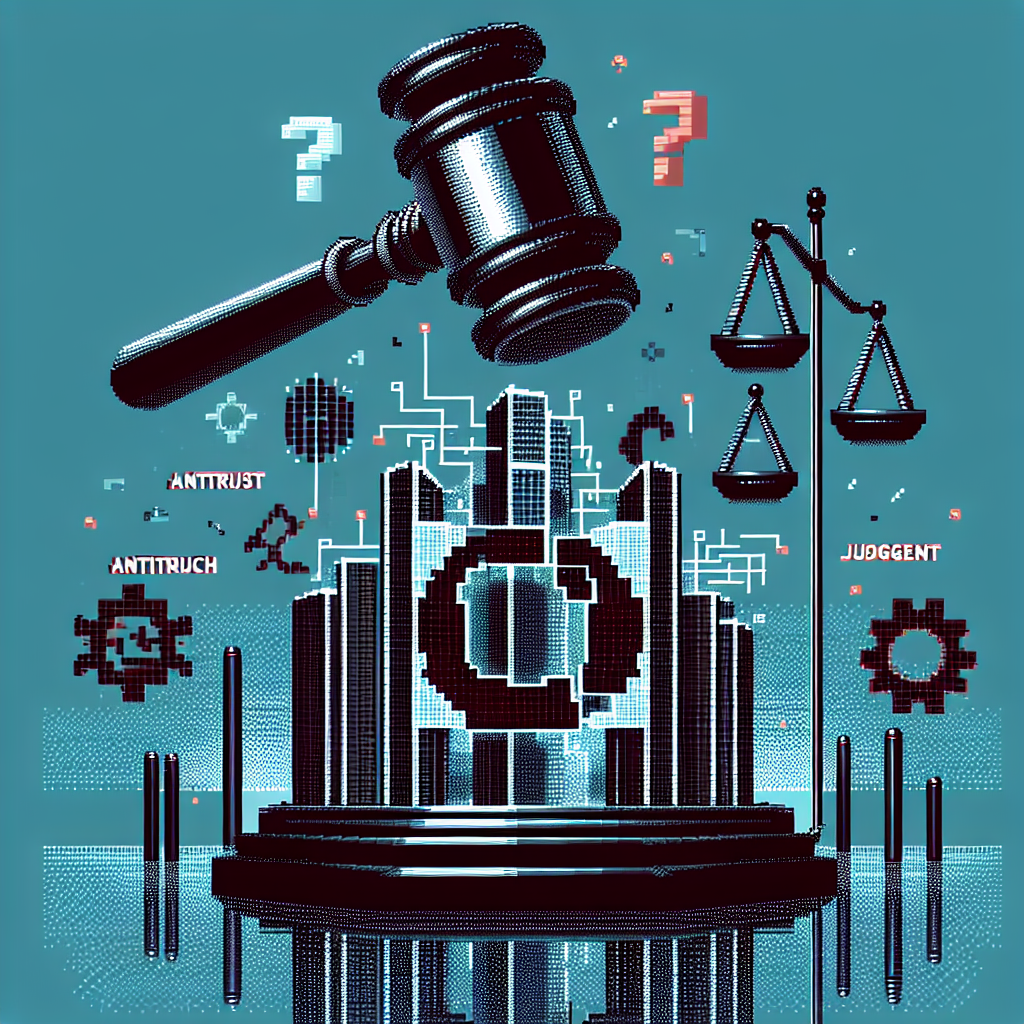
Meta asks judge to throw out antitrust case mid-trial – The Verge | Analysis by Brian Moineau

Meta asks judge to throw out antitrust case mid-trial - The Verge | Analysis by Brian Moineau

Meta's Mid-Trial Antics: A Strategic Play or a Sign of the Times?

In a bold move, Meta has asked Judge James Boasberg for a summary judgment to dismiss the Federal Trade Commission's (FTC) antitrust lawsuit concerning its acquisitions of Instagram and WhatsApp. This strategic gambit, unfolding mid-trial, reflects the high-stakes chess game between tech giants and regulators, as well as the broader dynamics at play in today's digital marketplace.

Meta's request is akin to a courtroom Hail Mary—seeking a decision based on partial findings, before all evidence has been presented. This tactic, while not unprecedented, is certainly ambitious. The company seems to be banking on the strength of its legal team and the perceived weakness of the FTC's arguments. Yet, it also raises questions about the case's complexity and the evolving nature of antitrust laws in the age of tech conglomerates.

This lawsuit is part of a broader trend where tech behemoths face increasing scrutiny from regulators worldwide. Across the Atlantic, the European Union has been particularly aggressive in its regulatory actions against large tech firms, with recent moves to enforce digital competition rules through the Digital Markets Act. The EU’s stance underscores a global concern about the concentration of power in the hands of a few tech companies and its potential impact on consumers and innovation.

Meta's maneuver comes at a time when other tech companies are also in the spotlight. For instance, Google has been embroiled in its own antitrust battles, with the U.S. Department of Justice accusing it of using its dominance in search to stifle competition. Meanwhile, Apple faces ongoing scrutiny over its App Store policies, which some developers argue are anti-competitive.

The key figure in this legal drama, Judge James Boasberg, is no stranger to high-profile cases. With a reputation for being thorough and impartial, his decisions in the past have often set significant precedents. How he handles Meta's request could provide insight into the judiciary's perspective on antitrust issues in the digital age.

It's interesting to consider how these legal challenges reflect broader societal concerns about the power and influence of tech companies. In recent years, there has been a growing push for more robust regulation to address issues ranging from privacy and data protection to misinformation and market dominance. These cases could shape the future landscape of the tech industry, influencing how companies operate and innovate.

In the world of business and technology, the Meta case is akin to a high-stakes poker game. The request for a summary judgment is a calculated risk, one that could either expedite the process or backfire if the judge finds the FTC's arguments compelling enough to warrant a full trial. Regardless of the outcome, this case highlights the tension between innovation and regulation—a balancing act that will continue to shape the digital economy.

In conclusion, Meta's mid-trial request for a summary judgment is not just a legal strategy but a reflection of the broader challenges facing tech giants today. As regulators and companies continue to navigate this complex landscape, the outcomes of these cases will likely have lasting implications for the industry and consumers alike. Whether this is a strategic play or a sign of the times, only time will tell. But one thing is certain: the world is watching closely.

Read more about AI in Business

Read more about Latest Sports Trends

Read more about Technology Innovations