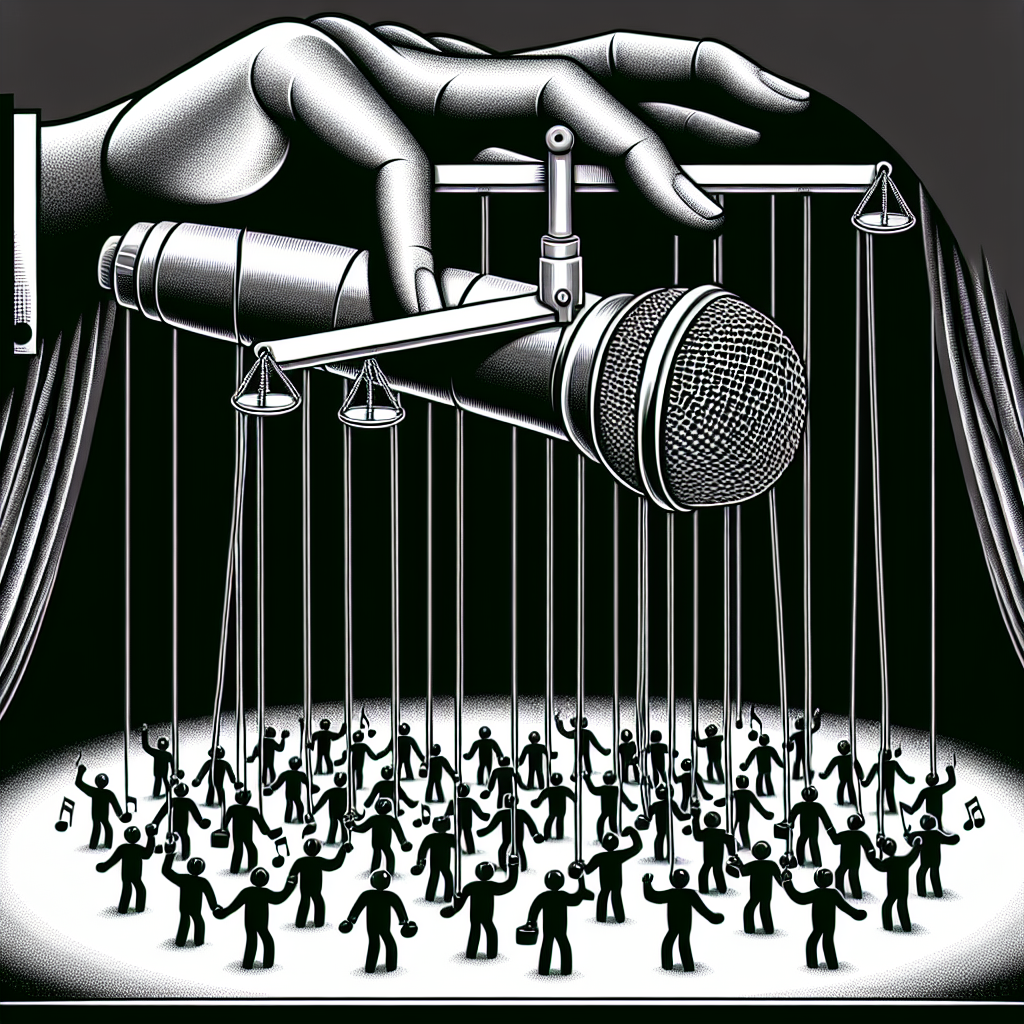
DOJ Lets Live Nation Keep Monopoly | Analysis by Brian Moineau

Live Nation Gets To Keep Its Monopoly Thanks To Trump’s Department Of Justice — a closer look

On March 9, 2026, the Department of Justice announced a tentative settlement in its long‑running antitrust case against Live Nation and Ticketmaster — the very same case that threatened to break up one of the most dominant companies in live entertainment. Live Nation Gets To Keep Its Monopoly Thanks To Trump’s Department Of Justice — that was the blunt framing in the Defector piece that lit the internet on fire, and it’s worth unpacking why so many people felt blindsided by the deal and what it actually does (and doesn’t) change.

The headlines matter because this felt like a rare moment when the federal government might actually pry open a tightly closed market. Instead, the settlement largely preserves the combined Live Nation/Ticketmaster structure while imposing conditions that some states and consumer advocates call insufficient.

Why this felt like a tipping point

  • The DOJ’s 2024 complaint accused Live Nation of building an illegal monopoly by tying promotion, venue ownership, management, and ticketing into a single competitive chokehold.
  • For years, consumers watched Ticketmaster’s platform issues and rising fees while independent promoters and venues complained about locked‑in exclusivity deals.
  • A breakup would have been a clear, structural remedy: separate promotion/venue ownership from ticketing. That possibility is what made the 2026 trial so consequential.

Yet the March 2026 settlement stops short of a full breakup. Instead, it requires divestitures of some amphitheaters, caps on certain fees at specific venues, and changes intended to let rival ticket sellers access Ticketmaster’s platform. Live Nation also agreed to a monetary fund to settle claims with states. Live Nation insists the deal improves competition — and crucially, keeps Ticketmaster under its corporate umbrella. (Live Nation’s statement is posted on its newsroom.) (newsroom.livenation.com)

What the settlement actually does

  • Opens Ticketmaster technology to some rivals and places limits on certain exclusive contracts.
  • Forces the sale of a limited number of amphitheaters (reported as up to 13), not a wholesale divestiture.
  • Creates a monetary settlement pool (reported around $280 million) to resolve state claims and civil penalties.
  • Imposes behavioral and structural remedies that regulators claim will increase access for competing sellers.

Those changes are not nothing. Opening platform access and limiting long‑term exclusivity could help smaller promoters and alternative ticket sellers. But critics argue these measures are incremental and leave the core market power intact. Reports from March 2026 show many state attorneys general refused to join the DOJ’s agreement and vowed to continue their own cases. (latimes.com)

Why people called this “keeps the monopoly”

Transitioning now to the political and practical angles: the timing and personnel surrounding the settlement fed the narrative that the case had been softened. The antitrust division’s leadership shifted under the current administration, and the negotiator who brokered the deal took over shortly before the settlement was announced. For many observers — consumer groups, independent venues, and some state AGs — that raised reasonable concerns about political influence and whether a tough structural remedy was ever on the table. Media coverage captured both the surprise and the skepticism. (news.bloombergtax.com)

From a market perspective, “keep the monopoly” is shorthand. Live Nation keeps control of Ticketmaster and the vertically integrated business model remains. The company avoids the disruption of a full corporate separation, which would have been the clearest path to eliminating systemic conflicts that critics say distort the marketplace. Instead, the settlement leans on regulated access and limited divestitures — approaches that often require vigilant enforcement to actually deliver competition.

The practical winners and losers

  • Winners
    • Live Nation/Ticketmaster: They remain intact, likely avoiding the operational and financial headaches of a breakup.
    • Artists and big promoters who want a stable platform and broad reach may prefer the predictability of a single giant.
  • Losers
    • Independent promoters and smaller ticketing platforms that need more than API access to compete on equal footing.
    • Consumers, if fee caps and venue-specific remedies don’t translate into lower prices or better service.
    • Several state attorneys general and public‑interest advocates who wanted structural remedies.

The stakes go beyond one company. This case is a test of whether antitrust enforcement in the United States will favor blunt, structural breakups for entrenched monopolies — or whether behavioral fixes and limited divestitures will be the norm.

What happens next

Dozens of states have their own suits and many have declined to sign onto the DOJ deal, so litigation will continue in multiple forums. Judges and state AGs can still force more aggressive remedies. Meanwhile, enforcement will hinge on monitoring: will the DOJ and state regulators actively police Ticketmaster’s new obligations? Or will violations be met with slow civil litigation that fails to change market incentives?

Recent reporting indicates the trial didn’t end; it shifted. Some states pressed forward and the federal judge urged settlement, but a full consensus wasn’t reached. That means this story will keep developing in courtrooms and in public debate. (apnews.com)

What this means for music fans and the live industry

If you buy concert tickets, expect incremental changes before sweeping improvements. You might see more listings from rivals on Ticketmaster, some venue fee caps, and a handful of amphitheaters under new ownership. But fundamental incentives — the desire to lock in exclusive deals and monetize fan data and fees — largely remain. Meaningful competition would require deeper, structural separation or robust enforcement that changes those incentives across the industry.

Final thoughts

There’s a reasonable argument on both sides here. The settlement could open modest breathing room for rivals and create some consumer protections. But if your yardstick for success is dismantling concentrated power so new competitors can thrive, this deal looks like a compromise that preserves the status quo more than it transforms it.

Antitrust choices are political and technical. This settlement shows how messy that mix gets: legal leverage, administrative change, and public outrage all collided. The next chapters — state lawsuits, judicial rulings, and possibly tougher remedies — will tell us whether the industry gets real competitive relief or simply a reshaped monopoly.

Sources

Trump Shock Reignites Corporate Landlord | Analysis by Brian Moineau

When Wall Street Got Blindsided: Trump, Corporate Homebuying, and the Housing Debate

The time of the corporate landlord as America’s housing villain was supposed to be over. Then, on January 7, 2026, a single social-media post from President Donald Trump threw markets, policymakers, and renters back into a debate that many thought had cooled: a move to bar large institutional investors from buying single-family homes. The announcement ricocheted through Wall Street — stocks of big landlords plunged — and reopened long-standing arguments about who should own America’s neighborhoods.

Why this felt like a surprise

  • The big institutional buyers — private-equity managers, REITs and other large funds — dramatically slowed purchases after their buying binge following the 2008 crisis. By many accounts, their share of the single-family market was small nationally (often cited near 1–3%), though concentrated in some metros.
  • Trump’s abrupt pledge to stop future institutional home purchases landed without legislative details. That lack of clarity was enough to spook investors who price policy risk quickly.
  • Markets reacted on instinct: shares of firms with single-family exposure dropped sharply the same day the post went up, reflecting uncertainty about the scale and enforceability of any new ban.

What’s actually at stake

  • Supply and affordability: Supporters of restrictions argue institutional buyers reduced available entry-level homes and raised prices in certain markets, making first-time homeownership harder.
  • Scale matters: Most research suggests large institutions own a small slice of single-family homes nationally, but in some cities their presence is significant and politically visible.
  • Legal and operational questions: Any federal ban would face tricky legal terrain — from property rights to the mechanics of enforcement — and would need clarity on whether it targets future purchases only or forces sales of existing portfolios.

The investor dilemma

  • Short-term shock vs. long-term exposure: Even if institutional buying has tapered, firms with existing portfolios — and public REITs associated with single-family rentals — face immediate valuation pressure when policy uncertainty spikes.
  • Regulatory risk pricing: Traders priced the unknowns quickly; without details on scope, definitions (what counts as “institutional”), exemptions, or transition rules, the proper valuation is hard to determine.
  • Reputational and political realities: Some lawmakers from both parties have at times criticized corporate landlords. That bipartisan sting makes this a politically potent issue even if the data on national impact are mixed.

A bit of history to ground this moment

  • After the 2008 housing crash, opportunistic capital acquired thousands of foreclosed single-family homes and converted many into rentals. Firms argued they provided needed rental supply and professionalized property management.
  • Critics pointed to concentrated ownership, alleged poor landlord practices, and a perception that large buyers crowded out would‑be homeowners, especially in hard-hit markets.
  • Over the past several years institutional purchases slowed, and conversations shifted toward building more homes, zoning reform, and tenant protections — but the narrative of the “corporate landlord” stuck in public debate.

Likely scenarios and practical effects

  • Narrow policy focused on future purchases: This would reduce the chance of forced sales, limit shock, and primarily constrain growth of institutional footprints. It could be less disruptive to markets but still politically meaningful.
  • Broad policy that forces divestiture: That would be unprecedented, likely face lengthy legal battles, and create significant market disruption and unintended consequences for housing finance.
  • State and local action: Expect an uptick in state/local proposals that limit corporate purchases (already happening in some locales), which may be easier to craft and defend than a sweeping federal ban.
  • Market adaptation: Investors may pivot toward multifamily, build-to-rent development, or other asset classes less politically fraught.

What the data and experts say

  • Nationally, large investors own a relatively small share of single-family homes; however, their impact varies widely by metro area. That concentration helps explain the political heat even when the national numbers look modest.
  • Economists generally point to constrained supply — lack of new construction, zoning limits, and rising building costs — as the primary drivers of housing affordability problems. Targeting buyers addresses distribution of existing stock more than the underlying supply shortage.
  • Policy design matters: measures that increase transparency (registries of corporate owners), limit predatory practices, or incentivize construction may produce more durable improvements than blunt purchase bans.

My take

This moment is a reminder that housing debates rarely center on just one variable. The optics of corporate landlords are powerful — they make for clear villains in news stories and political speeches — but durable solutions will need to tackle supply, financing, and local regulations, not only buyer identities. A narrowly tailored restriction on new institutional purchases could calm political pressure without wrecking markets; a broad forced-divestiture approach would risk legal peril and market disruption while doing little to spur new homebuilding.

Ultimately, real reform should aim for policies that increase access to homes for first-time buyers (more supply, better financing, down-payment assistance) and hold large landlords to strong standards where they exist — while recognizing that headline-grabbing bans are a blunt instrument for a multifaceted problem.

What to watch next

  • Precise policy language: definitions, effective dates, grandfathering clauses, and whether federal or state rules take precedence.
  • Court challenges and legal analyses about takings and property rights.
  • Local legislation and pilot programs in metros with high institutional ownership.
  • Market shifts: capital reallocating into other real-estate types or exit strategies if restrictions tighten.

Final thoughts

The surge of attention around institutional homebuying shows how housing policy mixes facts with perception. Markets move on uncertainty; voters respond to visible harms. Crafting effective housing policy means listening to both — but prioritizing the levers that actually increase affordable home access: more supply, smarter financing, and accountable landlords. A policy conversation that starts and ends with “who’s buying” risks missing the harder but more productive questions about how we build and sustain communities where people can afford to live.

Sources


Related update: We recently published an article that expands on this topic: read the latest post.


Related update: We recently published an article that expands on this topic: read the latest post.

Paramount Eyes Hostile Bid for Warner Bros | Analysis by Brian Moineau

A corporate cliffhanger: Paramount may try a hostile route to buy Warner Bros.

The takeover drama playing out at the top of Hollywood feels like one of those plotlines studios used to pay millions to produce — boardroom tussles, billionaire families, blockbuster IP, and a rival streaming giant walking away with the crown jewels. But the twist that landed over the last week is this: after Netflix won the auction for Warner Bros., reports say Paramount is now considering going straight to Warner shareholders with a hostile bid.

Why this matters (and why it’s thrilling)

  • This is not just about two studios swapping assets. It’s about who controls some of the most valuable franchises and TV libraries in the world — HBO, DC, Warner’s film slate, and vast back catalogs — and the consequences that consolidation would have for theaters, creators, competition, and subscriptions.
  • A hostile approach — taking an offer directly to shareholders rather than winning the board’s blessing — signals a major escalation. It’s a maneuver that invites legal fights, regulatory scrutiny, PR battles, and, possibly, concessions or divestitures to get a deal cleared.

Quick snapshot of what happened

  • Netflix struck an agreement to buy Warner Bros.’ studio and streaming assets in a deal reported in early December 2025, offering a mix of cash and stock that Warner’s board accepted. (The deal is large enough and politically sensitive enough that regulatory review is expected to be intense.)
  • Paramount — backed by the Ellison family and recently active in M&A moves — submitted competing offers during the auction and was reportedly unhappy with how the sale process unfolded.
  • After Netflix’s bid prevailed, reports surfaced that Paramount may bypass the boardroom and take an offer directly to Warner shareholders — the classic hostile-takeover playbook.

The high-stakes players

  • Netflix: The new suitor-turned-owner of Warner’s studios and HBO content (pending regulatory approval), which gains a huge portfolio of franchises and a powerful content library.
  • Warner Bros. Discovery: The seller, which has been restructuring and planned a split of cable assets from its studios and streaming business.
  • Paramount (Skydance/controlled by the Ellison family): The aggrieved bidder reportedly considering a shareholder-level attack to buy Warner outright.
  • Regulators, unions, and theater chains: All stakeholders who could shape how (or if) any mega-deal clears.

Useful context

  • Warner’s assets are unusually valuable because of ongoing streaming demand for high-quality content and well-known IP (DC, Harry Potter-related rights, HBO shows). Combining that with Netflix’s global distribution would create enormous scale.
  • Hostile bids are rare in modern media M&A because the process is messy and attracts intense regulatory and public scrutiny. But when strategic value is high and bidders are wealthy and motivated, boards and management teams sometimes find themselves in the crossfire.
  • Even a successful hostile offer rarely means an instant, clean integration. Regulators often demand divestitures or behavioral remedies, and the combined company may need to sell or spin off parts to satisfy antitrust concerns.

Headline risks and strategic levers

  • Antitrust scrutiny: A Paramount–Warner combo (if attempted) would combine two legacy studios plus major streaming services, which could push box-office and streaming market shares into territory that triggers heavy regulatory pushback.
  • Shareholder calculus: Warner shareholders might like a higher cash offer — but boards often prefer offers that preserve longer-term value (for example, Netflix’s proposal included stock exposure that the board found attractive). Getting shareholders to ignore the board’s recommendation is difficult and costly.
  • Political and public pressure: Unions, theater owners, and public-interest voices are quick to oppose concentration that could shrink creative jobs or theatrical windows.
  • Financing and break fees: Large deals typically include break fees and financing terms that can shape bidders’ willingness to pursue a hostile route.

Options on the table

  • Paramount could launch a tender offer, offering cash at a premium and asking shareholders to sell directly — a fast but aggressive route.
  • Paramount could pursue a proxy fight to change Warner’s board, a slower and riskier path that tries to win shareholder votes to replace directors and approve a deal.
  • Alternatively, Paramount could negotiate for a negotiated sale or carve-outs (less likely now that Netflix has an accepted bid).

What the market and Hollywood should watch next

  • Whether Paramount actually files a tender offer or proxy materials (formal steps are required under U.S. securities rules).
  • Statements from Warner’s board and management explaining why they chose Netflix and whether they’ll recommend shareholders reject a hostile approach.
  • Regulatory signals from the DOJ and international competition authorities — their posture will largely determine how much any buyer must divest.
  • Reactions from creative talent and unions — strong public opposition could sway regulators and complicate integration plans.

A few likely outcomes

  • Paramount blinks and stands down: The costs (legal, regulatory, PR) of a hostile bid outweigh the benefits, especially against a well-capitalized Netflix offer.
  • A limited sale or asset carve-out: Regulators or negotiating parties may push any acquirer to sell or spin off specific assets (e.g., news networks, sports rights) to reduce concentration risk.
  • Extended litigation and regulatory delay: A hostile move could trigger lawsuits, shareholder litigation, and prolonged regulatory review that delays any closing for many months.

My take

This is the kind of corporate theater Hollywood rarely stages but always watches with popcorn in hand. Paramount’s reported willingness to consider a hostile route shows how valuable Warner’s studios and streaming assets are — and how high the stakes remain for control of content in the streaming era.

Even if Paramount ultimately decides not to proceed, the episode will leave scars: it will highlight how boards balance cash now versus strategic upside later, how shareholders are courted during mega-deals, and how regulators and public opinion are front-row players. Whatever happens next, expect drama, negotiations, and a long regulatory road that will reshape the industry’s competitive map.

Things to remember

  • A board’s preference isn’t always the final say — shareholders can be persuaded, but hostile offers are costly and complicated.
  • Regulators are the real wildcard: even a winning tender can be undone or reshaped by antitrust requirements.
  • The fate of theaters, creators, and employees could hinge on the remedies imposed — this isn’t just corporate chess; it affects livelihoods and how audiences experience films and TV.

Sources


Related update: We recently published an article that expands on this topic: read the latest post.