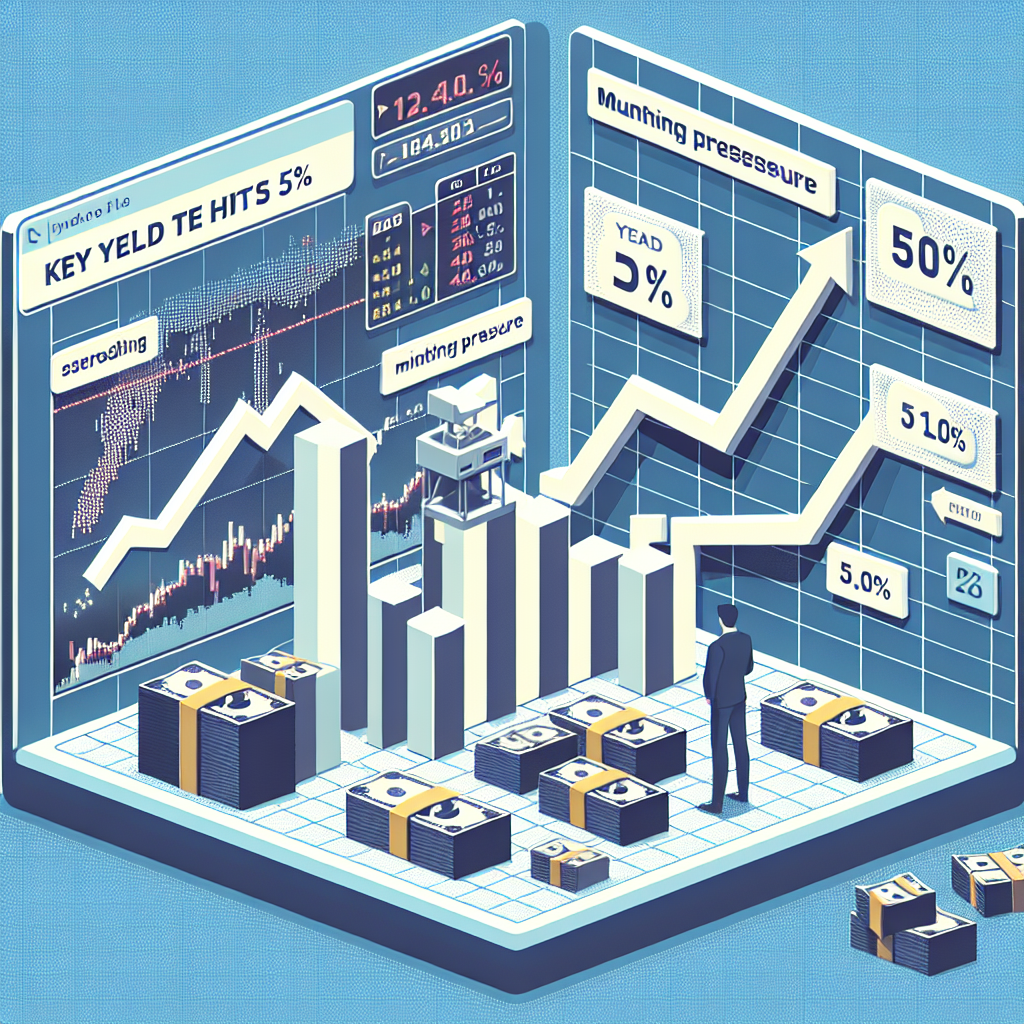
The long end is talking: why the 30‑year yield hovering around 5% matters
The yield on 30‑year US government debt hovered around 5% this week, and that simple sentence carries a lot of freight. Long‑term Treasury yields aren’t just an abstract market statistic — they’re a price signal that ripples into mortgage rates, corporate borrowing costs, pension funding, and how investors price risk across the global economy. When the 30‑year yield touches a round number like 5%, markets and money managers pay attention because it’s both psychological and practical: borrowing math changes, balance sheets flex, and strategy conversations shift.
Let’s walk through why this move is more than noise, what’s driving it, and what to watch next.
Why a 5% 30‑year yield is news
- A higher 30‑year yield means the government pays more to borrow for three decades. That raises the baseline for long‑term interest rates across the economy.
- Mortgage rates tend to track the long end; when the 30‑year Treasury rises, so does the cost of a 30‑year fixed mortgage, squeezing housing affordability.
- Pension plans and insurers mark long liabilities to market prices; sustained higher yields alter funding ratios and the economics of fixed‑income allocations.
- The long end reflects expectations about inflation, growth, fiscal policy and global demand for safe assets — it’s where the “what‑do‑we‑really‑expect over decades” conversation happens.
Put simply: moves at the long end force investors and policymakers to re‑ask the question, “How expensive will money be for the next generation?”
The yield on 30‑year US government debt hovered around 5% — what pushed it there?
Several factors have conspired to nudge the long‑end higher:
- Inflation and inflation expectations: Even if headline CPI has cooled from its peak, stickier or unpredictable prices keep investors demanding higher compensation for tying money up for 30 years.
- Fed policy and rate path bets: If markets push back expectations for Federal Reserve rate cuts — or see a risk the Fed may stay restrictive longer — long yields can rise as investors price in a higher neutral rate or slower easing.
- Fiscal dynamics and issuance: Large or persistent deficits mean more Treasury supply. If global demand for long‑dated paper softens, yields need to move up to attract buyers.
- Geopolitical and market stress: Events that change risk perceptions (commodity shocks, trade disruptions, regional conflicts) can alter both inflation expectations and safe‑asset flows, putting upward pressure on long yields.
- Technicals and liquidity: Auction weakens, lower foreign buying, or flows out of long‑duration ETFs can amplify a move once it starts.
Those forces don’t act in isolation. The market is sensitive to small changes in each — and when they line up, the long end can move quickly.
What it means for everyday markets and people
- Mortgages and housing: Long‑term mortgage rates often move with the 30‑year Treasury. A sustained rise toward or above this 5% zone lifts monthly payments for new homebuyers and can chill refinancing activity.
- Corporate borrowing and investment: Companies issuing long‑dated bonds face higher interest costs, which can alter capital expenditure plans and valuations.
- Risk assets: Higher long yields can make bonds more attractive versus stocks, or at least raise the hurdle rate for equities — especially for growth companies whose valuations rely on low discount rates.
- Government interest expense: Higher long yields increase the present value cost of future debt. For a large issuer like the U.S., that matters for budget math if yields stay elevated.
- Savers and retirees: Higher yields on long Treasuries can be a silver lining for savers who can ladder or buy duration; but pension plans may mark down liabilities, creating funding headaches.
A closer look at the signal: is this a temporary blip or a regime shift?
This is the central debate. A few ways to think about it:
- Temporary shock view: If the rise is driven by a transitory supply/demand mismatch, geopolitical blip, or a momentary repricing of Fed timing, yields can retreat once the shock subsides.
- Structural view: If the market is re‑establishing a higher equilibrium for long rates — because inflation expectations have permanently risen, fiscal pressures are larger, or the global appetite for long duration has waned — then 5% may be the new normal for the long end (or a floor, not a ceiling).
History shows both patterns: yields spike and fall around shocks, but they also trend to new ranges when the macro backdrop changes. The cadence of incoming inflation data, the Fed’s communications and Washington’s fiscal trajectory will be the deciding factors.
What investors and policymakers should watch next
- Inflation prints and the Fed’s language about policy normalization or cuts.
- Treasury auction results and demand from core buyers (domestic real money managers, foreign central banks).
- Data on mortgage rates and housing activity — they’ll reveal how the rate move is transmitting to the real economy.
- The shape of the yield curve: persistent steepening or flattening tells different stories about growth and recession risk.
- Global yields: long bonds elsewhere moving higher can validate a global re‑pricing, while an isolated U.S. rise points to domestic fiscal or policy drivers.
Market mood and strategy implications
- For fixed‑income investors: higher long yields reopen income opportunities — ladders and high‑quality duration can become attractive again — but timing matters if volatility spikes.
- For equity investors: reassess duration risk in portfolios, favor cash‑generating businesses if discount rates rise, and watch sectors more sensitive to financing costs.
- For households: locking mortgage rates or reassessing refinancing math may make sense if you expect yields to stay higher for months.
- For policymakers: a durable rise in long yields forces honest conversations about deficit paths and monetary‑fiscal interactions.
My take
The 30‑year yield flirting with 5% is a reminder that the bond market often gets ignored until it tugs on the rest of the economy. This isn’t an automatic recession signal — but it is a market vote demanding clarity. Investors and policymakers should treat the move as both a risk and an opportunity: risk if it’s the start of a sustained repricing that pressures growth; opportunity if elevated yields buy savers and long‑duration buyers income they haven’t seen in years.
In short: markets are asking for a clearer plan — on inflation, on Fed timing, and on fiscal responsibility. How those answers arrive will determine whether 5% is a headline or the new baseline.
A few practical takeaways
- Revisit duration exposure: consider whether you want to lock yields now or wait for volatility to subside.
- Homebuyers: check refinance vs. purchase math quickly — small yield moves change monthly payments meaningfully.
- Watch the data calendar: inflation, payrolls, and Treasury auctions will shape the next moves.
Sources
Related update: We recently published an article that expands on this topic: read the latest post.
Related update: We recently published an article that expands on this topic: read the latest post.

When Credit Markets Get Hot, Complacency Becomes the Real Risk
Global credit markets are running at their hottest in nearly two decades — spreads are compressing, issuance is booming, and big-name managers from Pimco to Aberdeen are waving caution flags. That combination makes for a heady cocktail: strong returns today, and a growing list of reasons to worry about what happens when the music stops.
Why this matters right now
- Corporate bond spreads have tightened to levels not seen since around 2007, driven by strong demand for yield and an ongoing search for income across institutions and retail investors.
- Heavy issuance — from investment-grade firms to private credit vehicles — has flooded markets with supply, yet investors continue to buy. That eagerness reduces compensation for taking credit risk.
- Managers who’ve lived through cycles (and painful defaults) are increasingly saying the same thing: fundamentals are showing cracks in some corners, underwriting standards look looser than they should, and the “complacency premium” may be dangerously low.
The tone isn’t doomsday. Rather, it’s a reminder that stretched markets can stay stretched for a long time — and when conditions change, losses can happen fast.
How the market got here
- Central banks’ pivot from emergency easing to tighter rates in recent years, followed by signs of easing expectations, encouraged buyers back into credit. Falling government yields made corporate spreads look attractive — at first.
- Private credit exploded in size as investors chased higher returns outside public markets. That growth brought looser lender protections and more leverage in some deals.
- Big pools of long-term capital (pension funds, insurers, yield-seeking mutual funds) have structurally increased demand for credit, reducing the market’s risk premiums.
Those forces combined into a classic late-cycle pattern: strong performance, plentiful issuance, and gradually deteriorating underwriting standards.
What the big managers are saying
- Pimco’s research and outlooks have highlighted compressed spreads and growing caution about private credit and lower-quality, highly leveraged sectors. Their view: be selective, favor high-quality public fixed income, and avoid chasing thin risk premia where protections are weak. (See Pimco’s recent “Charting the Year Ahead” insights.)
- Aberdeen (abrdn) analysts have laid out scenarios — soft landing, hard landing, and “higher-for-longer” rates — and pointed out that spreads now price a fairly optimistic path. They advise balancing risk and opportunity, favoring investment-grade credits while watching for vulnerabilities in lower-rated segments.
These voices aren’t saying “sell everything.” They’re saying: recognize where compensation is thin, stress-test portfolios for adverse outcomes, and favor structures and collateral that offer real protection.
Where vigilance should be highest
- Private credit and direct lending: Less liquid, often less transparent, and sometimes offering little extra spread relative to liquidity and covenant risk.
- Lower-rated corporate bonds and cov-lite loan markets: Covenant erosion and looser underwriting reduce recovery prospects if stress arrives.
- Heavily levered sectors or those exposed to cyclical slowdowns: Retail, certain parts of tech and media, and some leveraged consumer plays.
- Vehicles promising liquidity that isn’t supported by underlying assets: Mismatches can amplify losses in stressed conditions.
Practical portfolio nudges
- Tilt toward quality: Favor issuers with stable cash flows, healthy balance sheets, and strong covenants when possible.
- Mind liquidity: Don’t over-allocate to strategies or funds that can’t meet redemptions in a stress event if you rely on liquidity.
- Diversify across credit continuums: Think of public vs. private, secured vs. unsecured, and short vs. long duration as decision levers — not as a single “credit” bucket.
- Stress-test yield assumptions: Ask how returns hold up if rates shock higher or default rates rise modestly.
- Focus on security selection: In a spread-compressed world, alpha from selection matters more than broad beta exposure.
The investor dilemma
- On one hand, credit has delivered attractive returns and many investors can’t ignore the income.
- On the other, chasing that income without discipline risks permanent impairment of capital if defaults or liquidity squeezes spike.
That tension is the heart of the current message from the Street: participate, but don’t confuse participation with prudence.
A few scenarios to watch
- Soft landing: Spreads tighten further, defaults stay low — investors get more upside, but valuations look stretched.
- Hard landing: Spreads widen materially, defaults rise — lower-quality credit and illiquid private positions suffer first and worst.
- Higher-for-longer rates: Credit performance is mixed; higher absolute yields cushion total returns, but re-pricing risk and refinancing stress hurt vulnerable issuers.
Being explicit about which scenario you’re implicitly betting on helps shape position sizing and risk controls.
My take
There’s nothing inherently wrong with credit markets being hot — markets reflect supply, demand, and investor preferences. The problem is complacency: when good outcomes become the norm, people gradually lower their guard. Today’s environment rewards selectivity, structural protections, and a healthy dose of skepticism about easy-looking yield. For most investors, that means reducing blind beta in favor of credit with clear collateral, conservative underwriting, and diversified liquidity sources.
Final thoughts
Markets can stay frothy for longer than intuition suggests. That’s why the best defense isn’t trying to time the exact top but building resilience: limit exposure where compensation is thin, demand transparency and covenants, and keep some capacity to redeploy into genuinely attractive opportunities if conditions normalize or stress reveals weaknesses. The loudest warnings aren’t forecasts of immediate collapse — they’re a call to invest with intention.
Sources
Related update: We recently published an article that expands on this topic: read the latest post.

A small cut, big questions: why the Fed’s December move matters more than the math
The Federal Reserve is set to act this week — widely expected to shave 25 basis points off its policy rate at the December 9–10 meeting — but the decision feels less like a crisp policy pivot and more like a weather forecast for a very foggy year ahead. Markets are pricing the cut as likely, yet Fed officials remain sharply divided about what comes next. That tension is the real story: a “hawkish cut” that eases today while signaling caution about tomorrow. (finance.yahoo.com)
Why this cut is different
- It’s small and tactical: officials are likely to cut by 0.25 percentage points — a modest easing intended to support a slowing labor market rather than to ignite growth. (finance.yahoo.com)
- It’s politically and institutionally noisy: unusually high numbers of dissents and public disagreement among Fed officials have surfaced, weakening the usual appearance of consensus. (wsj.com)
- It’s defensive, not directional: the messaging is expected to emphasize that further cuts are not guaranteed and will depend on incoming data, especially payrolls and inflation signals. That is the essence of a “hawkish cut.” (finance.yahoo.com)
What led the Fed to this crossroads
Over the past year the Fed has moved from aggressive tightening (to fight high inflation) to cautious easing as jobs growth cooled and signs of economic slowing mounted. With inflation still above target in some measures and the labor market showing cracks, policymakers face two conflicting risks: easing too much could reignite inflation; easing too little could let a slowdown deepen into a recession. That trade-off explains why the Fed looks divided going into the meeting. (wbtv.com)
- Labor market softness has become a central worry — slowing hiring and rising unemployment risk a broader slowdown. (wbtv.com)
- Inflation remains a lingering concern, meaning many officials are reluctant to commit to a path of multiple cuts. (wbtv.com)
How markets will read the move
Expect three distinct market reactions depending on the Fed's communication:
- “Hawkish cut” narrative — Fed cuts now but signals a pause: short-term yields fall, risk assets rally modestly, but the rally is contained because the door for further easing is left mostly shut. This is the scenario many strategists expect. (finance.yahoo.com)
- Clear easing path signaled — Fed telegraphs additional cuts: bond yields and the dollar drop further, and equities get a stronger lift. Unlikely given current internal divisions but possible if data deteriorates. (reuters.com)
- Mixed message or large dissent — uncertainty spikes, volatility rises, and markets trade on headline interpretation rather than on concrete guidance. The Fed’s historic preference for consensus makes any multi-dissent outcome notable. (wsj.com)
CME Fed funds futures currently put a high probability on a 25 bps cut this week, but the outlook for January and beyond is much murkier — traders assign materially lower odds to a sustained easing cycle. That mismatch between near-term pricing and medium-term uncertainty is what creates the “year of unknowns.” (finance.yahoo.com)
What to watch in the Fed’s statement and Powell’s press conference
- Language around “neutral” or “restrictive” policy: small wording shifts will be parsed for signs of more cuts. (wsj.com)
- References to the labor market and downside risks to employment: clear talk of deterioration would open the door to additional easing. (wbtv.com)
- Any explicit guidance on the balance sheet or Treasury bill purchases: the Fed might use Reserve Management Purchases (RMP) or other tools to manage liquidity — an outcome that could surprise markets beyond the headline rate cut. (reuters.com)
What this means for everyday borrowers, savers, and investors
- Borrowers: A 25 bps cut can ease some short-term borrowing costs (credit cards, some variable-rate loans), but mortgage rates and longer-term borrowing are more sensitive to broader yield moves and inflation expectations, so homeowners may see only modest relief. (finance.yahoo.com)
- Savers: Any improvement in savings rates will likely be gradual; banks don’t always pass every Fed cut through to deposit rates. (finance.yahoo.com)
- Investors: Volatility is the likely constant. Strategies that focus on quality, cash flow, and duration management will generally fare better than high-beta short-term plays in an uncertain policy regime. (finance.yahoo.com)
Quick wins for readers who want to navigate the uncertainty
- Keep an eye on jobs, inflation, and Fed communications — those three datapoints will steer the odds for any further cuts. (wbtv.com)
- Reassess duration exposure in fixed-income portfolios: small cuts can lower short-term yields quickly but have a less predictable effect on long-term rates. (reuters.com)
- For households, prioritize emergency savings and fixed-rate borrowing if you expect rates to drift unpredictably. (finance.yahoo.com)
Final thoughts
A rate cut this week would be a pragmatic, defensive step: the Fed is trying to support a labor market that looks wobbly without declaring a new era of accommodative policy. But the split among policymakers matters. When a central bank is divided, its future path is harder to forecast — and that uncertainty can ripple through markets and everyday decisions more than the quarter-point itself. In short: the math of a 25 bps cut is simple; the message the Fed sends afterward is what will determine whether 2026 becomes steadier or more unsettled. (finance.yahoo.com)
What I’m watching next
- The Fed’s statement and Chair Powell’s December 10 press conference for clues about the January meeting and balance-sheet tools. (finance.yahoo.com)
- December labor-market releases and inflation prints for signs that could prompt either more easing or a pause. (wbtv.com)
Notes for readers
- The Fed meeting dates are December 9–10, 2025; markets and commentators are highly focused on both the rate decision and the tone of the Fed’s forward guidance. (finance.yahoo.com)
Sources
Related update: We recently published an article that expands on this topic: read the latest post.
Related update: We recently published an article that expands on this topic: read the latest post.