TL;DR
- The Atlanta Hawks’ Summer League OT loss to the Utah Jazz in Salt Lake City featured highlights, but the substance was Kingston Flemings’ decision-making: 9 assists, 1 turnover, and 4 steals despite 4-for-16 shooting. [3]
- Utah’s No. 2 pick Darryn Peterson scored 28 in his debut at the Huntsman Center on July 4, 2026, yet Atlanta still manufactured a late lead while shooting 38.7% from the field. That hints Flemings’ playmaking already functions as pro scaffolding. [2][3][4]
- With the NBA testing one–free-throw mechanics for most of regulation and a two-minute OT, processing speed beats polish in July; Flemings’ 9:1 assist-to-turnover line is the real Hawks takeaway. [5][6][3]
What the source said
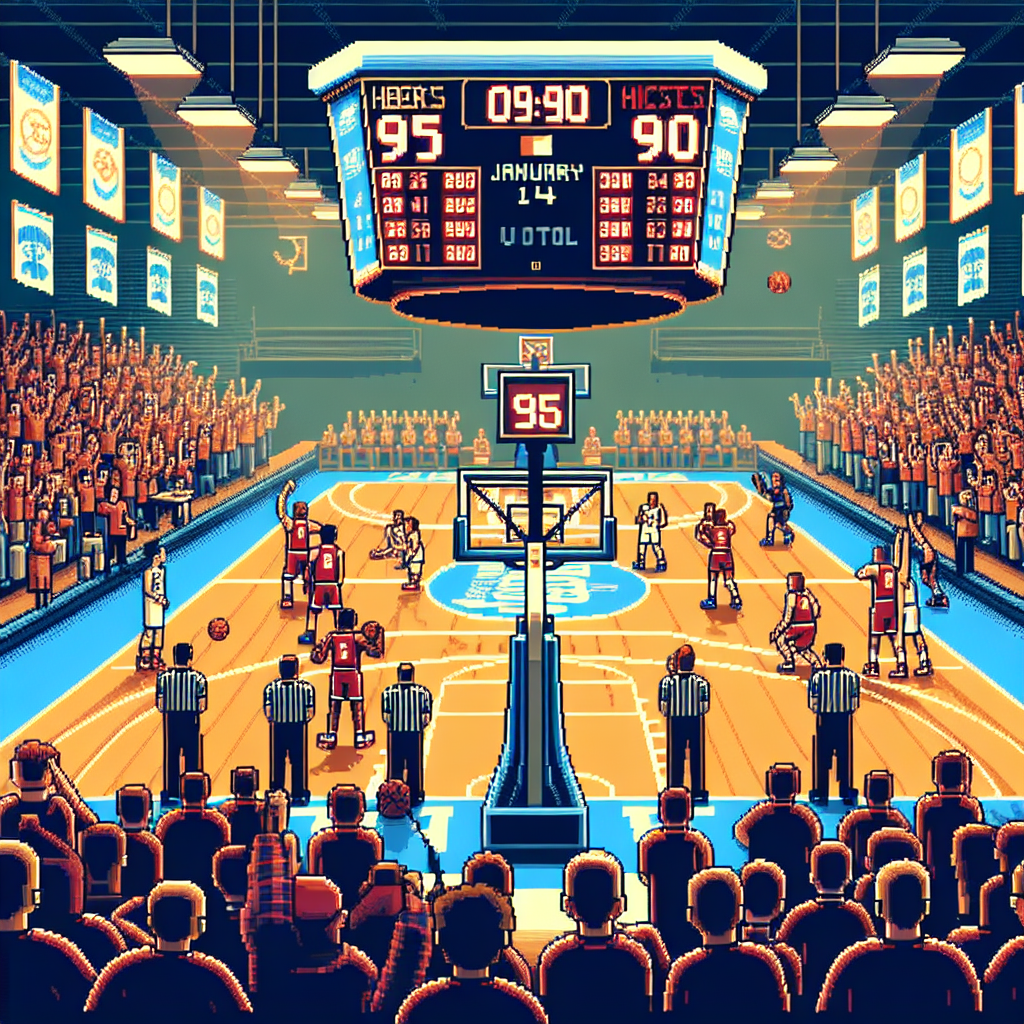
Peachtree Hoops recapped Atlanta’s July 4, 2026 opener against Utah at the Huntsman Center in Salt Lake City: a choppy first half with 19 combined turnovers, a third-quarter burst from No. 8 pick Kingston Flemings, and a frantic finish that reached a two-minute OT. The piece spotlights Darryn Peterson’s immediate 28-point impact for the Jazz, Asa Newell’s flashes for Atlanta, and Flemings’ late-game sequence—a steal and a corner jumper ruled a three, then changed to a two on review. The Hawks briefly led in the final minute before falling by one in overtime, with first-look contributions from Zuby Ejiofor and Henri Veesaar also noted. [1]
Why it matters
For evaluators like GM Landry Fields and Quin Snyder’s staff, Summer League offers early signals on what scales to NBA spacing and tempo. A 14–9–4 line with one turnover in 27:49 from Flemings points to a guard whose floor is supported by reads, not makes, which stabilizes minutes around Trae Young whether Flemings starts or organizes the second unit. [3]
For the league office, the July lab matters too. With the one–free-throw experiment and a two-minute OT compressing cadence, prospects who process faster win more possessions under pressure. That favors an undersized creator like Flemings in 2026, because anticipation, timing, and clean deliveries travel even when jumpers vary. [5][6]
Original analysis
Atlanta Hawks Summer League overtime loss: signal vs. noise
The official box shows Utah 103, Atlanta 102 in OT on July 4, 2026 at the Huntsman Center, not 102–101 as some early recaps had it. That single point reframes the debut: Flemings didn’t “shine” because he scored; he drove half-court offense, created four steals, and nearly flipped the result in a compressed, experimental environment. [3][2]
-
Back-of-the-envelope calculation 1: points created
- Flemings scored 14 and logged 9 assists. If we baseline each assist at 2 points, that’s 18 assisted points: 14 + 18 = 32. RealGM lists 13 Atlanta threes; if three of his dimes produced threes, a mixed estimate lands around 35: 14 + (6×2) + (3×3) = 35. That’s roughly one-third of Atlanta’s 102 points touched. [3]
- Signal: He produced ~35 points while committing 1 turnover, which is scalable usage under NBA pace. [3]
-
Back-of-the-envelope calculation 2: distribution density
- Per-36 assists: 9 in 27.82 minutes → 9 × (36/27.82) ≈ 11.6.
- Assist-to-turnover: 9:1 = 9.0.
- Under one–free-throw timing and a two-minute OT, mistake tolerance shrinks; a 9:1 line outweighs 4-for-16 shooting noise in this rules set. [3][5][6]
-
Historical analogue (2018): the Trae Young Summer League panic
- Young opened Summer League 4-for-20 (1-for-11 from three) in 2018, then stabilized days later with volume and feel intact. The lesson: July accuracy lies; processing scales. Flemings’ 2026 debut fits that template for Atlanta. [7]
-
A 2×2 typology: Summer League skill signals
- Translatable + Immediate: On-ball reads, two-man timing, advantage creation. Flemings logged 9 AST, 1 TOV, and 4 STL with clean PnR deliveries to Zuby Ejiofor. [1][3]
- Translatable + Delayed: Paint finishing vs. NBA length. Flemings went 4–16, but his passing forces help that should open layups by December 2026. [3]
- Context-Dependent + Immediate: Heat-check shooting spurts that swing quarters without predicting NBA stability; Asa Newell hit timely shots and ran lanes in space. [1]
- Context-Dependent + Delayed: Wing flashes without star gravity; Henri Veesaar pick-and-pop touches matter less until surrounded by NBA creators. [1]
Consensus after night one says Peterson owned the headline with 28, and Atlanta’s No. 8 pick needs his jumper to fall. The contrarian read: the Hawks already learned the only July lesson that matters about a small creator—Flemings can win possessions with his brain, which scales next to veterans who catch, cut, and space. [2][3][4]
Two tactical notes from this game with forward value:
-
The Flemings–Ejiofor pick-and-roll worked on first contact. That’s a preseason-ready “bench stabilizer” action: empty-corner PnR, short-roll to Ejiofor, spray to a weakside shooter like Asa Newell lifting from the slot. You’re banking on reads, not hero shots. [1][3]
-
Flemings’ four steals show anticipation and gap timing, not random bounces. In a two-minute OT where one possession flips the outcome, that anticipation is currency for a rookie guard. [3][5]
Rules context matters in 2026. Summer League’s one–free-throw rule (worth two or three points) applies until the last two minutes of the fourth, with standard free throws in those final two minutes and in all of OT; OT is two minutes. That compression raises the premium on early-clock reads over late-clock isolations, which aligns with Flemings’ strengths. [6][5]
What others are missing
Most coverage celebrates Peterson’s 28 and the final-minute drama. The neglected angle is how the one–free-throw framework and two-minute OT reshuffle evaluation toward possession-winning micro-skills: screen manipulation, pre-rotation reads, and events like steals or deflections that flip expected value. Flemings posted a 9:1 assist-to-turnover line and 4 steals in 27:49 under those constraints, matching the “travels on command” profile front offices seek in a complementary guard. [3][6][5]
What to watch next
- By July 7, 2026, Flemings finishes the Salt Lake City slate with an assist-to-turnover ratio of at least 3.5 across all SLC games. [2]
- By July 19, 2026 (Las Vegas Summer League window), Flemings records at least one game with 3 or more made threes as defenses go under more ball screens. [8]
- By July 19, 2026, Peterson posts a 30-plus-point Summer League outing as Utah expands his on-ball usage after a 28-point debut. [2][4][8]
My take
I’m buying Atlanta’s takeaway and fading the misses. If I’m the Hawks in 2026, I lock Flemings into second-unit organizer minutes on Opening Night and give him real PnR reps with a hands-y roller like Ejiofor. The jumper can lag; the reads can’t. A 4-for-16 debut stapled to 9 dimes, 4 steals, and late-clock poise under the one–free-throw rules screams “keep him on the ball in Vegas, surround him with shooters, and let volume normalize percentage.” The Hawks didn’t lose a prospect on July 4—they found his identity. [3][6][5]
Sources
- Flemings shines in overtime loss as Hawks lose 102-101 in Summer League debut — Peachtree Hoops (https://www.peachtreehoops.com/atlanta-hawks-summer-league/72161/flemings-kingston-atlanta-hawks-summer-league-debut-final-utah-jazz-darryn-peterson) — Possession notes from Atlanta’s opener, including Flemings’ late steal and the reviewed corner jumper.
- 2026 Salt Lake City Summer League: Peterson leads Jazz over Hawks — NBA.com (https://www.nba.com/news/2026-salt-lake-city-summer-league-hawks-jazz) — Official recap with final score (103–102 OT), venue, and key stat lines.
- Jul 4, 2026 — Atlanta Hawks 102 at Utah Jazz 103 (Box Score) — RealGM (https://basketball.realgm.com/nba/boxscore/2026-07-04/Atlanta-at-Utah/524604) — Box score: Flemings 14-9-4 in 27:49 with 1 TOV; team shooting splits and OT scoring.
- Utah Jazz rookie Darryn Peterson shines in Summer League debut, scores 28 points — The Salt Lake Tribune (https://www.sltrib.com/sports/jazz/2026/07/04/utah-jazz-rookie-darryn-peterson/) — Local confirmation of Peterson’s 28 and shot profile detail.
- NBA 2K26 Summer League Format Summary & Playing Rules — NBA.com (https://www.nba.com/news/2025-summer-league-format) — Confirms two-minute initial OT and Summer League-specific mechanics.
- NBA Summer League to use ‘1 free throw’ rule, “connected basketball” — NBA.com (https://www.nba.com/news/nba-summer-league-free-throw-connected-basketball) — Details when the one–free-throw experiment applies and when it reverts to standard.
- Hawks’ Trae Young: Struggles in Summer League debut — CBS Sports (https://www.cbssports.com/fantasy/basketball/news/hawks-trae-young-struggles-in-summer-league-debut/) — 2018 analogue: Young’s 4-for-20 opener and why early July accuracy misleads.
- NBA unveils 2026 NBA Summer League Schedule — NBA.com (https://www.nba.com/news/2026-nba-summer-league-schedule) — Las Vegas dates (July 9–19, 2026) to anchor prediction windows.
Related update: We recently published an article that expands on this topic: read the latest post.
Related update: We recently published an article that expands on this topic: read the latest post.