NHL 2026–27 Bold Predictions Preview | Analysis by Brian Moineau

TL;DR

  • Daily Faceoff’s bold NHL predictions for 2026–27 tee up a spicy year: a Texas expansion pause, a Bruins stumble, Logan Thompson’s Vezina push, and Brent Burns’ bid to chase down Phil Kessel’s 1,064‑game ironman record. I sort what’s bold versus bankable and who actually wins or loses if each happens. [1]

  • Expansion to Houston or Austin isn’t dead, but owners clearly tapped the brakes; the six‑month diligence window and municipal arena politics mean timing, not appetite, decides this one. Watch the NHL Board of Governors by December 2026. [2][3]

  • The edge here: translate hot takes into timelines and math. Track Ovechkin’s combined goals, Burns’ consecutive‑games count, and Thompson’s GSAX rank week by week against explicit thresholds. [4][5][6]

What the source said

Daily Faceoff lays out 25 predictions for the 2026–27 NHL season and grades their boldness. Highlights: rookie Porter Martone surges to the Calder; Washington’s Logan Thompson rides elite shot‑quality numbers to a Vezina; Boston’s 5‑on‑5 issues plus a six‑game Charlie McAvoy suspension sink the Bruins; Brent Burns breaks Kessel’s 1,064‑game ironman mark on Jan. 18, 2027; NHL expansion to Texas stalls; and Alex Ovechkin retires after surpassing Wayne Gretzky for most combined regular‑season and playoff goals. The list also floats Scott Arniel as the first coach fired in Winnipeg after the Jets’ post‑Presidents’ Trophy crash, and suggests Alex DeBrincat and Erik Karlsson headline the 2027 deadline. [1]

Why it matters

Stakeholders aren’t “fans” in the abstract. They’re discrete groups with different wallets and timelines. If Texas expansion slows, the Friedkin Group’s capex clock and Houston/Austin arena coalitions carry real opportunity costs; delay shifts sponsorship, lease, and broadcast sequencing across 2027–2030. [2][3]

On‑ice, a Bruins stumble and a Thompson Vezina campaign move dollars. Regional RSNs, national windows, and sportsbook props price these stories weekly in Boston, Washington, and Winnipeg. The Jets’ snapback risk under Arniel affects veteran trade markets and draft capital in 2027. Burns’ ironman chase and Ovechkin’s all‑time goals race are appointment TV with quantifiable milestones that drive inventory value for clubs and rights holders. [4][5][6]

Original analysis

Sorting the bold NHL predictions for 2026–27

Consensus says: “Texas expansion is on rails.” Contrarian read: the NHL signaled caution. In June 2026, Gary Bettman confirmed an agreement to explore a 33rd team with Dan Friedkin’s group focused on Houston or Austin; by late September he framed expansion as ongoing interest, not a done deal, and said a decision could come by year‑end. Translation: site control, arena financing, and owner politics still rule. No green light means no franchise. [2][3]

Historical analogue: The 2014–15 Bruins missed the playoffs a year after winning the Presidents’ Trophy. The 2025–26 Jets just repeated the dreaded post‑Presidents’ dip, becoming the rare defending regular‑season No. 1 to whiff entirely. If Winnipeg starts slowly under Arniel, the “first coach fired” chatter won’t be theater; it’s how GMs buy time. [7]

Back‑of‑envelope calculation — Ovechkin vs. Gretzky, the finish line in sight:

  • Gretzky’s total goals including playoffs: 1,016 (894 RS + 122 PO). [4]
  • As of late March 2026, Ovechkin reached 1,000 combined; public trackers put him near 1,006 entering October. If he needs 11 to pass 1,016, and if he scores at just 0.35 goals per game (well below his career 0.59), he clears Gretzky in ~32 games — around early January 2027. If he hits 0.45, it happens before Christmas. Either way, the line is visible on a calendar. [1][5]

Named‑stakeholder breakdown — five with real skin in these calls:

  • The Friedkin Group (Pursuit Sports): Each month of arena due diligence in Houston or Austin carries design, land option, and political burn rates. A slip to 2027 on approvals pushes realistic first‑puck to 2029–30, consistent with league signaling. [2][3]
  • NHL Board of Governors: Marginal dilution of Cup odds with 33–34 teams versus fresh franchise fees and new media markets. The owners’ calculus splits near‑term cash against long‑term parity and talent dispersion risk. [2][3]
  • Washington Capitals: Thompson’s GSAX leadership in 2025–26 wasn’t a vibes stat; it insulated a roster tilting back toward contention. A Vezina‑caliber year lets them price risk around Ovechkin’s usage and second‑wave scoring. [6]
  • Boston Bruins: A six‑game McAvoy ban to start the season is a concrete standings tax in a stacked Atlantic. If their 5‑on‑5 xGF% remains middling, goaltending variance can’t keep bailing water forever. [4]
  • Winnipeg Jets: From Presidents’ winner to out of the playoffs in one year is not a blip; it’s a portfolio problem. If the first 20 games are below .500, Arniel becomes a cap‑table decision about sunk costs and 2027 picks. [7]

2×2 framework — Boldness vs. Evidence

  • High Boldness / High Evidence: Burns’ ironman record chase. He hit 1,000 straight in April 2026; Kessel’s mark is 1,064. Health is the only gate. [5][4]
  • High Boldness / Low Evidence: Bruins miss the playoffs. It can happen, but it needs both 5‑on‑5 bleed and an Eastern arms race to converge. McAvoy’s six‑game hole is real but small. [4]
  • Low Boldness / High Evidence: Thompson for Vezina. He led the NHL in goals saved above expected last season on a heavy workload — the right profile for voters. [6]
  • Low Boldness / Low Evidence: “No Texas expansion talk this year.” There’s been sustained engagement since 2024; the only question is the vote timing and arena path, not interest. [2][3]

One more quick math check — Burns’ runway to 1,065:

  • Burns reached 1,000 consecutive on Apr. 6, 2026. Kessel’s record is 1,064. If Burns plays every game, Game 65 of 2026–27 ties 1,064; Game 66 breaks it. With an 82‑game slate, that falls in mid‑January 2027, aligning with the Jan. 18 date being circulated. Calendar math matches the narrative. [5][4]

Why the “first coach fired: Arniel” call lands: the Jets’ miss in 2025–26 came after a 116‑point Presidents’ campaign, a swing few markets stomach twice. Local reporting and NHL.com post‑mortems cited scoring sag and road form as culprits. That’s fixable on paper; if it isn’t fixed by U.S. Thanksgiving, ownership often chooses the fastest lever — the bench. [7]

What others are missing

Arena politics, not brand heat, will make or break Texas expansion in 2026–27. “Exclusive rights” to explore Houston/Austin is step one; the decisive step is a shovel‑ready arena with credible financing, traffic and land agreements, and city or county backing that survives litigation. [2]

Bettman’s “decision by end of year” framing is as much about municipal calendars as hockey calendars. Missed windows push environmental reviews and bond debates into 2027, which punts inaugural‑season revenue to 2029–30 at best. That delay compounds with a shrinking linear TV universe, making timing — not desire — the league’s biggest risk line item. [3]

What to watch next

  1. By December 2026, the NHL publicly schedules a Board of Governors vote (or declines to) on the Friedkin‑led Texas expansion bid; no scheduled vote by year‑end implies at least a one‑year slip in the launch timeline. [3]

  2. By January 18, 2027, Brent Burns plays his 1,065th consecutive NHL game to surpass Phil Kessel’s record, assuming zero scratches or injuries in his first 66 games of 2026–27. [4][5]

  3. By the 2027 trade deadline, Washington’s Logan Thompson sits top‑two in GSAX on public models and top‑three in Vezina odds across major books, reflecting sustained elite workload‑adjusted performance. [6]

My take

I buy two of Daily Faceoff’s splashiest calls — Thompson for Vezina and Burns for the ironman — and fade the rest. Washington finally has a goalie who suppresses quality, not just volume, and that tends to travel through defensive lapses. Burns? A metronome. The Bruins‑miss angle hinges on Jeremy Swayman cratering; I don’t see it. [6][4]

And Texas? It’s a real march, but arenas win votes, not sizzle reels. If the Friedkin group inks an arena pact by New Year’s, pencil in 2029–30 for puck drop; if they don’t, the NHL will wait rather than force a compromise market. [2][3]

Sources

  1. 25 bold NHL predictions for 2026–27: The Hot Take O‑Meter — Daily Faceoff (https://www.dailyfaceoff.com/news/25-bold-predictions-2026-27-nhl-season-hot-take-mcdavid-contract-matthews-trade-larkin-hellebuyck) — The starting slate of predictions and claimed timelines that this analysis interrogates.

  2. NHL exploring Texas expansion opportunities in Houston and Austin — NHL.com (https://www.nhl.com/news/nhl-exploring-texas-expansion-opportunities-in-houston-and-austin) — Bettman’s June 2026 comments on an agreement with the Friedkin family and the Texas focus.

  3. NHL expects decision on Houston or Austin for expansion by end of year — Houston Chronicle (https://www.houstonchronicle.com/sports/article/nhl-expansion-houston-austin-22443272.php/) — Local reporting that the league could decide by late 2026 and that arena site work is active.

  4. McAvoy suspended 6 regular‑season games; and NHL ironman record reference — NHL.com and NHL Records (https://www.nhl.com/news/charlie-mcavoy-suspended-six-regular-season-games-for-actions-in-boston-bruins-game; https://records.nhl.com/records/skater-records/seasons-and-games/most-consecutive-games-played) — Confirms McAvoy’s six‑game ban and Kessel’s 1,064 consecutive‑games record.

  5. Burns hits 1,000 consecutive games; Gretzky’s 1,016 goals including playoffs — NHL.com and Gretzky.com (https://www.nhl.com/news/brent-burns-to-play-in-1-000th-straight-game-thanks-to-love-of-game; https://gretzky.com/stats.php) — Establishes Burns’ current streak milestone and Gretzky’s combined goal total.

  6. Capitals re‑sign Logan Thompson; Thompson led NHL in goals saved above expected — Washington Capitals (team site) and corroborating analysis (https://www.nhl.com/capitals/news/capitals-re-sign-logan-thompson; https://pucky.com/2026/07/31/logan-thompson-best-goalie-nhl-gsax/) — Documents Thompson’s GSAX leadership profile and workload that underpin a Vezina case.

  7. Jets miss playoffs one season after Presidents’ Trophy — CityNews Winnipeg (https://winnipeg.citynews.ca/2026/04/16/winnipeg-jets-reflect-missing-playoffs/) — Confirms Winnipeg’s rare post‑Presidents’ Trophy miss and the cited causes.


Related update: We recently published an article that expands on this topic: read the latest post.
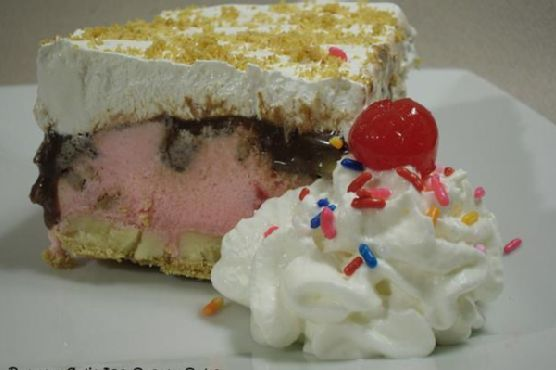

Banana Split Sundae Ice Cream Cake | Made by Meaghan Moineau

Picture this: It’s a lazy summer afternoon, and I’m staring at the assortment of ice cream tubs in my freezer, wondering how I can combine my love for banana splits and ice cream cake into one glorious dessert. Enter the Banana Split Sundae Ice Cream Cake. It’s the perfect lazy-day dessert that feels like a celebration. This cake is a dream for anyone who loves the classic banana split, but with a twist that everyone will rave about. Bonus? It’s super easy to assemble, and you don’t even have to turn on the oven. Plus, you can make it ahead of time, so it’s ready to wow your friends and family anytime. Trust me, this is the kind of treat that brings smiles to faces.

Jump to Recipe

What You’ll Need

This ingredient list is like a pantry treasure hunt — chances are you already have most of it tucked away.

  • Graham cracker crumbs
  • Unsalted butter
  • Bananas
  • Strawberry ice cream
  • Walnuts
  • Chocolate chips
  • Confectioner’s sugar
  • Evaporated milk
  • Vanilla extract
  • Whipped topping

How to Make Banana Split Sundae Ice Cream Cake

  1. In a small bowl, mix the graham cracker crumbs and melted butter until they’re all cozy and blended. Hold back 1/4 cup of this mix because we’ll use it later. Press the rest firmly into the bottom of a 9 x 13 pan — this is our cake’s sturdy base.
  2. Slice those bananas and arrange them like sweet, yellow soldiers over the crust. They’ll be hiding under the ice cream, adding a burst of flavor in each bite.
  3. Spread the softened strawberry ice cream over the bananas. Be gentle and smooth it out like frosting a cake. Sprinkle the nuts on top because we’re all about that crunchy goodness.
  4. Wrap it up in plastic and let it chill in the freezer until it’s firm. This should take about 2 hours, just enough time for a Netflix binge.
  5. In a medium saucepan, melt together the chocolate chips and the remaining 1/4 cup butter. Stir until it’s smooth and glossy like a chocolate dream.
  6. Add the confectioner’s sugar and evaporated milk to the pan. Keep stirring over medium heat until it thickens slightly and becomes silky, around 8 minutes.
  7. Take it off the heat and stir in the vanilla. Let this heavenly chocolate mixture cool for about 30 minutes, giving it a gentle stir now and then.
  8. Pour the cooled chocolate sauce over the ice cream layer and pop it back in the freezer until firm, approximately 1 hour.
  9. Once firm, spread the whipped topping over the chocolate layer like a fluffy, sweet cloud.
  10. Sprinkle the reserved graham cracker crumbs on top for a little extra crunch. Freeze the whole masterpiece for at least 4 hours or overnight. When you’re ready to serve, take it out of the freezer 20 minutes beforehand to make slicing a breeze.

Cook’s Notes

Here’s the lowdown: This cake is best when made a day ahead, giving all those layers time to really chill out and set. Leftovers? Pop them back in the freezer, covered tightly, and they’ll keep for up to a week. Just know that the whipped topping might lose some of its fluffiness over time, but the taste? Still fab.

  • Make sure your ice cream is soft but not melted for easy spreading. I’ve learned this the hard way, and trust me, it’s a sticky mess otherwise.
  • When melting chocolate, stirring constantly is key to avoid any burnt bits, which no one wants.
  • If you’re in a rush, use an electric mixer to speed up the whipped topping spreading process — I swear by this trick!

Make It Your Own

  • Pecans Instead: Swap walnuts with pecans for a richer, buttery flavor.
  • Chocolate Ice Cream Twist: Want more chocolate? Substitute strawberry ice cream with chocolate ice cream for an all-out chocolate banana split.
  • Berry Nice: Add a layer of fresh strawberries between the bananas and ice cream for an extra fruity punch.
  • No-Nut Alternative: Allergic to nuts? Use crushed pretzels for a salty-sweet crunch that’s just as delightful.

If you try this, I’d love to hear how it turns out — drop a comment or tag me! It’s one of those desserts that’s not just tasty but a real crowd-pleaser. Enjoy making it as much as eating it!

Goes Well With

If you want to round out the meal, here’s what I’d pair it with over on meaghanmoineau.com:

Related update: Banana Split Sundae Ice Cream Cake

Related update: Noodle Kugel with Pineapple-Gluten free, Dairy Free

Ultrasound Reveals Glioblastoma Nesting | Analysis by Brian Moineau

TL;DR

  • Trimodal ultrasound in awake mice shows glioblastoma physically displacing brain nuclei and reshaping local blood flow—an “ultrasound reveals a deadly cancer building its own ‘nest’ inside the brain” moment—but it’s fundamentally a research microscope, not a bedside scanner. [1]
  • The clever bit is genetic acoustic labeling (gas vesicle “reporter genes”) that make tumor cells pop on ultrasound while co-registering vasculature and hemodynamics; that enables experiments MRI and optical rigs can’t do. [1][2]
  • The translational path runs through focused-ultrasound companies (Insightec, CarThera, NaviFUS) and contrast-agent suppliers (e.g., microbubbles), not through engineered human tumors; the near-term win is faster preclinical GBM therapy development, not immediate clinical imaging. [2][6]

What the source said

ScienceAlert reports that a Caltech-led team (Mikhail Shapiro’s lab) built a trimodal ultrasound platform to watch glioblastoma grow in mouse brains while the animals were awake. The system combines three modalities in one co-registered acquisition: genetic ultrasound contrast to see the tumor, functional ultrasound to track visually evoked hemodynamics, and microbubble-based vascular mapping. Over 11 days in three mice, the tumor pushed nearby structures like the lateral geniculate nucleus out of place and reorganized local vessels, with altered blood-flow dynamics near the mass. The authors argue this fills a gap: no existing tool shows tumor growth, vascular remodeling, and neural-activity correlates together, in vivo, at depth, in awake animals. [1]

Why it matters

If you work in neuro-oncology in 2026, you know the failure rate. In the United States, glioblastoma (GBM) sits around a 5–7% five‑year survival rate and accounts for more than half of malignant brain tumors; SEER and CBTRUS put GBM incidence at roughly 3.27 per 100,000 and malignant brain/CNS deaths near 17,000 per year across all histologies. [3][10] The levers we control—surgery, chemoradiation, Tumor Treating Fields, experimental BBB opening—still yield marginal survival gains in adults.

A research platform that simultaneously shows tumor location, blood supply, and functional disruption in the same brain over time changes how labs screen therapies, sequence interventions, and decide what deserves a clinical trial slot. That is a big deal for stakeholders at the Focused Ultrasound Foundation, Insightec, and CarThera who must prioritize a handful of regimens each year under tight regulatory and budget constraints. [6]

Original analysis

Ultrasound reveals a deadly cancer ‘nest’: what’s actually new

The core innovation isn’t “ultrasound sees tumor.” We’ve done vascular ultrasound for decades. It’s the three-way co-registration—genetically labeled tumor cells (via gas vesicle acoustic reporter genes), brain-wide functional ultrasound of hemodynamics, and super‑resolution vascular maps—collected repeatedly in awake mice as the disease evolves. That unifies structure, function, and plumbing at tens of micrometers across days. The same Shapiro/Rabut ecosystem has also demonstrated human fUS through cranial windows and 3D “Takoyaki” ultrasound sequences that image gas‑vesicle contrast in vivo, including GBM models. This body of work says the stack is maturing technically, even if the labels remain preclinical. [2][4][5]

How the new platform compares to go-to tools:

  • MRI/fMRI: Whole-brain coverage with strong soft-tissue contrast, limited molecular specificity without tracers; awake-mouse runs are challenging; best for tumor volume, edema, and BOLD signals.
  • Two-photon/optical microscopy: Cellular specificity but shallow penetration; great for cortical cells and microvasculature in small windows over weeks.
  • Standard ultrasound/functional ultrasound: Large fields and high temporal resolution; limited molecular specificity without contrast agents; maps hemodynamics and larger-vessel flow.
  • Trimodal ultrasound + gas vesicles (this study): Co-registered tumor labeling, task-evoked hemodynamics, and super‑resolution vasculature in awake mice; ideal for linking growth, perfusion, and function longitudinally.
    Capability notes synthesized from the Caltech-led preprint, the cranial-window fUS paper in Science Translational Medicine (2024), and the “Takoyaki” Nature Communications report. [2][5][4]

Contrarian read:

  • Consensus: This is a step toward “seeing GBM nests” clinically.
  • My take: It’s a bench‑power tool, not a bedside modality—at least this decade. You can’t ethically or practically engineer human tumors to express gas‑vesicle genes. Skull attenuation still limits extracranial ultrasound resolution. The clinical translation will flow through focused ultrasound (FUS) interventions that already have devices, trials, and reimbursement paths; the trimodal platform will decide which combinations—BBB opening + drug X + immunomodulation Y—deserve those trials. [2][6]

Named-stakeholder breakdown:

  • Insightec (Exablate Neuro, MR‑guided FUS): Multiple GBM BBB‑opening and liquid‑biopsy trials are active or planned; a platform that quantifies tumor–vascular–functional coupling in mice can sharpen patient selection and sonication parameters before costly human studies. [6]
  • CarThera (SonoCloud‑9): Implantable 1 MHz system for repeated BBB opening with a Phase 3 trial underway; trimodal datasets can rank drug payloads and timing windows, turning “open BBB” from a blunt tool into a choreographed regimen. [6]
  • NaviFUS: Portable, neuronavigated BBB opening with feedback; preclinical trimodal endpoints can de‑risk target selection for white‑matter versus cortical targets where microbubble dynamics differ. [6]
  • Microbubble suppliers (Definity/Lantheus; SonoVue/Bracco): These agents remain workhorses for vascular imaging and BBB opening; better animal‑level readouts of flow and permeability should raise demand for optimized bubble formulations and dosing schemas. [6]
  • Focused Ultrasound Foundation and NCI‑funded centers: More decisive animal data reduces trial thrash and helps funders back modalities (BBB opening, sonodynamic therapy) with higher translational yield. [6]

Back‑of‑envelope calculation (stakes, not hype):

  • If ~14,000 Americans are diagnosed with GBM each year (CBTRUS) and 5‑year survival is ~6.8% (SEER), then five‑year survivors/year ≈ 14,000 × 0.068 ≈ 952 people.
  • A modest +2 percentage‑point absolute bump (to 8.8%) would mean ≈ 14,000 × 0.020 ≈ 280 additional five‑year survivors per diagnosis cohort—every year that gain sustains.
    Numbers: incidence from CBTRUS news (2026); survival from SEER Cancer Stat Facts. [10][3]

Why this platform could help reach even a small survival bump:

  • It captures displacement of functional nuclei (e.g., LGN) as tumors grow, enabling therapy timing when functional disruption, not just volume, crosses risk thresholds. [1][2]
  • It quantifies local perfusion slowdowns and vessel narrowing around the mass—variables that strongly influence drug delivery during BBB opening sessions. [1][6]
  • It shows tumor‑intrinsic hemodynamic rhythms decoupled from surrounding brain, a mechanistic clue for designing sonication schedules and drug pulses. [1][6]

What others are missing

The under‑covered angle is model‑based control. With co‑registered time series of tumor growth (genetic ARGs), vascular remodeling (super‑resolution ULM), and evoked hemodynamics (fUS), labs can build dynamical models that predict when and where to open the BBB, what drug concentration curve to aim for, and how to avoid functional collapse of key networks. Pair that with 3D “Takoyaki” ultrasound sequences that visualize gas‑vesicle expression in GBM models (Nature Communications 2026), plus early human fUS through cranial windows (Science Translational Medicine 2024), and you have the scaffolding for patient‑specific digital twins tested first in mice. That is a sharper path to clinical wins than promising ultrasound pictures for their own sake. [4][5]

What to watch next

  1. By June 2027: At least one peer‑reviewed clinical series with ≥20 glioma patients will report perioperative functional‑ultrasound maps showing displacement of eloquent cortex or thalamic nuclei adjacent to tumor, validated against post‑op outcomes. (Falsifiable via PubMed.) [5]
  2. By December 2027: A GBM BBB‑opening pivotal study (e.g., SonoCloud‑9 Phase 3) will publish primary outcomes on survival or progression‑free survival, enabling a real go/no‑go on integrating FUS into first‑line or recurrent settings. (Falsifiable via ClinicalTrials.gov and journals.) [6]
  3. By 2028: A large‑animal brain‑tumor study will demonstrate acoustic‑reporter‑gene imaging of tumor burden or therapeutic cells using gas vesicles, closing a key translational gap beyond rodent skulls. (Falsifiable via preclinical literature.) [4]

My take

I don’t want this in the scanner room yet; I want it in every serious neuro‑oncology lab tomorrow. The “ultrasound reveals a deadly cancer building its own ‘nest’ inside the brain” headline is accurate but beside the point. This is an experiment accelerator: one rig, three readouts, fewer confounds, faster iteration. Use it to rank drug–FUS combinations, lock down dosing calendars, and learn which tumors are function‑fragile versus function‑forgiving. Then push only the winners into MR‑guided BBB‑opening trials at Insightec or CarThera. If we squeeze even a two‑point survival gain out of that pipeline, thousands of families will feel it. [1][3][6]

Sources

  • [1] Ultrasound Reveals a Deadly Cancer Building Its Own ‘Nest’ Inside The Brain — ScienceAlert — https://www.sciencealert.com/scientists-watched-a-deadly-cancer-physically-reshape-the-brain-as-it-grew — News report summarizing the Caltech-led trimodal ultrasound study in awake mice, highlighting tumor displacement, vascular remodeling, and altered hemodynamics.
  • [2] Trimodal brain‑wide ultrasound imaging of brain‑tumor interaction — bioRxiv/PMC — https://pmc.ncbi.nlm.nih.gov/articles/PMC12636510/ — Preprint detailing the three‑in‑one ultrasound platform, genetic gas‑vesicle labeling, and longitudinal GBM imaging in mice.
  • [3] Brain and Other Nervous System Cancer: Cancer Stat Facts — NCI SEER — https://seer.cancer.gov/statfacts/html/brain.html — U.S. population data for survival and mortality; basis for the ~6–7% five‑year survival figure used in the calculation.
  • [4] Real‑time volumetric imaging of cells and molecules in deep tissues with Takoyaki ultrasound — Nature Communications — https://www.nature.com/articles/s41467-026-72961-0 — Demonstrates 3D ultrasound sequences with gas‑vesicle contrast, including in a mouse GBM model; key for assessing ARG translational trajectory.
  • [5] Functional ultrasound imaging of human brain activity through an acoustically transparent cranial window — Science Translational Medicine — https://pubmed.ncbi.nlm.nih.gov/38809965/ — Human proof‑of‑concept for fUS through a cranial implant; supports clinical plausibility of functional mapping.
  • [6] Identifying new therapeutics for focused ultrasound‑enhanced drug delivery in the management of glioblastoma — Frontiers in Oncology — https://www.frontiersin.org/journals/oncology/articles/10.3389/fonc.2025.1507940/full — Review of FUS BBB‑opening devices (Insightec, CarThera, NaviFUS), trial status, and mechanistic considerations that intersect with the mouse‑platform’s vascular/hemodynamic readouts.
  • [10] CBTRUS News & Events — CBTRUS — https://cbtrus.org/news-events/ — States that approximately 14,000 individuals in the U.S. will be diagnosed with glioblastoma annually; used for the incidence term in the back‑of‑envelope.


Related update: We recently published an article that expands on this topic: read the latest post.


Related update: We recently published an article that expands on this topic: read the latest post.
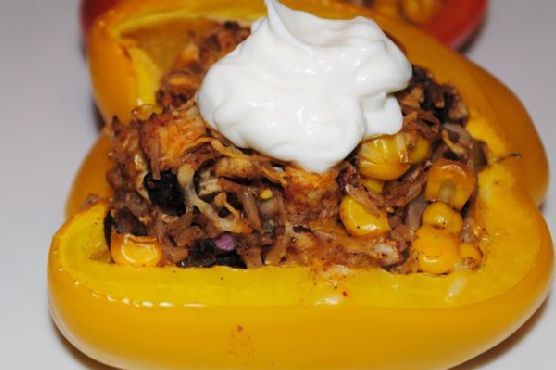
Blast Of Color Mexican Stuffed Bell Peppers | Made by Meaghan Moineau

It was one of those frantic Tuesday evenings, where work emails kept piling up and the clock was ticking closer to dinner time. You know the drill, right? Everyone’s hunger levels are rising, and you need something that feels like it took way more effort than it really did. Enter the “Blast Of Color Mexican Stuffed Bell Peppers,” because when you need to impress yourself and your family without breaking a sweat, these are your go-to. They’re vibrant, packed with flavor, and surprise — actually pretty easy! Plus, it’s likely that you have most of these ingredients lounging around in your kitchen already.

Jump to Recipe

What You’ll Need

I love this dish because it’s as easy as a quick fridge and pantry raid. Chances are you already have most of this:

  • Bell peppers – the canvas for your culinary masterpiece.
  • Black beans – for a hearty boost of protein.
  • Rotisserie chicken breast – a weeknight lifesaver.
  • Fire roasted green diced chile – for that smoky kick.
  • Chili seasoning – because flavor is everything.
  • Cooked brown rice – the glue that holds it all together.
  • Frozen corn kernels – add a touch of sweetness.
  • Garlic – because when isn’t garlic a good idea?
  • Low fat shredded cheddar cheese – gooey goodness.
  • Red diced onion – for a little zing.
  • Roma tomato – because every fiesta needs a fresh twist.
  • Sour light cream – the final creamy touch.

How to Make Blast Of Color Mexican Stuffed Bell Peppers

  1. Start by preheating your oven to 400 degrees. While it warms up, envision the colorful feast you’re about to create.
  2. In a large bowl, mix together the cooked brown rice, shredded rotisserie chicken, frozen corn, diced roma tomato, chopped red onion, black beans, 1/2 cup of cheddar cheese, minced garlic, diced green chile, and a sprinkle of chili seasoning. Stir until everything is looking speckled and colorful.
  3. Line a baking dish with foil (trust me, this makes cleanup a breeze) and give it a light spray with cooking spray.
  4. Grab those gorgeous bell peppers. Slice off the tops, remove the seeds, and stuff them generously with your chicken mixture. You want to really pack it in, then mound a little extra on top for good measure.
  5. Place your stuffed peppers into the prepared dish, and top each with 1/2 tablespoon of shredded cheese. As it bakes, this will melt into a deliciously golden crust.
  6. Bake for 30-40 minutes. Keep an eye on them — you’ll know they’re ready when the peppers are tender and the cheese is bubbling and golden.
  7. Once out of the oven, let them cool just slightly, then finish with a dollop of sour cream on each. It’s the creamy cherry on top!

Cook’s Notes

A couple of things to keep in mind: make sure your rice is cooked and cooled slightly before you start mixing — hot rice can make things a bit messy. If you find yourself with leftovers (not likely!), store them in an airtight container in the fridge. They make fantastic lunches and will last for about 3 days. Reheat them in the oven to keep them from getting soggy. If you’re planning ahead, you can make the stuffing mixture up to a day in advance, just cover and refrigerate until you’re ready to assemble the peppers.

Make It Your Own

Feeling adventurous? Here are some ideas to shake things up a bit:

  • Swap the chicken for crispy tofu for a vegetarian twist that’s just as hearty.
  • Try using quinoa instead of brown rice for a nutty flavor and a protein boost.
  • Want it spicier? Add diced jalapeños or a splash of hot sauce to the stuffing mix.
  • For a twist on the cheese, use pepper jack for an extra kick.

If you try this, I’d love to hear how it turns out — drop a comment or tag me! Happy cooking, and may your dinner be as colorful and delightful as these peppers.

Goes Well With

If you want to round out the meal, here’s what I’d pair it with over on meaghanmoineau.com:

Related update: Blast Of Color Mexican Stuffed Bell Peppers

Related update: Pesto & Yogurt Pasta

Late-Birth Kids and Social Security Gains | Analysis by Brian Moineau

TL;DR

  • Social Security dependent child benefits can pay up to 50% of a retiree’s full benefit per child, but a “family maximum” usually caps the household to ~150%–180% of the worker’s benefit, which makes timing, headcount, and income the real levers. [2][3]
  • For late-in-life parents who keep working, the earnings test can quietly zero out not just the worker’s check but also the kids’ checks until full retirement age—an undercovered landmine. [4][5][6]
  • As the average U.S. age at first birth reached 27.5 in 2023, more retirees will have minors at home; planners and Congress will have to confront whether auxiliary benefits for affluent late parents are sound policy or subsidy creep. [8][7]

What the source said

The Wall Street Journal highlights a little-known Social Security perk: retirees with minor children can collect dependent benefits for those kids, which can tilt the calculus on when to claim retirement benefits. It sketches the core rules—each eligible child can receive up to 50% of the retiree’s full (FRA) benefit, but the total paid to one family is capped by the “family maximum,” and benefits end at 18 (or 19 if still in high school). The piece notes that, because of this add-on, some late parents consider filing earlier to start the kids’ checks, though the working-while-claiming rules can complicate the payoff. [1][2][3]

Why it matters

  • Stakeholders aren’t just “retirees with kids.” They include high-earning 60-somethings at Google in Mountain View, a teacher couple in Columbus, Ohio with one teen, and advisors at Fidelity or Vanguard fielding “do we file at 62?” calls—each facing a cash-now-versus-later trade rooted in specific dollar math. [2][3][11]

  • The Social Security Administration (SSA) and taxpayers also have skin in the game. Children of retired workers already number about 714,000, averaging roughly $918 per month as of December 2024; a rising share of older parents means auxiliary payments will draw more budget and oversight attention. [7][8]

Original analysis

Back-of-the-envelope math: when a child benefit flips the filing decision

Assume a 63-year-old parent with a Primary Insurance Amount (PIA) of $3,200 (their monthly benefit at full retirement age).

  • Per-child benefit (child is 10): up to 50% of PIA = 0.5 × $3,200 = $1,600/month. [2]
  • If there are two kids, the unconstrained total would be: worker’s own check (reduced if filing early) + $1,600 + $1,600. But the “family maximum” usually caps the total payable on one record to roughly 150%–180% of PIA; at 175% as an illustration, the cap is 1.75 × $3,200 = $5,600. [3]

Now put numbers to it:

  • Early-claim worker check at 63 might be about $2,700 (illustrative; the child benefit uses the $3,200 PIA). If the unconstrained total is $2,700 + $3,200 = $5,900, the family maximum at $5,600 trims $300, cutting the children’s shares proportionally; net is roughly $5,600/month while both kids qualify. [2][3]

Over a 4-year window (ages 10→14), that’s about $5,600 × 48 = $268,800 to the household, before taxes. That cash-flow spike explains why late parents run the numbers, even though early filing permanently reduces the worker’s own check.

The catch: if that 63-year-old keeps a six-figure job, the retirement earnings test likely withholds benefits. In 2024, if you’re under full retirement age all year, SSA withholds $1 for every $2 of earnings above $22,320; in the year you hit full retirement age, it withholds $1 for every $3 above $59,520 (applies only to months before FRA). Crucially, SSA charges the worker’s excess earnings against the family’s total benefits—spouse/child checks included—so high earners can see the entire family benefit wiped out until FRA. [5][6][4]

Concrete example: earn $150,000 at age 63 in 2024. Excess over $22,320 is $127,680; the $1-for-$2 rule yields $63,840 withheld—often more than the total annual family benefit, so all checks get suspended until the excess is “repaid.” [6]

A 2×2: who should even consider filing early to trigger Social Security dependent child benefits?

  • X-axis: Number of qualifying dependents now (0–1 vs 2+).

  • Y-axis: Earnings relative to SSA’s test (e.g., 2024 limits: $22,320 under-FRA; $59,520 in the year you reach FRA). [5][6]

  • Quadrant A (2+ kids, below limits): Early filing often pencils out; multiple 50%-of-PIA checks within the family maximum can swamp the actuarial penalty on the worker’s reduced benefit. [2][3][6]

  • Quadrant B (2+ kids, above limits): Don’t file yet; the earnings test will likely suppress everyone’s checks until FRA, so wait until you stop or scale down work. [4][5][6]

  • Quadrant C (0–1 kid, below limits): It’s a closer call; with a $3,200 PIA, one child’s check caps at $1,600, which may not justify locking in an early-claim reduction without other needs. [2]

  • Quadrant D (0–1 kid, above limits): No case; the under-FRA limit ($22,320 in 2024) and smaller auxiliary stack argue strongly for waiting. [6]

Named-stakeholder breakdown

  • SSA: Must administer complex family-maximum math and earnings-test offsets; communications need to be explicit that the worker’s wages can suspend kid checks. [4][5][6]
  • AARP: Education machine; its plain-English “half the PIA, capped by family max” explainer is doing heavy lifting for households and advisors. [9]
  • Vanguard, Fidelity, and RIAs: Client tools that model auxiliaries, family maximums, and the earnings test in one view will win wallet share; their current “work while claiming” pages highlight SSA thresholds. [11]
  • Congress (House Ways & Means): Expect proposals to cap auxiliaries for high-PIA retirees; the SSA Actuary has scored such variants. [12]
  • Older parents (especially fathers in their 60s): They benefit most mechanically, but if still working, they’re also most exposed to the earnings test clawback that reduces everyone’s checks on the record. [5][6][4][8]

A historical analogue that hints at what’s next

In 1939, Congress converted Social Security from a worker-only pension into a family insurance program by creating benefits for spouses and children; that architecture still governs today. Lawmakers have repeatedly trimmed “edges” during fiscal stress: earnings tests (phased out at FRA in 2000) and taxation of benefits (added in 1984). [5][13] If demographic aging keeps pushing up parental ages into the late 30s and 40s, the next edge up for debate is obvious: whether and how much late-career, high-income retirees should receive in auxiliary benefits for school-age kids.

What others are missing

Coverage fixates on the “50% per child” headline, but the operational chokepoints drive outcomes. Three frictions shape checks: the 2024 earnings-test thresholds ($22,320 and $59,520), which can eliminate family payments for late parents who keep high-paying jobs; the rule that the worker’s excess earnings reduce the entire family’s benefits, not just the worker’s check; and the abrupt stop to child-in-care spousal benefits at the child’s 16th birthday, even though the child’s own benefit runs to 18 or 19 in high school. These switchbacks determine whether early filing helps or hurts in a specific year and household. Investors, HR teams, and advisors should underwrite these frictions first, the headline percentage second. [6][4][10][2]

What to watch next

  1. By Q4 2027, at least one bill will be introduced to limit auxiliary benefits (spouse/children of new retirees) for households above a high PIA or income threshold, echoing options SSA’s actuaries have previously analyzed.
  2. By the 2027 filing season, two or more major brokerages or fintechs will ship calculators that explicitly model child and child-in-care benefits, family maximums, and the earnings test in one view.
  3. By December 2028, the “children of retired workers” count in SSA’s Monthly Statistical Snapshot will exceed 800,000, up from roughly 714,000 in December 2024. [7]

My take

If you’re a late parent with two minors and your wages sit below the earnings-test thresholds ($22,320 under FRA, $59,520 in the year you reach FRA for 2024), file as soon as the kids qualify. The auxiliary flow can overwhelm the actuarial penalty and materially raise family cash through high-school years. But if you’re still pulling in $100,000 or more, filing early is theater because the earnings test will likely suspend everyone’s checks until FRA. Sequence instead: drop below the test, then file, while keeping an eye on Congress if auxiliary caps for high-PIA households appear. [5][6][12]

Sources

[1] The Surprise Social Security Benefit That Goes to Parents Who Have Kids Late — Wall Street Journal (https://www.wsj.com/personal-finance/the-surprise-social-security-benefit-that-goes-to-parents-who-have-kids-late-05497d3e) — News peg: WSJ spotlights dependent child benefits for retirees and how it shifts filing decisions.

[2] Benefits for Children (EN-05-10085) — Social Security Administration (https://www.ssa.gov/pubs/EN-05-10085.pdf) — Core rules: child eligibility, benefit equals up to 50% of the worker’s PIA, and age cutoffs (18/19 in high school).

[3] Is there a limit to the amount of monthly benefits my family can get on my record? — Social Security Administration (https://www.ssa.gov/faqs/en/questions/KA-02107.html) — States the family maximum typically ranges from ~150% to ~180% of the worker’s benefit.

[4] 20 C.F.R. §404.415 — Social Security Administration (https://www.ssa.gov/OP_Home/cfr20/404/404-0415.htm) — Regulation confirming that the worker’s excess earnings reduce husband’s, wife’s, and child’s benefits on that worker’s record.

[5] Receiving Benefits While Working (Retirement Planner) — Social Security Administration (https://www.ssa.gov/benefits/retirement/planner/whileworking.html) — Shows the year-you-reach-FRA earnings-test limit and the $1-for-$3 rule; notes the earnings test no longer applies at FRA (since 2000).

[6] How Work Affects Your Benefits (EN-05-10069) — Social Security Administration (https://www.ssa.gov/pubs/EN-05-10069.pdf) — Shows the under-FRA limit ($22,320 in 2024) and the $1-for-$2 withholding rule.

[7] Monthly Statistical Snapshot, December 2024 — Social Security Administration (https://www.ssa.gov/policy/docs/quickfacts/stat_snapshot/2024-12.html) — Counts about 714,000 “children of retired workers,” with an average benefit near $918/month.

[8] Births: Final Data for 2023 — CDC/National Vital Statistics Reports (https://beta.cdc.gov/nchs/data/nvsr/nvsr74/nvsr74-1.pdf) — Documents the U.S. mean age at first birth of 27.5 years in 2023.

[9] Can my children get benefits on my Social Security when I retire? — AARP (https://www.aarp.org/social-security/faq/retirement-benefits-for-child/) — Consumer-facing confirmation of the “up to half of PIA” rule and disabled adult child exceptions.

[10] 20 C.F.R. §404.341 (Mother’s and Father’s Benefits: begin and end) — Social Security Administration (https://www.ssa.gov/OP_Home/cfr20/404/404-0341.htm) — Establishes that child-in-care spouse benefits end when the youngest entitled child turns 16 (unless disabled).

[11] Can You Work and Collect Social Security? — Vanguard (https://investor.vanguard.com/investor-resources-education/social-security/collecting-benefits-while-working) — Mainstream guidance illustrating SSA earnings-test thresholds and impact examples.

[12] Provisions Affecting Family Member Benefits — Social Security Administration, Office of the Chief Actuary (https://www.ssa.gov/OACT/solvency/provisions/familyMembers_summary.pdf) — Menu of reform options that have been analyzed, including limits and changes to auxiliary benefits.

[13] A Profile of Social Security Child Beneficiaries and their Families — Social Security Bulletin (https://www.ssa.gov/policy/docs/ssb/v71n1/v71n1p1.pdf) — History and structure of child benefits dating to the 1939 amendments, and program context for auxiliaries.


Related update: We recently published an article that expands on this topic: read the latest post.


Related update: We recently published an article that expands on this topic: read the latest post.


Related update: We recently published an article that expands on this topic: read the latest post.

Related update: We recently published an article that expands on this topic: read the latest post.

Easter Nest Sweet Cake With Sour Cream-Royal Icing and Pistachios | Made by Meaghan Moineau

Easter was fast approaching, and like every year, I had a nagging feeling that I needed to whip up something special that not only screamed “spring” but was also indulgent enough to justify its place on the dessert table post-feast. But let’s be real, after juggling a full day of egg hunts and family chaos, the last thing I want is a complicated baking project. Enter this Easter Nest Sweet Cake with Sour Cream-Royal Icing and Pistachios. It’s a delightful mix of textures: a moist, buttery cake topped with a tangy, vibrant icing and the crunchy, nutty goodness of pistachios. Honestly, it’s like a little slice of heaven that doesn’t require you to sell your soul—or your afternoon—to make. It’s quick, it’s comforting, and it’s just the right amount of festive to make you look like you’ve got your life together at the Easter table.

Jump to Recipe

What You’ll Need

This ingredient list is a dream because chances are, you already have most of these tucked away in your pantry! Let’s gather up:

  • Unsalted butter
  • Brown sugar
  • Eggs
  • Sour cream
  • All-purpose flour
  • Baking powder
  • Icing sugar
  • Lemon juice
  • Egg white
  • Green food coloring
  • Unshelled pistachios

How to Make Easter Nest Sweet Cake With Sour Cream-Royal Icing and Pistachios

  1. Start by preheating your oven to 190°C (375°F). Lightly grease a ring cake pan and set it aside; this will be your cake’s cozy little home.
  2. In a medium bowl, grab your trusty electric mixer and beat together the brown sugar, eggs, and butter until the mixture turns creamy and smooth. Picture a fluffy cloud here.
  3. Mix in the sour cream and flour, and give it a couple of minutes of your mixing love until everything looks well combined. Our batter should look like it’s ready to party.
  4. Pour this luscious mixture into your prepared cake pan, smoothing it out so it bakes evenly. Bake for 20 minutes, or until the cake is golden brown. A skewer inserted should come out clean—your sign it’s done!
  5. While the cake is baking, let’s tackle the icing. In another bowl, beat the egg white using a standard mixer until you see soft, stiff peaks. It’s a workout, but trust me, it’s worth it.
  6. Add the lemon juice, icing sugar, and a few drops of green food coloring to the egg white and beat for a few more seconds. You want a consistency that’s smooth and spreadable.
  7. Once the cake is out of the oven, let it cool on a wire rack for about 10 minutes. This is crucial to avoid a melted icing disaster.
  8. Pour the royal icing over the cooled cake, letting it drip down the sides in a whimsical, nest-like fashion. Sprinkle with chopped pistachios generously. Go wild with any additional decorations you fancy.

Cook’s Notes

This cake is best enjoyed the day it’s made, but if you have leftovers (unlikely as that may be!), store them in an airtight container for up to 3 days. The royal icing may lose some of its luster over time, but the flavors will still be there to delight. For a make-ahead strategy, bake the cake a day in advance and add the icing and pistachios just before you’re ready to serve. This way, you can enjoy a freshly decorated cake without the stress. And hey, if your icing ends up a little runnier than expected, just call it “artisan” and roll with it!

Make It Your Own

Here are a few fun twists you could try:

  • Swap the pistachios for toasted coconut flakes for a tropical vibe.
  • Use almond extract instead of lemon juice in the icing for a nutty edge.
  • Skip the green food coloring and add a couple of drops of vanilla extract for a classic, elegant look and taste.
  • Add a few tablespoons of cocoa powder to the cake batter for a chocolatey Easter nest.

If you try this, I’d love to hear how it turns out—drop a comment or tag me! Baking doesn’t have to be perfect, just delicious and a little bit fun. Happy Easter baking!

Goes Well With

If you want to round out the meal, here’s what I’d pair it with over on meaghanmoineau.com:

Related update: Easter Nest Sweet Cake With Sour Cream-Royal Icing and Pistachios

Related update: Banana Split Sundae Ice Cream Cake

T‑Mobile’s Modular Perks Aim to Reduce | Analysis by Brian Moineau

TL;DR

  • T-Mobile perks are about to get modular: eight “On Us” add‑ons (Apple Music, YouTube Premium, ESPN+, Paramount+, SiriusXM, Xbox Game Pass, Google AI, DoorDash DashPass) surfaced in T-Mobile’s systems, pointing to a pick‑your‑perk launch as early as October 2026. [1][2][3]
  • Management flagged higher churn in Q3 2026 tied to “rate plan modernization,” and a configurable perk layer would sit alongside Magenta Status (launched May 2024) and Tuesdays as a retention tool for high‑ARPA accounts. [1][3][5]
  • The math bites: 2024–2026 streaming price hikes pushed YouTube Premium to $15.99 and Apple Music to $11.99 in the U.S.; without plan gating or deep wholesale, a broad free‑perk rollout could run into a nine‑figure annual subsidy. [7][8][9][10][11]

What the source said

TheStreet reported that T-Mobile added eight account‑level SOC codes labeled “On Us Add‑ons,” mapping to Apple Music, YouTube (likely Premium), SiriusXM, Paramount+, ESPN+, Xbox Game Pass, “Google AI,” and DoorDash DashPass. The report tied the change to an October 2026 reveal after a short internal delay and framed the bundle as a churn buffer following legacy plan retirements and price changes. It also cited CFO Peter Osvaldik’s July remark that Q3 2026 churn would temporarily rise amid “rate plan modernization,” with net postpaid account adds guided to about 250,000. [1]

Why it matters

The core audience isn’t just a few free‑perk hunters; it’s T-Mobile’s 34.7 million postpaid accounts and the ARPA engine behind them in 2026. When you force migrations and lock equipment into 36‑month EIPs, a configurable bundle of named perks like Apple Music and ESPN+ becomes social lubricant for price hikes—and a reason not to port to Verizon or AT&T in the fall quarter. [4][5][6]

Content platforms could be the quiet winners. Carrier‑bundled distribution gives Apple, Google, Disney (ESPN+), Microsoft, Paramount, and DoorDash low‑churn subscribers at scale without discounting in the open market, especially if T-Mobile structures minimums or account‑level choices in T‑Life. If the perk is truly account‑level, one subscription could cover multiple household lines, magnifying perceived value. [2][3][7][8][9][10][11]

Original analysis

— Back‑of‑envelope calculation —

  • Baseline: T‑Mobile ended Q2 2026 with roughly 34.7 million postpaid accounts. [4]
  • ARPA: $152.91 in Q2 2026. [4]
  • Retail monthly pricing (U.S.): YouTube Premium $15.99; Apple Music $11.99; ESPN+ $13.99; Paramount+ Essential $8.99; DashPass $9.99; simple average ≈ $12.19. [7][8][9][10][11]
  • Assumptions: one free perk per account; 20% of accounts opt in; wholesale cost = 50% of retail (illustrative).

Math:

  • Average wholesale ≈ $12.19 × 50% ≈ $6.10/month.
  • Uptake: 34.7M × 20% = 6.94M accounts.
  • Program cost: 6.94M × $6.10 ≈ $42.3M/month ≈ $508M/year.
  • Break‑even retention: $42.3M ÷ $152.91 ≈ 276,600 accounts “saved” per month—about 0.8% of the base monthly. [4][7]

Implication: an all‑customer, always‑free pick‑a‑perk looks expensive. Economics improve if (a) eligibility is gated to premium tiers like Go5G Next, (b) wholesale clears far below half of retail, or (c) T‑Mobile rotates enrollment windows via Tuesdays to cap take‑rate. [1][3][13]

— Named‑stakeholder breakdown —

  • T-Mobile: A modular perk layer supports a “membership” story to offset plan changes and 36‑month EIPs, but it must avoid cannibalizing premium plan differentiation such as Hulu on Us for Go5G Next (announced January 2024). [6][13]
  • Verizon: Its à‑la‑carte myPlan (2024) and Verizon Visa Card structure (3% dining, 4% grocery/gas in Verizon Dollars) emphasize cash‑back utility; if T‑Mobile lands choice at scale, expect Verizon to add at least one new à‑la‑carte partner before mid‑2027. [14][15]
  • AT&T: Health‑adjacent perks (e.g., telehealth tie‑ins) have been its angle; a rival “choice” bundle could defend high‑ARPA unlimited families without over‑subsidizing entertainment. [5]
  • Apple and Google: Clear wins. Apple Music ($11.99) and YouTube Premium ($15.99) raised U.S. prices by 2024–2026, so a carrier‑paid channel stabilizes net adds while masking sticker shock. [7][8]
  • Disney (ESPN+): Sports is seasonal glue; putting ESPN+ inside a family account could be retention‑positive through the NHL/NBA playoffs and college hoops. [9]
  • Microsoft (Xbox Game Pass): If the perk touches Ultimate or Standard (restructured July 2024), Microsoft books recurring revenue while T‑Mobile watches usage patterns closely. [16]

— 2x2: Perk design trade‑offs —

  • Axis A: Eligibility (All plans vs. Premium tiers). Axis B: Duration (Always‑on vs. Rotating windows).
  • All plans × Always‑on: Maximum reach, maximum subsidy; useful only with rock‑bottom wholesale (e.g., DashPass at scale).
  • All plans × Rotating: Big perceived value spike with capped cost; Tuesdays‑style annual enrollments fit this box. [3]
  • Premium tiers × Always‑on: Best for upsell (e.g., Hulu on Us in Go5G Next), moderate subsidy, clean positioning. [13]
  • Premium tiers × Rotating: Strong A/B testing sandbox in T‑Life with limited exposure; ideal for ESPN+ during playoffs or Paramount+ during marquee releases. [3][10]

— Contrarian read —

Consensus: “Letting customers choose any T‑Mobile perk for free will cut churn.”
Counter: rising content costs pull the other way. YouTube Premium hit $15.99 by 2025–2026 and Apple Music reached $11.99 by 2024–2026, compressing margins as promos age. Unless T‑Mobile gates eligibility, rotates options, or secures steep wholesale, a forever‑free pick‑a‑perk risks becoming a subsidy trap that dulls the upsell power of premium bundles. [7][8]

What others are missing

The shift from line‑level to account‑level SOC codes (reported as “OUA” suffixes) is the tell. It maps perks to households, not individual phones, which changes unit economics: Apple Music Family supports up to 6 people, and YouTube Premium Family supports up to 5, so one account‑level license could satisfy multiple lines. That architecture also points to a “membership layer” above plans—likely managed in the T‑Life app—that T‑Mobile can price, rotate, or A/B test independent of the core plan grid. Decoupling perks from plan SKUs gives product teams levers to tune perceived value without rewriting Go5G‑era plan cards every quarter. [2][3][7][8]

What to watch next

  1. By October 31, 2026, at least one of Apple Music, YouTube Premium, or ESPN+ appears as a selectable “On Us” add‑on in the T‑Life app for a defined subset of postpaid accounts.
  2. By June 30, 2027, T‑Mobile limits or retires at least one existing bundled perk (e.g., Hulu on Us) on any plan tier as it consolidates around pick‑your‑perk.
  3. By March 31, 2027, Verizon introduces a choose‑your‑benefit option with at least four third‑party services alongside existing myPlan add‑ons.

My take

This is the right pivot—if T-Mobile keeps it scarce and ties it to Go5G Next–class plans. A universal, evergreen freebie will bleed cash and blur why anyone should pay for premium placement like Hulu on Us or future “Experience” tiers. A gated, annually swappable pick‑a‑perk—anchored to high‑margin accounts and managed in T‑Life with performance‑based wholesale—turns forced migrations into a membership upgrade story. If I ran Magenta, I’d launch one perk per account on premium tiers only, pre‑negotiate wholesale bands with KPI triggers, and rotate the catalog quarterly to keep perceived value high while holding net subsidy near the modeled range. [3][4][13]

Sources

[1] TheStreet — Report on T‑Mobile “On Us Add‑ons,” October 2026 timing, and CFO churn framing — contributes the SOC leak, launch window, and guidance context.
[2] The Mobile Report — Leak showing eight add‑ons, account‑level “OUA” SOCs, and T‑Life management — contributes granular mapping of services and account‑level design.
[3] T‑Mobile Newsroom (May 2024) — Magenta Status and T‑Mobile Tuesdays program details — contributes baseline loyalty stack and app channel mechanics.
[4] T‑Mobile Q2 2026 earnings (release/call) — ARPA $152.91 and ~250k postpaid account add guidance — contributes core financial baselines for modeling.
[5] The Verge (Oct 2023) — Coverage of T‑Mobile plan retirements/forced migrations — contributes precedent that informs 2026 migration dynamics.
[6] T‑Mobile Support — Equipment Installment Plan terms with 24/36‑month options — contributes confirmation of 36‑month financing mechanics.
[7] YouTube — U.S. YouTube Premium pricing update — contributes $15.99/month retail anchor.
[8] Apple — Apple Music U.S. pricing update — contributes $11.99/month retail anchor and Family plan size.
[9] ESPN — ESPN+ U.S. pricing page — contributes current monthly rate and tier naming.
[10] Paramount+ — U.S. pricing page for Essential tier — contributes current monthly rate used in averages.
[11] DoorDash — DashPass pricing terms — contributes $9.99/month or $96/year reference.
[12] Google — Google One AI Premium pricing — contributes context for a “Google AI” add‑on category at $19.99/month.
[13] T‑Mobile Newsroom (Jan 2024) — “Hulu on Us” for Go5G Next announcement — contributes example of premium‑tier bundled perk.
[14] Verizon — myPlan benefits overview (2024) — contributes baseline structure of à‑la‑carte add‑ons.
[15] Verizon — Verizon Visa Card rewards terms (2024) — contributes 3% dining and 4% grocery/gas Verizon Dollars mechanics.
[16] Microsoft — Xbox Game Pass tier/pricing update (July 2024) — contributes context on Ultimate/Standard tiers relevant to bundle negotiations.

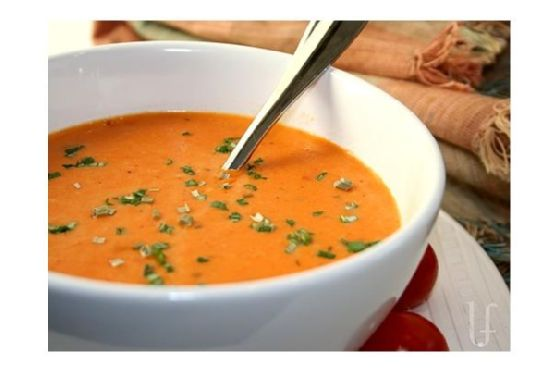
Creamy Tomato Soup | Made by Meaghan Moineau

It was one of those evenings where the chill in the air seemed to seep into my bones, demanding something warm and comforting. I found myself standing in front of the pantry, eyes skimming over cans and jars, when I spotted a lonely can of diced tomatoes. That’s when it hit me—creamy tomato soup. It’s the kind of dish that wraps you up like a cozy blanket, perfect for those nights when you crave something homemade without spending hours in the kitchen. It’s incredibly simple, yet feels like a luxurious treat. Plus, I’ve got a little trick with evaporated milk that makes it extra creamy without the heaviness of cream.

Jump to Recipe

What You’ll Need

I bet you have most of these at home already. This ingredient list is all about simplicity meeting a punch of flavor.

  • Olive oil
  • Diced onion
  • Fresh dried basil
  • Fresh dried thyme
  • Canned diced fresh tomatoes
  • Tomato paste
  • Flour
  • Chicken broth
  • Splenda
  • Evaporated milk
  • Salt
  • Black pepper

How to Make Creamy Tomato Soup

  1. In a large saucepan, heat the olive oil over medium heat. Once it shimmers, add the diced onion, dried basil, and thyme. Cook until the onion is tender and golden, stirring occasionally — you’ll know it’s ready when the kitchen smells amazing.
  2. Add the canned diced tomatoes and tomato paste to the pan. Stir everything together and let it simmer for about 10 minutes. You’ll see the mixture start to thicken and deepen in color.
  3. In a small bowl, whisk together the flour with 1/4 cup of the chicken broth until smooth. This will help thicken the soup without any lumps.
  4. Pour the flour mixture into the tomato mixture, stirring until everything is well blended. Add the rest of the chicken broth, and bring it to a gentle simmer. Let it cook for about 30 minutes, stirring frequently. The edges will start to bubble.
  5. Now comes the fun part: using an immersion blender, puree the soup until it’s smooth. If you don’t have an immersion blender, carefully transfer the soup to a countertop blender in batches.
  6. Stir in the Splenda and evaporated milk, mixing until everything is heated through. Taste and adjust the seasoning with salt and black pepper to your liking.

Cook’s Notes

Don’t rush the onions. It’s tempting, but letting them get golden and fragrant is what builds the foundation of flavor. If you’re making this ahead of time, stop before adding the Splenda and evaporated milk. You can refrigerate the base soup and just add the final touches when you’re ready to serve. Leftovers? This soup holds up well in the fridge for a few days, and you can freeze it too—just leave out the milk until you’re ready to eat.

Make It Your Own

  • Add a kick: Stir in a pinch of red pepper flakes with the onions for a spicy twist.
  • Go vegan: Swap the chicken broth for vegetable broth and use coconut milk instead of evaporated milk.
  • Herby delight: Add a handful of fresh basil leaves right before blending for a burst of freshness.
  • Cheesy goodness: Stir in a handful of shredded cheddar cheese just before serving for extra creaminess and a hint of sharpness.

If you try this, I’d love to hear how it turns out — drop a comment or tag me on social media! Your kitchen adventures make my day.

Goes Well With

If you want to round out the meal, here’s what I’d pair it with over on meaghanmoineau.com:

Related update: Creamy Tomato Soup

Related update: Creamy Chicken Orzo Soup

Penguins Kuzmenko Returns After Tragedy | Analysis by Brian Moineau

TL;DR

  • Pittsburgh Penguins winger Andrei Kuzmenko left camp and flew to Moscow after reports that his father, Alexander Kuzmenko, was killed by a bear during a fishing trip in Tuva, Siberia; the Krasnaya River location and four-hour downstream transport detail originate with Russian outlet REN TV and were relayed by Western media. [1][4]
  • Pittsburgh opens the 2026–27 NHL season on Wednesday, September 30 at Philadelphia and faces six games by Saturday, October 10, compressing roster decisions into an 11‑day window that stresses chemistry and special teams. [6][8][14]
  • The Penguins and NHL.com have issued concise confirmations and condolences, while granular field details come via Russian media—a sourcing split that will steer updates and on-air framing across September 30 broadcasts. [9][10]

What the source said

BBC Sport reported that Andrei Kuzmenko, a 30-year-old forward for the Pittsburgh Penguins, departed the team to return to Russia after his father, Alexander—described as an ice hockey coach—was killed by a bear near the Krasnaya River in southern Siberia’s Tuva Republic; the group reportedly moved him downstream for hours before an airlift to a hospital, where he was pronounced dead. [1] The Penguins, via president and general manager Kyle Dubas, issued condolences and confirmed Kuzmenko had practiced with teammates before leaving the club. [9] BBC’s piece also noted Kuzmenko’s one-year deal and that the NHL season begins next week on a late-September slate. [1]

Why it matters

Three stakeholder groups intersect here: Kuzmenko and his family; the Penguins’ hockey operations group managing opening-night roles; and national broadcasters programming a high-visibility launch week in Philadelphia. [6][8] For Pittsburgh’s cap and roster math, Kyle Dubas committed a one-year, $5 million contract to Kuzmenko on July 1, 2026 to backfill scoring after Anthony Mantha’s exit—making his Week 1 availability a live lever on lineup balance. [2][13] ESPN and TNT are marketing an early-season slate across the final week of September and first week of October in a league calendar set for 84 games, so a sudden top-nine absence becomes part of the opening storylines. [6][8]

There’s also a sourcing split: the most vivid incident details—Krasnaya River naming and multi-hour transport—trace to REN TV and are re-aggregated by Western outlets, while Penguins.com and NHL.com stick to verified essentials and attribute the rest to Russian media; that asymmetry will shape how beat writers, fans, and TV trucks update the narrative day by day. [4][9][10]

Original analysis

How the “Andrei Kuzmenko father killed by bear” news reshapes Pittsburgh’s opening week

Kuzmenko skated with Pittsburgh on Thursday, September 24, then left without a set return date after the team publicly committed to supporting his decision to be with family. [9][10] The calendar offers no soft landing: the NHL opens Tuesday, September 29; Pittsburgh opens at the Flyers on Wednesday, September 30 and then plays MTL (Oct 3), WPG (Oct 5), at WSH (Oct 7), at CBJ (Oct 9), and DAL (Oct 10)—six games in 11 days. [6][8][14] Week 1 is when coaches cement pairings and special-teams jobs, not when they expect to rewire them. [14]

Dubas did not add Kuzmenko as a spare part. NHL.com’s team reset framed him as a Mantha replacement for finishing punch; the projection slotted him on a third line with Ben Kindel and Nicholas Robertson to stabilize secondary scoring and PP2 looks. [13] In 2025–26 with Los Angeles, Kuzmenko posted 25 points in 52 games (0.48 P/GP) before a February meniscus repair, signaling a bet on finishing efficiency rather than primary-driving usage in Pittsburgh. [10][13]

  • Back-of-envelope calculation (opening-week points delta):

    • Expected Kuzmenko scoring over four games (Sep 30–Oct 7) at his 2025–26 rate: 0.48 P/GP × 4 = 1.92 ≈ 1.9 points. [10][14]
    • Nicholas Robertson candidate fill-in: 32 points in 78 games last season → 0.41 P/GP × 4 = 1.64 ≈ 1.6 points. Delta ≈ 0.3 points. [13]
    • Box-score delta is small, but PP2 finishing and controlled-entry balance can swing a single goal; one goal in a one-goal game can move win probability by double digits, magnified across an 11‑day gauntlet. [13][14]
  • A 2×2 for sudden absences before the season starts

    • Timing axis: Preseason/Opening week vs. Midseason.
    • Role axis: Core driver vs. Finishing/Support.
    • Quadrants:
      • Preseason × Core driver: Identity shock; systems scramble (e.g., a top-line center loss).
      • Preseason × Finishing/Support: Chemistry risk; PP2 tweaks; early-standings tax—Kuzmenko’s box. [13][14]
      • Midseason × Core driver: Trade-market pressure; cap gymnastics.
      • Midseason × Finishing/Support: AHL call-ups can patch; minimal systems churn.
    • Takeaway: Week‑1 loss of a finisher rarely dents xGF% in aggregate, but it bends coin-flip games when special teams and matchups are still unsettled. [14]
  • Named-stakeholder breakdown

    • Kyle Dubas (President/GM): Balances room culture and launch-week plans; his public stance prioritized player support over timelines, buying trust at the cost of short-term certainty. [9]
    • Dan Muse (Head Coach): Manages line continuity and PP2 roles; watch for Robertson absorbing Kuzmenko’s shooting reps while PP1 stays intact to avoid cascading disruption. [10][13]
    • Nicholas Robertson and Ben Kindel: Inherit offensive-zone starts and retrieval duties; one must shoulder more controlled entries to maintain finishing-quality looks. [13]
    • ESPN/TNT: The Sep 30 PHI–PIT window invites an empathy-forward segment, then shifts to who earns Kuzmenko’s minutes and whether PP2 changes generate a goal swing by October 10. [6][8]
  • A contrarian read

    • Consensus frames the hockey impact as minimal because it’s primarily a human story.
    • Counterpoint: Pittsburgh signed Kuzmenko to plug a finishing gap, and the first 11 days include two divisional road games; a two-goal special-teams swing across this span could decide a tiebreak in April in an 84‑game season. [6][14]

Sourcing context matters for reliability: REN TV supplies the Krasnaya River and four-hour transport claims later echoed by The Guardian and Yahoo, while Penguins.com and NHL.com attribute those details to Russian media and avoid embellishment, a standard risk-mitigation move when cross-border facts are still forming. [4][9][10]

What others are missing

The under-covered angle is roster-rule mechanics under the NHL–NHLPA CBA: if Kuzmenko is placed on the Non-Roster list, his $5 million cap hit still counts, but Pittsburgh can seek emergency recalls if it would otherwise dress fewer than 12 forwards and 6 defensemen; that pathway shapes Wilkes‑Barre/Scranton call-up timing more than any sentimental factors. [2][11] Broadcast windows also pressure clarity—TNT’s Sep 30 slot and ESPN’s early-week shoulder programming incentivize the team to issue status updates before puck drop in Philadelphia to preempt speculation. [6][8] Finally, the chain-of-custody on incident facts flows from REN TV to English-language outlets and then to team sites with attribution, so expect editors to wait for either a Russian police note or a family statement before adding any new field specifics. [4][9][10]

What to watch next

  1. By Friday, October 2, 2026, the Penguins either list Kuzmenko as Non-Roster on the NHL media notes or he appears on the game roster for at least one of the first two games (Sep 30 vs. PHI; Oct 3 vs. MTL). [11][14]
  2. Across Pittsburgh’s first three games (Sep 30–Oct 5), Nicholas Robertson averages at least 15:00 TOI per game and records at least one PP shot on goal, reflecting a Kuzmenko-role substitution. [13][14]
  3. The Sep 30 national broadcast (TNT) includes an on-air update segment naming REN TV as the origin of the field details or cites a team/NHL confirmation that limits specifics to time, place, and family status. [4][8]

Sources

[1] BBC Sport — Initial report on Andrei Kuzmenko leaving the Penguins to return to Russia after his father’s death in Tuva; age, location, practice-before-departure details.
[2] PuckPedia — Contract specifics for Kuzmenko’s one-year, $5 million 2026–27 SPC with Pittsburgh; cap and term context for roster decisions.
[4] REN TV (Russia) — Origin for Krasnaya River location and four-hour downstream transport; most granular incident narrative.
[6] ESPN — 2026–27 NHL opening-week schedule context, including late-September start and national windows.
[8] TNT/Warner Bros. Discovery Sports — PHI–PIT broadcast slot on Wednesday, September 30, 2026; production context for story framing.
[9] Penguins.com — Official team statement from President/GM Kyle Dubas confirming departure and organizational support.
[10] NHL.com — News note confirming Kuzmenko practiced before leaving and summarizing team messaging; timeline anchor.
[11] NHL–NHLPA CBA (Article 16 and roster/emergency-recall provisions) — Non-Roster status rules, emergency recall thresholds, and cap treatment.
[13] NHL.com (Team Reset/Depth Chart: Pittsburgh Penguins, 2026) — Kuzmenko’s projected role with Ben Kindel and Nicholas Robertson; Mantha exit framing and PP2 usage.
[14] NHL.com (2026–27 Penguins schedule page) — Opponent list and dates confirming six games between Sep 30 and Oct 10; compressed-window verification.


Related update: We recently published an article that expands on this topic: read the latest post.

Related update: We recently published an article that expands on this topic: read the latest post.
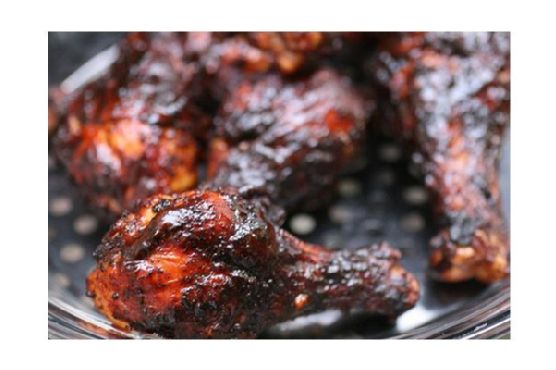
Bbq Chicken | Made by Meaghan Moineau

Picture this: It’s a chaotic Wednesday evening. You’ve just returned from work, and the last thing you want to do is spend hours in the kitchen. But, you crave something comforting and satisfying; something that feels like a hug on a plate. That’s when my go-to BBQ Chicken recipe swoops in to save the day! This dish is the epitome of easy yet impressive cooking. With minimal ingredients that you probably already have in your pantry, you’ll whip up a dinner that’ll have everyone licking their fingers and asking for seconds. Trust me, the blend of sweet, tangy, and smoky flavors makes it a must-try. Plus, your kitchen will smell absolutely amazing!

Jump to Recipe

What You’ll Need

One of the best things about this recipe is how simple the ingredient list is. Chances are you already have most of these lying around, just waiting to be turned into something magical.

  • Brown sugar
  • Catsup
  • Chicken pieces (your choice of cuts)
  • Dry mustard
  • Soy sauce
  • Worcestershire sauce

How to Make Bbq Chicken

  1. Start by combining the brown sugar, catsup, dry mustard, soy sauce, and Worcestershire sauce in a bowl. Stir until the mixture is smooth and the sugar has dissolved. This is your luscious BBQ sauce.
  2. Preheat your broiler. Trust me, this high heat is where the magic happens, caramelizing the sauce onto the chicken.
  3. Place your chicken pieces on a broiler pan or a baking sheet lined with foil. Baste the chicken generously with half of the sauce, making sure every piece is well-coated.
  4. Broil for 20 minutes. You’ll know it’s time to flip when the edges of the chicken start to bubble and caramelize. It’ll smell irresistible!
  5. Turn the chicken pieces over and baste with the remaining sauce. Return to the broiler for another 20 minutes, until the chicken is cooked through, and the sauce is sticky and slightly charred.

Cook’s Notes

This recipe is pretty forgiving, but here are some tips to nail it every time. First, make sure your chicken pieces are of similar size for even cooking. If they’re too large, they might need a bit more time to cook through. Also, keep a close eye on the chicken while it’s broiling—things can go from perfectly caramelized to burnt quickly under such high heat. If you’re prepping ahead, you can make the sauce a day in advance and store it in the fridge. Once cooked, leftovers can be stored in an airtight container in the fridge for up to three days. Simply reheat in the oven or microwave, although the broiler will help crisp it back up a bit!

Make It Your Own

  • Swap the chicken for crispy tofu for a vegetarian twist. Follow the same broiling steps for a delicious result.
  • Add a teaspoon of smoked paprika to the sauce for an extra smoky flavor boost.
  • Use honey instead of brown sugar for a different kind of sweetness and a slightly stickier sauce.
  • For a spicy kick, mix in some hot sauce or a pinch of cayenne pepper to the sauce.

If you try this, I’d love to hear how it turns out — drop a comment or tag me! Your kitchen adventures are always inspiring, and who knows, you might even teach me a new twist on this classic!

Goes Well With

If you want to round out the meal, here’s what I’d pair it with over on meaghanmoineau.com:

Related update: Bbq Chicken

Related update: Blast Of Color Mexican Stuffed Bell Peppers

Starbucks shutters 250 stores to boost | Analysis by Brian Moineau

TL;DR

  • Starbucks will close 250 North America stores this week—about 1% of its 18,371-location regional footprint—marking a second pruning in 12 months and a push to re-cut for profitability. [1], [3], [4]
  • The closures come as North America Q3 FY26 revenue hit $7.4B and operating margin reached 13.6%; pruning low-yield boxes can lift system ROIC even if headline revenue dips. [3]
  • The timing—days after a Sept. 17, 2026, $1M DEI settlement with Florida—adds political noise, but the operational story is clearer: cull underperformers, add 25,000 seats by fall 2026, and out-execute drive-thru rivals. [5], [6]

What the source said

Fox Business reports Starbucks will shutter about 250 coffeehouses across North America this week, a ~1% trim of its 18,000-plus regional fleet. COO Mike Grams told employees that while most units are profitable, a subset can’t deliver the desired customer/partner experience or “acceptable financial performance,” language consistent with prior portfolio resets. The article also notes Starbucks resolved a Florida DEI lawsuit with a $1 million payment and nationwide compliance commitments, citing the Florida Attorney General’s office. [1]

Why it matters

Landlords with Starbucks on their rent rolls, municipal corridors from Manhattan to Seattle trying to rebuild foot traffic, and competitors like Dunkin’ and Dutch Bros all face a localized demand shock when a green siren goes dark. AP News reported Starbucks’ share of U.S. coffee spend fell to 48% in 2025 from 52% in 2023, so nearby challengers have a real shot at inheriting transactions that don’t migrate to other Starbucks stores. [6]

Shareholders are parsing unit economics, not just headlines. Starbucks’ North America comps rose 8.1% in Q3 FY26 while segment margin reached 13.6%, yet management flagged labor investments and tariffs as ongoing pressures in Q2 FY26; trimming the bottom 1% tilts the mix toward higher-return boxes and frees capex for remodels and seat expansion. [3], [8]

Original analysis

A contrarian read

  • Consensus: “Another round of closures proves Starbucks is slipping.”
  • Counterpoint: This is a surgical trim to raise systemwide returns, echoing prior portfolio resets; North America comps climbed 8.1% in Q3 FY26 and operating margin reached 13.6%, so shutting money-losing units while comps are positive looks like housekeeping, not a distress flare. [3]

Back-of-the-envelope math

  • 2023 North America company-operated revenue: $23.9B across 10,628 stores ≈ $2.25M per store annually. Calculation: $23,905M ÷ 10,628 ≈ $2.249M. [4]
  • If 250 closures average 60–70% of AUV ($1.35M–$1.58M), that’s about $338M–$395M of low-margin revenue removed; math: 250 × $1.35M = $337.5M, 250 × $1.58M = $395M.
  • Assume these stores run at a 0–3% store-level margin (post-wage, pre-G&A) versus a 15% target; cutting them can lift consolidated margin even if reported revenue dips. Baselines come from FY25 filings; comps/margin trajectory comes from FY26 results. [4], [3]

Historical analogue: 2020’s “format” reset

In 2020, Starbucks announced plans to close up to 400 U.S./Canada units to speed a shift toward Pickup and drive‑thru formats, a reset that matched digital ordering and on-the-go demand and preceded revenue growth in subsequent years. The 2026 closures rhyme with that playbook, but the emphasis has shifted: Starbucks plans to add 25,000 café seats by fall 2026 to revive the “third place” while maintaining mobile/delivery strength. [7], [6]

A simple 2×2: where cuts likely cluster

  • High traffic + high margins: Suburban drive‑thrus near national anchors (e.g., Target/Walmart) with strong throughput; keep and invest in seating and ops tech to lift peak-hour capacity.
  • High traffic + low margins: Dense urban cafés (e.g., Midtown Manhattan, San Francisco’s FiDi) with lease or labor drag; renovate or relocate if added seats can boost dwell and food attach.
  • Low traffic + high margins: Seasonal/tourist nodes (e.g., Orlando attractions, national park gateways) with pricing power; keep and optimize scheduling and prep.
  • Low traffic + low margins: Aging mall inline or office‑dependent sites in corridors with weak return‑to‑office; close or relocate nearby to smaller, cheaper formats.
    This aligns with Starbucks’ notes on margin pressure from labor investments and tariffs and the need to shift mix toward stores that amplify connection and throughput. [8], [3]

Named-stakeholder breakdown

  • Starbucks (SBUX): Gains cleaner unit economics, redirects capex to remodels and 25,000 added seats through 2026, and expects comps to offset revenue lost from pruning. [3], [6]
  • Landlords (open‑air centers, downtown street retail): Face short‑term occupancy gaps; best‑positioned owners backfill quickly with QSR/coffee challengers like 7 Brew or Scooter’s near vacated corners. [6]
  • Rivals (Dunkin’, Dutch Bros): Inheritable demand near closed sites; AP pegged Starbucks’ U.S. coffee spend share at 48% in 2025 (from 52% in 2023), signaling a live land‑grab. [6]
  • Partners (employees): Disruption at affected cafés; redeployment can mitigate impacts, while FY25 restructuring and impairment charges of $892M underscore ongoing cost discipline. [4]

What others are missing

The licensed vs. company‑operated revenue‑mix effect. In North America, about 90% of 2023 segment revenue came from company‑operated stores, with ~10% from licensed operations; closing a company‑operated café directly lowers segment sales, while closing a licensed store mainly trims product/royalty flows. If this 250‑unit wave skews company‑operated (as past restructurings did), expect a modest headline revenue dip with an outsized operating‑margin lift once lease exits and impairments roll off, consistent with Q2 FY26 margin commentary and the Q3 FY26 uptick. [4], [8], [3]

What to watch next

  1. By Q4 FY26 (quarter ending late September 2026), North America segment operating margin expands at least 50 bps sequentially as closure drag ebbs and seat‑adding remodels start to raise throughput. [3]
  2. By Q1 FY27 (reported winter 2026/27), U.S. net unit growth turns positive despite the 250 closures, in line with guidance to open 575+ U.S. stores over three years. [6]
  3. By H1 2027, at least two drive‑thru challengers (e.g., Dutch Bros, Scooter’s, or 7 Brew) announce targeted openings within one mile of clusters of shuttered Starbucks sites, indicating competitive backfill. [6]

My take

I’d rather own a Starbucks that prunes 1% of dead wood than one that props it up; FY25 saw $892M of restructuring and 627 closures, and management kept pushing. With comps back, margins stabilizing, and 25,000 seats slated by fall 2026, this wave looks like oxygen redirected to winners, not retreat. The risk: rivals fill the gaps in 2026–2027 faster than Starbucks rebuilds the “third place.” Net‑net, the trim reads bullish for margins and brand relevance if execution on speed, seating, and service meets the FY26–FY27 plan. [4], [3], [6]

Sources

  1. Starbucks to close 250 stores: “Difficult decision” — Fox Business (https://www.foxbusiness.com/fox-news-food-drink/starbucks-close-250-stores-difficult-decision) — Initial report on the 250 North America closures, the ~1% figure, and rationale attributed to COO Mike Grams.
  2. Creating coffeehouses customers love and partners are proud of — Starbucks (https://about.starbucks.com/press/2026/creating-coffeehouses-customers-love-and-partners-are-proud-of/) — Official strategy framing and timing, including portfolio pruning within the current plan.
  3. Starbucks Reports Q3 Fiscal Year 2026 Results — Starbucks Investor Relations (https://investor.starbucks.com/news/financial-releases/news-details/2026/Starbucks-Reports-Q3-Fiscal-Year-2026-Results/) — North America comps (+8.1%), $7.4B segment revenue, store counts (18,371 NA), and 13.6% operating margin.
  4. Starbucks 2025 Annual Report (Form 10‑K) — Starbucks Investor Relations (https://s203.q4cdn.com/326826266/files/doc_financials/2025/ar/Starbucks-Corporation_2025-Annual-Report-Web-Ready.pdf) — Documents FY25 restructuring/impairment costs ($892M), closures (627), NA store mix, and a baseline for per‑store revenue.
  5. Starbucks, Florida AG ink deal to end lawsuit over alleged illegal DEI practices — HR Dive (https://www.hrdive.com/news/starbucks-florida-ag-ink-lawsuit-alleged-illegal-dei/830829/) — Confirms Sept. 17, 2026 settlement, $1M payment, and nationwide compliance commitments without admission of wrongdoing.
  6. Starbucks feeling the heat as more chains vie for US coffee drinkers — AP News (https://apnews.com/article/starbucks-coffee-menu-open-drivethru-dunkin-7f47a4e35e411a0e61c2bf2e551d1de7) — Competitive context, U.S. coffee spend share at 48% (2025) vs. 52% (2023), 25,000-seat plan by fall 2026, and guidance to open 575+ U.S. stores over three years.
  7. Starbucks to accelerate store portfolio transformation (Exhibit 99.1, June 2020) — SEC (https://www.sec.gov/Archives/edgar/data/829224/000082922420000057/sbux-06102020ex991.htm) — 2020 announcement to close up to 400 stores while shifting to Pickup and drive‑thru formats.
  8. Starbucks Reports Q2 Fiscal Year 2026 Results — Starbucks Investor Relations (https://investor.starbucks.com/news/financial-releases/news-details/2026/Starbucks-Reports-Q2-Fiscal-Year-2026-Results/default.aspx) — Notes margin compression from labor investments and tariffs, framing why pruning low‑yield stores can lift mix.


Related update: We recently published an article that expands on this topic: read the latest post.
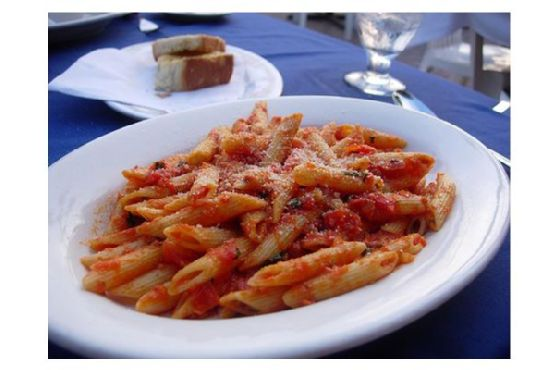

Related update: We recently published an article that expands on this topic: read the latest post.

Related update: We recently published an article that expands on this topic: read the latest post.

Penne Arrabiata | Made by Meaghan Moineau

The other night, as I found myself rummaging through my pantry, I hit jackpot with a can of tomatoes and a packet of penne. It was one of those evenings where I needed something quick, comforting, and just a little spicy to shake off the chill of the day. Enter Penne Arrabiata – my go-to for when I want something fiery, yet satisfying, without the fuss. Who knew a simple dish with such few ingredients could pack so much punch? Plus, if you’re like me and almost always have pasta, canned tomatoes, and garlic stashed away, you’re already halfway there. The magic really is in the simplicity.

Jump to Recipe

What You’ll Need

You might be surprised at how few ingredients are needed for this explosive dish. Chances are you already have most of these tucked away in your kitchen.

  • Canned whole tomatoes (I adore those Pomi tomatoes that come in a box!)
  • A packet of penne
  • Fresh garlic (about 5 cloves, minced)
  • Olive oil (3 tablespoons to be exact)
  • About 1 teaspoon of dried red peppers
  • Fresh Italian parsley, minced (2 tablespoons plus extra for garnish)
  • Fresh basil, coarsely chopped, for that final flourish

How to Make Penne Arrabiata

  1. First, set a large pot of water on the stove and bring it to a rolling boil. You’ll want enough water so the penne has space to dance around.
  2. While waiting on the water, heat 3 tablespoons of olive oil in a pan over medium heat. Toss in about 1 teaspoon of dried red peppers. Let them mingle with the oil until they’re fragrant but not burning.
  3. Add the minced garlic and 2 tablespoons of fresh Italian parsley to the oil and peppers. Stir and watch carefully – you want the garlic golden, not brown.
  4. Next, introduce the star of the show: your canned tomatoes. Give them a good chop before adding them to the pan. Stir, cover, and let the sauce simmer until it’s heated through and inviting.
  5. By now, your water should be boiling. Toss in the penne and cook until it’s al dente. You know it’s ready when it has a slight bite but isn’t mushy.
  6. Once the pasta is perfect, drain it and add it directly to the sauce. Mix thoroughly, ensuring each piece of penne is luxuriously coated in that fiery sauce.
  7. Right before serving, sprinkle in some coarsely chopped fresh basil and a little more parsley for that fresh, earthy touch.
  8. Serve immediately, preferably with a side of crusty bread to mop up any leftover sauce.

Cook’s Notes

Let me give you a few insider tips to make sure your Penne Arrabiata is the talk of the dinner table. First, don’t overcook the garlic – it can turn bitter quickly. Always keep an eye on it while it’s in the pan. If you’re in the mood for a deeper flavor, let the sauce simmer longer on low heat. You can make the sauce ahead of time; just reheat gently before adding the pasta. And leftovers? They keep well in the fridge for a couple of days. Just make sure to cover them properly and add a splash of olive oil when reheating to keep things glossy.

Make It Your Own

Here’s where you can let your creativity or pantry dictate the dish:

  • Swap the penne for rigatoni or another pasta you have on hand – just adjust the cooking time as needed.
  • For a smoky twist, add a pinch of smoked paprika along with the dried red peppers.
  • Incorporate some protein by tossing in cooked crispy tofu or grilled chicken right before serving.
  • If you’re feeling indulgent, sprinkle some shaved Parmesan on top. It’s not traditional, but who can resist cheese?

If you try this, I’d love to hear how it turns out — drop a comment or tag me! There’s nothing better than a little fiery pasta to spice up your day. Enjoy every bite, my friends!

Goes Well With

If you want to round out the meal, here’s what I’d pair it with over on meaghanmoineau.com:

Related update: Penne Arrabiata

Xbox Layoffs Shake Gears of War Team | Analysis by Brian Moineau

TL;DR

  • Xbox laid off Gears of War: E‑Day’s story director, Juan Vaca, roughly two weeks before the October 6, 2026 launch—days after The Coalition announced the game had “gone gold” on September 17, 2026; Vaca confirmed the layoff on LinkedIn after celebrating gold status. [1][3][4]
  • The same restructuring moved Halo development to Activision and shuffled other studios (Rare, World’s Edge, Obsidian, Playground, Turn 10), with 268 roles eliminated—Xbox is collapsing operating units into ABK/Bethesda “labels” to centralize P&L accountability. [2]
  • The immediate risk isn’t the October 6 ship; it’s post‑launch narrative continuity and The Coalition’s cross‑studio Unreal Engine 5 leadership, which Microsoft has called a “center of excellence.” [3][5]

What the source said

Eurogamer reports that The Coalition’s story director on Gears of War: E‑Day, Juan Vaca, was laid off as part of Xbox’s September 22, 2026 job cuts, less than two weeks before the October 6 release date. Vaca posted on LinkedIn that he was part of the layoffs and “open to new opportunities,” just days after celebrating the September 17 gold milestone, and a Kotaku source said “fewer than a handful” were affected at The Coalition. Eurogamer places the news inside a wider Xbox restructuring that totaled 268 layoffs across teams. [1][4][2]

Why it matters

For players, The Coalition locked the 1.0 build by September 17, 2026; early access begins October 1, and pre‑install starts September 29, which lowers immediate ship risk on disc and digital. The near‑term dependency is day‑one patch and compliance, not campaign rewrites; the longer‑tail risk sits with DLC, live‑ops storytelling, and cross‑media arcs after launch. [3]

For Microsoft, the September 22 restructuring shifted Halo to Activision, moved Rare and World’s Edge under Activision, placed Obsidian under Bethesda, and merged Playground with Turn 10—clear signals that Xbox is consolidating around ABK/Bethesda labels and franchise ownership. That can tighten margin discipline in FY2027, but it also concentrates creative decisions and reshapes how UE5 standards and tools move through the org, including The Coalition’s internal education role. [2][5]

Original analysis

Gears of War: E‑Day story director layoff — the 2×2 risk map

  • X‑axis: Game lifecycle stage (Pre‑gold → Post‑gold).
  • Y‑axis: Role criticality for immediate ship (Low → High).

Quadrants:

  • Pre‑gold/High: Engine, build engineering, core content leads—layoffs here often slip dates.
  • Pre‑gold/Low: External QA overflow, field marketing—disruptive but survivable.
  • Post‑gold/High: Live‑ops, platform compliance, build/release—critical for patches and day‑one stability.
  • Post‑gold/Low: Narrative direction (for a completed campaign), longer‑horizon content design—lower day‑one impact, higher DLC/seasonal risk.

Juan Vaca’s role lands post‑gold/low for day‑one ship, which explains why Xbox could pull this lever without moving the October 6 date or the October 1 early‑access window; gold was marked September 17, layoffs posted September 22. Shown work on the runway: Sep 18–30 = 13 days; Oct 1–6 = 6 days; 13 + 6 = 19 days between gold and launch, a timing window that reads like reorg optics more than content triage. [3][2]

Contrarian read: The consensus says “this hurts the game.” The narrower view is that the launch narrative is frozen on the gold master, while engineering/testing are the pressure points now; the cost shows up in the next 3–9 months via DLC planning, cross‑media shepherding, and a cohesive creative voice for live beats. That matters because The Coalition has acted as Xbox’s UE5 “center of excellence” and hosts cross‑studio tech enablement; cuts there ripple into other pipelines through the Xbox Games Technology Group. [5]

Named‑stakeholder breakdown (what this means for them)

  • The Coalition (Vancouver): Short‑term ship remains on track for October 1 early access and October 6 launch; medium‑term DLC/narrative cohesion is riskier, and morale shock near launch can slow iteration velocity. [3]
  • Activision (ABK): Gains Halo plus Rare and World’s Edge under its umbrella in 2026, signaling ABK as the first‑party “live‑ops + shooter” label; expect talent flows, engine standards, and tooling to converge toward Activision pipelines. [2]
  • 343/Halo Studios: Transitions to a sustaining role while a “purpose‑built” Halo team stands up at Activision, creating a reboot‑by‑org‑chart that resets timelines into 2027. [2]
  • Bethesda/Obsidian: Reporting lines consolidate; Obsidian’s RPG craft aligns closer to Bethesda Game Studios, raising integration gains but compressing label autonomy. [2]
  • Rare and World’s Edge: Moving beneath Activision aligns Sea of Thieves and Age of Empires operations with ABK’s cadence playbook—good for release rhythm, risky for studio identity. [2]
  • Ninja Theory: Xbox entered consultation on a proposed closure after failed divestiture talks, signaling a willingness to exit prestige teams when deals don’t pencil. [2]
  • Game Pass players: E‑Day lands day‑one on Game Pass; Premium Edition at $99.99 buys a five‑day head start beginning October 1, with Standard at $69.99 on October 6. [3]

What others are missing

The fixation on the layoff’s proximity to October 6 obscures the platform risk: Microsoft publicly labeled The Coalition a UE5 “center of excellence,” with knowledge transfer and tooling routed via the Xbox Games Technology Group hosted at the studio. That makes even small headcount cuts a systems issue—UE5 onboarding, performance guidance, and internal education for studios adopting UE5 across Xbox hinge on that hub, not just on one game’s campaign. [5]

What to watch next

  1. By December 2026, The Coalition clarifies post‑launch narrative ownership—either naming a successor for story leadership or signaling a multiplayer‑first cadence with limited campaign DLC; studio credits, a blog post, or patch notes will verify.

  2. By Q2 2027 (June 30, 2027), Microsoft finalizes label alignments for remaining first‑party shooters—either placing The Coalition under an ABK operating group or explicitly retaining autonomy; this will appear in an Xbox Wire org memo or an SEC filing footnote.

  3. By March 2027, Activision publicly names the leadership and team composition for the next Halo project and shares first development beats (engine/tooling choice, hiring plan, or teaser at a live event); absence of such disclosure falsifies this.

My take

This reads less like chaos around Gears of War: E‑Day and more like the cost of Xbox’s 2026 pivot to label‑centric operating companies already proven at Activision and Bethesda. The disc will ship, the Steam page will light up, and players will chainsaw Locust on October 6; the bill arrives later if DLC cadence frays and The Coalition’s UE5 brain trust gets scattered. If Microsoft reduces The Coalition to a pure franchise shop instead of protecting its cross‑studio platform mandate, today’s 268‑role savings could become tomorrow’s schedule drag across multiple UE5 projects. [2][3][5]

Sources

  1. Eurogamer — Gears of War E‑Day’s story director laid off ahead of October 2026 launch (https://www.eurogamer.net/gears-of-war-e-day-story-director-laid-off-xbox-cuts) — Breaks the Juan Vaca layoff, quotes “fewer than a handful” via Kotaku, and anchors timing.

  2. Xbox Wire — Continuing Our Reset (September 22, 2026) (https://news.xbox.com/en-us/2026/09/22/continuing-our-reset/) — Confirms 268 layoffs and the org shifts: Halo to Activision; Rare and World’s Edge to Activision; Obsidian to Bethesda; Playground/Turn 10 merge; Ninja Theory consultation.

  3. Xbox Wire — Gears of War: E‑Day Has Gone Gold (September 17, 2026) (https://news.xbox.com/en-us/2026/09/17/gears-of-war-e-day-gone-gold-pre-install-pc-specs/) — Confirms gold date (Sep 17), pre‑install (Sep 29), early access (Oct 1), full launch (Oct 6), and $69.99/$99.99 pricing.

  4. Kotaku — Gears of War: E‑Day Story Director Laid Off Days After Celebrating Gold (https://kotaku.com/gears-of-war-e-day-story-director-laid-off-just-four-days-after-celebrating-the-game-going-gold-2000736518) — Corroborates Vaca’s LinkedIn post and “fewer than a handful” impact at The Coalition.

  5. Xbox Podcast — Matt Booty Talks Showcase, Games, Studios, and More (https://news.xbox.com/en-us/podcast/matt-booty-talks-showcase-games-studios-and-more-official-xbox-podcast/) — States The Coalition is Xbox’s UE “center of excellence” and hosts cross‑studio tech enablement (XGTG).

Pink Lemonade Crinkle Cookies | Made by Meaghan Moineau

Okay, imagine this: it’s a random Tuesday evening, and you’re sitting on your couch, wrapped up in a cozy blanket, craving something sweet but just a tad bit different. Your pantry is a treasure chest, begging to be explored, and you’ve got a hankering for something light, bright, and a little quirky. Enter Pink Lemonade Crinkle Cookies! They’re the perfect blend of zesty and sweet, with a playful pink hue that’s sure to turn any average day into an Instagram story-worthy moment. Plus, they’re super easy, so you’re not stuck in the kitchen forever—because who has time for that? These cookies bring a little sunshine to your snack lineup, and they’re as fun to make as they are to eat. Let’s get baking!

Jump to Recipe

What You’ll Need

These cookies are a bit of a kitchen magician’s delight, with ingredients you likely already have on hand—except maybe the pink lemonade Kool-Aid, which might just become your new secret weapon.

  • 1/2 teaspoon baking powder
  • 1/4 teaspoon baking soda
  • 1/2 cup unsalted butter, softened
  • 1 tablespoon cornstarch
  • 1 large egg
  • 1 1/2 cups all-purpose flour
  • 1-2 drops pink food coloring (optional, for extra pizzazz)
  • 1 packet pink lemonade Kool-Aid mix
  • 1 cup powdered sugar, for rolling
  • 3/4 cup granulated sugar

How to Make Pink Lemonade Crinkle Cookies

  1. Preheat your oven to 350°F (175°C). While it’s warming up, prepare your cookie sheet with a light coating of non-stick cooking spray—trust me, you’ll thank me later!
  2. In a mixer, cream together your softened butter and sugar until it looks like fluffy clouds. Don’t forget to scrape down the sides of the bowl to make sure everything’s getting in the mix.
  3. Beat in the egg until it’s fully incorporated, giving your batter that extra creamy look.
  4. Add the baking powder, baking soda, Kool-Aid mix, and cornstarch. As you mix, watch for that magical moment when the dough turns pink—such a delight!
  5. If you’re feeling extra fancy, add a drop or two of pink food coloring for a more vibrant pop of color.
  6. Start adding the flour half a cup at a time. Mix slowly so you don’t end up with a floury mess—been there, done that!
  7. Once the dough is ready, roll it into walnut-sized balls. Give them a sweet powdered sugar bath, making sure each ball is lightly coated.
  8. Place each ball about 2 inches apart on your prepared cookie sheet. If you’re making multiple batches, let your cookie sheet cool in between—hot sheets can mess with your bake!
  9. Bake for 9-10 minutes. Keep an eye on them since they won’t brown much. Over-baking turns these beauties into crunchy rocks, which we definitely don’t want.

Cook’s Notes

These cookies are pretty forgiving, but a few tips can help you achieve perfection:

  • Store the cookies in an airtight container, and they’ll stay fresh for up to a week (if they last that long!).
  • If you want to make the dough ahead of time, store it in the fridge for up to 3 days. Just let it come to room temp before baking.
  • Watch your oven closely—since these cookies don’t brown much, it’s easy to accidentally leave them in too long.

Make It Your Own

Customize these cookies to suit your mood or pantry:

  • Swap the pink lemonade Kool-Aid for another flavor, like cherry or lime, for a different twist.
  • Add white chocolate chips to the dough for a little extra sweetness and texture.
  • Roll the dough balls in granulated sugar before the powdered sugar for a double sugar coating.
  • For a citrusy punch, zest a lemon into the dough for added flavor.

If you try this, I’d love to hear how it turns out—drop a comment or tag me! These cookies are a little piece of happiness, ready to be shared. Happy baking!

Goes Well With

If you want to round out the meal, here’s what I’d pair it with over on meaghanmoineau.com:

Related update: Pink Lemonade Crinkle Cookies

Related update: Easter Nest Sweet Cake With Sour Cream-Royal Icing and Pistachios

Waiver Targets: Mitchell, Boston, Bryce | Analysis by Brian Moineau

TL;DR

  • Week 2’s quieter scoring hides obvious Week 3 waiver value: Adonai Mitchell’s 12 targets (33% share) are the sticky signal you pay for, not last week’s yardage outliers. [4], [5]
  • Denzel Boston is not a gadget rookie—Cleveland already gave him a 95% route rate and a 16.5-yard aDOT; that combo scales fast in 12-team PPR leagues. [6], [7]
  • Bryce Young’s hot start isn’t smoke; Carolina’s 34–3 win in Atlanta with 287 yards and three TDs feeds a real Week 3 test at Cleveland on September 27, 2026. [2], [9]

What the source said

Fantasy Life’s Week 3 “Waiver Wire Pickups & FAAB Advice” column argues that despite fewer touchdowns in Week 2 than Week 1, there are better underlying usage bets available, led by Bryce Young’s six TDs through two games and WRs who earned real roles, with concrete FAAB bands by league size. The piece highlights Cleveland in Week 3 for Young’s schedule context and frames bids around roster rates and opponent matchups. The thesis: ignore low-scoring noise; chase roles and usage that project forward. [1]

Why it matters

The real stakeholders are not “fantasy managers” in the abstract. They’re:

  • 10–12 team redraft GMs who must decide whether to spend 12–18% FAAB on WR usage risers now or wait for the RB injury carousel that typically hits by Weeks 4–6.
  • Guillotine-league players operating in a $1,000 FAAB ecosystem where survival, not ceiling, dictates spending cadence; a mispriced early splash can get you chopped before premium names hit the wire. [8]

In Week 3, those groups intersect with concrete NFL shifts: Adonai Mitchell’s elevation into a true Jets WR2 via a 12-target, 33% share game, Denzel Boston’s immediate downfield role in Cleveland (95% routes, 16.5 aDOT), and Bryce Young’s verified step forward after a 34–3 road win in Atlanta ahead of a September 27, 2026 trip to Cleveland. [5], [6], [2], [9]

Original analysis

Why this Waiver Wire Pickups & FAAB Advice For Week 3 hits different

Consensus: “Chase last week’s points.” My read: Chase the jobs that just solidified.

  • Adonai Mitchell (Jets WR): Week 2 re-slotted New York’s room and put Mitchell on a full-time track opposite Garrett Wilson. He drew 12 targets (33.3% share), caught 6 for 63 vs. Green Bay, and played 80%+ snaps—bankable usage, not a fluke box score. [4], [5]
  • Denzel Boston (Browns WR): Two games, seven catches, 154 yards, two TDs, with a 95% route rate and a 16.5-yard aDOT. That’s a ready-made vertical role, not a rotational rookie. Cleveland already schemed him downfield; that travels. [6], [7]
  • Bryce Young (Panthers QB): 287 yards and three TDs in a 34–3 road win in Atlanta puts real signal on the board. He now walks into Cleveland in Week 3, the sort of environment that clarifies whether he’s a weekly streamer or back-end QB1. [2], [9]

Contrarian read

  • The hot waiver list will hype Tre Tucker types off single-week yardage spikes. The smarter spend is on target and route monopolists—Mitchell and Boston—because volume compounds while splash plays regress. Mitchell’s 12 targets and 33% share are precisely the traits that persist; Boston’s 95% route rate plus deep usage means he only needs 6–8 looks to swing weeks. [5], [6]

Back-of-envelope math

  • Mitchell projection: If his rest-of-season target share stabilizes at an attainable 22% (down from 33% in Week 2) on a 33-attempt Jets baseline, that’s 7.3 targets per game. In full PPR, at a modest 7.5 yards/target and 67% catch rate, you’re talking roughly 5.0 receptions (~10.0 PPR) and ~55 yards (5.5 points) per week before TD variance—call it ~12–13 PPR median, with spike potential as aDOT rises. Assumptions anchor to Week 2 usage. [5]
  • Boston projection: Keep his 95% route rate, assume a 21% target share on a 32-attempt Browns baseline. That’s ~6.7 targets. With his 16.5 aDOT, a 55–60% catch rate yields 3.7–4.0 receptions and 60–70 yards (9–11 PPR) weekly, plus elevated TD odds because his targets are downfield and near the paint. Role > name here. [6], [7]

Named-stakeholder breakdown

  • Joe Douglas (Jets GM): If Mitchell holds a 20%+ share by October 31, 2026, New York’s passing game shifts from one-outlet to two-outlet, and you get a weekly WR2/3 from the wire. That outcome validates early FAAB aggression. [5]
  • Kevin Stefanski (Browns HC): Early usage says Stefanski is comfortable letting a rookie stretch vertically. If that continues into October, Boston’s per-target value dwarfs low-aDOT possession roles, and your bids should chase routes plus depth shots, not jersey seniority. [6], [7]
  • Dan Morgan (Panthers GM): Young’s two-game line (six TD passes) underlines organizational stability around QB development; a credible showing in Cleveland turns a streamer into a medium-term hold in 10–12 team leagues. [1], [2]

2×2: Where to spend FAAB this week

  • Axes: Usage (bankable vs. speculative) × Fantasy role (floor vs. ceiling)
Quadrant Profile Example this week What to do
Bankable + Floor High routes, steady targets, modest aDOT Adonai Mitchell Prioritize in PPR; 12–18% FAAB in redraft; higher if shallow wire. [5]
Bankable + Ceiling High routes, downfield usage Denzel Boston Add aggressively in 12+ teamers; 10–15% FAAB, more if you need WR juice. [6]
Speculative + Ceiling Low routes, big play Last-week yardage spikes Avoid overpaying; $0–5 “see it again” bids.
Speculative + Floor Part-time roles, short targets Depth WR/RB handcuffs Stream if desperate; save FAAB.

Guillotine angle (where survival trumps upside)

  • Public guillotine leagues often use $1,000 FAAB. Early-season survival means you prioritize stable weekly points over home-run profiles. Mitchell’s target-share profile fits survival bidding better than chasing last week’s yardage blips; Boston’s deep role is volatile week-to-week, but the route dominance keeps him viable if priced fairly. Think 4–7% on Mitchell and 3–5% on Boston unless your room is barren; keep powder dry for the first true “stud drop.” [8]

Historical analogue

  • Amon-Ra St. Brown’s late-2021 breakout with Detroit (10+ targets in six straight from Week 13, 2021) showed how fast value compounds once a team condenses targets to two primary receivers. Mitchell’s Week 2 one-third share echoes that pathway—buy the consolidation before the box scores catch up.

What others are missing

The quiet catalyst behind Mitchell’s week-to-week viability is structural, not box-score: New York condensed routes and kept him on the field for 80%+ snaps while feeding him 12 targets (33.3% share). That pairing—full-time participation plus first-read volume—predicts stability in a way raw yardage never will, and it explains why a 6–63 line can be a green light rather than “just fine.” If you’re pricing FAAB as if he’s a flash in the pan, you’re ignoring the route and snap math that created his job. [4], [5]

What to watch next

  1. By October 18, 2026 (Week 6), Adonai Mitchell will have at least three games with 8+ targets and two with 60+ receiving yards, locking him into weekly WR3 territory in PPR.
  2. By October 11, 2026 (Week 5), Denzel Boston will record another 50+ yard touchdown or 80+ yard game, reflecting continued high aDOT usage in Cleveland.
  3. By October 4, 2026 (Week 4), Bryce Young will rank top-12 in TD passes and passer rating despite a Week 3 trip to Cleveland, sustaining his early QB1/streamer case.

My take

If you have one premium bullet this week, fire it at Adonai Mitchell. Roles beat vibes, and his role just became sticky, tradable volume on a roster that needed a second grown-up target; spend 12–18% FAAB in standard 12-team PPR and lean high if you whiffed at WR in August. Add Denzel Boston where you start three WRs or reward big plays—he’s a cheaper path to wins than chasing last Sunday’s mirages. On QB, buy Bryce Young as a rest-of-season hold if he clears Cleveland with competence; if he does, stash him and stop streaming.

Sources

[1] Fantasy Life — Waiver Wire Pickups & FAAB Advice For Week 3 — Usage-first waiver logic, Bryce Young’s six-TD context, and practical FAAB bands.
[2] Panthers.com — Inside The Numbers: Panthers at Falcons, Week 2 (2026) — Confirms 34–3 final and Bryce Young’s 287 yards with three TDs.
[3] NFL.com — Game Center: Panthers at Falcons, Week 2 (2026) — Official scoreboard and team stat corroboration for Carolina’s blowout in Atlanta.
[4] CBS Sports — Jets vs. Packers Week 2 (2026) recap/box score — Lists Adonai Mitchell’s 6–63 receiving line and notes 12 targets.
[5] Team/usage tracker — Jets Week 2 snap counts and target shares — Documents Mitchell’s ~82% snaps and 33.3% target share.
[6] DraftKings Nation — Is Denzel Boston a must-add for Week 3? — Cites 95% route rate, ~21% target share, 2.4+ YPRR, and a 16.5-yard aDOT.
[7] ClevelandBrowns.com — Denzel Boston player page/notes — Verifies two-week totals (7–154–2) and role within Kevin Stefanski’s offense.
[8] FantasyPros — Guillotine League Strategy (2026) — Explains common


Related update: We recently published an article that expands on this topic: read the latest post.

Related update: We recently published an article that expands on this topic: read the latest post.
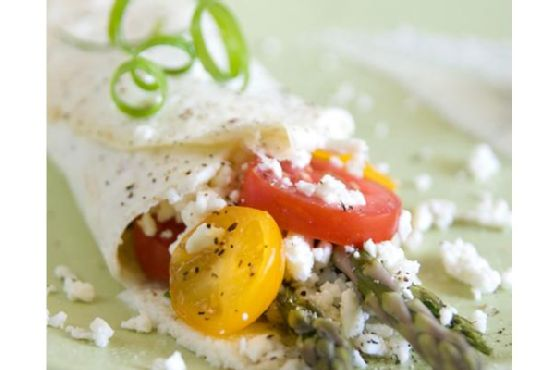
Greek Inspired Spring Omelet | Made by Meaghan Moineau

Picture this: It’s a crisp spring morning, the kind where the sun is just starting to warm the earth, and you’re craving something fresh yet comforting for breakfast. You peep into your fridge, and there they are — gorgeous green asparagus spears and a tub of tzatziki begging to be used. Enter the Greek Inspired Spring Omelet, a dish that feels like a mini-vacation on a plate, promising both simplicity and flair. This omelet is just the thing for when you want something light and packed with flavor, without spending ages in the kitchen. Whether you’re impressing brunch guests or sneaking in a quick solo breakfast, this recipe is a winner.

Jump to Recipe

What You’ll Need

Honestly, this ingredient list is a love letter to spring. You’ll likely find most of these staples in your fridge or pantry, making it not just delicious but convenient.

  • Asparagus spears (because who can resist their crunch?)
  • Egg whites (keeping things light and fluffy)
  • Feta cheese (the tangy star of the show)
  • Diced green onions (for a bit of zing)
  • Salt and pepper (to taste, because you know your buds better than anyone)
  • Tzatziki (our creamy secret weapon)
  • Yellow and red diced cherry tomatoes (for a burst of color and sweetness)

How to Make Greek Inspired Spring Omelet

  1. Start by grabbing a medium skillet, and toss in your asparagus spears. Sauté them until they become tender and vibrant green, which should take about 7 minutes. This is when your kitchen starts smelling spring-fresh.
  2. Set the asparagus aside and let them cool off a bit. Meanwhile, in a small bowl, combine your egg whites with a good dollop of tzatziki. Stir until they’re well acquainted.
  3. Now, spray a non-stick skillet with cooking spray and bring it to medium heat. Pour your egg white mixture into the skillet and watch it spread like a satisfying blanket over the pan. Cook until the edges are firm and the surface turns white, about 2 minutes.
  4. Carefully slide the cooked omelet onto a waiting plate. Pile your sautéed asparagus, diced cherry tomatoes, green onions, and a crumble of feta right in the middle. It’s like you’re giving your omelet a delicious core.
  5. Fold the omelet into thirds, gently covering your vibrant fillings. This is when it starts to look like something out of a café menu.
  6. Serve it up hot, with an extra side of tzatziki because why not? Season with salt and pepper to your liking, and dig in!

Cook’s Notes

Let’s talk omelet mastery and leftover magic. First, when sautéing your asparagus, keep an eye to avoid overcooking; you want them vibrant, not mushy. If your omelet sticks to the pan, it’s likely because the pan wasn’t hot enough or lacked a proper coating of cooking spray.

Make-ahead tip: You can prep the veggies the night before to save time in the morning. As for leftovers, though this omelet is best fresh, you can store it in the fridge for up to two days. Just reheat it gently in the microwave or a warm skillet.

Make It Your Own

Variety is the spice of life, so let’s play with this recipe a bit.

  • Swap the asparagus for zucchini ribbons if you’re feeling adventurous and want more veggie variety.
  • Not a fan of feta? Try using crumbled goat cheese instead for a creamier texture.
  • If you’re craving more protein, add diced cooked chicken breast for an extra hearty omelet.
  • For a vegetarian twist with a nutty flavor, replace tzatziki with a pesto spread.

If you try this omelet, I’d love to hear how it turns out — drop a comment or tag me on social media! This recipe is like a breath of fresh spring air, and I hope it brings a little sunshine to your plate. Enjoy!

Goes Well With

If you want to round out the meal, here’s what I’d pair it with over on meaghanmoineau.com:

Related update: Greek Inspired Spring Omelet

Related update: Chorizo and egg bake

Gen Z’s Thematic ETF Mania: Risks | Analysis by Brian Moineau

TL;DR

  • Thematic ETFs are back with Gen Z: roughly $76 billion of net inflows since December 2024, with about one-third into AI-linked funds, while Morningstar’s fee and persistence data suggest most themes lag broad markets over time. [1][2]
  • Duplication is the hidden risk: the S&P 500’s top 10 holdings sit near 37.8% weight and the Nasdaq‑100’s top 10 near 52%, so many “AI” or “tech” themes just repackage Microsoft, Apple, and NVIDIA at higher fees. [3][4]
  • Daily ETF transparency is no longer guaranteed: semi‑transparent active ETFs don’t publish full holdings every day, so “look under the hood” isn’t a one-click promise for hot themes. [5][6]

What the source said

CNBC reports that investors—especially Gen Z—are returning to thematic ETFs (AI, space, infrastructure) after pulling back during 2022–2024 drawdowns, with Morningstar tallying about $95 billion of theme inflows in 2020–2021 and another $76 billion since December 2024, roughly one‑third tagged to AI funds. [1][2]

Nasdaq’s 2024 Retail ETF Investor survey of 2,000 investors (±2% margin) found 75% of Gen Z hold ETFs in retirement accounts and 34% show interest in thematics, confirming demand for “expressive” exposures. [1][16]

Todd Rosenbluth of TMX VettaFi told CNBC that themes can complement diversified cores but warned on fees, holdings, and overlap, echoing the “don’t just re-buy Apple and Microsoft” caution. [1]

Why it matters

For Gen Z savers using 401(k)s, IRAs, or broker apps, thematic ETFs offer targeted exposure to trends like AI and infrastructure, but they often carry higher expense ratios near 0.60% versus roughly 0.40% for broad funds, plus elevated closure risk. [2][7]

For issuers and index providers such as BlackRock and Global X, themes are fee engines: concentration in the S&P 500 (top‑10 near 37.8%) and Nasdaq‑100 (top‑10 near 52%) means “AI” wrappers can sell investors what they already own—just at higher fees. [2][3][4]

Original analysis

Consensus view: “Thematic ETFs help investors ‘double‑click’ structural trends and complement a core.” That’s true in theory, but fees, concentration, and survival bias do most of the damage in practice.

Back‑of‑envelope calculation

  • Flows: CNBC cites $76B into themes since Dec 2024; assume one‑third to AI ≈ $25B. [1]
  • Fees: If thematics average ~0.60% versus non‑thematics near ~0.41% (2020 asset‑weighted), then new AI fee revenue ≈ $25B × 0.60% ≈ $150M per year—before any market gains. [7]
  • Investor math: A 30–60 bps fee gap over 10 years on $10,000 is roughly $300–$600 in cumulative drag before compounding, and worse if the theme overlaps with S&P 500/Nasdaq‑100 exposures you already hold. [2][3][7]

2×2 framework: How to pick a thematic ETF that actually adds something

  • Low overlap + Low fee (<0.40–0.50%): Sweet Spot. Look for mid‑caps, global suppliers, and niche enablers absent from VOO/QQQ.
  • Low overlap + High fee (≥0.60–0.95%): Maybe. Demand clear index rules, sane capacity, and credible liquidity.
  • High overlap + Low fee: Meh Core‑Plus. Consider equal‑weight or factor alternatives that diversify away from mega‑cap concentration.
  • High overlap + High fee: Worst Box. Avoid “story wrappers” that mirror Mag‑7 with a pricier label.

Why duplication risk is bigger now

  • Index concentration is historically elevated: the S&P 500’s top‑10 weight is ~37.8%, and the Nasdaq‑100’s top‑10 reached ~52% at year‑end 2025, so many AI themes just stack NVIDIA, Microsoft, Alphabet, Meta, and Amazon. [3][4]
  • Morningstar’s “7 charts” shows 66% of US thematic funds tilt “growth” versus only 11% “value,” compounding the same factor bets already embedded in cap‑weighted indexes. [2]

Historical analogue: the clean‑tech and cannabis cycles

  • Clean‑energy ETFs like ICLN and TAN peaked in 2021 and then slumped as rates rose; Morningstar chronicles multi‑fold AUM drawdowns and sharp volatility in 2022–2023. [8][9]
  • Cannabis ETFs (e.g., MJ) surged in 2018–2020 and then reversed, with ETF.com documenting episodes of odd premiums/discounts and fragile liquidity during stress. [10][11]
  • Morningstar Indexes finds limited persistence in thematic leadership, with rotation across horizons rather than steady outperformance. [12]

Contrarian read

  • The crowd says “Buy AI‑thematic ETFs to ride the secular boom,” but a better sleeve may exclude the Mag‑7 and focus on picks‑and‑shovels like power equipment, specialty chemicals, memory, testing, and grid software—areas many AI indexes underweight. [2][3][4]

Named‑stakeholder breakdown

  • BlackRock, Global X, Roundhill: Gather assets now, collect 0.50%–0.95% fees, and shutter stragglers later if flows fade. [2]
  • Nasdaq (survey publisher) and VettaFi (research/distribution): Their data and models seed product launches and model portfolios that steer retail flows. [1][2]
  • SEC and investor‑education shops: Semi‑transparent active ETFs complicate the “daily holdings” promise, so disclosure and basket policies remain under scrutiny in 2026. [5][6]

What others are missing

Holdings transparency is no longer binary: semi‑transparent active ETFs with proxy baskets don’t publish full daily portfolios, weakening the investor shortcut of “just run an overlap check” on a website. [5][6]

In thematics, where index IP, reconstitution cadence, and trading liquidity are the paid edge, partial transparency makes it harder to see if a fund drifted toward Mag‑7 concentration or quietly upped turnover to chase narrative names. [5][6]

What to watch next

  1. By December 31, 2026, closures: At least 10 US‑listed thematic ETFs will liquidate or merge as flows consolidate into a few AI and infrastructure leaders, consistent with elevated post‑2021 closure trends. [2]

  2. By Q2 2027, fees: A top‑5 AI‑thematic ETF by AUM will cut its expense ratio below 0.39% as performance dispersion grows and price competition intensifies within “premium” niches. [13][14]

  3. By June 30, 2027, overlap: The average top‑10 holding overlap between the five largest AI‑thematic ETFs and the S&P 500 will fall by at least 25% from current levels as issuers retool indexes toward purer picks‑and‑shovels exposure. [3][15]

My take

I’d cap a Gen Z “sandbox” at 5%–10% of the portfolio, after maxing tax‑advantaged accounts and building a low‑cost core like VTI/VOO plus VXUS/IXUS with a plain bond sleeve. [2]

Inside the sandbox, I’d avoid Mag‑7‑heavy AI wrappers and target under‑owned beneficiaries—power gear, memory, testing, industrial software—while capping fees at 0.50% and checking overlap quarterly with tools like ETF Research Center. [3][15]

If a theme can’t prove distinct exposure, disciplined methodology, and fair pricing, it doesn’t earn a slot—because the story you buy should differ from the story you already own. [2][3]

Sources

  1. These Gen Z‑approved investment funds are having a moment — CNBC (https://www.cnbc.com/2026/09/21/themed-etfs-gen-z-investors.html) — News peg, flow figures ($95B in 2020–2021; $76B since Dec 2024; ~one‑third to AI) and Rosenbluth’s guidance.
  2. The Thematic Fund Landscape in 7 Charts — Morningstar (https://www.morningstar.com/funds/thematic-fund-landscape-7-charts) — Growth bias (66% vs 11%), survival risks, asset history, and fee differentials.
  3. S&P 500 — S&P Dow Jones Indices (https://www.spglobal.com/spdji/en/indices/equity/sp-500/) — Concentration data; Top‑10 weight around 37.8% for duplication context.
  4. 2025 Nasdaq‑100 Reconstitution and Performance Highlights — Nasdaq (https://www.nasdaq.com/articles/global-indexes/2025-nasdaq-100-reconstitution-and-performance-highlights) — Top‑10 weight near 52% at 2025 year‑end.
  5. Exchange‑Traded Funds: A Small Entity Compliance Guide — SEC.gov (https://www.sec.gov/investment/exchange-traded-funds-small-entity-compliance-guide) — ETF Rule 6c‑11 and disclosure mechanics.
  6. Active Semi‑Transparent ETFs: What’s Under the Hood? — Charles Schwab (https://www.schwab.com/learn/story/active-semi-transparent-etfs-whats-under-hood) — Why semi‑transparent active ETFs don’t publish full daily holdings.
  7. Morningstar Finds Falling Fees Saved Investors $6.2 Billion in 2020 — Morningstar (https://newsroom.morningstar.com/news/news-details/2021/Morningstar-Finds-Falling-Fees-Saved-Investors-6-2-Billion-in-2020/default.aspx) — Asset‑weighted expense ratios (0.61% thematic vs 0.41% non‑thematic in 2020).
  8. Why Are Climate Funds in the Dumps? — Morningstar (https://www.morningstar.com/sustainable-investing/why-are-climate-funds-dumps) — Clean‑energy ETF slump post‑2021.
  9. The Election Is One More Headache for US Clean Energy ETFs — Morningstar Canada (https://global.morningstar.com/en-ca/etfs/election-is-one-more-headache-us-clean-energy-etfs) — ICLN and TAN boom‑bust AUM patterns.
  10. US Marijuana ETF Boom Stalls — ETF.com (https://www.etf.com/sections/news/us-marijuana-etf-boom-stalls) — Cannabis ETF surge and reversal chronology.
  11. UPDATE: Strange Case Of Premiums For Pot ETF — ETF.com (https://www.etf.com/sections/news/update-strange-case-premiums-pot-etf) — Premium/discount behavior during narrative spikes.
  12. Thematic Investing: Performance and Rotation Insights — Morningstar Indexes (https://index-website-frontend-prd.mif0286.eas.morningstar.com/insights/analysis/bltfe9deb5617110ea2/thematic-investing-performance-and-rotation-insights) — Leadership rotation and limited persistence.
  13. Fund Fee Wars Shift to Complex Funds and New Strategies — Morningstar (https://www.morningstar.com/en-us/business/insights/blog/us-fund-fee-study) — Fee competition spreading into higher‑fee ETF niches.
  14. How Active ETFs Are Reshaping Fund Fees — Morningstar (https://www.morningstar.com/funds/how-active-etfs-are-reshaping-fund-fees) — 2025 fee trends and pricing pressure within ETFs.
  15. Fund Overlap Tool — ETF Research Center (https://www.etfrc.com/funds/overlap.php) — Quantifies duplication between thematic ETFs and core holdings.
  16. Nasdaq 2024 ETF Retail Survey Report — Nasdaq (https://www.nasdaq.com/docs/2025/06/18/2024-ETF-Retail-Survey-Report.pdf) — Survey methodology (2,000 respondents; ±2%) and Gen Z interest metrics.


Related update: We recently published an article that expands on this topic: read the latest post.
Vegetable Tart With Goat Cheese | Made by Meaghan Moineau

It was one of those Wednesday evenings where the clock seemed to sprint from 5 to 7 PM in the blink of an eye. My stomach was grumbling louder than my Spotify playlist, and all I could think about was something delicious yet uncomplicated. The kind of meal that makes you feel like a culinary wizard without actually breaking a sweat. Enter stage left: the Vegetable Tart with Goat Cheese. This tart is my secret weapon, perfect for when I want something that looks as good as it tastes with minimal fuss. It’s a colorful showstopper that tastes like you planned it all week, but shhhh… it’s our little secret!

Jump to Recipe

What You’ll Need

Trust me, if your pantry and fridge are anything like mine, you’re already halfway there. This tart comes together with just a few key stars and supporting players.

  • Puff pastry (the freezer-friendly hero of this dish)
  • Frozen spinach
  • Mushrooms
  • Red bell pepper
  • Goat cheese (the creamy crown jewel)
  • Salt and pepper

How to Make Vegetable Tart With Goat Cheese

  1. Preheat your oven to 350°F. This is the first step to turning your kitchen into a cozy haven.
  2. Grab your puff pastry from the freezer and roll it out onto a cookie sheet, keeping the parchment paper underneath to prevent any sticky situations.
  3. Spread the frozen spinach evenly over the pastry, but leave about an inch of edge untouched. This creates a beautiful border that puffs up like magic.
  4. Layer the mushrooms on top of the spinach. They’ll release their juices, adding depth to the flavor party.
  5. Next, scatter the red bell pepper slices over the mushrooms. This vibrant red layer will make your tart pop, both visually and taste-wise.
  6. Finally, sprinkle crumbled goat cheese over the top. As it bakes, it will melt into creamy pockets of tangy goodness.
  7. Season with a sprinkle of salt and a few cracks of fresh pepper to taste.
  8. Bake in the preheated oven for 15-20 minutes, or until the edges of the tart are golden brown and the cheese is bubbly and slightly caramelized.

Cook’s Notes

Alright, here’s the inside scoop: always make sure your puff pastry is still cold when you start rolling it out, as it puffs better. If your mushrooms seem a bit too wet after slicing, give them a quick pat with a paper towel to avoid sogginess. This tart is best enjoyed fresh out of the oven, but if you do have leftovers, store them in an airtight container in the fridge and reheat them in the oven to maintain that crispy crust. If you’re planning ahead, all the veggies can be prepped a day in advance, making the assembly a breeze when you’re ready to bake.

Make It Your Own

This tart is a blank canvas for your culinary whims. Here are some ideas to get those wheels turning:

  • Switch the spinach for kale for a heartier texture.
  • Love a bit of heat? Add sliced jalapeños on top for a spicy kick.
  • Not a fan of goat cheese? No problem. Try it with feta cheese instead for a milder flavor.
  • For a sweet twist, caramelize some onions and layer them under the spinach.

If you try this, I’d love to hear how it turns out — drop a comment or tag me! This is a dish that invites creativity, so feel free to experiment and make it truly yours. Happy cooking, friends!

Goes Well With

If you want to round out the meal, here’s what I’d pair it with over on meaghanmoineau.com:

Related update: Vegetable Tart With Goat Cheese

Related update: Penne Arrabiata

Windows 11s Clipchamp Sidelines Low‑End | Analysis by Brian Moineau

TL;DR

  • Microsoft’s “free, highly rated” Windows 11 editor is Clipchamp, and Microsoft’s own support docs say it runs best with 8GB+ RAM, a 64-bit OS, and a recent GPU—well above Windows 11’s 4GB RAM minimum. [1][2][3]

  • The tension: Windows 11 bundles Clipchamp by default, but a big slice of older or budget PCs—think 4GB RAM laptops from 2018–2021—won’t get smooth previews or exports without upgrades. [2][6]

  • My read: Microsoft is formalizing a two-tier Windows experience for creative tools—Clipchamp for 8GB+ PCs and OneDrive-tethered users, and “good luck” for low-end hardware—unless OEMs push 16GB RAM as a baseline on sub-$600 machines by 2027. [2][4]

What the source said

Neowin reports that Microsoft has confirmed Clipchamp—the free, bundled Windows 11 video editor with strong user reviews—is more demanding than many assume. The article points to Microsoft’s support documentation that recommends at least 8GB of RAM (16GB “better”), a 64‑bit system, and a “recent” graphics card. On older or under‑spec’d PCs, Microsoft warns users should expect stuttery previews, slow processing, freezing, and crashes—even if those devices meet Windows 11’s 4GB baseline requirements. Neowin frames this as a surprise given Clipchamp’s “built‑in” positioning and notes performance varies widely by hardware. [1][2][3]

Why it matters

Microsoft ships Clipchamp with Windows 11, which sets an “it just works” expectation for any supported PC from Lenovo, HP, Dell, Acer, or ASUS. But Microsoft’s own docs advise 8GB+ RAM and “recent” GPUs for a good experience—double the OS’s 4GB minimum—creating a clear gap between marketing and reality. For schools, SMBs, and households that stretched devices into the Windows 11 era, that gap turns a headline “free editor” into an upgrade tax measured in DIMMs and SSDs. [6][2][3]

As of March 23, 2026, Clipchamp requires saving projects to OneDrive to keep them editable, which compounds friction for low‑end or offline‑leaning users in places with spotty broadband. A heavy app plus a cloud requirement nudges creators toward newer PCs and Microsoft’s storage ecosystem, reinforcing the company’s Microsoft Account and OneDrive usage. That’s strategic for Redmond, but it creates collateral damage among budget users who expected “Movie Maker simplicity” from a bundled tool in 2026. [4]

Original analysis

  • Back‑of‑envelope calculation

    • Windows 11 crossed 1 billion users in January 2026 (reported by Ars Technica and discussed on Microsoft’s January 29, 2026 call). If even a conservative 12% of active Windows 11 devices still sit at 4GB RAM—a plausible tail from budget laptops and older upgrades—then roughly 120 million users sit below Clipchamp’s recommended floor. Math: 1,000,000,000 × 0.12 ≈ 120,000,000 potentially under‑spec’d devices. This is directional, not telemetry, but it shows the scale of friction imposed by an 8GB‑plus expectation. [5][2]
  • A 2×2 framework: Where Clipchamp fits—and where it fights

    • Device capability (rows) × Project type (columns)

      • Sub‑8GB or older GPU:

        • Short social clips (cuts, text, 1080p): Works, but preview/export lag and crashes are common; frustration risk high. [2]
        • Multi‑track edits (B‑roll, effects, AI tools): Poor fit; expect stutter and long renders; consider alternatives or hardware upgrades. [2]
      • 8GB+ and “recent” GPU:

        • Short social clips: Smooth; bundled convenience wins; free 1080p exports on Clipchamp’s free plan cover the use case. [2][7]
        • Multi‑track edits: Viable for many; not Premiere Pro or DaVinci Resolve, but good enough for prosumer YouTube workflows and internal comms. [7]
  • Named‑stakeholder breakdown

    • Microsoft Windows and OneDrive: Bundling Clipchamp plus a OneDrive editing requirement corrals users into Microsoft identity and storage in 2026. That raises engagement, but it risks headlines about “Windows bloat” and misaligned defaults on low‑end hardware. [4][6]

    • OEMs (Acer, Lenovo, HP): This is a gift‑wrapped upsell story for 2026–2027 back‑to‑school cycles. An 8GB norm becomes a 16GB base on sub‑$600 laptops to avoid bad reviews about stuttery “built‑in” creator tools; expect spec sheets to cite “Optimized for Clipchamp.” [2]

    • CPU/GPU vendors (Intel, AMD, Qualcomm): Clipchamp’s “recent GPU” language tacitly rewards modern iGPUs and NPUs that accelerate media pipelines and AI captions. Expect marketing to tout “faster exports” on Meteor Lake, Ryzen 8000, and Copilot+‑class laptops. [2]

    • Competing editors (CapCut/ByteDance, Adobe, Blackmagic): The higher floor leaves a segment stranded; lightweight trimmers and web‑first tools (or freemium CapCut) can claim the sub‑8GB crowd. Adobe retains the pro tier with Premiere Pro, and DaVinci Resolve keeps its “free, but bring a GPU” moat into 2027. [7]

  • A contrarian read

    • Consensus: “Bundling a heavy editor is tone‑deaf—Microsoft should make Clipchamp run everywhere.”

    • Counter: Microsoft is intentionally signaling a post‑4GB baseline for creative work on Windows 11. Clipchamp leans on Chromium APIs and GPU acceleration; combining hardware uplift with a cloud‑saved project model (OneDrive) lets Microsoft prioritize reliability and features over universal lightness. That’s a bet that RAM is cheaper than rewriting a timeline editor to scale down gracefully—and OEMs will do the rest across 2026–2027 devices. [2][4]

What others are missing

The real story isn’t just “Clipchamp is heavy.” It’s the strategic coupling of hardware and cloud: the support page draws a line at 8GB+ and “recent” GPUs, while the OneDrive rule makes project files cloud‑primary as of March 2026. Together, they create a de facto standard that creative tasks on Windows 11 assume extra memory and a Microsoft account with storage. That standard pressures OEMs to ship 16GB by default and moves more Windows users into Microsoft’s identity/storage loop by 2027. It also reframes “built‑in app” to mean “runs where modern hardware and Microsoft’s services are present,” not “runs everywhere.” [2][4]

What to watch next

  1. By December 31, 2026, Microsoft will publish a clearer Clipchamp “performance tiers” guide (RAM/GPU examples and expected export times) on support.microsoft.com, replacing today’s vague “recent GPU” wording. [2]

  2. By Q2 2027, at least two top‑five Windows OEMs will announce sub‑$500 laptops with 16GB RAM standard, citing creator workflows or “Windows 11 editing” in marketing materials; reviewers will confirm on spec sheets.

  3. By Q3 2027, Microsoft will ship either a local‑only “Quick Trim” path inside Photos or a Clipchamp toggle that allows editable local projects without OneDrive, reversing the current cloud‑only edit rule. (Falsifiable via app release notes.) [4]

My take

Microsoft is right about one thing: a timeline editor that does AI captions, effects, and 1080p exports won’t sing on a 4GB machine in 2026. But bundling Clipchamp while letting Windows 11’s minimum linger at 4GB leaves millions stranded on hardware that technically passes the OS bar. If Microsoft wants creators on Windows, pick a lane: either optimize Clipchamp to degrade gracefully on low‑end hardware, or bundle a dead‑simple local trimmer for the long tail and keep Clipchamp as the “pro‑ish” default for 8GB+. Right now, Windows 11 promises a built‑in editor but delivers an upgrade nudge plus a OneDrive leash. [2][3][4]

Sources

[1] Microsoft confirms its free highly rated Windows 11 editor is surprisingly hard to run — Neowin (https://www.neowin.net/news/microsoft-confirms-its-free-highly-rated-windows-11-editor-is-surprisingly-hard-to-run/) — Original report tying Clipchamp performance caveats to Microsoft’s documentation.

[2] Make sure Clipchamp works well for you — Microsoft Support (https://support.microsoft.com/en-us/clipchamp/make-sure-clipchamp-works-well-for-you) — Hardware guidance: 8GB RAM minimum (16GB better), 64‑bit OS/browser, and a “recent” GPU; warns of slow performance on older PCs.

[3] Windows 11 specifications and system requirements — Microsoft (https://www.microsoft.com/en-us/windows/windows-11-specifications) — Confirms Windows 11’s 4GB RAM minimum, underscoring the gap with Clipchamp’s 8GB expectation.

[4] Microsoft’s new Clipchamp ultimatum — Sync to OneDrive or lose your ability to edit — Windows Central (https://www.windowscentral.com/software-apps/microsofts-new-clipchamp-ultimatum-sync-to-onedrive-or-lose-your-ability-to-edit) — Details the March 23, 2026 shift making OneDrive mandatory for editable Clipchamp projects.

[5] Windows 11 has hit 1 billion users — Ars Technica (https://arstechnica.com/gadgets/2026/01/windows-11-has-hit-1-billion-users-just-a-hair-faster-than-windows-10-did/) — Context for installed base, used for the back‑of‑the‑envelope scale calculation.

[6] Create films with a video editor (Windows) — Microsoft Support (https://support.microsoft.com/en-us/clipchamp/windows-photos-app/create-films-with-a-video-editor) — States Clipchamp is preinstalled and the “official Microsoft video editor” on Windows 11.

[7] Microsoft Clipchamp (2026) review — TechRadar (https://www.techradar.com/reviews/clipchamp-review) — Independent evaluation highlighting 1080p exports on the free plan and the tool’s positioning versus alternatives.

Dutch Babies With Mulberry-Rhubarb Compote | Made by Meaghan Moineau

Okay, so picture this: It’s a lazy Sunday morning, and I’m still in my pajama pants, hair doing its own thing, craving something that’s going to make me feel like I have my life together. But I definitely do not have my life together right now. I glance over at my kitchen counter, and there’s a basket of mulberries just sitting there, giving me the “use me or lose me” eyes. Rhubarb stalks are peeking out from the fridge door like they’re trying to escape to find their life purpose. And that’s when it hit me: Dutch Babies with Mulberry-Rhubarb Compote. This recipe is one of those magical ones where you get to feel fancy without actually doing anything fancy. It’s not just about the taste—though, trust me, it’s a hug on a plate—but it’s also about how it looks like you put in way more effort than you actually did. Plus, it gets me extra points with anyone who’s lucky enough to be around when it comes out of the oven.

Jump to Recipe

What You’ll Need

This recipe is all about using what you probably already have in your kitchen, with a couple of stars that make it shine.

  • Butter
  • Cornstarch
  • Eggs
  • Flour
  • Milk
  • Mint leaves
  • Mulberries
  • Orange juice
  • Rhubarb
  • Salt
  • Sugar
  • Vanilla sugar

How to Make Dutch Babies With Mulberry-Rhubarb Compote

  1. First, let’s tackle the compote. Pulse the rhubarb in a food processor about 5-6 times until it’s diced but not mushy. Then give the mulberries a quick 3-4 pulses until they’re nicely chopped.
  2. In a saucepan, combine the diced rhubarb, chopped mulberries, orange juice, sugar, salt, and cornstarch. Let this mixture simmer over medium heat for about 10-15 minutes, stirring occasionally. You’ll know it’s done when it smells like a fruity dream and is slightly thickened.
  3. Once off the heat, stir in the fresh mint leaves. This is where the magic happens, trust me. Set it aside—it’ll thicken a bit more as it cools.
  4. Now, preheat your oven to 375°F. This is the perfect time to grab a coffee and do a little dance because it’s all happening!
  5. In a blender, throw in the flour, sugar, salt, milk, and eggs. Blend for a solid 10 seconds to get everything nice and smooth. Then, add 2 tablespoons of melted butter and give it another quick blitz.
  6. Brush the remaining 4 tablespoons of melted butter into a 24-cup muffin tin, ensuring every nook and cranny is coated. This is what gives the Dutch babies their golden crispiness.
  7. Pour the batter slowly into each muffin cup, filling about halfway. Pop them into the oven and bake for 12-14 minutes until the edges are golden brown and the centers are all puffed up and proud.
  8. Remove those Dutch babies immediately from the muffin tins to avoid any sticking issues, and top generously with your mulberry-rhubarb compote. Serve them up while they’re still warm and watch them disappear!

Cook’s Notes

These Dutch babies are best eaten fresh out of the oven, but if you have leftovers (ha, as if!), they can be stored in an airtight container in the fridge for up to two days. Just reheat them in the oven for a few minutes to regain some of that crispiness.

When making the compote, keep an eye on the heat. You want a gentle simmer, not a vigorous boil, to avoid turning everything into a fruit soup.

  • If you’re short on mulberries, you can easily swap in another berry. Blackberries or blueberries work wonders here.
  • For a richer flavor, try browning the butter before you add it to the muffin tins—trust me, it’s a game-changer.
  • If you’re feeling adventurous, add a dash of cinnamon or nutmeg to the batter for a warm spice twist.

Make It Your Own

  • Swap the mulberries for blackberries if you’re feeling a bit wild, or raspberries for a nice tart kick.
  • Want a savory version? Skip the compote and serve with a dollop of crème fraîche and smoked salmon.
  • No rhubarb? No problem! Substitute with an equal amount of strawberries for a sweeter compote.
  • For a nutty twist, add a tablespoon of almond extract to the batter and top with slivered almonds before baking.

If you try this, I’d love to hear how it turns out—drop a comment or tag me on social media! I’m always excited to see your creations and hear your tweaks. Happy baking!

Goes Well With

If you want to round out the meal, here’s what I’d pair it with over on meaghanmoineau.com:

Related update: Greek Inspired Spring Omelet