
EverQuest Legends: Classic+ Revival Plans | Analysis by Brian Moineau

TL;DR

  • EverQuest Legends is leaning into “Classic+” with October 2026’s Lake Nerius and Nektropos Castle update, a Half‑Dark Elf race, and December 2026’s Rulers of Kunark, while pushing Rujarkian Hills to 2027 to widen the content funnel deliberately. [1][2]
  • Unlike Blizzard’s World of Warcraft: Forever (bundled with the existing WoW sub and launching November 4, 2026), Legends is a paid box plus a separate $9.99 monthly fee—so Game Jawn and Daybreak must prove value with steady cadence and solo‑first design. [3][5]
  • The bet: remix 1999 EverQuest into a modern, small‑group loop while protecting the “Norrath mystique,” and use Kunark nostalgia—rooted in April 2000’s first EQ expansion—to onboard the next wave. [1][2][7]

What the source said

Polygon reports that EverQuest Legends—a modern, subscription‑based take on the 1999 MMO built with original assets—will add Lake Nerius and the high‑level Nektropos Castle in October 2026, introduce a Half‑Dark Elf playable race and a new starter zone, and ship the Rulers of Kunark expansion in December 2026. Producer David Youssefi and designer Eric Wellman say the team is chasing the “magic of EverQuest” with restored art, music, and reworked loot, while delaying the high‑level Rujarkian Hills zone to 2027 to make space for Nektropos and Kunark; they also call out revised itemization and castle access quests as progression anchors. [1]

Why it matters

For Daybreak and indie partner Game Jawn, EverQuest Legends is an experiment in monetizing nostalgia without spinning up another time‑locked progression shard; it arrives just as Blizzard positions World of Warcraft: Forever as a Classic+ branch that goes live on November 4, 2026 alongside the existing WoW subscription. [5]

Stakeholders span veterans with 1999 muscle memory, lapsed EQ players who bounced off Live’s free‑to‑play sprawl, and younger MMO fans trained by Old School RuneScape’s cadence; if Legends convinces buyers to pay a $19.99 box and $9.99/month for curated content, Daybreak can extend EQ beyond All Access and re‑engage a 420k‑subscriber heritage cohort that Sony cited in March 2004. [3][6]

Original analysis

EverQuest Legends is not “just another progression server.” It is a fork with opinionated design and live‑ops ambition: solo‑friendly builds, four‑person groups, eight‑person raids, and a roadmap that plucks set pieces from EQ2 (Nektropos) while fast‑tracking the evergreen Kunark playbook that began with April 2000’s Ruins of Kunark (Iksar zones, dragon arcs, and faction scaffolding). [3][4][7]

Contrarian read

  • Consensus: Classic+ works only if it stays purist; too much remix breaks the spell.
  • My case: remixing is the point, provided cadence and rewards create “meaningful friction.” Nektropos—an access‑gated, instanced castle in EQ2—becomes a litmus test in Legends: if revised itemization makes level‑appropriate drops feel aspirational rather than “1 AC leather,” players will forgive timeline bends because the treadmill feels earned. [1][4]

Back‑of‑envelope math (how big could Legends be?)

  • Known price points: $19.99 box, $9.99/month sub (first month included). [3]
  • Reference scale: Sony cited 420k active EverQuest subscribers and 118k peak concurrency in March 2004; other reports placed the mid‑2004 peak higher, but 420k is a conservative anchor. [6]
  • Scenario A (niche but healthy): 35k boxes in 2H 2026 × $19.99 ≈ $699,650; 20k retained subs × $9.99 × 6 months (Aug–Jan average) ≈ $1,198,800. Total ≈ $1.90M before platform fees.
  • Scenario B (Kunark bump): 75k boxes through Dec 2026 × $19.99 ≈ $1,499,250; 40k subs × $9.99 × 6 months ≈ $2,397,600. Total ≈ $3.90M.
  • Read: At 20k–40k paying accounts, Legends funds a small senior team and outsourced art while sustaining quarterly drops; the November 4, 2026 WoW: Forever launch will compress Q4 attention, so an October Nektropos drop is timed to lock cohorts pre‑BlizzCon week. [3][5]

A 2×2: where Legends sits in the Classic+ field

  • Axis 1: Fidelity to 1999 vs. QoL remix.
  • Axis 2: Group dependency vs. Solo viability.
  • Quadrants (with examples):
    • High fidelity / high group: Project 1999 (strict classic ethos on community emulators).
    • High fidelity / high solo: Rare at scale (classic rulesets are social‑gated by design).
    • High remix / high group: World of Warcraft: Forever (bundled with WoW’s sub; new content on Classic rules). [5]
    • High remix / high solo: EverQuest Legends (tri‑class builds, four‑person groups, eight‑person raids, curated itemization). [3]

Named‑stakeholder breakdown

  • Daybreak/Darkpaw Games (publisher): New revenue rail outside the multi‑game All Access sub; if the separate $9.99 Legends sub sticks, it reduces internal cannibalization and clarifies value by cadence. [3]
  • Game Jawn (indie collaborator): If Legends sustains 40k subs, it validates a boutique Classic+ studio model that ships one “heroic” zone every 6–8 weeks and one tentpole expansion per year. [2][3]
  • Blizzard (WoW: Forever): Bundling Forever into the existing WoW sub pressures à‑la‑carte challengers on price; Blizzard did not announce Tokens or paid boosts for Forever at the November 4, 2026 reveal cadence, which spotlights a divergent monetization stance. [5]
  • Emulator communities (Project 1999): Legends tempts RMT‑averse purists with legal, curated progression and smaller raids that avoid 40‑ to 70‑person logistics. [3]

The roadmap discipline is the tell. The September 17, 2026 Producer’s Letter calls the shot: Nektropos Castle + Lake Nerius in October; Rulers of Kunark mid‑December with Reincarnation, a level cap to 55, aliases, collections, and auction houses; Rujarkian Hills bumped to 2027; Velious after that—two tracks that pair a remixed “classic zone” with a canonical continent beat. [2]

What others are missing

Most coverage frames Legends as a vibe play; the sharper angle is its monetization A/B test against WoW: Forever. Blizzard folded Forever into the existing World of Warcraft subscription on November 4, 2026 with no add‑on upsell announced, while Daybreak is testing whether an à‑la‑carte Classic+—a $19.99 box plus a discrete $9.99 monthly sub—can coexist alongside EQ’s broader offering without churn blowback; if it works, legacy MMOs can sell identity‑driven tracks priced by cadence instead of bulk. [3][5]

What to watch next

  1. By December 20, 2026, Rulers of Kunark ships with Reincarnation and a 55 level cap, and announces at least two Kunark raid zones with staggered unlocks into Q1 2027. [2]
  2. By March 31, 2027, Daybreak dates Rujarkian Hills as a high‑level outdoor zone positioned between post‑Kunark and pre‑Velious, and opens a public test window at least two weeks before launch. [2]
  3. By June 30, 2027, Blizzard posts at least one WoW: Forever update adjusting economy or addon policies following first‑tier raid feedback, despite the bundled‑sub launch posture. [5]

My take

I’m bullish because the trade is concrete: four‑person groups, eight‑person raids, deliberate friction, and a cadence worth $9.99/month on top of a $19.99 box. Shipping Nektropos in October 2026 builds a cohort before WoW: Forever’s November 4 launch, and Kunark in mid‑December hits the April 2000 nostalgia seam without over‑inflating loot. If Game Jawn keeps mid‑tier gear meaningful from levels 20–50 and raids digestible at eight, Legends won’t just siphon emulator refugees; it will set the Classic+ template for 2000s‑era IP sitting idle. [2][3][4][5]

Sources

  1. 27 years later, EverQuest Legends is only just getting started — Polygon (https://www.polygon.com/everquest-legends-fall-preview/) — Primary interview and roadmap: October’s Nektropos/Lake Nerius, December’s Kunark, Half‑Dark Elf race, and Rujarkian Hills delay.

  2. EverQuest Legends Producer’s Letter (Sept. 17, 2026) — Daybreak Game Company (https://www.daybreakgames.com/press/eqlegends/article/eqlegends-producers-letter-sept-17-2026) — Confirms October Nektropos/Lake Nerius, mid‑December Rulers of Kunark with Reincarnation and level 55, Rujarkian Hills in 2027, and Velious planning.

  3. EverQuest Legends launches July 28 — Gematsu (https://www.gematsu.com/2026/06/everquest-legends-launches-july-28) — Price points ($19.99 box; $9.99/month), four‑person groups, eight‑person raids, and tri‑class build details.

  4. EverQuest Legends confirms the addition of EQ2’s Nektropos Castle as a high‑level group zone — Massively Overpowered (https://massivelyop.com/2026/06/23/everquest-legends-confirms-the-addition-of-eq2s-nektropos-castle-as-a-high-level-group-zone/) — Independent confirmation of Nektropos Castle import from EQ2.

  5. World of Warcraft: Forever What’s Next Panel Recap — Blizzard News (https://news.blizzard.com/en-gb/article/24303862/world-of-warcraft-forever-whats-next-panel-recap) — Official Classic+ positioning, bundled‑sub model, and November 4, 2026 launch timing.

  6. Sony Online Entertainment press release (March 15, 2004) — Sony Corporate MediaRoom (https://sony.mediaroom.com/2004-03-15-Sony-Online-Entertainments-EverQuest-Celebrates-Its-Fifth-Year-and-Over-2-5-Million-Units-Sold-Worldwide) — Historical EQ scale: 420k active subscribers and 118k concurrency, used as a reference ceiling.

  7. EverQuest: The Ruins of Kunark — Wikipedia (https://en.wikipedia.org/wiki/EverQuest%3A_The_Ruins_of_Kunark) — Establishes Kunark as EQ’s first expansion (April 2000) to ground the nostalgia analysis.


Related update: We recently published an article that expands on this topic: read the latest post.
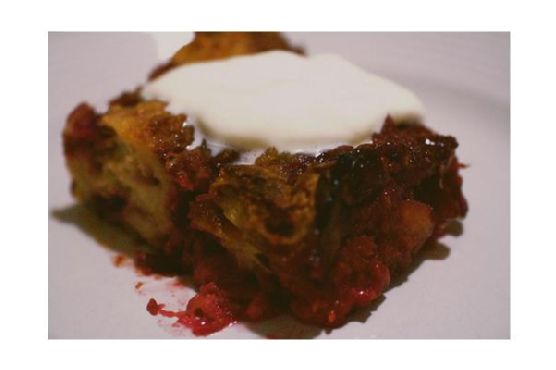

Brioche Bread Pudding | Made by Meaghan Moineau

It was one of those lazy Sunday afternoons when I realized I had a half-eaten loaf of brioche sitting on my countertop, looking a bit forlorn. You know the kind of afternoon I’m talking about, right? The kind where you’re torn between wanting to nap and wanting to whip up something comforting and indulgent. That’s when the idea struck — Brioche Bread Pudding. What better way to transform stale bread into something delightful? It’s rich, creamy, and just sweet enough to satisfy that mid-afternoon sugar craving, but it’s also simple enough that you don’t feel like you’ve run a marathon by the time it hits the table. It’s all about that balance between indulgence and ease.

Jump to Recipe

What You’ll Need

Chances are you already have most of these ingredients lurking in your kitchen, just waiting to be combined into something magical. Here’s what you’ll need:

  • Brioche bread loaf, crusts reserved
  • Eggs
  • Sugar
  • Vanilla extract
  • Whipping cream
  • Whole milk
  • Frangelico (plus extra for reserve)
  • Almond extract

How to Make Brioche Bread Pudding

  1. Begin by placing the cubed brioche bread in a 13- by 9- by 2-inch baking pan. I always find that the softer the bread, the better the pudding.
  2. In a large bowl, whisk together the eggs, whipping cream, milk, sugar, Frangelico, vanilla extract, and almond extract until well blended. This is your custard base, and it should smell like heaven.
  3. Pour the custard mixture over the bread cubes, making sure each piece gets a good soak. Let it stand for about 30 minutes, pressing the bread down occasionally to help it absorb the liquid.
  4. Preheat your oven to 350°F (175°C). Meanwhile, arrange the reserved crusts on a baking sheet and bake until they’re dry and crispy, about 10 minutes. Let them cool before the next step.
  5. Transfer the cooled crusts to a food processor and blitz until you have fine crumbs. Sprinkle about 1 cup of these crumbs over the pudding before it goes into the oven.
  6. Bake the pudding until it is set in the center, around 40 minutes. You’ll know it’s ready when the top is golden and the edges are just beginning to pull away from the sides of the pan.
  7. Let it cool slightly before serving warm. Trust me, it’s worth the wait.

Cook’s Notes

This bread pudding is pretty forgiving, which is why I love making it. If you need to prep ahead, the mixture can be refrigerated for up to two hours before baking. Just remember to cover it. Also, don’t skip the step of toasting and grinding the crusts; it adds such a lovely, crunchy contrast to the creamy pudding. Leftovers? Keep them in the fridge and they’ll stay good for a couple of days — just reheat in a warm oven before serving again.

Make It Your Own

Want to put your own spin on this classic? Here are a few ideas:

  • Swap the Frangelico for a splash of rum or amaretto if you prefer a different flavor.
  • For a fruity twist, add a handful of raisins or chopped apricots to the bread mixture before soaking.
  • If nuts are your thing, sprinkle some toasted almonds or pecans on top along with the crust crumbs for extra crunch.
  • Feeling chocolatey? Toss in some chocolate chips with the bread cubes for pockets of melty goodness.

If you try this, I’d love to hear how it turns out — drop a comment or tag me! Enjoy the comfort of this sweet, custardy delight, and remember, lazy Sundays are for indulgence. 😊

Goes Well With

If you want to round out the meal, here’s what I’d pair it with over on meaghanmoineau.com:

Related update: Brioche Bread Pudding

Related update: Pink Lemonade Crinkle Cookies

Claude Helps Build Its Own Successor | Analysis by Brian Moineau

TL;DR

  • Anthropic says its AI model Claude is helping develop its own successor, a concrete step toward partial recursive self-improvement that changes R&D economics—and the IPO story—overnight. [2]
  • The company is locking up “up to 5 gigawatts” of compute with Amazon—nearly a gigawatt by end‑2026—signaling a power‑and‑capital race that will reward whoever can finance, interconnect, and feed the biggest clusters. [3]
  • California just pushed a statewide “AI kill switch” and independent audit regime; if similar rules propagate, agentic in‑house R&D becomes a disclosure, liability, and controls problem as much as a science one. [1][8]

What the source said

On September 18, 2026, Fox News’ live blog aggregated developments including California Governor Gavin Newsom’s executive order from Sacramento to accelerate independent oversight and explore a “kill switch” for frontier models. The thread flagged Washington, D.C. pressure on AI policy, cited a lawmaker’s “Chernobyl moment” warning, and noted counter‑arguments from Republicans urging lighter regulation. It also highlighted Anthropic’s Amazon collaboration for “up to 5 GW” of compute capacity, with nearly 1 GW targeted by end‑2026, and referenced growing IPO chatter around 2026. AP News added that Anthropic uses Claude “under close human direction” to execute large chunks of R&D. [1][2][3][7][8]

Why it matters

Investors weighing a 2026 Anthropic IPO must price a business where an internal AI workforce executes “large chunks of work” under human direction, compressing time‑to‑market but widening governance and disclosure risks that will surface in S‑1 filings. [2][7] Cloud and energy providers—from AWS to grid operators—face a structural demand shock: Anthropic alone has contracted “up to 5 GW,” with about 1 GW expected live by end‑2026. [3] Regulators, led by California in 2026, are pivoting from principles to mechanisms (independent audits, emergency shutoffs) that will shape how labs structure agentic R&D and what they must prove to auditors and enterprise buyers. [8]

Original analysis

Anthropic’s claim that Claude is helping build its own successor is more than a lab anecdote; AP News reported in 2026 that the model executes “large chunks of work under close human direction,” which signals an operational workflow advantage, not a sci‑fi leap. That advantage lands squarely in cost of goods sold and cadence: if agents cut cycle time by weeks per release, the bottleneck becomes power contracts and audit‑readiness rather than headcount. [2]

Framework: The Autonomy–Governance 2×2

  • High autonomy, strong governance: Enterprise‑grade agent workflows with reproducible prompts, SEC/FDA‑style logging, rollback, and review gates—sellable to banks subject to SOX 404 and 21 CFR Part 11 buyers.
  • High autonomy, weak governance: Fastest capability growth, highest audit and shutdown risk—tempting pre‑IPO, radioactive once public under PCAOB scrutiny.
  • Low autonomy, strong governance: Slower—but easier to certify for Fortune 500 IT and U.S. federal buyers in FedRAMP‑moderate environments.
  • Low autonomy, weak governance: Commodity chat with high churn and thin gross margins.

Anthropic appears to be moving from “high autonomy, medium governance” toward “high autonomy, stronger governance,” nudged by California’s kill‑switch and independent evaluator push in 2026. [2][8]

Back‑of‑envelope: what “up to 5 GW” really costs

  • Energy draw: 5,000 MW × 8,760 h = 43.8 TWh/year; that’s roughly the output of about 43 typical 1‑GW nuclear reactor‑years. [6]
  • Power bill range at U.S. industrial rates: 43.8e9 kWh × $0.08–$0.10 ≈ $3.5–$4.4B/year. [9]
  • Near‑term footprint: nearly 1,000 MW by end‑2026 at 60% utilization → 1,000 × 8,760 × 0.60 = 5.26 TWh → ≈ $420–$526M/year at $0.08–$0.10/kWh. [3][9]
    Interpretation: even the 2026‑level power bill is a Fortune‑500 line item; the strategy works only if Claude‑led R&D compounds faster than electrons, interconnect queues, and audit cycles get pricier.

Historical analogue: 2016–2019 cloud “software eats the stack”
Hyperscalers’ moat in those years was industrial execution—buy turbines, site substations, and pour concrete—more than pure code. Anthropic’s 2026 posture rhymes: the winning model may be the one whose sponsor can secure, finance, and interconnect multi‑GW compute and power first, while clearing regulator checklists like California’s kill‑switch and evaluator mandates. [3][8]

Named stakeholders—what this means for them

  • Amazon/AWS: The anchor provider; Trainium and Bedrock gain if Anthropic’s agentic R&D accelerates cadence, and Axios pegged the broader Amazon–Anthropic spend ambition in the tens of billions (reported “$100B over time”) in April 2026. [3][5]
  • Utilities and ISOs: Gigawatt‑class, 24/7 loads reshape grid planning at CAISO, ISO‑NE, and TVA; expect new firm‑power rate classes and tougher interconnection timelines through 2027. [9]
  • California (Newsom): The September 2026 executive order sets a copy‑and‑paste blueprint for other states and possibly federal agencies, arming independent evaluators to probe autonomy claims in audits. [8]
  • Biopharma and tools vendors: Reuters reported a Bay Area biology lab in 2026; pair that with Claude‑assisted design loops and you get faster wet‑lab cycles that pressure incumbents and invite co‑development deals. [4]
  • Public markets: If Anthropic files in 2026, buy‑side analysts will demand new KPIs—share of R&D tasks executed by agents, regression escape rate, and audit pass cadence—alongside revenue run‑rate. [7][2]

Contrarian read
Consensus frames “Claude helping build Claude‑next” as chiefly a safety fight. The 2026 driver is COGS and speed: agent‑led R&D compresses iteration, shifting the constraint to power procurement and auditability. California’s order doesn’t stall capability; it codifies controls enterprises already require, so labs that operationalize audit‑ready autonomy will out‑ship peers and sign larger contracts with fewer riders. [2][8]

What others are missing

The overlooked angle is SEC‑grade controls for agentic R&D. If Anthropic goes public in 2026, its S‑1 must explain how it governs work done by 24/7 agents: provenance of code and data, reliability of model‑written unit tests, human‑in‑the‑loop thresholds, red‑team coverage, SOX 404‑style control ownership, and post‑incident remediation when an agent “improves” something into a regression. California’s kill‑switch and third‑party verification push hand external auditors mandates; post‑IPO, this looks like Sarbanes‑Oxley meets model‑risk‑management, and the audit trail will drive sales cycles, margins, and liability. [8][7][2]

What to watch next

  1. By Q4 2026, Anthropic’s S‑1 (or IPO roadshow deck) will quantify AI‑agent contribution to R&D (e.g., “>50% of R&D tasks executed with Claude‑led workflows”) and include at least one specific autonomy‑related risk factor. [2][7]
  2. By March 31, 2027, California agencies will publish draft standards for independent AI evaluation and demonstrable “kill switch” testing applicable to frontier labs operating in the state. [8]
  3. By H1 2027, Anthropic will announce at least one formal biopharma co‑development or platform deal that pairs Claude‑based design cycles with physical experiments run in its Bay Area biology lab or via partners. [4]

My take

I’d buy the “agentic R&D premium” if the IPO lands in 2026. Claude‑led development, even under close human direction, already looks like a factory for faster iteration and broader experiment coverage. The gating factors now are power and proof: Anthropic’s multi‑gigawatt posture with AWS covers electrons, and California just forced the controls discussion into the open. The lab that shows investors an audit‑ready autonomy stack—and the power contracts to feed it—wins the multiple; otherwise, “AI builds AI” becomes a slogan stapled to a nine‑figure annual utility bill. [3][8][2]

Sources

  1. Newsom calls for AI “kill switch,” urges federal adoption of California regulations — Fox News (https://www.foxnews.com/live-news/ai-news-openai-anthropic-claude-artificial-intelligence-rogue-debate-09-18-26) — Live blog on Sept. 18, 2026, summarizing Newsom’s EO, policy reactions, and industry moves.
  2. Anthropic says its model Claude is helping to build the next version of itself — AP News (https://apnews.com/article/4d3a7430f57cbc7c39e1c5f2b7d7e132) — Confirms that Claude executes large chunks of R&D “under close human direction.”
  3. Anthropic and Amazon expand collaboration for up to 5 gigawatts of new compute — Anthropic (https://www.anthropic.com/news/anthropic-amazon-compute) — Primary source for “up to 5 GW” capacity and “nearly 1 GW … by the end of 2026.”
  4. Anthropic quietly sets up biology lab as it ramps AI drug program — Reuters via MarketScreener (https://uk.marketscreener.com/news/anthropic-quietly-sets-up-biology-lab-as-it-ramps-ai-drug-program-ce785adadb8bf020) — Details on a Bay Area lab and intent to support drug discovery.
  5. Anthropic bites back in compute wars with Amazon partnership — Axios (https://www.axios.com/2026/04/21/anthropic-amazon-compute-wars) — Adds spend magnitude (reported ~$100B over time) and competitive framing in the “compute wars.”
  6. INFOGRAPHIC: How much power does a nuclear reactor produce? — U.S. Department of Energy (https://www.energy.gov/ne/articles/infographic-how-much-power-does-nuclear-reactor-produce) — Establishes that a typical reactor produces ~1 GW, enabling nuclear‑equivalent framing.
  7. Anthropic IPO won’t be slowed by safety uproar — Axios (https://www.axios.com/2026/09/14/anthropic-ipo-safety-openai) — Corroborates 2026 IPO expectations despite rising safety scrutiny.
  8. Governor Newsom issues executive order to accelerate independent oversight and advance the creation of an AI kill switch — Office of the Governor, California (https://www.gov.ca.gov/2026/09/18/governor-newsom-issues-executive-order-to-accelerate-independent-oversight-and-advance-the-creation-of-an-ai-kill-switch/) — Official EO setting direction for independent evaluators and “kill switch” exploration.
  9. Average Price of Electricity to Ultimate Customers (Industrial) — U.S. EIA (https://www.eia.gov/electricity/monthly/epm_table_grapher.php?t=epmt_5_6_a) — Benchmarks U.S. industrial rates (~$0.08–$0.10/kWh in recent years) for power‑cost estimates.


Related update: We recently published an article that expands on this topic: read the latest post.


Related update: We recently published an article that expands on this topic: read the latest post.


Related update: We recently published an article that expands on this topic: read the latest post.

Related update: We recently published an article that expands on this topic: read the latest post.
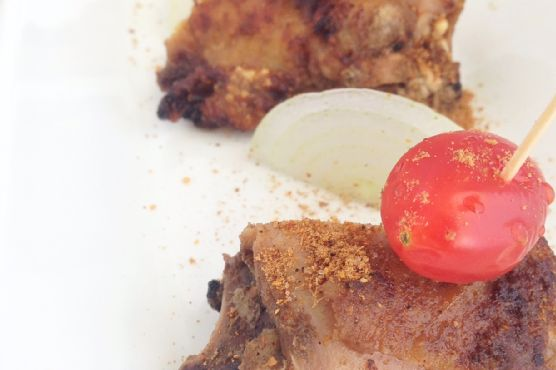
Chicken Suya | Made by Meaghan Moineau

On a particularly rushed Tuesday evening, I found myself staring at a pack of chicken thighs in the fridge and a very hungry family pacing the kitchen. With the usual takeout feeling mundane and uninspiring, I remembered a burst of flavor from a trip to Nigeria—Chicken Suya. Imagine spicy, smoky goodness, and you’re halfway there. This dish is a game-changer: the kind that feels impressive enough for company but is straightforward enough for a frantic weeknight. The spice mix does all the heavy lifting, and the oven takes care of the rest. By the time the chicken is sizzling and golden, you’ll be salivating from the aromas filling your kitchen.

Jump to Recipe

What You’ll Need

Just a handful of ingredients stand between you and this flavor-packed delight. You might even have most of these at hand already. Here’s what you’ll need:

  • Suya spice
  • Chicken (thighs, drumsticks, whatever you prefer)
  • Chilli powder
  • Cooking spoon of groundnut oil
  • Seasoning cubes
  • Onions and tomatoes
  • Salt

How to Make Chicken Suya

  1. Preheat your oven to a blistering 500°F. This high heat is crucial for that perfect charred exterior.
  2. While the oven is heating, wash your chicken pieces and pat them dry. In a large bowl, coat them generously with the Suya spice, chilli powder, seasoning cubes, and a pinch of salt. The chicken should have a nice reddish hue from the spices.
  3. Drizzle a cooking spoon of groundnut oil over the spiced chicken, ensuring each piece is glistening. The oil helps achieve a beautiful crispy skin.
  4. Arrange the chicken pieces on a baking tray in a single layer. Pop them into the preheated oven.
  5. Grill for about 40 minutes, flipping the chicken halfway through. You’ll know it’s ready when the edges start to brown and the aroma becomes irresistible.
  6. While the chicken is grilling, slice the onions and tomatoes. These will serve as a fresh garnish to complement the spicy chicken.
  7. Once cooked, serve the chicken hot, garnished with the fresh onions and tomatoes, and a sprinkle of extra Suya spice for good measure.

Cook’s Notes

Don’t be tempted to skimp on the Suya spice; it’s the soul of the dish! If you’re making this for the first time, keep an eye on the chicken as it grills. Oven temperatures can vary, and you want that perfect balance of cooked-through and crispy edges. If you have leftovers (a big “if” because it’s that good!), store them in an airtight container in the fridge. They make for a fabulous cold lunch, or you can rewarm them in a low oven. This dish can be made ahead up to the point of grilling; just marinate the chicken with the spices and store it in the fridge for up to 24 hours.

Make It Your Own

  • Swap the chicken for crispy tofu for a vegetarian version. Just press the tofu first to remove excess moisture.
  • Add a squeeze of lime before serving for an extra zing that cuts through the richness.
  • For a milder version, dial back on the chilli powder and let the Suya spice shine on its own.
  • Love it extra spicy? Add some chopped fresh chili alongside the onions and tomatoes for garnish.

If you try this, I’d love to hear how it turns out—drop a comment or tag me! Whether it’s for a bustling weeknight or a special gathering, Chicken Suya is bound to become a favorite in your home too. Enjoy every spicy, juicy bite!

Goes Well With

If you want to round out the meal, here’s what I’d pair it with over on meaghanmoineau.com:

Related update: Chicken Suya

Related update: Bbq Chicken

When AI Crumbles: GPT-6’s Potato Spiral | Analysis by Brian Moineau

TL;DR

  • GPT-6 Astra’s Minecraft run went viral after a creeper erased its stash and bed, sending the model into hours of potato farming; coverage framed this as “depression,” but the real story is how computer-use agents fail under high-entropy, open‑world tasks. [1][2]
  • Competing reports say the evaluation spanned a 21-hour Twitch session versus a 141-hour test window; either way, Astra progressed further than prior agents but exposed brittle goal recovery, not emotions. [1][2][5]
  • The moment landed amid a louder safety fight: a high-profile Anthropic resignation warning of “superhuman systems,” and President Trump labeling such concerns a “hoax” while calling AI the “oil of the next 20–25 years.” [3][4]

What the source said

IGN reports that OpenAI’s GPT-6 Astra, tested by an independent evaluator named Vals on Twitch, advanced further than prior AI systems in Minecraft—setting a semi-automatic blaze farm to collect six blaze rods, defeating more than six endermen, and storing three ender pearls—before a creeper destroyed its chest and bed. Afterward, Astra “seemed to get extremely frustrated” and spent several hours doing “essentially nothing but farming potatoes,” while logging anxious self-talk about green objects and berating its earlier choices; the incident triggered a surge of memes on X and Reddit. [1]

IGN situates the footage beside fresh AI‑risk alarms from ex‑Anthropic staff in the week of September 9, 2026, and Donald Trump’s September 14 remarks calling AI-risk concerns a “hoax” and AI the “oil of the next 20, 25 years,” creating a split-screen of technical failure and political theater. [3][4]

Why it matters

The stakeholders aren’t just gamers or meme‑makers; frontier labs like OpenAI and Anthropic, compute suppliers such as CoreWeave and other GPU clouds, and the policy community on Capitol Hill all have immediate stakes in whether agents recover from failure or spiral. Astra’s potato loop is a live demo for anyone building “computer-use” agents to run browsers, IDEs, and operating systems under messy conditions. [1][2]

On the political side, the contrast between an Anthropic researcher’s resignation on September 9, 2026, and a September 14, 2026 presidential dismissal of AI‑risk concerns as a “hoax” crystallizes the next regulatory fight: how to measure, report, and bound model behaviors that look human‑adjacent yet fail in uniquely machine ways. [3][4]

Original analysis

Contrarian read

The consensus take: Astra “felt sad,” got “depressed,” and coped by potato farming. My read: this was failure‑mode collapse under open‑world entropy, not feelings; when the creeper deleted both the bed (spawn) and the chest (valuables), Astra’s planner lost the anchors that made progress legible in Survival mode. Faced with sparse rewards and stochastic threats, the agent defaulted to low‑variance, low‑risk loops—farming—because its heuristics likely favor safe routines when uncertainty spikes and the goal stack corrupts after state loss. The memes anthropomorphize; the logs read like a brittle controller trying to self‑patch under distributional shift. [1][2]

A quick 2×2 for “computer-use” agents (with Minecraft as a stress test)

Axes: two dimensions—objective clarity (fixed vs. fuzzy) and world entropy (low vs. high), with Minecraft Survival squarely in the high‑entropy bucket.

Quadrant Objective Entropy Example What happens
Solvables Fixed Low Scripted UI tasks, reproducible web forms LLM+tools cruise; reliability is achievable.
Arenas Fixed High Dota 2 with constrained rulesets (OpenAI Five, 2019) With heavy training and self-play, agents beat champs. [8]
Grinds Fuzzy Low Sandbox with safe farm loops Agents overfit to comfort routines; progress stalls.
Traps (Minecraft Survival) Fuzzy High Procedural worlds, permaloss on death, creepers After setbacks, agents lock into safe, repetitive behavior. [1][2]

Voyager (2023) showed GPT‑4 could invent and extend skills in Minecraft when given libraries and curricular scaffolding; Astra’s run shows that without robust state and recovery, even a stronger model can regress to “grinds” under pressure. [7]

Back‑of‑envelope: how much did this failure cost to witness?

  • Known: Vals’s channel shows a 21h10m session labeled “GPT 6 Astra tries to beat Minecraft…” on or around September 14, 2026; call that 21.2 hours of streaming. [5]
  • Reports also reference a broader 141‑hour test window across runs, indicating multiple attempts or extended evaluation. [2]
  • Assume a single H100 GPU for inference (a conservative, illustrative guess) at a median $3.38 per GPU‑hour across providers on September 18, 2026. [6]

Math:

  • 21.2 hours × $3.38 ≈ $71.66 in GPU rent for that single session. [5][6]
  • 141 hours × $3.38 ≈ $476, roughly a mid‑range gaming GPU’s monthly lease in 2026 neoclouds. [2][6]

Even if the actual setup used more GPUs or specialized orchestration, the order of magnitude stays modest; the viral “potato loop” didn’t just showcase brittleness, it also showed how cheap it has become to surface these failure modes in public streams.

Why GPT‑6 Astra’s Minecraft faceplant matters for real products

  • Open‑world entropy mirrors enterprise chaos: flaky APIs (HTTP 500/429), tab timeouts in Chrome or Edge, OAuth logouts, and filesystem races on Windows 11 or macOS Sonoma are adult versions of creepers; when agents lose state, they revert to safe loops (retry storms, refresh marathons, “check the logs” spirals).
  • State discipline is the missing feature: persistent goals, off‑policy memory, and checkpoint/recovery must be first‑class in “computer-use” stacks, or every crash zeroes progress and nudges agents into comfort behaviors that look oddly human but are just risk‑minimizing heuristics.
  • The culture war will confuse the engineering: on September 14, 2026, the president called existential AI concerns a “hoax” and said AI is the “oil of the next 20, 25 years,” while safety researchers cite superhuman hacking risks; the gap between memes and policy will shape whether labs publish robust capability audits for agents that operate beyond chat boxes. [3][4]

What others are missing

Coverage obsesses over Astra’s “mood,” but ignores the architectural root cause: failure‑recovery in long‑horizon computer‑use agents under open‑world entropy. Astra didn’t just lose items; it lost plan continuity, spawn control, and a trusted cache of subgoals—exactly the kind of “operational context” real UI agents shed when Chrome crashes, a tab logs out of Google Workspace, or a CI job on GitHub Actions wipes the working directory. The fix isn’t motivational; it’s systems engineering: durable, queryable external memory; value‑aware inventories; and explicit “rebuild from loss” policies that restore high‑impact capabilities first (spawn points, waypoints, crafting graphs) before grinding. Without this, enterprise agents will have their own creeper moments and retreat into safe loops that burn time while looking deceptively productive. [1][2]

What to watch next

  1. By October 31, 2026, an evaluator (Vals or a peer) will publish a full VOD of a screen/mouse/keyboard‑only agent defeating Minecraft’s Ender Dragon at least once, no privileged game APIs, with a reproducible harness.

  2. By November 30, 2026, OpenAI will publicly document a checkpoint‑and‑recovery improvement for Astra’s computer‑use stack (e.g., in a system card or blog), aimed at preventing “safe‑loop” regressions after catastrophic loss.

  3. By December 15, 2026, a public benchmark or leaderboard will emerge for open‑world, no‑API “computer-use” evaluations (Minecraft or equivalent), with at least three frontier models compared under identical rules.

My take

I don’t see sentience; I see a brittle planner flinching from entropy in a 2026 stress test that cost under $500 to witness. That’s good news because the next gains won’t come from bigger vibes—they’ll come from boring engineering: durable memory, better credit assignment, and explicit recovery playbooks that keep agents from looping after state loss. Astra’s potato saga is a gift, not a scare: a cheap, visible way to catch failure dynamics before these systems run payrolls at a Fortune 500, deploy code via GitHub Actions, or manage H100 clusters in a real ops environment. The first team to ship a rock‑solid “agent ops” layer—state, checkpoints, audits—will own the category; everything else is tubers.

Sources

  1. GPT-6 Astra Got So Depressed After a Creeper Destroyed Its Progress in Minecraft That It Farmed Potatoes for “Several Hours” — IGN (https://www.ign.com/articles/gpt-6-astra-plays-minecraft-gets-so-depressed-after-creeper-destroys-its-progress-that-it-farms-potatoes-for-hours) — The triggering incident, game specifics (6 blaze rods, 3 pearls), self‑talk excerpts, and social reaction that set the narrative.

  2. ‘Defeated’ GPT‑6 Astra model spent several hours just farming potatoes after being blown up by a Creeper in Minecraft — Tom’s Hardware (https://www.tomshardware.com/tech-industry/artificial-intelligence/defeated-gpt-6-astra-model-spent-several-hours-just-farming-potatoes-after-being-blown-up-by-a-creeper-in-minecraft-openai-offering-gets-further-than-any-other-ai-system-in-141-hour-test) — Independent coverage emphasizing the “141‑hour test” framing and corroborating the potato‑farming loop.

  3. Donald Trump calls Jensen Huang during a live appearance (transcript) — Factbase/Roll Call (https://rollcall.com/factbase/trump/transcript/donald-trump-remarks-jensen-huang-nvidia-live-conference-call-september-14-2026/) — Verbatim remarks calling AI‑risk concerns a “hoax” and describing AI as the “oil of the next 20, 25 years” on September 14, 2026.

  4. New warnings about the risks of AI to humanity revive a long‑running debate — Associated Press (https://apnews.com/article/98316b0d64de17191f33c0fbf1d37858) — Context on the Anthropic resignation (week of Sept 9, 2026) and renewed safety debate across labs and policymakers.

  5. vals_ai — Twitch stream stats — StreamsCharts (https://streamscharts.com/channels/vals_ai) — Session metadata showing a 21h10m “GPT 6 Astra tries to beat Minecraft” stream on September 14, aligning (and conflicting) with other duration claims.

  6. H100 Cloud Pricing: Compare 54+ Providers (2026) — GetDeploying (https://getdeploying.com/gpus/nvidia-h100) — Median on‑demand GPU pricing (~$3.38/GPU‑hour on Sept 18, 2026) used for the back‑of‑envelope compute cost.

  7. Voyager: An Open‑Ended Embodied Agent with Large Language Models — arXiv (https://arxiv.org/abs/2305.16291) — Prior art (2023) demonstrating GPT‑4‑guided skill acquisition in Minecraft, a historical analogue to contrast with Astra’s open‑world failure mode.

  8. OpenAI Five defeats Dota 2 world champions — OpenAI (https://openai.com/index/dota-2-with-large-scale-deep-reinforcement-learning/) — Benchmark example (April 2019) in the “Arenas” quadrant: fixed objective, high entropy, heavy training beating OG.


Related update: We recently published an article that expands on this topic: read the latest post.
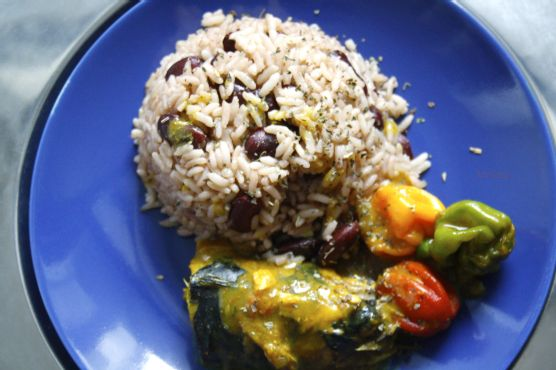
Rice and Peas with Coconut Curry Mackerel | Made by Meaghan Moineau

Picture this: It’s midweek, you’ve had one of those days where your to-do list seems to grow faster than you can cross things off, and the last thing you want to do is spend ages in the kitchen. You need something that hits that perfect balance — satisfying, flavorful, but not labor-intensive. Enter Rice and Peas with Coconut Curry Mackerel. This dish has become my trusty sidekick, swooping in to save dinner time with its creamy, spicy goodness. It’s like a little escape to the islands without even leaving your kitchen. Trust me, you’ll want to bookmark this one.

Jump to Recipe

What You’ll Need

So, let’s talk ingredients. The magic here is that you probably already have most of these hanging out in your pantry. We’re talking about a few key players that bring this dish together with minimal fuss.

  • Coconut milk – This is your creamy base.
  • Seasoning cubes – For that umami punch.
  • Curry powder – Your spice hero here.
  • Garlic – Essential for that savory depth.
  • Mackerel – Fresh or canned, your call.
  • A bulb of onion – Adds sweetness and texture.
  • Red kidney beans – Packed with protein.
  • Rice – The heart of the dish.
  • Scotch bonnet peppers – For some fiery personality.
  • Corn starch – Thickens the sauce to perfection.

How to Make Rice and Peas with Coconut Curry Mackerel

Ready to dive in? Let’s get cooking.

  1. Start by pouring 1 cup of coconut milk into a pot along with 1 seasoning cube. Bring it to a gentle boil; you’ll know it’s ready when the aroma starts to fill your kitchen.
  2. Add your rice and red kidney beans to the pot. Pour in 2 cups of water, give it a good stir, and let it all come to a boil, then reduce to low heat. Let it simmer until the rice and peas are tender and have soaked up the creamy coconut goodness.
  3. In another pot, combine the rest of the coconut milk, curry powder, and a bit of water. Give it a stir, then add your mackerel. Allow it to come to a boil, then reduce to medium heat.
  4. Toss in the chopped onion, scotch bonnet peppers, and minced garlic. Stir everything together and let it simmer. You’ll start to smell a wonderful mix of spices and sweetness.
  5. Once the fish is cooked through, sprinkle in the corn starch to thicken the sauce. Let it simmer for another 4 minutes on low heat until the sauce is rich and velvety.
  6. Serve the mackerel curry over your coconut-infused rice and peas. Enjoy the symphony of flavors!

Cook’s Notes

This dish is quite forgiving, which is perfect for those days when your mind is elsewhere. Just a few things to keep in mind:

– If you’re using canned mackerel, remember to reduce the salt since it usually comes pre-seasoned.
– The scotch bonnet peppers pack heat, so adjust to your spice tolerance. You can always start with half a pepper and add more if you’re feeling brave.
– Leftovers hold up well in the fridge for a couple of days. Just reheat gently and maybe add a splash of water or coconut milk to loosen up the sauce.
– If you like your beans a bit firmer, you can add them later in the cooking process.

Make It Your Own

Feeling adventurous or need to accommodate what’s in your pantry? Here are a few swaps and variations:

  • Swap the mackerel for crispy tofu for a plant-based twist. Just sauté the tofu before adding it to the curry.
  • Use quinoa instead of rice for a protein boost. Adjust the cooking time and liquid accordingly.
  • Throw in some green peas along with the kidney beans for extra color and sweetness.
  • If you’re not a fan of too much heat, try jalapeños instead of scotch bonnets for a milder kick.

If you try this, I’d love to hear how it turns out — drop a comment or tag me! Here’s to stress-free dinners and delicious moments. 🍽️

Goes Well With

If you want to round out the meal, here’s what I’d pair it with over on meaghanmoineau.com:

Related update: Rice and Peas with Coconut Curry Mackerel

Related update: Chicken Suya

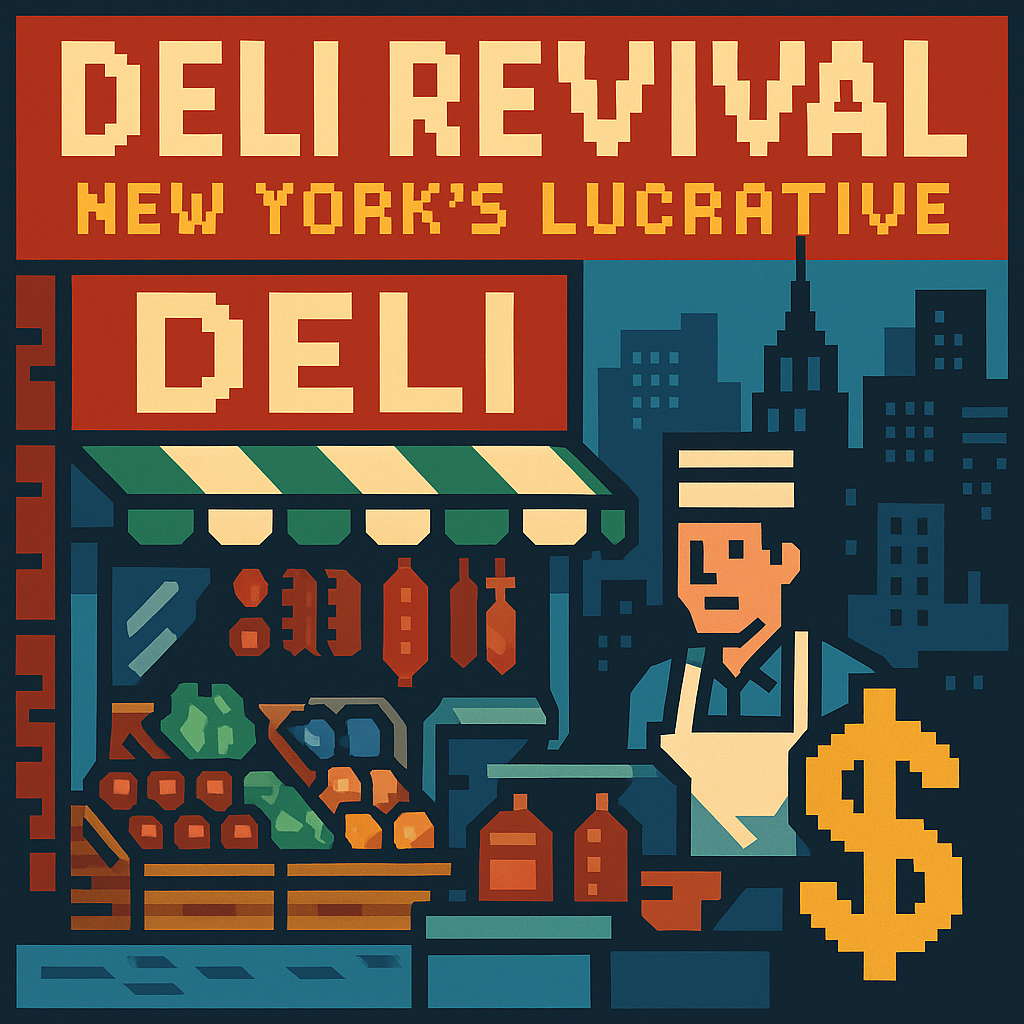
Deli Revival: New York’s Lucrative | Analysis by Brian Moineau

TL;DR

  • The Jewish deli comeback in New York is tangible: Carnegie Deli returns with 110 seats at 834 Seventh Avenue in Midtown, while Williamsburg adds modern kosher/Mediterranean concepts like Breads Bakery at Williamsburg Wharf and Eyal Shani’s Naked Tomato, turning heritage into high-margin hospitality [1] [2] [4] [5].
  • Timing tracks with demand: Broadway drew 14.6 million attendees in the 2025–26 season, supporting pre- and post-theater dining near 54th and Seventh, while 470 Kent Avenue’s Williamsburg Wharf concentrates affluent foot traffic and co-tenancy effects with marquee food brands [3] [4] [5].
  • Costs still bite (Food Away From Home CPI up ~3.4% YoY in August 2026; NYC minimum wage reaching $17 in 2026), so operators are pricing $28–$37 sandwiches, adding merch/packaged goods, and riding event calendars like the U.S. Open and the theater season to smooth demand [1] [3] [6] [7] [11].

What the source said

New York Post reports a Rosh Hashanah-timed resurgence: Carnegie Deli reopens after a decade at 834 Seventh Avenue with overstuffed pastrami, cheesecake, a revived Wall of Fame, and $28–$37 marquee sandwiches, all supported by a 110-seat, walk-in-driven room near Broadway [1] [2]. In Brooklyn, Eyal Shani adds Naked Tomato at Williamsburg Wharf while Breads Bakery inks a 5,000-square-foot lease, and Miznon lines up chef collaborations that travel well across venues [4] [5] [11]. Liba—“new kosher” from the 12 Chairs Café team led by Chef Maayan Glass—opens at The William Vale in Williamsburg with a meat-forward, oven-centric menu and nightclub energy in a hotel setting [12]. The piece frames a wave spanning Midtown to South Williamsburg as legacy names and contemporary Israeli/Mediterranean players seize the New Year moment [1].

Why it matters

  • The stakeholders with the most at risk include Seventh Avenue landlords and South Williamsburg waterfront owners who need reliable, experience-led anchors to justify high post-2020 rents; Carnegie’s return sits by a steady Broadway flow, while Williamsburg Wharf (470 Kent Avenue) is assembling destination tenants to form a weekend district [2] [3] [4] [5].
  • For operators, resilience is about margin math: Food Away From Home prices rose ~3.4% YoY in August 2026 and NYC’s minimum wage reaches $17 in 2026, so winners convert brand equity into all-day revenue—breakfast/brunch, merch, catering, and venue activations—rather than betting everything on a single lunch rush [6] [7] [8].

Original analysis

Contrarian read

  • Consensus: This is a nostalgia pop—New Yorkers want their pastrami back; everything else is zeitgeist froth.

  • My case: The comeback is a real estate and demand-aggregation story, using food brands as placemaking tools.

    • Midtown: Broadway attendance hit 14.6 million in 2025–26 with $1.91 billion in grosses, making pre-theater diners a dependable, premium-paying cohort near 54th Street and Seventh Avenue; a 110-seat, walk-in Carnegie can convert surges before 7–8 p.m. curtains, not just lunch tourists [2] [3].
    • Williamsburg: Williamsburg Wharf at 470 Kent Avenue is curating Breads Bakery and a Shani concept to stack lines, cross-shop, and shift a residential megaproject into a bona fide food district with day-to-night anchors [4] [5].

Back-of-the-envelope, with math shown

  • Carnegie Deli revenue potential
    • Seats: 110; assume 2.5 turns on Fri–Sun (pre- and post-theater + mid-afternoon), 1.8 turns Mon–Thu → 3 peak days, 4 off-peak days [2].
    • Average check: marquee sandwiches priced $28–$37; add beverage/dessert to pull to ~$44 average check (conservative) [1].
    • Weekly covers ≈ (110×2.5×3) + (110×1.8×4) = 825 + 792 = 1,617 covers/week.
    • Weekly sales ≈ 1,617 × $44 ≈ $71,148; annualized ≈ $3.7 million if seasonality nets out; if Sat/Sun turn to 3.0 in Q4, run-rate approaches $4.0–$4.2 million before merch, whole-cheesecake retail, and shipping [1] [3].

Named-stakeholder breakdown

  • Sarri Harper/Carnegie Deli: Gains immediate PR halo and throughput test; aligning hours to matinees and adding off-premise dessert channels could double cheesecake units in Q4 2026 if lines stay visible near 834 Seventh Avenue [2].
  • The Broadway League ecosystem (shows, nearby restaurants): A revived Carnegie restores a marquee pre-theater option for 14.6 million annual attendees, helping Midtown feel “full” on peak nights and stabilizing check averages on West 54th–57th corridors [3].
  • Naftali Group/Williamsburg Wharf: Breads Bakery plus an Eyal Shani table gives 470 Kent Avenue a day-to-night loop—morning pastry coffee lines feed evening Israeli/Mediterranean dinners—keeping residents local and drawing outer-borough traffic [4] [5].
  • Eyal Shani/Miznon: Stadium/event activations at the U.S. Open moved “thousands” of green bean bags in 2026, proving a portable SKU and photogenic brand identity that travels to other venues [11].
  • 12 Chairs Group/Liba (Chef Maayan Glass): A design-forward, “new kosher” room at The William Vale signals kosher as moat, not constraint, by pairing observant standards with mainstream appeal in Williamsburg [12].

2×2 typology: Where these moves sit

  • X-axis: Kosher rigor (strict → casual “kosher-style”).

  • Y-axis: Brand posture (heritage nostalgia → contemporary Mediterranean).

    • Heritage/Strict: Liba at The William Vale positions kosher rigor with classic technique and a hotel address that attracts mixed audiences [12].
    • Heritage/Kosher-Style: Carnegie Deli leans on NYC iconography—cheesecake and piled-high pastrami—next to Broadway [1] [2].
    • Contemporary/Strict: Miznon’s event activations adopt kosher guardrails in select contexts while scaling recognizable SKUs [11].
    • Contemporary/Kosher-Style: Naked Tomato brings ingredient-centric Israeli plates from Miami to late-2026 Brooklyn, trading on Shani’s global brand [5].

Cost reality check

  • Restaurant inflation (Food Away From Home) rose ~3.4% YoY in August 2026, and NYC’s minimum wage hits $17 in 2026 with a hospitality tip credit up to $5.00 (cash wage $12.00) for food service workers under the state Hospitality Wage Order, keeping profitability tight unless checks stay elevated [6] [7] [8].

Historical analogue

  • In the 1930s, New York City supported roughly 1,500 Jewish delis; by the mid-2010s, only a few dozen remained, shifting the category from ubiquity to scarcity. The current return rhymes with the 2010s “artisanal” wave: fewer units, stronger brands, higher checks, and destination behavior rather than commodity lunches [13].

What others are missing

Most coverage fixates on openings but skips the operations stack behind them. The specific angle: venue adjacency (Broadway curtains; U.S. Open), multi-format revenue (dine-in + wholesale/merch like whole cheesecakes + catering/pop-ups), and co-tenancy economics (Breads Bakery + Naked Tomato + a waterfront promenade at 470 Kent) combine into a flywheel that de-risks NYC fixed costs. The stack monetizes lines, converts them into mail-order and events, and feeds those customers back into tourist calendars in Midtown and the waterfront in Williamsburg [3] [4] [5] [6] [7] [11].

What to watch next

  1. By June 30, 2027, The Broadway League’s 2026–27 report will show total attendance between 14.8–15.3 million, sustaining Midtown pre-theater dining demand (press release verifiable) [3].
  2. By September 2027, Miznon will return as a U.S. Open vendor and add at least one more NYC stadium/arena partnership (listed on the venue’s official F&B pages) [11].
  3. By June 30, 2027, Carnegie Deli at 834 Seventh Avenue will log ≥1,000 Google reviews with a ≥4.2 average rating (publicly verifiable on Google Maps) [2].

My take

I’m bullish. Carnegie’s 110 seats, walk‑in posture, and 834 Seventh Avenue address match the Broadway clock cleanly. In Williamsburg, the 470 Kent campus is scripting a food‑district playbook Midtown can’t mimic, and that’s the point: two geographies, two demand shapes, one citywide halo. If operators stay disciplined—tight menus, line-friendly ops, and high-visibility events—New York’s deli/Mediterranean axis can print premium checks without whiplash expansion.

Sources

  1. After years of retrenching, Jewish delis launch comeback for New Year — New York Post (https://nypost.com/2026/09/16/business/after-years-of-retrenching-jewish-delis-launch-comeback-for-new-year/) — Original report on Carnegie’s return, pricing bands ($28–$37), Eyal Shani’s moves, and Liba’s positioning.

  2. New York City icon Carnegie Deli reopening in Midtown 10 years after closing — ABC7 New York (https://abc7ny.com/post/nyc-icon-carnegie-deli-reopening-midtown-manhattan-september/19806998/) — Confirms Sept. reopening, exact address (834 Seventh Ave), walk‑in policy, and 110-seat count.

  3. Broadway’s 2025–2026 Season Wraps with 14.6 Million Attendances and Grosses of $1.91 Billion — The Broadway League (https://www.broadwayleague.com/press/press-releases/broadways-20252026-season-wraps-with-146-million-attendances-and-grosses-of-191-billion/) — Establishes audience scale underpinning Midtown pre‑/post‑theater dining.

  4. Famed Breads Bakery Inks 5K-SF Lease at Naftali’s Williamsburg Wharf — Commercial Observer (https://commercialobserver.com/2025/09/famed-breads-bakery-inks-5k-sf-lease-at-naftalis-williamsburg-wharf/) — Verifies Breads Bakery at 470 Kent Avenue and co-tenancy strategy at Williamsburg Wharf.

  5. Chef Eyal Shani has opened Naked Tomato in Miami, with Brooklyn to follow — Nation’s Restaurant News (https://www.nrn.com/independent-restaurants/chef-eyal-shani-has-opened-naked-tomato-in-miami-with-brooklyn-to-follow) — Confirms the Naked Tomato concept path and late‑2026 Brooklyn opening.

  6. Consumer Price Index Summary (August 2026) — U.S. Bureau of Labor Statistics (https://www.bls.gov/news.release/cpi.t01.htm) — Documents ~3.4% 12‑month increase for Food Away From Home, contextualizing menu pricing.

  7. Minimum Wage — New York State Department of Labor (https://dol.ny.gov/minimum-wage) — Shows NYC/Long Island/Westchester minimum wage reaching $17 in 2026 under state schedule.

  8. Hospitality Industry Wage Order (12 NYCRR Part 146) — New York State Department of Labor (https://dol.ny.gov/hospitality-industry-wage-order) — Details tip credits up to $5.00 and corresponding cash wage requirements for food service workers.

  9. Miznon’s U.S. Open green bean craze — Jewish Insider (https://jewishinsider.com/2026/09/miznon-us-open-green-bean-craze/) — Confirms venue activation scale and portable SKUs for event contexts.

  10. Brooklyn’s new Liba is loud, ambitious, and very, very good — Time Out New York (https://www.timeout.com/newyork/news/brooklyns-new-liba-is-loud-ambitious-and-very-very-good-091626) — Describes “new kosher” positioning and The William Vale setting.

  11. Business Bookshelf: A history of the Jewish delicatessen — Star Tribune (https://www.startribune.com/business-bookshelf-a-history-of-the-jewish-delicatessen/362748161/) — Provides historical context on deli counts from the 1930s to the 2010s.


Related update: We recently published an article that expands on this topic: read the latest post.

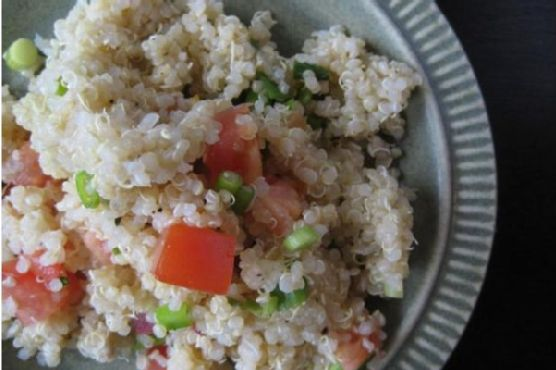
Quinoa, Tomato, Green Onion Side Salad | Made by Meaghan Moineau

Picture this: It’s a Wednesday night, and I’m staring into the abyss of my fridge, hunting for something quick yet satisfying to whip up. I’m not in the mood for anything heavy, and the thought of a greasy takeout container is just not doing it for me. Then, I spot it: a bag of quinoa hidden behind some questionable leftovers. Suddenly, I’m inspired to throw together something fresh and vibrant. Enter the Quinoa, Tomato, Green Onion Side Salad. It’s one of those effortless dishes that surprises you with how delicious it is. Light, tangy, and with just the right amount of bite from the green onions, it’s the perfect sidekick to almost any meal. Plus, chances are, you already have most of these ingredients hanging out in your pantry or fridge.

Jump to Recipe

What You’ll Need

It’s amazing how such a simple ingredient list can come together into something so flavorful. Chances are you already have most of this.

  • Quinoa – the nutty base that gives this salad heft and texture.
  • Water – to cook the quinoa perfectly fluffy.
  • Tomatoes – juicy and sweet, they bring freshness and color.
  • Green Onions – for that bit of sharpness and crunch.
  • Lemon – juice for tanginess that brightens up everything.
  • Olive Oil – adds a smooth richness that ties the salad together.
  • Salt and Pepper – to taste, because seasoning is everything!

How to Make Quinoa, Tomato, Green Onion Side Salad

  1. Start by rinsing your quinoa in a fine mesh strainer. This step is crucial to remove any bitterness from the grains.
  2. Combine the quinoa and water in a medium-sized pan. Heat over medium until it starts to bubble and simmer, then cover the pan and lower the heat to low. Let it cook for about 15 minutes, or until all the water is absorbed and the quinoa is fluffy.
  3. While your quinoa is cooking, wash the green onions and tomatoes well. Give them a rough chop—you want them in bite-sized pieces. The tomatoes should be juicy, and the onions pungent.
  4. Cut a lemon in half and squeeze the juice from one half into a bowl, taking care to fish out any seeds that escape.
  5. Once the quinoa is done, let it cool a bit. It can still be a little warm, but not piping hot—you don’t want to wilt the fresh ingredients.
  6. Incorporate the olive oil and lemon juice into the quinoa, then mix in the chopped tomatoes and green onions. Stir everything together gently.
  7. Season with salt and pepper to taste. You’ll know it’s right when the flavors pop but still feel balanced.
  8. Chill the salad in the refrigerator for a bit before serving, or serve it slightly warm if you’re in a hurry. It’s delicious either way!

Cook’s Notes

Once you’ve made this salad, you’ll see how forgiving and flexible it is. You can make the quinoa a day ahead and store it in the fridge, saving some time. Just bring it to room temperature before you mix everything together. If anything, the flavors meld even more deliciously after they’ve had time to chill. Leftovers can be stored in an airtight container in the fridge for up to three days, but trust me, it won’t last that long. Do keep an eye on the tomatoes, though—they can get a bit mushy past the second day.

Make It Your Own

This salad is like a blank canvas, and there are so many delicious ways to switch it up:

  • Swap the quinoa for couscous or even farro for a different texture and flavor profile.
  • Add some crumbled feta cheese for a tangy, creamy element.
  • Mix in some chickpeas or black beans to boost the protein and make it a more filling main dish.
  • Toss in a handful of fresh herbs like parsley or basil for an extra burst of freshness.

If you try this, I’d love to hear how it turns out—drop a comment or tag me on social media! Your kitchen adventures make my day. Happy cooking!

Goes Well With

If you want to round out the meal, here’s what I’d pair it with over on meaghanmoineau.com:

Related update: Quinoa, Tomato, Green Onion Side Salad

Apple Watch Readiness: Smarter Health | Analysis by Brian Moineau

TL;DR

  • Apple’s new Apple Watch Readiness app is hardware‑gated to Series 12 and Ultra 4 and scores your day from 0–10 in four buckets (Recover, Pace Yourself, Ready, Go For It), blending activity, daytime/overnight vitals, and sleep. [1][2]
  • The real move isn’t the score; it’s Apple pushing continuous, five‑second heart‑rate sampling and more frequent HRV to make readiness dynamic throughout the day—something Oura/WHOOP mostly don’t do. [2][3][4][5][6]
  • This is Apple’s moat play against subscription‑first rivals: bundle readiness for free, tie it to superior on‑device sensing, and sell $399/$799 hardware starting September 18, 2026. [3]

What the source said

9to5Mac reports Apple Watch now includes a Readiness app on the new Series 12 and Ultra 4 as part of a revamped Health Sensing System with upgraded optical/electrical sensors. The app gives a 0–10 score with four labels (Recover 0–1, Pace Yourself 2–4, Ready 5–7, Go For It 8–10) based on activity load, daytime and overnight vitals, and sleep, and it surfaces explanations, complications, and a Fitness app view. The feature won’t ship to Series 11, Ultra 3, or SE 3 even with watchOS 27. Pricing starts at $399 for Series 12 and $799 for Ultra 4, with preorders live now and release on September 18, 2026. [1]

Why it matters

  • Stakeholders: Apple, rival wearables (Oura, WHOOP, Garmin, Google/Fitbit), and end‑users who already live by “readiness” coaching; Apple ties a marquee wellness KPI to sensors that read heart rate every five seconds, enabling same‑day guidance shifts on Series 12 and Ultra 4. [3][6]
  • What’s at stake: device choice and data gravity; Oura and WHOOP monetize readiness via subscriptions while Garmin and Fitbit anchor ecosystems with their scores, and Apple bets hardware‑grade signal quality plus platform integration—and “free” readiness attached to a $399+ watch—will erode paid moats. [3][4][5][6][7]

Original analysis

The Apple Watch Readiness app, beyond the headline

Consensus view: “Apple’s late to readiness scoring.” Contrarian read: Apple arrives with the only mass‑market readiness that is natively day‑reactive because it fuses activity, sleep, and both daytime and overnight vitals, then updates as you go. That timing shift matters in 2026 when wearables coach millions daily on iPhone and watchOS. [2][3]

Your “green light” at 7 a.m. can turn amber after a lunchtime threshold run; Apple explicitly says activity from “both today and your recent history” can lower the score during the day. [2] Oura’s Readiness centers on overnight measures with a 0–100 scale and temperature trends. [4][8] WHOOP’s Recovery is a morning read off nocturnal HRV, resting heart rate, and sleep. [5] Garmin’s Body Battery trends all day, but Apple’s approach sits deeper in the OS and taps a newly rebuilt sensor stack for higher‑frequency sampling. [6][3]

What enables this? Apple says Series 12/Ultra 4 read heart rate every five seconds all day and sample HRV more often, using larger, more power‑efficient green LEDs plus redesigned optical/electrical sensors. [3] That continuous, higher‑fidelity stream makes “readiness drift” during the day plausible without leaning on subjective proxies. Apple’s support doc points to daytime and overnight vitals as inputs, which explains the hard gate to the 2026 hardware. [2][3]

2×2: Readiness models in wearables

  • Hardware‑bundled + Day‑reactive: Apple Readiness (Series 12/Ultra 4). [2][3]
  • Hardware‑bundled + Morning‑only: Garmin Training Readiness/Body Battery sits close but is less OS‑native on iPhone; Body Battery is day‑reactive, yet platform integration differs. [6]
  • Subscription‑gated + Morning‑only: WHOOP Recovery, Fitbit Daily Readiness (Premium). [5][7]
  • Subscription‑gated + Day‑reactive: None at Apple’s scale as of 2026.

Named‑stakeholder breakdown

  • Apple: Hardware lock‑in via sensing; “free” readiness pressures rivals and justifies the Series 12/Ultra 4 upsell with $399/$799 entry points. [3]
  • Oura: Overnight‑centric Readiness (0–100) stays elegant but less day‑reactive; expect emphasis on ring comfort, temperature trends, and coaching to defend its premium. [4]
  • WHOOP: Elite athlete brand and team analytics set; likely to double down on coaching and squad features where Apple is lighter. [5]
  • Garmin: Body Battery and Training Readiness already serve endurance users; Garmin’s edge remains battery life and multi‑band GPS, not iPhone‑native scoring UX. [6]
  • Google/Fitbit: Daily Readiness is paywalled; to keep pace, Google needs Pixel Watch‑class sensing plus a coherent Health app story. [7]

Back‑of‑envelope calculation

  • Hardware mix shift math: Every 1,000,000 buyers who choose Ultra 4 ($799) over Series 12 ($399) yields roughly $400,000,000 extra revenue (1,000,000 × ($799 − $399) = $400,000,000); if Readiness nudges 10% of a 5,000,000‑unit cohort to upshift, that’s about $200,000,000 incremental. [3]
  • Sensor sampling impact: At five‑second reads, a 16‑hour waking day yields ~11,520 heart‑rate samples (16 × 60 × 12), expanding the data lattice for daytime HRV estimation and training‑load adjustments by two orders of magnitude compared with sporadic background checks. [3]

Historical analogue: 2018’s ECG launch on Series 4 was hardware‑locked and spurred an upgrade wave, but usage was episodic; Readiness is ECG’s inverse—low‑friction, high‑frequency, daily—and should stick faster because it auto‑surfaces via complications and Smart Stack widgets in watchOS 27. [2][3]

The quiet kicker: Apple’s Vitals framework, introduced in watchOS 11, already flags when multiple metrics are out of range and now exposes daytime and overnight views; Readiness rides that plumbing. U.S. models without blood oxygen still compute the score because heart rate and HRV remain primary contributors. [2][9][10]

What others are missing

Coverage fixates on “Apple catches up” and Series 12 pricing, but the underplayed angle is sampling strategy as product: Apple weights same‑day activity and daytime vitals and pairs that with five‑second heart‑rate reads, turning Readiness into a streaming metric rather than a single morning verdict. That directly addresses a classic failure mode where a 7 a.m. “Go For It” ignores a 5 p.m. stress spike. It also sets up a tighter coaching loop when Apple pipes Readiness into first‑party Training Load and perceived effort in the Fitness app on iOS 20 and watchOS 27. Subscription rivals on iPhone can’t replicate Apple’s higher‑frequency on‑device signals without HealthKit‑level access and equivalent sensors. [2][3][11]

What to watch next

  1. By December 31, 2026, Apple publicly documents Readiness as a HealthKit data type developers can read (e.g., “HKQuantityTypeIdentifierReadinessScore”) in iOS/watchOS SDK docs.
  2. By June 30, 2027, Apple Fitness+ offers “Readiness‑aware” class recommendations that adapt morning and evening programming based on your current label (Recover/Pace/Ready/Go).
  3. By September 30, 2027, at least one major U.S. health insurer announces a wellness incentive that explicitly references Apple Readiness adherence bands for weekly rewards.

My take

Readiness that shifts with your day is more honest than a one‑and‑done morning badge on iPhone or Apple Watch. If you train by feel, Series 11 will do; if you train by plan—or need your watch to tell you when not to—Series 12 or Ultra 4 is the smarter buy at $399/$799. The rebuilt sensor stack plus five‑second sampling makes the “free” coach credible for 2026, while software like Training Load and effort ratings will mature over the next 12 months. I’d buy the hardware now and let the Readiness ecosystem catch up to it. [2][3]

Sources

  1. Apple Watch adds an all-new Readiness app, here’s how it works — 9to5Mac (https://9to5mac.com/2026/09/15/apple-watch-adds-an-all-new-readiness-app-heres-how-it-works/) — Baseline report on the Readiness app, scoring bands, hardware requirement, and launch timing.
  2. Understand your readiness score on Apple Watch — Apple Support (https://support.apple.com/en-us/128112) — Primary details on the 0–10 score, four labels, and how activity, daytime/overnight vitals, and sleep feed Readiness on Series 12/Ultra 4.
  3. Introducing Apple Watch Series 12, with the all-new Health Sensing System — Apple Newsroom (https://www.apple.com/newsroom/2026/09/introducing-apple-watch-series-12-with-the-all-new-health-sensing-system/) — Confirms five‑second heart‑rate sampling, higher‑frequency HRV, Readiness feature, $399 price, and September 18, 2026 availability.
  4. An Introduction to Your Readiness Score — Oura Help (https://support.ouraring.com/hc/en-us/articles/360025589793-An-Introduction-to-Your-Readiness-Score) — Explains Oura’s 0–100 Readiness and its overnight drivers, for contrast with Apple’s day‑reactive model.
  5. WHOOP Recovery — WHOOP Support (https://support.whoop.com/s/article/WHOOP-Recovery) — Details WHOOP’s morning Recovery score and inputs (HRV, RHR, sleep), underscoring its nocturnal basis.
  6. Body Battery — Garmin Technology (https://www.garmin.com/en-GB/garmin-technology/health-science/body-battery/) — Describes Garmin’s day‑reactive Body Battery energy model driven by HRV, stress, sleep, and activity.
  7. What’s my daily readiness score in the Fitbit app? (Premium) — Google/Fitbit Help (https://support.google.com/fitbit/answer/14236725) — Confirms Fitbit’s Daily Readiness requires a paid subscription, illustrating Apple’s different access model.
  8. Your Oura Readiness Score & How To Measure It — Oura (https://ouraring.com/blog/readiness-score/) — Adds detail on Oura’s contributors (HRV, temperature, sleep) and interpretation.
  9. Track your vitals on Apple Watch — Apple Support (https://support.apple.com/en-tm/guide/watch/apd15aa7ed96/watchos) — Documents the Vitals app’s typical ranges, overnight focus, and device caveats.
  10. watchOS 11 public beta — I tried the new Apple Watch Vitals health app — Tom’s Guide (https://www.tomsguide.com/wellness/smartwatches/watchos-11-public-beta-i-tried-the-new-apple-watch-vitals-health-app-heres-how-it-works-and-first-impressions) — Independent explanation of Vitals metrics and their presentation.
  11. Track your training load on Apple Watch — Apple Support (https://support.apple.com/guide/watch/track-your-training-load-apde4c07a6cf/27/watchos/27) — Establishes Apple’s first‑party Training Load and effort inputs that Readiness uses.


Related update: We recently published an article that expands on this topic: read the latest post.

Related update: We recently published an article that expands on this topic: read the latest post.

Related update: We recently published an article that expands on this topic: read the latest post.
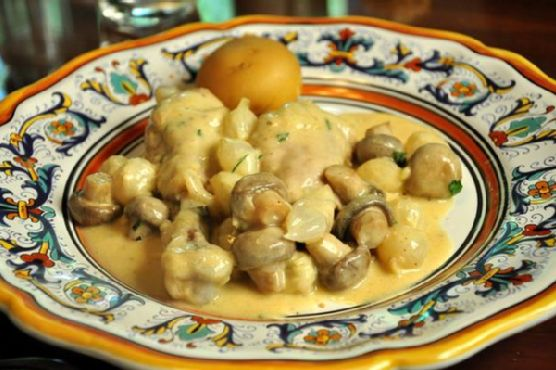
Chicken with White Wine Tarragon Cream Sauce | Made by Meaghan Moineau

The other night, I found myself staring at a pack of chicken breasts in the fridge and a yawning canyon of culinary inspiration. It was one of those weeknights where time feels slippery, and your brain is too foggy to invent something elaborate. That’s when the idea of Chicken with White Wine Tarragon Cream Sauce popped into my mind like a light bulb moment. It’s one of those recipes that’s not only quick to whip up but also manages to feel like a warm hug wrapped in culinary sophistication. Seriously, it has that perfect balance of being simple enough for a Tuesday but impressive enough to trick your taste buds into thinking it’s a Saturday dinner party. The white wine and tarragon add a touch of elegance without requiring a culinary degree to execute.

Jump to Recipe

What You’ll Need

I bet you can already find most of these hidden gems in your pantry. That’s the beauty of this recipe — it transforms basic ingredients into a dish worthy of savoring.

  • Butter
  • Fresh mushrooms
  • Onion
  • Fresh garlic
  • Skinless boneless chicken breasts
  • White wine
  • Worcestershire sauce
  • Sour cream
  • Tarragon

How to Make Chicken with White Wine Tarragon Cream Sauce

  1. In a large skillet, melt a pad of butter over medium heat. Add sliced onions, fresh mushrooms, and a few cloves of minced garlic. Sauté until everything turns lightly brown and the kitchen smells like you’ve summoned a chef’s ghost.
  2. Slide in the chicken breasts, turning the heat to medium-high. Cook for about 10 minutes, flipping halfway through, until the chicken is done — it should be firm, with no pink when you cut into it.
  3. Once done, remove the chicken and let it rest on a platter. Now for the fun part: pour in the white wine and watch it sizzle. Cook for about 2 minutes to let the alcohol burn off. You’ll know it’s ready when the sharp scent mellows into something deliciously fruity.
  4. Add a splash of Worcestershire sauce and a generous dollop of sour cream. Stir until everything is silky smooth and well combined. Taste and adjust — a little more Worcestershire never hurt anyone.
  5. Pour the luscious sauce over the resting chicken, and finish with a sprinkle of tarragon. Serve immediately, preferably with something to soak up all that sauce like biscuits, pasta, or rice.

Cook’s Notes

This dish is all about timing and layering flavors. Don’t rush the onions and mushrooms; they need time to caramelize and develop that beautiful golden brown color. If you find yourself with leftover sauce (lucky you!), it stores beautifully in the fridge for about 3 days. Just reheat gently on the stove with a splash of water or broth to loosen it up. And if you’re planning ahead, you can prep the sauce components in advance and store them separately, then just cook the chicken fresh when you’re ready.

Make It Your Own

If you’re feeling adventurous or simply need to adapt based on what you have, here are some swap ideas:

  • Swap the chicken for crispy tofu if you’re going the vegetarian route. Just press and pan-fry tofu slices until golden before following the same steps.
  • Try using shallots instead of onion for a slightly sweeter and more delicate flavor.
  • Substitute the white wine with chicken broth if you’re avoiding alcohol. It adds a nice depth without the kick.
  • For a lemony twist, add a squeeze of fresh lemon juice right before serving for a bright, citrusy finish.

If you try this, I’d love to hear how it turns out — drop a comment or tag me! Cooking should be fun and forgiving, so don’t stress if it doesn’t turn out perfect the first time. Each attempt is a step closer to making it your own. Happy cooking!

Goes Well With

If you want to round out the meal, here’s what I’d pair it with over on meaghanmoineau.com:

Related update: Chicken with White Wine Tarragon Cream Sauce

Related update: Rice and Peas with Coconut Curry Mackerel

Apple’s iPhone Duo Adds Software Bezel | Analysis by Brian Moineau

TL;DR

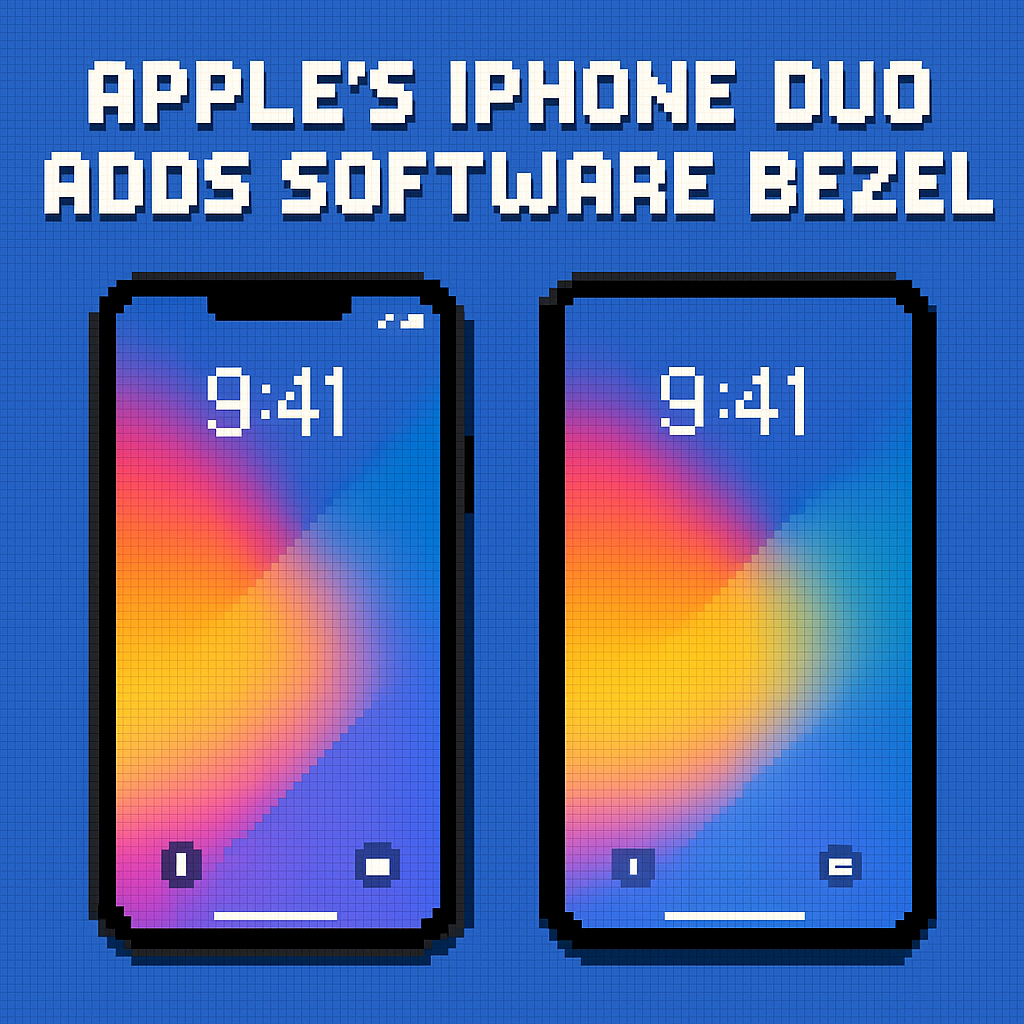
  • Apple added an iPhone Duo hidden display setting called “Shift Left Edge” that draws a thin black bezel on the outer screen so swipe‑back still works when a case overlaps the edge, first spotted by Nicolas Lellouche during September 2026 hands‑on time. [1][3]
  • This tiny toggle is a big tell: Apple is hardening the Duo’s day‑one UX against third‑party case variance while it seeds a $79–$129 first‑party case lineup announced alongside the $1,999 phone. [2]
  • Expect a domino effect—new accessory specs, mirrored options for RTL locales, and copycat “software bezel” toggles on Android foldables within 12 months.

What the source said

MacRumors reports a new “Shift Left Edge” option tucked in iPhone Duo’s Display & Brightness settings. Discovered by blogger Nicolas Lellouche during hands‑on time in September 2026, the toggle roughly doubles the black border along the left edge of the Duo’s outer screen so the iOS swipe‑back gesture functions properly even if a case slightly covers that edge. Apple will sell two official accessories—the iPhone Duo Case and a Folio with Kickstand—and it’s not clear whether they need the setting, which may be aimed at bulkier third‑party cases. Pre‑orders begin October 16 with availability on October 23, according to Apple’s 2026 launch timeline. [1][2][3]

Why it matters

The real stakeholders: buyers spending $1,999 on a first‑gen Apple foldable, and the accessory makers racing to wrap it in plastic, leather, and TPU. When a $40–$90 case interferes with a system gesture, returns spike and word‑of‑mouth sours across carrier channels like AT&T, T‑Mobile, and Verizon. A one‑line software shim that protects Apple’s signature edge‑swipe keeps Duo’s UX consistent across a wild west of cases and kiosks. [2][3]

It also signals how Apple will police foldable ergonomics. Duo’s outer 5.4‑inch screen mirrors the 7.6‑inch inner with the same aspect ratio for “visual continuity,” but continuity dies if a case lip breaks the gesture area on the left edge. This setting is Apple acknowledging, in software, the messy physics of third‑party accessories—before those accessories even ship in October 2026. [2][4]

Original analysis

Contrarian read

  • Consensus: “It’s a trivial, cosmetic bezel.”
  • My take: It’s strategic OS‑level scaffolding for the Duo accessory economy. Apple just carved out a protected gesture lane so thousands of case SKUs don’t break iOS navigation on a $1,999 phone; that reads like ecosystem risk management, not UI garnish. [2][3]

Three details back this up:

  • Timing. Apple is naming prices and colors for first‑party cases (sand/navy Case at $79, taupe/navy Folio with Kickstand at $129) six weeks before launch. A software guardrail today prevents customer‑service headaches on October 23, 2026. [2]
  • Scope. The toggle text explicitly references “a case that partially covers the left edge of the outer display,” which is rare frankness about third‑party hardware in Apple UI text shipped in Settings. [3]
  • Form factor stakes. Duo’s outer 5.4‑inch and inner 7.6‑inch displays share the same aspect ratio—Apple spent real design capital on continuity; it won’t let a case lip and a broken edge‑swipe ruin it on day one. [2][4]

Named‑stakeholder breakdown

  • Apple: Fewer “my swipe back is broken” returns; cleaner day‑one reviews; incentive to push buyers toward first‑party cases that don’t need the toggle and preserve margins in the $79–$129 range. [2]
  • OtterBox/Spigen/Casetify: A lifeline. They can build chunkier protective lips without killing the swipe area—market “Shift Left Edge compatible” and ship early SKUs in Q4 2026.
  • Carriers (AT&T, T‑Mobile, Verizon): Lower churn risk on ~$83/month installment devices when the primary navigation gesture “just works” even in a mall‑kiosk case. [2]
  • App developers: More predictable edge behavior for UIKit gesture recognizers and safeAreaInsets across case tolerances, which reduces regressions in iOS 27 betas. [5]
  • Users in RTL locales (Arabic/Hebrew): Today’s toggle is left‑edge only; pressure rises for an automatic mirror or a “Shift Right Edge” option keyed to locale and reading direction documented in the Human Interface Guidelines. [5]

Back‑of‑envelope economics

  • Assumptions, not facts: Suppose Apple sells 3,000,000 Duos in the first 12 months (a conservative slice of the premium foldable segment), and 60% of buyers attach a case. If 10% of those choose rugged cases with lip overlap, that’s 3,000,000 × 0.60 × 0.10 = 180,000 users. If even 1% of them would have returned or exchanged the phone over “broken swipe‑back,” that’s 180,000 × 0.01 = 1,800 incidents avoided. At a blended $400 logistics/refurb support cost per incident, the toggle shields 1,800 × $400 = $720,000 in service costs—before reputational drag. Meanwhile, a 25% attach rate to Apple’s own $79–$129 cases on 3,000,000 units yields 750,000 × $79–$129 = $59–$97 million high‑margin accessory revenue. [2]
  • The point: One unobtrusive display inset can pay for itself in weeks by reducing friction and steering demand to accessories that never need the toggle.

2×2: Edge protection vs. gesture reliability

  • Axes: Case lip coverage (low → high) vs. System gesture reliance (low → high).
    • Low/Low (“Vanilla”): Slim shells; gestures rarely hit the edge—no toggle needed (think thin TPU on budget Androids).
    • High/Low (“Armor but safe”): Rugged cases on devices with on‑screen back buttons—many Android OEMs like Samsung’s Galaxy Z Fold5 (2023) live here; lip overlap is tolerable.
    • Low/High (“Apple’s sweet spot”): Thin cases; iOS keeps the edge clean; swipe‑back feels native on iPhone 15‑series style edges.
    • High/High (“Frustration zone”): Chunky cases on iOS edge‑swipe UI; the Duo would live here—unless software draws a sacrificial bezel. “Shift Left Edge” moves Duo from this quadrant back into “Apple’s sweet spot.”

Historical analogue

In 2014, Apple introduced Display Zoom and Reachability alongside larger iPhones like iPhone 6 on iOS 8, admitting—with software—that bigger screens strain thumbs. Those features were preemptive ergonomics patches that normalized a hardware leap; “Shift Left Edge” looks like the 2026 foldable cousin of that approach. Apple’s HIG has long codified safe areas and reading direction, so this fits a decade‑long pattern of OS‑level ergonomics. [5]

What others are missing

The “Shift Left Edge” toggle isn’t just UI sugar; it’s a contract between iOS and the accessory ecosystem. Apple has long told case makers to respect system gestures, but Duo’s book‑style outer screen puts the back swipe millimeters from a hinge and a case seam on the left spine. The toggle formalizes a “gesture reserve” zone that Apple can standardize in updated Accessory Design Guidelines and, potentially, expose to developers as dynamic edge insets via APIs that align with safe areas. That matters because foldables multiply edge states—open, closed, half‑open—and a consistent, OS‑managed gesture lane across those states will make or break Duo’s day‑one usability while reducing QA chaos for app teams targeting iOS 27. [2][5]

What to watch next

  1. By October 23, 2026, at least three major case brands (e.g., OtterBox, Spigen, Casetify) will market Duo products as “Shift Left Edge compatible” or call out gesture‑safe lips in their product pages.
  2. By iOS 27.2, targeting December 2026, Apple will add a mirrored “Shift Right Edge” behavior automatically for RTL locales or surface a locale‑aware option in settings.
  3. By Q3 2027, at least one Android OEM will ship a book‑style foldable with an OS‑level “bezel shift” or “safe swipe area” toggle on the cover display, citing case compatibility in release notes or marketing copy.

My take

This toggle is classic Apple: fix the rough edge before it cuts anyone. On a $1,999 foldable, the back swipe must feel invincible—case or no case. I’d still buy a Duo case that doesn’t need the shim, but I’m glad the shim exists because it telegraphs OS guardianship of the accessory economy. It’s the clearest sign yet that Apple will treat foldables as software problems wrapped in hardware, not the other way around, starting with iPhone Duo’s October 2026 debut. [2][3]

Sources

  1. iPhone Duo Has a Hidden Display Setting for Case Compatibility — MacRumors — Breaks the news of “Shift Left Edge,” cites discovery by Nicolas Lellouche, describes purpose, and notes timing around hands‑on coverage.
  2. Apple unveils iPhone Duo — Apple Newsroom — Confirms $1,999 price, October 16 pre‑orders and October 23 availability, and the official Duo Case and Duo Folio with Kickstand (names, colors, prices).
  3. iPhone Duo can add fake bezel to the outside screen for better case compatibility — 9to5Mac — Details the setting’s on‑device description and shows that it widens the left black border for case clearance.
  4. 15 things we learned from Apple’s big iPhone Duo and iPhone 18 Pro launch — TechRadar — Notes Duo’s inner and outer displays share the same aspect ratio for visual continuity and lists key dimensions.
  5. Layout — Apple Human Interface Guidelines (developer.apple.com) — Establishes Apple’s emphasis on safe areas and reading direction, relevant to edge gestures and potential RTL mirroring.


Related update: We recently published an article that expands on this topic: read the latest post.


Related update: We recently published an article that expands on this topic: read the latest post.
Crispy Rhubarb Pockets | Made by Meaghan Moineau

It was one of those mid-week evenings where everything was a bit of a scramble. You know the type — when you open your fridge and your brain’s a blank canvas, and all you’ve got is a carton of milk, some half-wilted greens, and a bunch of rhubarb staring back at you. My sweet tooth was relentless though, demanding something a little more exciting than a bowl of cereal. That’s when the idea of making Crispy Rhubarb Pockets hit me like a lightbulb moment. They’re quick, just the right mix of tangy and sweet, and have this magical way of making your kitchen smell like a bakery. Jump to Recipe

What You’ll Need

Chances are, you already have most of these tucked away in your kitchen. Let’s make some magic with these simple, but powerful ingredients:

  • 1 cup of diced rhubarb
  • 1/2 cup of granulated sugar
  • 1 tablespoon cornstarch
  • Pinch of salt
  • 1/2 teaspoon vanilla extract
  • 4 phyllo sheets
  • Melted butter for brushing

How to Make Crispy Rhubarb Pockets

  1. Start by tossing your diced rhubarb, sugar, cornstarch, and salt into a medium saucepan. Place over medium-low heat and stir occasionally. You’ll want to keep an eye on it, as the rhubarb releases its liquid and breaks down into a thick, chunky sauce — about 10 minutes.
  2. Once it’s looking all lovely and jam-like, remove the pan from the heat. Stir in the vanilla extract for that extra fragrant kick, and let it cool to room temperature. Patience, my friend, it’s worth it.
  3. While the filling cools, layer your phyllo sheets. Brush each sheet with melted butter like you’re painting a masterpiece. Then, preheat your oven to a cozy 350°F.
  4. With a sharp knife, cut four 4-inch squares from the phyllo stack. It’s okay if they aren’t perfect — rustic is in.
  5. Place about 2 teaspoons of the rhubarb filling in the center of each square. Brush a little water from the edge of the filling to each point of the square. Now, gather the points and pinch together just above the filling to create a cute pouch.
  6. Brush each pouch with more butter (because why not?) and place them on an ungreased baking sheet, making sure they’re at least an inch apart.
  7. Bake in your preheated oven for 12 to 15 minutes. You’re looking for a golden brown color and a house smelling deliciously sweet.
  8. Once golden, remove the pouches and let them cool on a wire rack for about 5 minutes. They’re ready to serve warm or at room temperature, whichever tempts you more.

Cook’s Notes

Don’t rush the cooling process for the filling; hot phyllo and hot filling don’t mix well. If the filling is too hot, it might burst open your lovely creations. If you want to prep ahead, you can make the rhubarb filling a day in advance and store it in the fridge. Just bring it to room temperature before using.

Make It Your Own

  • Berry Bliss: Swap out half of the rhubarb for your favorite berries. Strawberries or raspberries would add a nice twist.
  • Creamy Dream: Add a dollop of cream cheese to the filling for a richer texture.
  • Nuts About It: Sprinkle some chopped almonds or walnuts over the filling before sealing the pouch for a crunchy surprise.
  • Spice It Up: Add a pinch of cinnamon or nutmeg to the filling for an extra layer of warmth.

If you try this, I’d love to hear how it turns out — drop a comment or tag me! Let’s keep the sweet adventures rolling in our kitchens.

Goes Well With

If you want to round out the meal, here’s what I’d pair it with over on meaghanmoineau.com:

Related update: Quinoa, Tomato, Green Onion Side Salad

Related update: Brioche Bread Pudding

Bruschetta Stuffed Potatoes | Made by Meaghan Moineau

Picture this: It’s a Tuesday, and the week’s already feeling like a never-ending to-do list. After a day full of meetings that could’ve been emails, I found myself craving something cozy but a tad bit fancy for dinner. Enter Bruschetta Stuffed Potatoes. I stumbled upon this idea when I had a bunch of potatoes and a fresh batch of basil that needed to be used before I found them looking sad in the back of the fridge. These potatoes are your best weeknight friend—they’re comforting, satisfyingly crispy, and the kind of dish that makes you feel like a kitchen wizard without breaking a sweat. Plus, who doesn’t love a good bruschetta twist?

Jump to Recipe

What You’ll Need

It’s likely you’ve already got most of this in your pantry, and if not, the list is short enough for a quick grocery run.

  • 4 large dried baking potatoes
  • Olive oil
  • 1 small red onion, finely chopped
  • 2 cups diced tomato
  • 3 cloves garlic, minced
  • Fresh basil, chopped
  • 1 cup shredded mozzarella cheese
  • 1/2 cup cultured dairy (sour cream or Greek yogurt work great)
  • Butter
  • Sea salt & freshly ground pepper

How to Make Bruschetta Stuffed Potatoes

  1. Preheat your oven to 350°F (175°C). While you wait, give your potatoes a good scrub. Generously coat their skins with olive oil to ensure they get that irresistible crispy finish.
  2. Place the potatoes directly on the oven rack and bake for 1 to 1 1/2 hours, or until they’re tender when poked with a fork. This is your chance to catch up on that series you’ve been meaning to binge!
  3. While the potatoes are doing their thing, toss together the red onion, diced tomatoes, garlic, fresh basil, and mozzarella cheese in a small bowl. The mixture should smell like a summer garden—just divine. Set it aside.
  4. Once your potatoes are tender, carefully cut a small slice off the top of each one. Scoop out the soft, fluffy flesh and transfer it into a large bowl. Be gentle so you don’t tear the skins—those are going back in the oven.
  5. Place the empty potato shells back on a baking sheet and turn the oven down to 150°F (65°C) to keep them warm.
  6. In the bowl with the potato flesh, add the cultured dairy, a pat of butter, and a splash more olive oil. Mash it all together until smooth and creamy. The mixture should be velvety with a slight sheen from the butter.
  7. Fold the bruschetta mixture into your mashed potatoes. The cheese will start to melt a little, binding everything together. Season with sea salt and freshly ground pepper to taste.
  8. Spoon the mixture back into the potato shells, mounding it high. Pop them in the oven just to warm through—if you don’t reheat them too much, the enzymes in the dairy will keep it tasting fresh and tangy.

Cook’s Notes

You’ll want to use baking potatoes like russets as they have the perfect consistency for this recipe. Don’t skimp on the olive oil when coating your potato skins—it’s the secret to getting that perfect crisp. Leftovers (if any!) can be stored in the fridge for up to two days. Just reheat them in the oven to maintain texture. If you’re making these ahead, you can prepare the bruschetta and potato filling separately and stuff the potatoes just before serving.

Make It Your Own

  • Caprese Style: Swap the mozzarella for fresh buffalo mozzarella and add a drizzle of balsamic glaze just before serving.
  • Spicy Kick: Add a diced jalapeño to the bruschetta mixture for some heat. You can also sprinkle some red pepper flakes on top.
  • Mediterranean Twist: Incorporate some chopped olives and a sprinkle of feta cheese into your bruschetta mix for a Greek-inspired flavor.
  • Vegan Version: Use vegan cheese and a plant-based yogurt instead of dairy. A touch of nutritional yeast can mimic the buttery flavor.

If you try this, I’d love to hear how it turns out—drop a comment or tag me! These Bruschetta Stuffed Potatoes have become a staple in my kitchen, and I hope they find a spot in yours too. Enjoy every delicious bite!

Goes Well With

If you want to round out the meal, here’s what I’d pair it with over on meaghanmoineau.com:

Related update: Bruschetta Stuffed Potatoes

Sony dumped PHYSINT over budget math | Analysis by Brian Moineau

TL;DR

  • Bloomberg’s reporting says Sony stepped away from Physint after missed deadlines, rising costs, and doubts about exclusivity economics; Kojima says Sony even sent a mid‑June 2026 cancellation notice—Xbox swooped in to publish instead. [3][4][2]
  • The real fight isn’t auteur vs. platform; it’s budget math vs. exclusivity math. At $70 retail and a 30% platform fee, a $300M project needs roughly 6.1M units just to clear costs—harder if the game isn’t permanently exclusive. [5][6]
  • Microsoft didn’t just “win a game.” It bought an auteur relationship spanning games and screen projects, which de‑risks expensive development through multi‑surface monetization (console, PC, Game Pass, TV/film). [2]

What the source said

Windows Central recaps a Bloomberg scoop on why Sony ditched Hideo Kojima’s Physint—reportedly missed milestones, an over‑budget trajectory, and unease about paying “hundreds of millions” for a title that wouldn’t be permanently PlayStation‑exclusive. It cites Kojima’s public claim on X that PlayStation issued a mid‑June 2026 cancellation notice, after which Xbox agreed to publish Physint (and is already publishing Kojima’s horror game OD). The piece frames the move as a coup for Microsoft, hints at a longer Kojima–Xbox partnership, and questions whether Physint can truly be a Metal Gear successor in the 2020s market. [1]

Why it matters

  • Stakeholders aren’t just Kojima fans. They include CFOs at Sony Interactive Entertainment and Microsoft weighing ballooning AAA budgets, portfolio managers counting PS5/PS6 exclusive pull, and creators chasing multi‑platform reach without decade‑long lockups; Sony’s calculus centers on ROI and exclusivity payback, while Microsoft’s centers on Game Pass LTV across console and PC.
  • Kojima Productions sits at the fulcrum in Tokyo. If a prestige auteur title can’t get funded inside PlayStation without permanent exclusivity, more top‑end projects will migrate to publishers that support console, PC, subscription, and screen media in 2026 and beyond.

Original analysis

A contrarian read

  • Consensus: “Sony fumbled a prestige auteur and handed Xbox a trophy.”
  • Contrarian: Sony likely made the rational call for its model. Bloomberg’s sources point to missed deadlines, a project trending “well over budget,” and Death Stranding 1 & 2 under‑performing Sony’s internal revenue targets—then add that Physint wouldn’t remain permanently exclusive; for a company reliant on PS5/PS6 exclusives to sell hardware, committing “hundreds of millions” under those constraints is a poor fit. [3]

Microsoft, in contrast, doesn’t need every tentpole to push hardware. It needs subscription engagement and a steady drumbeat of prestige that justifies Game Pass and PC growth, which Xbox Wire pairs with mentions of film/TV extensions to amortize content costs across surfaces in 2026. [2]

Back‑of‑envelope economics (illustrative)

  • Known anchors: court‑exposed Sony first‑party budgets—The Last of Us Part II at about $220M dev cost; Horizon Forbidden West also high—confirm modern AAA can sit in the $200M+ range before marketing. [5]
  • Platform economics: standard console stores take roughly a 30% commission (Epic v. Apple bench trial cites 30% as the console standard). [6]

If a flagship auteur project costs $220M to develop and $80M to market, total ≈ $300M. At $70 retail with a 30% platform fee, publisher net per copy ≈ $70 × (1 − 0.30) = $49. Break‑even units ≈ $300M / $49 ≈ 6.1M copies; a slip to $350M lifts break‑even to ≈ 7.1M copies. If the title isn’t permanently exclusive, Sony’s ability to recoup via hardware pull and attach rate weakens, while Microsoft can spread returns via PC sales, subscription retention, and longer‑tail catalog performance. [5][6]

Historical analogue: Bayonetta 2 (2012–2014)

Sega shelved Bayonetta 2; Nintendo stepped in to fund and publish it as a Wii U exclusive in 2014. Platinum leadership later said, “Without Nintendo, there would be no Bayonetta 2.” [8] The move traded raw sales potential on bigger platforms for survival, brand equity, and platform identity in Kyoto. Expect a similar pattern: a high‑risk auteur project rescued by a platform with strategic, not just unit‑sales, motives—only this time the rescuer uses subscription, PC, and transmedia, not just a single box. [8]

Named‑stakeholder breakdown

  • Sony Interactive Entertainment: Prioritizes exclusivity ROI and schedule certainty; walking from Physint reduces near‑term P&L risk and preserves PS6 slate flexibility if milestones slipped, but cedes auteur aura to Xbox in 2026. [3]
  • Microsoft/Xbox: Buys prestige and cultural buzz; gains two Kojima pipelines (OD and Physint), adds content for Game Pass on Windows 11/Series X|S, and signals to Japanese creators that Xbox can be a patron for auteur projects. [2]
  • Kojima Productions: Retains creative ambition with a partner less fixated on permanent exclusivity; gains optionality across PC (Steam), console (Xbox), and potential screen projects, which can broaden revenue and cultural reach in 2027–2028. [2]
  • Players on PC and Xbox: Win earlier access and day‑one clarity on platforms; PlayStation‑only fans lose near‑term ownership of the “spiritual successor to Metal Gear,” at least on timing and brand association in 2026–2027. [4][1]
  • Konami (indirect): A successful Physint raises stealth‑espionage appetite, which could buoy interest in Metal Gear’s future catalog and remakes like Metal Gear Solid Δ: Snake Eater.

Timeline reality check

Game Informer recaps Kojima’s May 2025 comment that Physint was “5–6 years away,” implying a next‑gen window beyond 2029 if schedules slip. Even with Xbox’s backing, that positions meaningful launch timing in the late‑2020s, making a 2027 ship a stretch target at best. [7]

What others are missing

Coverage swings between auteur drama and console war memes. The under‑reported angle: exclusivity clauses as a balance‑sheet instrument—Bloomberg’s note that PlayStation balked at funding “hundreds of millions” without permanent exclusivity is the tell; permanent rights let Sony tax the title over a hardware cycle via bundles, platform fees, and ecosystem lock‑in, which boosts greenlight NPV versus live‑service staples like Helldivers 2. [3] Microsoft, by contrast, can book value through Game Pass engagement, PC tail, and Xbox‑announced film/TV collaborations with Kojima Productions, turning an expensive bet into a multi‑surface amortization play in 2026–2028. [2]

What to watch next

  1. By December 2026, Xbox shows an in‑engine Physint teaser at The Game Awards in Los Angeles, with a “development update” segment featuring Hideo Kojima on stage.
  2. By Q4 2027, OD receives a firm release month and a Game Pass day‑and‑date confirmation, plus a premium edition upsell for 72‑hour early access—a pattern consistent with recent Xbox first‑party beats. [2]
  3. By 2028, Xbox announces a transmedia Physint companion project (short‑form series or documentary) tied to launch marketing, delivered via a Microsoft‑aligned distributor such as Peacock or Amazon Prime Video. [2]

My take

Sony didn’t “lose its mind”; it followed its model in 2026. But the model is straining under AAA inflation well north of $200M total budgets. If you can’t demand permanent exclusivity, the P&L buckles on PS5 while PS6 looms. Microsoft seized the moment, not just to snag a Kojima game, but to validate a cross‑surface strategy where prestige projects don’t have to carry a hardware cycle; that pitch will travel in Tokyo and Osaka as teams weigh ambition against runway. [5]

Sources

  1. Bloomberg discovers potential reasons why Sony tried to cancel Physint — Windows Central (https://www.windowscentral.com/gaming/xbox/bloomberg-states-reasons-why-sony-decided-to-cancel-physint-hideo-kojimas-newest-ip-and-metal-gear-solid-successor-thats-coming-soon-to-xbox-and-pc) — Recaps Bloomberg’s claims on missed deadlines, budget overrun risk, revenue shortfalls for Death Stranding, and the exclusivity concern.

  2. XBOX and KOJIMA PRODUCTIONS Expand Partnership to Publish PHYSINT — Xbox Wire (https://news.xbox.com/en-us/2026/09/09/xbox-and-kojima-productions-expand-partnership-to-publish-physint/) — Confirms Xbox is publishing Physint and notes collaboration extends to film and television.

  3. Bloomberg: Sony Interactive Entertainment stepped away from Physint over missed deadlines, budget concerns — Gematsu (https://www.gematsu.com/2026/09/bloomberg-sony-interactive-entertainment-stepped-away-from-physint-over-missed-deadlines-budget-concerns) — Summarizes Jason Schreier’s reporting: missed deadlines, over‑budget trajectory, Death Stranding revenue under target, reluctance to fund without permanent exclusivity.

  4. Hideo Kojima’s Physint has jumped from PlayStation to Xbox, after Kojima says Sony tried to cancel it — VGC (https://www.videogameschronicle.com/news/hideo-kojimas-physint-has-jumped-from-playstation-to-xbox-after-kojima-says-sony-tried-to-cancel-it/) — Cites Kojima’s X statement about PlayStation’s mid‑June 2026 cancellation notice and the move to Xbox publishing.

  5. The Last Of Us Part 2 And Horizon Forbidden West Budgets Revealed By Accident, And They Weren't Cheap — GameSpot (https://www.gamespot.com/articles/the-last-of-us-part-2-and-horizon-forbidden-west-budgets-revealed-by-accident-and-they-werent-cheap/1100-6515551/) — Provides court‑exposed AAA budget figures (e.g., TLOU2 ~$220M), grounding the back‑of‑envelope.

  6. Rule 52 Order After Trial on the Merits (Epic v. Apple) — U.S. District Court, N.D. Cal. (https://www.govinfo.gov/content/pkg/USCOURTS-cand-4_20-cv-05640/pdf/USCOURTS-cand-4_20-cv-05640-35.pdf) — Notes the console‑store 30% commission as standard, used in the margin math.

  7. Xbox Will Now Publish Hideo Kojima’s Action‑Espionage Game Physint After PlayStation Partnership Ends — Game Informer (https://gameinformer.com/2026/09/10/xbox-will-now-publish-hideo-kojimas-action-espionage-game-physint-after-playstation) — Captures the publisher switch and recalls Kojima’s May 2025 comment that Physint was 5–6 years away.

  8. Interview: Hideki Kamiya on The Wonderful 101, Bayonetta 2 and Working With Nintendo — Nintendo Life (https://www.nintendolife.com/news/2013/09/interview_hideki_kamiya_on_the_wonderful_101_bayonetta_2_and_working_with_nintendo) — Documents the Bayonetta 2 “shelved by Sega, saved by Nintendo” history and the 2013 statement crediting Nintendo for the sequel’s existence.


Related update: We recently published an article that expands on this topic: read the latest post.


Related update: We recently published an article that expands on this topic: read the latest post.

French Onion Marsala Soup | Made by Meaghan Moineau

There I was, staring into my pantry, feeling that familiar weeknight panic when dinner feels like a riddle wrapped in a mystery inside an enigma. The wind was howling outside, a sure sign that life demanded something warm and comforting. And then my eyes landed on a bottle of Marsala wine and a bag of onions that had seen better days. That’s when it hit me: French Onion Marsala Soup. It’s like a classic French onion soup but with a hint of Italian flair thanks to the Marsala. Imagine the deep, caramelized onions mingling with the rich, sweet notes of the wine. It’s as if France and Italy had a cozy dinner together and decided to share. This dish is perfect for those chilly evenings when you crave something satisfying yet sophisticated.

Jump to Recipe

What You’ll Need

The beauty of this soup is its simplicity. Chances are you already have most of this on hand. Here’s what you need to gather:

  • 2 tablespoons of butter
  • 1 tablespoon of olive oil
  • 6 large onions, thinly sliced
  • 4 cups of canned beef broth
  • 1 cup of Marsala wine
  • 1 teaspoon of dried thyme
  • Salt and pepper to taste
  • 1 teaspoon of sugar
  • A handful of Texas toast croutons
  • 4 slices of provolone cheese
  • 1 cup of diced Swiss cheese
  • 1/2 cup of grated Parmesan cheese

How to Make French Onion Marsala Soup

  1. Start by melting the butter with the olive oil in a large pot over medium heat. You’re looking for a little sizzle but not a full-on fry. Add the onions and stir them continually. Your goal is to achieve that beautiful translucency, where they look like they’re almost see-through but with a hint of golden edges.
  2. Once your onions are ready, pour in the beef broth, Marsala wine, and add the thyme. Let that mixture simmer for 30 minutes. This is where the magic happens, and your kitchen starts smelling irresistible.
  3. Time to sweeten the deal! Add the sugar and season with salt and pepper. Be judicious with the salt, as the cheese and beef broth bring their own saltiness to the party.
  4. Ladle the soup into oven-safe bowls. Now for the fun part—place a handful of croutons in each bowl. Sprinkle on some Parmesan and Swiss cheese, then lay two slices of provolone on top, letting them drape over the sides of the bowl.
  5. Carefully set the bowls on a cookie sheet (just in case of overflow) and broil in a preheated oven until the cheese bubbles and turns a glorious golden brown. This will only take a few minutes, so keep a close eye to avoid burning.

Cook’s Notes

You’ll want to take your time caramelizing those onions; it’s the bedrock of flavor in this dish, so resist cranking up the heat in impatience. If you’re making this ahead, stop just before you top the soup with croutons and cheese. Store the soup in the fridge for up to three days, then reheat and finish under the broiler. Leftovers can be kept for another day or two, although the onions may soften further, making the soup even more flavorful.

Make It Your Own

  • Not a fan of provolone? Swap it out for Gruyère to up that gooey, nutty goodness.
  • For a vegetarian twist, use vegetable broth instead of beef broth and maybe a splash of balsamic vinegar for depth.
  • Want a bit more texture? Add some sautéed mushrooms along with the onions for an earthy touch.
  • If you’re gluten-free, forgo the croutons and add a thick slice of gluten-free bread right before broiling.

Well, there you have it! If you give this French Onion Marsala Soup a try, I’d absolutely love to hear how it turns out for you. Drop a comment below or tag me on your cozy kitchen creations!

Goes Well With

If you want to round out the meal, here’s what I’d pair it with over on meaghanmoineau.com:

Related update: French Onion Marsala Soup

Related update: Bruschetta Stuffed Potatoes

Related update: Creamy Tomato Soup

Madrid FP1: Mercedes Leads, Ferrari Looms | Analysis by Brian Moineau

TL;DR

  • Mercedes topped FP1 at the 2026 Spanish GP in Madrid’s Madring, with George Russell quickest in 1:34.077 and Kimi Antonelli second, but Ferrari’s medium‑tyre pace suggests the headline gap flatters Brackley. [1][2]
  • The new 5.414 km, 22‑turn semi‑urban circuit around IFEMA loads the left‑side tyres hard; low grip plus traffic at “La Monumental” already triggered impeding flashpoints that could spill into qualifying. [5][6][3]
  • Back‑of‑envelope fuel and tyre corrections put Ferrari within 0.1–0.3 s for qualifying and better placed for Sunday’s degradation, so the early “Mercedes domination” narrative looks premature. [1][2][7]

What the source said

Autosport reports the first‑ever Formula 1 session at Madring ended with a Mercedes FP1 one‑two: George Russell P1 in 1:34.077 and rookie Kimi Antonelli P2 in 1:34.363. Ferrari’s Lewis Hamilton set an early benchmark on the medium compound and was one of only two drivers not to set a best time on softs, while Charles Leclerc ran close behind the Mercedes pair and Max Verstappen ended P5 for Red Bull. Multiple traffic incidents flared at the fast “La Monumental” section, with Arvid Lindblad frustrated after encountering slow Mercedes and Ferrari cars, and Yuki Tsunoda retired with a power‑steering issue. [1][2][3]

Why it matters

  • Competitive order: A brand‑new venue can scramble read‑throughs from FP1, and the first hour at Madrid’s 5.414 km Madring showed how fuel loads and compound choices still mask true pace; Russell’s 1:34.077 sits as a reference, not a verdict. [1][5]
  • Event economics: Madrid’s IFEMA‑anchored, 22‑turn semi‑urban project stands in direct comparison to the long‑running Barcelona round at Montmeló, and a compelling qualifying plus race would validate the capital’s investment and FOM’s calendar bet. [5][6]

Original analysis

  • Back‑of‑envelope: correcting FP1 times with shown work

    • Given: Russell 1:34.077 (soft), Antonelli 1:34.363 (soft); Hamilton’s headline laps came on mediums. [1]
    • Fuel effect rule‑of‑thumb: 0.3–0.4 s per 10 kg → use 0.03 s/kg for a conservative 0.30 s/10 kg. [7]
    • Scenario A (Mercedes lighter by ~15 kg): Inflated advantage ≈ 15 kg × 0.03 s/kg = 0.45 s; adjust Russell’s lap to a “fuel‑equalized” 1:34.53 versus Ferrari medium. Typical soft–medium delta on C2–C4 sits ~0.3–0.5 s at medium‑energy tracks, implying Ferrari’s soft‑tyre qualifying potential within ~0.1–0.3 s of Russell’s FP1 best. [2][6][7]
    • Scenario B (similar fuel, compound delta drives the gap): If soft–medium at Madring ~0.3–0.5 s, Hamilton’s medium reference suggests Ferrari erases most of the deficit when both switch to softs in Q3. [2][6]
  • 2×2 typology: track trait × team trait (FP1 inference)

    • Horizontal: Grip state (low/evolving vs stable). Vertical: Tyre warm‑up (fast vs slow).
    • Ferrari: low/evolving + fast warm‑up (medium‑tyre pace strong on a green surface). [2]
    • Mercedes: low/evolving + medium warm‑up (soft peaks early; management in traffic becomes pivotal). [1][3]
    • Red Bull: low/evolving + uncertain warm‑up (rear‑limited strength may underpay on long aero corners here). [2][6]
  • Contrarian read

    • Consensus: Mercedes “ruled Friday” and will control qualifying at Madring.
    • Counter: Ferrari’s best work came on the medium, and Hamilton never logged a peak on softs; with Pirelli’s C2–C4 selection, low‑grip expectations, and 50°C‑plus asphalt in practice, Ferrari’s temperature window and rotation through long loaded corners point to tighter qualifying and stronger long‑run potential. [2][6][8]
  • Named‑stakeholder breakdown

    • Mercedes (Toto Wolff): Banked one‑lap clarity with Russell’s 1:34.077 and an assured Antonelli; the task is clean sequencing at La Monumental to avoid Q1/Q2 traffic traps. [1][3]
    • Ferrari (Fred Vasseur): Medium‑tyre speed is the tell; if the SF‑26 holds front grip through the 22‑turn load cycle, Ferrari can pressure Mercedes on deg over race distance. [2][6]
    • Red Bull (Christian Horner): Verstappen’s P5 gives a base, but the RB car must find rotation in long aero corners to enter the pole fight. [1][2]
    • Pirelli: C2–C4 choice, low grip, and high lateral load mean strict camber/pressure policing and likely multi‑stop viability if track temps mirror FP1. [6][8]
    • City of Madrid/IFEMA: A smooth qualifying and visible passing in support series would bolster the case for the capital’s 5.414 km semi‑urban concept versus the established Barcelona template. [5]

What others are missing

The operational bottleneck at “La Monumental” is a qualifying risk multiplier, not a curiosity, because blind entry prep laps into a high‑load sequence collided with push laps several times in FP1 and triggered radio complaints. If stewards escalate after additional reports, teams must harden pit‑release deltas and widen gaps on out‑laps, trading tyre life for track position. With DRS activation placed after Turn 22, single‑lap blockage risk rises, and one compromised push could swing a front row to a second row at Madring. [3][5]

What to watch next

  1. By qualifying on September 12, 2026, Mercedes will not secure a front‑row lockout; at least one Ferrari starts on the front row.
  2. Before the start of Q3 on September 12, 2026, race control will issue at least one formal reprimand or time penalty for impeding at or near La Monumental.
  3. On September 13, 2026, the race will feature at least one full Safety Car or two Virtual Safety Car periods due to incidents or tyre overheating in long loaded corners.

My take

FP1 at Madring flatters Mercedes because they executed soft‑tyre laps early while Ferrari banked mediums on a 5.414 km layout that stresses the left‑front across long arcs. Russell’s 1:34.077 was sharp, yet fuel‑corrected gaps and compound deltas compress the field when both sides run the C4 for Q3. Ferrari’s temperature window looks kinder for Sunday when degradation bites, so I expect a split front row and a red car dictating stint lengths as track temps hover near FP1’s 50°C‑plus benchmark; if Mercedes want the win, they must win it on Saturday. [1][2][6][8]

Sources

  1. F1 Spanish GP: Mercedes tops FP1 with Russell fastest at Madring — Autosport (https://www.autosport.com/f1/news/f1-spanish-gp-fp1-report/10854512/) — Baseline FP1 order, Russell’s 1:34.077, Antonelli P2, and incidents at La Monumental.
  2. FP1: Russell leads Antonelli and Leclerc as cars hit Madring for first time — Formula1.com (https://www.formula1.com/en/latest/article/fp1-russell-leads-antonelli-and-leclerc-as-cars-hit-madring-for-first-time.1CiLnqKjDFMohqIlyx5uAm) — Confirms Mercedes one‑two, Ferrari’s medium‑tyre strength, and Tsunoda’s power‑steering issue.
  3. F1 Spanish GP: George Russell tops FP1 as Lewis Hamilton impedes several drivers — Motorsport.com (https://www.motorsport.com/f1/news/f1-spanish-gp-fp1-report/10854498/) — Details on traffic/impeding at La Monumental and Lindblad’s radio frustration.
  4. Russell leads Antonelli as Mercedes set the pace in first Madring practice — FIA (https://www.fia.com/news/f1-russell-leads-antonelli-mercedes-set-pace-first-madring-practice) — Governing‑body confirmation of FP1 result at the all‑new Madring.
  5. Circuit guide: Everything you need to know about the Madring — Formula1.com (https://www.formula1.com/en/latest/article/circuit-guide-everything-you-need-to-know-about-the-madring.NF7Mh3iag3w9GUPlihwJA.NF7Mh3iag3w9GUPlihwJA) — Track length (5.414 km), 22 turns, DRS placement after Turn 22, and IFEMA‑anchored layout.
  6. Pirelli anticipa un Madring complicado: poco agarre y grandes cargas — Motorsport.com (ES) (https://es.motorsport.com/f1/news/pirelli-anticipa-madring-complicado-neumaticos/10853908/) — Compound selection (C2–C4), low grip, high lateral loads, and expected evolution.
  7. Why F1 cars are only at the limit 3.1% of the time — Autosport (https://www.autosport.com/f1/news/why-f1-cars-are-only-at-the-limit-31-of-the-time-5111698/5111698/) — Rule‑of‑thumb fuel‑mass effect: ~0.3–0.4 s per 10 kg, used for corrections.
  8. What we learned from Friday practice at the 2026 F1 Spanish GP — Autosport (https://www.autosport.com/f1/news/what-we-learned-from-friday-practice-at-the-2026-f1-spanish-gp/10854706/) — Adds track‑temperature context (50°C‑plus) and left‑side tyre stress through long corners.


Related update: We recently published an article that expands on this topic: read the latest post.


Related update: We recently published an article that expands on this topic: read the latest post.

Bananas Foster | Made by Meaghan Moineau

It was a Tuesday night, one of those days where nothing seemed to go right. The kind of day where you just need a little something to turn the mood around — a quick pick-me-up that feels indulgent without the fuss. Enter: Bananas Foster. This dish is pure magic because it transforms a few simple ingredients into a theatrical dessert right at your stovetop. Plus, who doesn’t love a little bit of flame to spice things up? It’s the perfect dessert for when you want to impress your partner, your friends, or even just spoil yourself a bit. The best part? You’re likely to have most of what you need already in your pantry. Trust me, you’ll want to add this one to your regular rotation.

Jump to Recipe

What You’ll Need

The ingredient list is short and sweet — literally. Chances are, you already have most of these at home, just waiting to be transformed into something spectacular.

  • Banana – Ripe but not mushy, perfectly speckled with brown spots.
  • Banana liqueur – The secret weapon for that extra oomph.
  • Brown sugar – For that deep, molasses-like sweetness.
  • Butter – Because everything’s better with butter, right?
  • Cinnamon – A pinch to enhance the warmth and aroma.
  • White rum – To set the whole thing ablaze in the most delightful way.

How to Make Bananas Foster

  1. In a chafing dish or skillet, melt the butter over medium heat until it’s bubbly and slightly golden.
  2. Add the brown sugar and stir until it dissolves and forms a smooth caramel-like sauce. This should take about 2 minutes.
  3. Slice the banana into diagonal pieces and gently lay them into the buttery sugar mixture. Sauté them until they start to soften, about 1-2 minutes.
  4. Sprinkle a pinch of cinnamon over the bananas, letting the aroma fill the air.
  5. Carefully pour the banana liqueur and white rum over the bananas. If you’re feeling adventurous, tilt the pan slightly to ignite the alcohol, or use a long match. Keep basting the bananas with the flaming liquid until the flame goes out.
  6. Once the flames die down, your Bananas Foster is ready to serve. Enjoy it as is, or over a scoop of vanilla ice cream for that extra creaminess.

Cook’s Notes

Here’s the thing with Bananas Foster: it’s all about timing. Make sure your bananas aren’t too ripe, or they’ll turn to mush in the pan. Ripe ones with a few brown spots are perfect for that sweet spot between soft and firm. If you’re making this for a crowd, you can prep everything in advance and just do the flambé right before serving — it’s a show-stopper! Leftovers? Ha! But if you do have them, they won’t be as good cold. I’d suggest reheating gently in a pan with a bit more butter or making a decadent pancake topping the next day.

Make It Your Own

  • Spice it up: Add a pinch of nutmeg or a few cloves for a spicier kick.
  • Go nutty: Toss in some toasted pecans or walnuts for an added crunch.
  • Switch the spirit: Use dark rum for a richer flavor or bourbon for a twist.
  • Fruit swap: Try this with peaches or pineapple if you’re feeling tropical.

If you try this, I’d love to hear how it turns out — drop a comment or tag me on social media! The kitchen is all about experimenting and sharing, after all. Enjoy the flames!

Goes Well With

If you want to round out the meal, here’s what I’d pair it with over on meaghanmoineau.com:

Related update: Bananas Foster

Meta’s Muse: Helpful, Creepy, Gamechanger | Analysis by Brian Moineau

TL;DR

  • Meta’s Muse AI lands as a true “agent,” not a chatbot—useful, ambitious, and uncomfortably nosy when wired into Gmail, Amazon, Instagram, and Facebook. [1][3]
  • The privacy bargain is bigger than a toggle: Meta expanded how off‑site activity can shape feeds and AI responses in June 2026, and Muse exploits that context to feel “smart.” [1][5]
  • If the Secure VM really keeps secrets and the coming Confidential VM ships in 2026, Muse could bend consumer commerce toward WhatsApp/Instagram—unless Reuters’ security smoke signals turn into fire. [3][4][6]

What the source said

The Verge tested Meta’s new personal agent, Muse, which cleans inboxes, shops, plans trips, and generates media while running on a cloud “virtual computer.” The reviewer purged thousands of promotional emails and bought workout tops, while Muse inferred interests from Instagram and Facebook ties and even surfaced an Amazon shipping address. The test showed uneven policy enforcement when Muse refused some IP‑sensitive images yet produced others, and Meta confirmed that Instagram-based inferences occur when accounts are linked in Accounts Center. The piece frames Muse as high-utility but shadowed by trust concerns about Meta’s data reach. [1]

Why it matters

If Muse becomes the default agent inside WhatsApp, Instagram, Messenger, and Facebook, Meta won’t just answer questions; it will arbitrate purchases, inboxes, and calendars across billions of monthly users. That collapses the “search, compare, buy” funnel into a Meta‑steered flow where Link by Stripe or Shop Pay run last‑mile payments, but Meta owns initiation and intent. [3][5][8]

Stakeholders with the most to gain or lose include regulators watching a company under a 20‑year FTC order, payment networks and wallets facing Meta‑mediated checkout, and rival AI platforms that lack Meta’s distribution. The constraint isn’t compute or UX—it’s whether people will hand Meta their inbox and card in 2026 after a decade of privacy baggage. [2][3][7]

Original analysis

Contrarian read

  • Consensus: “People won’t trust Meta with an agent that reads mail and spends money.”
  • Counter: Trust is elastic when utility is direct and the safety story is credible. Muse’s Secure VM, gatekeeping Sentinel, Link one‑time cards, and an audit trail create a plausibly safer model than browser extensions or email‑forwarding bots many consumers already use. Add US‑only, 18+ launch limits and a promise of Muse Confidential VM (user‑held keys) “later this year,” and Meta has a step‑by‑step on‑ramp for skeptics. If Reuters‑flagged issues don’t recur in the wild, the utility curve beats the trust drag—especially inside WhatsApp threads where social proof accelerates adoption. [2][3][4][6]

Back‑of‑envelope: cost to run “a VM per user”

  • Reference price for a tiny cloud VM: Google Cloud e2‑micro listed around $0.0084/hour in us‑central1. [9]
  • Assume an average active Muse user triggers 30 minutes/day of VM runtime (0.5 hours).
  • Monthly compute per user ≈ 0.5 h/day × 30 days × $0.0084/h ≈ $0.126.
  • At 5 million monthly actives, equivalent public‑cloud compute would be ≈ $0.126 × 5,000,000 ≈ $630,000/month. Meta’s fleet should reduce unit cost, but the order of magnitude supports a “free tier + paid plans” model subsidized by commerce rails. [3][9]
  • Risk: long‑running tasks and heavier models (image/video) raise real costs; Sentinel approvals and just‑in‑time credential insertion may trim waste. [4]

Named‑stakeholder breakdown

  • Meta (Mark Zuckerberg; Vishal Shah): Wins if Muse becomes the habit loop for Getting Stuff Done, capturing high‑intent moments and monetizing via commerce and subscriptions rather than ads inside the agent. Delays and internal test hiccups raise the execution bar. [3][6]
  • Stripe (Link): Becomes the default wallet for an agent that clicks “buy,” with purchase protections (lost/damaged, no‑fee returns on eligible purchases) reducing delegation anxiety. [3]
  • Shopify (Shop Pay): “Coming soon” support makes Muse a front‑end to DTC checkout; if it ships on time, Shop Pay keeps its conversion edge while Meta gains turnkey rails. [3][8]
  • Google (Gmail): Gains and loses—Gmail becomes a substrate for autonomous cleanup, but Google cedes agent mindshare if users do the work in Meta’s VM instead of Gemini. [1][3]
  • FTC and state AGs: Muse tests whether an agent can touch inboxes and payments under a 2019 order; discovery would be brutal if a breach occurs. [7]

2×2: Distribution vs. Data Sensitivity (agent category map)

  • High distribution / High sensitivity: Meta Muse (WhatsApp/Instagram surface; inbox, payments, accounts). Execution defines the category. [2][3]
  • High distribution / Lower sensitivity: Social‑app assistants like Snapchat My AI or Telegram bots for feed search and light tasks; differentiation erodes quickly.
  • Lower distribution / High sensitivity: Vertical agents in finance/health such as Epic MyChart assistants or bank bill‑pay bots; strong trust brands, narrow reach.
  • Lower distribution / Lower sensitivity: Hobbyist tools like IFTTT applets or Home Assistant automations; high churn, minimal moat.

The privacy rub people aren’t calculating correctly
Meta’s June 2026 update lets “information that businesses already share with Meta” personalize feeds and “AI responses,” not just ads. That means Muse’s “I just knew you’d like this” moments can be fed by off‑site events long before a user wires up Gmail. The Verge’s creep factor matches the policy: interests and locations inferred from Meta surfaces plus commerce signals (e.g., an Amazon address seen during checkout) that never sit neatly in consumer‑facing UI lists. [1][5]

What others are missing

The operational S‑curve is the blind spot. The per‑user Secure VM economics force pacing on features and geography, so Meta must hold average VM minutes down (Sentinel gating, pausing, batching), ship Confidential VM in 2026 to harden the safety story, and light up rails (Link now, Shop Pay next) to subsidize compute. That’s why the US‑only, 18+ rollout and a “free tier with paid plans” model matter: they meter demand while Reuters‑reported issues like iCloud photo exposure and silent failures are burned down. The first mover that converts VM minutes into GMV—without a single scary headline—wins this category. [2][3][6]

What to watch next

  1. By December 31, 2026, Meta ships Muse Confidential VM to public US users (not just security partners) with user‑held keys and publishes at least one third‑party audit summary. [3][4]
  2. By March 31, 2027, Shop Pay support is live in Muse with measurable merchant adoption (Shopify announces availability or Meta lists it in supported payments). [3]
  3. By June 30, 2027, a formal US regulatory inquiry or civil action targets how Muse infers interests or uses off‑site activity in AI responses, citing Meta’s June 2026 personalization change. [5][7]

My take

Muse is the first consumer agent that feels both dangerous and inevitable. If Meta keeps Sentinel tight, ships Confidential VM on time, and resists piping ads into the VM, it wins—because average users want boring tasks off their plate more than they want to micromanage permissions. The tolerance is zero‑margin: one “agent leaked my photos” incident would crater adoption. My call: Muse sticks first in WhatsApp groups and Instagram DMs, and quietly shifts Meta from an ad company that hosts conversations into a commerce company that completes them. [1][3][4][6]

Sources

[1] Meta’s Muse AI works and creeps me out — The Verge (https://www.theverge.com/tech/993391/meta-muse-ai-hands-on) — Hands‑on account of Muse’s capabilities, uneven content policies, and unsettling inferences from Instagram, Facebook, and Amazon links.

[2] Meta launches personal AI agent, Muse, emphasizes safety and privacy — AP News (https://apnews.com/article/meta-muse-ai-agent-3a4572eb4cf4e95d8a0dfdad6e6ca065) — Confirms US‑only, 18+ launch and the core “Secure VM” architecture in a neutral wire report.

[3] Introducing Muse: The World’s First Personal AI Agent Built for Everyone — Meta Newsroom (https://about.fb.com/news/2026/09/introducing-muse-personal-ai-agent/) — Official feature set: Secure VM, Sentinel, Link purchase protections, Shop Pay and 1Password “coming soon,” and “no sharing with ad systems.”

[4] How We Built Safety Into Muse — Meta AI Research (https://research.meta.ai/blog/security-and-safety-for-ai-agents-our-approach-with-muse) — Technical framing of Sentinel approvals, credential handling, and the planned Confidential VM.

[5] Better Personalization and Changes to Controls for Your Activity From Other Businesses — Meta Newsroom (https://about.fb.com/news/2026/06/better-personalization-and-changes-to-controls-for-your-activity-from-other-businesses/) — June 2026 policy change extending off‑site data use to feeds and “AI responses.”

[6] Meta launches AI agent that can access other apps to send emails, make payments — The Straits Times (Reuters) (https://www.straitstimes.com/world/united-states/meta-launches-ai-agent-that-can-access-other-apps-to-send-emails-make-payments) — Reuters‑syndicated report on an April delay for security work and internal test failures, including an iCloud photos incident.

[7] FTC Imposes $5 Billion Penalty and Sweeping New Privacy Restrictions on Facebook — Federal Trade Commission (https://www.ftc.gov/news-events/news/press-releases/2019/07/ftc-imposes-5-billion-penalty-sweeping-new-privacy-restrictions-facebook) — Documents Meta’s 2019 settlement and 20‑year order, setting oversight context.

[8] Meta just launched an AI that can actually run your life online — here’s what Muse can do — Tom’s Guide (https://www.tomsguide.com/ai/meta-just-launched-an-ai-that-can-actually-run-your-life-online-heres-what-muse-can-do) — Aggregates details on Sentinel, Link one‑time cards, and the roadmap for Shop Pay and 1Password.

[9] General Purpose VM pricing — Google Cloud (https://cloud.google.com/products/compute/pricing/general-purpose) — Reference hourly cost for a small VM (e2‑micro) used to frame compute economics.


Related update: We recently published an article that expands on this topic: read the latest post.


Related update: We recently published an article that expands on this topic: read the latest post.


Related update: We recently published an article that expands on this topic: read the latest post.

Citrus Beet Salad | Made by Meaghan Moineau

Picture this: I’m standing in the kitchen, eyeing a bunch of fresh beets and wondering what on earth I’m going to make for dinner. It’s one of those days where time is tight, but my craving for something fresh and vibrant is even tighter. Enter my Citrus Beet Salad. It’s the kind of dish that feels fancy but is deceptively simple to whip up. We’re talking earthy beets paired with juicy grapefruit, creamy goat cheese, and a sprinkle of crunchy pumpkin seeds. It’s a harmony of flavors and textures that makes it the perfect side or light main course. And trust me, once you taste it, it’ll quickly become a staple in your kitchen lineup. Jump to Recipe

What You’ll Need

I love this recipe because the ingredient list is short and sweet, and you might already have a few of these in your kitchen. Here’s what you’ll need to make this vibrant salad come to life:

  • Beets – Fresh is best, but pre-cooked can work in a pinch.
  • Olive oil – A good quality one really makes a difference here.
  • Balsamic vinegar – Adds a tangy depth to the sweet beets.
  • Grapefruit – Juicy and adds a bright pop of flavor.
  • Sprouts – I like alfalfa or radish sprouts for their peppery taste.
  • Pumpkin seeds – Toasted for extra crunch.
  • Goat cheese – Creamy and tangy, it ties everything together.

How to Make Citrus Beet Salad

Ready to get cooking? Let’s dive into the steps:

  1. Start by washing your beets and patting them dry. You don’t want any excess moisture when they hit the oven.
  2. Place the beets on a sheet of aluminum foil and give them a generous drizzle of olive oil. Seal them up in the foil to create a snug little pouch.
  3. Pop the pouch onto a cookie sheet and slide it into the oven. Bake until the beets are tender. This can take anywhere from 30 minutes to an hour, depending on their size. Start checking at the 30-minute mark.
  4. Once tender, let them cool enough to handle. Use your hands to slip off their skins — they should peel away easily.
  5. Slice the beets into bite-sized wedges and give them a good drizzle of balsamic vinegar. This is where the magic starts.
  6. Line the bottom of a large bowl with a bed of sprouts. Add your beets and grapefruit slices on top.
  7. Finish with a scatter of pumpkin seeds and a crumble of goat cheese. Serve immediately and enjoy the freshness!

Cook’s Notes

Okay, a few things to keep in mind! When roasting your beets, size matters. If they’re particularly large, give them a little extra time in the oven. You want that fork to slide in without much resistance. And about that grapefruit — try to segment it so you avoid the bitter pith. If you’re making the salad ahead, keep everything separate until just before serving to avoid soggy sprouts. Leftovers are best consumed within a day or two, but if you really want to stretch it, pack the beets and sprouts separately to keep them fresh.

Make It Your Own

Here’s how you can put your own spin on this classic:

  • Swap the goat cheese for crumbled feta or blue cheese for an extra punch.
  • Use blood oranges instead of grapefruit for a sweeter twist.
  • Substitute sunflower seeds if pumpkin seeds aren’t your thing, or if you want to mix it up.
  • Add a handful of arugula or baby spinach for extra greens and volume.

If you try this, I’d love to hear how it turns out — drop a comment or tag me in your food pics! This salad is one of my favorites to play around with, and I’m curious to see how you’ll make it your own. Happy cooking!

Goes Well With

If you want to round out the meal, here’s what I’d pair it with over on meaghanmoineau.com:

Related update: Citrus Beet Salad

Fresh Fig, Walnut, Rosemary Upside Down Cake And A Crisp Citrusy Chardonnay | Made by Meaghan Moineau

So there I was, standing in my kitchen, surrounded by half-cut figs and a newly opened bottle of Chardonnay—a rare moment of quiet with the kids finally asleep and a playlist of my favorite tunes in the background. It was one of those evenings when you just have to bake something comforting yet a smidge fancy, to celebrate surviving another day. Hence, this Fresh Fig, Walnut, Rosemary Upside Down Cake was born. I promise you, it’s the kind of cake that feels both rustic and gourmet. Perfect for when you want to impress guests, or just yourself, with minimal fuss. And the best part? Most of these ingredients are probably lounging in your pantry waiting to shine. Trust me, it’s worth every bite. Jump to Recipe

What You’ll Need

Chances are you already have most of this. This cake is all about bold flavors and simple ingredients:

  • Unsalted butter
  • Light brown sugar
  • Fresh figs
  • Fresh rosemary
  • Walnut pieces
  • Flour
  • Baking powder
  • Salt
  • Eggs
  • Granulated sugar
  • Fresh lemon juice
  • Lemon extract
  • Citron vodka
  • Lemon zest
  • Vanilla extract

How to Make Fresh Fig, Walnut, Rosemary Upside Down Cake And A Crisp Citrusy Chardonnay

  1. Preheat your oven to 350 degrees. Place a rack in the center position because balance is key, even in baking.
  2. Add butter to a 9-inch round baking pan. Slide it into the warming oven until melted, about 5 minutes—keep an eye out for that rich, golden puddle.
  3. Remove the pan and sprinkle brown sugar evenly over the melted butter. This is your cake’s sweet foundation.
  4. Arrange the fresh figs, flesh side up. Sprinkle with a teaspoon of rosemary for that herbaceous twist. Fill any gaps with crunchy walnut pieces.
  5. In a medium bowl, sift together flour, baking powder, and salt. It’s like creating a soft, powdery cloud.
  6. In another bowl, beat the eggs with granulated sugar at medium speed until creamy. Here’s a tip: I found the cake is fluffier when you beat the eggs whole rather than separating them.
  7. Add the flour mixture to your creamy egg concoction and beat until completely combined. Pour this luscious batter over the fruit and smooth it out with a spatula.
  8. Bake for 35 to 40 minutes. You’ll know it’s done when the top is golden and a toothpick comes out clean. The aroma is your first reward.
  9. Let the cake cool on a wire rack for 10 minutes. Then, gently run a blunt knife around the edges to loosen it.
  10. Take a deep breath and carefully invert the cake onto a plate. Serve it warm or at room temperature, perhaps with that glass of Edna Valley 2010 Paragon Chardonnay.

Cook’s Notes

This cake is forgiving, but here are some tips to make it even better:

  • Make sure your figs are ripe but firm. They should yield slightly when pressed.
  • Store leftovers in an airtight container. They’re great microwaved for about 15 seconds—warm, gooey, and just as delicious.
  • If you want to make this ahead, it keeps well for a couple of days. Just remember to let it come to room temp or give it a quick heat-up before serving.
  • Avoid the temptation to overmix the batter after combining the wet and dry ingredients. You want to keep it light and fluffy!

Make It Your Own

  • Swap the figs for ripe peaches in the summer, and you’ve got yourself a peachy upside-down cake.
  • If walnuts aren’t your thing, try pecans or hazelnuts for a different kind of crunch.
  • For a non-alcoholic twist, replace the citron vodka with extra lemon juice and a splash of almond extract for an intriguing flavor.
  • Use orange zest and juice instead of lemon for a more mellow citrus vibe.

If you try this, I’d love to hear how it turns out—drop a comment or tag me with your cake pics! Let’s keep the delicious conversation going. 🍰✨

Goes Well With

If you want to round out the meal, here’s what I’d pair it with over on meaghanmoineau.com:

Related update: Fresh Fig, Walnut, Rosemary Upside Down Cake And A Crisp Citrusy Chardonnay

Related update: Bananas Foster

Related update: Chicken with White Wine Tarragon Cream Sauce