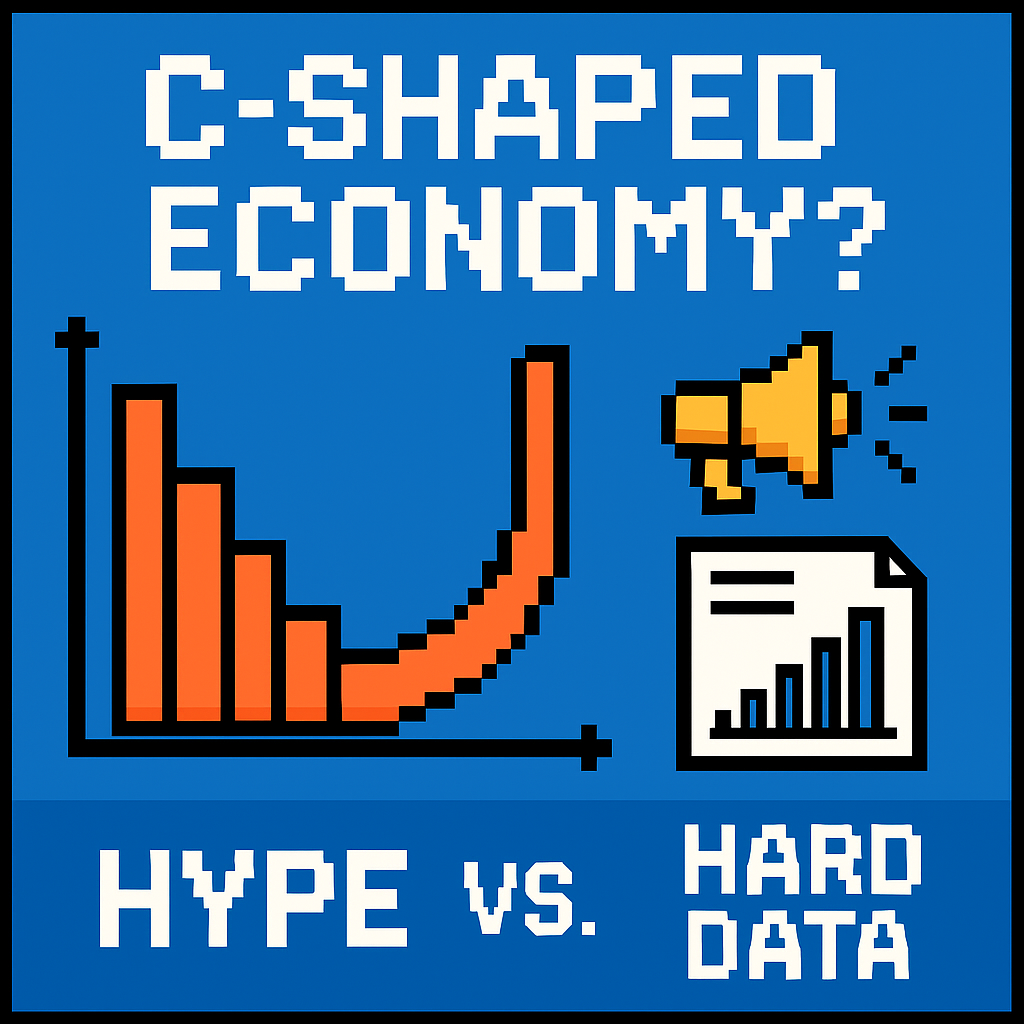
C‑Shaped Economy? Hype vs. Hard Data | Analysis by Brian Moineau

TL;DR

  • Planet Money’s 8 September 2026 episode spotlights a “C-shaped economy” pitch—convergence between top and bottom—set against the older “K-shaped” divergence; my read: it’s a snapshot in wages, not a new regime [1].
  • Bank of America’s June 2026 read shows after‑tax wage growth for lower‑income households at about 4.1% YoY versus ~3.4% CPI in July 2026, a ~0.7% real gain, while the top 1% still holds roughly one‑third of U.S. household net worth and the “Magnificent Seven” sit near one‑third of S&P 500 market cap [2] [3] [4] [6].
  • If firms and policymakers treat a short‑lived wage convergence as structural, they will misprice labor, overpromise on inequality, and get surprised when asset‑led divergence reasserts itself in 2027–2028.

What the source said

Planet Money frames the “alphabet soup” debate using the pandemic‑era “K‑shaped” meme (winners up, losers down) versus a newer “C‑shaped economy” narrative popularized by investor Scott Bessent (Key Square Group) and Hilton CEO Chris Nassetta in 2025–2026 [1]. The show cites one “C‑ish” datapoint—real weekly earnings rising at the low end and dipping up top—and quotes economist Claudia Sahm to argue your letter depends on the metric you choose: wages, wealth, or consumption [1].

The episode aired via NPR distribution on gpb.org on 8 September 2026, and it leans on current payroll, price, and household data while acknowledging mixed signals [1]. The producers stress framing risk: wage flows can converge while asset stocks still diverge.

Why it matters

Two groups care most in 2026–2027. Firms serving the broad middle—Hilton and Marriott in lodging, Walmart and Dollar General in retail, and McDonald’s and Chipotle in quick‑serve—would enjoy steadier unit volumes if the “C” holds, which would lift operating margin via fixed‑cost absorption and labor scheduling efficiency. Public multiples for these mid‑market names already embed 2024 rebound hopes, so wrong‑way surprises can hit valuations.

Policy and allocation decisions hinge on this framing too. A durable convergence would soften pressure on the Federal Reserve to keep real rates high, compress S&P 500 profit margins from the 2021 peak, and alter the 2026–2028 tax debate on EITC and child credit expansions; a transitory convergence argues for caution in resetting pay bands or promising inequality fixes.

Original analysis

The C-shaped economy is a wage snapshot, not a new regime

The sales pitch is narrow but real: lower‑income workers’ after‑tax wages are rising a bit faster than prices, while higher‑income gains have cooled. Bank of America’s internal card/payroll proxy pegs lower‑income YoY after‑tax wage growth at ~4.1% in June 2026; headline CPI ran ~3.4% YoY in July 2026 [2] [3]. Math: 4.1 minus 3.4 ≈ 0.7 percentage points of real wage growth for the bottom cohort—helpful for groceries and rent, not transformative for wealth [2] [3].

Stocks and wealth tell a different story. The Federal Reserve’s Distributional Financial Accounts show the top 1% holding roughly one‑third of U.S. household net worth through 2025–2026, near series highs [4]. Index concentration remains intense: the “Magnificent Seven” hovered around the low‑to‑mid‑30s percent of S&P 500 market cap by late 2024 and sat near 33% on live tallies in September 2026, keeping equity‑linked wealth top‑heavy [6].

What’s really happening is cyclical compression layered on structural concentration. The Atlanta Fed’s Wage Growth Tracker shows low‑wage growth outpacing high‑wage growth in 2022–2023, then cooling across the board in 2025–2026 as quits fell; most workers saw real wage gains in 2024 when PCE inflation drifted to roughly 2.6% YoY, but wealth and profit concentration did not budge [7] [8].

A 2×2 to decode the “letter” you see

  • Lens 1 (Flows vs. Stocks) x Lens 2 (Households vs. Markets):
    • Flows + Households: wages, after‑tax income, hours. Looks “C” lately for the bottom tercile, with ~0.7% real gains in mid‑2026 [2] [3].
    • Stocks + Households: net worth shares. Still “K”: the top 1% holds about one‑third of wealth in 2025–2026 [4].
    • Flows + Markets: earnings growth by sector. Mega‑cap profit engines continue to dominate EPS contribution, while rate‑sensitive cyclicals only partially revived after 2022–2023 tightening [5].
    • Stocks + Markets: index concentration. The Mag‑7 near ~33% of S&P 500 market cap channels returns—and equity‑tied household wealth—upward [6].

Back‑of‑envelope: how big is the “C” for pay?

  • Wage math: if low‑income after‑tax wages grow ~4.1% YoY (June 2026) and CPI runs ~3.4% YoY (July 2026), then real wage growth ≈ 0.7% YoY. Calculation: 4.1 − 3.4 = 0.7 percentage points [2] [3].

  • Wealth effect math: assume the S&P 500 rises 15% in a year and the top decile holds roughly 89% of corporate equity and mutual fund shares per the 2019 Survey of Consumer Finances; then ~0.89 × 15% ≈ 13.35% of the equity wealth gain accrues to the top 10%, diluting any bottom‑up wage convergence at the aggregated household level [14].

History rhymes: past wage compression spurts faded

The late‑1990s boom (1998–2000) delivered strong low‑end wage growth as unemployment hit 3.8% in April 2000, but the 2001 recession unwound part of that compression within two years [12]. A second mini‑episode in 2015–2019, aided by state minimum‑wage hikes and a 3.5% unemployment rate in late 2019, again showed bottom‑heavy gains that stalled with the 2020 shock [12]. These analogues suggest wage convergence can recur cyclically without rewriting long‑run wealth distribution.

Contrarian read

Consensus claims the “C‑shaped economy” marks a durable healing of inequality. My read: it’s a cyclical wage convergence that coexists with persistent asset and market concentration, which remain “K‑shaped.” The Census Bureau’s 2024 income report shows no statistically significant change in the Gini index from 2023, while the 90th‑percentile household gained about 4.2% versus no significant gains at the 10th or 50th percentiles—hardly the letter‑swap reformers want [9].

Named‑stakeholder breakdown

  • Hilton and Marriott: mid‑scale occupancy gains of 100–200 bps in 2026 would boost RevPAR and flow‑through; Chris Nassetta has publicly cheered resilient leisure demand since 2023 [1].
  • Walmart and Dollar General: any 0.5–1.0 pp real wage uptick at the bottom tercile tends to lift traffic and private‑label mix; watch SNAP‑related spend for volatility.
  • McDonald’s and Chipotle: low‑end hours growth supports ticket and throughput, but 2022–2025 wage floors raised crew costs; margin depends on menu price elasticity.
  • United Auto Workers and SEIU: tight low‑end labor markets in 2022–2024 enabled gains; a cooler quits rate in 2025–2026 weakens bargaining leverage into 2027 [7] [11].
  • Federal Reserve (FOMC): a transient “C” argues for holding real rates mildly positive in 2026–2027 to cement disinflation without over‑tightening wage growth [8].
  • Asset managers (Vanguard, BlackRock): concentration risk stays elevated if the Mag‑7 weight remains ~30%+ of SPX; portfolio construction and tracking error matter [6].

What others are missing

Analysts rarely price the “benefits cliff” and high effective marginal tax rates (EMTRs) that workers face at 125%–200% of the federal poverty line, where stacked phase‑outs of SNAP, housing vouchers, and tax credits can push EMTRs into the 50%–80% range; that wedge mutes hours responses and blunts the real‑world impact of a 0.7% wage gain at the low end [15]. Layer on 2023’s 7% jump in average employer‑sponsored family premiums reported by KFF and a 2025–2026 decline in the quits rate per BLS JOLTS, and you get thinner household cash flow transmission than the “C” story implies [10] [11].

What to watch next

  1. By Q4 2027, the Atlanta Fed Wage Growth Tracker spread (bottom quartile minus top quartile) turns negative on a three‑month average, reversing the 2022–2023 bottom‑outperformance.

  2. Through Q4 2027, the Fed’s Distributional Financial Accounts keep the top 1% wealth share at or above 32% of total U.S. household net worth on a four‑quarter average.

  3. By 31 December 2027, the “Magnificent Seven” share of S&P 500 market cap remains at or above 30% on S&P‑published weights, indicating persistent concentration.

Sources

[1] Planet Money (NPR via GPB), “Has the economy gone C‑shaped?”, 8 Sep 2026. What this contributes: defines the “C‑shaped” claim, names Scott Bessent and Chris Nassetta, and frames the metrics debate. https://www.gpb.org/news/planet-money/2026/09/08/has-the-economy-gone-c-shaped

[2] Axios, “Wage growth and the K‑shaped recovery,” 9 Jul 2026. What this contributes: cites Bank of America after‑tax wage growth of ~4.1% YoY for lower‑income cohorts. https://www.axios.com/2026/07/09/k-shaped-economy-wage-growth

[3] U.S. Bureau of Labor Statistics, Consumer Price Index (CPI) landing page. What this contributes: official CPI methodology and monthly inflation readings; July 2026 referenced at ~3.4% YoY. https://www.bls.gov/cpi/

[4] Federal Reserve, Distributional Financial Accounts (DFA). What this contributes: wealth shares by percentile; top 1% near one‑third of net worth in 2025–2026. https://www.federalreserve.gov/releases/z1/dataviz/dfa/

[5] SIFMA, Equity Market Structure Compendium, 2024. What this contributes: sector earnings and market structure context relevant to cyclical vs. secular leadership. https://www.sifma.org/resources/research/equity-market-structure-compendium/

[6] History of Market, Magnificent Seven concentration tracker. What this contributes: running estimate of Mag‑7 share near ~33% of S&P 500 in 2026. https://historyofmarket.com/mag7/mag7-concentration/

[7] Federal Reserve Bank of Atlanta, Wage Growth Tracker. What this contributes: quartile wage growth differentials showing low‑end outperformance in 2022–2023 and cooling by 2025–2026. https://www.atlantafed.org/chcs/wage-growth-tracker

[8] U.S. Bureau of Economic Analysis, PCE Price Index. What this contributes: PCE inflation running near 2.6% YoY in 2024, anchoring real wage calculations. https://www.bea.gov/data/personal-consumption-expenditures-price-index

[9] U.S. Census Bureau, “Income in the United States: 2024” (P60‑286). What this contributes: Gini stability and 90th‑percentile income gains (~4.2%) vs. flat 10th/50th. https://www.census.gov/library/publications/2025/demo/p60-286.html

[10] KFF, 2023 Employer Health Benefits Survey. What this contributes: 7% increase in average family premiums, pressuring household cash flows. https://www.kff.org/health-costs/report/2023-employer-health-benefits-survey/

[11] U.S. Bureau of Labor Statistics, Job Openings and Labor Turnover Survey (JOLTS). What this contributes: falling quits rate in 2025–2026, signaling softer worker bargaining power. https://www.bls.gov/jlt/

[12] Economic Policy Institute, State of American Wages 2019. What this contributes: historical wage compression episodes in 1998–2000 and 2015–2019. https://www.epi.org/publication/state-of-american-wages-2019/

[14] Federal Reserve, Survey of Consumer Finances (2019) overview. What this contributes: top decile’s roughly 89% share of corporate equity/mutual fund ownership. https://www.federalreserve.gov/econres/scfindex.htm

[15] Congressional Budget Office, “Effective Marginal Tax Rates for Low‑ and Moderate‑Income Workers,” Nov 2012. What this contributes: EMTRs of 50%–80% due to program phase‑outs, informing benefits‑cliff dynamics. https://www.cbo.gov/publication/44626


Related update: We recently published an article that expands on this topic: read the latest post.
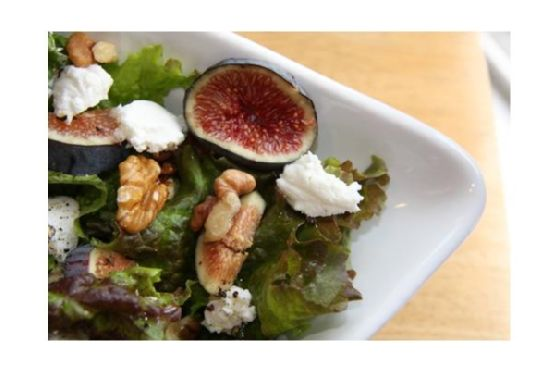

Fig, Goat Cheese and Walnut Salad | Made by Meaghan Moineau

Last Tuesday, the afternoon sun cast a golden glow across my kitchen, and all I craved was something fresh and vibrant. You know those days when life gets a bit too overwhelming, and you just need a food hug? That was me. I opened the fridge and there they were—beautifully ripe figs, a half-eaten log of goat cheese, and a bag of mixed greens waiting to be transformed. And just like that, a Fig, Goat Cheese, and Walnut Salad came to life. This dish is like a cozy sweater—it’s comforting yet bright, with just the right amount of flair to make you feel fancy without the fuss. Trust me, this salad is a total game-changer, especially when you need something quick yet utterly delicious.

Jump to Recipe

What You’ll Need

This salad is all about simple ingredients that pack a punch. Chances are you already have most of this stuff lying around:

  • Fresh figs – the star of the show
  • Goat cheese – creamy goodness in every bite
  • Lemon juice – for that zesty kick
  • Mixed greens – a fresh and leafy base
  • Olive oil – smooth and silky
  • Salt and pepper – gotta season!
  • Walnuts – for a crunchy contrast

How to Make Fig, Goat Cheese and Walnut Salad

  1. Start by rinsing your mixed greens. Spin them dry if you have a salad spinner or spread them out on a clean towel to air-dry. You want them crisp, not soggy.
  2. Tear the greens into bite-size pieces if they’re not already prepped. No one wants to wrestle with a giant leaf on their plate.
  3. Slice the figs delicately, savoring the sweet fragrance that fills the room. They should be tender yet firm enough to hold their shape.
  4. Roughly chop the walnuts. You’re aiming for a mix of larger chunks and smaller bits to keep things interesting.
  5. Gently scatter small spoonfuls of goat cheese over the salad. This is where the magic happens—creamy pockets of flavor await every bite.
  6. In a small bowl, mix olive oil and lemon juice to taste, or if you’re like me and love to freestyle, drizzle them directly over the salad.
  7. Season with salt and pepper to your liking. Toss everything together gently to keep all those beautiful components intact.
  8. Serve immediately and enjoy the delightful combination of flavors and textures.

Cook’s Notes

Here’s the deal: use the freshest figs you can find. Overripe ones can make the salad mushy, and underripe figs won’t give you that sweet juiciness. You can prepare the salad base and keep it in the fridge for a couple of hours, but only add the dressing and goat cheese right before serving to keep the greens vibrant and the cheese from getting lost in the mix. If you need to store leftovers, keep the dressing separate and consume within a day for best quality.

Make It Your Own

  • Swap the goat cheese for feta if you’re feeling a bit more Mediterranean.
  • Replace the walnuts with toasted almonds for an added crunch and a slightly different flavor profile.
  • Add some crispy bacon bits if you want a smoky, savory note.
  • Try arugula instead of mixed greens for a peppery punch.

If you try this, I’d love to hear how it turns out—drop a comment or tag me! There’s nothing like sharing the joy of a simple, delicious meal with friends. Bon appétit! 🍽️

Goes Well With

If you want to round out the meal, here’s what I’d pair it with over on meaghanmoineau.com:

Related update: Fig, Goat Cheese and Walnut Salad

Related update: Citrus Beet Salad

Related update: Vegetable Tart With Goat Cheese

Xbox Grandfathers Some Cloud Gamers | Analysis by Brian Moineau

TL;DR

  • Xbox cloud gaming time limits start worldwide in November 2026, but Microsoft is “grandfathering” some auto‑recurring Game Pass members in Australia, Germany, Brazil, and Poland with no cap for now; players in the US, UK, and Canada report no such emails. [1][2][3]
  • At 1080p/60, a plausible cost stack is close to $1–$1.50 per hour: around $0.78/hour for egress plus $0.45–$0.73/hour for Azure GPU time, which breaks the margin on a $22.99/month Ultimate plan for heavy streamers. [5][6][8]
  • Expect Xbox to sell prepaid cloud hours broadly and push TV app and “stream games you own” access; the cap contains costs while shifting the model toward pay‑as‑you‑go. [2][4]

What the source said

Pure Xbox reported in September 2026 that after Microsoft announced November caps on Xbox Cloud Gaming hours (15/10/5 by tier), some existing subscribers in Australia, Germany, Brazil, and Poland received emails saying the limits won’t apply as long as their Game Pass stays on auto‑renew. US, UK, and Canada subscribers did not see the same exemption notices, based on reader reports collected by Pure Xbox and VGC. The outlets suggest regional consumer‑contract rules could explain the carve‑outs, and advise subscribers to check inboxes for localized messaging. The bottom line is that most users will see the new caps in November 2026, while a minority in select markets may be exempt. [1][2][3]

Why it matters

Two groups feel this most in 2026. Heavy cloud‑only players—the Xbox One S (2016) owner streaming Series titles, the Samsung TV app user skipping consoles, and the handheld PC crowd on ROG Ally (2023)—now hit a hard ceiling unless they buy extra hours, while Microsoft says only 4% of Game Pass users will reach the limit. That 4% are the exact users driving outsized Azure GPU minutes and outbound bandwidth bills that Microsoft cited when it announced the change on Xbox Wire. [2]

The carve‑outs fracture the product by country in September–November 2026. “Unlimited” in São Paulo and Stuttgart but not in Seattle invites confusion, churn, and gray‑market account swaps, while hinting that Brazil, Germany, and Poland have stricter consumer‑law bite on mid‑contract downgrades than the US or UK. The pattern itself is a signal about which regulators matter in subscription policy without Microsoft publishing a list. Expect forum screenshots from Brisbane, Berlin, and Warsaw to keep this visible. [1][3]

Original analysis

Xbox cloud gaming time limits: follow the unit economics

Microsoft didn’t cap cloud hours because “nobody uses it”; it capped them because a small cohort uses a lot—and streaming at scale burns two paid meters: GPU time and internet egress. Microsoft’s own post states that “the cost of providing cloud gaming grows as more people use it and play for longer,” and it pegs affected users at ~4% across Game Pass tiers. [2]

Back‑of‑envelope calculation (US/EU list prices)

  • Bandwidth: Services like GeForce NOW recommend 25 Mbps for 1080p gaming; assume a conservative 20 Mbps for Xbox Cloud Gaming on TV/PC. 20 Mbps ≈ 2.5 MB/s ≈ 9.0 GB/hour; Azure Zone 1 egress first‑tier is ~$0.087/GB, so hourly egress ≈ 9.0 × $0.087 ≈ $0.78. [7][5]
  • GPU: Xbox Cloud Gaming workloads map to Azure NV families; a representative NV6ads A10 v5 VM lists around $0.454/hour on Linux (about $0.73/hour on Windows). Call compute $0.45–$0.73/hour. [6]
  • Per‑hour ballpark: $0.78 egress + $0.45–$0.73 GPU ≈ $1.23–$1.51/hour before encoding, orchestration, and support overhead. [5][6]

Now compare to April 21, 2026 US pricing of $22.99/month for Game Pass Ultimate. A 20‑hour cloud‑only user costs roughly $24–$30/month at list infra rates—underwater on gross margin before content royalties—so the break‑even near 15–19 hours lines up with the new 15‑hour Ultimate cap by design. That makes the cap a margin governor, not a usage nudge. [2][8]

Contrarian read

  • Consensus: “Microsoft is backing away from cloud in 2026.”
  • Counter: Caps are the prerequisite to scale cloud profitably; Xbox will sell hours à la carte to subscribers (overages) and to non‑subscribers who stream games they own, similar to Nvidia’s 100‑hour policy on GeForce NOW paid tiers. That broadens the funnel, reins in worst‑case costs from the heaviest 4%, and makes COGS predictable instead of buffet‑style. Expect visible hour meters and “buy more time” flows rather than a retreat from streaming. [2][4][7]

Named‑stakeholder breakdown

  • Microsoft/Xbox: Gains cost predictability and aligns infra burn with revenue; risks the narrative that Game Pass (2017) keeps shrinking perks after the April 2026 price move. Expect hour‑pack SKUs on Xbox Store, time‑remaining UI, and TV‑first bundles in 2026–2027. [2][4][8]
  • Nvidia GeForce NOW: Opens with simple compare ads—“100 hours vs 15 hours”—and leans on 1440p/4K tiers, latency, and session length as differentiators in Q4 2026 marketing. [7]
  • Sony PlayStation Plus Premium: No explicit monthly cap today; Sony can pitch PS5‑to‑Portal (2023) and catalog streaming without a monthly hour number, even if sessions time out. Watch how Sony frames this in the US and Germany. [9]
  • Handheld PC/TV OEMs (Lenovo Legion Go, ASUS ROG Ally, TCL 2024 TVs): Messaging pivots from “unlimited cloud” to “remote play + hour top‑ups,” pushing OEMs to optimize Wi‑Fi 6E and local streaming while keeping cloud as a paid add‑on. [4]
  • Regulators in Brazil, Germany, Poland, Australia: The exemption emails imply these jurisdictions constrain mid‑contract downgrades for auto‑renewing digital services, shaping Microsoft’s policy map more than in the US or UK in late 2026. [1][3]

Another quick calc: scale of impact

  • Microsoft disclosed 34 million Game Pass subscriptions in January 2024; 4% affected implies ~1.36 million people under the cap if the base is similar in 2026. If 30% of this cohort buys an average $2 in overages, that’s ~408,000 buyers × $2 ≈ $0.816 million/month in revenue, plus avoided infra losses on the heaviest hours. This is cash‑flow stabilization more than topline growth theater. [2][11]

A quick 2×2: who’s helped vs. hurt

  • High hours + No console (Samsung/TCL TV app, hotel/travel gamers): Hurt by 15/10/5 caps; likely to buy hour packs; price sensitivity high in markets like Brazil. [2][4]
  • High hours + Console PC (Series X, ROG Ally): Mixed; can fall back to local play, but cloud convenience now metered. [2]
  • Low hours + No console (casual FIFA/EA FC in cafés): Helped; can buy 5–10 prepaid hours in 2026 holiday promos without a subscription. [2][4]
  • Low hours + Console PC: Largely unaffected; caps won’t bite, and remote play remains free over LAN. [2]

Historical analogue

  • Between 2010 and 2012, US carriers like AT&T and Verizon moved from “unlimited” smartphone data to buckets with overages as mobile video surged, and the market kept growing; Xbox’s 2026 cap rhymes with that shift by pushing heavy users into a variable‑cost lane while preserving flat‑rate value for the median user. Expect family‑style “hour packs” and seasonal coupons to soften optics in Q4 2026–Q1 2027. [2][4]

What others are missing

The hinge isn’t the cap; it’s Microsoft’s “cloud without Game Pass” SKU that Xbox Wire teased on September 3, 2026. That reframes cloud from a perk into a metered product with margins, especially when tied to TV apps from OEMs like TCL and Samsung where console penetration lags. Picture a $10 “10‑hour weekend” code sold at JB Hi‑Fi in Sydney or B&H in New York for people who already own Starfield—no subscription required. In regions like Brazil and Poland with strong internet but lower console ARPU, prepaid hours mirror mobile data top‑ups and give retailers a physical item to sell. [2][4]

What to watch next

  1. By December 15, 2026, Microsoft will publish US pricing for add‑on cloud hours at no more than $1.50 per hour (Xbox Wire or Xbox Store listing).
  2. By March 31, 2027, the Xbox app on at least two platforms (e.g., Xbox console and Windows PC) will prominently display a time‑remaining meter for cloud hours.
  3. By June 30, 2027, Xbox will end “no‑cap” grandfathering in at least two currently exempt countries (e.g., Brazil, Germany), aligning them with the global policy.

My take

The cap is the financially disciplined call Xbox should have made by mid‑2025, because unlimited cloud inside a flat subscription let a tiny cohort run six‑hour Saturday sessions that torched Azure egress and GPU budgets. Locking in 15/10/5 hours per tier and selling overages resets unit economics and, crucially, enables pay‑as‑you‑go cloud for people who already own games but don’t want a subscription. If Microsoft prices hour packs near unit cost (about $1–$1.50/hour at list) and nails the 2026 TV experience with TCL and Samsung apps, cloud can stand on its own without bleeding green. This is Xbox choosing predictable gross margin over vibes, and it likely sticks through FY2027. [2][4][5][6][8]

Sources

[1] Xbox Is Telling Some People They Don't Need To Worry About Cloud Gaming Time Limits — Pure Xbox (https://www.purexbox.com/news/2026/09/xbox-is-telling-some-people-they-dont-need-to-worry-about-cloud-gaming-time-limits) — Reports Microsoft’s exemption emails for existing auto‑recurring Game Pass members in select countries, and absence in the US/UK/Canada.

[2] Upcoming Changes to Xbox Cloud Gaming — Xbox Wire (https://news.xbox.com/en-us/2026/09/03/xbox-cloud-gaming-changes/) — Official details: 15/10/5 hours by tier, November 2026 start, impacts ~4% of users, rationale (costs), add‑on hours, and non‑subscriber hour purchases.

[3] Xbox tells existing Game Pass members its new cloud gaming cap doesn’t apply to them, but only in certain countries — Video Games Chronicle (https://www.videogameschronicle.com/news/xbox-tells-existing-game-pass-members-its-new-cloud-gaming-cap-doesnt-apply-to-them-but-only-in-certain-countries/) — Corroborates the email carve‑out and cites markets (Australia, Brazil, Poland, Germany).

[4] Microsoft is introducing hourly limits on Xbox Cloud Gaming starting in November — Windows Central (https://www.windowscentral.com/gaming/xbox/microsoft-is-introducing-hourly-limits-on-xbox-cloud-gaming) — Explains the policy shift, 4% figure, and the plan to sell cloud hours and allow cloud without Game Pass.

[5] Pricing – Bandwidth — Microsoft Azure (https://azure.microsoft.com/en-us/pricing/details/bandwidth/) — Official egress pricing used to estimate per‑hour streaming bandwidth cost.

[6] NVIDIA A10 cloud pricing (Azure NV6ads_A10_v5) — Instance Pricing (https://www.instance-pricing.com/gpu/model%3Dnvidia-a10/) — Lists ~$0.454/hour (Linux) for a representative Azure GPU VM suited to game streaming.

[7] GeForce NOW FAQ — NVIDIA (https://www.nvidia.com/en-gb/geforce-now/faq/) — Confirms Nvidia’s monthly playtime policies and 1080p bandwidth guidance, the nearest industry analogue.

[8] Microsoft announces surprise Xbox Game Pass price cuts, ends day‑one Call of Duty inclusion — Tom’s Hardware (https://www.tomshardware.com/video-games/xbox/microsoft-announces-surprise-xbox-game-pass-price-cuts-ends-day-one-call-of-duty-inclusion-ultimate-down-to-usd22-99-while-pc-game-pass-drops-to-usd13-99) — Documents April 21, 2026 price drop of Ultimate to $22.99/month, key to the margin math.

[9] Cloud streaming on PS5 — PlayStation.com (https://www.playstation.com/en-us/ps5-game-cloud-streaming/) — Describes Sony’s Premium‑tier cloud streaming approach for contrast on caps and positioning.

[10] Xbox Cloud Gaming | Brasil não seria afetado pelos ajustes recentes; entenda — Omelete (https://www.omelete.com.br/games/xbox-cloud-gaming-brasil-nao-seria-afetado-por-ajustes-recentes) — Local reporting that Brazil’s auto‑recurring subscribers received Microsoft’s “no cap” message, reinforcing the market‑by‑market carve‑out.

[11] Xbox Game Pass hits 34 million subscribers — The Verge (https://www.theverge.com/2024/1/30/23929824/microsoft-xbox-game-pass-34-million-subscribers) — Establishes a concrete subscription base (January 2024) used for affected‑user scale math.


Related update: We recently published an article that expands on this topic: read the latest post.


Related update: We recently published an article that expands on this topic: read the latest post.


Related update: We recently published an article that expands on this topic: read the latest post.
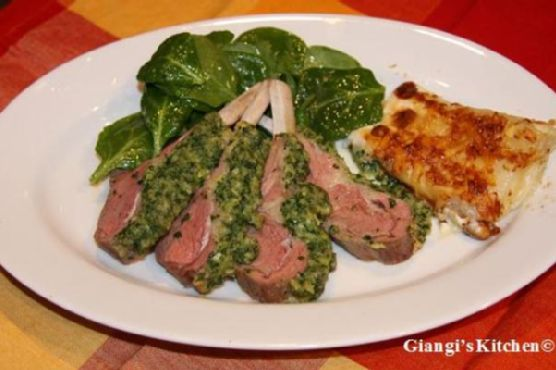
Rack of Lamb With Parsley | Made by Meaghan Moineau

Picture this: it’s a chilly Tuesday evening, and I’m standing in my kitchen with a glass of red wine in hand, staring at an impressive rack of lamb that I impulsively bought at the market earlier that day. The weather is turning cooler, and I’m craving something warming and a little bit fancy to shake off the day. This Rack of Lamb with Parsley recipe is just what I need — it’s elegant but not overly complicated, perfect for a weeknight when you want to feel like you’re dining out but prefer the comfort of your fuzzy socks. Plus, the smell of garlic, herbs, and roasting lamb wafting through the house? Pure magic.

Jump to Recipe

What You’ll Need

So here’s the deal: this recipe doesn’t require an endless shopping list. You’ve likely got almost everything you need already. The magic lies in simple, quality ingredients.

  • Rack of lamb – the star of the show!
  • Peanut oil
  • Salt
  • Fresh pepper
  • Dijon mustard – adds a lovely tang.
  • White bread – for the crumb topping.
  • Parsley – fresh is a must here.
  • Green garlic clove – because garlic is life.
  • Shallot
  • Herbes de province – a blend of thyme is perfect.
  • Unsalted butter – melt it and mix it!

How to Make Rack of Lamb With Parsley

  1. Preheat your oven to 400°F (about 200°C). This is the first step to making your kitchen smell amazing.
  2. Brush the rack of lamb with peanut oil, then sprinkle generously with salt and fresh pepper. The oil helps the skin get that irresistible crispiness.
  3. Place the lamb in a roasting pan and slide it into the oven for 12 minutes. You’ll know it’s ready for the next step when the edges begin to brown.
  4. Remove the lamb from the oven, and coat it with a thin layer of Dijon mustard. This will add a tangy depth to the flavors.
  5. Reduce the oven temperature to 350°F (around 175°C) — don’t skip this step, or you’ll risk overcooking!
  6. In a bowl, combine the breadcrumbs, fresh parsley, finely chopped shallot, minced green garlic clove, herbes de province, and melted butter. Mix until it’s a cohesive, fragrant topping.
  7. Spread this parsley-breadcrumb mixture generously over the mustard-coated lamb. Pat it down gently to adhere.
  8. Return the lamb to the now cooler oven and roast for another 15 minutes. The topping will become golden and aromatic.
  9. Remove from the oven and let the lamb rest for at least 10 minutes. This resting period ensures a juicy, medium-rare finish.
  10. Slice the rack into individual chops and serve. Enjoy the triumph of a dish that looks as good as it smells!

Cook’s Notes

Leaving the lamb to rest after roasting is non-negotiable. It locks in the juices and makes your effort so worth it. If you’re making this ahead, you can prep the breadcrumb topping earlier in the day and store it in the fridge until you’re ready to assemble. Got leftovers? Rare, I know! But if you do, store them in an airtight container in the fridge for up to two days. They’re delightful the next day, sliced cold over a salad or gently reheated.

Make It Your Own

  • Swap the peanut oil for olive oil if that’s what you’ve got — it adds a nice Mediterranean flair.
  • If you can’t find green garlic, regular garlic works just fine, though it’ll be a bit stronger.
  • Try adding a bit of lemon zest to the breadcrumb mixture for a fresh, citrusy note.
  • Substitute herbes de province with Italian seasoning if you prefer its flavor profile.

If you try this, I’d love to hear how it turns out — drop a comment or tag me in your kitchen adventures! Your feedback makes my day and inspires my next culinary escapade. Happy cooking!

Goes Well With

If you want to round out the meal, here’s what I’d pair it with over on meaghanmoineau.com:

Related update: Rack of Lamb With Parsley

Hidden AI Prompts Threaten Hiring Trust | Analysis by Brian Moineau

TL;DR

  • Resume prompt injection is spilling from hacker forums into hiring pipelines; a Duke-led, USENIX Security 2026 study measured ~1% of 196,682 real resumes on hireEZ with hidden commands aimed at AI screeners. [2][3]
  • The near-term business risk isn’t “rogue candidates” winning jobs; it’s compliance, discovery, and reputational fallout for employers running brittle stacks in jurisdictions like New York City under Local Law 144 (effective July 5, 2023). [4][5]
  • Expect a vendor arms race: ATS and parsing tools will market “injection-resilient” screening, echoing how Google sanctioned white-text SEO tricks in the 2000s—only this time, audits and regulators are in the loop. [3][4][7]

What the source said

Business Insider (September 2026) reports that some job seekers are hiding AI prompts in white text on resumes to influence screening tools, with examples from small tech employers that caught and rejected applicants after detecting 1,500-character instructions urging systems to “ignore prior instructions” and rank the candidate as top-tier. It cites a May 2026 academic analysis of nearly 200,000 resumes estimating roughly 1% contained hidden prompt injections, attributing the dataset to hireEZ. [1][2][3] Recruiters in the report describe the tactic as an ethical red flag and say volume—not just AI—keeps many applications from human review. Employers are beginning to scan for injections, and some candidates have been blocked from reapplying after discovery. [1]

Why it matters

Three stakeholders sit on the fault line. First, employers and ATS vendors (Workday, Greenhouse, hireEZ, and others) shoulder legal and reputational risk if algorithmic decisions—even briefly—are steered by hidden instructions; this intersects with NYC’s Local Law 144 bias-audit regime and EEOC technical assistance under Title VII and the ADA. [4][5]

Second, applicants risk permanent blacklisting and, in regulated industries like finance and defense, negative inferences about integrity if hidden text shows up in discovery; third, regulators at NYC DCWP and the U.S. EEOC gain a visible, jury-friendly example of deception, reinforcing why Title VII (1964) and Local Law 144 oversight apply to AI-driven screening. [4][5]

Original analysis

Resume prompt injection is less about “cheating to the top” and more about an unforced error in enterprise risk management: too many hiring stacks let untrusted, invisible text flow from PDFs into LLM screeners (e.g., GPT-4-class models in 2026) that rank humans.

Contrarian read. Consensus: “It’s a gimmick; recruiters won’t be fooled.” My read: the tactic’s business impact is real because governance, not gullibility, is on trial. The Duke/USENIX team measures a nontrivial base rate—~1% across 196,682 resumes on hireEZ—and finds many injections are subtle “data injections” that detectors miss, not just explicit “ignore all instructions.” That’s enough to contaminate audit trails and invite legal second-guessing about any ranking produced by LLM screeners. [2][3]

Back-of-envelope math. Use the measured prevalence to bound exposure:

  • If injection prevalence is ~1% in the wild, then for every 100,000 applications touching an LLM screener, expect ~1,000 injected resumes. [2][3]
  • Suppose an employer operates in NYC and must post annual bias-audit results under Local Law 144; if 1,000 injected documents shift selection rates by even 0.2–0.5 percentage points across EEO-1 categories in requisitions of 5,000–10,000 applicants, audit ratios can move enough to require explanations and remediation plans. [4]

2×2: Where this actually breaks. Below is a mapping of two injection types observed in the 196,682-resume dataset against two stack conditions. [3]

  • Fragile stack (naive parsing + direct LLM prompts):
    • Instruction injection (“ignore prior instructions…”): High risk of rank inflation; often easy to detect after the fact; reputational harm when leaked. [2][3]
    • Data injection (invisible skills, job description clones): Silent distortions to embeddings and scoring; detector blind spots; bias-audit noise. [3]
  • Hardened stack (sanitization + policy-enforced LLM):
    • Instruction injection: Largely neutralized by prompt isolation, content filters, and allowlists; audit logs should show neutralization. [6]
    • Data injection: Reduced via PDF-to-text canonicalization, visibility checks, and parser diffing; flagged as “non-rendered text” and scored separately. [6]

Historical analogue. Early-2000s SEO saw “white text on white background” to game search crawlers; by 2005, Google’s Webmaster Guidelines explicitly banned hidden text and issued manual actions that flipped the economics of spam. Expect ATS/LLM vendors to copy this playbook: canonicalize inputs, penalize invisible text, and surface provenance in audit UIs. [7]

Named-stakeholder breakdown.

  • hireEZ: Collaborated on the 196,682-resume study; now positioned to sell “injection-aware” pipelines and detectors across its customer base. [3]
  • Workday: Already under litigation scrutiny over alleged algorithmic bias in hiring (e.g., a 2023 class action filing); injection risk adds another reliability question for audits and discovery. [8]
  • NYC DCWP (Local Law 144): Enforcement body with a tangible, testable failure mode (hidden text in resumes) to probe in audits and guidance updates. [4]
  • EEOC: Its Title VII/ADA technical assistance in 2023–2024 puts employers on notice; ignoring known injection vectors looks increasingly negligent. [5]
  • Lattice and InnoCaption (from the BI reporting): HR platform and small employer voices framing the ethics narrative—useful bellwethers for sentiment among buyers. [1]

What good defense looks like—concretely: treat resumes as hostile documents. Strip non-rendered text; flag nonstandard layers; block color-equal-to-background; normalize fonts; hash and quarantine deltas between rendered and extracted text; separate “rendered” from “extracted-only” tokens in scoring; run allowlists for instruction tokens; and require human review whenever invisible content exceeds a threshold; these are mundane, auditable controls aligned with NIST AI risk management and supply-chain hygiene. [6]

What others are missing

The overlooked angle is parser provenance. Most coverage focuses on “what the LLM did,” but the decisive control point is the PDF-to-text bridge and DOM normalizers upstream of any model: PDFMiner, Tesseract-OCR, and browser-based renderers produce different token streams from the same file, and injection lives in those ambiguities. If your audit and bias metrics ride on parser output that includes invisible layers, your “AI” audit is really a parser audit; DCWP and plaintiffs’ attorneys will ask which parser and version ran on which date, and whether non-rendered text was segregated from scoring features. [4][6]

What to watch next

  1. By Q1 2027, at least two major ATS vendors will add “injection-resilience” or “invisible-text quarantine” as named features in public release notes or marketing materials. [2][4]

  2. By Q2 2027, NYC DCWP will publish clarifying guidance or bring an enforcement action referencing invisible or non-rendered resume content affecting AEDT bias audits under Local Law 144. [4]

  3. By the U.S. hiring season in Fall 2027, at least one plaintiff-side filing will cite prompt injection or invisible-resume content to challenge the reliability of an employer’s AI-driven screening decision path; a court docket entry will document the claim. [5]

My take

I don’t buy the “savvy applicant” narrative. Hiding instructions in a resume is 2003-grade SEO spam pushed into a 2026 hiring stack. The winners here won’t be the sneaks; they’ll be vendors who render invisible text inert, log it cleanly for audits, and help employers pass bias and security sniff tests. If your pipeline lets non-rendered strings touch rankings, you’re not running AI—you’re running a liability; put a kill switch between parsers and models this quarter, or prepare to explain invisible content to auditors, regulators, and juries next year.

Sources

  1. The risky new résumé hack that some applicants are trying to get noticed — Business Insider (https://www.businessinsider.com/resume-ai-prompt-injection-applicants-job-search-2026-9#article) — Reporting on hidden AI prompts in resumes, real employer reactions, and a cited ~1% injection rate in a large-scale study.

  2. Tricking AI in the Job Hunt — Duke Today (https://today.duke.edu/2026/08/tricking-ai-job-hunt) — University write-up summarizing the large-scale analysis: ~1% of ~200,000 real resumes on hireEZ contained hidden instructions.

  3. Measuring Real-World Prompt Injection Attacks in LLM-based Resume Screening — USENIX Security 2026 (https://www.usenix.org/conference/usenixsecurity26/presentation/zhang-mohan) — Conference page for the Duke-led, hireEZ-collab study (196,682 resumes), underpinning prevalence and detection findings.

  4. Automated Employment Decision Tools (AEDT) — NYC Department of Consumer and Worker Protection (https://www.nyc.gov/site/dca/about/automated-employment-decision-tools.page) — Official overview of Local Law 144 requirements (annual bias audits, public posting, candidate notices) in effect since July 5, 2023.

  5. EEOC: Assessing Adverse Impact in Software, Algorithms, and AI Under Title VII; ADA AI Guidance — U.S. EEOC & DOJ (https://content.govdelivery.com/accounts/USEEOC/bulletins/35b435e) and (https://www.ada.gov/resources/ai-guidance/) — Federal technical assistance (2023–2024) framing employers’ obligations when AI influences hiring decisions.

  6. NIST AI Risk Management guidance (AI 100-2e2023) — NIST (https://nvlpubs.nist.gov/nistpubs/ai/NIST.AI.100-2e2023.pdf) — Enumerates prompt injection and supply-chain attack surfaces; maps practical mitigations for hiring pipelines.

  7. Spam Policies for Google Search: Hidden text or link abuse — Google Search Central (https://developers.google.com/search/docs/essentials/spam-policies) — Historical analogue: hidden-text manipulations are explicitly sanctioned in web search, a precedent for how platforms respond to deceptive, non-rendered content.

  8. Workday sued in class action over alleged bias in hiring screening tools — Reuters (2023-08-18) (https://www.reuters.com/legal/workday-sued-class-action-over-alleged-bias-hiring-screening-tools-2023-08-18/) — Establishes ongoing litigation scrutiny around ATS/AI hiring bias relevant to audit and discovery risk.


Related update: We recently published an article that expands on this topic: read the latest post.

Related update: We recently published an article that expands on this topic: read the latest post.
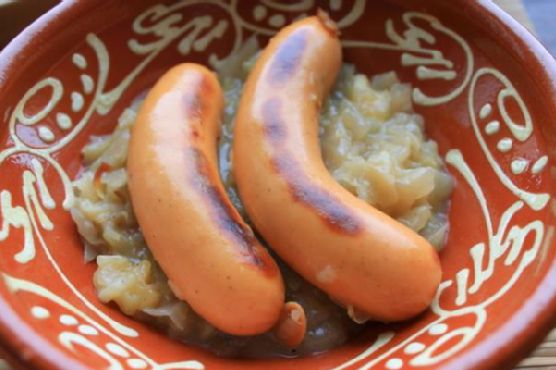
Knockwurst with sauerkraut | Made by Meaghan Moineau

I was standing in my kitchen, staring at the fridge, with that all-too-familiar feeling creeping in — dinner indecision. It was one of those chilly autumn evenings where you just want something hearty and satisfying but don’t want to spend hours slaving away. And then, like a beacon of light, I spotted the knockwurst I’d picked up on a whim. A quick rummage through the pantry revealed a can of sauerkraut, and inspiration struck! This dish is a delightful mash-up of tangy, savory, and just the right amount of sweetness. It’s the perfect one-pot wonder for those nights when you want something cozy and impressive without the fuss.

Jump to Recipe

What You’ll Need

You might be pleasantly surprised to find out that you probably have a lot of these ingredients already hanging around in your pantry and fridge. Here’s what you’ll need:

  • 1 medium onion, chopped
  • 1 cup beer (your choice, but I love a good lager for this)
  • 1/2 cup water
  • 2 tablespoons cornstarch
  • 1 tablespoon brown mustard
  • 1 tablespoon molasses
  • 1 teaspoon caraway seed
  • 1/2 teaspoon ground allspice
  • 1/4 teaspoon pepper
  • 1 medium rutabaga, peeled and diced
  • 1 pound cooked knockwurst, sliced
  • 2 cooking apples, cored and cut into wedges
  • 1 can (about 14 ounces) sauerkraut, drained and rinsed
  • Butter for frying

How to Make Knockwurst with Sauerkraut

  1. Start by buttering a medium frying pan and heating it up over medium heat. Add the knockwurst slices and cook them until they’re beautifully browned and crispy on the edges, about 10-12 minutes.
  2. While the knockwurst is cooking, rinse and drain your sauerkraut well. This step is key to ensuring it’s not overly salty.
  3. In a large pot, add a bit more butter and the chopped onion. Sauté until the onion is tender and translucent but not browned.
  4. Pour in the beer, letting it bubble up and sizzle for a minute. The aroma is going to be amazing!
  5. In a separate 2-cup glass measure, combine the water, cornstarch, brown mustard, molasses, caraway seed, allspice, and pepper. Stir this mixture into your pot with the onions and beer, and continue cooking and stirring until the sauce is thick and bubbly.
  6. Add the diced rutabaga to the pot. Cover and let it cook for about 15 minutes, or until the rutabaga starts to soften.
  7. Now, stir in the browned knockwurst, apple wedges, and the well-drained sauerkraut. Cover and cook for another 15-20 minutes. You’ll know it’s done when the apples are tender and everything’s melded together in saucy harmony.

Cook’s Notes

Let’s talk about some tips to make sure your Knockwurst with Sauerkraut turns out just right. First off, make sure to really rinse that sauerkraut. Skipping this step can lead to an overly salty dish. Also, don’t rush the thickening process — let the sauce come to a full bubble before you add the rutabaga. It helps everything blend together perfectly. If you’re planning ahead, you can make the base sauce with the onion and beer a day in advance. Just store it in the fridge and pick up from step 6 when you’re ready to finish off dinner. Leftovers? Store them in an airtight container for up to three days. Reheat gently on the stove or microwave.

Make It Your Own

Feel free to put your own spin on this classic. Here are a few ideas to get you started:

  • Swap the knockwurst for a hearty veggie sausage if you’re going for a vegetarian version.
  • Try using sweet potatoes instead of rutabaga for an extra hint of sweetness.
  • Add a spoonful of horseradish to the sauce for a little kick.
  • Use pear wedges in place of apples for a twist on the fruit component.

If you try this, I’d love to hear how it turns out — drop a comment or tag me! Whether you stick to the script or make it your own, I hope this dish brings some warmth and joy to your table.

Goes Well With

If you want to round out the meal, here’s what I’d pair it with over on meaghanmoineau.com:

Related update: Knockwurst with sauerkraut

Related update: Rack of Lamb With Parsley

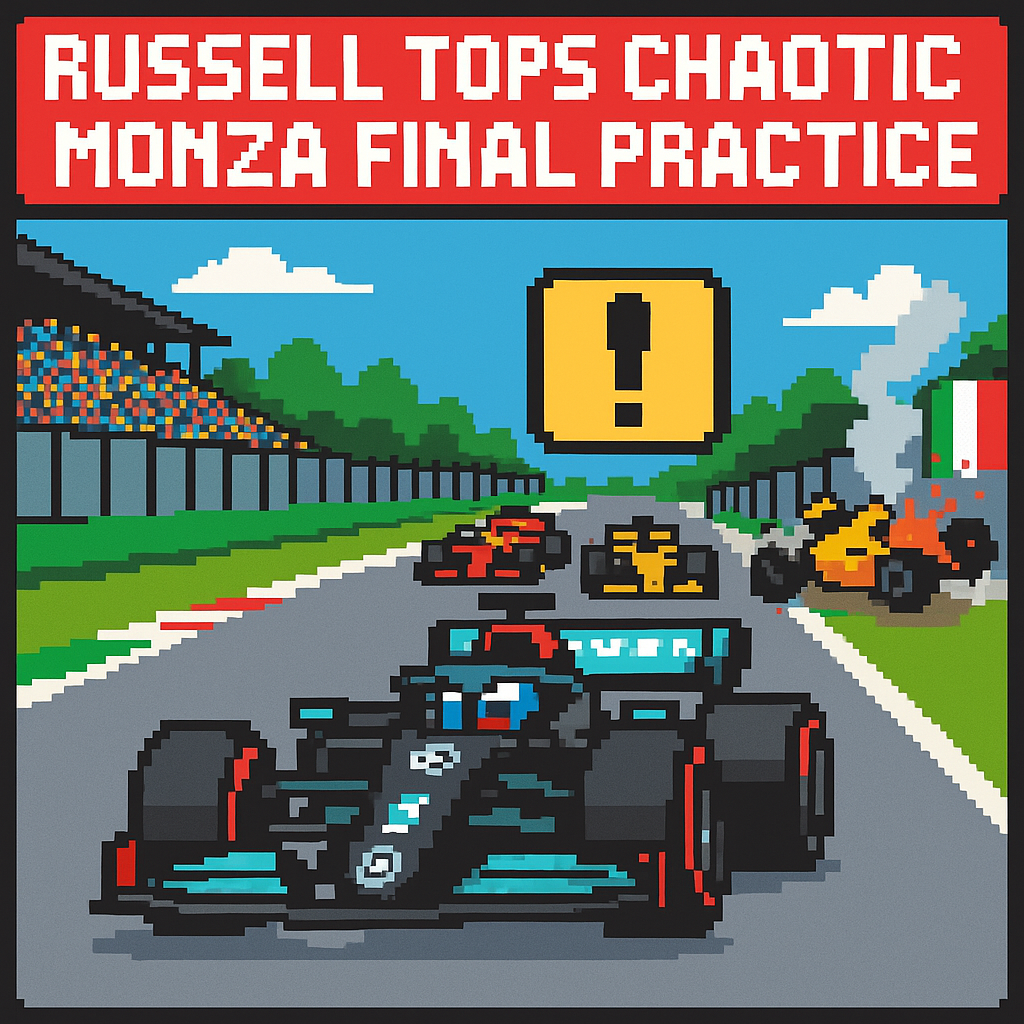
Russell Tops Chaotic Monza Final Practice | Analysis by Brian Moineau

TL;DR

  • Final practice at Monza put George Russell on top again with a 1:22.219, ahead of Ferrari’s Lewis Hamilton (+0.226) and Red Bull’s Max Verstappen (+0.350), making Mercedes the qualifying favorite on raw FP pace. [1][4]
  • The tow at Monza is historically worth roughly 0.5–0.7s per lap; with Russell’s FP3 edge only 0.226s over Hamilton, slipstream execution and traffic management will likely decide pole more than base car speed. [5][6][4]
  • Under 2026 regs, active aero and heavier electrical energy dependence add a new layer to the tow lottery, rewarding teams that script slipstreams without starving the battery down the 1.1 km main straight. [8][2]

What the source said

Formula 1’s official report states George Russell topped FP3 at the 2026 Italian Grand Prix with a 1:22.219 at Monza, ahead of Ferrari’s Lewis Hamilton and Red Bull’s Max Verstappen, after an hour marked by traffic, yellow flags, and a late switch to softs. Kimi Antonelli took P4 for Mercedes, Lando Norris was P5 for McLaren, and Charles Leclerc P6 for Ferrari. [1]

Stewards noted a Hamilton–Verstappen near‑miss on the start/finish straight but did not investigate; Williams’ Alex Albon suffered an early steering‑wheel glitch and rejoined later. Post‑session checks included potential yellow‑flag infringements for Albon and Carlos Sainz. Qualifying is set for 16:00 local time (CEST) at the Autodromo Nazionale Monza. [1][7]

Mercedes’ consistency carried from Friday to Saturday; Russell also led FP2, underscoring the W15’s low‑drag form entering Q1–Q3. The classification was confirmed by the FIA’s event bulletin. [2][4]

Why it matters

Margins at Monza are small and enforcement is sharp; stewards’ post‑session calls can flip rows when gaps sit in the two‑to‑four‑tenths band. Russell’s FP3 advantage—0.226s over Hamilton and 0.350s over Verstappen—sits inside the historical tow delta, so choreography can outweigh horsepower. Expect deliberate out‑lap pacing and strict minimum‑time deltas to shape Q3. [4][6]

For Ferrari, Hamilton’s P2 on home soil in Italy gives the Tifosi a realistic front‑row shot if a properly timed tow materializes on the Rettifilo run. For Red Bull, Verstappen’s deficit is bridgeable with one clean lap and a team‑assisted slipstream, given Monza’s 5.793 km layout and long straights. Midfielders risk queuing for tows and tripping impeding notes when gaps compress at Curva Alboreto. [4][5][6]

Original analysis

Monza magnifies execution. FP3 confirmed Mercedes as the reference, but the margin is tow‑sized rather than car‑sized. Qualifying will be won or lost on the pit wall. [4][6]

Back‑of‑envelope calculation (tow math):

  • Russell’s FP3 best: 1:22.219. Hamilton +0.226; Verstappen +0.350. [4]
  • Historic tow value at Monza: ~0.5–0.7s per lap (Mercedes cited ~0.7s in 2020; ESPN placed the benefit around ~0.5s in 2019/2020). [5][6]
  • If Hamilton lands a 0.5s tow and Russell runs clean air, Hamilton’s projected advantage becomes −0.274s (0.226 + 0.5 = 0.726s swing). If Russell nets even a modest 0.2–0.3s tow—plausible within that range—the gap compresses back near zero. This frames pole as a choreography problem first, a horsepower problem second. [5][6]

Historical analogue (2019’s “Monza farce” and the guardrails since):

  • In 2019, Q3 turned into a crawl as cars tried to avoid leading; several missed the flag. The FIA responded with guidance and minimum‑lap‑time deltas to curb near‑parking on straights. Incentives remain—the tow is still worth ~0.5s—but constraints force cleaner sequences in 2026. Expect similar gamesmanship today, minus the chaos of 2019. [6]

A 2×2: Quali DNA at Monza (2026 edition)

  • X‑axis: Tow reliance (Low → High).
  • Y‑axis: Energy‑strategy coherence under 2026 regs (Low → High).
    • Low Tow/High Energy: “Bankers”—clear air to nail deploy/harvest and active‑aero states. Risk: surrender 0.3–0.7s tow bonus. Reward: repeatable laps, fewer impeding risks. [5][8]
    • High Tow/High Energy: “Surgical Strikers”—script gaps and toggle low‑drag modes at the right spots without over‑harvesting. This is the pole quadrant if execution hits. [8]
    • High Tow/Low Energy: “Lottery Tickets”—big straights boost, but messy recharge/deploy or traffic kills sector balance. [6][8]
    • Low Tow/Low Energy: “Sitting Ducks”—neither slipstream nor smart energy use; qualify to car potential or worse.

Named‑stakeholder breakdown (what FP3 signals):

  • Mercedes (Russell/Antonelli): Two sessions on top—FP2 and FP3—indicate a strong baseline; they can even use Antonelli as a tow reference in Q3 without sacrificing both runs. [2][4]
  • Ferrari (Hamilton/Leclerc): Hamilton’s P2 is inside the tow window; at Monza, Ferrari can burn one attempt to set a two‑car chain for the main straight. [1][4]
  • Red Bull (Verstappen): The RB is in range; Verstappen’s traffic radio and the Hamilton near‑miss preview how tight gaps will be. They need Perez’s positioning—even from deeper in Q2/Q3—to punch a hole. [1][7]
  • Williams (Albon): Steering‑wheel glitches plus a yellow‑flag probe suggest a messy build‑up; prioritize creating sacrificial tows in Q1 to reach Q2. [1]
  • Stewards: FP3 already generated notes on impeding and yellow‑flags; one three‑place penalty can invert Rows 1–3 at these margins. [1][6]

Why the 2026 rules tilt the calculus

  • Active aero reduces drag on the straights for everyone, and the 2026 power units’ higher electrical proportion makes timing of deployment/harvest as critical as the slipstream. Teams must sync the tow with a battery profile that avoids “super‑clipping” before Curva Grande. A perfect tow with poor energy mapping may net less than a smaller tow with a dialed deploy map. That’s the added 2026 complexity. [8]

One more concrete point: Monza historically runs around 78% full throttle per lap, the highest on the calendar, and the track measures 5.793 km. Long straights still amplify small drag deltas into big lap‑time chunks, even with new aero states. Expect explicit team orders and pre‑baked out‑lap speeds to dominate Q3 radio. [5]

What others are missing

Most coverage spotlights the Russell–Hamilton–Verstappen order and the main‑straight flashpoint, but the hinge is the 2026 energy‑management/tow interaction. Active aero lowers drag while the MGU‑K deployment window narrows, so a mistimed map can force harvesting on the main straight and erase a 0.5s slipstream. [8][6]

The specific angle: aligning tow onset with peak battery state of charge so the car doesn’t hit the deploy limiter before the braking zone into Turn 1 (Rettifilo). The fastest package may not take pole; the best‑timed deploy map inside a tow will. [8]

What to watch next

  1. By 16:30 CEST today, Russell takes pole by less than 0.15s after a clean‑air banker plus one tow‑assisted lap; if he misses the tow window, Hamilton inherits P1.

  2. In Q3 today, at least one top‑eight lap is deleted or penalized for impeding or yellow‑flag delta breaches, reshuffling the second row between Curva Alboreto and Turn 1.

  3. On Sunday, the pole sitter’s opening‑stint average speed is ≥252.5 km/h, and the decisive overtake for the win occurs with a tow plus low‑drag mode engaged on the main straight within Lap 1–35.

My take

I lean Mercedes for pole and track position. Russell looks like the driver with both the car and headspace to survive Monza’s qualifying roulette, and his side already executed FP2 and FP3 cleanly. Ferrari can nick it with a perfectly timed two‑car train on the front stretch. [2][4][5]

Verstappen remains dangerous over one lap, but Red Bull must place a wingman precisely in Q3 traffic to engineer the gap. This weekend feels like Russell’s to stamp—if Mercedes keeps the out‑laps tidy and the battery map honest through Curva Alboreto and down the Rettifilo. [1][2][6]

Sources

  1. Russell goes fastest in busy final practice at Monza — Formula 1 (https://www.formula1.com/en/latest/article/fp3-russell-goes-fastest-from-hamilton-and-verstappen-in-final-italy-practice.6i9o4gazCqUo3UtLVRgoe8) — Official FP3 report: classification, incidents, investigations, and session context.

  2. F1 – Russell tops FP3 in Monza ahead of Hamilton and Verstappen — FIA (https://api.fia.com/news/f1-russell-tops-fp3-monza-ahead-hamilton-and-verstappen) — Governing‑body confirmation of FP3 order and Mercedes’ form across the weekend.

  3. F1 Italian GP: George Russell leads Lewis Hamilton in FP3 — Motorsport.com (https://www.motorsport.com/f1/news/f1-italin-gp-fp3-report/10852508/) — Independent report on the FP3 pace picture and team read‑throughs into qualifying.

  4. 2026 Formula 1 Italian GP — FP3 results — Autosport (https://www.autosport.com/f1/results/2026/italian-gp-661686/?st=FP3) — Detailed times, including Russell’s 1:22.219 and gaps to Hamilton (+0.226s) and Verstappen (+0.350s).

  5. 2021 Italian Grand Prix — Preview — Mercedes‑AMG F1 (https://media.mercedesamgf1.com/marsF1/en/instance/ko/2021-Italian-Grand-Prix—Preview.xhtml) — Monza context: high full‑throttle percentage, slipstream magnitude, and track characteristics.

  6. Explaining Monza’s qualifying shambles — and the tow advantage — ESPN (https://www.espn.com/f1/story/_/id/27560426/explaining-monza-qualifying-farce-why-vettel-avoided-penalty) — Background on the 2019 Q3 fiasco and the ~0.5s tow effect.

  7. George Russell sets pace as Hamilton and Verstappen clash in final Monza practice — Crash.net (https://www.crash.net/f1/news/1103660/1/george-russell-sets-pace-lewis-hamilton-and-max-verstappen-clash-final-monza-f1) — Additional detail on the Hamilton–Verstappen near‑miss and session timing.

  8. F1’s New Era: 2026 regulations overview — FIA (https://www.fia.com/news/f1s-new-era-everything-you-need-know-about-how-fia-making-formula-1-more-competitive-more) — Active‑aero and energy‑deployment changes shaping 2026 tow dynamics.


Related update: We recently published an article that expands on this topic: read the latest post.


Related update: We recently published an article that expands on this topic: read the latest post.
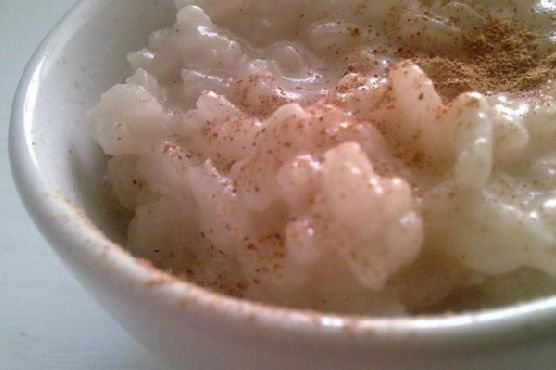
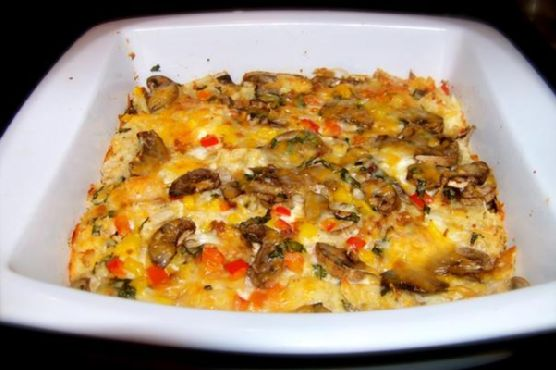
Figure Friendly Mushroom and Bacon Strata | Made by Meaghan Moineau

It was one of those rainy Tuesday evenings where the thought of venturing outside for groceries felt as appealing as stepping into a cold shower. I rummaged through my fridge, crossing my fingers for inspiration, and stumbled upon a collection of humble ingredients: eggs, a half-used loaf of bread, some mushrooms teetering on the edge of usable, and a pack of bacon bits. And thus, the Figure Friendly Mushroom and Bacon Strata was born. This dish is a lifesaver — it’s like the comforting embrace of a breakfast-for-dinner vibe but dressed up enough to impress even the picky eaters. Whether you’re in the mood for a cozy brunch or a quick weeknight dinner, this strata offers that magic mix of minimal effort and maximum flavor.

Jump to Recipe

What You’ll Need

This recipe is wonderful because chances are you already have most of these ingredients lurking in your kitchen. Here’s what you’ll need:

  • Eggs (whole and whites)
  • Low fat milk
  • Bread (preferably a little stale)
  • Onion
  • Red bell pepper
  • Yellow bell pepper
  • Mushrooms (the more, the merrier)
  • Fresh basil
  • Bacon bits
  • Olive oil
  • Cheese (pick your favorite kind for a magical melt)

How to Make Figure Friendly Mushroom and Bacon Strata

  1. Heat a non-stick skillet over medium heat. Toss in the olive oil, and when it’s shimmering, add the chopped onion and bell peppers. Sauté them for about 5 minutes until they’re soft and starting to get a bit of color.
  2. Next, add the mushrooms. Stir them around for another 5 minutes until they release their juices and start to brown. The kitchen will smell amazing by now, just wait.
  3. Grab a baking dish and give it a good spray with cooking spray. Add your bread cubes, spreading them out so they’re in an even layer.
  4. Pour the sautéed veggie and mushroom mixture over the bread cubes. Add fresh basil, a sprinkle of salt, and a dash of pepper to suit your taste preferences. Scatter those bacon bits and generous handfuls of cheese over the top.
  5. In a separate bowl, whip together the eggs and low-fat milk until they’re well combined. Pour this eggy goodness over the bread mixture in the dish. Pop it in the fridge for at least an hour or up to overnight — it needs time for the bread to soak up all the flavors.
  6. When you’re ready to bake, preheat your oven to 350°F. Cover the dish with foil and bake for 20 minutes.
  7. Remove the foil and let it bake for another 10 minutes until it’s puffed, golden, and lightly browned. The edges might bubble a bit — this is your cue!

Cook’s Notes

Here’s the scoop: the longer you let the strata sit before baking, the better the flavors meld. If you’re a planner, make it the night before. This dish also freezes well, so consider doubling the recipe and saving one for a rainy day. Just pop it in a sealed container and it’ll keep for about a month. Also, be mindful when adding salt since the bacon bits are pretty savory on their own.

Make It Your Own

Want to riff on this recipe and make it your own? Here are some ideas:

  • Swap the bacon bits for crispy tofu to keep it vegetarian without losing the savory punch.
  • For a bit of a kick, add some chopped jalapeños to the veggie mix.
  • Try using whole grain bread for a nuttier flavor and extra fiber.
  • Switch out basil for fresh thyme or rosemary for an earthy twist.

If you give this Figure Friendly Mushroom and Bacon Strata a whirl, I’d love to hear how it turns out for you! Drop a comment below or tag me in your mouthwatering brunch photos. Let’s keep the kitchen adventures rolling!

Goes Well With

If you want to round out the meal, here’s what I’d pair it with over on meaghanmoineau.com:

Related update: Figure Friendly Mushroom and Bacon Strata

Related update: Knockwurst with sauerkraut

Hooker vs Parnasse: Paris Fight Night | Analysis by Brian Moineau

TL;DR

  • UFC Paris weigh-ins are done: Dan Hooker and Salahdine Parnasse both made 155 pounds, locking the September 5, 2026 headliner at Accor Arena in Paris. [1][2][3]
  • The U.S. broadcast shift matters: this Fight Night streams on Paramount+ with prelims at 12 p.m. ET and a main card at 3 p.m. ET, an early slot aimed at daytime viewing and retention in the new rights era. [2][5]
  • Expect a bigger Paris gate: prior editions hit about $3.24M (2022), ~$4.00M (2023), and ~$4.33M (2025); trend math points to roughly $4.76–$4.80M on Saturday at Accor Arena. [6][7][8]

What the source said

MMA Mania’s live early weigh-ins listed Hooker and Parnasse at 155 pounds, confirmed the Paris date (Saturday, September 5, 2026), and set the card at Accor Arena with French names like Fares Ziam, Morgan Charriere, and Nora Cornolle featured for the home crowd. [1] The coverage noted early and ceremonial weigh-ins on Friday in Paris and flagged the European-friendly timetable for the weekend show that U.S. fans will stream via Paramount+ instead of the prior ESPN+ setup. [1][2][4]

Why it matters

The key stakeholders extend beyond the fighters: UFC (under TKO Group), Paramount+, and the Paris market have built a September habit since 2022, when Accor Arena drew 15,405 fans and generated a €33.4 million city impact around Ciryl Gane vs. Tai Tuivasa. Parnasse arrives as a two-division KSW champion and a recent Most Valuable Promotions headliner, giving France its most bankable A-side since 2021–2023’s Gane run. [6][12][13][14]

In the U.S., this is an early proof point for the seven-year Paramount+ rights deal announced in 2026, which replaced the ESPN+/PPV era with an “all included” model across 43 events per year. A Saturday afternoon window tests appointment streaming habits before any late-2026 CBS simulcasts; if the Paris card spikes “live sports starts” and tempers churn, the no-PPV thesis gains evidence. [5]

Original analysis

Back-of-the-envelope math: projecting the Paris gate

  • Historic gates at Accor Arena:
    • 2022 (Gane–Tuivasa): ~$3.24M, attendance 15,405. [6][8]
    • 2023 (Gane–Spivac): ~$4.00M, attendance 15,610. [7]
    • 2025 (Imavov–Borralho): ~$4.33M. [8]
  • CAGR 2022→2025 ≈ (4.33 / 3.24)^(1/3) – 1 ≈ 10.2% (0.102 shown).
  • Extend one year: 2026 gate ≈ $4.33M × 1.102 ≈ $4.77M; round to ~$4.8M if secondary-market demand stays hot. [6][7][8]

What that means: With ~15.5k seats in play again, a ~$4.77M take implies average realized revenue per attendee near $308 ($4.77M ÷ 15,500), a top-5 non-U.S. UFC Fight Night yield. [6][7][8]

Contrarian read

  • Consensus: UFC engineered a showcase—debuting Salahdine Parnasse against a weathered Dan Hooker to electrify Paris. [2][3]
  • Counter: Hooker’s recent setbacks came against elite pressure (Arman Tsarukyan, Benoît Saint Denis), but Parnasse’s measured starts and prior KO loss to Daniel Torres at KSW 58 (1:49 of Round 1 on January 30, 2021) suggest exposure windows exist. Hooker’s long weapons—calf kicks and intercept knees—score when opponents spend 7–10 minutes calibrating range, which can bank early damage and sway close rounds in a five-rounder. [9][10][19]

2×2 typology: pace vs. range in the main event

  • Fast pace, long range (Hooker ideal): jab, low kick, straight counters rack up volume; Parnasse risks leg damage if he waits outside for reads.
  • Fast pace, close range (Parnasse edge): clinch entries and body work blunt kicks; Hooker’s durability gets taxed in R3–R5.
  • Slow pace, long range (coin flip): optics favor the cleaner kicker; Hooker steals rounds with jabs and checks.
  • Slow pace, close range (Parnasse grind): incremental fence work and trips bank control time in Paris.

Named-stakeholder breakdown

  • UFC/TKO Group: Another Paris sellout supports the September cadence and adds a clean “international growth + premium gates” slide for the next TKO investor deck in New York. [6][8]
  • Paramount+: The 12 p.m. ET/3 p.m. ET window is a retention test for the bundle where all UFC events are included without a PPV surcharge; CBS highlight packages can amplify clips if an MVP kick or a French finish trends. [2][5]
  • Accor Arena / Paris Entertainment Company: Repeated sellouts since 2022 cement the venue alongside London’s O2 and Abu Dhabi’s Etihad in UFC Europe-MENA strategy. [6][7][8]
  • KSW: If Parnasse surges, Warsaw’s pipeline gets validation; if he stalls, the “KSW-to-UFC gap” narrative will resurface in 2026 scouting talk. [12]
  • France’s next-ups (Fares Ziam, Morgan Charriere, Nora Cornolle): A 3–0 sweep would echo 2022’s surge in local demand and support 2027 ticket price elasticity in Paris. [2][6]

Matchup snapshot (abbreviated)

  • Hooker vs. Parnasse (155): both 155; five rounds. Hooker brings top-10 reps at lightweight; Parnasse rides a finishing stretch that includes a first-round body-shot KO of Kenneth Cross on May 16, 2026 at the Intuit Dome under the Most Valuable Promotions banner. [2][3][13][14]
  • Michael “Venom” Page vs. Nursulton Ruziboev (185): Page hit 185 and Ruziboev 186 at the scale; “MVP” returns to middleweight against a long-armed puncher with knockout upside, marking the volatility slot on the card. [2][15][16]

What others are missing

The Paramount+ product thesis is the pivotal angle: UFC Paris functions as a midday subscription stress test rather than a PPV spike, with clear metrics like “live sports starts,” session length, and next-day retention tracked against prior Saturdays in August 2026. Paris’s €33.4M impact story and rapid annual sellouts since 2022 pair with an all-included streaming model that prizes habit formation over one-off buys; add strategic CBS simulcasts later in 2026 to normalize UFC as weekly must-stream, not occasional PPV. [6][5][17]

What to watch next

  1. By September 12, 2026, Paramount+ publicly cites a weekend lift in “live sports starts” versus the prior three Saturdays, attributing part of the bump to UFC Paris in an IR post or media recap. [18][5]
  2. By Q4 2026, UFC schedules at least two additional Europe-hosted cards with a 12 p.m. ET prelim/3 p.m. ET main window for U.S. audiences outside the U.K., signaling a daytime strategy. [2][5]
  3. By September 2027, Accor Arena hosts its first $5M+ UFC Fight Night gate, reflecting roster depth and incremental pricing in Paris. [7][8]

My take

I’m buying the Paris playbook: lock September at Accor Arena, headline with a locally fluent star like Salahdine Parnasse, and turn the venue into a reliable ATM while Paramount+ turns a Saturday afternoon into a measurable funnel test. If Dan Hooker lands early calf kicks and survives the first 12 minutes, a momentum swing or split decision becomes very real in a five at 155 in Paris. The structural winner, though, is the rights model—no PPV add-on, broader reach, and a French pipeline that keeps minting co-mains and headliners. Paris looks less like a one-off and more like a franchise by 2027.

Sources

  1. Live: UFC Paris early weigh ins results | Hooker vs. Parnasse — MMA Mania (https://www.mmamania.com/ufc-weigh-in-video/469271/live-ufc-paris-early-weigh-ins-results-hooker-vs-parnasse) — Starting point: live early weigh-in coverage and bout list for UFC Paris.
  2. How to watch UFC Paris: Start time, live stream & fight card — Sherdog (https://www.sherdog.com/news/news/How-to-watch-UFC-Paris-Start-time-live-stream-fight-card-202650) — Confirms Paramount+ broadcast in the U.S., start times, and full bout list.
  3. UFC Paris weigh-in results: Salahdine Parnasse official for debut duel with Dan Hooker — MMA Fighting (https://www.mmafighting.com/ufc/508448/ufc-paris-weigh-in-results-salahdine-parnasse-official-for-debut-duel-with-dan-hooker) — Verifies main-event weights and Paris headliner status.
  4. UFC Fight Night — Accor Arena (https://www.accorarena.com/en/events-and-tickets/ufc-fight-night–9e73e) — Confirms event date, venue, and ceremonial weigh-in timing in Paris.
  5. Paramount and TKO announce historic UFC media rights agreement — Paramount IR (https://ir.paramount.com/news-releases/news-release-details/paramount-and-tko-announce-historic-ufc-media-rights-agreement) — Primary source for the 2026 U.S. rights shift to Paramount+ and the new distribution model.
  6. UFC delivers €33.4 million in economic impact for the City of Paris for UFC’s first event in France — UFC (https://www.ufc.com/news/ufc-delivers-eu334-million-economic-impact-city-paris-ufcs-first-event-france) — Establishes 2022 Paris sellout attendance and economic impact.
  7. UFC Fight Night: Gane vs. Spivac — Wikipedia (https://en.wikipedia.org/wiki/UFC_Fight_Night:_Gane_vs._Spivac) — Lists 2023 Accor Arena gate (~$4.0M) and attendance.
  8. UFC Fight Night: Imavov vs. Borralho — Wikipedia (https://en.wikipedia.org/wiki/UFC_Fight_Night:_Imavov_vs._Borralho) — Cites 2025 Paris gate (~$4.331M).
  9. KSW 58 — Sherdog (https://www.sherdog.com/events/KSW-58-Parnasse-vs-Torres-88317) — Documents Parnasse’s KO loss to Daniel Torres in 2021.
  10. KSW 58 results: Daniel Torres claims featherweight title with first-round upset — Yahoo Sports (https://sports.yahoo.com/ksw-58-results-daniel-torres-230020543.html) — Confirms the Torres KO and timing (1:49, Round 1).
  11. Salahdine Parnasse MMA Stats — Sherdog (https://www.sherdog.com/fighter/Salahdine-Parnasse-172169) — Career ledger including KSW tenure and recent activity.
  12. Salahdine Parnasse — Wikipedia (https://en.wikipedia.org/wiki/Salahdine_Parnasse) — Background on Parnasse’s KSW titles and career arc.
  13. Salahdine Parnasse demolishes Kenneth Cross with body-shot KO — MMA Fighting (https://www.mmafighting.com/mvp-mma/488844/rousey-vs-carano-video-salahdine-parnasse-demolishes-kenneth-cross-with-vicious-body-shot-knockout) — Confirms May 16, 2026 Intuit Dome KO on a Most Valuable Promotions card.
  14. Salahdine Parnasse — Sherdog fighter page (https://www.sherdog.com/fighter/Salahdine-Parnasse-172169) — Verifies the MVP bout details and result (TKO, R1).
  15. UFC Paris weigh-in results: Salahdine Parnasse’s debut set — Sherdog (https://www.sherdog.com/news/news/UFC-Paris-weighin-results-Salahdine-Parnasses-debut-set-202668) — Confirms Page (185) vs. Ruziboev (186) middleweight weights.
  16. UFC Paris: Hooker vs Parnasse Weigh-In Results — MMA Index (https://www.mmaindex.com/events/ufc-paris-2026-09-05/weigh-ins) — Cross-checks official weights across the card.
  17. MMA: l’UFC, de retour à Paris… — Le Monde (https://www.lemonde.fr/sport/article/2025/09/06/mma-l-ufc-de-retour-a-paris-et-toujours-aussi-attractive-aupres-des-fans-francais_6639233_3242.html) — Local reporting on sellouts and French fan demand for September UFC Paris.
  18. Paramount Skydance FQ4 2025 Earnings Call (Feb 25, 2026) — Paramount IR (https://ir.paramount.com/static-files/924818e2-5e3a-433a-bf91-e750c2eb9603) — Management commentary framing early-2026 UFC integration on Paramount+.
  19. Dan Hooker — Wikipedia (https://en.wikipedia.org/wiki/Dan_Hooker) — Confirms recent opponents and results, including bouts with Tsarukyan and Saint Denis.


Related update: We recently published an article that expands on this topic: read the latest post.


Related update: We recently published an article that expands on this topic: read the latest post.
Arroz Con Leche | Made by Meaghan Moineau

One chilly evening, I found myself standing in the kitchen, the rain tapping softly against my window, craving something warm and creamy to chase away the lingering cold. I peeked into my pantry and spotted the perfect answer to my comfort food craving—Arroz Con Leche. This luscious rice pudding has a way of wrapping you in a cozy hug with its creamy texture and fragrant cinnamon aroma. It’s one of those deceptively simple recipes that feels fancy but comes together in a snap. Plus, it uses ingredients you’re likely to already have on hand. Trust me, if you’re in need of a little comfort in a bowl, this one’s a keeper. Jump to Recipe

What You’ll Need

If your pantry is anything like mine, you’re already halfway there with these ingredients:

  • 2 cups heavy cream
  • 2 cups milk
  • 1 cup arborio rice
  • 2 cinnamon sticks
  • 1 tablespoon lemon zest
  • Pinch of salt
  • 1 cup sugar
  • Ground cinnamon, for sprinkling

How to Make Arroz Con Leche

  1. Grab a medium-sized saucepan and toss in 2 cups of heavy cream, 2 cups of milk, the cup of arborio rice, cinnamon sticks, lemon zest, and a pinch of salt. Bring this fragrant concoction to a gentle boil over medium heat. You want those aromas to greet you like an old friend.
  2. Once it hits a boil, reduce the heat and let it simmer gently. Stir occasionally, enjoying the wafting scent of cinnamon, until the rice is tender. This should take about 30 minutes. Keep an eye on it—if the mixture gets too thick, add a splash of milk or cream to loosen it up.
  3. Remove the pan from heat and stir in the sugar until it’s fully dissolved. It should feel like velvet on your spoon.
  4. Fish out those cinnamon sticks before serving. Scoop the creamy rice pudding into bowls and give it a generous sprinkle of ground cinnamon for that extra warm-spice kick.

Cook’s Notes

Here’s the scoop: Arroz Con Leche is all about the creamy texture. Arborio rice is my go-to because it’s so good at soaking up all that dairy goodness. Keep the heat low and slow once you’ve hit that initial boil. If you’re not careful, the bottom might scorch or it might thicken too quickly, so don’t wander off too far!

Leftovers? You bet! This pudding keeps well in the fridge for up to three days. Just seal it in an airtight container. When you’re ready to reheat, you might need to add a splash of milk to bring it back to life.

Make It Your Own

  • Swap out the lemon zest for orange zest if you’re feeling citrusy.
  • Throw in a handful of raisins or dried cranberries during the last 10 minutes of cooking for a fruity twist.
  • If you’re a vanilla fan, add a splash of vanilla extract just before serving for an added layer of flavor.
  • Try using coconut milk for a tropical take—just replace half the milk and heavy cream with coconut milk.

If you try this, I’d love to hear how it turns out—drop a comment or tag me! There’s nothing like sharing a little comfort, one bowl at a time. Enjoy the warmth, my friends!

Goes Well With

If you want to round out the meal, here’s what I’d pair it with over on meaghanmoineau.com:

Related update: Arroz Con Leche

Related update: Fresh Fig, Walnut, Rosemary Upside Down Cake And A Crisp Citrusy Chardonnay

Waller Signals Likely September Rate Pause | Analysis by Brian Moineau

TL;DR

  • Federal Reserve Governor Christopher Waller said he was inclined to hold rates at the mid-September 2026 FOMC if August inflation cools, countering Kevin Warsh’s hawkish Jackson Hole tone that pushed markets toward a September hike. [1][3]
  • CME-linked odds for a September increase jumped near 58% after Warsh’s Jackson Hole remarks, then drifted back toward roughly 50% after Waller’s comments. [3][2]
  • My read: data-dependent voices like Waller will carry the month unless core inflation re-accelerates materially in the next print; markets look a bit rich on hike odds here. [1][2]

What the source said

The Financial Times reported that Governor Waller indicated he was inclined to keep the federal funds rate unchanged in September 2026 if incoming August inflation data confirm cooling, and it contrasted that signal with markets’ post–Jackson Hole shift toward a hike. [1]
Coverage noted that Warsh’s hawkish posture in Jackson Hole, Wyoming, on August 28, 2026, helped push hike odds higher before Waller’s remarks pared them. [3]
Waller explicitly grounded his September stance in the next CPI/PCE readings and acknowledged softer labor data, with July’s U.S. unemployment rate near 4.1%. [2]
Net: the FT framed an active policy debate—Warsh’s toughness nudged probabilities up; Waller’s conditional patience leaned them back toward a hold pending next week’s inflation report. [1]

Why it matters

A 25 basis point hike or hold in September 2026 changes mortgage quotes, corporate funding costs, and bank hedging right now, not in theory. The split between Warsh’s tougher stance and Waller’s data-first posture pulls the Treasury curve, which feeds into housing affordability, small‑business credit, and capex decisions in cities like Dallas and Detroit. [2][3]
Pricing moves of a few basis points affect real money: dealers, asset managers, and regional lenders must adjust risk on the fly when odds swing 8–10 percentage points in a single session. [2][3]

Investors also have to parse a communications shift after Jackson Hole. Warsh downplayed forward guidance and emphasized discipline, which increases the premium on each CPI and PCE print. [3]
That stance amplifies the influence of officials like Waller who translate data into conditional policy, and it heightens whiplash risk as traders chase each speech, tightening financial conditions via volatility even without a formal hike. [1][3]

Original analysis

Contrarian read — the consensus and why I disagree

  • Consensus: Warsh’s Jackson Hole hawkishness tipped the odds toward a September hike, with CME-linked probabilities near 57–58% intraday. [3]
  • My case: Waller supplied the data-contingent anchor and odds slid back toward even-money after his remarks; if August core CPI runs ~0.20–0.25% m/m, a voting majority will back a hold over a preemptive hike. [1][2]
  • Labor adds cover: with July unemployment around 4.1% and signs of easing job openings, a “watchful hold” minimizes regret while keeping optionality. [2]

Back-of-envelope calculation — how much “hike risk” is actually priced

  • After Jackson Hole: implied odds of a 25 bp September hike ≈ 58%; expected move = 0.58 × 25 bp ≈ 14.5 bp. [3]
  • After Waller’s pushback: pricing cooled to ≈ 50%; expected move = 0.50 × 25 bp = 12.5 bp. [2]
  • Delta ≈ 2 bp; with a two‑year Treasury duration ~1.9, price impact ≈ 1.9 × 0.0002 = 0.00038, or 0.038%. On a $250,000,000 position, mark‑to‑market ≈ $95,000 (author’s calculation using duration × yield change).

Back-of-envelope calculation — the household translation

  • Assume a $400,000, 30‑year fixed mortgage priced at 7.00% if the Fed holds versus 7.25% if it hikes 25 bp.
  • Payment at 7.00%: r = 0.07/12; n = 360 → about $2,663/month.
  • Payment at 7.25%: r = 0.0725/12; n = 360 → about $2,729/month.
  • Difference ≈ $66/month, or ~$800/year—material for first‑time buyers deciding whether to lock in September 2026 (author’s calculation).

Named‑stakeholder breakdown — what this means right now

  • Homebuilders (D.R. Horton, Lennar): A September hold steadies rate locks into the autumn selling season; a hike risks cancellations and heavier incentives. Watch MBA weekly applications and order backlogs in Q3.
  • Regional banks (PNC, Fifth Third): A hold stabilizes deposit betas; a hike nudges NIM but worsens AFS/HTM marks, pressuring tangible common equity optics into Q4.
  • AI‑buildout supply chain (Nvidia, Broadcom, Eaton): Warsh linked late‑cycle demand risks to frothy investment; a hike cools multiples and debt‑financed data‑center capex, while a hold stretches the runway for 2027–2028 plans. [3]
  • Utilities and yield proxies (NextEra, Duke): Even a 2–3 bp shift in expected policy bleeds into equity risk premia; a hold supports defensives that sold off when hike odds spiked. [2][3]
  • High‑yield issuers (private credit funds; B‑rated borrowers): A hold preserves refinancing windows into Q4 2026; a hike raises coupons into clustered maturities.

Historical analogue — how guidance risk feeds term premia

  • In 2013’s “taper tantrum,” less‑predictable guidance widened term premia even as the expected policy path shifted modestly; the 10‑year yield rose over 100 bp from May to September 2013 while the funds rate stayed pinned.
  • In 2017, the Fed’s balance‑sheet normalization plan muted that volatility by pre‑announcing caps; today’s retreat from specificity rhymes more with 2013 than 2017, arguing for a fatter term premium into 2026–2027.

A simple typology for the Fed’s current split

  • Pragmatic data‑first (Waller): Votes hinge on the next CPI/PCE; communicates thresholds like “if continued progress, hold.” [1][2]
  • Credibility‑first (Warsh): Emphasizes vigilance on inflation and accepts more market volatility as the cost of policy flexibility. [3]
  • Markets ping‑pong between these poles, which is why odds lurched to ~58% post–Jackson Hole, then cooled toward ~50% after Waller. Position sizing should reflect that tug‑of‑war rather than a single static reaction function. [3][2]

What others are missing

Most coverage fixates on the September 2026 binary. The bigger story is how Warsh’s retreat from forward guidance changes the entire term structure by design, raising communication uncertainty that feeds the term premium even if the modal path for the funds rate barely shifts. [3]
Waller’s conditional clarity briefly filled that vacuum, but the structural takeaway is fewer breadcrumbs and fatter premia, which matter for 10‑year mortgages, 20‑ to 30‑year project finance, and multi‑decade utility rate cases that discount far‑out cash flows. [1][3]
Even if the FOMC holds on September 16, a higher term premium can keep borrowing costs elevated and price‑to‑earnings multiples subdued into 2027, especially in capital‑intensive sectors.

What to watch next

  1. By September 13, 2026: Core CPI prints at or below 0.25% m/m SA; if that happens, September hike odds fall below 40% by the September 14 open.
  2. By September 16, 2026: FOMC holds the target range; the statement adds a data‑contingent “willingness to act” clause without new forward guidance.
  3. By October 31, 2026: The two‑year Treasury yield stays within ±15 bp of its September 9 close, signaling a narrow realized policy path despite noisier Fed rhetoric.

My take

I side with Waller’s conditional hold. Banking disinflation progress while unemployment hovers near 4.1% reduces overshoot risk and buys time to see whether shelter and non‑market services cool into Q4 2026. [2]
Warsh’s concern about credibility is understandable, but a preemptive hike into moderating core could tighten more than intended, especially with AI‑linked capex muddling relative prices. If August core lands near 0.20–0.25% m/m, expect a steady hand and a statement that keeps the hawkish umbrella open—but furled. [1][2]

Sources

  1. Financial Times — “Fed’s Chris Waller inclined to hold rates if inflation cools” (September 2026). What this contributes: primary report on Waller’s conditional hold stance and its timing.
  2. AP News — Coverage of Waller’s remarks and market reaction (September 2026). What this contributes: odds near 50%, July unemployment near 4.1%, and context on shifting expectations.
  3. Kiplinger — “Stocks turn down as Warsh talks up rates: Stock Market Today” (late August 2026). What this contributes: link between Warsh’s Jackson Hole tone and CME FedWatch odds around 57–58%.


Related update: We recently published an article that expands on this topic: read the latest post.
Cheddar Polenta with Sun-dried Tomatoes & Shrimp | Made by Meaghan Moineau

Have you ever had one of those days where you’re staring blankly into your pantry at 6 PM, hoping dinner might somehow magically prepare itself? I had one of those days last week, feeling uninspired and ready to resort to a bowl of cereal. But then, tucked away behind the canned beans, I spotted a tube of polenta. That’s when the idea hit me—Cheddar Polenta with Sun-dried Tomatoes & Shrimp. It’s one of those dishes that sounds fancy but is secretly really easy to whip up. Plus, it’s comforting enough to chase away the end-of-day grumbles without demanding hours of your evening. Warm, cheesy polenta topped with juicy shrimp and tangy sun-dried tomatoes? Perfect for those nights when you want your food to taste like it took a lot more effort than it actually did.

Jump to Recipe

What You’ll Need

This dish is like a kitchen scavenger hunt with a delicious prize at the end. You might already have most of these sitting in your pantry or fridge:

  • 1 tube of precooked polenta
  • 1 cup shredded cheddar cheese
  • 1 medium red onion, sliced
  • 12 large shrimp, peeled and deveined
  • 1/2 cup sun-dried tomatoes, julienned
  • 2 tablespoons olive oil
  • 1 teaspoon garlic powder
  • 1 tablespoon chopped chives
  • Juice of 1 lemon
  • Salt and pepper to taste

How to Make Cheddar Polenta with Sun-dried Tomatoes & Shrimp

  1. Slice the polenta into rounds and cook according to the package directions. As you approach the end of cooking, sprinkle in the shredded cheddar cheese, allowing it to melt slowly. Stir until the cheese is fully incorporated and the polenta is creamy.
  2. While the polenta cooks, heat olive oil in a skillet over medium heat. Add the sliced red onion and sauté until they turn translucent, filling your kitchen with their sweet aroma.
  3. Add the sun-dried tomatoes to the skillet. Let them soften and release their flavors for about 2-3 minutes, stirring occasionally.
  4. Toss in the shrimp. Cook, stirring frequently, until they turn pink and are firm to the touch. This should take about 3-4 minutes.
  5. Season the mixture generously with salt, pepper, and garlic powder. Stir everything together to ensure the flavors meld beautifully. Remove from heat.
  6. Plate the creamy polenta and top it with the shrimp and sun-dried tomato mixture. Drizzle with fresh lemon juice and finish with a sprinkle of chopped chives. Serve warm and enjoy every bite!

Cook’s Notes

A couple of things to keep in mind: be gentle when stirring the polenta. You want it creamy but not overworked. If you find it thickening too much as the cheese melts, feel free to add a splash of milk or water to loosen it up. When it comes to shrimp, don’t overcook them — they should be just pink and tender. If you’re preparing this in advance, the polenta can be cooked and refrigerated up to a day ahead; simply reheat gently with a bit of water or milk to restore its creamy texture. The shrimp and tomato topping is best enjoyed fresh, but trust me, leftovers taste just as delightful.

Make It Your Own

Here’s the fun part—playing with the flavors and making this dish uniquely yours:

  • Swap the shrimp for crispy tofu for a vegetarian twist.
  • Add a handful of fresh spinach to the skillet with the sun-dried tomatoes for some extra greens.
  • Kick up the heat by adding a pinch of red pepper flakes when sautéing the onions.
  • Try using a sharp white cheddar or a smoked cheese for a different flavor profile.

If you give this recipe a spin, I’d love to hear how it turns out—drop a comment or tag me in your delicious creations! Whatever tweaks you make, I hope this dish brings you warmth and satisfaction, just like it did for me on that otherwise uninspired evening.

Goes Well With

If you want to round out the meal, here’s what I’d pair it with over on meaghanmoineau.com:

Related update: Cheddar Polenta with Sun-dried Tomatoes & Shrimp

Belichick’s Diabolical Field Goal Trick | Analysis by Brian Moineau

TL;DR

  • Bill Belichick’s “field goal trick” at Gillette Stadium in Foxborough, Massachusetts used the north‑end video board to show a reverse end‑zone view that created a second, offset set of yellow uprights for visiting kickers, while Patriots kicks did not feature that view. [1]
  • The tactic aligns with the NFL’s 2022–2023 Game Operations Manual, which permits either a static image or an All‑22 camera angle on in‑stadium boards during kicks—exactly the feed that produces the illusion when a board sits behind the posts. [2][3]
  • In a venue known for weather volatility, even a 2–3 percentage‑point dip in opponents’ make rate translates to roughly 1–2 expected points over a multi‑year window at home; that swing stems from a 2019 league baseline of 30.7 attempts per team and 81.6% accuracy. [5][7]

What the source said

The New York Post reported on September 2, 2026 that former NFL analytics staffer Ryan Paganetti reviewed broadcasts from roughly 2012–2020 and saw “dozens” of visiting attempts where Gillette’s board showed a reverse end‑zone angle, creating “double uprights,” while Patriots attempts did not show the same view; he cited the 2012 AFC Championship miss by Billy Cundiff as an example. [1][6] Paganetti also said the effect was strongest on one end of the field because of the board’s fixed placement at Gillette, which opened in 2002 on Route 1 in Foxborough. [1] Co‑host Nick Underhill added that several college programs run similar board tactics more routinely, citing SEC stadium practices. [1]

Why it matters

The key stakeholders are NFL Football Operations (which writes stadium display rules), club operators like the Kraft Group who control in‑stadium content, and special‑teams coordinators trying to protect expected points on 3‑point plays; the current All‑22/static rule in the 2022–2023 manual unintentionally allows an optical conflict at venues where boards sit behind the posts. [2][3] When policy prescribes “neutralized hype” but doesn’t address geometry, teams with certain sightlines get a legal nudge.

Visiting kickers already face Foxborough winds and winter cold; mid‑range 40–49‑yard tries convert around 83% in NFL data, and even a small perceptual conflict can tilt marginal attempts. [9] Those marginal decisions—go versus kick from the 36‑ to 32‑yard lines—stack across eight home dates per season and can decide one‑score outcomes over 2012–2020 windows. [5][1]

Original analysis

The Bill Belichick field goal trick, quantified

  • Back‑of‑envelope math

    • Opponents attempt ~31 field goals per 16‑game season (2019: 30.7); that’s ~1.9 per game. In one home stadium, expect roughly half that—about 15 attempts across eight home games. [5]
    • Leaguewide make rate was 81.6% in 2019. If the board‑induced illusion trimmed visiting accuracy at Gillette by a conservative 3 percentage points (from 82% to 79%), the expected points swing per home season ≈ attempts × delta make% × 3 points = 15 × 0.03 × 3 ≈ 1.35 points. [5]
    • Across nine seasons (2012–2020), that sums to roughly 12 points—enough to flip one or two coin‑flip outcomes, which fits Belichick’s marginal‑gains ethos and the Patriots’ 2010s record of close wins. [1][5]
  • Contrarian read

    • Conventional reaction: “This feels like rule‑bending.”
    • Counter: It matches policy as written. The Game Operations Manual specifies a static image or All‑22 angle for kicks “from when the kicking team reaches the line of scrimmage” through the officials’ signal; an end‑zone All‑22 framed behind real posts inherently paints a second set in the kicker’s view. ProFootballTalk reported the approach remains legal under current guidance, which is why the effect persisted in the 2010s. [2][3]
  • Named‑stakeholder breakdown

    • New England Patriots (Robert Kraft, Bill Belichick through 2019): Legal, repeatable, venue‑specific edge that compounds over years; a clarified memo would retire a small advantage without retroactive penalties. [2][3]
    • NFL Football Operations: The Equity Rule promises fairness across 30 venues; expect a clarification specifying “neutral background behind uprights” to remove architecture‑driven asymmetry before the 2026 playoffs. [4]
    • Visiting special‑teams coordinators (Baltimore Ravens, Buffalo Bills, Miami Dolphins): Add a Friday walk‑through item at Gillette—verify board content on both ends, brief kickers to anchor mid‑upright, and cue holders to adjust tilt if a reverse image appears; the 2012 Billy Cundiff case shows how stadium information can intrude on timing. [6]
    • Broadcast partners (CBS, Fox, NBC): TV trucks often feed in‑stadium boards; standardizing a neutral template for kicks requires a single production note and lowers the risk of an officiating complaint in a Week 15 game. [2][3]
    • Stadium vendors (Daktronics): RFPs will start asking for “kick templates” that gray out uprights or lock a team wordmark during live attempts to comply with an anticipated memo without redesigning the board.
  • Historical analogue

    • Compare 2014 “Deflategate,” where alleged PSI manipulation violated rules, with this 2012–2020 optics case: here the parameter is visual, the behavior is overt, and the tactic sits inside policy. The closer analogue is the 2012 AFC title game, when Cundiff said the scoreboard showed third down and rushed his process—an information‑design issue affecting a 32‑yard attempt at 0:15 of Q4. [6]
  • Simple 2×2: geometry × policy (hypotheses)

    • Board aligned behind uprights × All‑22 feed: Highest conflict; expect 2–4 percentage‑point make‑rate drag in marginal winds given 81.6% baseline. [5][10][11][12]
    • Board aligned × Static image (blank/wordmark): Minimal conflict; expect 0–1 pp effect. [3][5]
    • Board offset (north/south corner) × All‑22: Low conflict; expect 0–1 pp effect due to parallax. [3][5]
    • Board offset × Static: Negligible; effectively baseline. [3][5]
  • Why the illusion can matter at all

    • Lab findings show illusions like Ebbinghaus (2004) and related paradigms (2005; sports analogues in 2008 golf putting) bias movement planning under time pressure; a kicker’s saccade from snap to spot limits online correction, so a second set of yellow bars can pull aim. [10][11][12] Add Foxborough wind gusts and cold in November–January, and small planning errors widen dispersion on 45–53‑yard tries. [9]

What others are missing

The specific blind spot is governance‑by‑template: the “Video During Kicks” clause was built to stop hype clips and strobe effects, not to model how an All‑22 feed interacts with a board physically behind the posts at Gillette’s north end in Foxborough. [3] In Philadelphia, Lincoln Financial Field’s boards don’t sit directly behind the uprights, so the same All‑22 choice doesn’t paint “virtual posts,” which is why a one‑line policy tweak—“no uprights or end‑zone shots on boards during live kicks”—solves the asymmetry without banning All‑22 elsewhere. [8][3]

What to watch next

  1. By Week 6 of the 2026 season (October 14, 2026), the NFL issues a Game Operations memo requiring a static, non‑upright background (team wordmark or blank) on end‑zone boards during field‑goal and try attempts. [3]

  2. By December 31, 2026, at least five clubs publicly confirm updated in‑stadium kick templates (static or de‑saturated backgrounds) in game‑notes, team sites, or beat reports.

  3. In 2026 regular‑season data, visiting opponents at Gillette attempt at least 14 field goals but post a make rate within ±1.0 percentage point of their combined away‑game average, indicating the illusion edge shrinks after the memo.

My take

This is peak Belichick: marginal gains through venue control at Gillette in Massachusetts, executed within written policy, and effective only in tight bands. Small edges, repeated from 2012 through 2020, add up on the scoreboard. Keep the All‑22 allowance for fairness to fans and film, but mandate a neutral, non‑upright background once the kicking unit is set. Let wind, snap, and swing—not a second set of painted posts—decide 3‑point plays. [2][3][6]

Sources

[1] Bill Belichick used ‘diabolically clever’ field goal trick to gain Patriots edge — New York Post (https://nypost.com/2026/09/02/sports/bill-belichick-used-diabolically-clever-field-goal-trick-to-gain-patriots-edge-in-shocking-reveal/) — Reports Paganetti’s claim, 2012–2020 review, and the “double uprights” description with examples.

[2] Patriots’ video tactic for field goals was, and still is, legal — NBC Sports/ProFootballTalk (https://www.nbcsports.com/nfl/profootballtalk/rumor-mill/news/patriots-video-tactic-for-field-goals-was-and-still-is-legal) — Explains why current policy permits the tactic and summarizes league posture.

[3] NFL Operations Manual (excerpted): “Video During Kicks — static image or All‑22” — FlipHTML5 mirror (https://fliphtml5.com/uryp/sdbq/NFL_Operations_Manual_2022-2023/) — Provides the board‑content rule that enables the illusion when a board sits behind the uprights.

[4] Equity Rule — NFL Football Operations (https://nfl-ops-prod-umbraco-author.azurewebsites.net/game-operations-logistics/preparation-safety/equity-rule/) — States the league’s competitive‑equity philosophy guiding technology and access.

[5] 2020 NFL Record & Fact Book (2019 data): League average FG attempts and make rate — NFL (https://edge-operations.nfl.com/media/4414/2020-nfl-record-and-fact-book-1.pdf) — Documents 2019 averages: 30.7 attempts per team and 81.6% FG%.

[6] Cundiff: Scoreboard showed third down — FOX Sports (https://www.foxsports.com/stories/nfl/cundiff-scoreboard-showed-third-down) — Contemporary report on Billy Cundiff’s 32‑yard miss in the 2012 AFC title game and scoreboard confusion.

[7] The impact of visual illusions on perception, action planning, and motor performance — PubMed (https://pubmed.ncbi.nlm.nih.gov/23757046/) — Reviews evidence that illusions can bias aiming performance under time constraints.

[8] Yahoo Sports video on Patriots’ scoreboard tactic — Yahoo Sports (https://sports.yahoo.com/videos/patriots-leverage-stadium-video-screen-191541772.html) — Explainer summarizing Paganetti’s account and why board placement matters, with stadium‑specific notes.

[9] NFL might experiment with making extra‑points longer — NFL.com (https://www.nfl.com/news/nfl-might-experiment-with-making-extra-point-attempts-longer-0ap2000000330411) — Cites ~83% success for 40–49‑yard field goals, framing mid‑range difficulty.

[10] Ebbinghaus illusion affects on‑line movement control (2004) — PubMed (https://pubmed.ncbi.nlm.nih.gov/15288440/) — Shows classic illusion effects on action in time‑pressured aiming.

[11] Visual illusions affect both movement planning and on‑line control (2005) — ScienceDirect (https://www.sciencedirect.com/science/article/abs/pii/S0167945705000679) — Details mechanisms by which illusions perturb goal‑directed actions.

[12] Putting to a bigger hole: Golf performance relates to perceived size (2008) — Colorado State University (https://amplab.colostate.edu/reprints/Witt_etal_Golf_2008.pdf) — Sports‑specific evidence linking perceived target size and accuracy.


Related update: We recently published an article that expands on this topic: read the latest post.
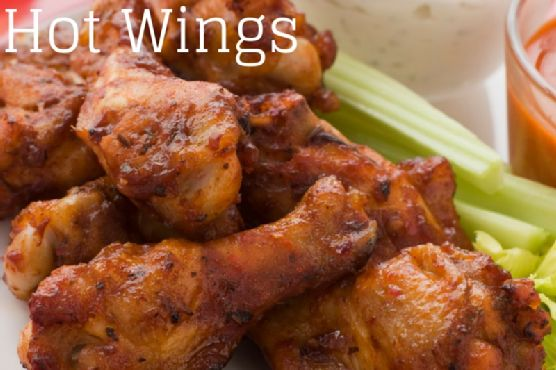

Related update: We recently published an article that expands on this topic: read the latest post.
Slow Cooker Spicy Hot Wings | Made by Meaghan Moineau

It was one of those hectic Tuesdays when nothing seemed to go according to plan. You know the kind — you get home late, everyone’s starving, and the last thing you want is a complicated dinner. That’s when I remembered the chicken wings I’d stashed in the fridge over the weekend. Enter these Slow Cooker Spicy Hot Wings! They’re not just any wings — they’re a perfect blend of heat and sweetness, and the slow cooker does all the hard work. Honestly, they’re so good, they can easily become your go-to for game nights or any time you want to impress without actually trying too hard. Plus, using the slow cooker keeps life simple, even on the craziest of days.

Jump to Recipe

What You’ll Need

One of the best things about these wings is that you probably have most of the ingredients already. Here’s what you’ll need:

  • Regular chicken wings
  • Louisiana hot sauce
  • Brown sugar
  • Cayenne pepper
  • Garlic (preferably fresh)
  • Cooking spray

How to Make Slow Cooker Spicy Hot Wings

  1. Start by mixing the brown sugar, crushed garlic, hot sauce, and cayenne pepper in a medium mixing bowl. Stir it until it looks like the kind of sauce you want to dive into.
  2. Grab your cooking spray and give the inside of your slow cooker a good spritz. Don’t forget to spray the wings, too — this helps the flavors stick and keeps them juicy, trust me.
  3. Toss the wings into the mixing bowl, making sure they get an even coat of that spicy, sweet sauce. It should smell amazing already.
  4. Transfer the wings into the slow cooker. Set it to low, and let the wings cook for 4 hours. Go live your life; the slow cooker’s got this.
  5. When the time’s up, carefully place the wings on a prepared cookie sheet. Pop them under the broiler for 4-6 minutes until they’re crisp and slightly caramelized. The edges should start to bubble and turn a delicious golden brown.
  6. Serve immediately, preferably with some blue cheese dressing and celery sticks for that classic vibe.

Cook’s Notes

Don’t rush to take the wings out of the slow cooker too early — they need the full 4 hours to really soak up the flavors and get tender. If you’re planning ahead, you can mix the sauce the night before and store it in the fridge. Just give it a good stir before tossing the wings in. Leftovers (if there are any) can be stored in the fridge for up to 3 days. They’re great reheated under the broiler or even air-fried if you’ve got one.

Make It Your Own

  • Not feeling the heat? Swap the cayenne pepper for smoked paprika for a milder, smoky flavor.
  • Try using crispy tofu instead of chicken for a vegetarian twist that still packs a punch.
  • If you fancy something tangier, add a splash of apple cider vinegar to the sauce mix.
  • Want to up the ante on sweetness? A drizzle of honey just before broiling can give the wings a sticky, caramelized finish.

If you try this, I’d love to hear how it turns out — drop a comment or tag me! These wings have become a staple in my house, and I hope they’ll bring the same joy to your table. Enjoy every spicy, sticky bite!

Goes Well With

If you want to round out the meal, here’s what I’d pair it with over on meaghanmoineau.com:

Related update: Slow Cooker Spicy Hot Wings

M.A.D.3: Calabrese’s Baladin for | Analysis by Brian Moineau

TL;DR

  • The M.A.D.Editions M.A.D.3 Vincent Calabrese Jumping Hour brings Calabrese’s Baladin display into a CHF 2,900, 1,500-piece raffle drop—industrialized indie watchmaking without the five‑figure tax. [2]
  • Beyond the pretty orbiting hour, the story is operational: MB&F’s M.A.D. team rebuilt the wandering jump-hour module on an LJP G111 base to ship October 2026–April 2027 at scale. [2]
  • Strategically, M.A.D. leans on La Joux‑Perret’s big‑group backing (Citizen, plus a 2025 LVMH investment) to make “independent” reliability reproducible—an under‑discussed moat. [4]

What the source said

Monochrome’s first look frames the M.A.D.3 as a respectful modernization of Vincent Calabrese’s Baladin: a wandering jumping-hour that replaces abrupt hour flips with a slow, circular voyage around the dial, a concept Calabrese pursued since the late 1980s. The piece uses an optimized La Joux‑Perret G111 as its base with an in‑house module, a 55‑hour reserve, and a compact 40 × 12.7 × 43.7 mm steel case designed by Eric Giroud. Two colorways launch: blue via public raffle and pink for MB&F’s Tribe/Friends, at CHF 2,900 before tax. The intent: keep the spirit of Calabrese’s idea while hardening reliability and consistency for wider production. [1]

Why it matters

Collectors get a rare mix: a historically significant complication from an AHCI co‑founder (Calabrese) at CHF 2,900 with 1,500 units allocated by raffle and deliveries scheduled over seven months—clear signals that M.A.D. treats “independent” ideas with industrial discipline. That price and cadence reduce reliance on boutique relationships and opaque waitlists that often gate similar concepts. [2][3]

For the industry, this tests how far you can scale indie creativity without sanding off its edge. The core dependency is La Joux‑Perret (Citizen Group), which in 2025 accepted capital from LVMH—so the movement supplier behind this “independent” release now sits between two of the largest corporate poles in watchmaking, a configuration that can stabilize QC and volume or reshape access and bargaining power. [2][4]

Original analysis

M.A.D.Editions M.A.D.3 Vincent Calabrese Jumping Hour: industrialized Baladin

Consensus view: “M.A.D.3 is a nostalgic deep‑cut—cool, but less daring than M.A.D.1/2.” Contrarian read: it’s the most radical move yet because it translates an idiosyncratic late‑1980s display (Baladin) into a productized, repeatable machine that a small brand can promise to deliver across a seven‑month window. The real innovation isn’t the animation; it’s the reproducibility. [3][2]

  • Back‑of‑envelope math:

    • Units allocated by raffle: 1,500. Price: CHF 2,900. Implied gross order intake if all convert: 1,500 × 2,900 = CHF 4,350,000. [2]
    • Delivery promise: October 2026–April 2027 (≈7 months). Average monthly fulfillment to clear raffle allocation: 1,500 ÷ 7 ≈ 214 watches/month—throughput that forces a module you can assemble, test, and service without artisanal heroics. [2]
  • Historical analogue (1988 → 2026): Calabrese’s Baladin debuted as a provocation against the “blink” of traditional jump hours—hours should flow, not snap. In 2026, the same philosophy becomes a product‑discipline challenge: keep the poetic motion while surviving shock tests, tolerance stacks, and after‑sales realities of a 1,500‑piece run. The circle from one bench in 1988 to a global raffle in 2026 shows how indie ideas mature only when backed by method, not myth. [3]

  • Named‑stakeholder breakdown:

    • M.A.D.Editions / MB&F: Proves it can do more than colorways; it can ingest a third‑party concept and ship predictably, reinforcing a “fair raffle” brand architecture after strong M.A.D.2 demand in recent cycles. [2]
    • Vincent Calabrese: Gains canonization for a broader audience while preserving authorship—the Baladin’s wandering jump hour becomes the headline, not an auction‑catalog footnote. [3]
    • La Joux‑Perret (Citizen Group, with 2025 LVMH investment): Validates the G111 as a modular, indie‑friendly workhorse; dual corporate ties imply durable access to parts, finishing, and QC—exactly what small brands struggle to secure. [4]
    • Collectors: Transparent rules (one entry, pre‑auth, 1,500 allocations, prior non‑winners get double chance) reduce cynicism around “drops” and shift attention to wearability and service. [2]
  • A simple 2×2 to place the M.A.D.3 (examples are illustrative, not exhaustive):

    • High Creativity × High Industrial Scale: M.A.D.3 (Calabrese display on LJP G111; 1,500 units in 2026–2027) [2]
    • High Creativity × Low Industrial Scale: MB&F Legacy Machine Thunderdome (complexity limits runs; six‑figure pricing) [1]
    • Low/Moderate Creativity × High Industrial Scale: Seiko Presage series (broad distribution, conventional layouts; large annual volumes)
    • Low/Moderate Creativity × Low Industrial Scale: Microbrand three‑handers with Sellita bases in sub‑500‑piece drops (frequent QC variance)

This is the quiet pivot for M.A.D.: from “MB&F‑adjacent fun” to “publishing house for mechanisms,” where each Edition is a different author under the same editorial spine. If the M.A.D.3 runs on time—both on the wrist and in the DHL network—M.A.D. becomes the default bridge between seven‑figure indie aura and four‑figure accessibility. [2][3]

What others are missing

Coverage fixates on the dial theater; the advantage sits upstream. La Joux‑Perret’s role isn’t just technical—it’s supplier governance. Since 2012, LJP has been under Citizen; in 2025, LVMH injected capital into LJP itself, creating a Citizen–LVMH–LJP triangle that can prioritize parts pipelines, after‑sales documentation, and allocation discipline for clients like M.A.D. In a market where movement access is bargaining power, this alignment directly affects service turnaround times and long‑term parts availability for a wandering jump‑hour module that will see real‑world shocks and 2026–2027 warranty claims. [4]

What to watch next

  1. By November 2026, the M.A.D.3 will be shortlisted for GPHG in Petite Aiguille or Challenge; if it isn’t, the jury will have signaled fatigue with “accessible indie” narratives.
  2. By December 31, 2026, at least 25 resale listings will appear on major platforms (e.g., Chrono24, WatchCharts feeds) for the M.A.D.3 with asking prices above CHF 5,000, quantifying raffle scarcity.
  3. By Q2 2027, M.A.D.Editions will announce a follow‑on M.A.D.3 color or micro‑run beyond Tribe/Friends, keeping the module in production while amortizing development.

My take

I’m in on the idea and the execution because the CHF 2,900 ticket, the 1,500‑unit structure, and the October 2026–April 2027 timetable line up with a credible industrial plan rather than a vibes‑only drop. The M.A.D.3 isn’t MB&F cosplay; it’s an honest, documented attempt to tame a poetic mechanism for real‑world ownership. If M.A.D. ships on schedule and service proves clean in 2027, it will cement a middle lane watchmaking needs: independent thinking with industrial follow‑through. I’d enter the raffle to wear a 1988 concept carried forward without the usual compromises. [2][3]

Sources

  1. First Look: The new M.A.D.Editions M.A.D.3 Vincent Calabrese Jumping Hour — Monochrome Watches (https://monochrome-watches.com/the-new-mad-3-brings-vincent-calabreses-jumping-hour-into-the-mad-editions-universe-review-price/) — Baseline report with specs, design intent, dimensions, and pricing context.

  2. M.A.D.Editions Raffle — MB&F (https://www.mbandf.com/madeditions/madeditions-raffles) — Official details on M.A.D.3 raffle (1,500 units), CHF 2,900 price, allocation rules, and delivery window.

  3. Vincent Calabrese: A Creative Watchmaker — Fondation de la Haute Horlogerie (https://www.hautehorlogerie.org/en/watches-and-culture/watchmaking-knowledge/encyclopedia/vincent-calabrese-) — Background on Calabrese, AHCI ties, and the Baladin wandering jumping-hour concept.

  4. Capital investment by the LVMH Group to La Joux‑Perret S.A., a Subsidiary of Citizen Group — Citizen (https://www.citizen.co.jp/global/release/news/detail/2025/20251112.html) — Confirms 2025 LVMH investment into La Joux‑Perret and clarifies corporate backing and governance context.


Related update: We recently published an article that expands on this topic: read the latest post.
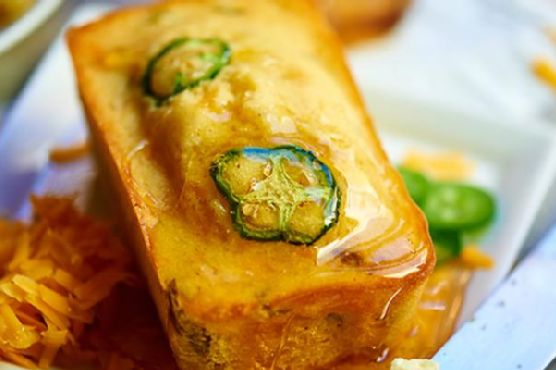
One Bowl Jalapeno Cheddar Cornbread | Made by Meaghan Moineau

Picture this: it’s a Wednesday evening, the kind where you just want to curl up with something that feels like a bear hug — warm, comforting, and a little bit spicy. This One Bowl Jalapeno Cheddar Cornbread is the answer to that midweek craving. It’s one of those recipes that’s as satisfying to make as it is to eat, with just enough kick from the jalapenos to keep things interesting. Plus, did I mention you only need one bowl to whip this up? Less dishes, more deliciousness. Trust me, you’ll want to bookmark this for those cozy nights.

Jump to Recipe

What You’ll Need

The beauty of this recipe is that it uses pantry staples with a couple of standout stars. Chances are you already have most of this lying around:

  • 1 stick unsalted butter
  • 1 cup white sugar
  • 2 eggs
  • 1 cup buttermilk
  • ½ teaspoon baking soda
  • 1 cup cornmeal
  • 1 cup flour
  • ½ teaspoon salt
  • 1 cup shredded cheddar cheese
  • 1 can diced jalapenos
  • 1 fresh jalapeno, thinly sliced

How to Make One Bowl Jalapeno Cheddar Cornbread

  1. Start by melting a stick of butter in a microwave-safe bowl. Use 30-second intervals to melt it completely without making a buttery mess.
  2. Whisk in the white sugar until it’s well integrated with the melted butter. The mixture should look smooth and glossy.
  3. Add in the eggs. You’ll want to whisk until the mixture turns a pale yellow and all the ingredients are happily married.
  4. In a small bowl, mix together the buttermilk and baking soda, then pour this into your buttery egg mixture. Stir until well combined.
  5. Now, add the cornmeal, flour, salt, shredded cheddar cheese, and diced jalapenos to the bowl. Mix gently until the batter is just combined. The mantra is ‘less is more’ here — overmixing is the enemy of tender cornbread.
  6. Preheat your oven to 375°F. While it’s warming up, prepare your pan with cooking spray. I usually opt for a mini loaf pan, but an 8×8 inch pan is a solid choice too.
  7. Spoon the batter into the prepared pan and artfully arrange the fresh jalapeno slices on top. They add a little flair and a preview of the heat inside.
  8. Bake for 25 to 35 minutes. Keep an eye out for edges turning golden and a skewer coming out clean. Remember, cooking time varies with pan size, so adjust as needed!
  9. Once baked, let the cornbread cool in the pan for a few minutes before transferring to a cooling rack. This step requires patience, but it’s worth it.

Cook’s Notes

Here are some notes to keep your cornbread game strong:

  • For those who plan ahead, this cornbread can be made a day in advance and stored in an airtight container. Just reheat it gently in the oven or microwave before serving.
  • If you accidentally overmix the batter, don’t panic! Just proceed and make a mental note for next time. It’ll still taste great, just a bit denser.
  • Leftovers can be wrapped and stored in the fridge for about a week. They’re fantastic reheated with a little butter or honey.

Make It Your Own

Feeling adventurous? Try these variations:

  • Spicy Honey Drizzle: Mix honey with a dash of cayenne pepper, and drizzle over warm cornbread for a sweet-spicy twist.
  • Herb Infusion: Add a tablespoon of chopped fresh cilantro or chives to the batter for a burst of freshness.
  • Cheese Swap: Try swapping cheddar for pepper jack if you want an extra kick.
  • Vegetarian Twist: Add in a half cup of cooked corn kernels for a subtle textural change.

If you try this, I’d love to hear how it turns out — drop a comment or tag me! Happy baking and spicing things up in your kitchen!

Goes Well With

If you want to round out the meal, here’s what I’d pair it with over on meaghanmoineau.com:

Related update: One Bowl Jalapeno Cheddar Cornbread

Falcons’ Bold Four‑QB Roster Gambit | Analysis by Brian Moineau

TL;DR

  • The Falcons’ initial 53-man roster for 2026 kept four quarterbacks (Tua Tagovailoa, Michael Penix Jr., Cooper Rush, Jack Strand) and only two running backs (Bijan Robinson, Brian Robinson Jr.), a rare build that squeezes special teams and edge depth while buying time to sort the QB pecking order. [2][3][4]
  • Atlanta traded CB Clark Phillips III and a 2027 fifth-round pick to the Bears for DT Gervon Dexter Sr., and carried injured DB Billy Bowman Jr. on the 53—classic “roster sequencing” that signals short-term IR moves and more churn before Week 1 against Pittsburgh at Mercedes-Benz Stadium in Atlanta, Georgia. [1][2][6][7]
  • My read: the four-QB gambit is a rational response to 2026 emergency QB mechanics and trade dynamics, not indecision; expect Atlanta to flip one QB and backfill RB/EDGE via the IR/waiver dance within 72 hours of cutdown. [3][5][8]

What the source said

The Falcoholic’s initial roster rundown highlights three headline choices: Atlanta carried four quarterbacks through the 53-man cutdown, reduced the running back room to two, and made several surprising moves at the margins. Those included releasing special-teams contributor Tyler Goodson and passing on veteran edge help (Azeez Ojulari, Bralen Trice) while adding Gervon Dexter Sr. on the interior. The piece frames Billy Bowman Jr.’s inclusion as a positive recovery signal, with Da’Shawn Hand in a similar spot heading into the September 2026 opener against the Pittsburgh Steelers. It also underscores that “initial” is the operative word—more moves are expected before Week 1—while questioning a few priorities (e.g., LB JD Bertrand, QB Cooper Rush) in a roster that’s likely to keep moving. [1]

Why it matters

This isn’t just about the Falcons; it’s about how 2026 roster mechanics and quarterback injury risk push teams toward hoarding passers and punting on back-end depth across 53 and 48 active slots on game day. The real stakeholders are general manager Ian Cunningham and head coach Kevin Stefanski, who must balance immediate competitive needs (edge pressure, special teams) with asset preservation (QB trade value) under NFL roster rules that reward sequencing acumen. [2][3][5][8]

Players feel it most. Four quarterbacks and 13 defensive backs crowd out roles for back-end runners and rotational edge rushers—jobs often earned on kick coverage at Heinz Field–style slugfests the Steelers prefer. If Atlanta can’t replace those hidden-yardage snaps with disciplined personnel usage, the cost shows up in field position in Week 1 on September 6–7, not on a transaction log. [1][2][4]

Original analysis

Contrarian read — The consensus: carrying four quarterbacks is wasteful and screams indecision. My take: it’s rational roster arbitrage in 2026. The NFLPA’s veto of the league’s proposed unlimited emergency QB elevations forces the true “QB3” to live on the 53 or consume one of a finite number of weekly elevations, which erodes flexibility. Four clubs kept four QBs on initial 53s this week, so Atlanta’s not an outlier; they’re playing the market. [3][5]

Back-of-the-envelope roster math — edge and RB:

  • Defensive snap math: assume 65 defensive snaps and two-edge fronts on 80% of plays. That’s 0.8 × 65 × 2 ≈ 104 edge snaps to allocate. With only three true edges (Za’Darius Smith, Samson Ebukam, Cameron Thomas), the average load is ~35 snaps each if perfectly balanced; in real usage, the top two push toward 50+, leaving fatigue and injury exposure and minimal sub-package variability. A fourth edge would drop average load toward the high-20s and add third-down variants without taxing Smith/Ebukam. [2][4]
  • Offensive run math: assume ~62 offensive snaps and a 42% rush rate ≈ 26 RB carries. Bijan Robinson and Brian Robinson Jr. can absorb that on paper, but one in-game ankle tweak leaves pass-pro and two-minute offense in the hands of a practice-squad elevation or an out-of-position WR. The opportunity cost of QB4 is probably 10–12 special-teams snaps and the emergency RB3 role on September game days. [2][4][8]

Named-stakeholder breakdown:

  • Tua Tagovailoa, QB: Retains leverage as presumed QB1; four-QB build gives Atlanta time to test-market the room without cutting bait in late August 2026. [2][3][4]
  • Michael Penix Jr., QB: Protected development runway; not forced into QB2 by timing. A trade of Rush or a Strand stash becomes the pressure valve before Week 2. [2][3]
  • Cooper Rush, QB: Classic “inventory” quarterback—valuable to teams thin on game-ready backups; most tradable piece if Atlanta wants to reclaim a roster slot by September 14. [2][3][4]
  • Jack Strand, QB: UDFA with preseason juice; hard to sneak to the practice squad without exposing him to claims—hence the initial 53 spot and the likely PS shuffle. [3][4]
  • Gervon Dexter Sr., DT: Interior pass-rush infusion via a costed asset (Clark Phillips III + 2027 5th); signals confidence in perimeter pressure packages built around Smith/Ebukam/Thomas until James Pearce Jr. returns from suspension. [2][6]
  • Billy Bowman Jr., DB: Inclusion on 53 signals a near-term practice return under IR rules (minimum four games if he were stashed), preserving earlier availability; roster sequencing, not sentiment. [2][4][7]

A 2×2 to decode the Falcons’ initial 53-man roster

  • Axis 1 (X): Immediate game-day utility for Week 1 at Mercedes-Benz Stadium in Atlanta. [1][2]
  • Axis 2 (Y): Retainable market value on the 53 across September 2026 trade calls. [3][5]
    • High utility / high value: Bijan Robinson, Za’Darius Smith — scarce snaps that change outcomes on third-and-medium. [2][4]
    • High utility / low value: Core special-teamers (Malcolm DeWalt IV), swing OL — replaceable leaguewide but essential every Sunday. [2][4]
    • Low utility / high value: QB4 (Rush or Strand) — minimal game-day need, high trade/roster-protection value under current QB rules. [3][5]
    • Low utility / low value: Developmental TE3 or RB3 — the very spots squeezed to carry a fourth QB. [2][4]

What the numbers and rules foreshadow: The Falcons will almost certainly execute the classic post-53 shuffle—short-term IR for one or two injured players (eligible to return after four games), followed by re-signs or claims at RB and EDGE before September 3, 2026. That’s how you square a four-QB ledger with Week 1 reality without losing assets to waivers under 16-man practice-squad and elevation limits. The team site’s transaction language and the Bowman/Hand handling already point that direction. [2][6][7][8]

What others are missing

Angle: the deliberate “roster sequencing” behind Bowman and Dexter. Billy Bowman Jr. on the initial 53 isn’t a sentimental victory lap; it’s a clock play tied to the four-game IR return rule that preserves earlier practice activation in September. Dexter’s arrival on August cutdown week pairs with that timing—interior depth lets Atlanta tolerate going light at edge for a few days while it maneuvers IR and waiver claims. That combination—timing plus positional redundancy—explains the four-QB and two-RB oddity better than “they can’t decide at quarterback.” [2][4][6][7]

What to watch next

  1. By September 3, 2026, Atlanta will place at least one of Bowman or Hand on short-term IR and add an RB3 to the 53 via re-sign or waiver claim. [2][4][7]
  2. By Week 2 (September 13–14, 2026), the Falcons will pare the active QB room to three (via trade of Rush or a Strand move to the practice squad). [2][3][4][5]
  3. By October 11, 2026 (through Week 5), Gervon Dexter Sr. will log 40%+ defensive snap share in at least two games as Atlanta leans interior pressure to offset light edge depth. [2][6]

My take

I’m fine with the Falcons burning an initial 53 spot on QB4. The 2026 rules incentivize hoarding passers, and Atlanta’s room has both uncertainty and trade value in a market where four teams carried four QBs on cutdown day. I’m not fine with living short at edge beyond this week, because Za’Darius Smith and Samson Ebukam shouldn’t play 85% of snaps in September if you want them healthy in December. If Cunningham executes the IR/waiver two-step and spins off one quarterback for a day-three pick while adding an RB3 and a rotational edge, this roster build stops looking weird and starts looking savvy. [2][3][5][6][7][8]

Sources

[1] Top storylines following the Falcons initial 53-man roster — The Falcoholic (https://www.thefalcoholic.com/atlanta-falcons-depth-chart/95615/top-storylines-following-the-falcons-initial-53-man-roster-billy-bowman-tyler-goodson) — The starting point: four QBs, two RBs, surprise edge cuts, Bowman/Hand status, and the expectation of churn.

[2] Atlanta Falcons release initial 2026 roster — AtlantaFalcons.com (https://www.atlantafalcons.com/news/atlanta-falcons-2026-roster) — Official 53 with position counts and transaction buckets (released/waived), including QB4, RB2, Bowman on the 53, and Goodson/Ojulari/Trice moves.

[3] Four NFL teams keep four QBs on initial 53-man rosters — NFL.com (https://amp.nfl.com/news/four-nfl-teams-keep-four-qbs-on-initial-53-man-rosters) — League-wide context that Atlanta isn’t alone; lists the Falcons’ quartet and explains why teams are doing it.

[4] Falcons announce initial 53-man roster: 3 takeaways as team carries 4 QBs — Atlanta Journal-Constitution (https://images.ajc.com/sports/2026/08/falcons-announce-initial-53-man-roster-3-takeaways-as-atlanta-carries-4-qbs/) — Independent confirmation of the position counts and notable inclusions/exclusions, plus Bowman’s status.

[5] NFLPA vetoes emergency third QB rule change — NFL.com (https://www.nfl.com/news/nflpa-vetoes-emergency-third-qb-rule-change) — Explains why teams can’t stash a “bona fide” emergency QB via unlimited elevations, pushing clubs toward carrying more QBs.

[6] Falcons trade CB Clark Phillips III, 5th-round pick to Chicago Bears for DT Gervon Dexter Sr. — AtlantaFalcons.com (https://www.atlantafalcons.com/news/falcons-trade-clark-phillips-iii-5th-round-pick-chicago-bears-gervon-dexter-sr) — Confirms the Dexter acquisition that shapes trench depth and buys time for edge-room triage.

[7] Players now eligible to return from injured reserve after four games — NFL.com (https://www.nfl.com/news/players-now-eligible-to-return-from-injured-reserve-after-four-games) — Details the modern short-term IR framework (four-game minimum, designated to return), critical to understanding Bowman/IR timing.

[8] Contract Language & Roster Mechanics (Practice Squad and Standard Elevation Addendum) — NFL Football Operations (https://operations.nfl.com/calendar-events/nfl-free-agency/contract-language) — Codifies 16-man practice squads and the 54/55-man elevations that interact with the Falcons’ initial 53 calculus.


Related update: We recently published an article that expands on this topic: read the latest post.

Related update: We recently published an article that expands on this topic: read the latest post.
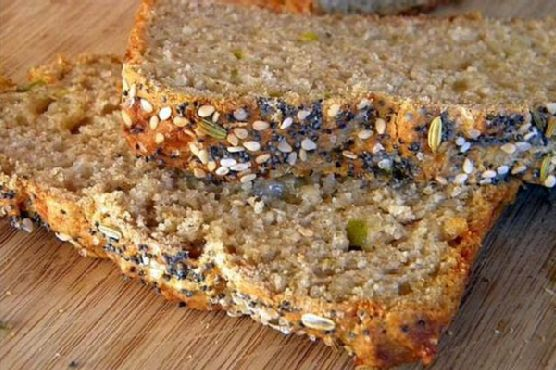
Cheddar Chile Beer Bread | Made by Meaghan Moineau

Last Tuesday, I found myself rummaging through the pantry with a fervor only a forgotten homework panic could match. It was one of those weeks: deadlines at work, the kids’ endless activities, and a weather forecast oscillating between sun and torrential rain. My mind craved something comforting yet simple—and homemade bread sounded like the answer to my prayers. Enter the Cheddar Chile Beer Bread. It’s the type of recipe that feels like a hug from the inside, yet simple enough to whip up in the middle of a busy week. The best part? It’s got a kick from the chiles and a tang from the beer that just elevates it from everyday bread to something a bit more special.

Jump to Recipe

What You’ll Need

This bread is a masterpiece of simplicity. Chances are you already have most of this in your pantry and fridge.

  • 1 cup whole wheat flour
  • 1 cup flour
  • 1 teaspoon baking powder
  • 1 teaspoon salt
  • 1 teaspoon dry mustard
  • 1 can of beer (choose your favorite lager or even an IPA for more flavor!)
  • 1 cup shredded extra sharp cheddar cheese
  • 1 can (4 oz) of green chiles, drained
  • 1 tablespoon sesame seeds
  • 1 tablespoon poppy seeds
  • 1 tablespoon caraway seeds
  • 1 teaspoon sea salt

How to Make Cheddar Chile Beer Bread

  1. Start by preheating your oven to 425 degrees. Trust me, this step is key to getting a nice initial rise on the bread.
  2. Grease a loaf pan. I love using a bit of butter for this, but cooking spray works just as well.
  3. In a large bowl, whisk together the whole wheat flour, flour, baking powder, salt, and dry mustard. The dry mustard adds a sneaky layer of flavor that makes things interesting.
  4. Add the green chiles, shredded cheddar, and beer to the dry ingredients. Stir until combined. The batter will be thick enough to try your patience, but hang in there—it’s worth it!
  5. Scrape the batter into your prepared loaf pan and spread it out evenly. It will look rustic and that’s perfect.
  6. Sprinkle the sesame seeds, poppy seeds, caraway seeds, and sea salt over the top. Gently press them into the batter using your fingers to ensure they stick.
  7. Now, reduce the oven temperature to 400 degrees and pop the loaf pan into the oven.
  8. Bake for 45 to 50 minutes. You’ll know it’s done when the top is golden and a toothpick comes out clean from the center.
  9. Cool on a wire rack for about 15 minutes, then turn out from the pan. Continue cooling, but feel free to sample right away. It’s irresistible!

Cook’s Notes

When it comes to making this bread, don’t second guess the beer choice. Whatever you love to drink is going to add that extra special something. Just remember, a stronger beer like an IPA will give a more pronounced flavor. Also, the batter is supposed to be thick—don’t panic! Once baked, the bread will be moist and delicious. If you’re planning on making this ahead, it’s best enjoyed within a day or two. Store it wrapped tightly in foil or in an airtight container to keep it fresh. And while it does freeze well, I recommend slicing it before freezing for easy access to toast on a whim.

Make It Your Own

  • Spicy Kick: Swap the canned green chiles for diced jalapeños if you can handle the heat.
  • Cheesy Affair: Experiment with different cheese blends. A mix of gouda and cheddar is a personal favorite.
  • Herbaceous Twist: Stir in a tablespoon of dried herbs like rosemary or thyme for an aromatic lift.
  • Nutty Crunch: Add a handful of chopped walnuts or pecans to the batter for an unexpected crunch.

If you try this, I’d love to hear how it turns out—drop a comment or tag me in your photos! This bread is a cozy companion to any meal or great just on its own.

Goes Well With

If you want to round out the meal, here’s what I’d pair it with over on meaghanmoineau.com:

Related update: Cheddar Chile Beer Bread