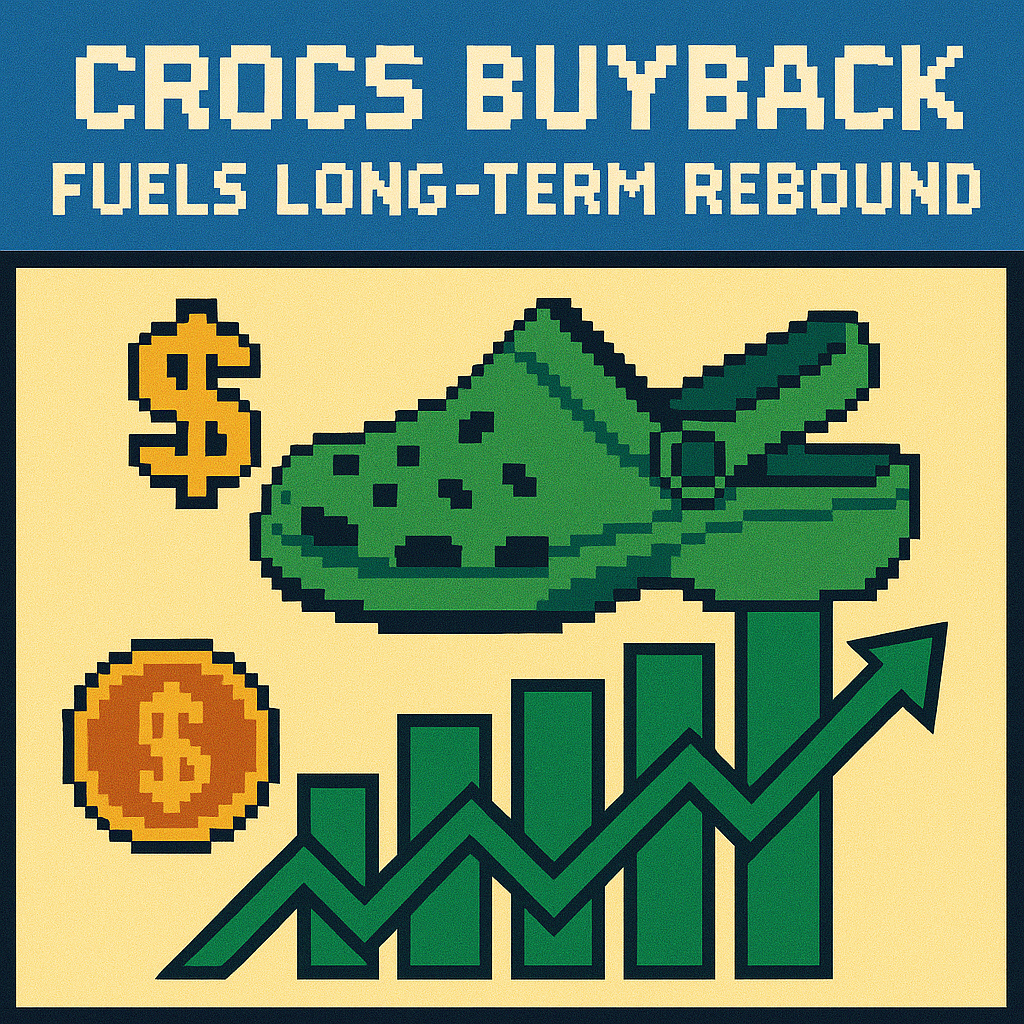
Crocs Buyback Fuels Long-Term Rebound | Analysis by Brian Moineau

TL;DR

  • Crocs’s plan to turn short-term pain into long-term gain is working: the company pulled promotions, cleaned up HEYDUDE wholesale, and just posted a record quarter while raising 2026 guidance. [2]
  • The real flywheel isn’t HEYDUDE’s rebound; it’s the Crocs brand’s DTC-heavy, international growth engine that crossed $1.0B in a single quarter and is still comping up. [2][4]
  • Capital allocation is the hidden moat: inventory is tighter, cash flow is gushing, and a fresh $2.0B buyback authorization sets up outsized EPS growth even if revenue stays low single-digits. [2]

What the source said

WSJ’s CFO Journal reports that Crocs took a deliberate sales hit to repair the marketplace: it curtailed discounting, yanked excess product from shelves, and tightened HEYDUDE distribution. The company argues those choices preserved brand equity and positioned it for healthier, more profitable growth. With that reset largely behind it in 2026, Crocs has returned to growth and is leaning into higher-quality revenue even if near‑term top line looks choppy. The story frames this as classic CFO triage—accept short-term pain to safeguard long-term margin dollars and strategic flexibility at Crocs, Inc. [1]

Why it matters

  • Stakeholders are not just shareholders. The big losers in a sloppy cleanup would have been wholesale partners like Dick’s and Kohl’s that rely on crisp allocations and full‑price sell‑through to defend floor space; Crocs chose to take its medicine centrally so partners wouldn’t have to bleed margins locally. That earns shelf trust in 2026–2027. [2][3]
  • For investors, the setup is asymmetric. Crocs raised its 2026 outlook, logged record Q2 revenue, and crossed $1.0B for the Crocs brand in a single quarter, even as HEYDUDE remains down year over year. Combine healthier mix with a $2.0B repurchase capacity and shrinking share count, and per‑share math can outrun modest reported growth. [2][4]

Original analysis

Consensus says the Crocs thesis hinges on a HEYDUDE comeback. My read: the engine driving this recovery is the core Crocs brand’s DTC‑led, international expansion—and that’s already visible in the numbers. In Q2 2026, consolidated revenue rose to $1.179B, with DTC up 12% and wholesale down 7%; Crocs brand alone hit $1.000B, with North America finally back to growth (+0.4%). Management simultaneously raised full‑year guidance and now expects Crocs brand up ~2–3% for 2026, while HEYDUDE is still guided down ~4–2%. That mix shift is deliberate—and accretive. [2][4]

Back-of-envelope math 1 — EPS torque from buybacks (illustrative at $130/share):

  • Q2 2026 diluted weighted-average shares: ~49.6M, down from ~55.8M a year ago (≈−11%). [2]
  • Remaining authorization: ~$2.0B. Suppose Crocs deploys just $800M of that between now and mid‑2027 at an average $130. That retires ≈6.15M shares ($800M ÷ $130).
  • New diluted base ≈ 49.6M − 6.15M ≈ 43.5M shares. All else equal, that’s ~14% EPS lift (49.6 ÷ 43.5 − 1) without heroic revenue assumptions. [2]
    This is why the company can guide conservatively on revenue and still deliver attractive per‑share outcomes.

Back-of-envelope math 2 — What “quality of revenue” looks like in cash terms:

  • Q2 adjusted gross margin was 60.0% versus 61.7% last year, reflecting the transitional mix; but Crocs brand DTC was +12.9%, and inventory stepped down to $389M from $405M, improving working capital turns. [2]
  • The 10‑Q dissects H1 revenue drivers: higher ASPs added ~$37.9M (+3.3%) while HEYDUDE volume declines subtracted ~$14.1M (−1.2%). That’s healthy price realization even as units normalize. [3]
  • Translate that: Crocs is swapping lower‑quality wholesale units for higher‑margin DTC and international sell‑through while still getting paid on price. Cash flow follows margin mix. [2][3]

A named-stakeholder breakdown (2026 context):

  • Crocs brand (clogs + sandals): Clear winner. It crossed $1.0B in a quarter and is guided to grow in 2026; DTC and international are doing the heavy lifting. [2][4]
  • HEYDUDE: Still in the penalty box but stabilizing; wholesale −17% in Q2, DTC +7%. The reset preserved pricing power and should compound once clean channel inventory meets better product stories. [2]
  • Wholesale partners (Dick’s, Kohl’s, Scheels): Benefit from tighter assortments and fewer promotions; sell‑through and floor productivity matter more than brute sell‑in in 2026. [2][3]
  • Competitors (Deckers/Birkenstock): Crocs’s DTC acceleration and renewed design cadence raise the bar in casual comfort; promotions will be harder to win against if Crocs holds price realization. [2][3]

A simple 2×2 (“Channel x Time”):

  • Short term × Wholesale: Painful—lower sell‑in, cleanups, order books tight. [2][4]
  • Short term × DTC: Offense—double‑digit growth with improved price discipline. [2]
  • Long term × Wholesale: Healthier partner relationships, better brand presentation, fewer markdown allowances. [2][3]
  • Long term × DTC: Structural margin tailwind; more first‑party data and product velocity. [2]

The overlooked tell: management did not buy growth. It protected the brand. Q2 shows they’ve earned the right to grow into 2027 on better mix—whether or not HEYDUDE fully snaps back this year. [2][4]

What others are missing

Coverage dwells on HEYDUDE’s recovery timeline; the real under‑reported edge is capital intensity and per‑share math. Weighted‑average diluted shares collapsed from ~55.8M to ~49.6M in a year, and the board just topped up buybacks to ~$2.0B outstanding. That’s a structural tailwind independent of whether 2026 prints +1% or +2% on revenue. Pair that with inventory down to $389M (from $405M) and ASP‑driven growth in H1, and you get compounding cash flow with fewer shares to divide it by. The market talks product cycles; the P&L and the cap table say “durable compounding.” [2][3]

What to watch next

  1. By Q4 2026, HEYDUDE North America returns to positive year‑over‑year revenue growth as the cleanup anniversaries and fall product lands. [4]
  2. For full‑year 2026, consolidated revenue finishes within the raised +1% to +2% range and adjusted gross margin lands ≥59%, reflecting sustained DTC mix and pricing. Verification: FY results release by February 2027. [2]
  3. By December 31, 2026, diluted weighted‑average shares drop below 48.5M as repurchases continue, amplifying EPS versus revenue growth. [2]

My take

I’m long the Crocs operating model, not the HEYDUDE headline. The Crocs brand just proved it can scale to $1.0B in a quarter while keeping promo discipline, and management lifted guidance with inventory down and ASPs doing real work. That’s the tell. If they spend even a fraction of the $2.0B authorization, EPS math gets tailwinded for multiple quarters. [2]

I’d underwrite 2026 as a “mix and margin” year and 2027 as the “both brands growing” year for CROX. The bear case needs both HEYDUDE to stumble and buybacks to stall. With inventory at $389M and DTC still comping double digits in 2026, I don’t see it. [2][3][4]

Sources

[1] Crocs’s Plan to Turn Short-Term Pain Into Long-Term Gain — WSJ CFO Journal (https://www.wsj.com/cfo-journal/crocss-plan-to-turn-short-term-pain-into-long-term-gain-830343ef) — Frames Crocs’s discount pullback and channel cleanup as CFO‑led “short‑term pain” to protect long‑term margins and brand health.
[2] Crocs, Inc. Reports Record Second Quarter 2026 Results; Raises Full‑Year 2026 Outlook — Crocs IR (https://investors.crocs.com/news-and-events/press-releases/press-release-details/2026/Crocs-Inc–Reports-Record-Second-Quarter-2026-Results-Raises-Full-Year-2026-Outlook/default.aspx) — Confirms $1.179B Q2 revenue, Crocs brand surpassing $1.0B, DTC +12%, wholesale −7%, inventory $389M, updated FY26 guidance, and $2.0B buyback capacity.
[3] Form 10‑Q for quarter ended June 30, 2026 — U.S. SEC (https://www.sec.gov/Archives/edgar/data/1334036/000133403626000052/crox-20260630.htm) — Breaks down H1 revenue drivers (ASP +$37.9M, volume −$14.1M), Crocs brand +4.3%, and qualitative commentary on channel and geography.
[4] Crocs (CROX) Q2 2026 Earnings Call Transcript — The Motley Fool (https://www.fool.com/earnings/call-transcripts/2026/08/07/crocs-crox-q2-2026-earnings-call-transcript/) — Management color on brand trajectories; FY26 HEYDUDE guide (−4% to −2%) and Q3 outlook; reiterates the return‑to‑growth narrative.
[5] Crocs, Inc. Reports Better‑Than‑Expected First Quarter 2026 Results and Raises Full‑Year Outlook — Crocs IR via SEC (https://www.sec.gov/Archives/edgar/data/1334036/000133403626000029/croxq12026-pressrelease.htm) — Prior guidance context; notes continued wholesale pressure and DTC strength early in 2026.


Related update: We recently published an article that expands on this topic: read the latest post.


Related update: We recently published an article that expands on this topic: read the latest post.

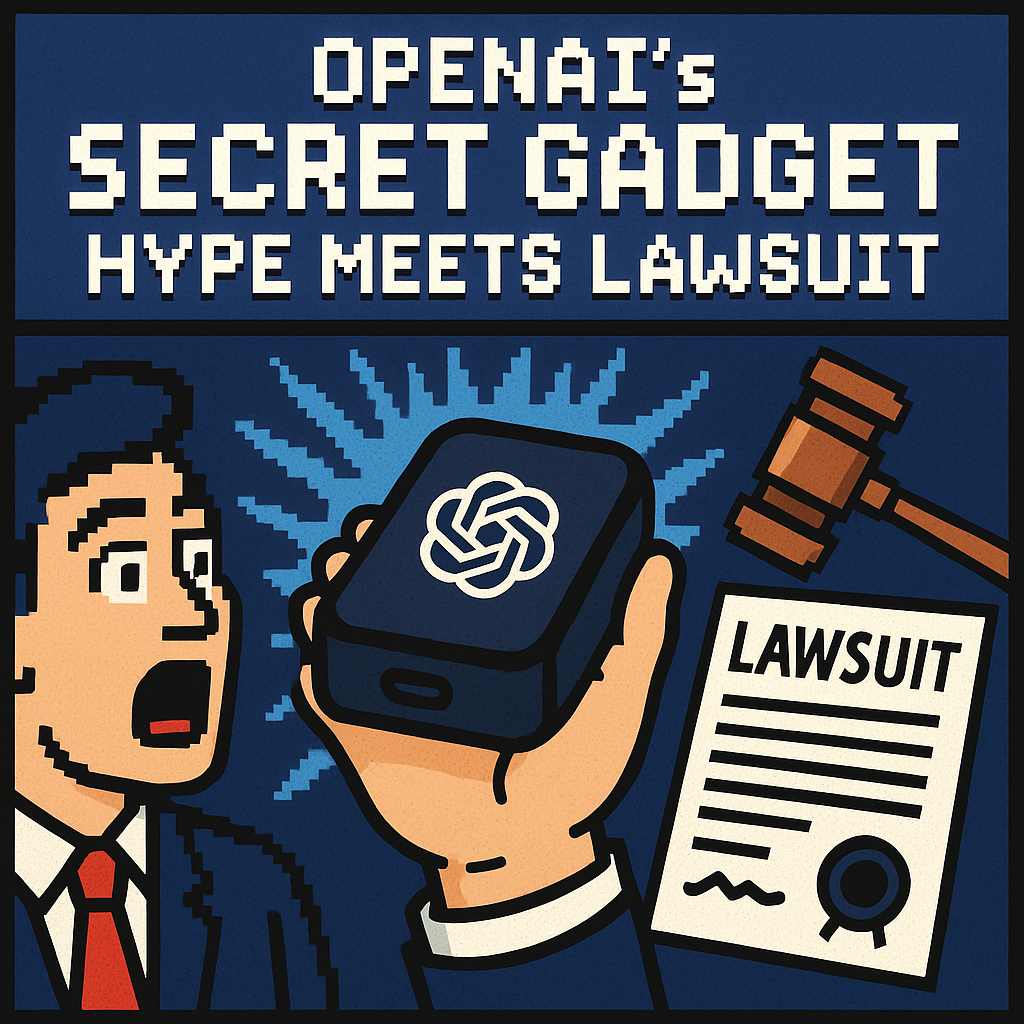
OpenAI’s Secret Gadget: Hype Meets Lawsuit | Analysis by Brian Moineau

TL;DR

  • OpenAI’s secret gadget sits at the collision of design theater and legal crossfire: Joanna Stern’s NBC News open letter spotlights the mystery while Apple’s July 2026 trade‑secrets suit turns the launch into a courtroom subplot. [1][3]
  • Competing leaks disagree on form factor—TechCrunch points to earbuds, while Bloomberg Law points to a screen‑free smart speaker; meanwhile, the only consumer AI hardware with real traction is Ray‑Ban Meta smart glasses, which topped 1 million units in 2024. [5][7][4]
  • The winning move isn’t “iPhone‑killer” hardware; it’s a low‑friction accessory that rides existing habits, avoids Humane‑style support fiascos, and pairs tightly with phones—before the courts can slow the party. [2][6]

What the source said

Joanna Stern’s NBC News column uses the conceit of an “open letter” to OpenAI’s unannounced device to frame three concrete questions: what it is, who it’s for, and why it matters amid scrutiny of OpenAI’s hardware ambitions. She cites the Jony Ive aura and the fact that a real object is in the works even as the company holds specs. Her tone mixes skepticism with affection for ambitious gadgets and reminds readers that shipping consumer hardware is brutal, even for a software‑first company. [1]

Why it matters

The stakeholders extend beyond OpenAI and any Ive‑led studio. Apple is suing over alleged trade‑secret theft; Qualcomm wants design‑win sockets if NPUs or modems are inside; and retailers like Best Buy act as gatekeepers for shelf space that can make or break holiday sell‑through. Each participant either gains a new revenue vector or absorbs costs from returns, legal delays, and a feature set that fails to map to daily habits. [2][3]

If OpenAI misreads the category, it risks Humane‑style blowback—devices dying within a year and refunds that torch trust. If it gets the fit right, it can earn durable voice presence in daily life without asking iOS or Android for front‑door access every time. That’s the prize: habitual access, not an industrial‑design trophy. [6]

Original analysis

OpenAI’s secret gadget: where it can win—and where it will bleed

Two conflicting, sourced threads point to very different launches. TechCrunch reports the first device “could be earbuds,” while Bloomberg Law says the debut will be a screen‑free, mobile smart speaker—an at‑home AI companion. Both imply voice‑first, screen‑optional UX and heavy reliance on cloud inference unless an on‑device NPU surprises us. Axios, by contrast, stakes the timeline: OpenAI is “on track” for a second‑half‑of‑2026 unveiling, which now competes with Apple’s active lawsuit clock. [5][7][2][3]

Here’s the consensus in one sentence: to control the assistant layer, OpenAI needs a phone replacement or a dedicated countertop gadget. Contrarian read: the safest path to habit is a humble accessory that piggybacks on phones and sunglasses people already wear. Consumer data backs this up: the only AI‑adjacent gadget with obvious momentum is Ray‑Ban Meta smart glasses, which crossed one million units in 2024 with a familiar brand, tight phone pairing, and “good enough” on‑device features plus cloud AI; bespoke “AI devices” like Humane’s Ai Pin imploded in under a year, leaving owners with bricked hardware and partial refunds. That’s not a UX quibble; that’s a trust‑and‑support lesson. [4][6]

A 2×2 to decode the options

  • Axis 1: Form factor

    • Body‑worn (earbuds, glasses)
    • Room‑placed (speaker, dock)
  • Axis 2: Compute location

    • On‑device NPU‑first
    • Cloud‑first with minimal edge compute

Place the contenders:

  • Ray‑Ban Meta: Body‑worn, partial on‑device, cloud assist. Proof that “ambient + accessory” can scale beyond novelty. [4]
  • OpenAI earbuds (rumored): Body‑worn, likely cloud‑first. Wins on habit (always with you), loses if Android/iOS power management and Bluetooth latency hobble responsiveness. [5]
  • OpenAI speaker (reported): Room‑placed, cloud‑first. Wins on mic array and far‑field reliability; risks Echo‑style appliance status unless it does something new. [7]
  • Apple/HomePod + Apple Intelligence: Room‑placed with deep OS hooks that hide seams; Apple’s distribution and default status are structural advantages.

Implication: OpenAI maximizes daily use odds by starting with body‑worn accessories that ride iPhone and Android. A room device can be lovely—but the Echo lesson looms: retention needs a daily anchor use case, not just better chitchat.

Named‑stakeholder breakdown

  • OpenAI: The launch is a three‑front campaign—industrial design, cloud cost economics, and litigation risk. A speaker ties them to the home and a services margin; earbuds tie them to your pocket and carrier politics. [2][7][3]
  • Apple: The trade‑secret case creates optionality—squeeze discovery, seek an injunction, or at least slow a rival while Apple embeds “Apple Intelligence” across accessories. Even without a win, time is advantage. [3]
  • Ive‑adjacent studio: If the product delights, the mystique resets the “AI gadget” narrative; if it stumbles, pin‑era skepticism hardens. Discovery risk also drags more eyes over design processes. [3]
  • Qualcomm: Axios signaled collaboration with OpenAI; a shipping device means sockets, reference designs, and a chance to prove NPUs can cut latency or boost battery for assistants. [2]
  • Meta: A hit for OpenAI in wearables would crowd Meta’s smart‑glasses runway; if OpenAI ships only a speaker, Meta keeps the mobility high ground. [4]

Historical analogue

  • 2016 AirPods showed how a tiny, accessory‑class device could become a daily ritual without replacing the phone.
  • 2014 Echo established that room devices win setup speed and reliable wake words but struggle to expand beyond timers and music without deep service hooks.
  • 2013 Google Glass proved that social acceptability and fashion matter as much as sensors and CPUs for face‑worn tech.

The contrarian wedge

Everyone is arguing about the object—earbuds or speaker—while the real moat is distribution plus delight. Meta built habit in under 12 months via Ray‑Ban stores, Instagram campaigns, and a fashion‑credible frame; Humane had neither, and it showed. OpenAI doesn’t own retail or an OS. Its best wedge is to become the most responsive voice AI inside accessories people already want to wear; if the first reveal is a room gadget, it must deliver genuinely proactive, multi‑step agency that saves visible time—think minutes per day—to justify a new box on the counter. Otherwise, it’s another pretty cylinder. [4][6]

What others are missing

Support and refunds will decide this category as much as the model weights. Engadget documented how Humane’s $700 Ai Pin shut down with a 10‑day sunset and limited refunds, leaving early adopters stranded and souring the exact audience OpenAI is courting. The lesson is operational, not just architectural: publish a clear warranty, promise an offline baseline that never bricks, and make the refund path explicit on day one. If OpenAI skimps here, the demo sizzle won’t matter once the first RMA hits Reddit. [6]

What to watch next

  1. By October 2026, OpenAI publicly clarifies the form factor (speaker vs. earbuds) with a working demo, not just renders. [2][5][7]
  2. By November 2026, at least one court filing in Apple v. OpenAI explicitly links—or fails to link—specific hardware components or supplier processes to alleged trade secrets, determining whether an injunction is plausible before year‑end. [3]
  3. By December 2026, if the device is room‑placed, major retailers list it for holiday preorders; if body‑worn, at least one U.S. carrier partnership appears to handle voice and app permissions cleanly. [2][4][5]

My take

Ship a thing people already wear. Earbuds or glasses beat a countertop monolith like Echo or HomePod for mobility and habit formation. If OpenAI leads with a speaker, it’s choosing controlled acoustics and easier marketing over the harder, more valuable challenge of being with me at the crosswalk, at the grocery shelf, and on the subway. The bet I’d back: a modest, beautiful accessory that pairs instantly, responds fast, and never bricks when servers hiccup.

Sources

  1. An open letter to OpenAI’s secret gadget — NBC News (https://www.nbcnews.com/tech/gadgets/joanna-stern-open-letter-openais-secret-gadget-rcna588052) — Frames the mystery and tone around an unannounced OpenAI device; stakes out consumer‑hardware skepticism.

  2. Exclusive: OpenAI aims to debut first device in 2026 — Axios (https://www.axios.com/2026/01/19/openai-device-2026-lehane-jony-ive) — Reports a second‑half‑of‑2026 target and hints at Qualcomm collaboration; anchors the timeline.

  3. Apple sues OpenAI over alleged trade secret theft — TechCrunch (https://techcrunch.com/2026/07/10/apple-sues-openai-over-alleged-trade-secret-theft/) — Details Apple’s July 2026 complaint and remedies sought; establishes legal headwinds.

  4. Meta’s Ray‑Ban smart glasses sold more than 1 million units last year — The Verge (https://www.theverge.com/meta/603674/meta-ray-ban-smart-glasses-sales) — Provides a hard sales number for 2024, showing accessory‑first momentum.

  5. OpenAI aims to ship its first device in 2026, and it could be earbuds — TechCrunch (https://techcrunch.com/2026/01/21/openai-aims-to-ship-its-first-device-in-2026-and-it-could-be-earbuds/) — Competes with the speaker narrative by flagging earbuds and “screen‑free” direction.

  6. All of Humane’s Ai Pins will stop working in 10 days — Engadget (https://www.engadget.com/ai/all-of-humanes-ai-pins-will-stop-working-in-10-days-225643798.html) — Documents a shutdown window and refund limits that poisoned early‑adopter trust.

  7. OpenAI’s First Device Will Be Speaker Built as AI Companion — Bloomberg Law (https://news.bloomberglaw.com/artificial-intelligence/openais-first-device-will-be-speaker-built-as-ai-companion-1) — Adds weight to the speaker rumor and the room‑placed launch angle.


Related update: We recently published an article that expands on this topic: read the latest post.


Related update: We recently published an article that expands on this topic: read the latest post.

Cyberpunk TCG Breaks Kickstarter Records | Analysis by Brian Moineau

Night City on Cards: how the Cyberpunk TCG became the most-funded TCG on Kickstarter

Boot up: the Cyberpunk TCG became the most-funded TCG game in Kickstarter history almost as fast as its backers hit the pledge button. The campaign — a licensed, physical trading card game tied to Cyberpunk 2077 and the Edgerunners universe — exploded past its goal in minutes and kept climbing, showing how a beloved IP plus a polished physical product can light up crowdfunding in 2026.

This post looks at why this Cyberpunk TCG resonated, what it means for creators and sellers of games, and what lessons developers should take from a campaign that turned fandom into record-setting funding.

Why the Cyberpunk TCG blew past expectations

  • The IP matters. Cyberpunk 2077 isn’t just a video game; after years of recoveries, expansions, and the Edgerunners anime, it’s a multi-platform franchise with passionate fans. That built-in audience gave the campaign an immediate traction edge.
  • Clear product promise. The Kickstarter focused on a physical, collectible TCG experience — starter decks, premium artwork, and collectability — which matches the expectations of trading-card audiences who prioritize tactile components and long-term collection value.
  • Timing and hype. Launched amid anniversary celebrations and other promotional activity for the franchise, the campaign benefited from headline attention and social amplification.
  • Professional execution. The campaign page and early previews leaned on strong visuals, video, and a structured release plan, which reduces perceived risk for backers and entices higher pledge tiers.

Together, these elements turned casual curiosity into immediate pledges. Moreover, the campaign rode the post-pandemic crowdfunding maturity curve: savvy buyers now expect polished campaigns and are willing to fund big production runs for premium table-top goods.

The crowdfunding landscape has changed — and this shows it

First, crowdfunding is no longer only for niche indie experiments. Large IP partners and established studios now use Kickstarter as a demand test and marketing engine. Consequently, the platform has seen campaigns with multimillion-dollar outcomes, especially in tabletop categories.

Second, backer expectations have shifted. They want transparency about manufacturing, distribution plans, and organized play. Campaigns that provide clear logistics, stretch goals tied to tangible components, and realistic timelines earn trust — and money.

Third, platforms beyond Kickstarter (Gamefound, BackerKit, and specialized fulfillment partners) have matured, making it economically feasible to promise large print runs and global distribution. That infrastructure lets campaigns scale rapidly when demand spikes.

Therefore, when a licensed title with good execution launches, it can climb record books quickly. This Cyberpunk TCG did exactly that.

What this record means for creators and sellers of games

  • Licensing can be a force multiplier. A strong license draws attention, but it also raises expectations. If you opt for an IP tie-in, invest in production quality and community-facing materials to match the brand’s reputation.
  • Community-first product development pays off. Early previews, playable prototypes, and transparent timelines reduce friction for backers. In practice, that translates into faster funding and higher-average pledges.
  • Physical-first collectors still drive value. Despite the growth of digital card games, many buyers prize the tactile and collectible aspects of physical TCGs. High-quality printing, sleeve-friendly card stock, and compelling art will remain selling points.
  • Prepare fulfillment early. Large, viral campaigns bring fulfillment complexity. Working with experienced manufacturers and fulfillment partners before launch mitigates delays and reputational risk.
  • Be wary of scale risk. Rapid funding growth is attractive, but it can force scope creep (more stretch goals, extra components). Creators should model budgets conservatively and avoid adding features that jeopardize delivery.

In short, the crowd will pay for what it loves — but creators must be ready to deliver at scale.

How retailers and distributors should read this

Retailers should watch two signals: demand spillover and long-tail collectability. Successful Kickstarter runs for recognizable IPs often translate into strong retail interest post-fulfillment, especially when the publisher secures distribution deals.

Consequently, retailers can:

  • Track Kickstarter momentum as an early indicator of SKU demand.
  • Consider preorder partnerships with publishers to capture backers who missed the campaign.
  • Emphasize boxed, starter, and premium sets for display and event play, since organized play drives repeat purchases.

Meanwhile, distributors should plan for staggered shipments and regional compliance (customs, taxes), because big tabletop runs often require multiple production batches and warehousing solutions.

The player perspective: why people pledged

Players don’t just buy games; they buy stories, status, and community. For many backers, the Cyberpunk TCG offered:

  • A chance to own premium, limited-run physical items tied to a favorite franchise.
  • Early access to prototype gameplay and collectible variants that may never be reprinted.
  • Social capital within fandom communities — supporting a launch and showing off exclusive components.

Additionally, the rapid funding momentum created a bandwagon effect: as stretch goals popped, latecomers saw more value for the same pledge, which further accelerated backing.

My take

This campaign is a clear sign that the TCG market still has appetite for well-executed physical products, especially when paired with a high-profile license and professional campaign management. However, the real test comes after the pledge period ends: fulfillment, quality control, and community support will determine whether this becomes a beloved TCG or a cautionary tale.

For designers and publishers, the takeaway is simple: combine strong IP or an equally compelling original vision with meticulous production planning and transparent communication. Do that, and the crowd will likely meet you at the starting line.

Further reading

  • The Kickstarter campaign page for the Cyberpunk TCG shows stretch goals, pledge tiers, and the team's production notes.
  • Coverage from tabletop press and independent outlets put this campaign in context with recent high-profile TCG Kickstarters and platform trends.

Sources


Related update: We recently published an article that expands on this topic: read the latest post.