TL;DR
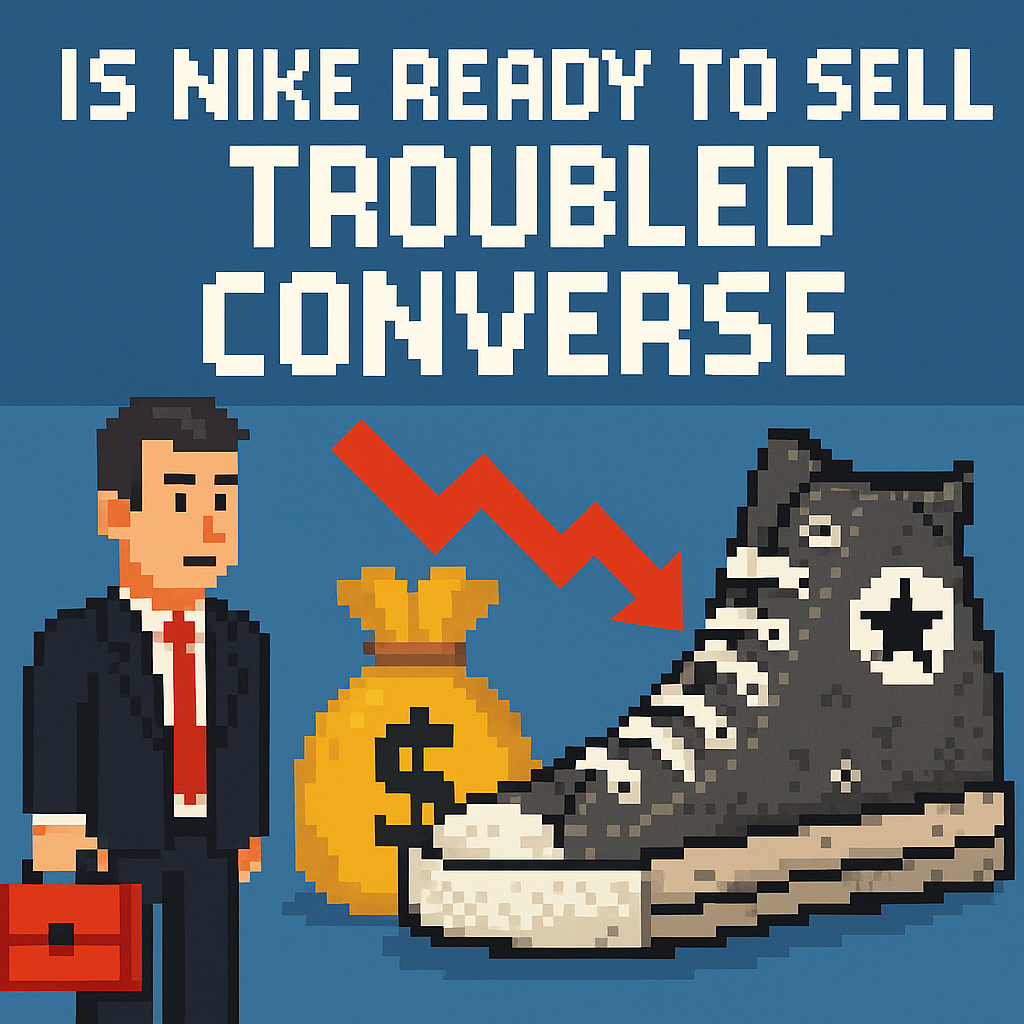
- Converse is in free fall inside Nike, with analysts openly asking “Is Nike ready to sell Converse?” after a multi‑quarter slide and a headline “44%” figure ricocheting around markets. [1] (fortune.com)
- Nike’s FY2026 filings show Converse shrank to $1.174B revenue and just $18M EBIT, implying ~2.5% of Nike sales but disproportionate pain—classic conditions for a spin or sale. [2], [3] (investors.nike.com; s1.q4cdn.com)
- Back‑of‑envelope math says a sale could fetch roughly $0.9B–$1.4B; the real debate is strategic: prune a non‑core lifestyle brand now, or fund a two‑year reboot focused on product, distribution, and margins. [2] (investors.nike.com)
What the source said
Fortune frames Converse as a drag on Nike’s turnaround, noting Converse is about 2.5% of Nike sales yet contributed roughly 20% of the company’s quarterly decline. It cites analysts blaming an innovation drought and overreliance on Chuck Taylor All Star, compares Converse’s slump to Vans’ icon fatigue, and highlights a BNP Paribas comment—“We’ve never seen a 44% decline in demand for a brand”—tied to the fiscal quarter ending November 2025. The piece floats a potential divestiture as speculation grows around whether the Beaverton parent will keep the 118‑year‑old label founded in 1908 in Malden, Massachusetts. [1] (fortune.com)
Why it matters
For Nike shareholders, Converse is a small top‑line slice but a large headache. In FY2026 Converse revenue fell to $1.174B and EBIT cratered to $18M, while unit sales dropped 31%—evidence of a brand reset compressing both scale and profitability. A sale would barely dent Nike’s $46.398B revenue base yet could unclog management bandwidth and sharpen the sport‑performance focus in 2027 product cycles. [2] (investors.nike.com)
For potential buyers like Authentic Brands Group, Converse is a scaled, globally recognized IP asset with licensing potential. The comps—Sperry’s $130M sale to ABG/Aldo in January 2024 and Reebok’s up‑to‑€2.1B sale to ABG in 2021—show active appetite for heritage footwear from brand managers who monetize via partners, wholesale, and royalties. [4], [5] (investors.wolverineworldwide.com; adidas-group.com)
Original analysis
Is Nike ready to sell Converse? Valuation math
Converse posted $1.174B in FY2026 revenue with EBIT of $18M; Nike’s total FY2026 revenue was $46.398B, so Converse is ~2.53% of sales (1.174 ÷ 46.398 ≈ 0.0253). [2]
Revenue‑multiple scenarios typical for heritage labels:- 0.8x sales: $1.174B × 0.8 ≈ $0.94B
- 1.2x sales: $1.174B × 1.2 ≈ $1.41B
With a thin 1.5% EBIT margin, buyers will underwrite upside from a mix reset and licensing rather than current EBITDA. [2] (investors.nike.com)
Why now vs later: Nike’s FY2026 segment note shows Converse unit sales down 31% and lower ASP clipping another ~1 point—textbook prune territory. Each quarter spent “nursing” the brand diverts attention from Nike/Jordan innovation sprints tied to Paris 2024 halo and 2027 running/soccer pipelines. [2] (investors.nike.com)
A simple 2x2: icon dependence vs innovation cadence
- High icon dependence + Low cadence: Converse Chuck Taylor, Vans Old Skool—vulnerable to style cycles and discounting when marketing fades. [1], [8]
- High icon dependence + High cadence: Adidas Originals with Stan Smith/Samba but frequent collabs (e.g., 2023–2024 drops)—stays topical via partners and scarcity.
- Low icon dependence + Low cadence: Generic mall brands—steady but low growth; poor fit for Nike’s higher‑velocity model.
- Low icon dependence + High cadence: Nike/Jordan performance franchises (PEG/Tempo/Alphafly; AJ1 variants) with continuous tech and colorway refresh—resilient through cycles. [3]
Historical analogues that actually predict behavior
Nike’s 2012 portfolio cleanup: It divested Cole Haan and Umbro to refocus on core performance brands, signaling a willingness to shed non‑core assets when drag appears. The Beaverton decision pattern says: if it’s not fueling sport performance or profitable growth, it’s expendable. [6] (investors.nikeinc.com)
Adidas–Reebok 2021: Adidas offloaded an underperforming lifestyle brand to ABG for up to €2.1B, trading operating headaches for cash while letting a brand manager run global licensees. Converse could follow a similar light‑asset playbook under a consolidator. [5] (adidas-group.com)
Contrarian read
- Consensus: “Nike should sell Converse because it’s shrinking fast and isn’t innovative.” [1]
- Counter: Nike can fix it if it commits to a product and channel reboot rather than starving it. The FY2026 10‑K shows Converse gross margin compressed 490 bps amid discounts and reset costs, and demand creation expense fell 39% YoY—signals of self‑inflicted austerity during a reset more than terminal decline. With restored marketing, tighter wholesale/DTC mix, and refreshed silhouettes beyond Chuck Taylor, EBIT could normalize closer to the ~$240M Converse generated in FY2025. [2] (investors.nike.com)
Named‑stakeholder breakdown
Nike leadership in Beaverton, Oregon (CFO Matthew Friend): The Q2 FY2026 release referenced “rebalancing our portfolio,” code for optionality on non‑core assets. A sale cleans up the narrative and frees opex; a keep‑and‑fix requires visible 2027 product stories and channel discipline. [3] (s1.q4cdn.com)
Authentic Brands Group (ABG): The owner of Reebok (since 2021) and buyer of Sperry rights in 2024 specializes in licensing and partner‑operated growth. Converse’s global awareness and evergreen silhouettes could suit ABG’s network, with deal math likely near ~1.0x sales given today’s margin. [4], [5] (investors.wolverineworldwide.com; adidas-group.com)
VF Corp (Vans): Vans’ filing concedes “sales from new products are growing, but still more than offset by declines in the icons,” revealing category pressure. If ABG or another consolidator widens Converse lifestyle distribution, Vans faces a tougher mall and online shelf. [8] (vfc.com)
Retailers and licensees (JD Sports, Foot Locker, regional distributors): A sale could broaden access and SKU breadth as a buyer leans harder into wholesale and collaborations. Short‑term, expect inventory resets; mid‑term, more doors and higher royalties, especially in EMEA and APAC partner markets.
What others are missing
The “44%” talking point is being misread. Fortune quotes a BNP Paribas line about a “44% decline in demand,” which many interpret as consumer pullback; Nike’s filings point to a marketing throttle‑down and reset costs, with Converse demand creation expense down 39% YoY and gross margin down 490 bps in FY2026. That pattern—plus Q2 FY2026 revenue down ~30% with broad‑based unit declines—looks like intentional sell‑in tightening and discount cleanup rather than an abrupt collapse in brand affinity. The specific angle: the debate conflates sell‑in, sell‑through, and marketing spend into one “demand” number, masking a reversible, policy‑driven cutback. [1], [2], [3] (fortune.com; investors.nike.com; s1.q4cdn.com)
What to watch next
- By March 31, 2027, Nike will either announce “strategic alternatives” for Converse or disclose a definitive agreement to sell the brand.
- By July 15, 2027 (around Nike’s FY2027 10‑K filing), Converse revenue will rebound to at least $1.30B if Nike retains the brand, indicating early recovery from the FY2026 reset.
- If a sale is announced by December 31, 2027, the headline valuation will land between $0.9B and $1.4B (0.8x–1.2x FY2026 sales), consistent with heritage‑brand comps. [2], [4], [5]
Sources
[1] Fortune (2026‑10‑20): Why Nike may be forced to ditch Converse — contributes analyst sentiment, the “44%” quote, and market framing.
[2] Nike, Inc. FY2026 Form 10‑K (investors.nike.com): Segment revenue/EBIT for Converse, unit trends, ASP commentary, and margin/reset disclosures.
[3] Nike Q2 FY2026 earnings release (s1.q4cdn.com): “Rebalancing our portfolio” language and quarterly performance context.
[4] Wolverine Worldwide press release (2024‑01‑11): Sperry sale to ABG/Aldo for $130M — a heritage footwear comp and licensing model signal.
[5] Adidas press release (2021): Sale of Reebok to Authentic Brands Group for up to €2.1B — precedent for offloading an underperforming lifestyle brand.
[6] NIKE, Inc. press release (2012): Divestiture of Cole Haan and Umbro — historical analogue for portfolio pruning from Beaverton.
[8] VF Corp annual report/filing (2025): Vans commentary on icon declines vs new product growth — competitive context for Converse.