
OpenAI’s Secret Gadget: Hype Meets Lawsuit | Analysis by Brian Moineau

TL;DR

  • OpenAI’s secret gadget sits at the collision of design theater and legal crossfire: Joanna Stern’s NBC News open letter spotlights the mystery while Apple’s July 2026 trade‑secrets suit turns the launch into a courtroom subplot. [1][3]
  • Competing leaks disagree on form factor—TechCrunch points to earbuds, while Bloomberg Law points to a screen‑free smart speaker; meanwhile, the only consumer AI hardware with real traction is Ray‑Ban Meta smart glasses, which topped 1 million units in 2024. [5][7][4]
  • The winning move isn’t “iPhone‑killer” hardware; it’s a low‑friction accessory that rides existing habits, avoids Humane‑style support fiascos, and pairs tightly with phones—before the courts can slow the party. [2][6]

What the source said

Joanna Stern’s NBC News column uses the conceit of an “open letter” to OpenAI’s unannounced device to frame three concrete questions: what it is, who it’s for, and why it matters amid scrutiny of OpenAI’s hardware ambitions. She cites the Jony Ive aura and the fact that a real object is in the works even as the company holds specs. Her tone mixes skepticism with affection for ambitious gadgets and reminds readers that shipping consumer hardware is brutal, even for a software‑first company. [1]

Why it matters

The stakeholders extend beyond OpenAI and any Ive‑led studio. Apple is suing over alleged trade‑secret theft; Qualcomm wants design‑win sockets if NPUs or modems are inside; and retailers like Best Buy act as gatekeepers for shelf space that can make or break holiday sell‑through. Each participant either gains a new revenue vector or absorbs costs from returns, legal delays, and a feature set that fails to map to daily habits. [2][3]

If OpenAI misreads the category, it risks Humane‑style blowback—devices dying within a year and refunds that torch trust. If it gets the fit right, it can earn durable voice presence in daily life without asking iOS or Android for front‑door access every time. That’s the prize: habitual access, not an industrial‑design trophy. [6]

Original analysis

OpenAI’s secret gadget: where it can win—and where it will bleed

Two conflicting, sourced threads point to very different launches. TechCrunch reports the first device “could be earbuds,” while Bloomberg Law says the debut will be a screen‑free, mobile smart speaker—an at‑home AI companion. Both imply voice‑first, screen‑optional UX and heavy reliance on cloud inference unless an on‑device NPU surprises us. Axios, by contrast, stakes the timeline: OpenAI is “on track” for a second‑half‑of‑2026 unveiling, which now competes with Apple’s active lawsuit clock. [5][7][2][3]

Here’s the consensus in one sentence: to control the assistant layer, OpenAI needs a phone replacement or a dedicated countertop gadget. Contrarian read: the safest path to habit is a humble accessory that piggybacks on phones and sunglasses people already wear. Consumer data backs this up: the only AI‑adjacent gadget with obvious momentum is Ray‑Ban Meta smart glasses, which crossed one million units in 2024 with a familiar brand, tight phone pairing, and “good enough” on‑device features plus cloud AI; bespoke “AI devices” like Humane’s Ai Pin imploded in under a year, leaving owners with bricked hardware and partial refunds. That’s not a UX quibble; that’s a trust‑and‑support lesson. [4][6]

A 2×2 to decode the options

  • Axis 1: Form factor

    • Body‑worn (earbuds, glasses)
    • Room‑placed (speaker, dock)
  • Axis 2: Compute location

    • On‑device NPU‑first
    • Cloud‑first with minimal edge compute

Place the contenders:

  • Ray‑Ban Meta: Body‑worn, partial on‑device, cloud assist. Proof that “ambient + accessory” can scale beyond novelty. [4]
  • OpenAI earbuds (rumored): Body‑worn, likely cloud‑first. Wins on habit (always with you), loses if Android/iOS power management and Bluetooth latency hobble responsiveness. [5]
  • OpenAI speaker (reported): Room‑placed, cloud‑first. Wins on mic array and far‑field reliability; risks Echo‑style appliance status unless it does something new. [7]
  • Apple/HomePod + Apple Intelligence: Room‑placed with deep OS hooks that hide seams; Apple’s distribution and default status are structural advantages.

Implication: OpenAI maximizes daily use odds by starting with body‑worn accessories that ride iPhone and Android. A room device can be lovely—but the Echo lesson looms: retention needs a daily anchor use case, not just better chitchat.

Named‑stakeholder breakdown

  • OpenAI: The launch is a three‑front campaign—industrial design, cloud cost economics, and litigation risk. A speaker ties them to the home and a services margin; earbuds tie them to your pocket and carrier politics. [2][7][3]
  • Apple: The trade‑secret case creates optionality—squeeze discovery, seek an injunction, or at least slow a rival while Apple embeds “Apple Intelligence” across accessories. Even without a win, time is advantage. [3]
  • Ive‑adjacent studio: If the product delights, the mystique resets the “AI gadget” narrative; if it stumbles, pin‑era skepticism hardens. Discovery risk also drags more eyes over design processes. [3]
  • Qualcomm: Axios signaled collaboration with OpenAI; a shipping device means sockets, reference designs, and a chance to prove NPUs can cut latency or boost battery for assistants. [2]
  • Meta: A hit for OpenAI in wearables would crowd Meta’s smart‑glasses runway; if OpenAI ships only a speaker, Meta keeps the mobility high ground. [4]

Historical analogue

  • 2016 AirPods showed how a tiny, accessory‑class device could become a daily ritual without replacing the phone.
  • 2014 Echo established that room devices win setup speed and reliable wake words but struggle to expand beyond timers and music without deep service hooks.
  • 2013 Google Glass proved that social acceptability and fashion matter as much as sensors and CPUs for face‑worn tech.

The contrarian wedge

Everyone is arguing about the object—earbuds or speaker—while the real moat is distribution plus delight. Meta built habit in under 12 months via Ray‑Ban stores, Instagram campaigns, and a fashion‑credible frame; Humane had neither, and it showed. OpenAI doesn’t own retail or an OS. Its best wedge is to become the most responsive voice AI inside accessories people already want to wear; if the first reveal is a room gadget, it must deliver genuinely proactive, multi‑step agency that saves visible time—think minutes per day—to justify a new box on the counter. Otherwise, it’s another pretty cylinder. [4][6]

What others are missing

Support and refunds will decide this category as much as the model weights. Engadget documented how Humane’s $700 Ai Pin shut down with a 10‑day sunset and limited refunds, leaving early adopters stranded and souring the exact audience OpenAI is courting. The lesson is operational, not just architectural: publish a clear warranty, promise an offline baseline that never bricks, and make the refund path explicit on day one. If OpenAI skimps here, the demo sizzle won’t matter once the first RMA hits Reddit. [6]

What to watch next

  1. By October 2026, OpenAI publicly clarifies the form factor (speaker vs. earbuds) with a working demo, not just renders. [2][5][7]
  2. By November 2026, at least one court filing in Apple v. OpenAI explicitly links—or fails to link—specific hardware components or supplier processes to alleged trade secrets, determining whether an injunction is plausible before year‑end. [3]
  3. By December 2026, if the device is room‑placed, major retailers list it for holiday preorders; if body‑worn, at least one U.S. carrier partnership appears to handle voice and app permissions cleanly. [2][4][5]

My take

Ship a thing people already wear. Earbuds or glasses beat a countertop monolith like Echo or HomePod for mobility and habit formation. If OpenAI leads with a speaker, it’s choosing controlled acoustics and easier marketing over the harder, more valuable challenge of being with me at the crosswalk, at the grocery shelf, and on the subway. The bet I’d back: a modest, beautiful accessory that pairs instantly, responds fast, and never bricks when servers hiccup.

Sources

  1. An open letter to OpenAI’s secret gadget — NBC News (https://www.nbcnews.com/tech/gadgets/joanna-stern-open-letter-openais-secret-gadget-rcna588052) — Frames the mystery and tone around an unannounced OpenAI device; stakes out consumer‑hardware skepticism.

  2. Exclusive: OpenAI aims to debut first device in 2026 — Axios (https://www.axios.com/2026/01/19/openai-device-2026-lehane-jony-ive) — Reports a second‑half‑of‑2026 target and hints at Qualcomm collaboration; anchors the timeline.

  3. Apple sues OpenAI over alleged trade secret theft — TechCrunch (https://techcrunch.com/2026/07/10/apple-sues-openai-over-alleged-trade-secret-theft/) — Details Apple’s July 2026 complaint and remedies sought; establishes legal headwinds.

  4. Meta’s Ray‑Ban smart glasses sold more than 1 million units last year — The Verge (https://www.theverge.com/meta/603674/meta-ray-ban-smart-glasses-sales) — Provides a hard sales number for 2024, showing accessory‑first momentum.

  5. OpenAI aims to ship its first device in 2026, and it could be earbuds — TechCrunch (https://techcrunch.com/2026/01/21/openai-aims-to-ship-its-first-device-in-2026-and-it-could-be-earbuds/) — Competes with the speaker narrative by flagging earbuds and “screen‑free” direction.

  6. All of Humane’s Ai Pins will stop working in 10 days — Engadget (https://www.engadget.com/ai/all-of-humanes-ai-pins-will-stop-working-in-10-days-225643798.html) — Documents a shutdown window and refund limits that poisoned early‑adopter trust.

  7. OpenAI’s First Device Will Be Speaker Built as AI Companion — Bloomberg Law (https://news.bloomberglaw.com/artificial-intelligence/openais-first-device-will-be-speaker-built-as-ai-companion-1) — Adds weight to the speaker rumor and the room‑placed launch angle.


Related update: We recently published an article that expands on this topic: read the latest post.
Related update: We recently published an article that expands on this topic: read the latest post.

Oura Ring 5: Sleeker, Worth the Cost? | Analysis by Brian Moineau

TL;DR

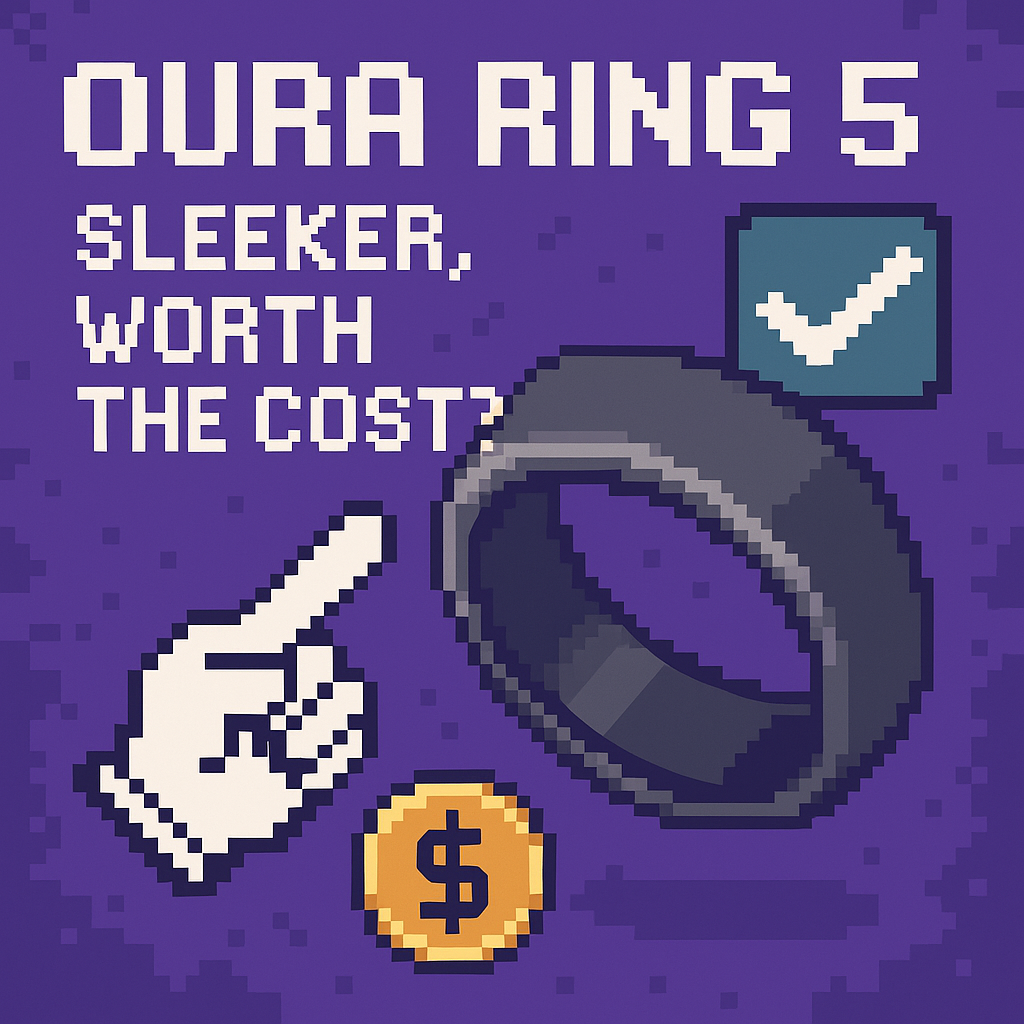
  • Oura Ring 5 trims the metal to 6.1mm wide and 2.28mm thick, claims 6–9 days of battery, and starts at $399 plus a $5.99/month membership; most of its new software also lands on older Oura models, so the case for upgrading is comfort, not capability. [1][3]
  • The three‑year cost reality: Oura Ring 5 at $399 + membership (~$610 total, or ~$710 with the $99 charging case) vs Samsung Galaxy Ring at $399 with no subscription; the gap makes Oura’s pitch hinge on its app’s longitudinal insights. [3][5][6]
  • For sports, Oura is still a non‑starter; even budget watches beat it on workout tracking—so the smart ring fight is really about sleep, stress, and ecosystem lock‑in, not athletics. [1]

What the source said

DC Rainmaker’s in‑depth review says Oura Ring 5 is materially smaller than Ring 4 and feels better day‑to‑day, with slightly better real‑world battery life. The headline hardware changes: width drops from 7.9mm to 6.1mm, thickness from 2.8mm to 2.28mm, and weight drops by roughly 2g; Oura reduces light paths from 18 to 12 but amps LED brightness 4x, with claimed 12% HRV gains at night and up to 19% workout accuracy gains. Pricing rises $50 to $399 (premium finishes $499), and the $5.99/month subscription remains. Critically, most software features also come to previous rings, and sports tracking remains “woefully behind” basic wearables. [1]

Why it matters

Two groups drive the smart ring market in mid‑2026: watch‑averse wellness users who won’t wear a band, and phone‑ecosystem loyalists (Samsung Health, Zepp) who want passive sleep and stress data without a recurring fee. Oura Ring 5 is squarely aimed at the first group, betting that a “world’s smallest” ring and cleaner signal capture will keep churn down and membership retention up. [3]

For Oura Health, hardware is a funnel to recurring revenue. The company’s May 2026 press note pitches scale and adds “Health Radar” (including blood pressure signals) and multi‑ring support to raise switching costs. That is a classic SaaS defense in a category suddenly crowded with subscription‑free rivals at $199–$399 from Samsung, Zepp Health, and RingConn. [3][2][6]

Original analysis

Back‑of‑the‑envelope math: Oura Ring 5 vs subscription‑free rivals

  • Oura Ring 5 base: $399 hardware + $69.99/year membership if billed annually.
    Three‑year total: $399 + 3 × $69.99 ≈ $609.97.
    Add $99 charging case and you’re at ≈ $708.97. [3]
  • Samsung Galaxy Ring: $399, no subscription. Three‑year total: $399. Samsung has already run sustained discounts to $299 in the US, so the likely “street” three‑year total often trends ≈ $299–$399. [5][7]
  • Amazfit Helio Ring: commonly $199, no subscription. Three‑year total: $199. [2]

If Oura’s app‑level guidance and longitudinal trends are worth $210–$310 more than Samsung (or ~$410 more than Amazfit), the Ring 5 wins. If not, the math favors subscription‑free rings—especially when Samsung discounts Galaxy Ring to $299. [7]

Oura Ring 5: a 2×2 on what actually differentiates rings in 2026

Axes for the 2×2 as of 2026: Y = depth of health insights (validated sleep staging, HR/HRV nocturnal stability, proactive Health Radar), and X = ecosystem lock‑in and ongoing cost (subscriptions and phone OS limits such as Android‑only policies). [3][8]

Placement as of 2026:

  • Oura Ring 5: High insights, high lock‑in/cost (membership; works with iOS/Android). [3]
  • Samsung Galaxy Ring: Medium‑high insights, medium lock‑in (no sub but Android‑only; some Galaxy‑exclusive features). [5][8][9][11]
  • Amazfit Helio Ring: Medium insights, low lock‑in/cost (no sub; cheapest credible hardware). [2][8]

This is why the Oura debate isn’t about LEDs or millimeters; it’s about whether Oura’s software moat—a readiness model refined over a decade, new Health Radar cues like “blood pressure signals,” and higher‑touch guidance—earns that premium. [3]

Contrarian read

  • Consensus in gadget coverage: “Oura Ring 5 wins because it’s smaller—and therefore better.”
  • My view: Size is a rounding error next to total cost and platform reach. Most of Ring 5’s new software lands on older rings. In DC Rainmaker’s testing, sports remain a weak spot. If you already wear a Garmin, Apple Watch, or even a budget Amazfit, Ring 5 adds little beyond sleep comfort. Meanwhile, Samsung undercuts Oura’s value story by removing the membership line item entirely at the same $399 MSRP (and often $299 on sale). That reframes Oura’s $5.99/month as a tax on comfort unless you truly use the longitudinal insights every week. [1][3][5][7]

Named‑stakeholder breakdown

  • Oura Health: Betting that “world’s smallest” plus Health Radar will raise perceived value per month and slow churn. Multi‑ring support and a $99 travel charger signal a push for higher ARPU via accessories and multi‑device households. [3]
  • Samsung: Keeps price parity at $399 with no sub, pressures Oura’s TCO, and uses Galaxy‑only features to keep buyers in the phone fold while still working on broader Android. That’s a Trojan horse for Samsung Health’s daily active users. [5][9][11]
  • Zepp Health (Amazfit Helio Ring): Wins the price war at $199, appealing to “value maximizers” who want sleep and basic readiness without subscriptions; risks being perceived as “good enough,” not “best.” [2][8]
  • RingConn: Longer battery claims and no sub create a middle lane, but patent pressure in the US complicates scale. Oura’s ITC actions show it will fight hard to tax or block rivals. [10][12]

The quiet strategic move

Oura’s press release trumpets “Health Radar”—blood pressure signals and nighttime breathing—as a new pillar. That isn’t cuff‑grade BP; it’s a trend‑surfacing feature that nudges you to rest, change behavior, or seek care. [3]

But it widens Oura’s wedge into preventative health, potentially justifying membership even if you rarely start workouts in the app. That is how Oura shifts the conversation from better LEDs to “we’ll tap you on the shoulder before your week goes off the rails.” If those nudges correlate with reduced strain days or illness downtime in members’ own timelines, churn falls—and the $210 three‑year delta vs Samsung becomes a feature, not a bug. [3]

What others are missing

Two design decisions meaningfully narrow the addressable market. First, Ring 5 shrinks the size range to 6–13 (down from 4–15 previously), which quietly excludes smaller and larger fingers; “world’s smallest” doesn’t matter if it doesn’t fit you. Second, Oura changed the charger again and added a separate $99 charging case—great for travelers, but another tax for multi‑ring homes and upgraders. Combine those with the fact that most new features also land on older hardware, and the strategic signal is clear: Oura is optimizing for a profitable core segment (sleep‑first, membership‑sticky users), not universal reach. [1][3]

What to watch next

  1. By Black Friday 2026 (November 27–30), Oura will run a mainstream promo bundling at least six months of membership or the $99 charging case to blunt TCO and accelerate upgrades from Ring 3/4. [3]
  2. By Q1 2027 (March 31), Samsung will normalize Galaxy Ring “street” pricing at $299 in the US outside of launch windows, following multiple nationwide promos in 2025–2026 that already hit that mark. [7]
  3. By H1 2027 (June 30), at least one major US insurer or employer wellness program will name Oura Ring 5 as an approved device with partial reimbursement via HSA/FSA positioning, expanding beyond niche pilots. [3]

My take

I’d buy Oura Ring 5 only if I refuse to wear a watch and I will actually use the readiness and “Health Radar” nudges weekly. The hardware miniaturization is impressive, but the reason to pay Oura’s subscription tax is the software history baked into those scores—not the ring’s silhouette. If you’re already in Samsung’s orbit or you’re a value buyer, the math doesn’t justify Oura. If you want the best passive sleep engine and a long‑term health journal on your phone, this is still the default pick—just budget for three years upfront and make sure you’ll open the app enough to earn the delta. [1][3][5]

Sources

iPhone Pro 2026: quad‑curved redesign | Analysis by Brian Moineau

A new look for the iPhone’s milestone year: the 20th anniversary iPhone might actually just be an all-new design that’s coming to next year’s iPhone Pro models

Apple loves an anniversary moment — and the rumor mill is heating up around the idea that the 20th anniversary iPhone will bring more than just a sticker and a commemorative wallpaper. The core whisper — that the 20th anniversary iPhone might actually just be an all-new design that’s coming to next year’s iPhone Pro models — has been amplified by recent reports pointing to a “quad-curved” display and a drastic rethinking of how Apple hides bezels and sensors.

Let’s unpack what’s being reported, why this matters, and what it might mean for the broader iPhone line.

What the latest rumors are actually saying

  • According to 9to5Mac, analyst Jeff Pu suggests the special anniversary design could land on Apple’s Pro models next year rather than being a standalone one-off. (9to5mac.com)
  • Multiple leakers and outlets (MacRumors, Notebookcheck, and others) have picked up a consistent image: Apple is testing an “equal-depth quad-curved” OLED panel — essentially a display that curves subtly along all four edges to create a near bezel-free look. (macrumors.com)
  • Bloomberg’s prior reporting has also hinted at a big redesign roadmap that includes an all-glass, all-screen ambition for the iPhone’s milestone model, plus major changes across the Pro lineup. (macrumors.com)

In short: the “20th anniversary iPhone” story may be less about a special edition and more about the moment Apple flips the switch on a new design language — starting with the Pro models.

Quad-curved display: what is it and why would Apple use it?

Put simply, a quad-curved display gently wraps the panel over all four edges of the phone, blurring the line between screen and glass. It’s not new to the concept wars — manufacturers like Samsung experimented with heavily curved edges years ago — but Apple seems to be leaning toward a much subtler, “equal-depth” micro-curve that reduces visible bezel without the usability problems of deep curves.

  • Benefits: cleaner edge-to-edge visuals, the illusion of fewer bezels, and a refined, premium aesthetic.
  • Challenges: manufacturing complexity, accidental touch rejection, and the technical headache of placing sensors (front camera, Face ID) under a curved panel without degrading performance.

Therefore, it makes sense Apple would start the push with Pro models, where margins and customer expectations allow for experimental and more expensive components. (macrumors.com)

The strategy: why debut the new design on Pro models

There are a few practical reasons Apple would introduce a major design shift on the Pro line first.

  • Pro buyers are historically more willing to pay for new materials and features, giving Apple room to absorb higher component costs.
  • Rolling changes into the Pro line allows Apple to iterate on tricky engineering problems — like under-display Face ID or front cameras — before applying them to mass-market models.
  • Apple has precedent: the iPhone X’s design debuted as a premium model in 2017 and became the template for later generations.

Hence, introducing a new look via Pro models is both a product and risk-management decision. (macrumors.com)

The roadmap and timeline context

To add context, Bloomberg and others have sketched a multi-year roadmap: Apple’s been testing bold shifts including a foldable iPhone and an all-glass, cutout-free design aimed at the 20th anniversary in 2027. Meanwhile, the rumor timeline suggests incremental steps — smaller Dynamic Island, punch-hole approaches, and then a more radical all-screen rollout. So, the quad-curved Pro models could be the pivotal middle step in that evolution. (macrumors.com)

Importantly, rumors shift and timelines slip: prototypes don’t always become products, and under-display sensors remain a tough engineering puzzle. Still, the volume and consistency of recent reporting suggest Apple is committed to a major display evolution.

What this means for users and the market

  • For consumers: expect a more immersive visual experience and a sleeker feel in hand if the quad-curved approach arrives. However, durability and repairability will be questions to watch — curved glass can affect screen protectors and case compatibility.
  • For competitors: Apple adopting micro-curves at scale would pull Android makers toward subtler styling and under-display solutions, not the dramatic curves of earlier years.
  • For the accessory industry: cases, screen protectors, and repair services will need to adapt quickly — a new edge profile changes a lot.

Transitioning to this design primarily in Pro models means early adopters get the novelty first, while Apple buys time to refine broader rollout.

Design trade-offs and realism check

There’s a balance between spectacle and utility. Historically, dramatic curves created glare and accidental touches that annoyed users. Apple’s rumored “micro” or “equal-depth” curve sounds like an attempt to capture the cinematic look without the downsides.

Moreover, under-display Face ID and camera tech still face performance trade-offs. Reports vary: some sources claim Apple will hide sensors under the panel in a true all-screen device; others say those systems may remain partially visible for now. So, while the visual change is plausible, some core functions might remain conservative until the technology matures. (macrumors.com)

My take

If Apple is indeed planning to roll a quad-curved display into next year’s Pro models, it’s a smart move. It’s evolutionary rather than purely revolutionary: Apple tightens the visual beltline and moves closer to the “all-screen” ideal without betting the whole company on a fragile new component. Practically, that minimizes user disruption while resetting the design language for the next half-decade of iPhones.

Plus, anniversaries are marketing gold. Even if the 20th anniversary device isn’t a one-off luxury edition, treating the milestone as the start of a new era—rather than a single commemorative release—makes more sense for product continuity.

Final thoughts

Rumors are only as good as their evidence, and Apple is famously cagey. Nevertheless, several outlets now point to a consistent direction: a quad-curved, near bezel-free look debuting on Pro models as Apple marches toward an all-screen future. Whether this becomes the next iPhone signature or an experiment that’s refined later, it’s clear Apple is pushing design boundaries again — and that’s what keeps the iPhone conversation exciting every year.

Sources


Related update: We recently published an article that expands on this topic: read the latest post.


Related update: We recently published an article that expands on this topic: read the latest post.