TL;DR
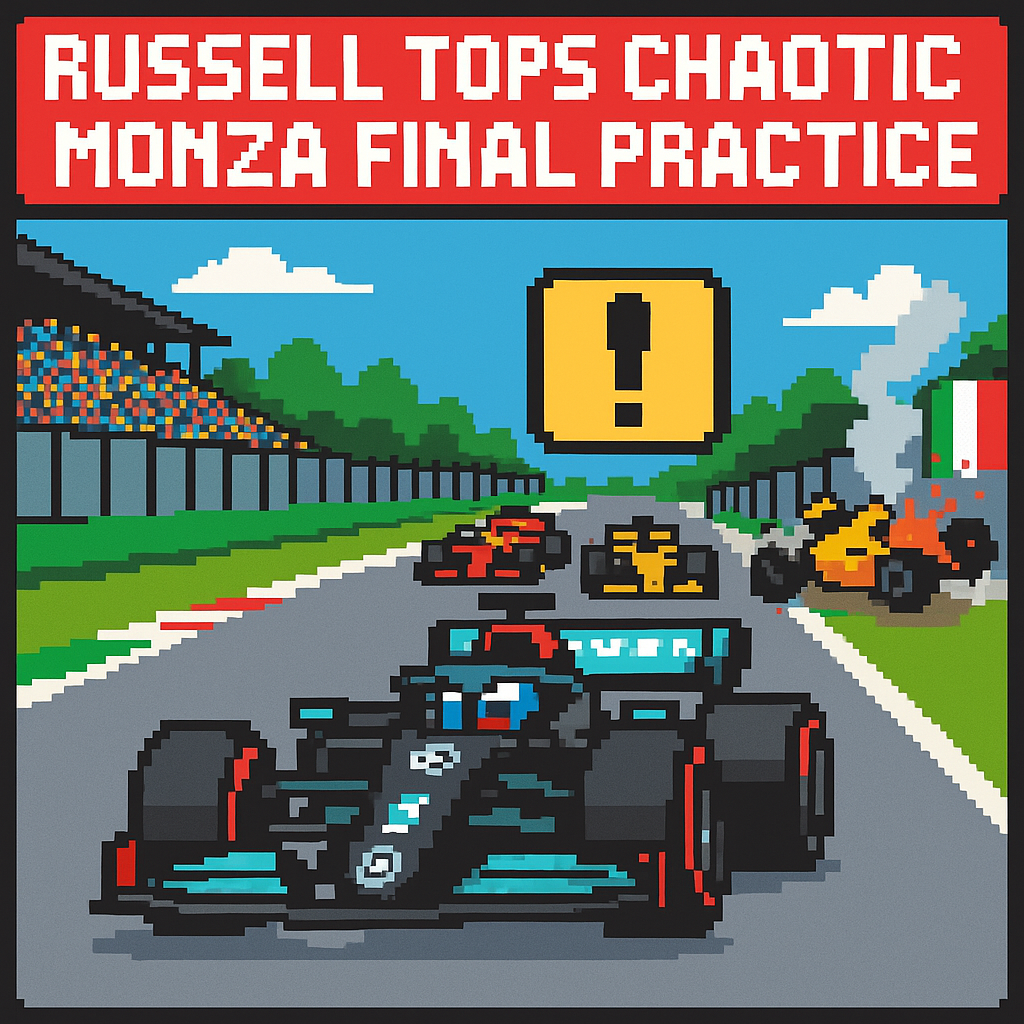
- Mercedes topped FP1 at the 2026 Spanish GP in Madrid’s Madring, with George Russell quickest in 1:34.077 and Kimi Antonelli second, but Ferrari’s medium‑tyre pace suggests the headline gap flatters Brackley. [1][2]
- The new 5.414 km, 22‑turn semi‑urban circuit around IFEMA loads the left‑side tyres hard; low grip plus traffic at “La Monumental” already triggered impeding flashpoints that could spill into qualifying. [5][6][3]
- Back‑of‑envelope fuel and tyre corrections put Ferrari within 0.1–0.3 s for qualifying and better placed for Sunday’s degradation, so the early “Mercedes domination” narrative looks premature. [1][2][7]
What the source said
Autosport reports the first‑ever Formula 1 session at Madring ended with a Mercedes FP1 one‑two: George Russell P1 in 1:34.077 and rookie Kimi Antonelli P2 in 1:34.363. Ferrari’s Lewis Hamilton set an early benchmark on the medium compound and was one of only two drivers not to set a best time on softs, while Charles Leclerc ran close behind the Mercedes pair and Max Verstappen ended P5 for Red Bull. Multiple traffic incidents flared at the fast “La Monumental” section, with Arvid Lindblad frustrated after encountering slow Mercedes and Ferrari cars, and Yuki Tsunoda retired with a power‑steering issue. [1][2][3]
Why it matters
- Competitive order: A brand‑new venue can scramble read‑throughs from FP1, and the first hour at Madrid’s 5.414 km Madring showed how fuel loads and compound choices still mask true pace; Russell’s 1:34.077 sits as a reference, not a verdict. [1][5]
- Event economics: Madrid’s IFEMA‑anchored, 22‑turn semi‑urban project stands in direct comparison to the long‑running Barcelona round at Montmeló, and a compelling qualifying plus race would validate the capital’s investment and FOM’s calendar bet. [5][6]
Original analysis
-
Back‑of‑envelope: correcting FP1 times with shown work
- Given: Russell 1:34.077 (soft), Antonelli 1:34.363 (soft); Hamilton’s headline laps came on mediums. [1]
- Fuel effect rule‑of‑thumb: 0.3–0.4 s per 10 kg → use 0.03 s/kg for a conservative 0.30 s/10 kg. [7]
- Scenario A (Mercedes lighter by ~15 kg): Inflated advantage ≈ 15 kg × 0.03 s/kg = 0.45 s; adjust Russell’s lap to a “fuel‑equalized” 1:34.53 versus Ferrari medium. Typical soft–medium delta on C2–C4 sits ~0.3–0.5 s at medium‑energy tracks, implying Ferrari’s soft‑tyre qualifying potential within ~0.1–0.3 s of Russell’s FP1 best. [2][6][7]
- Scenario B (similar fuel, compound delta drives the gap): If soft–medium at Madring ~0.3–0.5 s, Hamilton’s medium reference suggests Ferrari erases most of the deficit when both switch to softs in Q3. [2][6]
-
2×2 typology: track trait × team trait (FP1 inference)
- Horizontal: Grip state (low/evolving vs stable). Vertical: Tyre warm‑up (fast vs slow).
- Ferrari: low/evolving + fast warm‑up (medium‑tyre pace strong on a green surface). [2]
- Mercedes: low/evolving + medium warm‑up (soft peaks early; management in traffic becomes pivotal). [1][3]
- Red Bull: low/evolving + uncertain warm‑up (rear‑limited strength may underpay on long aero corners here). [2][6]
-
Contrarian read
- Consensus: Mercedes “ruled Friday” and will control qualifying at Madring.
- Counter: Ferrari’s best work came on the medium, and Hamilton never logged a peak on softs; with Pirelli’s C2–C4 selection, low‑grip expectations, and 50°C‑plus asphalt in practice, Ferrari’s temperature window and rotation through long loaded corners point to tighter qualifying and stronger long‑run potential. [2][6][8]
-
Named‑stakeholder breakdown
- Mercedes (Toto Wolff): Banked one‑lap clarity with Russell’s 1:34.077 and an assured Antonelli; the task is clean sequencing at La Monumental to avoid Q1/Q2 traffic traps. [1][3]
- Ferrari (Fred Vasseur): Medium‑tyre speed is the tell; if the SF‑26 holds front grip through the 22‑turn load cycle, Ferrari can pressure Mercedes on deg over race distance. [2][6]
- Red Bull (Christian Horner): Verstappen’s P5 gives a base, but the RB car must find rotation in long aero corners to enter the pole fight. [1][2]
- Pirelli: C2–C4 choice, low grip, and high lateral load mean strict camber/pressure policing and likely multi‑stop viability if track temps mirror FP1. [6][8]
- City of Madrid/IFEMA: A smooth qualifying and visible passing in support series would bolster the case for the capital’s 5.414 km semi‑urban concept versus the established Barcelona template. [5]
What others are missing
The operational bottleneck at “La Monumental” is a qualifying risk multiplier, not a curiosity, because blind entry prep laps into a high‑load sequence collided with push laps several times in FP1 and triggered radio complaints. If stewards escalate after additional reports, teams must harden pit‑release deltas and widen gaps on out‑laps, trading tyre life for track position. With DRS activation placed after Turn 22, single‑lap blockage risk rises, and one compromised push could swing a front row to a second row at Madring. [3][5]
What to watch next
- By qualifying on September 12, 2026, Mercedes will not secure a front‑row lockout; at least one Ferrari starts on the front row.
- Before the start of Q3 on September 12, 2026, race control will issue at least one formal reprimand or time penalty for impeding at or near La Monumental.
- On September 13, 2026, the race will feature at least one full Safety Car or two Virtual Safety Car periods due to incidents or tyre overheating in long loaded corners.
My take
FP1 at Madring flatters Mercedes because they executed soft‑tyre laps early while Ferrari banked mediums on a 5.414 km layout that stresses the left‑front across long arcs. Russell’s 1:34.077 was sharp, yet fuel‑corrected gaps and compound deltas compress the field when both sides run the C4 for Q3. Ferrari’s temperature window looks kinder for Sunday when degradation bites, so I expect a split front row and a red car dictating stint lengths as track temps hover near FP1’s 50°C‑plus benchmark; if Mercedes want the win, they must win it on Saturday. [1][2][6][8]
Sources
- F1 Spanish GP: Mercedes tops FP1 with Russell fastest at Madring — Autosport (https://www.autosport.com/f1/news/f1-spanish-gp-fp1-report/10854512/) — Baseline FP1 order, Russell’s 1:34.077, Antonelli P2, and incidents at La Monumental.
- FP1: Russell leads Antonelli and Leclerc as cars hit Madring for first time — Formula1.com (https://www.formula1.com/en/latest/article/fp1-russell-leads-antonelli-and-leclerc-as-cars-hit-madring-for-first-time.1CiLnqKjDFMohqIlyx5uAm) — Confirms Mercedes one‑two, Ferrari’s medium‑tyre strength, and Tsunoda’s power‑steering issue.
- F1 Spanish GP: George Russell tops FP1 as Lewis Hamilton impedes several drivers — Motorsport.com (https://www.motorsport.com/f1/news/f1-spanish-gp-fp1-report/10854498/) — Details on traffic/impeding at La Monumental and Lindblad’s radio frustration.
- Russell leads Antonelli as Mercedes set the pace in first Madring practice — FIA (https://www.fia.com/news/f1-russell-leads-antonelli-mercedes-set-pace-first-madring-practice) — Governing‑body confirmation of FP1 result at the all‑new Madring.
- Circuit guide: Everything you need to know about the Madring — Formula1.com (https://www.formula1.com/en/latest/article/circuit-guide-everything-you-need-to-know-about-the-madring.NF7Mh3iag3w9GUPlihwJA.NF7Mh3iag3w9GUPlihwJA) — Track length (5.414 km), 22 turns, DRS placement after Turn 22, and IFEMA‑anchored layout.
- Pirelli anticipa un Madring complicado: poco agarre y grandes cargas — Motorsport.com (ES) (https://es.motorsport.com/f1/news/pirelli-anticipa-madring-complicado-neumaticos/10853908/) — Compound selection (C2–C4), low grip, high lateral loads, and expected evolution.
- Why F1 cars are only at the limit 3.1% of the time — Autosport (https://www.autosport.com/f1/news/why-f1-cars-are-only-at-the-limit-31-of-the-time-5111698/5111698/) — Rule‑of‑thumb fuel‑mass effect: ~0.3–0.4 s per 10 kg, used for corrections.
- What we learned from Friday practice at the 2026 F1 Spanish GP — Autosport (https://www.autosport.com/f1/news/what-we-learned-from-friday-practice-at-the-2026-f1-spanish-gp/10854706/) — Adds track‑temperature context (50°C‑plus) and left‑side tyre stress through long corners.
Related update: We recently published an article that expands on this topic: read the latest post.
Related update: We recently published an article that expands on this topic: read the latest post.