
Suzuka Shockers: F1 Qualifying Winners & | Analysis by Brian Moineau

Winners and losers from F1 qualifying at the Japanese Grand Prix — Suzuka snapshot

There’s something about Suzuka that teases the unexpected out of drivers and machines alike. Qualifying at the Japanese Grand Prix once again delivered drama, surprise and the brief, bright moments that make Formula 1 addictive. In this piece I pick through the winners and losers from F1 qualifying at the Japanese Grand Prix, explain why a few headline names rose or fell, and why those grid positions actually matter for Sunday’s race.

Quick scene-setting

Suzuka’s figure-eight layout rewards precision and bravery. Small errors are punished by time and traction loss, while the right set-up can yield pole from nowhere. The recent qualifying session (held on March 28, 2026) saw established stars and rising talents trading punches: a young fast gun grabbed attention, a perennial front-runner stumbled, and a couple of midfield outfits suddenly looked a lot more competitive.

What happened in qualifying (short summary)

  • Q1–Q2–Q3 played out under stable conditions, but traffic, tyre usage and tiny mistakes reshuffled expectations.
  • A breakout performance put a teenager or young driver on the front row (and in some coverage that man was Kimi Antonelli), while at least one top name failed to extract a clean Q3 lap.
  • Midfield teams that have been quietly developing their 2026 packages showed real pace in single-lap trim.

Now let’s dig into the winners and losers — and why their results matter beyond the immediate scoreboard.

Winners: the bold and the surprising

  • Young guns who delivered when it counted
    A rising driver converted practice promise into pure-lap pace when it mattered. Grabbing a front-row slot at Suzuka isn’t just media gold; it gives a real strategic advantage because overtaking here is hard and track position is precious. That kind of qualifying result can turn a rookie’s weekend into a podium-or-bust weekend.

  • Mercedes (tactical gains despite mixed signs)
    One Mercedes driver looked sharp in single-lap pace and extracted a top-three grid spot, salvaging a weekend that earlier sessions suggested might be tricky. Mercedes’ ability to deliver in qualifying shows the car still has one-lap performance, and starting up front helps mask race-pace or tyre-wear questions during the race.

  • A few midfield teams who found a setup sweet spot
    Suzuka can amplify small aero or balance gains. Teams that have been inching forward all season found themselves into Q3 or on the verge of it; that’s valuable for momentum, sponsor headlines, and importantly, points opportunities on Sunday.

Losers: the ones who misfired at the worst moment

  • Big names who left laps on the table
    A couple of well-known drivers failed to produce a clean Q3 lap — whether from traffic, a small mistake, or being held in the pits for an incoming car — and paid the price with a compromised grid slot. At Suzuka, missing out by a few tenths can drop you from prime podium contention to an uphill recovery.

  • Red Bull’s inconsistency in single-lap trim (if applicable)
    If the frontrunner team didn’t quite match its usual qualifying excellence, it becomes a talking point. Suzuka’s medium- and high-speed corners expose balance weaknesses; when Red Bull or another top team struggles in qualifying, rivals smell opportunity for the race.

  • Drivers who used tyre sets badly or burned a tyre allocation early
    Strategy around tyre sets and running in Q1–Q2 is deceptively complex. Those who found themselves short of fresh rubber in Q3 — or who’d wasted sets in earlier sessions — ended up with limp final-lap attempts and grid positions that don’t reflect their race pace.

Why qualifying here matters more than you might think

  • Track position is king at Suzuka. There are overtaking spots, but a clean run through the esses and a controlled exit from 130R are priceless. Starting on the front two rows reduces exposure to first-lap incidents and gives control of strategy.
  • The psychological edge: a strong qualifying puts pressure on rivals and gives the team clear tactical options (undercut, overcut, or playing the tyre game differently).
  • For rookies and lower-budget teams, Q3 or a surprise front-row spot is a trophy in itself — it attracts attention, placates sponsors, and can change the tone of a season.

Notable moments that shaped the order

  • A mechanical or traffic issue in Q3 for a top driver changed the podium landscape. Even a brief hold in the pit lane can equal a lost lap and a lost chance.
  • Some teams elected to be conservative with tyres early and paid for it later when track evolution made late laps faster. That’s a classic Suzuka trap: run too early and you miss the improving track.

My take

Suzuka’s qualifying served a reminder: single-lap speed still matters. It’s not always the team with the fastest race package that headlines Saturday — sometimes it’s the driver who finds the perfect combination of commitment and precision for one lap. The grid reshuffle we saw adds spice to Sunday: races at Suzuka often reward controlled aggression and strategic clarity, so expect teams that qualified lower but with strong race pace to push hard early.

Qualifying also underlined the sport’s shifting narrative — younger drivers are not just learning, they’re delivering when asked. That’s healthy for F1: it keeps the storylines fresh and makes Saturdays must-watch television.

Sources

(If you want to re-check any individual lap times or see the full Q1–Q2–Q3 timing sheet, the official Formula1.com qualifying page listed above has the detailed timing sheets.)


Related update: We recently published an article that expands on this topic: read the latest post.
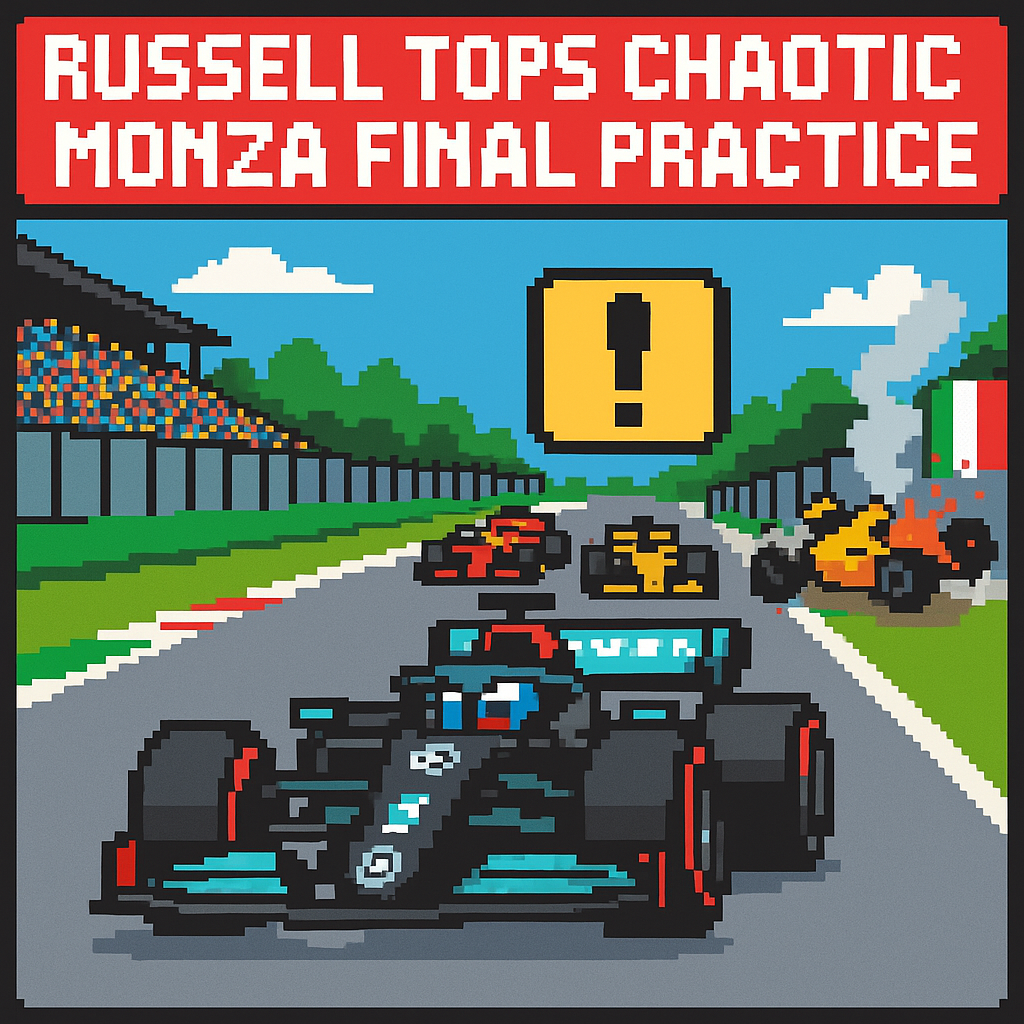

Related update: We recently published an article that expands on this topic: read the latest post.
Suzuka’s One-Lap Crisis After F1 2026 | Analysis by Brian Moineau

The one-lap headache at Suzuka: why a last-minute F1 rule change didn’t fix everything

There is still a glaring problem over one lap at Suzuka despite the last-minute F1 rule change, and it’s the kind of technical, tactical tangle that fans notice before the sport’s administrators can swap talking points. Suzuka is one of the few circuits that still feels like a driver’s challenge — flowing, unforgiving and iconic — yet the new 2026 power-unit and energy-management rules have exposed a single-lap fragility that a hurried tweak couldn’t cure.

Suzuka’s charms make the problem louder. It’s a track where a single perfect lap rewards bravery and rhythm, but the new energy and qualifying realities mean “perfect” is suddenly unstable: one lap can be significantly faster or slower than the next depending on battery state and how teams manage new electric boost systems. The result is qualifying and short, crucial stints that feel fragile, artificial and — at times — unfair.

What changed for 2026 and why Suzuka feels it hardest

  • 2026 power-unit changes shift the electric/ICE balance toward a much more powerful MGU-K and a bigger, more usable battery. Teams can recover and deploy far more electrical energy than before. This creates a multi-dimensional optimisation problem: you need battery for one hot lap in qualifying but also to sustain e-lift across a race stint. (RacingNews365 explains the rule changes and the battery/MGU-K shift.) (racingnews365.com)

  • Teams discovered race strategies under the updated rules can hinge on a single lap’s worth of energy. A one-lap mismanage in qualifying — or an extra lap of deployment in the wrong place — can blow an entire session’s timing or a race strategy. That “one lap” sensitivity is particularly exposed at Suzuka, where there’s little margin for error and where lap time variance between good and bad battery usage shows up instantly. PlanetF1 lists Suzuka among the tracks where battery regeneration and deployment will challenge teams most. (planetf1.com)

  • In-season and late rule changes — sometimes announced close to race weekends — aim to blunt loopholes or react to a single-event issue (Monaco’s experiment with extra mandatory pit stops is one example from recent seasons). But last-minute clarifications rarely erase the underlying technical mismatch between what the tyres, aerodynamics and new electrical systems want on a lap-by-lap basis. Teams can be left firefighting rather than solving the strategic imbalance. (sports.yahoo.com)

Transitioning from what happened to why it matters helps explain the frustration in the paddock and the stands.

There is still a glaring problem over one lap at Suzuka despite the last-minute F1 rule change

That sentence sums up the issue: the sport tried a rapid fix — or a tweak — to blunt a tactical loophole or an unfair edge, but the underlying “one-lap volatility” remains. At Suzuka, lap-to-lap consistency has become a casualty of:

  • Battery state swings that change the character of a lap (attack mode/boost availability vs. conservation).
  • Qualifying strategies where you might fatally burn battery for one flying lap and then be left with suboptimal energy for following attempts or race starts.
  • Pirelli tyre behaviour combined with new energy deployment maps that make finding a stable window for an all-out lap trickier. Autosport recently highlighted how qualifying preparation has become more complicated because tyre and battery requirements can contradict each other. (autosport.com)

The practical upshot is ugly: sessions where drivers leave big time on the table through no conventional fault of car balance or driving skill, but because the car simply cannot produce a repeatable “ideal” lap under the new electrical constraints.

How this plays out on race weekend

  • Qualifying becomes a high-variance lottery. One perfect deployment lap can put a driver on pole, while the next session the same driver might struggle to extract performance because the battery’s earlier use changed the thermal and charge profile.
  • Races can feel processional even when the cars are closer on paper. If teams are forced to conserve or stagger battery usage, opportunities for wheel-to-wheel attack narrow — that’s not Suzuka’s natural theatrical style.
  • Strategic games (pitting early, using a full battery boost on an opening lap) can be decisive in ways that feel engineered rather than earned — and that makes fans and drivers grumpy in equal measure.

Transitioning again: there are fixes, but they require patience.

What would actually help — pragmatic fixes, not theatre

  • Clear, consistent rules about qualifying battery allocation that are published well in advance of race weekends. Consistency beats ad-hoc changes. (thejudge13.com)
  • Technical windows in which teams can use maximum battery for a single lap in qualifying — but only if that allocation is identical for everyone, removing the “one team gambit” advantage.
  • Better alignment between tyre working windows and energy deployment maps, co-designed with Pirelli so a tyre phase doesn’t punish an aggressive electric push.
  • Simulation and testing time for all teams to validate race-energy allocations on specific circuits; Suzuka demands bespoke calibration because of how rapidly lap times can change with small set-up changes. RacingNews365 and the technical coverage across outlets underline that the 2026 regulations created novel multi-factor trade-offs teams are still learning. (racingnews365.com)

What fans should expect in the near term

Expect more noisy debate and occasional Saturday qualifying dramas where lap 1 is king. Expect teams to learn — and adapt — but also expect a few more races where Suzuka’s natural rhythm is interrupted by the sport’s new energy game. Over time teams will find equilibrium, but that equilibrium may look different from the Suzuka that many remember.

My take

Suzuka hasn’t lost its soul; the problem is procedural and technical, not architectural. The flow and challenge of the circuit remain unique, but F1’s latest technical pivot has created edge cases that show up magnified at a track that rewards precision. A last-minute rule change can paper over an unfair outcome for a weekend, but it won’t fix the deeper misalignment between how qualifying is structured, how energy is managed, and how tyres behave — especially on circuits like Suzuka.

Fixing it properly means clear, stable rules and careful co-ordination between the FIA, F1, Pirelli and teams. Fans deserve a version of Suzuka where laps feel earned because of driver skill and car balance — not because a battery map happened to be kinder on one lap than the next.

Sources


Related update: We recently published an article that expands on this topic: read the latest post.


Related update: We recently published an article that expands on this topic: read the latest post.

Aitken Snatches Sebring 12H Pole Glory | Analysis by Brian Moineau

Pole, pressure and provenance: Aitken Beats Blomqvist to 12H Sebring Pole

Jack Aitken’s late lunge for the top spot — Aitken Beats Blomqvist to 12H Sebring Pole — grabbed headlines and reset expectations for the Mobil 1 Twelve Hours of Sebring. The Action Express Racing Cadillac V‑Series.R showed both outright pace and a knack for timing, denying Tom Blomqvist and the Meyer Shank Racing Acura a clear run at qualifying glory. That one-lap duel felt like a microcosm of modern endurance racing: razor-thin margins, tactical timing, and drivers who can flip from patient to aggressive in an instant.

Why this pole mattered

Sebring’s concrete surface is famously punishing; it rewards bravery and punishes mistakes. Securing pole at the 12 Hours isn’t just ego — it’s strategic. Clean track position at the start can help avoid first-lap attrition and gives teams the breathing room to execute early stints and pit strategy without immediate traffic compromises.

Aitken’s effort carried extra weight because it came against serious competition. Blomqvist has been on a hot streak in IMSA qualifying sessions, and the Acura Meyer Shank package is consistently a threat. For Action Express, putting the Cadillac V‑Series.R on top reasserted Cadillac’s development curve and injected momentum into a long 12‑hour day where reliability and execution ultimately decide the result.

The on-track story — how Aitken edged Blomqvist

  • The session was compact and intense: drivers had a narrow window to lay down flying laps before traffic and track evolution changed the equation.
  • Blomqvist produced a run that looked pole-worthy, but Aitken found an extra sliver of pace on his final attempt.
  • The margin was minimal — the sort of difference that can come down to a single clean apex, a better exit, or timing a tow. That’s the poetry of qualifying at Sebring: tiny edges translate into headline moments.

Beyond the headline, the qualifying phase underlined two broader trends. First, Cadillac’s V‑Series.R package remains highly competitive across different track conditions. Second, the GTP field has compressed: BMW, Porsche, Acura and Cadillac traded laps throughout the session, creating an unpredictable grid that promises a chaotic, tactical race.

What this means for race day

Securing pole in a 12‑hour race doesn’t guarantee victory, but it shapes the script. From the Action Express perspective:

  • Early stint control becomes easier: leading into Turn 1 reduces immediate contact risk and lets the team dictate the opening pace.
  • Strategy flexibility improves: a pole-sitter can play with stint length and tire choices without being forced into reactive moves to stay in traffic.
  • Psychological advantage: teammates and rivals notice—small boosts in confidence can influence split-second driver choices later.

For Blomqvist and Acura Meyer Shank Racing, the narrow miss is a warning and motivation. They showed they have the pace — and in endurance racing, pace plus prudence often equals results. Expect MSR to pressure the Cadillacs early and to use pit-stop precision to try and regain track position when it matters.

The bigger picture for Cadillac and the GTP class

The GTP grid is more crowded and competitive than it’s been in years. Manufacturer investment has sharpened development and closed the gaps between different cars and engine philosophies. Aitken’s pole is evidence that Cadillac is still refining strengths — aero, balance or tire management — that can deliver one-lap speed and race durability.

But remember: Sebring eats setups. Race engineers will be monitoring tire degradation, brake wear and shock behavior over concrete bumps more obsessively than usual. Teams that convert qualifying pace into consistent, repeatable stint times will be the ones to watch as night falls and track temperatures change.

A few notable subplots to watch during the race

  • How the Cadillacs manage traffic and multi-class interactions during the first few hours.
  • Whether Meyer Shank can turn its qualifying speed into clean race stints and gain back track position through pit strategy.
  • Tire and brake conservation across teams — the concrete surface and long stints force trade-offs between outright lap time and sustainable pace.
  • Which manufacturer extracts late‑race advantage: powertrain durability and team pit execution tend to decide the closing hours.

Quick hits

  • Pole showcases single-lap performance; the race will reward long-run consistency.
  • Sebring’s bumps and concrete demand conservative bravery: push where it counts, preserve where it doesn’t.
  • Team strategy and pit stops will likely shuffle the order multiple times — don’t read too much into the opening stints alone.

A few takeaways for fans

  • Expect a strategic chess match rather than a straightforward procession. Qualifying shows who can be fast — the race shows who can balance speed and preservation.
  • Keep an eye on in-car driver swaps: how teams distribute stints (young, fast drivers vs. experienced closers) will be crucial.
  • Night running often flips the narrative; the team that adapts quickest to changing track grip typically finishes stronger.

Final thoughts

There’s something magnetic about a pole decided by a sliver of a second. Jack Aitken’s achievement — Aitken Beats Blomqvist to 12H Sebring Pole — captured that blend of precision and drama that endurance fans live for. But Sebring has the final say; the surface remakes contenders hourly, and the long game favors the crew that pairs speed with unflinching reliability. If qualifying is the teaser, the twelve hours will be the full novel — and judging by how tight things are now, it promises to be a page‑turner.

Sources


Related update: We recently published an article that expands on this topic: read the latest post.


Related update: We recently published an article that expands on this topic: read the latest post.