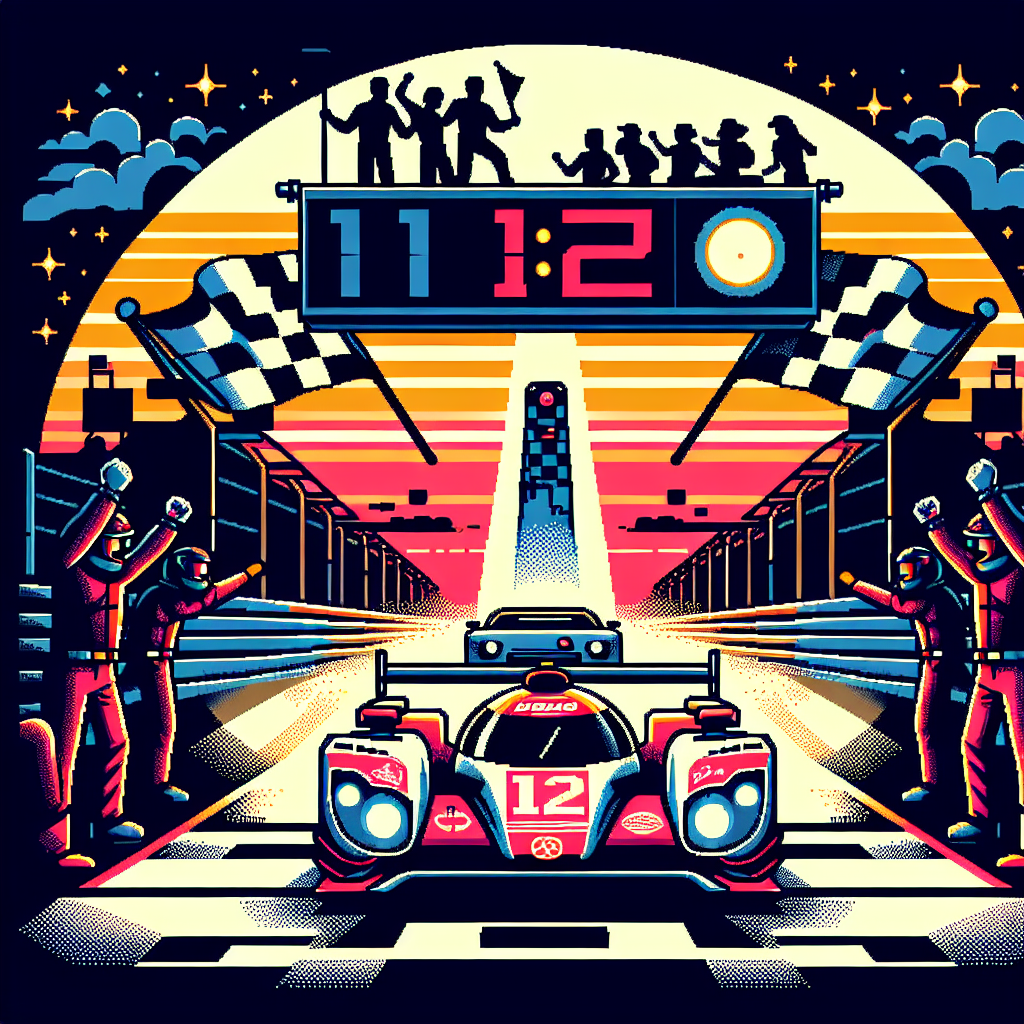
Pole, pressure and provenance: Aitken Beats Blomqvist to 12H Sebring Pole
Jack Aitken’s late lunge for the top spot — Aitken Beats Blomqvist to 12H Sebring Pole — grabbed headlines and reset expectations for the Mobil 1 Twelve Hours of Sebring. The Action Express Racing Cadillac V‑Series.R showed both outright pace and a knack for timing, denying Tom Blomqvist and the Meyer Shank Racing Acura a clear run at qualifying glory. That one-lap duel felt like a microcosm of modern endurance racing: razor-thin margins, tactical timing, and drivers who can flip from patient to aggressive in an instant.
Why this pole mattered
Sebring’s concrete surface is famously punishing; it rewards bravery and punishes mistakes. Securing pole at the 12 Hours isn’t just ego — it’s strategic. Clean track position at the start can help avoid first-lap attrition and gives teams the breathing room to execute early stints and pit strategy without immediate traffic compromises.
Aitken’s effort carried extra weight because it came against serious competition. Blomqvist has been on a hot streak in IMSA qualifying sessions, and the Acura Meyer Shank package is consistently a threat. For Action Express, putting the Cadillac V‑Series.R on top reasserted Cadillac’s development curve and injected momentum into a long 12‑hour day where reliability and execution ultimately decide the result.
The on-track story — how Aitken edged Blomqvist
- The session was compact and intense: drivers had a narrow window to lay down flying laps before traffic and track evolution changed the equation.
- Blomqvist produced a run that looked pole-worthy, but Aitken found an extra sliver of pace on his final attempt.
- The margin was minimal — the sort of difference that can come down to a single clean apex, a better exit, or timing a tow. That’s the poetry of qualifying at Sebring: tiny edges translate into headline moments.
Beyond the headline, the qualifying phase underlined two broader trends. First, Cadillac’s V‑Series.R package remains highly competitive across different track conditions. Second, the GTP field has compressed: BMW, Porsche, Acura and Cadillac traded laps throughout the session, creating an unpredictable grid that promises a chaotic, tactical race.
What this means for race day
Securing pole in a 12‑hour race doesn’t guarantee victory, but it shapes the script. From the Action Express perspective:
- Early stint control becomes easier: leading into Turn 1 reduces immediate contact risk and lets the team dictate the opening pace.
- Strategy flexibility improves: a pole-sitter can play with stint length and tire choices without being forced into reactive moves to stay in traffic.
- Psychological advantage: teammates and rivals notice—small boosts in confidence can influence split-second driver choices later.
For Blomqvist and Acura Meyer Shank Racing, the narrow miss is a warning and motivation. They showed they have the pace — and in endurance racing, pace plus prudence often equals results. Expect MSR to pressure the Cadillacs early and to use pit-stop precision to try and regain track position when it matters.
The bigger picture for Cadillac and the GTP class
The GTP grid is more crowded and competitive than it’s been in years. Manufacturer investment has sharpened development and closed the gaps between different cars and engine philosophies. Aitken’s pole is evidence that Cadillac is still refining strengths — aero, balance or tire management — that can deliver one-lap speed and race durability.
But remember: Sebring eats setups. Race engineers will be monitoring tire degradation, brake wear and shock behavior over concrete bumps more obsessively than usual. Teams that convert qualifying pace into consistent, repeatable stint times will be the ones to watch as night falls and track temperatures change.
A few notable subplots to watch during the race
- How the Cadillacs manage traffic and multi-class interactions during the first few hours.
- Whether Meyer Shank can turn its qualifying speed into clean race stints and gain back track position through pit strategy.
- Tire and brake conservation across teams — the concrete surface and long stints force trade-offs between outright lap time and sustainable pace.
- Which manufacturer extracts late‑race advantage: powertrain durability and team pit execution tend to decide the closing hours.
Quick hits
- Pole showcases single-lap performance; the race will reward long-run consistency.
- Sebring’s bumps and concrete demand conservative bravery: push where it counts, preserve where it doesn’t.
- Team strategy and pit stops will likely shuffle the order multiple times — don’t read too much into the opening stints alone.
A few takeaways for fans
- Expect a strategic chess match rather than a straightforward procession. Qualifying shows who can be fast — the race shows who can balance speed and preservation.
- Keep an eye on in-car driver swaps: how teams distribute stints (young, fast drivers vs. experienced closers) will be crucial.
- Night running often flips the narrative; the team that adapts quickest to changing track grip typically finishes stronger.
Final thoughts
There’s something magnetic about a pole decided by a sliver of a second. Jack Aitken’s achievement — Aitken Beats Blomqvist to 12H Sebring Pole — captured that blend of precision and drama that endurance fans live for. But Sebring has the final say; the surface remakes contenders hourly, and the long game favors the crew that pairs speed with unflinching reliability. If qualifying is the teaser, the twelve hours will be the full novel — and judging by how tight things are now, it promises to be a page‑turner.
Sources
-
Vanthoor Storms to 12H Sebring Pole for BMW — Sportscar365.
https://sportscar365.com/imsa/iwsc/dries-vanthoor-storms-to-12h-sebring-pole/ -
Aitken Fastest in Sebring Night Practice — Sportscar365.
https://sportscar365.com/imsa/iwsc/aitken-fastest-in-sebring-night-practice/ -
Entry List Notebook – 73rd Mobil 1 Twelve Hours of Sebring — IMSA.
https://www.imsa.com/news/2025/03/06/entry-list-notebook-73rd-mobil-1-twelve-hours-of-sebring/ -
Jack Aitken tops night final free practice at Sebring — Motorsport Week.
https://www.motorsportweek.com/2025/03/14/jack-aitken-tops-night-final-free-practice-at-sebring/
Related update: We recently published an article that expands on this topic: read the latest post.
Related update: We recently published an article that expands on this topic: read the latest post.
