
Leclerc Penalised After Miami GP Spin | Analysis by Brian Moineau

Why Leclerc was hit with a penalty after Miami GP — a closer look

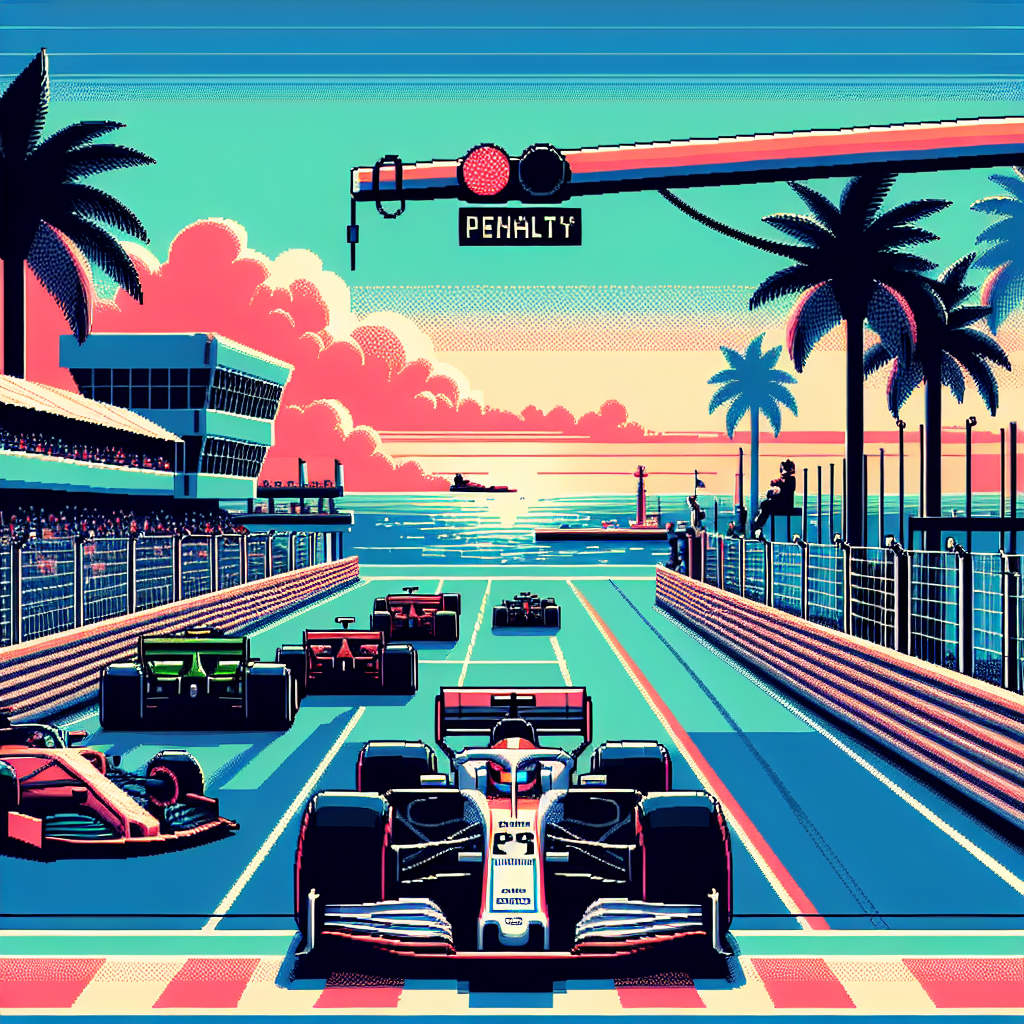
Charles Leclerc endured a rollercoaster Miami Grand Prix on Sunday, and the headline — "Why Leclerc was hit with a penalty after Miami GP – Formula 1" — tells only part of the story. On the last lap he spun, clipped the wall, and limped across the line only to be demoted later when stewards added a post-race penalty. Fans saw the drama; the stewards saw repeated track-limit transgressions. Let’s unpack what happened, why it mattered, and what it means for Leclerc and Ferrari going forward.

Quick takeaways

  • The stewards handed Leclerc a drive-through penalty that was converted to a 20-second time addition because it was applied after the race.
  • The formal reason: repeated leaving of the track on the final lap without a justifiable reason, per FIA race regulations.
  • The penalty dropped Leclerc from sixth on the road to eighth in the official classification.
  • The decision reflects stricter enforcement of track limits and that mechanical issues do not automatically justify off-track excursions.
  • The incident underlines how a single error — compounded by post-race scrutiny — can erase a hard-fought recovery.

What exactly did Leclerc do on the last lap?

On the final lap at the Miami International Autodrome, Leclerc lost the rear end at Turn 3, spun and made light contact with the wall. He rejoined and continued to the finish, crossing the line in sixth position on track. Race control then reviewed telemetry, video and the car’s path. They concluded that on that lap Leclerc had left the track “on several occasions without a justifiable reason.” That finding triggered a drive-through penalty equivalent to 20 seconds added to his race time after the checkered flag, which demoted him in the final standings. (formula1.com)

The rule behind the decision

The stewards referenced F1 sporting regulations that penalize drivers who repeatedly go off the track to gain an advantage or avoid losing time, or who leave the track without a “justifiable reason.” Leaving the track because of an unavoidable mechanical failure or because someone else forced you off can be a valid defense. But in this case, the stewards judged Leclerc’s multiple excursions were not sufficiently justified by any mechanical issue. The wording used in the official explanations makes clear the decision centered on serial infringements on a single lap rather than one isolated mistake. (formula1.com)

Why the penalty was applied after the race

Stewards can issue certain penalties during the race (for example, drive-throughs or time penalties) but sometimes investigations extend beyond the chequered flag. When a drive-through is imposed post-race, the regulation converts it into a fixed time addition — in this case 20 seconds. That conversion is why Leclerc’s on-track sixth place became an eighth-place classification in the final results. Post-race conversions are standard procedure but feel especially brutal for drivers when the outcome was decided on the final lap. (formula1.com)

The human side: a costly mistake

Leclerc himself admitted the error was his responsibility, saying the last-lap spin was “not acceptable.” The image is stark: after fighting through the race, he loses rhythm and control right at the end, then suffers the double blow of a dramatic on-track error and an equally dramatic post-race demotion. That emotional arc — from hope to heartbreak — is part of why this story resonated with fans and pundits alike. (racer.com)

The tactical and championship implications

A single 20-second swing can be significant in both drivers’ and constructors’ standings, especially early in a season where margins are small. Beyond the points, there’s a reputational and momentum cost. For Leclerc, who has shown blistering pace but also occasional late-race errors this year, this incident reinforces a narrative teams hate: lost points are often more painful when they follow a recovery drive that could have yielded valuable reward.

For Ferrari, the stewards’ stance signals that teams must prepare drivers to accept strict policing of track limits — even when a spin or contact complicates the picture. Ferrari may need to reassess risk management in wheel-to-wheel scenarios and emphasize finishing cleanly as much as pushing for every tenth. (motorsport.com)

Why the stewards weren’t more lenient

Some fans expected sympathy — a spin and wall contact feel like extenuating circumstances. But stewards look at patterns. In Miami, the repeated nature of Leclerc’s departures from the track on that last lap made leniency harder to justify. The rule exists to preserve fairness: if drivers could routinely rejoin after going wide without consequence, track limits would lose their meaning. That said, debates always remain about proportionality: was a drive-through (20 seconds) the right conversion here? Opinions differ across pundits and former drivers. (motorsport.com)

My take

Racing is a mix of razor-edge skill and cold rules. Leclerc’s spin was human; the penalty was procedural. Both elements matter. Stewards are right to keep the sport consistent, but enforcement will always feel harsh when it erases a comeback. For Leclerc, the takeaway is practical: avoid leaving the track repeatedly, even after a mistake. For Ferrari, the task is to support that discipline while keeping Leclerc in a mindset that balances aggression with clean finishes.

Final thoughts

The Miami weekend will stick in memories not just for the on-track entertainment but because it highlights how modern F1 blends split-second driving with meticulous post-race governance. Rules are there to assure fairness; their application can change race outcomes. That tension — the human drama vs. the rulebook — is exactly what keeps debates alive after every Grand Prix.

Sources


Related update: We recently published an article that expands on this topic: read the latest post.

Related update: We recently published an article that expands on this topic: read the latest post.

Verstappen Penalized for Pit Exit Breach | Analysis by Brian Moineau

When a White Line Became the Story: Verstappen's Five-Second Penalty in Miami

A five-second time penalty has gone Max Verstappen’s way for crossing the white line at the pit exit in the Miami Grand Prix. The penalty felt small in raw seconds, but like many things in Formula 1, the detail — a single tyre over a painted line — grew into a prism that reflected rules, timing, and how tiny margins tilt championship narratives.

The incident happened during the 2026 Miami Grand Prix weekend. Verstappen rejoined the track after a pit stop and was later investigated by the stewards, who concluded his front-left tyre had crossed the outside of the solid white pit-exit line in breach of Appendix L, Chapter IV Article 6(c) of the International Sporting Code. The stewards applied the standard five-second time penalty post-race. Despite the sanction, race events (notably Charles Leclerc’s own post-race penalty) left Verstappen’s final position unchanged, but the moment still offers useful lessons about enforcement, perception, and the thin hairline between fair play and foul.

Why the white line matters

The pit-exit line isn’t a cosmetic rule. It exists to manage rejoining cars so they don’t create unsafe situations as they enter live racing lines. Crossing that line can put a driver directly into another car’s path, especially during safety-car periods or full-course yellows when cars bunch up and speeds converging are unpredictable.

Race control treats the line seriously because it’s an objective, clearly marked boundary. Video evidence and timing data make it straightforward to check whether a tyre touched the outside of the white. The regulation doesn’t make exceptions for the context — so, even if a driver says they were rejoining under a full-course yellow, that does not automatically excuse a line breach. The stewards’ published reasoning in Miami referenced exactly that text of the sporting code. (formula1.com)

What happened in Miami (short timeline)

  • Verstappen pitted and rejoined the track during a period when the race was affected by slowed conditions.
  • Race control flagged the exit; the stewards reviewed the camera footage after the race.
  • They determined the outside of Verstappen’s front-left tyre had crossed the solid white pit-exit line, constituting a breach.
  • The stewards imposed the standard five-second time penalty, applied to his race time post-event.
  • The final finishing order left Verstappen in P5, helped by other events and penalties that shuffled the order. (grandprixwire.com)

The penalty: proportional or pickier enforcement?

On the surface, a five-second penalty is the routine sanction here. But what made the Miami story interesting wasn’t the amount of time — it was how and when the stewards acted.

  • Timing: Officials chose a post-race review rather than an in-the-moment call. That invites debate: should obvious infractions be dealt with immediately to clear the air, or is it better to ensure incontrovertible evidence before penalising a championship leader?
  • Consistency: Fans and teams always compare enforcement across weekends. Some infractions get immediate penalties; others get reviewed later. That perceived inconsistency fuels chatter about “driver bias” or variable stewarding standards.
  • Outcome sensitivity: Because penalties can be converted (drive-throughs become time additions if issued after the race), the final race order can swing by seconds — and seconds matter in F1 standings and storytelling. (formula1.com)

These aren’t novel complaints. Formula 1 has long balanced on the tension between instant sporting justice and the need for airtight evidence. Miami’s choice to investigate post-race seems driven by the caution of stewards who wanted an unmistakable picture before altering results.

Broader race context matters

Verstappen’s penalty didn’t exist in a vacuum. The Miami race featured strategic gambles, on-track skirmishes, and other post-race investigations (notably Charles Leclerc receiving a larger time addition). Those developments meant the five-second penalty had less immediate consequence than it might have in a cleaner race.

Still, the optics are important: a World Champion being penalised for a pit-exit line breach feeds headlines and social media reaction. It reinforces that even the biggest names must obey the smallest lines, and it reminds teams to brief on rejoin discipline as much as they do tyre compounds. (formula1.com)

What teams and drivers will take away

  • Precision trumps bravado: A millimetre over a white line can cost time and headlines. Drivers must be drilled on pit-exit discipline.
  • Cameras win arguments: Expect continued investment in pit-exit camera angles and telemetry crosschecks to prevent late penalties.
  • Stewarding predictability should be the target: Teams want clearer, quicker signals so they can adapt strategy rather than chase post-race reversals.

From a championship perspective, the incident is a reminder that mechanical reliability, strategy, and tiny human choices combine to decide outcomes — not just raw pace.

My take

Rules are necessary and, in this case, straightforward. The stewarding panel followed the rulebook and delivered the expected sanction. What I find more notable is how a relatively small infraction can dominate headlines when it touches a star driver. That magnification is part sport, part media economics: Verstappen’s name sells attention, and the white line became a lens into how finely tuned F1 governance has to be.

That said, if the FIA wants to reduce post-race drama, a move toward faster, more transparent on-track communications — or an automated sensor-backed confirmation of pit-exit breaches — would help. Racing should feel like a contest decided by speed and strategy, not post-race paperwork.

Final thoughts

The Miami five-second penalty was a tidy enforcement of an old rule. It didn’t upend the championship, but it did what good sporting processes do: remind everyone that rules matter and that even tiny errors have consequences. In a sport where milliseconds define legacy, a tyre over a line is both a cautionary tale and a prompt to refine processes.

Sources


Related update: We recently published an article that expands on this topic: read the latest post.


Related update: We recently published an article that expands on this topic: read the latest post.

Suzuka’s One-Lap Crisis After F1 2026 | Analysis by Brian Moineau

The one-lap headache at Suzuka: why a last-minute F1 rule change didn’t fix everything

There is still a glaring problem over one lap at Suzuka despite the last-minute F1 rule change, and it’s the kind of technical, tactical tangle that fans notice before the sport’s administrators can swap talking points. Suzuka is one of the few circuits that still feels like a driver’s challenge — flowing, unforgiving and iconic — yet the new 2026 power-unit and energy-management rules have exposed a single-lap fragility that a hurried tweak couldn’t cure.

Suzuka’s charms make the problem louder. It’s a track where a single perfect lap rewards bravery and rhythm, but the new energy and qualifying realities mean “perfect” is suddenly unstable: one lap can be significantly faster or slower than the next depending on battery state and how teams manage new electric boost systems. The result is qualifying and short, crucial stints that feel fragile, artificial and — at times — unfair.

What changed for 2026 and why Suzuka feels it hardest

  • 2026 power-unit changes shift the electric/ICE balance toward a much more powerful MGU-K and a bigger, more usable battery. Teams can recover and deploy far more electrical energy than before. This creates a multi-dimensional optimisation problem: you need battery for one hot lap in qualifying but also to sustain e-lift across a race stint. (RacingNews365 explains the rule changes and the battery/MGU-K shift.) (racingnews365.com)

  • Teams discovered race strategies under the updated rules can hinge on a single lap’s worth of energy. A one-lap mismanage in qualifying — or an extra lap of deployment in the wrong place — can blow an entire session’s timing or a race strategy. That “one lap” sensitivity is particularly exposed at Suzuka, where there’s little margin for error and where lap time variance between good and bad battery usage shows up instantly. PlanetF1 lists Suzuka among the tracks where battery regeneration and deployment will challenge teams most. (planetf1.com)

  • In-season and late rule changes — sometimes announced close to race weekends — aim to blunt loopholes or react to a single-event issue (Monaco’s experiment with extra mandatory pit stops is one example from recent seasons). But last-minute clarifications rarely erase the underlying technical mismatch between what the tyres, aerodynamics and new electrical systems want on a lap-by-lap basis. Teams can be left firefighting rather than solving the strategic imbalance. (sports.yahoo.com)

Transitioning from what happened to why it matters helps explain the frustration in the paddock and the stands.

There is still a glaring problem over one lap at Suzuka despite the last-minute F1 rule change

That sentence sums up the issue: the sport tried a rapid fix — or a tweak — to blunt a tactical loophole or an unfair edge, but the underlying “one-lap volatility” remains. At Suzuka, lap-to-lap consistency has become a casualty of:

  • Battery state swings that change the character of a lap (attack mode/boost availability vs. conservation).
  • Qualifying strategies where you might fatally burn battery for one flying lap and then be left with suboptimal energy for following attempts or race starts.
  • Pirelli tyre behaviour combined with new energy deployment maps that make finding a stable window for an all-out lap trickier. Autosport recently highlighted how qualifying preparation has become more complicated because tyre and battery requirements can contradict each other. (autosport.com)

The practical upshot is ugly: sessions where drivers leave big time on the table through no conventional fault of car balance or driving skill, but because the car simply cannot produce a repeatable “ideal” lap under the new electrical constraints.

How this plays out on race weekend

  • Qualifying becomes a high-variance lottery. One perfect deployment lap can put a driver on pole, while the next session the same driver might struggle to extract performance because the battery’s earlier use changed the thermal and charge profile.
  • Races can feel processional even when the cars are closer on paper. If teams are forced to conserve or stagger battery usage, opportunities for wheel-to-wheel attack narrow — that’s not Suzuka’s natural theatrical style.
  • Strategic games (pitting early, using a full battery boost on an opening lap) can be decisive in ways that feel engineered rather than earned — and that makes fans and drivers grumpy in equal measure.

Transitioning again: there are fixes, but they require patience.

What would actually help — pragmatic fixes, not theatre

  • Clear, consistent rules about qualifying battery allocation that are published well in advance of race weekends. Consistency beats ad-hoc changes. (thejudge13.com)
  • Technical windows in which teams can use maximum battery for a single lap in qualifying — but only if that allocation is identical for everyone, removing the “one team gambit” advantage.
  • Better alignment between tyre working windows and energy deployment maps, co-designed with Pirelli so a tyre phase doesn’t punish an aggressive electric push.
  • Simulation and testing time for all teams to validate race-energy allocations on specific circuits; Suzuka demands bespoke calibration because of how rapidly lap times can change with small set-up changes. RacingNews365 and the technical coverage across outlets underline that the 2026 regulations created novel multi-factor trade-offs teams are still learning. (racingnews365.com)

What fans should expect in the near term

Expect more noisy debate and occasional Saturday qualifying dramas where lap 1 is king. Expect teams to learn — and adapt — but also expect a few more races where Suzuka’s natural rhythm is interrupted by the sport’s new energy game. Over time teams will find equilibrium, but that equilibrium may look different from the Suzuka that many remember.

My take

Suzuka hasn’t lost its soul; the problem is procedural and technical, not architectural. The flow and challenge of the circuit remain unique, but F1’s latest technical pivot has created edge cases that show up magnified at a track that rewards precision. A last-minute rule change can paper over an unfair outcome for a weekend, but it won’t fix the deeper misalignment between how qualifying is structured, how energy is managed, and how tyres behave — especially on circuits like Suzuka.

Fixing it properly means clear, stable rules and careful co-ordination between the FIA, F1, Pirelli and teams. Fans deserve a version of Suzuka where laps feel earned because of driver skill and car balance — not because a battery map happened to be kinder on one lap than the next.

Sources


Related update: We recently published an article that expands on this topic: read the latest post.


Related update: We recently published an article that expands on this topic: read the latest post.