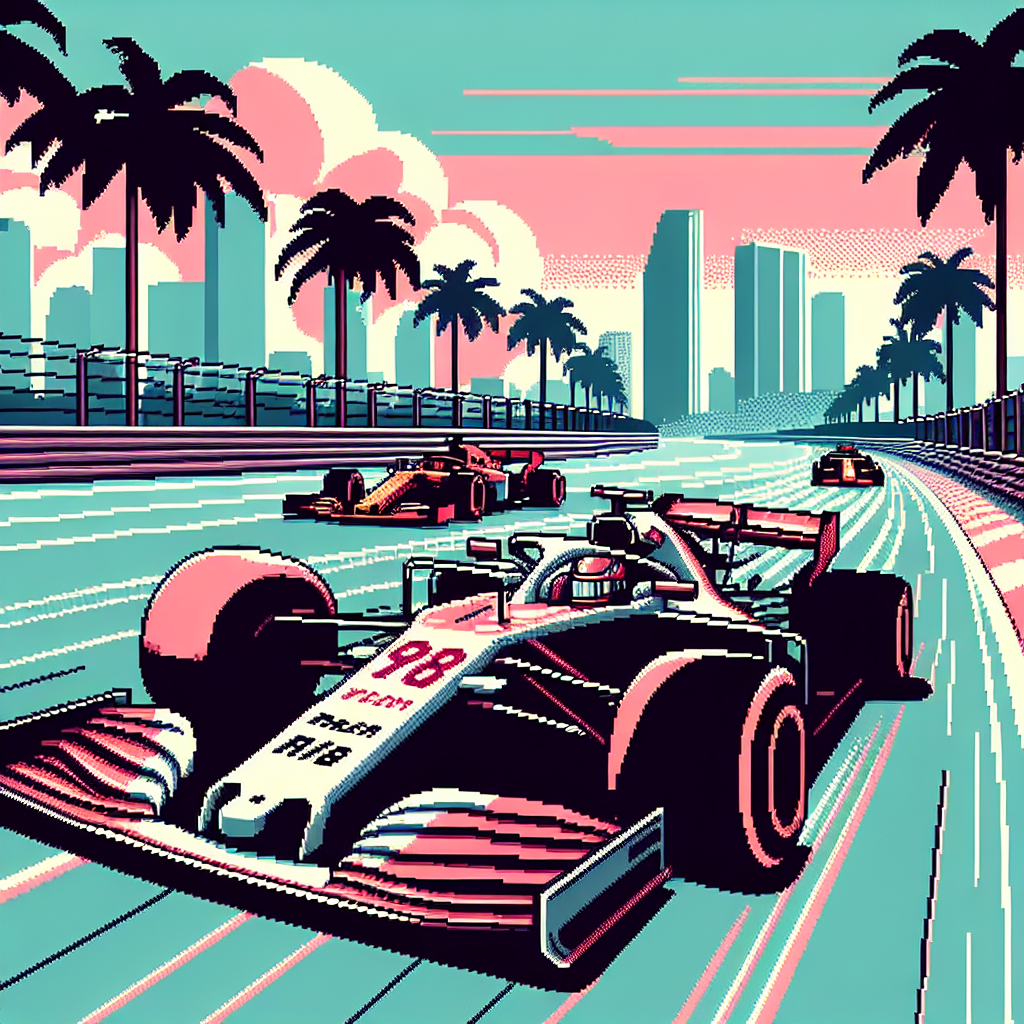
Why Leclerc was hit with a penalty after Miami GP — a closer look
Charles Leclerc endured a rollercoaster Miami Grand Prix on Sunday, and the headline — "Why Leclerc was hit with a penalty after Miami GP – Formula 1" — tells only part of the story. On the last lap he spun, clipped the wall, and limped across the line only to be demoted later when stewards added a post-race penalty. Fans saw the drama; the stewards saw repeated track-limit transgressions. Let’s unpack what happened, why it mattered, and what it means for Leclerc and Ferrari going forward.
Quick takeaways
- The stewards handed Leclerc a drive-through penalty that was converted to a 20-second time addition because it was applied after the race.
- The formal reason: repeated leaving of the track on the final lap without a justifiable reason, per FIA race regulations.
- The penalty dropped Leclerc from sixth on the road to eighth in the official classification.
- The decision reflects stricter enforcement of track limits and that mechanical issues do not automatically justify off-track excursions.
- The incident underlines how a single error — compounded by post-race scrutiny — can erase a hard-fought recovery.
What exactly did Leclerc do on the last lap?
On the final lap at the Miami International Autodrome, Leclerc lost the rear end at Turn 3, spun and made light contact with the wall. He rejoined and continued to the finish, crossing the line in sixth position on track. Race control then reviewed telemetry, video and the car’s path. They concluded that on that lap Leclerc had left the track “on several occasions without a justifiable reason.” That finding triggered a drive-through penalty equivalent to 20 seconds added to his race time after the checkered flag, which demoted him in the final standings. (formula1.com)
The rule behind the decision
The stewards referenced F1 sporting regulations that penalize drivers who repeatedly go off the track to gain an advantage or avoid losing time, or who leave the track without a “justifiable reason.” Leaving the track because of an unavoidable mechanical failure or because someone else forced you off can be a valid defense. But in this case, the stewards judged Leclerc’s multiple excursions were not sufficiently justified by any mechanical issue. The wording used in the official explanations makes clear the decision centered on serial infringements on a single lap rather than one isolated mistake. (formula1.com)
Why the penalty was applied after the race
Stewards can issue certain penalties during the race (for example, drive-throughs or time penalties) but sometimes investigations extend beyond the chequered flag. When a drive-through is imposed post-race, the regulation converts it into a fixed time addition — in this case 20 seconds. That conversion is why Leclerc’s on-track sixth place became an eighth-place classification in the final results. Post-race conversions are standard procedure but feel especially brutal for drivers when the outcome was decided on the final lap. (formula1.com)
The human side: a costly mistake
Leclerc himself admitted the error was his responsibility, saying the last-lap spin was “not acceptable.” The image is stark: after fighting through the race, he loses rhythm and control right at the end, then suffers the double blow of a dramatic on-track error and an equally dramatic post-race demotion. That emotional arc — from hope to heartbreak — is part of why this story resonated with fans and pundits alike. (racer.com)
The tactical and championship implications
A single 20-second swing can be significant in both drivers’ and constructors’ standings, especially early in a season where margins are small. Beyond the points, there’s a reputational and momentum cost. For Leclerc, who has shown blistering pace but also occasional late-race errors this year, this incident reinforces a narrative teams hate: lost points are often more painful when they follow a recovery drive that could have yielded valuable reward.
For Ferrari, the stewards’ stance signals that teams must prepare drivers to accept strict policing of track limits — even when a spin or contact complicates the picture. Ferrari may need to reassess risk management in wheel-to-wheel scenarios and emphasize finishing cleanly as much as pushing for every tenth. (motorsport.com)
Why the stewards weren’t more lenient
Some fans expected sympathy — a spin and wall contact feel like extenuating circumstances. But stewards look at patterns. In Miami, the repeated nature of Leclerc’s departures from the track on that last lap made leniency harder to justify. The rule exists to preserve fairness: if drivers could routinely rejoin after going wide without consequence, track limits would lose their meaning. That said, debates always remain about proportionality: was a drive-through (20 seconds) the right conversion here? Opinions differ across pundits and former drivers. (motorsport.com)
My take
Racing is a mix of razor-edge skill and cold rules. Leclerc’s spin was human; the penalty was procedural. Both elements matter. Stewards are right to keep the sport consistent, but enforcement will always feel harsh when it erases a comeback. For Leclerc, the takeaway is practical: avoid leaving the track repeatedly, even after a mistake. For Ferrari, the task is to support that discipline while keeping Leclerc in a mindset that balances aggression with clean finishes.
Final thoughts
The Miami weekend will stick in memories not just for the on-track entertainment but because it highlights how modern F1 blends split-second driving with meticulous post-race governance. Rules are there to assure fairness; their application can change race outcomes. That tension — the human drama vs. the rulebook — is exactly what keeps debates alive after every Grand Prix.
Sources
-
EXPLAINED: Why Ferrari's Charles Leclerc was hit with a 20-second time penalty after the Miami Grand Prix — Formula1.com
https://www.formula1.com/en/latest/article/explained-why-leclerc-was-hit-with-a-20-second-time-penalty-after-the-miami-grand-prix.4EbZXOee2tXei29C5ktNMG.4EbZXOee2tXei29C5ktNMG -
Leclerc admits final lap spin 'not acceptable' — RACER
https://racer.com/2026/05/04/last-lap-spin-not-acceptable-leclerc-admits -
Why the stewards weren't lenient with Charles Leclerc in Miami GP — Motorsport.com
https://www.motorsport.com/f1/news/why-the-stewards-werent-lenient-with-leclerc/10818234/ -
Charles Leclerc's Costly Penalty at F1 Miami Grand Prix Explained — Sports Illustrated / SI.com
https://www.si.com/onsi/f1/news/charles-leclerc-costly-penalty-at-f1-miami-grand-prix-explained
Related update: We recently published an article that expands on this topic: read the latest post.
Related update: We recently published an article that expands on this topic: read the latest post.