TL;DR
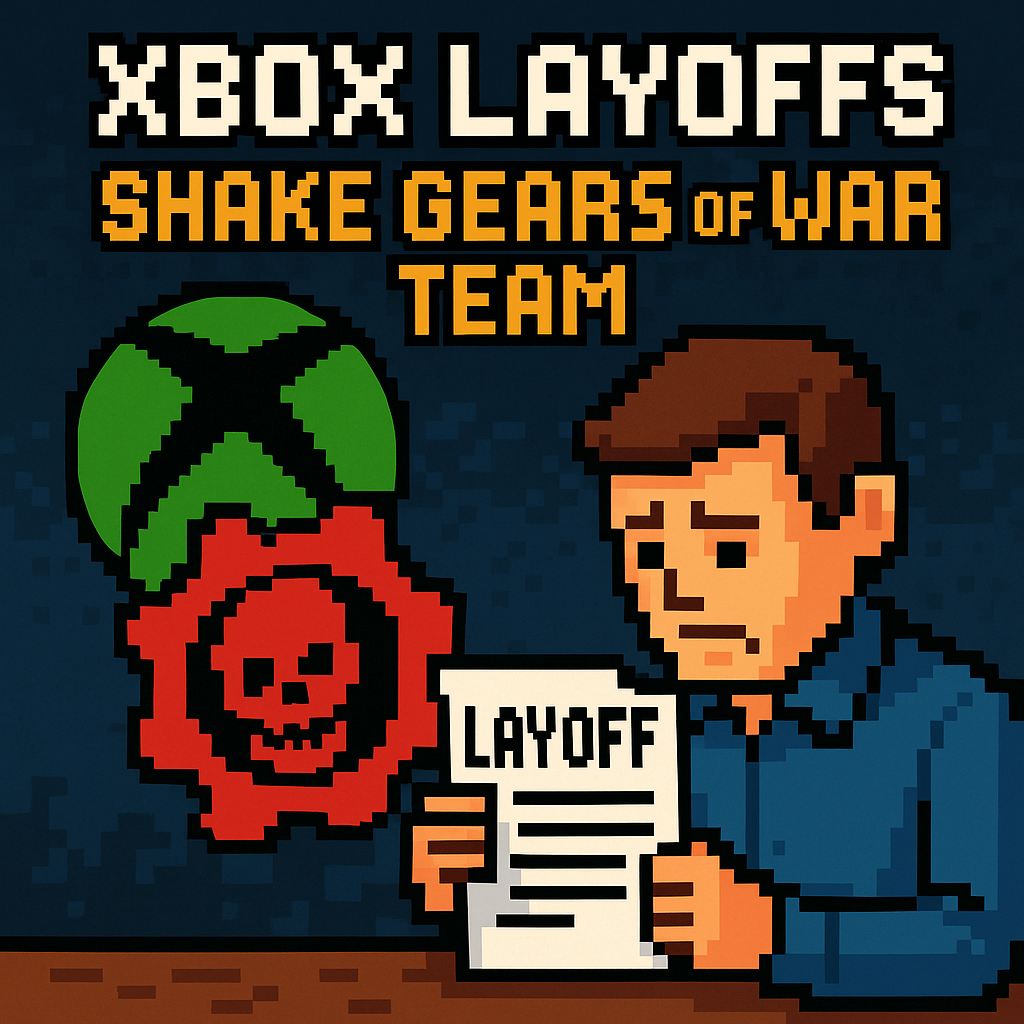
- Xbox laid off Gears of War: E‑Day’s story director, Juan Vaca, roughly two weeks before the October 6, 2026 launch—days after The Coalition announced the game had “gone gold” on September 17, 2026; Vaca confirmed the layoff on LinkedIn after celebrating gold status. [1][3][4]
- The same restructuring moved Halo development to Activision and shuffled other studios (Rare, World’s Edge, Obsidian, Playground, Turn 10), with 268 roles eliminated—Xbox is collapsing operating units into ABK/Bethesda “labels” to centralize P&L accountability. [2]
- The immediate risk isn’t the October 6 ship; it’s post‑launch narrative continuity and The Coalition’s cross‑studio Unreal Engine 5 leadership, which Microsoft has called a “center of excellence.” [3][5]
What the source said
Eurogamer reports that The Coalition’s story director on Gears of War: E‑Day, Juan Vaca, was laid off as part of Xbox’s September 22, 2026 job cuts, less than two weeks before the October 6 release date. Vaca posted on LinkedIn that he was part of the layoffs and “open to new opportunities,” just days after celebrating the September 17 gold milestone, and a Kotaku source said “fewer than a handful” were affected at The Coalition. Eurogamer places the news inside a wider Xbox restructuring that totaled 268 layoffs across teams. [1][4][2]
Why it matters
For players, The Coalition locked the 1.0 build by September 17, 2026; early access begins October 1, and pre‑install starts September 29, which lowers immediate ship risk on disc and digital. The near‑term dependency is day‑one patch and compliance, not campaign rewrites; the longer‑tail risk sits with DLC, live‑ops storytelling, and cross‑media arcs after launch. [3]
For Microsoft, the September 22 restructuring shifted Halo to Activision, moved Rare and World’s Edge under Activision, placed Obsidian under Bethesda, and merged Playground with Turn 10—clear signals that Xbox is consolidating around ABK/Bethesda labels and franchise ownership. That can tighten margin discipline in FY2027, but it also concentrates creative decisions and reshapes how UE5 standards and tools move through the org, including The Coalition’s internal education role. [2][5]
Original analysis
Gears of War: E‑Day story director layoff — the 2×2 risk map
- X‑axis: Game lifecycle stage (Pre‑gold → Post‑gold).
- Y‑axis: Role criticality for immediate ship (Low → High).
Quadrants:
- Pre‑gold/High: Engine, build engineering, core content leads—layoffs here often slip dates.
- Pre‑gold/Low: External QA overflow, field marketing—disruptive but survivable.
- Post‑gold/High: Live‑ops, platform compliance, build/release—critical for patches and day‑one stability.
- Post‑gold/Low: Narrative direction (for a completed campaign), longer‑horizon content design—lower day‑one impact, higher DLC/seasonal risk.
Juan Vaca’s role lands post‑gold/low for day‑one ship, which explains why Xbox could pull this lever without moving the October 6 date or the October 1 early‑access window; gold was marked September 17, layoffs posted September 22. Shown work on the runway: Sep 18–30 = 13 days; Oct 1–6 = 6 days; 13 + 6 = 19 days between gold and launch, a timing window that reads like reorg optics more than content triage. [3][2]
Contrarian read: The consensus says “this hurts the game.” The narrower view is that the launch narrative is frozen on the gold master, while engineering/testing are the pressure points now; the cost shows up in the next 3–9 months via DLC planning, cross‑media shepherding, and a cohesive creative voice for live beats. That matters because The Coalition has acted as Xbox’s UE5 “center of excellence” and hosts cross‑studio tech enablement; cuts there ripple into other pipelines through the Xbox Games Technology Group. [5]
Named‑stakeholder breakdown (what this means for them)
- The Coalition (Vancouver): Short‑term ship remains on track for October 1 early access and October 6 launch; medium‑term DLC/narrative cohesion is riskier, and morale shock near launch can slow iteration velocity. [3]
- Activision (ABK): Gains Halo plus Rare and World’s Edge under its umbrella in 2026, signaling ABK as the first‑party “live‑ops + shooter” label; expect talent flows, engine standards, and tooling to converge toward Activision pipelines. [2]
- 343/Halo Studios: Transitions to a sustaining role while a “purpose‑built” Halo team stands up at Activision, creating a reboot‑by‑org‑chart that resets timelines into 2027. [2]
- Bethesda/Obsidian: Reporting lines consolidate; Obsidian’s RPG craft aligns closer to Bethesda Game Studios, raising integration gains but compressing label autonomy. [2]
- Rare and World’s Edge: Moving beneath Activision aligns Sea of Thieves and Age of Empires operations with ABK’s cadence playbook—good for release rhythm, risky for studio identity. [2]
- Ninja Theory: Xbox entered consultation on a proposed closure after failed divestiture talks, signaling a willingness to exit prestige teams when deals don’t pencil. [2]
- Game Pass players: E‑Day lands day‑one on Game Pass; Premium Edition at $99.99 buys a five‑day head start beginning October 1, with Standard at $69.99 on October 6. [3]
What others are missing
The fixation on the layoff’s proximity to October 6 obscures the platform risk: Microsoft publicly labeled The Coalition a UE5 “center of excellence,” with knowledge transfer and tooling routed via the Xbox Games Technology Group hosted at the studio. That makes even small headcount cuts a systems issue—UE5 onboarding, performance guidance, and internal education for studios adopting UE5 across Xbox hinge on that hub, not just on one game’s campaign. [5]
What to watch next
By December 2026, The Coalition clarifies post‑launch narrative ownership—either naming a successor for story leadership or signaling a multiplayer‑first cadence with limited campaign DLC; studio credits, a blog post, or patch notes will verify.
By Q2 2027 (June 30, 2027), Microsoft finalizes label alignments for remaining first‑party shooters—either placing The Coalition under an ABK operating group or explicitly retaining autonomy; this will appear in an Xbox Wire org memo or an SEC filing footnote.
By March 2027, Activision publicly names the leadership and team composition for the next Halo project and shares first development beats (engine/tooling choice, hiring plan, or teaser at a live event); absence of such disclosure falsifies this.
My take
This reads less like chaos around Gears of War: E‑Day and more like the cost of Xbox’s 2026 pivot to label‑centric operating companies already proven at Activision and Bethesda. The disc will ship, the Steam page will light up, and players will chainsaw Locust on October 6; the bill arrives later if DLC cadence frays and The Coalition’s UE5 brain trust gets scattered. If Microsoft reduces The Coalition to a pure franchise shop instead of protecting its cross‑studio platform mandate, today’s 268‑role savings could become tomorrow’s schedule drag across multiple UE5 projects. [2][3][5]
Sources
Eurogamer — Gears of War E‑Day’s story director laid off ahead of October 2026 launch (https://www.eurogamer.net/gears-of-war-e-day-story-director-laid-off-xbox-cuts) — Breaks the Juan Vaca layoff, quotes “fewer than a handful” via Kotaku, and anchors timing.
Xbox Wire — Continuing Our Reset (September 22, 2026) (https://news.xbox.com/en-us/2026/09/22/continuing-our-reset/) — Confirms 268 layoffs and the org shifts: Halo to Activision; Rare and World’s Edge to Activision; Obsidian to Bethesda; Playground/Turn 10 merge; Ninja Theory consultation.
Xbox Wire — Gears of War: E‑Day Has Gone Gold (September 17, 2026) (https://news.xbox.com/en-us/2026/09/17/gears-of-war-e-day-gone-gold-pre-install-pc-specs/) — Confirms gold date (Sep 17), pre‑install (Sep 29), early access (Oct 1), full launch (Oct 6), and $69.99/$99.99 pricing.
Kotaku — Gears of War: E‑Day Story Director Laid Off Days After Celebrating Gold (https://kotaku.com/gears-of-war-e-day-story-director-laid-off-just-four-days-after-celebrating-the-game-going-gold-2000736518) — Corroborates Vaca’s LinkedIn post and “fewer than a handful” impact at The Coalition.
Xbox Podcast — Matt Booty Talks Showcase, Games, Studios, and More (https://news.xbox.com/en-us/podcast/matt-booty-talks-showcase-games-studios-and-more-official-xbox-podcast/) — States The Coalition is Xbox’s UE “center of excellence” and hosts cross‑studio tech enablement (XGTG).