
Xboxs 43‑Game Week Tests Game Pass | Analysis by Brian Moineau

TL;DR

  • Xbox gets 40+ new releases the week of July 13, 2026, with five new Xbox Game Pass titles; abundance grabs headlines, but the business test is curation clarity as Microsoft leans on volume to drive engagement. [1]
  • Microsoft’s July cadence follows an April 2026 price reset (Ultimate $22.99; PC $13.99) and the retreat from day‑one Call of Duty; this slate tests “retention by variety” instead of “retention by blockbuster.” [3]
  • Back‑of‑envelope: if 0.5% of ~30 million Game Pass members re‑sub for this drop, that’s roughly $2.10M–$3.45M in monthly revenue at PC vs. Ultimate pricing; unclear “Premium vs. Ultimate” tags could mute that lift. [3][4]

What the source said

TrueAchievements pegs the week of July 13, 2026 at a “ridiculous 43” Xbox launches across console and PC, with five arriving on Xbox Game Pass during the same window. It highlights day‑one timing inside the Monday–Friday span and flags that subscribers get only a subset of the total flood. The roundup functions as an old‑school release list, but it sets the baseline for how noisy the Xbox store will be that week. [1]

Why it matters

For players, a 43‑game week means choice and chaos on Xbox Series X|S and PC; with five Game Pass arrivals, sample‑and‑drop behavior spikes, and completion rates tend to fall as novelty climbs. The specific dates—July 13 through July 17—compress trials into a four‑day window, which raises the discoverability tax in the Game Pass carousel and the Microsoft Store. [1][2]

For Microsoft, July acts as a live‑fire trial of its 2026 Game Pass reset: lower prices, fewer day‑one AAA promises, and a bet that “enough” variety keeps churn in check. If the company converts volume into recurring playtime, Xbox Content & Services could see steadier engagement; if not, paying third parties for catalog noise won’t bend the retention curve. [3][4]

Original analysis

The “40+ new games” headline hides a harder question: what actually moves the retention needle for Game Pass in July 2026?

  • What Game Pass is actually adding next week
    The calendar shows five true “new to Game Pass” additions: Ascend to Zero (Jul 13), PBA Pro Bowling 2026 (Jul 14), Mavrix by Matt Jones (Jul 16), FixForce (Jul 17), and Fogpiercer (Jul 17), matching the TrueAchievements count. Xbox Wire also spotlights tier expansions like “Now with Game Pass Premium; joining Ultimate and PC Game Pass,” which are upgrades, not net‑new catalog entries. [1][2]

  • Cadence vs. clarity
    Microsoft blog posts frequently mix “Ultimate,” “Premium,” and “PC Game Pass” in a single paragraph, which forces customers to parse a tier matrix mid‑scroll on news.xbox.com. July posts have repeated the “Now with Game Pass Premium; joining Ultimate and PC” phrasing, signaling a tactic of using tier expansions to simulate novelty. A cleaner split—“New to Game Pass (5)” versus “New tier/platform availability (1+)”—would save attention and clicks. [2]

  • The cost of confusion
    April 2026 pricing sits at $22.99 for Ultimate and $13.99 for PC, paired with a public pullback from day‑one Call of Duty after years of marketing those beats. That swap trades shock‑and‑awe for steadier weekly flow, which only works if subscribers understand—at a glance—what their tier gets on their device that day. [3]

  • Back‑of‑envelope calculation (retention/returner math)
    Assume ~30 million Game Pass members and a modest 0.5% re‑enable in July off the five new titles: 150,000 incremental paid months.
    • PC tier: 150,000 × $13.99 ≈ $2.10M for July.
    • Ultimate tier: 150,000 × $22.99 ≈ $3.45M for July.
    Annualized (if even a fraction holds): ≈ $25M–$41M. The math frames why “quiet wins” matter when you don’t promise day‑one megahits. [3][4]

  • 2×2: Content velocity vs. curation quality
    • High velocity / High curation (ideal): Clear tiering, weekly heroes, minimal misses.
    • High velocity / Low curation (current risk): 43 launches drown five real debuts; tier tags confuse; sampling stalls.
    • Low velocity / High curation: Fewer, bigger beats; stronger marketing per title; risk of empty weeks.
    • Low velocity / Low curation: Thin pipeline and messy messaging—no place to hide. Today’s slate sits in “High velocity / Low curation,” fixable with UI headers that pin “New to Game Pass (5)” atop the store all week. [1][2]

  • Named‑stakeholder breakdown
    • Microsoft/Xbox: Must show that “variety + lower prices” can check churn without day‑one COD in 2026 earnings calls. [3]
    • Indie/AA publishers (e.g., Hooded Horse, tinyBuild): Gain sampling and cash, but face shelf‑life decay when sharing a stage with 42 neighbors. [2]
    • Subscribers: Get quirky genres this week—bowling sims, roguelikes, bike parks—and lose time to search costs on Series X|S dashboards. [1][2]
    • Competitors (Sony’s PS Plus): Track July conversion chatter; if Xbox’s “steady variety” resonates, expect PS Plus to double down on curated monthly spotlights instead of raw volume by Q4 2026. [3]

  • One more concrete tell
    Ten titles leave Game Pass on July 15—examples include PowerWash Simulator, Stellaris, and Shadow of the Tomb Raider—per Xbox Wire’s “Leaving soon” cadence. Net perception hinges on whether the five genuine arrivals feel additive against the visible exits on the 15th. [2]

  • Historical analogue (2016–2021)
    Netflix’s 2016–2019 “more originals” push eventually met a discovery wall, prompting the in‑app “Top 10” row rollout in February 2020 and a weekly Top 10 site in November 2021; both aimed to surface a small, clear set amid a flood. Xbox can mirror this with a persistent “This Week’s Five New to Game Pass” row across console and PC surfaces. [5]

What others are missing

Coverage keeps blurring “new to Game Pass” with “now on Premium/Ultimate,” echoing Xbox Wire’s phrasing that reads like “marketing‑new” but not catalog‑new. That specific label inflation—especially when repeated twice in a month—warps value perception during a post‑April price repositioning, because two of three “new” clicks can resolve to old content on your tier. A simple, visual split of “New to Game Pass (5)” versus “New tier/platform availability (1+)” is the concrete fix that affects retention and sampling minutes right away. [2][3]

What to watch next

  1. By September 30, 2026, Microsoft’s earnings remarks will explicitly tie April price changes and July cadence to better Xbox “retention” or “engagement” metrics in Content & Services; absence of that link implies another packaging tweak this fall. [3]
  2. By October 31, 2026, at least one of the five July “new to Game Pass” titles (Ascend to Zero, PBA Pro Bowling 2026, Mavrix, FixForce, Fogpiercer) will exit within six months, signaling shorter third‑party deal terms; verify via Xbox Wire “Leaving soon.” [2]
  3. By August 31, 2026, a Next Week on Xbox or Game Pass post will introduce a distinct “New to Game Pass” block, separate from “Now on Premium/Ultimate,” making tiering visually obvious in blog and app UI. [2]

My take

The flood is not a strategy; it is a stress test of 2026’s “variety over vanguard” plan on Xbox. Forty‑three launches create noise, so only five genuine Game Pass arrivals should dominate the store header across July 13–17 to earn those $2.10M–$3.45M upside scenarios. If Microsoft pins a persistent “New to Game Pass (5)” row and cleans tier copy (“Premium vs. Ultimate”), subscribers will sample more and complain less, which shows up in August MAU and July retention deltas. If Microsoft keeps blurring tiers, expect PS Plus to counter with loud, curated “Monthly Picks” by Q4 2026 while Xbox leaves money on the table. [1][2][3]

Sources

[1] TrueAchievements (2026): Weekly “New Xbox games” roundup for week of Jul 13, 2026 — baseline count (43) and the five Game Pass adds.
[2] Xbox Wire (news.xbox.com): Game Pass “Coming soon” and “Leaving soon” posts, plus tier labels (“Now with Game Pass Premium; joining Ultimate and PC”) — official timing, tier semantics, and removals cadence.
[3] Reuters (reuters.com): Coverage of Microsoft’s Game Pass pricing and subscription strategy shifts in 2026 — corroborates April pricing levels and day‑one policy context.
[4] TechSpot (techspot.com): Reporting on Game Pass subscriber counts near 30 million — frames scale for retention math.
[5] Netflix Media Center / Netflix Top 10 (about.netflix.com; top10.netflix.com): 2020 “Top 10” row and 2021 weekly Top 10 site — historical analogue for discovery fixes amid content volume.


Related update: We recently published an article that expands on this topic: read the latest post.
Minecraft Finally Adds Native Sitting | Analysis by Brian Moineau

TL;DR

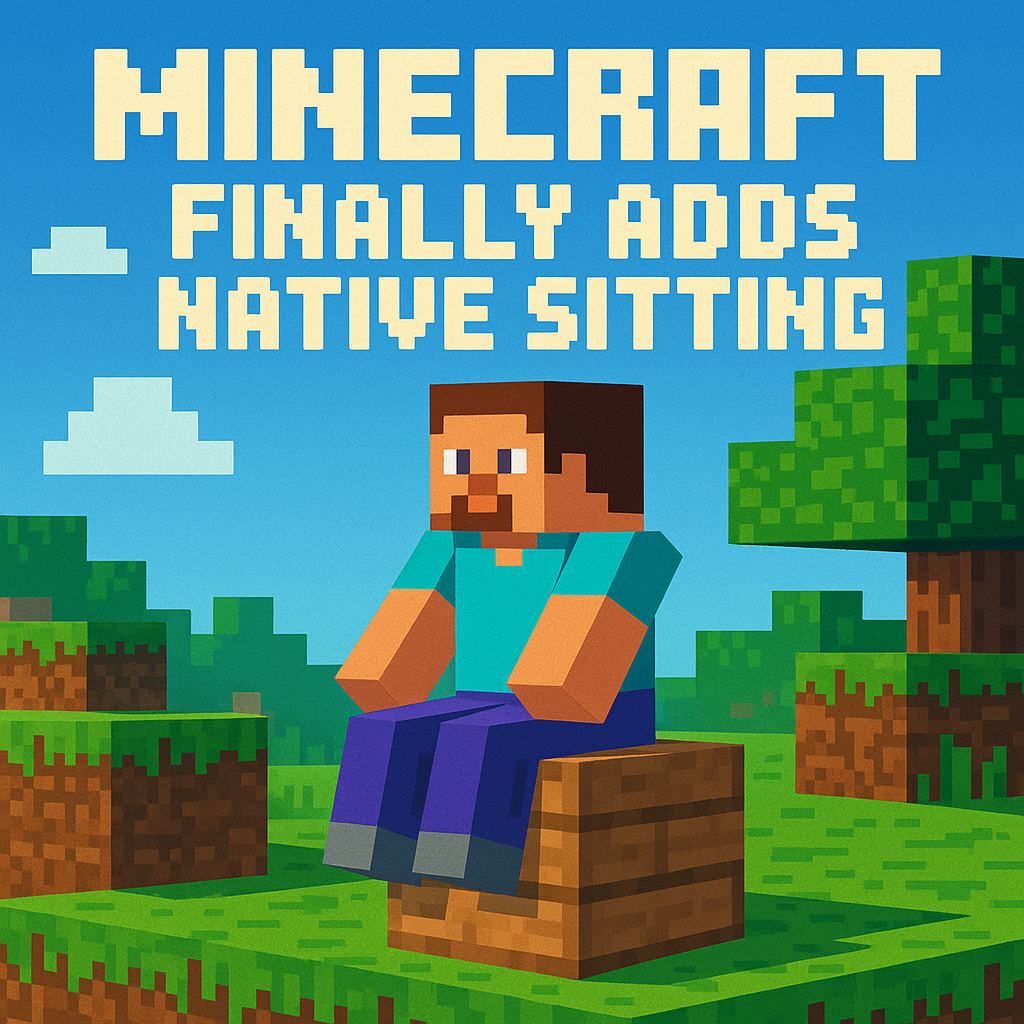
  • Minecraft’s next update adds native sitting via a new Cushion item and a one‑use Straw Bed that lets you sleep without resetting spawn; both are live today in Java Snapshot 26.3‑3 and Bedrock Preview 26.40.30, with a broader fall Drop 3 release planned. [1][2][3]
  • The “sit” mechanic is a social‑presence primitive that role‑play servers, creators, and Realm owners can convert into session length and spending, landing just as Xbox’s new chief Asha Sharma says Mojang will report directly to her after major cuts. [3][4]
  • If even a sliver of Minecraft’s 155 million monthly players tries Realms because “hanging out” looks better with seats, that’s meaningful recurring revenue without building a single boss fight. [5][6]

What the source said

IGN reports Mojang is adding a Cushion item (16 colors) you can place and interact with to sit, plus a Straw Bed for one‑night sleeps that don’t change your spawn; both features are available now in preview builds and slated for a fall Drop 3 release that also includes a new biome. Fans—who’ve asked for sitting for 17 years—cheered the reveal, and the coverage frames it amid Microsoft’s Xbox restructuring that moves Mojang’s reporting line to Xbox CEO Asha Sharma. [1][2][3]

Why it matters

Minecraft is not just a survival sandbox; it’s Microsoft’s biggest always‑on social space since the company acquired Mojang for $2.5 billion in 2014, and small mechanics like “sit” shape screenshots, streams, and role‑play rhythms across Java and Bedrock. That’s oxygen for creators selling furniture packs, for Realm owners inviting friends to “hang out,” and for servers that compete on vibe and presence as much as progression. [2][5][9]

For Xbox, the timing is pointed. On July 6, 2026, Asha Sharma announced a top‑to‑bottom restructure and said Mojang will report directly to her, while AP confirmed 4,800 job cuts across Microsoft, many in gaming; a social‑presence roadmap—seats now, better emotes or gestures next—offers low‑risk, high‑surface‑area wins that lift dwell time and Marketplace conversion without changing the game’s DNA. [3][4]

Original analysis

Contrarian read

  • Consensus: “Adding sitting is cute but trivial.”
  • Here’s the rub: sitting is a platform feature, not just a prop. The Cushion is an entity that overlaps non‑full blocks and has no collision, so you can tuck it onto slabs, shelves, or trapdoors to create real living spaces that look good in thumbnails, TikToks, and server hubs—the media that recruits the next player into your Realm or Discord. Mojang just shipped a low‑friction equivalent to Roblox‑style social emotes, baked into vanilla across Java and Bedrock previews. [2]

Back‑of‑envelope math (assumptions stated)

  • Facts: Minecraft reached 155 million monthly active users (MAU), and Realms list at $3.99 (solo) and $7.99 (Plus) per month in the U.S. [6][5]
  • If an incremental 0.1%–0.3% of MAU spins up a new Realm because sitting makes social builds and hangouts feel worth it:
    • 155,000–465,000 incremental subs.
    • At $3.99: $618,450–$1,855,350 in monthly recurring revenue (MRR).
    • At $7.99: $1,238,450–$3,715,350 MRR.
  • This is not a forecast; it shows the order of magnitude for a presence primitive that nudges conversion by tenths of a point, especially when Marketplace furniture packs piggyback on the Cushion. [5][6]

Named‑stakeholder breakdown

  • Mojang Studios: The Cushion and Straw Bed test cross‑edition choreography—Java Snapshot 26.3‑3 and Bedrock Preview 26.40.30 ship near‑simultaneously—hinting at a tighter parity cadence under Sharma’s direct oversight. [2][3]
  • Xbox leadership (Asha Sharma): With Mojang reporting to her and cuts resetting expectations, small social wins that scale to 155M MAU are the cleanest path to “more engagement, higher attach” without AAA risk. [3][4][6]
  • Marketplace creators: Every seat is a set; expect Cushion‑compatible decor packs and sit‑friendly interiors that monetize screenshots as much as survival utility. [2]
  • Realm owners and server hosts: RP towns, school clubs, and SMPs finally get canonical chairs; call‑to‑action is simple—“Come sit by the campfire at 8 PM”—and average session duration should tick up. [5]
  • Modders: Some fast‑follow utility mods get obsoleted (one modder already called their Sitting Pillows redundant), while high‑concept furniture, animations, and datapack integrations gain a better vanilla base. [2][7]

2×2: presence vs. progression, low vs. high scope

  • Low scope × Presence: Vanilla seats (Cushion) and emotes that make hubs and cafés feel inhabited. [2]
  • High scope × Presence: Worldgen that seeds seating in Abandoned Camps and villages, guiding players into social spots. [2][3]
  • Low scope × Progression: Straw Bed enabling tactical sleep in expeditions without spawn reset. [2]
  • High scope × Progression: Full biome drops that alter routes and resource loops, paired with social props for hubs. [1][2]

Concrete design consequences

  • The Cushion’s rules (entity, no collision, overlapping allowed) enable layered builds but constrain redstone motion; you can’t piston‑push a seat like a block, and early feedback already requests a piston‑friendly Seat/Bench variant for flying machines. That is Mojang receiving signal on where “sit” collides with engineering patterns—and it’s fixable. [2][8]
  • Performance risk lives at scale; community testers report lag when spamming thousands of Cushions on lower‑end servers, which means Mojang will need to tune entity budgets and culling if “seating everywhere” becomes the new SMP aesthetic. [7]

What others are missing

The Cushions are entities, not ordinary blocks, and Mojang explicitly allows them to overlap other objects and lack collision; that’s a deliberate “soft‑furniture” layer that avoids rewriting block rules but adds entity‑count costs and redstone limits. Bedrock’s Preview notes even mention Abandoned Camps seeding these items in the world, with a known generation bug right now, which signals Mojang wants seating seen and used rather than buried in crafting menus. Net effect: seating as worldgen affordance, not merely a craftable gimmick, which changes how villages, hubs, and screenshots look at scale. [2][3]

What to watch next

  1. By November 30, 2026, Mojang ships Drop 3 with Cushion and Straw Bed on both Java and Bedrock, and the final release notes retain “sleep without resetting spawn” as a Straw Bed property. Verification: official 26.3 release changelogs. [2][3]
  2. By March 31, 2027, Mojang introduces at least one additional social‑presence feature beyond sitting/sleeping (for example, new emotes or a Seat/Bench variant that supports piston movement), reflecting early Snapshot feedback. Verification: Mojang.net snapshot/release notes. [2][8]
  3. By Q2 FY27 earnings (reported late Q1 FY27 on Microsoft’s calendar), Microsoft cites a new all‑time‑high Minecraft MAU above 155M or calls out increased Realms/Marketplace engagement tied to 2026 social‑presence updates. Verification: Microsoft investor transcripts. [6]

My take

This is Mojang slipping a platform upgrade into a comfort update. Sitting sounds tiny until you remember Minecraft’s real competitor is wherever kids hang out—Roblox, Fortnite Creative, even Discord—and a chair is permission to linger. Under Asha Sharma, Xbox just put Mojang on the front burner; expect more presence primitives that make worlds feel inhabited: seats now, gestures and diegetic emotes next. If I ran a Realm or a Marketplace studio, I’d build for vibe immediately—campfires, cafés, bleachers—because the next wave of growth in a 155‑million‑MAU sandbox won’t be mobs; it will be moments. [3][5][6]

Sources

  1. A New Minecraft Update Will Finally Let Players Sit Down — IGN (https://www.ign.com/articles/new-minecraft-update-finally-allows-players-to-sit-down) — Baseline report on the Cushion sit feature, Straw Bed, player reaction, and fall timing context.
  2. Minecraft 26.3 Snapshot 3 — Mojang (https://www.minecraft.net/en-us/article/minecraft-26-3-snapshot-3) — Primary source confirming Cushion mechanics (entity, overlap, no collision), 16 colors, and Straw Bed behavior.
  3. Resetting XBOX — Xbox Wire (https://news.xbox.com/en-us/2026/07/06/resetting-xbox/) — Official memo by Asha Sharma announcing the restructure and stating Mojang will report directly to her; situates Minecraft strategy.
  4. Microsoft cuts 4,800 jobs, including many at Xbox, in a “reset” — AP News (https://apnews.com/article/5a8f712c531911089dee008b3bbb33c4) — Independent confirmation of the scale and timing of Microsoft’s gaming layoffs and Sharma’s memo.
  5. Realms Servers for Bedrock & Java — Minecraft (https://www.minecraft.net/en-us/realms) — Official pricing and positioning for Realms and Realms Plus, used in the revenue calculation.
  6. Microsoft Fiscal Year 2026 Q1 Earnings Call — Microsoft Investor Relations (https://www.microsoft.com/en-us/investor/events/fy-2026/earnings-fy-2026-q1) — Transcript citing 155M monthly active users for Minecraft, grounding scale assumptions.
  7. With Minecraft adding cushions in the latest snapshot, my Sitting Pillows mod has become rather redundant — Reddit (https://www.reddit.com/r/Minecraft/comments/1upx8eo/with_minecraft_adding_cushions_in_the_latest/) — Community signal that vanilla seating impacts mod utility and points to creator adaptation.
  8. Cushion and Seat — Minecraft Feedback (https://feedback.minecraft.net/hc/en-us/community/posts/47210956510861-Cushion-and-Seat) — Snapshot‑era discussion requesting a piston‑friendly seat variant; evidence of redstone use‑case pressure.
  9. Microsoft to acquire Mojang — Microsoft (https://news.microsoft.com/2014/09/15/minecraft-to-join-microsoft/) — Confirms the 2014 acquisition of Mojang for $2.5 billion, framing Microsoft’s long‑term stake in Minecraft.


Related update: We recently published an article that expands on this topic: read the latest post.

ServiceNow Earnings Steady, Armis Weighs | Analysis by Brian Moineau

A beat that didn’t feel like a win: ServiceNow earnings and the Armis hangover

ServiceNow earnings landed roughly where analysts expected: revenue and EPS that met or just nudged past consensus. On the surface it looked like business as usual for a company riding strong enterprise demand for AI-enabled workflows. But ServiceNow’s closing of the Armis acquisition — and the near‑term margin hit management disclosed — turned what might have been a muted celebration into a market disappointment, and the stock dropped accordingly.

The phrase “ServiceNow earnings” is what traders and customers were searching for after the April 22, 2026 report. Dig into the details and you’ll see a company with healthy top-line momentum, heavy capital returns, and a clear strategic move into security — yet one that chose growth and capability over near‑term margin optics.

Quick context: why Armis matters (and why it worries investors)

ServiceNow closed the roughly $7.75 billion Armis acquisition in April 2026, adding cyber‑exposure and device‑visibility technology to its platform. That’s a logical fit: enterprises want unified visibility across assets, identities, and workflows, and Armis fills an important blind spot (OT/IoT/connected devices) for the Now Platform.

But acquisitions cost money. Management said Armis would boost subscription revenue growth (roughly 125 basis points contribution noted in guidance) while also creating headwinds to margins — about a 25 bps drag on subscription gross margin, roughly 75 bps on operating margin for FY26, and a larger hit to free cash flow margin. Investors had been primed for growth and margin expansion; suddenly there’s a tradeoff.

The headlines from the quarter

  • Subscription revenue accelerated (reported growth in the low‑20s percent year-over-year).
  • Non-GAAP EPS and revenue broadly met Wall Street expectations.
  • ServiceNow executed a $2 billion accelerated share repurchase in Q1 and returned capital aggressively.
  • Management raised full‑year subscription revenue guidance but flagged several margin impacts from Armis and some regional disruptions.
  • The stock dropped after hours, with investors focused on the margin readjustment rather than the topline strength.

Why the market reacted the way it did

Investors buy stories as much as numbers. For high-growth enterprise software, the preferred story is: scale + improving margins = durable cash generation. ServiceNow delivered scale, and it touted AI-driven adoption across its tiers, but the Armis close introduced a near‑term wrinkle in the margin side of that story.

A few psychological and technical factors made the reaction sharper:

  • Expectations were fragile: ServiceNow’s stock had already been under pressure earlier in the year, so the market needed a clear win to regain confidence.
  • Timing: the acquisition closed right before the earnings release, making the margin impact immediate and concrete.
  • Magnitude: while 75 bps on operating margin isn’t catastrophic for a business of this size, when combined with a 200 bps expected hit to free cash flow margin, it changes the short‑term math for investors who were modeling improvement.
  • Narrative clash: the company is emphasizing expanding its total addressable market (TAM) and accelerating subscription growth via security capabilities — a long‑term positive — while investors often prefer short‑term margin certainty.

Transitioning to a bigger platform that includes cyber exposure is strategically sensible. But markets often punish short‑term pain even when the long‑term case is intact.

The operational takeaways that matter to customers and partners

  • Product fit: Armis brings real‑time visibility into unmanaged and connected devices — something customers buying security and risk solutions have been asking for. This should speed ServiceNow’s ability to offer end‑to‑end remediation workflows that start with detection and end with automated remediation.
  • Integration risk: as with any acquisition, the speed and quality of integration will determine whether the combined technology really delivers value or becomes a noisy addition.
  • Partner opportunity: channel and technology partners get new joint offerings to sell, especially around secure AI and converged IT/OT/IoT visibility.

What analysts and investors should watch next

  • Margins and cadence: will margin pressures be front‑loaded and then ease as synergies and cross‑sell kick in, or will the hit linger?
  • Cross‑sell velocity: are existing ServiceNow customers adopting Armis capabilities quickly, or will adoption take quarters?
  • Free cash flow behavior: the company flagged a meaningful impact to free cash flow margin — the market will be sensitive to how quickly that metric normalizes.
  • Execution on AI monetization: ServiceNow says AI demand is real. How much of the topline acceleration is from durable subscription expansion versus one‑off pulls?

What this means for the stock (and why reactions can be overblown)

Short term, the stock move reflects a classic market behavior: fear of margin deterioration trumps modest beats in revenue and EPS. Over the medium term, two scenarios are possible:

  • The optimistic path: Armis accelerates TAM expansion, cross‑sells drive subscription revenue, integration synergies appear, and margins normalize — supporting higher valuation multiples later.
  • The cautious path: integration takes longer, incremental revenue doesn’t offset the margin drag, and investor patience runs thin — keeping multiples depressed.

Both are plausible. The stock’s initial drop doesn’t decide the final outcome — execution does.

What to remember right now

  • ServiceNow delivered solid execution on revenue and buybacks.
  • The Armis acquisition is strategically compelling for platform completeness but introduces measurable near‑term margin pressure.
  • The market reaction reflects risk aversion to margin misses in a stock that needed a clean victory.

A few practical signals to monitor

  • Next two quarters’ operating margin and free cash flow margin vs. the company’s adjusted guidance.
  • Customer case studies showing Armis workflows delivering measurable security outcomes.
  • Any additional capital allocation moves: continued buybacks or M&A tweaks.

My take

ServiceNow made a clear strategic move: extend the Now Platform into the fast‑growing, high‑value area of cyber‑exposure and device visibility. That’s a smart long‑term play — enterprises want unified answers to asset risk, identity, and automated remediation. But timing matters. Closing Armis right before an earnings report forced the company to quantify headwinds before investors had time to parse the long‑term benefits.

This isn’t a story of disappointing execution; it’s a story of prioritizing capability and TAM expansion over short‑term margin optics. If management can show that Armis accelerates subscription revenue growth and meaningfully upsells into existing accounts, today’s price hit could prove temporary. For now, investors should watch margins and integration milestones closely and give the strategic thesis a few quarters to prove out.

Sources


Related update: We recently published an article that expands on this topic: read the latest post.

Xbox, Game Pass, and Bethesdas Fallout | Analysis by Brian Moineau

"That shouldn't be a surprise to you": when a veteran blows the whistle on change

When you first read the headline — "'I Saw How It Was Getting Damaged': Ex-Bethesda Exec Goes to Town on Xbox's Mistreatment" — it lands like a complaint you half-expected. The quote slices through nostalgia and corporate gloss: a longtime Bethesda executive, Pete Hines, saying he watched something he loved being “damaged” after the Microsoft acquisition. That shouldn't be a surprise to you, he adds, and that line is the emotional backbone of this debate about studio culture, acquisitions, and what subscription platforms do to creative incentives.

This post looks at what Hines said, where it fits in the bigger picture of Xbox, Game Pass and industry consolidation, and why his words matter beyond one company being “right” or “wrong.”

Why the quote matters

  • Hines speaks from inside decades of Bethesda history. He was a public face for the company for years and left in October 2023.
  • His remarks are not just a gripe — they accuse a shift in values and treatment of teams after Microsoft’s takeover.
  • The comment taps into a larger conversation about how big tech owners influence creative studios, and whether the tradeoffs (stability vs. autonomy) are worth it.

These points are important because they move the story from personality to pattern. When a respected insider frames the changes as “damage,” it reframes layoffs, studio reorganizations, and strategic pivots as consequences, not just corporate housekeeping.

The core claim: what Hines actually said

In a recent interview (April 2026), Hines said he left because he felt powerless to protect Bethesda as it was “being damaged and broken apart and frankly mistreated, abused.” He described the post-acquisition environment as “not authentic and not genuine,” and added, “That shouldn't be a surprise to you.” Those are strong words coming from someone who stayed on for a time after the deal closed. (pushsquare.com)

Put plainly: Hines is saying the acquisition created an ecosystem change — one that shifted incentives and day-to-day realities in ways that eroded what he and many others cherished about Bethesda.

Context: acquisitions, restructuring, and Game Pass dynamics

Since Microsoft acquired Bethesda’s parent ZeniMax, there have been shifts you can point to as background evidence: studio reorganizations, policy changes, and a stronger strategic focus on Game Pass as a distribution model. That model creates clear business benefits — stable revenue, massive user reach — but it also introduces new pressures.

  • Subscription services can compress the lifecycle of content and alter what “success” looks like.
  • Bigger corporate ownership can standardize processes and prioritize platform strategy over studio idiosyncrasies.
  • Layoffs and reorganizations in recent years across the industry have made talent and morale fragile.

Hines’ comments echo other developers’ and execs’ worries about "weird inner tensions" Game Pass can create and whether platform owners sufficiently value the long-term craft of big-budget studios. These tensions have surfaced in public debates and reporting over the past couple of years. (tech.yahoo.com)

What this means for players and creators

For players, the immediate impact is mixed. Game Pass has made a vast library affordable and accessible; entire communities enjoy games they might never have tried otherwise. For creators, however, the calculus can be uglier.

  • Short-term performance metrics can trump long-term IP cultivation.
  • Smaller teams and ambitious projects may find themselves deprioritized in favor of consistent platform content.
  • Creative autonomy can suffer when corporate priorities shift.

Hines’ complaint isn’t merely nostalgia. It’s a caution about how value is distributed inside large ecosystems: who gets resources, whose vision is protected, and which projects survive intact.

Where we should be cautious

That said, we should avoid one-sided conclusions. Large publishers can also offer resources and stability that enable ambitious projects which otherwise might never be funded. Microsoft has funded big games and given studios budgets impossible for many independent publishers.

  • Not every change is deliberate sabotage; some are genuine attempts to integrate and scale.
  • Problems observed at Bethesda had complex roots — not all attributable solely to the acquisition.
  • Public statements from former insiders often mix personal frustration with legitimate industry critique.

Balance matters. The right question isn’t simply “Is Microsoft bad?” but “How can large platform owners structure relationships to protect creative culture while pursuing growth?”

"I Saw How It Was Getting Damaged": what to watch next

  • Will Microsoft or Xbox publicly respond with concrete changes to studio autonomy or developer support?
  • Will other studio leaders come forward with corroborating accounts, or will defenders emphasize the benefits of scale?
  • How will Game Pass evolve its compensation and discovery models to better reward diverse kinds of creative output?

These are the practical policy areas where words like Hines’ should lead to action rather than just headlines.

My take

Hines’ words cut because they come from someone who loved, built, and defended Bethesda. They force a hard, necessary conversation about what we value in games and studios. Consolidation and subscription models are reshaping an industry that once relied on a patchwork of small, independent teams and a few large publishers. Those shifts can produce great things — and ugly consequences.

If you care about creative depth in videogames, don’t treat this as a partisan Xbox story. Treat it as a systems problem: how to design corporate relationships so that commercial success and creative stewardship reinforce each other, not erode one another.

Sources

YouTube Premium Lite Adds Background Play | Analysis by Brian Moineau

YouTube’s $7.99 Lite Plan Just Got a Big Upgrade — Here’s Why It Matters

YouTube quietly made a move on February 24, 2026 that changes the calculus for anyone who wants fewer ads without paying full price: Premium Lite, the $7.99-per-month tier, now includes background playback and offline downloads. Those two features were previously held back for the full $13.99 Premium plan — and their arrival on Lite suddenly makes the cheaper option a lot more compelling.

Why this feels bigger than a feature toggle

  • Background play and downloads are the features that turn YouTube from a “watch while you look at the screen” service into something you can use like a music or podcast app — listen while you do other things, save videos for flights or commutes, and generally treat YouTube as part of your everyday media rotation.
  • Historically, YouTube has guarded those features to differentiate its highest-paying users. The original Premium Lite launch (announced March 5, 2025) offered most videos ad-free but explicitly excluded downloads and background playback. By adding them on February 24, 2026, YouTube has narrowed the gap between Lite and full Premium. (blog.youtube)

What changed, exactly (and when)

  • Date of announcement: February 24, 2026. YouTube’s official blog and major tech outlets reported the rollout starting that day, with a regional phased rollout over the following weeks. (blog.youtube)
  • New capabilities for Premium Lite subscribers:
    • Background playback (audio continues when the app is minimized or the screen is off).
    • Offline downloads (save most videos for temporary offline viewing).
  • What remains exclusive to full YouTube Premium:
    • Ad-free access to music content and YouTube Music Premium features.
    • Additional convenience features like certain playback controls and unified ad removal across all music and music videos. (blog.youtube)

Who wins (and who doesn’t)

  • Winners
    • Casual viewers who want an ad-light experience and the practical benefits of downloads and background listening without paying full price.
    • Parents, commuters, and travelers who rely on offline playback for long stretches without reliable connectivity.
    • Users who were on the fence about switching to any paid tier — Lite now offers more tangible day-to-day value.
  • Losers (or, at least, still disadvantaged)
    • People who depend on ad-free music or the integration with YouTube Music — those features still require the full Premium plan.
    • Creators may see modest changes in ad revenue or subscription dynamics depending on how many viewers migrate to Lite instead of full Premium.

The competitive angle

This is part of a broader push by major platforms to tier subscription offerings more carefully: offer a lower-priced, compelling entry tier to capture price-sensitive users while preserving a premium product with exclusive extras. YouTube’s decision also follows enforcement moves earlier this year to close background-play loopholes that non-subscribers used via certain browsers — a reminder that background playback is strategically valuable to YouTube’s subscription business. (technobezz.com)

Quick takeaways

  • YouTube added background playback and downloads to Premium Lite on February 24, 2026.
  • The Lite tier is $7.99/month in the U.S.; full Premium is $13.99/month and still covers ad-free music and YouTube Music features.
  • This change makes Lite a much stronger value for non-music-focused users who want ad-light, multitasking-friendly access.

My take

YouTube’s move feels like sensible product segmentation: give price-sensitive users the day-to-day conveniences that make the service useful beyond “watching with the screen on,” while keeping music and the deepest integrations as part of the premium bundle. For many listeners and casual viewers, $7.99 with downloads and background play will be enough — and that’s exactly the point. If you want music without ads or the full YouTube Music experience, you’ll still pay more. But for general video consumers, this blurs the line between “good enough” and “premium.”

Sources


Related update: We recently published an article that expands on this topic: read the latest post.

Xbox Identity Crisis: What Comes Next | Analysis by Brian Moineau

What even is an Xbox anymore?

A good marketing tagline sticks. A product that people can describe in one sentence — a phone, a pickup truck, a streaming service — is easier to love, defend, and buy. Lately, Xbox has been anything but tidy. After decades and billions of dollars spent on studios, subscriptions, and cloud dreams, the brand feels like an argument with itself: is Xbox a console, a subscription, a cloud service, or a Microsoft-shaped ecosystem stitched across everything? The Verge’s recent piece captures that unease perfectly — and the leadership shake-up at Microsoft’s gaming division only raises more questions about what comes next.

Why this matters now

  • Phil Spencer, the public face of Xbox for more than a decade, announced his retirement on February 23, 2026.
  • Microsoft promoted Asha Sharma, a senior AI and CoreAI executive, to lead Microsoft Gaming.
  • Xbox president Sarah Bond is leaving, and internal promotions (like Matt Booty becoming Chief Content Officer) aim to anchor creative output.
  • These moves come after huge, headline-grabbing acquisitions — Bethesda ($7.5B) and Activision Blizzard ($68.7B) — and heavy investment in Game Pass and cloud initiatives that have reshaped Xbox’s strategy and identity.

Taken together, those facts make this more than a CEO change: it’s a brand identity crisis at scale.

The messy legacy of “Game Pass first”

The last decade under Spencer is, in one word, transformative — in another, contradictory.

  • Microsoft pivoted from a hardware-first console identity toward subscription and cloud-first thinking. Game Pass became the north star: an all-you-can-play library meant to expand Xbox beyond living-room consoles.
  • To fuel that vision, Microsoft bought entire studios and publishers. The result: more content, but also unexpected costs, antitrust headaches, layoffs, canceled projects, and a dilution of the old “this is an Xbox” simplicity.
  • Game Pass growth has slowed. Public metrics have been sparse since the service reported 34 million subscribers in 2024, far from the 100 million-by-2030 target once floated. Meanwhile the economics of bundling day-one releases with a subscription have complicated traditional game-sales revenue streams.

That mix — massive content buys, aggressive subscription bets, and a partially cloud-driven future — left Xbox with incredible capabilities and an unclear pitch for players.

What Asha Sharma’s hiring signals

Asha Sharma comes from Microsoft’s CoreAI organization, not from decades inside game development. That has provoked two reactions:

  • Worry: gaming communities and some industry watchers fear the company will lean heavy on AI-driven efficiencies, monetization shortcuts, or product decisions steered by machine-first thinking rather than craft.
  • Hope: others see a fresh strategic lens. Xbox has been accused of losing its way; an executive experienced in large-scale platform shifts (AI, cloud) might be exactly the toolkit needed to reframe Xbox for a multi-device, multi-modal future.

In her early messaging, Sharma pledged a “return of Xbox” and explicitly rejected “soulless AI slop” in creative work. That’s encouraging as rhetoric, but it’s vague — and rhetoric doesn’t replace clear product direction.

The core problem: identity, not just organization

The leadership turnover highlights a deeper question: Xbox means different things to different audiences.

  • To some, Xbox has been a hardware brand — recognizable green console boxes, controllers, and platform exclusives.
  • To others, it’s Game Pass, a subscription that breaks games out from devices and into libraries across PC, cloud, and console.
  • To developers and studios, Xbox is a publisher, partner, or corporate owner whose incentives shape projects and pipeline decisions.

Those roles are compatible in theory, but Microsoft’s choices — bringing its biggest acquisitions to multiple platforms and making many first-party titles available everywhere — blurred the lines. The “This is an Xbox” campaign tried to redefine the brand as a state of play that lives on any screen. The risk: a diluted brand that has trouble inspiring fervent fans, convincing console buyers, or explaining what unique value Xbox contributes that competitors do not.

What to watch next

  • Clarity on exclusives: will Microsoft make recently acquired franchises truly exclusive, or continue a multiplatform approach that treats exclusivity as an afterthought?
  • Game Pass economics: will Microsoft change pricing, tier structure, or content windows to stabilize revenue vs. subscriber growth?
  • Hardware roadmap: Sharma’s memo referenced “starting with console” — watch for clear signals on next-gen hardware or Windows-integrated devices (e.g., handhelds, Xbox-branded PCs).
  • Studio autonomy and layoffs: after past closures and reorganizations, preserving creative teams and confidence will be essential to shipping compelling games.
  • How AI is used (and limited): concrete policies about creative AI — when it’s used, and when human-driven craft is protected — will matter for developer trust and public perception.

The reader’s cheat-sheet

  • This is not just a CEO swap. It’s a reframing of Microsoft’s bets on gaming at scale.
  • Past spending bought content and capability, not an automatic audience. Xbox’s identity problem is now a business problem.
  • The company’s next concrete moves — exclusivity, pricing, hardware, and studio support — will decide whether this is a course correction or more strategic drift.

My take

Microsoft’s bet on a cloud-and-subscription future was bold and inevitable in many ways — but bold doesn’t mean flawless. Building a new, platform-spanning definition of “Xbox” needed both product clarity and patient execution. What’s happened instead is a high-cost experiment with uneven returns and a brand that’s harder to explain to newcomers and die-hards alike.

Asha Sharma’s appointment is an honest admission that the playbook has to change. Whether that means returning to a strong, console-rooted identity, fully embracing an everywhere-play playbook, or inventing something genuinely new depends on the humility to learn from what didn’t work and the courage to pick a clearer direction. The next year will be decisive: rhetoric about “the return of Xbox” needs follow-through in product roadmaps, studio support, and messaging that players can actually understand.

Sources


Related update: We recently published an article that expands on this topic: read the latest post.



Related update: We recently published an article that expands on this topic: read the latest post.


Related update: We recently published an article that expands on this topic: read the latest post.
Cyber Monday Extensions: Score Deals Now | Analysis by Brian Moineau

Just when you thought Black Friday was good…now Cyber Monday keeps giving

If your inbox and social feeds felt like a bargain bazaar over the weekend, breathe easy: the best retailers kept the lights on. Cyber Monday may have officially passed, but an army of “extended” deals rolled into Tuesday (and beyond), meaning you can still snag deep discounts on tech, home, fashion and more — without camping in front of a site at midnight.

Retailers treated Cyber Monday like the start of a weeklong shopping sprint. That means if you hesitated, there’s still time to scope out — and score — things you actually want (or gifts you’ll pretend you’d planned on all along).

Why these extensions happen and why you should care

  • Retailers split holiday promotions across several shopping events to keep momentum and capture late buyers.
  • Inventory and algorithmic repricing often let good deals hang on after the official date — especially on big retailers like Amazon, Wayfair, Best Buy and department stores.
  • For shoppers, that translates into second-chance discounts on laptops, TVs, kitchen appliances, sneakers, and beauty bestsellers — sometimes at near-Black-Friday levels.

Put simply: patience and quick comparisons still win. A “still-on” Cyber Monday offer can be your ticket to a high-ticket item with smaller regret.

What categories are still worth checking

  • Tech
    • Laptops, headphones, TVs and smart home gear frequently see extended markdowns.
    • Look for Nike-level markdowns on midrange and premium models (Apple, Samsung, Bose, Sony).
  • Home and furniture
    • Wayfair, Home Depot and mattress brands often keep clearance and doorbuster pricing going for a few extra days.
  • Fashion and beauty
    • Department stores and beauty retailers extend sitewide or category sales; limited-stock items (sizes, shades) go fast.
  • Travel and subscriptions
    • Airlines, cruises and streaming platforms occasionally extend promotional fares and trial pricing through the week.
  • Kitchen and small appliances
    • High-ticket blenders, espresso machines and air fryers are often restocked and repriced for the extended window.

Where to look first (smart shopping order)

  1. Check the retailer’s front page or “Cyber” landing page for explicit end dates.
  2. Search the specific item you want — “extended sale” or “clearance” filters reveal lingering bargains.
  3. Compare the item on two or three sites (price trackers and quick searches help).
  4. Factor shipping, returns and warranty into your total cost — a slightly higher price with free returns can be the safer play.
  5. Use browser coupons, cash-back extensions, and store credit offers to squeeze more value.

Deals worth prioritizing right now

  • Big-screen TVs and OLEDs: retailers commonly hold back some TV inventory with meaningful discounts for late shoppers.
  • Headphones and earbuds from household brands: often deeply discounted as part of bundle deals.
  • Large home purchases (furniture, mattresses): extended sales frequently include floor models and overstock items.
  • Beauty tools (hair stylers, skincare devices): high-ticket items marked down for seasonal promotions and gift sets.
  • Smart home devices and robot vacuums: solid savings, especially on popular models that were doorbusters.

(These are categories where multiple outlets — from mainstream outlets to niche publications — reported continued savings across platforms during the extended Cyber Monday pushes.)

How to avoid buyer’s remorse

  • Set a hard price ceiling before you click “buy.” If a deal doesn’t beat your ceiling, it’s not a deal.
  • Watch for promo expiration language and coupon exclusions — some “extended” prices are only valid while supplies last.
  • Beware of “comps”: a product shown at a higher crossed-out price isn’t always the real benchmark; check past prices on price-tracking sites.
  • Consider warranty/return windows for electronics and large furniture; post-holiday returns and exchanges get busy.

Shopping etiquette for the late-December sprint

  • If you’re purchasing gifts, double-check delivery estimates — extended deals don’t always mean extended shipping speed.
  • Buy from retailers with clear return policies to avoid holiday headaches.
  • Keep digital receipts and order confirmations for easier tracking and price-matching later if needed.

Late-stage winners: real-world examples

Over the latest Cyber Monday wave, outlets such as the New York Post, Forbes and major shopping editors highlighted:

  • Discounts on major-brand electronics and headphones.
  • Furniture and home accessory markdowns from Wayfair and big-box sellers.
  • Beauty gift sets and hair tools holding their price throughout the extended window. These patterns tell a consistent story: retailers want to capture straggler shoppers, and they're willing to keep attractive discounts live for a short extension. (See Sources below for roundups and live updates.)

My take

If you missed the Cyber Monday frenzy, don’t panic. The smart move is to prioritize what you really want (or need), compare quickly, and use any store-level protections to your advantage. Some of the best savings show up in the first couple of days after Cyber Monday — so act deliberately but decisively.

If you’re hunting a high-ticket item (TV, laptop, major appliance), treat the remainder of the week like your last chance: check prices, confirm return policies, and pull the trigger when the total deal beats your price ceiling.

Final thoughts

Retailers kept the sale energy alive for a reason: shoppers kept clicking. For buyers, that means better odds of finding exactly what you wanted without the drama of the holiday weekend. Shop smart, protect yourself with returns and warranties, and enjoy the rare pleasure of getting a real deal…after the crowds have thinned.

Sources