TL;DR
- Commodore’s Callback 8020 digital detox phone threads a new needle: Sailfish OS with Android AppSupport for “need‑to‑have” apps like WhatsApp and Uber, while the OS itself blocks browsers and social media by design. [1][2]
- The real swing market isn’t hipsters; it’s schools and parents adapting to statewide K–12 phone restrictions and porous parental controls—demand that could plausibly reach hundreds of thousands of units even at a $500 price, with U.S. feature‑phone interest rising per Counterpoint. [1][3][4][5][8]
- The product’s fate in the U.S. will hinge on two unsexy hurdles: carrier certification (VoLTE/IMS whitelists) and whether Jolla’s Android layer stays current enough for essential apps over the next 24–36 months. [2][7][9]
What the source said
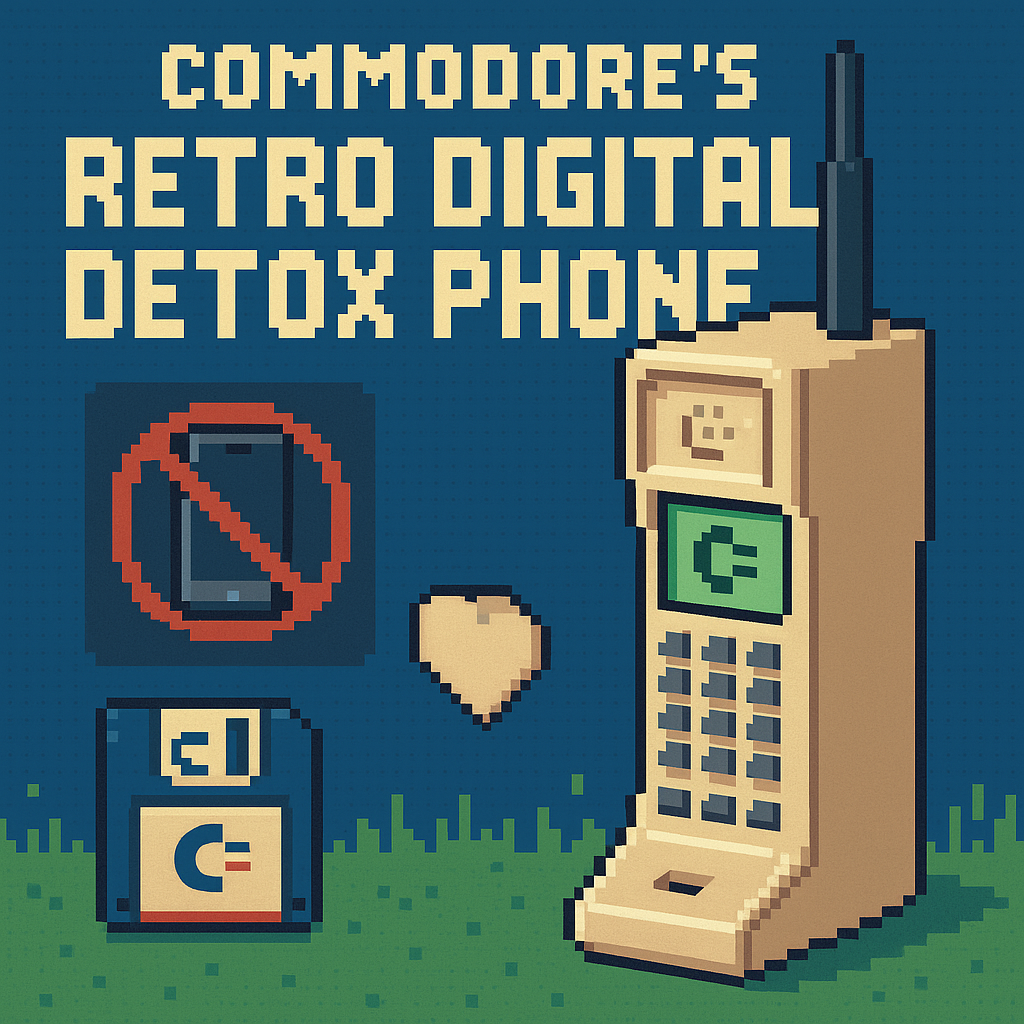
Wired reports that Commodore—the 1980s computer icon now led by Christian “Peri Fractic” Simpson—built the Callback 8020, a retro flip phone running Sailfish OS that can run selected Android apps like Uber, WhatsApp, and Spotify via Jolla’s AppSupport. Social media, web browsers, email, and Slack are blocked at the OS level to enforce “digital detox,” with T9 typing (or voice transcription), a removable battery, FM radio, a 48 MP Sony sensor with retro camcorder mode, and C64 chiptune ringtones included. Prices start at $500 ($550 clear “Starlight,” $640 Founder’s), preorders open June 30, and shipments target “toward the end of the year.” [1][2]
Why it matters
- Stakeholders one: schools and parents. In 2025–26, at least 11 U.S. states had adopted some form of statewide K–12 student phone restrictions, which creates a procurement and BYOD gray zone where a “school‑legal” phone with enforced guardrails could be attractive. That demand spikes because kids routinely bypass software‑only parental controls on iOS 17 and iPadOS 17, and it’s reinforced by Counterpoint data showing a detox‑driven feature‑phone comeback. [3][4][5]
- Stakeholders two: the Android app ecosystem and carriers. Jolla’s AppSupport makes Android essentials usable on a non‑Android platform, but if API parity lags, users lose mission‑critical apps like ride‑hailing and messaging. Meanwhile, U.S. carriers gate VoLTE, HD Voice, and Wi‑Fi Calling behind model whitelists and IMS provisioning—a common tripwire for niche devices. [2][7]
Original analysis
A 2×2: The detox device matrix
Axis X = App access (e.g., WhatsApp/Uber allowed vs blocked); Axis Y = UX friction (how much the phone slows you down).
| Low app access (none/very few) | Essential-only, whitelisted apps | |
|---|---|---|
| High friction (T9, small screens, no feeds) | Dumb flips (e.g., basic KaiOS devices); cheapest “detox,” but often too limiting for logistics like ride‑hailing. | Commodore Callback 8020: T9, no browser/social/email, but Uber/WhatsApp/Spotify via Sailfish AppSupport; intentional friction with enough utility. [1][2] |
| Low friction (touch, modern UI) | Ultra‑locked profiles on iOS/Android rarely hold; kids route around them. [5] | Light Phone III: larger OLED, touch, minimal tools (timers, maps, etc.), but $799 and more permissive than “no browser at all.” [11] |
Consensus view: “Detox phones are a short‑lived aesthetic fad.” Contrarian read: Hardware‑level and OS‑level constraints beat app‑level toggles—Apple’s Screen Time has seen persistent workarounds, and state ed boards are ratcheting toward bell‑to‑bell bans. The product that pairs a viable app subset with structural friction can endure, because the constraints are harder to bypass and aligned with 2025–26 policy. [4][5]
Back‑of‑the‑envelope TAM
- U.S. public K–12 enrollment was 49.5 million in fall 2023. [8]
- Assume 1.0% of students wind up needing a “school‑legal” phone that truly blocks browsers/social (due to statewide bans or family policy): 0.01 × 49.5M ≈ 495,000 units.
- At a $500 average selling price (ASP), that’s ≈ $247.5M revenue for the category; even a 0.5% penetration implies ≈ 247,500 units and ≈ $123.8M. This dwarfs typical indie‑phone runs and suggests room for two or three players, assuming AppSupport keeps core APIs current. [1][4][8]
Named‑stakeholder breakdown
- Commodore (Christian “Peri Fractic” Simpson): If the company converts retro goodwill from its 2025 C64 Ultimate relaunch into school/parent channels, the Callback can be more than merch—and the margin stack from bundled IEMs and accessories helps. [1][10]
- Jolla (Sailfish OS/AppSupport): This is a marquee validation of AppSupport outside automotive; Jolla must keep Android API coverage modern—its materials emphasize “latest Android APIs,” and Sailfish 5.0 “Tampella” shipped recently—so cadence will be scrutinized. [2][9]
- Light Phone: The Callback’s $500 undercuts Light Phone III’s $799 MSRP while offering a broader app whitelist; Light must defend premium minimalism or build a curated‑apps story to avoid being boxed in as “too limited, too pricey.” [11]
- U.S. carriers (AT&T/T‑Mobile and MVNOs): Success hinges on certified VoLTE/IMS support; AT&T’s “Service Capabilities for Unlocked Devices” shows feature access is model‑ and certification‑dependent, which can strand boutique devices in “data‑only” purgatory. [7]
What others are missing
Coverage fawns over nostalgia and T9, but the hinge is compliance engineering for K–12 districts and parent‑device policies. First, the OS‑level ban on browsers/social matters because kids defeat app‑level toggles; structural blocks close common bypass vectors (Safari, embedded webviews) that Screen Time leaves open in practice. That gives principals and IT leads a tool that aligns with bell‑to‑bell bans adopted in at least 11 states as of April 2025. [4][5] Second, the “Commodore Store based on Aurora” phrasing points to Aurora Store plumbing, which is an unofficial Google Play client on F‑Droid—not a Jolla‑native store—raising governance questions about app whitelists, signature checks, and ToS risk. [1][6]
What to watch next
- By December 31, 2026: At least two additional U.S. states adopt bell‑to‑bell statewide K–12 phone restrictions, expanding the school‑legal device market (trackable via KFF and state ed departments). [4]
- By March 31, 2027: Jolla publicly commits AppSupport on current Sailfish devices to Android 13+ API parity for core apps, with a forward schedule (press/blog or docs; measurable against Android API levels). [2][9]
- By December 31, 2026: Commodore announces a U.S. carrier or MVNO partnership that explicitly lists the Callback 8020 as VoLTE‑certified (checkable via carrier BYOD and capabilities pages). [7]
My take
If Commodore ships what Wired describes—Sailfish plus a hard OS‑level block on browsers/social with an explicit whitelist—the Callback 8020 becomes the first “detox‑but‑capable” phone that isn’t a $799 art object. The bet is well‑placed: schools and parents need stronger controls than toggles kids can bypass, and $500 is palatable if the phone handles rides, messaging, and maps. The pitfalls are prosaic but fatal if ignored: carrier VoLTE certification and AppSupport cadence over 2025–2027. Nail those, and this isn’t cosplay; it’s a viable lane between dumb flips and full smartphones. Miss them, and it’s another beautiful curiosity in a drawer. [1][2][5][7][11]
Sources
- Commodore Made a Digital Detox Phone That Isn’t Dumb — WIRED (https://www.wired.com/story/commodore-callback-8020-is-a-digital-detox-phone-that-isnt-dumb/) — Original report with specs, prices, OS blocking model, and preorder/shipping window.
- Android AppSupport | Sailfish OS Documentation — Jolla (https://docs.sailfishos.org/Support/Help_Articles/Android_App_Support/) — Confirms how Sailfish runs Android apps via Jolla’s AppSupport layer.
- US Feature Phone Market Stages Comeback as Gen Z, Millennials Advocate Digital Detox — Counterpoint Research (https://counterpointresearch.com/insight/us-feature-phone-market) — Evidence of U.S. “detox” interest and the feature‑phone market’s resilience.
- A Look at State Efforts to Ban Cellphones in Schools and Implications for Youth Mental Health — KFF (https://www.kff.org/mental-health/issue-brief/a-look-at-state-efforts-to-ban-cellphones-in-schools-and-implications-for-youth-mental-health/) — State‑by‑state policy snapshot showing at least 11 states with restrictions as of April 2025.
- Screen time: Children can easily bypass app limits in iOS 17 and iPadOS 17 — heise online (https://www.heise.de/en/news/Screen-time-Children-can-easily-bypass-app-limits-in-iOS-17-and-iPadOS-17-9816215.html) — Documents persistent workarounds that undermine software‑only parental controls.
- Aurora Store | F‑Droid (https://f-droid.org/en/packages/com.aurora.store/) — Establishes Aurora Store as an unofficial, open‑source Google Play client (not a Sailfish‑native store).
- Service Capabilities for Your Unlocked Device (PDF) — AT&T (https://www.att.com/idpassets/images/support/pdf/Service-Capabilities-Unlocked-Devices-ATT-Network.pdf) — Shows that feature access (HD Voice/VoLTE, Wi‑Fi Calling) is model‑ and certification‑dependent.
- NCES Data Show Public School Enrollment Held Steady Overall From Fall 2022 to Fall 2023 — NCES (https://nces.ed.gov/whatsnew/press_releases/12_5_2024.asp) — Provides the 49.5 million public K–12 enrollment figure used in the TAM math.
- Sailfish OS 5.0 “Tampella” is here! — Jolla Blog (https://blog.jolla.com/sailfish-os-5-0-tampella-is-here/) — Confirms active development and recent major Sailfish release cadence.
- The Commodore 64 Ultimate computer is the company's first hardware release in over 30 years — Tom’s Hardware (https://www.tomshardware.com/video-games/retro-gaming/the-commodore-64-ultimate-computer-is-the-companys-first-hardware-release-in-over-30-years-pre-orders-start-at-usd299) — Corroborates the brand’s 2025 reboot under Christian “Peri Fractic” Simpson.
- The Light Phone 3 is here with miniature features, massive $799 price tag — Android Central (https://www.androidcentral.com/phones/the-light-phone-3-is-here-with-miniature-features-massive-usd799-price-tag) — Confirms Light Phone III’s pricing and minimalist positioning for comparison.
Related update: We recently published an article that expands on this topic: read the latest post.