OpenAI Streamlines Focus as Execs Exit | Analysis by Brian Moineau

When a Tech Giant Stops Chasing Shiny Things: OpenAI loses 3 top executives as it cuts back on "side quests"

The moment OpenAI loses three senior leaders in a single day, it’s hard not to read the tea leaves. OpenAI loses 3 top executives as it cuts back on "side quests" — and that phrase captures the shift: a company that exploded into the mainstream with ChatGPT is now narrowing its focus, shelving experimental consumer projects and leaning harder into enterprise and core model work. This isn’t just HR churn; it’s strategy in motion. (thenextweb.com)

What happened, briefly

  • Three senior OpenAI executives announced departures on Friday, April 17, 2026: Kevin Weil (who led OpenAI for Science), Bill Peebles (Sora lead), and Srinivas Narayanan (enterprise engineering leadership). Their exits came as the company moved to wind down several consumer-facing and experimental initiatives often referred to internally as “side quests.” (benzinga.com)

  • The pullback follows a leadership reshuffle earlier in April, when Fidji Simo, OpenAI’s applications and product chief, took medical leave and pushed a tighter focus on productivity and business-use cases — language that appears to have been operationalized into shutting projects that don’t map to revenue or strategic defenses. (axios.com)

  • Competitor pressure — especially from Anthropic, which has been aggressively building in areas like code assistance and biotech — is widely cited as a factor nudging OpenAI to prioritize core offerings and enterprise GTM. (theneuron.ai)

Why this matters: leadership departures often precede or follow strategy pivots. Losing multiple senior figures at once signals a decisive reorientation, not a momentary course correction.

The context: from moonshots to a narrower map

OpenAI’s rise married blue-sky research with bold consumer experiences. Over the past three years it expanded rapidly: model advances, consumer apps, developer platforms, and a string of experimental products like Sora (AI video) and OpenAI for Science.

But scaling research into profitable, manageable business lines is brutal. Enterprise customers pay real dollars and demand reliability, compliance, and fine-grained controls — things that experimental consumer projects often don’t deliver quickly or predictably. Add in health-related leaves from senior leaders and a competitor like Anthropic carving out territory in code and domain-specific AI, and you get a board- and leadership-level re-evaluation. (axios.com)

OpenAI loses 3 top executives: what the departures reveal

These exits reveal three overlapping dynamics:

  • Resource realignment. Engineering and product talent is finite; OpenAI seems to be reallocating it from speculative consumer products to model scaling and enterprise features. That’s a pragmatic move if growth and margins hinge on large B2B deals. (thenextweb.com)

  • Cultural consolidation. “Side quests” were often the source of creative energy — but also distractions. Cutting them suggests leadership wants a tighter mission alignment across teams and incentives. That reduces fragmentation, but risks damping innovation that lived outside the main product roadmaps. (indianexpress.com)

  • Competitive pressure and defensive focus. Anthropic’s push into developer tooling and domain-specific models (including acquisitions in bio) is forcing rivals to prioritize where they can win or protect market share. OpenAI’s pause on consumer moonshots looks partly reactive. (time.com)

The investor and product dilemma

Investors love growth and defensibility. Enterprise contracts deliver both, but they’re also longer, pricier, and operationally demanding. Consumer experiments can produce breakthrough features and brand halo, but they rarely convert quickly into predictable revenue.

So the dilemma: double down on core, predictable revenue streams or continue funding creative experiments that could deliver long-term differentiation. OpenAI appears to be choosing the former for now. That’s not surprising — but it does reframe how the company will compete with Anthropic, Google, and others in the near term. (benzinga.com)

Where the risks lie

  • Talent flight: creative teams that thrived on “side quests” may leave if constrained, sapping long-term innovation.
  • Brand dilution: consumers who loved novel OpenAI apps could disengage if the company becomes too enterprise-focused.
  • Competitor capture: if Anthropic or others double down on areas OpenAI disbands, those firms could own emergent categories.

Each risk is manageable — if the company balances discipline with selective bets. The danger is swinging too far toward short-term commerciality and losing the exploratory R&D that once set OpenAI apart.

What this means for customers and developers

  • Enterprise customers should expect more product stability, enterprise-grade features, and tighter roadmaps. That’s good for businesses that build on OpenAI tech. (thenextweb.com)

  • Independent developers and creative users may see less experimentation from OpenAI itself. However, open ecosystems and competitors will likely fill the gap, meaning third-party innovation could accelerate in areas OpenAI abandons. (theneuron.ai)

My take

The exits and the “no more side quests” posture feel less like a retreat and more like an inflection. OpenAI is maturing from a rapid-prototyping pioneer into an operational juggernaut that must satisfy enterprise customers and regulators alike. That trade-off is normal for companies that scale — and it can be healthy if OpenAI preserves a smaller, well-funded experimental arm rather than closing the doors entirely.

That said, the magic sauce that once came from tangential experiments should not be entirely extinguished. The challenge now is structuring a company that delivers predictable products without losing the curiosity that led to breakthroughs in the first place.

Sources


Related update: We recently published an article that expands on this topic: read the latest post.


Related update: We recently published an article that expands on this topic: read the latest post.


Related update: We recently published an article that expands on this topic: read the latest post.

Xbox, Game Pass, and Bethesdas Fallout | Analysis by Brian Moineau

"That shouldn't be a surprise to you": when a veteran blows the whistle on change

When you first read the headline — "'I Saw How It Was Getting Damaged': Ex-Bethesda Exec Goes to Town on Xbox's Mistreatment" — it lands like a complaint you half-expected. The quote slices through nostalgia and corporate gloss: a longtime Bethesda executive, Pete Hines, saying he watched something he loved being “damaged” after the Microsoft acquisition. That shouldn't be a surprise to you, he adds, and that line is the emotional backbone of this debate about studio culture, acquisitions, and what subscription platforms do to creative incentives.

This post looks at what Hines said, where it fits in the bigger picture of Xbox, Game Pass and industry consolidation, and why his words matter beyond one company being “right” or “wrong.”

Why the quote matters

  • Hines speaks from inside decades of Bethesda history. He was a public face for the company for years and left in October 2023.
  • His remarks are not just a gripe — they accuse a shift in values and treatment of teams after Microsoft’s takeover.
  • The comment taps into a larger conversation about how big tech owners influence creative studios, and whether the tradeoffs (stability vs. autonomy) are worth it.

These points are important because they move the story from personality to pattern. When a respected insider frames the changes as “damage,” it reframes layoffs, studio reorganizations, and strategic pivots as consequences, not just corporate housekeeping.

The core claim: what Hines actually said

In a recent interview (April 2026), Hines said he left because he felt powerless to protect Bethesda as it was “being damaged and broken apart and frankly mistreated, abused.” He described the post-acquisition environment as “not authentic and not genuine,” and added, “That shouldn't be a surprise to you.” Those are strong words coming from someone who stayed on for a time after the deal closed. (pushsquare.com)

Put plainly: Hines is saying the acquisition created an ecosystem change — one that shifted incentives and day-to-day realities in ways that eroded what he and many others cherished about Bethesda.

Context: acquisitions, restructuring, and Game Pass dynamics

Since Microsoft acquired Bethesda’s parent ZeniMax, there have been shifts you can point to as background evidence: studio reorganizations, policy changes, and a stronger strategic focus on Game Pass as a distribution model. That model creates clear business benefits — stable revenue, massive user reach — but it also introduces new pressures.

  • Subscription services can compress the lifecycle of content and alter what “success” looks like.
  • Bigger corporate ownership can standardize processes and prioritize platform strategy over studio idiosyncrasies.
  • Layoffs and reorganizations in recent years across the industry have made talent and morale fragile.

Hines’ comments echo other developers’ and execs’ worries about "weird inner tensions" Game Pass can create and whether platform owners sufficiently value the long-term craft of big-budget studios. These tensions have surfaced in public debates and reporting over the past couple of years. (tech.yahoo.com)

What this means for players and creators

For players, the immediate impact is mixed. Game Pass has made a vast library affordable and accessible; entire communities enjoy games they might never have tried otherwise. For creators, however, the calculus can be uglier.

  • Short-term performance metrics can trump long-term IP cultivation.
  • Smaller teams and ambitious projects may find themselves deprioritized in favor of consistent platform content.
  • Creative autonomy can suffer when corporate priorities shift.

Hines’ complaint isn’t merely nostalgia. It’s a caution about how value is distributed inside large ecosystems: who gets resources, whose vision is protected, and which projects survive intact.

Where we should be cautious

That said, we should avoid one-sided conclusions. Large publishers can also offer resources and stability that enable ambitious projects which otherwise might never be funded. Microsoft has funded big games and given studios budgets impossible for many independent publishers.

  • Not every change is deliberate sabotage; some are genuine attempts to integrate and scale.
  • Problems observed at Bethesda had complex roots — not all attributable solely to the acquisition.
  • Public statements from former insiders often mix personal frustration with legitimate industry critique.

Balance matters. The right question isn’t simply “Is Microsoft bad?” but “How can large platform owners structure relationships to protect creative culture while pursuing growth?”

"I Saw How It Was Getting Damaged": what to watch next

  • Will Microsoft or Xbox publicly respond with concrete changes to studio autonomy or developer support?
  • Will other studio leaders come forward with corroborating accounts, or will defenders emphasize the benefits of scale?
  • How will Game Pass evolve its compensation and discovery models to better reward diverse kinds of creative output?

These are the practical policy areas where words like Hines’ should lead to action rather than just headlines.

My take

Hines’ words cut because they come from someone who loved, built, and defended Bethesda. They force a hard, necessary conversation about what we value in games and studios. Consolidation and subscription models are reshaping an industry that once relied on a patchwork of small, independent teams and a few large publishers. Those shifts can produce great things — and ugly consequences.

If you care about creative depth in videogames, don’t treat this as a partisan Xbox story. Treat it as a systems problem: how to design corporate relationships so that commercial success and creative stewardship reinforce each other, not erode one another.

Sources

When Companies Blame AI for Layoffs | Analysis by Brian Moineau

Why “AI did it” sounds convenient — and often incomplete

Tech companies are blaming massive layoffs on AI. What’s really going on? That line has become a familiar squeeze play in corporate communications: tidy, forward-looking, and investor-friendly. But peel back the memo and the explanation usually looks messier — a mix of pandemic-era overhiring, macro pressures, strategic pivots, and sometimes genuine automation opportunities. Let’s walk through what companies mean (and don’t mean) when they point to AI as the reason for job cuts — and why the distinction matters for workers, managers and policymakers.

The narrative everyone hears: AI as an efficiency engine

Since the generative-AI boom, executives have leaned into one message: AI will make work dramatically more efficient. Saying “we’re reducing roles because AI can handle X” serves two purposes for companies.

  • It signals to investors that the firm is modernizing and prioritizing high-margin AI projects.
  • It frames layoffs as forward-looking, not a punishment for past mistakes.

That framing is seductive — and occasionally accurate. Some tasks, especially routine customer support, data labeling, and certain content generation chores, are clearly within AI’s current reach. But the louder trend is that many layoffs announced as “AI-driven” are actually about other business realities.

The inconvenient background causes

Look beyond the memo and you often find traditional drivers:

  • Overhiring after the pandemic boom. Many firms expanded aggressively in 2020–2022 and are now trimming layers that grew in that rush.
  • Cost-cutting to protect margins. Even profitable companies prune headcount to boost profit per share or free up cash for capital-intensive AI investments.
  • Poor strategic bets. Companies sometimes pivot away from projects or markets that didn’t deliver, which triggers reorganizations and cuts.
  • Market slowdown or demand shifts. Ad revenue, enterprise spending, or product demand can drop, forcing layoffs unrelated to automation.

Research and reporting show this nuance. For example, Fortune’s recent reporting notes that AI was explicitly mentioned in only a small share of overall 2025 job-cut announcements, and many large cuts — including at companies with strong financials — still reflected trimming “bloat” rather than direct AI substitution. The Guardian and other outlets have documented similar patterns: executives using AI as a palatable public reason while underlying motives include over-expansion and economic recalibration. (fortune.com)

The “AI-washing” problem

A growing critique calls this messaging “AI-washing”: portraying layoffs as technology-driven when they’re not. OpenAI’s CEO and several analysts have used that term to describe cases where AI is a convenient cover for business mistakes or standard restructuring.

Why does AI-washing matter?

  • It erodes trust. Employees who survive cuts often distrust leadership claims about the future role of technology.
  • It misleads policymakers. If governments assume AI is already displacing huge swaths of labor, they may craft the wrong training or social-safety policies.
  • It manufactures fear. Public anxiety around automation can distort labor markets and political debates, even when the data don’t support mass displacement yet.

That’s not to say companies never replace workers with automation; they do, and the pace will vary by industry and role. The key point is transparency: leaders should specify which tasks are being automated, what the timeline looks like, and what support (retraining, redeployment, severance) they’ll provide.

What the data actually show

Empirical work is still catching up to the rhetoric. Several analyses indicate that, while AI is reshaping jobs, the proportion of layoffs that are demonstrably caused by deployed AI systems remains modest so far.

  • Much of the observable impact has been in task redefinition rather than outright replacement: job descriptions change, junior roles shift, and organizations hire different skills (AI-savvy engineers, data product managers). (phys.org)
  • Market-research firms have flagged that companies citing AI as a factor often mean anticipatory efficiency gains — "we expect AI will allow us to do more with fewer people sometime down the road" — not immediate automated replacement. (fortune.com)

So the labor market is changing, but not uniformly or instantaneously. Think slow remapping of roles and skills, punctuated by real but targeted automation in certain domains.

What this means for workers and managers

Transitioning into an AI-augmented workplace looks different depending on your role and company. Practical takeaways:

  • For workers: document the value you add that AI cannot replicate easily — judgment, cross-domain context, relationship-building, ethical oversight, and domain expertise. Learn to work with AI tools rather than only worry about them.
  • For managers: be specific in layoff and reskilling communications. Vague claims that “AI made this role unnecessary” breed cynicism and harm morale.
  • For leaders and boards: weigh the reputational and operational costs of premature layoffs aimed at signaling AI progress. Investors may cheer initial cost cuts, but churn, rehiring and lost institutional knowledge are expensive.

A pivot-and-reskill reality

Companies that handle the transition well will combine three moves: realistic assessment of which tasks can be automated, investment in high-impact AI capabilities, and meaningful reskilling pathways for displaced or redeployed staff.

That isn’t easy. Reskilling at scale takes time and money, and AI adoption itself is complex. But firms that treat automation as a reallocation of human effort (not a one-way replacement) will likely sustain better performance and workplace trust.

The conversation deserves better honesty

Tech companies are blaming massive layoffs on AI. What’s really going on? In many cases it’s a tangle of overhiring, margin pressure, and strategic reorientation — with AI invoked as a tidy explanation. Calling out that storytelling isn’t anti-AI; it’s pro-transparency. Honest communication about motives and timelines would help employees plan, policymakers design better supports, and investors set reasonable expectations.

My take

AI is real and powerful, and it will reshape work over the coming decade. But narrative matters. When leaders over-attribute layoffs to AI, they risk undermining the very workforce they’ll need to build, deploy and govern these systems. The healthier path is candidness: name the financial and strategic reasons for changes, explain how AI fits into the plan, and invest in the people who’ll make that future work.

Sources


Related update: We recently published an article that expands on this topic: read the latest post.


Related update: We recently published an article that expands on this topic: read the latest post.

Main Street Under Siege by Affordability | Analysis by Brian Moineau

The squeeze on Main Street: why mom-and-pop shops are hunkering down

There’s a quiet panic in small-business towns across the country. Shop owners are trimming hours, delaying hires, and staring at spreadsheet scenarios that all end the same way — build cash, avoid risk, survive the next shock. The affordability crisis isn’t just about rising grocery bills; it’s a compound threat hitting mom-and-pop shops from every direction: higher import costs, rising payroll and health‑care bills, scarce affordable credit, and employees who are one rent check away from distraction. This is what happens when the cost-of-living crisis collides with a fragile small-business ecosystem.

Why this feels different right now

  • Import and input costs have jumped for many small manufacturers and retailers, driven by tariffs and higher shipping costs that squeeze margins. Owners who used to pass only a fraction of price increases onto customers are now forced to choose between less profit and fewer sales. (finance.yahoo.com)
  • Lending is available in some forms, but often expensive. Small-term business loans show average rates that are higher than they have been in recent memory, pricing out growth and forcing owners to hoard cash rather than invest. (finance.yahoo.com)
  • Payroll and healthcare remain stickier costs. With wages and benefits rising, labor-intensive small businesses—cafés, shops, local manufacturers—face a double bind: pay more to retain staff or risk turnover and service disruption. (finance.yahoo.com)
  • The workforce itself is stressed. When employees are worried about housing, groceries, or medical bills they bring that anxiety to work; productivity and customer service suffer. Business owners report distracted staff and a loss of morale that is hard to quantify but easy to feel at the register. (finance.yahoo.com)

Signals from the data and policy landscape

  • Banks reported a modest uptick in demand for business loans in late 2024, but lending standards have tightened, and smaller borrowers often see higher effective rates or find themselves steered away from underwriting entirely. That mismatch leaves many Main Street businesses underserved. (reuters.com)
  • The Small Business Administration (SBA) has increased small-dollar backing in recent years, which has helped some entrepreneurs access capital. But access remains uneven, and policy shifts or agency reorganizations can change the terrain quickly for small lenders and borrowers. (apnews.com)

What owners are doing (and why it matters)

  • Hunkering down: owners are building cash reserves, delaying capital expenditures, and cutting discretionary spending. That preserves survival but stalls growth and job creation. (finance.yahoo.com)
  • Shrinking payrolls: some have reduced staff or hours to manage labor costs. That reduces overhead but can also reduce revenue and community vibrancy. (finance.yahoo.com)
  • Seeking alternate revenue: pop-up events, online channels, and partnerships can help, but not every business can pivot easily—especially manufacturers and service providers tied to local demand. (finance.yahoo.com)
  • Shopping for credit carefully: owners are comparing SBA-backed options, community lenders, and commercial banks, but smaller, mission-driven loans are still scarce in some regions. (sba.gov)

A few human stories that put numbers in perspective

Across different reports, small-business owners say the same thing: uncertainty makes planning impossible. A Massachusetts manufacturer that recently laid off staff described an environment where tariffs and shifting trade policy dent demand overnight, forcing quick cuts and a focus on cash preservation rather than investment. Those individual decisions ripple through local economies—less payroll, fewer local purchases, and a community that slowly tightens its belt. (finance.yahoo.com)

What would help Main Street (practical levers)

  • Expand small-dollar lending and streamline access. More predictable, affordable credit for loans under six figures helps owners bridge seasonal gaps and invest in productivity. SBA programs and community lenders can play a role but need scale and stability. (apnews.com)
  • Targeted relief for input-cost shocks. Temporary tax credits, tariff adjustments, or subsidized logistics support could blunt abrupt cost spikes for small manufacturers who lack hedging tools used by larger firms. (finance.yahoo.com)
  • Workforce support that stabilizes employees’ lives. Expanding access to childcare, emergency savings, and affordable health-care options reduces the non‑work distractions that hit productivity and retention. (finance.yahoo.com)
  • Predictable policy environment. Businesses need fewer policy surprises—clearer trade and regulatory signals allow owners to plan hiring and capital expenditures with confidence. (finance.yahoo.com)

A short set of takeaways for readers

  • Main Street is resilient but not invincible: small businesses are conserving cash and deferring growth while facing multiple cost pressures. (finance.yahoo.com)
  • Credit exists but is uneven: SBA efforts have expanded small-dollar lending, yet many owners still pay high effective rates or face tighter underwriting. (apnews.com)
  • The workforce crisis is an affordability crisis: stressed employees reduce productivity, and that compounds business stress. (finance.yahoo.com)

My take

This moment feels like a stress test for the local economy. Policies and markets have nudged mom-and-pop shops into a defensive crouch—and defense is a valid short-term strategy. But if we leave Main Street in that posture too long, we risk losing the entrepreneurial engine that drives jobs and community identity. The right mix of predictable policy, targeted support for credit and inputs, and investments that stabilize workers’ lives could flip a lot of these businesses back from “survive” to “grow.”

Sources


Related update: We recently published an article that expands on this topic: read the latest post.


Related update: We recently published an article that expands on this topic: read the latest post.

Paramount Cuts After Skydance Merger | Analysis by Brian Moineau

Paramount Layoffs After Skydance Merger: What Happened and Why It Matters

Introduction — a quick hook
Paramount has begun a sweeping round of layoffs that reach across CBS Entertainment, Paramount+, MTV and other properties — a major consolidation move that follows its recent merger with Skydance. For employees, viewers and creators, the cuts signal a new era of cost-focused consolidation at one of Hollywood’s biggest media houses.

What’s going on (context and background)
In August 2025 Skydance and Paramount completed a high-profile merger that combined Skydance’s production muscle with Paramount’s legacy TV and streaming businesses. Within weeks, new leadership set out a plan to reduce overlap, streamline operations and cut costs — a process that culminated in layoffs that began in late October 2025.

The first wave eliminated roughly 1,000 roles across multiple divisions, with company statements and reporting indicating the total reduction will be about 2,000 jobs (around 10% of the combined workforce) once subsequent rounds are complete. A memo from CEO David Ellison framed the cuts as part of restructuring after the merger; outside reporting has also described a broader target of substantial cost savings as Paramount refocuses priorities under the Skydance-led management team.

Why this matters

  • It affects major content and distribution units: staff reductions touch broadcast (CBS), streaming (Paramount+), youth and music networks (MTV) and other cable and studio operations — meaning decisions about programming, development and day-to-day operations could change.
  • Industry ripple effects: large-scale layoffs immediately alter project staffing, timelines and freelance opportunities and can influence what kinds of shows and formats get greenlit.
  • Strategic repositioning: the move signals that the new leadership is prioritizing efficiency and margin improvement, which may change long-term creative strategy (fewer, higher-budget tentpoles vs. broader slates; more franchise-focused content; emphasis on profitable streaming models).

Key takeaways

  • Paramount Skydance has begun mass layoffs following the August 2025 merger; about 1,000 jobs were cut in the first wave and roughly 2,000 jobs in total are expected. (October 2025 reporting.)
  • Cuts span CBS Entertainment, Paramount+, MTV and other divisions — not limited to a single business unit.
  • The layoffs are part of a broader cost-cutting and restructuring plan under new CEO David Ellison aimed at eliminating overlap and realigning the combined company.
  • Industry consequences include potential delays or cancellations of projects, shifts in commissioning strategy, and reduced staffing for news, production and development teams.
  • This is consistent with typical post-merger consolidation, but the scale and timing mean the effects will be widely felt across creative and corporate ranks.

Scannable snapshot: who’s affected and what to watch

  • Affected groups: corporate staff, production and development teams, cable network personnel, and some news and streaming operations.
  • Near-term risks: halted projects, fewer development deals, hiring freezes, and an increase in freelance competition.
  • What to watch next: official company disclosures (quarterly earnings and SEC filings), statements from division leaders (CBS, Paramount+), and follow-up reporting on which teams and shows are most impacted.

Short concluding reflection
Mergers promise scale and new capabilities, but they also bring hard choices. The Paramount–Skydance layoffs are a stark reminder that corporate consolidation often translates into sharper editorial and staffing decisions on the ground. For viewers, the biggest question will be whether these cuts narrow the range of original voices and experimentation on air and on streaming — and for the industry, whether the refocused Paramount produces a smaller slate of more concentrated hits or a leaner, but less diverse offering.

Sources


Related update: We recently published an article that expands on this topic: read the latest post.

Paramount’s Bold Cuts and the Strategy | Analysis by Brian Moineau

Paramount layoffs: what David Ellison’s memo tells us about the “new” Paramount
The pink slips that hit Paramount this week aren’t just a headcount trim—they’re a statement of strategy. In a memo to staff, Chairman and CEO David Ellison framed sweeping layoffs as “necessary” to position the newly merged Paramount Skydance for long‑term success. If you work in media—or watch it closely—this is a moment to pay attention to.

What happened and why it matters
Paramount Skydance began notifying roughly 1,000 employees of job cuts this week, with additional rounds expected as the company targets about 2,000 roles in total—around 10% of its workforce. Ellison’s message to employees cited two drivers: eliminating redundancies created by the Skydance-Paramount merger and phasing out roles that no longer fit the company’s evolving priorities. The reductions span TV, film, streaming, and corporate teams. Variety first reported details of the memo and the day’s actions. Reuters and the Associated Press corroborated the scale and timing, noting the merger closed in August and that deeper cost savings—up to $2 billion—have been a stated goal. (au.variety.com)

Context: the Skydance-Paramount reset

  • The deal: Skydance completed its acquisition of Paramount in August 2025, ushering in Ellison as CEO and launching what leadership calls “the new Paramount.” Job cuts following major mergers are common, and management had foreshadowed restructuring and consolidation. (apnews.com)
  • The numbers: Paramount reported about 18,600 full‑ and part‑time employees at year‑end 2024 (plus project-based staff). A 2,000‑person reduction would be roughly 10%—material enough to reshape org charts and product roadmaps. (reuters.com)
  • The strategy mix: Even as it trims staff, Paramount Skydance has been aggressive on content and portfolio moves since summer, part of a push to refocus the business and chase growth. (au.variety.com)

What Ellison’s memo signals

  • Consolidate to compete: The note emphasizes removing overlap and reorienting resources to growth areas. In practice, expect tighter greenlight discipline, fewer parallel teams, and a sharper slate strategy. (au.variety.com)
  • Cost savings fuel offense: Leadership has talked about billions in savings. The near‑term pain is designed to free up room for bigger bets—rights deals, franchises, and technology investments that can scale across platforms. (au.variety.com)
  • More change ahead: With additional cuts expected after this initial 1,000, this is a process, not a one‑day event. Integration workstreams and business-line realignments will likely continue into 2026. (au.variety.com)

Implications across the media stack

  • Streaming: Expect a tightened content funnel and stronger cross‑promotion across Paramount+ and linear assets, prioritizing franchises and live tentpoles that travel globally.
  • Film and TV studios: Fewer overlapping development tracks and a bigger emphasis on IP with multi‑platform potential.
  • News and sports: Big rights packages and marquee news brands can anchor bundles and advertising; back‑office consolidation is likely to continue as teams standardize tooling and workflows.

Key takeaways

  • Paramount Skydance began an initial round of about 1,000 layoffs, part of a broader plan targeting roughly 2,000 (about 10% of staff). (au.variety.com)
  • Ellison’s memo frames the cuts as essential for long‑term growth—eliminating redundancies and realigning roles after the Skydance merger. (au.variety.com)
  • Management has targeted up to $2 billion in cost savings; expect ongoing restructuring through multiple divisions. (au.variety.com)
  • Even amid cuts, the company is pursuing offensive moves (content and portfolio plays), signaling a leaner but bolder strategy. (au.variety.com)

A brief reflection
Layoffs are always personal before they’re strategic. For the people affected, this week is wrenching. For the company, it’s a bet that a smaller, more focused Paramount can compete in a scale‑obsessed, hit‑driven market. The next six to twelve months—what gets greenlit, what gets sold, and how the organization actually executes—will tell us whether “necessary”


Related update: We recently published an article that expands on this topic: read the latest post.

5 Things to Know Before the Stock Market Opens – Investopedia | Analysis by Brian Moineau

5 Things to Know Before the Stock Market Opens - Investopedia | Analysis by Brian Moineau

### Watching the Markets Unfold: January Jobs Report and Amazon's Revenue Outlook

Ah, the stock market—an arena where numbers dance like confetti on the trading floor and investors clutch their morning coffee a little tighter. Today, we're peering through the looking glass at the U.S. stock futures, which are tiptoeing around as investors eagerly await the January jobs report. This report is anticipated to show a deceleration in growth, with unemployment rates holding steady like an overcaffeinated yoga instructor maintaining a perfect tree pose. Meanwhile, Amazon’s shares are experiencing a bit of a nosedive after their revenue projections failed to ignite Wall Street’s enthusiasm. Let’s dive into how these elements are playing out and what else is stirring in the broader economic landscape.

#### The Calm Before the Jobs Report Storm

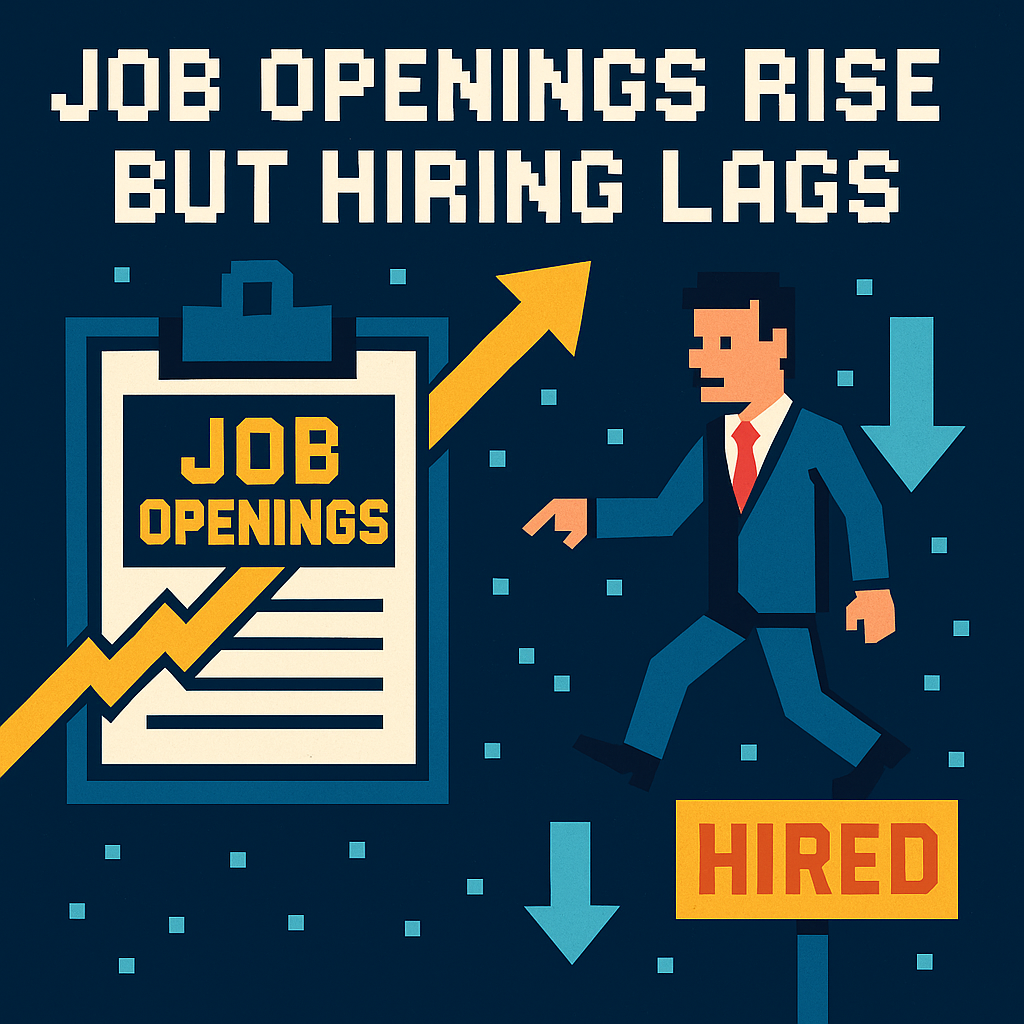
First on the docket is the January jobs report, a monthly ritual that sends ripples through the financial world. Economists are predicting slower growth, which isn't exactly a surprise given the economic tea leaves we've been reading lately. The Federal Reserve's interest rate hikes, aimed at taming inflation, are part of this intricate dance, as they often lead to a cooling effect on economic expansion. Yet, the unemployment rate is expected to stay put, which could suggest that while hiring is slowing, layoffs aren't spiking—a silver lining, perhaps.

For some context, this report comes on the heels of diverse economic signals. Take, for instance, the tech sector, which has seen companies like Meta and Microsoft announce substantial layoffs recently. These moves are often framed as necessary adjustments to post-pandemic realities, but they also highlight a sector in flux, trying to recalibrate its workforce amid shifting demands.

#### Amazon's Revenue Outlook: A Bumpy Road Ahead

Switching gears to Amazon, the e-commerce behemoth is feeling the heat after its revenue outlook didn't quite match the market's lofty expectations. Shares took a hit, reflecting investor anxiety over the company's future growth prospects. Amazon's predicament is a microcosm of broader challenges facing the retail sector, particularly in navigating supply chain disruptions and changing consumer behaviors in a post-pandemic world.

Interestingly, Amazon's situation isn't happening in a vacuum. Retailers across the globe are grappling with similar issues. For instance, in the UK, companies are facing the dual challenge of inflation and a cost-of-living crisis, leading to cautious consumer spending. This global context underscores the interconnectedness of today's economy, where a hiccup in one region can echo in another.

#### Connecting the Dots: The Global Economic Tapestry

Beyond the immediate headlines, these developments are threads in a larger tapestry of global economic trends. The stock market's response to the jobs report and Amazon's outlook serves as a barometer for investor sentiment in a world still adjusting to pandemic aftershocks. Moreover, these elements connect to broader concerns such as sustainable growth and technological innovation.

In China, for instance, the recent reopening after stringent COVID-19 lockdowns is expected to inject some vitality into the global economy. How this plays out will be crucial, especially for companies like Amazon that are deeply embedded in the international supply chain. Additionally, as countries invest in green technologies, the push for sustainability could redefine industries and reshape the future job market.

#### Final Thoughts

In the grand scheme of things, today's market musings remind us of the intricate dance that is global economics. As investors scrutinize the numbers and make their moves, it's essential to remember that markets are not just about profits and losses—they're about people, innovations, and the endless quest for balance in an ever-changing world.

So, as you sip your coffee and watch the ticker, take a moment to appreciate the complex, interconnected world we live in. After all, the markets may be unpredictable, but they're also a reflection of our shared journey through uncharted waters. Let’s see where the tide takes us next.

Read more about AI in Business

Read more about Latest Sports Trends

Read more about Technology Innovations

Phoenix Labs lays off “majority” of workforce – GamesIndustry.biz

The recent news of Phoenix Labs laying off the majority of its workforce comes as a blow to the gaming industry. The Vancouver-based developer has been known for its popular game Dauntless, which has garnered a dedicated fan base since its release. The decision to downsize the company has left many questioning the future of the game and the company as a whole.

This news reflects a larger trend in the gaming industry, where companies are constantly facing pressure to deliver successful titles while also managing the costs associated with game development. With the rise of free-to-play games and the increasing competition in the market, developers like Phoenix Labs are forced to make difficult decisions in order to stay afloat.

The layoffs at Phoenix Labs also highlight the challenges faced by employees in the gaming industry. Many developers work long hours on tight deadlines, only to be let go when a project is completed or when a company is facing financial difficulties. This instability can take a toll on the mental health and well-being of employees, who may find themselves constantly worrying about job security.

It's important for companies in the gaming industry to prioritize the well-being of their employees and to create a supportive work environment. By investing in their workforce and fostering a positive company culture, companies like Phoenix Labs can not only attract and retain top talent, but also ensure the long-term success of their games.

In light of this news, it's crucial for the gaming industry as a whole to take a closer look at how they treat their employees and to work towards creating a more sustainable and equitable work environment. Only by valuing and supporting their workforce can companies hope to achieve long-term success in an ever-evolving and competitive industry.