Falcons’ Bold Four‑QB Roster Gambit | Analysis by Brian Moineau

TL;DR

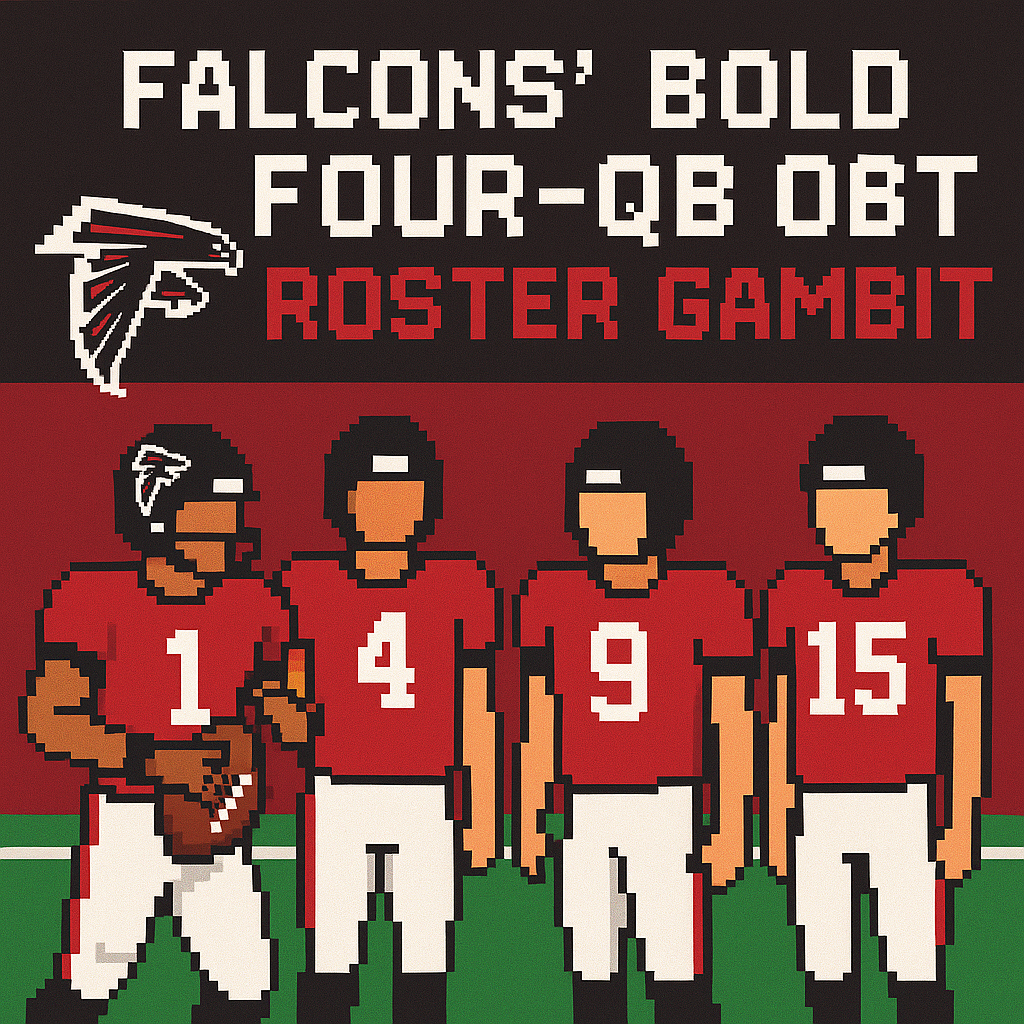
  • The Falcons’ initial 53-man roster for 2026 kept four quarterbacks (Tua Tagovailoa, Michael Penix Jr., Cooper Rush, Jack Strand) and only two running backs (Bijan Robinson, Brian Robinson Jr.), a rare build that squeezes special teams and edge depth while buying time to sort the QB pecking order. [2][3][4]
  • Atlanta traded CB Clark Phillips III and a 2027 fifth-round pick to the Bears for DT Gervon Dexter Sr., and carried injured DB Billy Bowman Jr. on the 53—classic “roster sequencing” that signals short-term IR moves and more churn before Week 1 against Pittsburgh at Mercedes-Benz Stadium in Atlanta, Georgia. [1][2][6][7]
  • My read: the four-QB gambit is a rational response to 2026 emergency QB mechanics and trade dynamics, not indecision; expect Atlanta to flip one QB and backfill RB/EDGE via the IR/waiver dance within 72 hours of cutdown. [3][5][8]

What the source said

The Falcoholic’s initial roster rundown highlights three headline choices: Atlanta carried four quarterbacks through the 53-man cutdown, reduced the running back room to two, and made several surprising moves at the margins. Those included releasing special-teams contributor Tyler Goodson and passing on veteran edge help (Azeez Ojulari, Bralen Trice) while adding Gervon Dexter Sr. on the interior. The piece frames Billy Bowman Jr.’s inclusion as a positive recovery signal, with Da’Shawn Hand in a similar spot heading into the September 2026 opener against the Pittsburgh Steelers. It also underscores that “initial” is the operative word—more moves are expected before Week 1—while questioning a few priorities (e.g., LB JD Bertrand, QB Cooper Rush) in a roster that’s likely to keep moving. [1]

Why it matters

This isn’t just about the Falcons; it’s about how 2026 roster mechanics and quarterback injury risk push teams toward hoarding passers and punting on back-end depth across 53 and 48 active slots on game day. The real stakeholders are general manager Ian Cunningham and head coach Kevin Stefanski, who must balance immediate competitive needs (edge pressure, special teams) with asset preservation (QB trade value) under NFL roster rules that reward sequencing acumen. [2][3][5][8]

Players feel it most. Four quarterbacks and 13 defensive backs crowd out roles for back-end runners and rotational edge rushers—jobs often earned on kick coverage at Heinz Field–style slugfests the Steelers prefer. If Atlanta can’t replace those hidden-yardage snaps with disciplined personnel usage, the cost shows up in field position in Week 1 on September 6–7, not on a transaction log. [1][2][4]

Original analysis

Contrarian read — The consensus: carrying four quarterbacks is wasteful and screams indecision. My take: it’s rational roster arbitrage in 2026. The NFLPA’s veto of the league’s proposed unlimited emergency QB elevations forces the true “QB3” to live on the 53 or consume one of a finite number of weekly elevations, which erodes flexibility. Four clubs kept four QBs on initial 53s this week, so Atlanta’s not an outlier; they’re playing the market. [3][5]

Back-of-the-envelope roster math — edge and RB:

  • Defensive snap math: assume 65 defensive snaps and two-edge fronts on 80% of plays. That’s 0.8 × 65 × 2 ≈ 104 edge snaps to allocate. With only three true edges (Za’Darius Smith, Samson Ebukam, Cameron Thomas), the average load is ~35 snaps each if perfectly balanced; in real usage, the top two push toward 50+, leaving fatigue and injury exposure and minimal sub-package variability. A fourth edge would drop average load toward the high-20s and add third-down variants without taxing Smith/Ebukam. [2][4]
  • Offensive run math: assume ~62 offensive snaps and a 42% rush rate ≈ 26 RB carries. Bijan Robinson and Brian Robinson Jr. can absorb that on paper, but one in-game ankle tweak leaves pass-pro and two-minute offense in the hands of a practice-squad elevation or an out-of-position WR. The opportunity cost of QB4 is probably 10–12 special-teams snaps and the emergency RB3 role on September game days. [2][4][8]

Named-stakeholder breakdown:

  • Tua Tagovailoa, QB: Retains leverage as presumed QB1; four-QB build gives Atlanta time to test-market the room without cutting bait in late August 2026. [2][3][4]
  • Michael Penix Jr., QB: Protected development runway; not forced into QB2 by timing. A trade of Rush or a Strand stash becomes the pressure valve before Week 2. [2][3]
  • Cooper Rush, QB: Classic “inventory” quarterback—valuable to teams thin on game-ready backups; most tradable piece if Atlanta wants to reclaim a roster slot by September 14. [2][3][4]
  • Jack Strand, QB: UDFA with preseason juice; hard to sneak to the practice squad without exposing him to claims—hence the initial 53 spot and the likely PS shuffle. [3][4]
  • Gervon Dexter Sr., DT: Interior pass-rush infusion via a costed asset (Clark Phillips III + 2027 5th); signals confidence in perimeter pressure packages built around Smith/Ebukam/Thomas until James Pearce Jr. returns from suspension. [2][6]
  • Billy Bowman Jr., DB: Inclusion on 53 signals a near-term practice return under IR rules (minimum four games if he were stashed), preserving earlier availability; roster sequencing, not sentiment. [2][4][7]

A 2×2 to decode the Falcons’ initial 53-man roster

  • Axis 1 (X): Immediate game-day utility for Week 1 at Mercedes-Benz Stadium in Atlanta. [1][2]
  • Axis 2 (Y): Retainable market value on the 53 across September 2026 trade calls. [3][5]
    • High utility / high value: Bijan Robinson, Za’Darius Smith — scarce snaps that change outcomes on third-and-medium. [2][4]
    • High utility / low value: Core special-teamers (Malcolm DeWalt IV), swing OL — replaceable leaguewide but essential every Sunday. [2][4]
    • Low utility / high value: QB4 (Rush or Strand) — minimal game-day need, high trade/roster-protection value under current QB rules. [3][5]
    • Low utility / low value: Developmental TE3 or RB3 — the very spots squeezed to carry a fourth QB. [2][4]

What the numbers and rules foreshadow: The Falcons will almost certainly execute the classic post-53 shuffle—short-term IR for one or two injured players (eligible to return after four games), followed by re-signs or claims at RB and EDGE before September 3, 2026. That’s how you square a four-QB ledger with Week 1 reality without losing assets to waivers under 16-man practice-squad and elevation limits. The team site’s transaction language and the Bowman/Hand handling already point that direction. [2][6][7][8]

What others are missing

Angle: the deliberate “roster sequencing” behind Bowman and Dexter. Billy Bowman Jr. on the initial 53 isn’t a sentimental victory lap; it’s a clock play tied to the four-game IR return rule that preserves earlier practice activation in September. Dexter’s arrival on August cutdown week pairs with that timing—interior depth lets Atlanta tolerate going light at edge for a few days while it maneuvers IR and waiver claims. That combination—timing plus positional redundancy—explains the four-QB and two-RB oddity better than “they can’t decide at quarterback.” [2][4][6][7]

What to watch next

  1. By September 3, 2026, Atlanta will place at least one of Bowman or Hand on short-term IR and add an RB3 to the 53 via re-sign or waiver claim. [2][4][7]
  2. By Week 2 (September 13–14, 2026), the Falcons will pare the active QB room to three (via trade of Rush or a Strand move to the practice squad). [2][3][4][5]
  3. By October 11, 2026 (through Week 5), Gervon Dexter Sr. will log 40%+ defensive snap share in at least two games as Atlanta leans interior pressure to offset light edge depth. [2][6]

My take

I’m fine with the Falcons burning an initial 53 spot on QB4. The 2026 rules incentivize hoarding passers, and Atlanta’s room has both uncertainty and trade value in a market where four teams carried four QBs on cutdown day. I’m not fine with living short at edge beyond this week, because Za’Darius Smith and Samson Ebukam shouldn’t play 85% of snaps in September if you want them healthy in December. If Cunningham executes the IR/waiver two-step and spins off one quarterback for a day-three pick while adding an RB3 and a rotational edge, this roster build stops looking weird and starts looking savvy. [2][3][5][6][7][8]

Sources

[1] Top storylines following the Falcons initial 53-man roster — The Falcoholic (https://www.thefalcoholic.com/atlanta-falcons-depth-chart/95615/top-storylines-following-the-falcons-initial-53-man-roster-billy-bowman-tyler-goodson) — The starting point: four QBs, two RBs, surprise edge cuts, Bowman/Hand status, and the expectation of churn.

[2] Atlanta Falcons release initial 2026 roster — AtlantaFalcons.com (https://www.atlantafalcons.com/news/atlanta-falcons-2026-roster) — Official 53 with position counts and transaction buckets (released/waived), including QB4, RB2, Bowman on the 53, and Goodson/Ojulari/Trice moves.

[3] Four NFL teams keep four QBs on initial 53-man rosters — NFL.com (https://amp.nfl.com/news/four-nfl-teams-keep-four-qbs-on-initial-53-man-rosters) — League-wide context that Atlanta isn’t alone; lists the Falcons’ quartet and explains why teams are doing it.

[4] Falcons announce initial 53-man roster: 3 takeaways as team carries 4 QBs — Atlanta Journal-Constitution (https://images.ajc.com/sports/2026/08/falcons-announce-initial-53-man-roster-3-takeaways-as-atlanta-carries-4-qbs/) — Independent confirmation of the position counts and notable inclusions/exclusions, plus Bowman’s status.

[5] NFLPA vetoes emergency third QB rule change — NFL.com (https://www.nfl.com/news/nflpa-vetoes-emergency-third-qb-rule-change) — Explains why teams can’t stash a “bona fide” emergency QB via unlimited elevations, pushing clubs toward carrying more QBs.

[6] Falcons trade CB Clark Phillips III, 5th-round pick to Chicago Bears for DT Gervon Dexter Sr. — AtlantaFalcons.com (https://www.atlantafalcons.com/news/falcons-trade-clark-phillips-iii-5th-round-pick-chicago-bears-gervon-dexter-sr) — Confirms the Dexter acquisition that shapes trench depth and buys time for edge-room triage.

[7] Players now eligible to return from injured reserve after four games — NFL.com (https://www.nfl.com/news/players-now-eligible-to-return-from-injured-reserve-after-four-games) — Details the modern short-term IR framework (four-game minimum, designated to return), critical to understanding Bowman/IR timing.

[8] Contract Language & Roster Mechanics (Practice Squad and Standard Elevation Addendum) — NFL Football Operations (https://operations.nfl.com/calendar-events/nfl-free-agency/contract-language) — Codifies 16-man practice squads and the 54/55-man elevations that interact with the Falcons’ initial 53 calculus.


Related update: We recently published an article that expands on this topic: read the latest post.

Related update: We recently published an article that expands on this topic: read the latest post.

Bland’s Foot Injury Threatens Cowboys Run | Analysis by Brian Moineau

When a Season Tilts: DaRon Bland, the Cowboys’ Corner, and the Fragility of Momentum

A gut-punch moment for Cowboys fans: DaRon Bland — the All-Pro corner who altered games with his ball-hawking instincts — is now a realistic injured‑reserve candidate because of a foot issue that surfaced during preparations for the Week 16 matchup against the Los Angeles Chargers. That single sentence carries ripple effects for Dallas’s defense, roster decisions and the feel of the locker room the rest of the way.

Quick hits you should know

  • DaRon Bland was added to the Cowboys’ practice/injury reports Dec. 18, 2025, after a foot problem that sidelined him during midweek practice and made him unlikely to play Sunday versus the Chargers. (dallascowboys.com)
  • The team signaled the injury could be serious enough to require placing Bland on season‑ending injured reserve, which would end his 2025 campaign with three games remaining. (dallascowboys.com)
  • Bland’s availability has been a recurring storyline since 2024, when a foot stress fracture forced him to miss significant time; durability is becoming a concern for a player on a big contract and with All‑Pro pedigree. (dallasnews.com)

The context: why this matters beyond one roster move

Bland is not just “a corner” for the Cowboys — he’s a playmaker with a history of flipping field position and generating turnovers. In 2023 he exploded onto the national radar, leading the league with nine interceptions and returning an unprecedented five for touchdowns. The Cowboys leaned on that playmaking ability as a cornerstone of their secondary identity.

When a player like Bland becomes unavailable late in the season, several things happen at once:

  • Opposing offenses adjust, targeting the side away from the team’s most disruptive defender. That can force the Cowboys to rotate coverages more or rely on less‑proven teammates.
  • The coaching staff suddenly faces pressure to retool matchups and potentially increase Trevon Diggs’ snaps (if/when he’s available), or to accelerate the development of younger corners. Reports indicate the Cowboys were already juggling Diggs’ status and other cornerback windows. (dallascowboys.com)
  • The front office and medical staff must balance short‑term competitiveness against long‑term health. Putting Bland on IR could protect his recovery and the team’s future investment, but it also concedes immediate defensive continuity.

What the roster implications look like

  • If Bland lands on injured reserve: Dallas must hollow out a starting-caliber role across the secondary for the remaining three games, or shuffle Diggs and backups into heavier duty. The team has options — returning players from the practice squad window, flipping nickel personnel, or leaning on coverage schematics that mask inexperience — but none are perfect substitutes for an All‑Pro. (dallascowboys.com)
  • If Bland avoids IR and misses only a few games: the Cowboys preserve a matchup advantage for the playoffs (in a healthy scenario), but risk aggravating the injury and possible surgery/longer absence later. Given Bland’s recent foot history, conservative management is a rational path. (dallasnews.com)

What this means for the Chargers game — and the rest of the month

Even if Bland is inactive Sunday, the Cowboys can still defend well on schematic strength and pass rush. Still, his absence compresses margin for error: coverages that rely on tight single‑coverage outside could be more vulnerable, and Dallas may have to trust inexperienced alignments in crucial moments.

For the Chargers game specifically, expect the Cowboys to:

  • Mix zone and help over the top to keep receivers away from the sideline where young corners can get isolated.
  • Increase safety rotation and safety‑to‑slot matchups to account for mismatches.
  • Consider elevating practice‑squad or depth corners to provide fresh legs and special‑teams value.

My take

It’s disappointing on a human level — no player wants to see a season end in a quiet medical room rather than the bright lights of a game. For the Cowboys, this moment reveals two hard truths: elite playmakers are also fragile, and a good roster is built not only with stars but with dependable depth plans. I’d rather see the team make the prudent medical call even if it costs the next three games. Protecting Bland’s long‑term health preserves the investment and gives Dallas a chance to start 2026 with one of its best defenders healthy.

Final thoughts

Injuries are the cruel equalizer of the NFL. The way Dallas responds — schematically and in roster moves — will show whether the organization learned from past seasons about building sustainable depth. Fans should brace for a few imperfect weeks, but also remember that smart, measured decisions now could be the difference between a recovered All‑Pro next fall and a chronic problem that lingers beyond one campaign.

Sources


Related update: We recently published an article that expands on this topic: read the latest post.


Related update: We recently published an article that expands on this topic: read the latest post.

Pesce Returns: Devils vs. Golden Knights | Analysis by Brian Moineau

Devils vs. Golden Knights: Pesce’s Return and a Week of Ripples Across the NHL

A game-changing lineup note can feel small on paper — a defenseman sketching his name back onto the roster sheet — but it can also tilt momentum, chemistry and confidence. That’s the vibe coming out of the NHL’s latest status report: Brett Pesce is back with the New Jersey Devils for their showdown with the Vegas Golden Knights, while elsewhere the league is navigating absences that matter — Darcy Kuemper to injured reserve for the Los Angeles Kings and Jack Eichel and Shea Theodore sidelined for Vegas.

Why this matters beyond one game

  • The Devils get a reliable, puck-moving right-shot defenseman back in their top-four pairing; that’s not just defensive depth, it’s a strategic reset for breakout plays and power-play support.
  • For Vegas, missing Eichel and Theodore in the same night forces lineup shifts and tests the depth that has been their identity since the club’s first run.
  • The Kings’ placing Darcy Kuemper on IR is a reminder of how fragile goaltending depth can be — and how quickly team plans pivot when a veteran netminder hits the shelf.

These pieces interact league-wide: a returned defenseman affects matchups; a star out changes the opponent’s scouting report; a goalie on IR forces AHL call-ups and can reshape division standings over a month.

The immediate headlines

  • Brett Pesce returned from a hand injury and was in the Devils’ lineup for their game against Vegas after practicing earlier in the week. He hadn’t played since October 26 and had been paired with Luke Hughes when active. (NHL.com) (nhl.com)
  • The Golden Knights were missing Jack Eichel (illness) and Shea Theodore (upper-body injury) for that matchup, a significant dent given Eichel’s role as the team’s driving offensive center and Theodore’s importance on the right side of the Vegas blue line. Coach Bruce Cassidy labeled both as day-to-day. (Reuters / The Hockey News) (reuters.com)
  • Darcy Kuemper of the Kings was placed on injured reserve after taking a blow to the head in a game vs. Dallas; the IR designation sidelines him for at least seven days and prompted the Kings to recall depth goaltenders. (Reuters) (reuters.com)

How Pesce’s return changes the Devils

  • Stabilizes a top-four role: Pesce brings a steady right-side presence who can log heavy minutes against opponents’ top lines.
  • Improves transition play: Pesce’s mobility and outlet passing help New Jersey move the puck quickly out of danger — important against teams that pressure high and force turnovers.
  • Short-term boost to confidence and matchup flexibility: even a single healthy defenseman returning lets the coach stagger minutes differently, shelter younger d-men and create fresher matchups late in games.

If Pesce can pick up where he left off — averaging close to 20 minutes a night this season before injury — the Devils get a measurable upgrade in both five-on-five defense and special teams options.

What Vegas loses (and how they cope)

  • Losing Jack Eichel for a game or two creates an immediate offensive vacuum. He’s not only a point producer but a center who controls tempo and draws opponents’ top defenders.
  • Shea Theodore’s absence undermines Vegas’ transitional game and their power-play quarterbacking from the right point.
  • Coach Bruce Cassidy’s “shuffle the lines” approach (moving veterans into different roles, sliding other blueliners up) is sensible short-term, but sustained absences would force long-term lineup changes and increased minutes for depth pieces like Braeden Bowman or retooled forward lines.

Depth is the Golden Knights’ historical strength, but stars like Eichel and Theodore are the difference-makers in tight games and playoff scenarios.

The Kings and the ripple effects of goaltender injuries

  • Kuemper’s IR placement after a head blow leaves Los Angeles relying on backups who haven’t carried the same workload or statistical consistency this season.
  • Goaltending injuries create immediate roster churn: recalls, emergency starts, and, at worst, a stretch where defensive systems must compensate for a less consistent netminder.
  • The Kings’ short-term objectives become preserving points while protecting their starter’s recovery timeline — and that can influence in-game risk tolerance (less aggressive pinch play, more conservative breakouts).

Even when the skater landscape feels noisy, the goaltender’s health often determines whether a team can stay competitive through a streaky month.

A few practical reading points for fans and bettors

  • Watch first-period matchups: With Pesce back, Devils’ defensive zone pairings and matchup decisions will change. That affects puck possession and early shot suppression metrics.
  • Track Vegas’ special teams: Without Theodore and Eichel, see how the Golden Knights reassign power-play duties and who quarterbacking from the point — that will indicate whether they can maintain their penalty efficiency.
  • Monitor Kings’ netminder starts: Kuemper’s return-to-play date is not fixed; short-term results under the backup can swing LA’s place in the standings quickly.

Quick takeaways

  • Pesce’s return gives the Devils an upgrade on the right side of their defense and immediate matchup flexibility. (nhl.com)
  • Vegas missing Eichel and Theodore in the same game is significant; their day-to-day status could affect short-term results and lineup chemistry. (reuters.com)
  • Kuemper on IR forces the Kings to rely on depth goalies, which can expose defensive vulnerabilities until he’s cleared to return. (reuters.com)

My take

This is the kind of week that separates team depth from team identity. The Devils get a measured upgrade with Pesce back — it won’t single-handedly change their season, but it makes life easier for Luke Hughes and the forwards relying on steady exits. Vegas’ versatility will be tested without Eichel and Theodore, and how they respond will tell us whether their depth remains as formidable as advertised. As for the Kings, protecting Kuemper’s recovery is priority one; riding a backup through December can be survivable, but the calendar doesn’t pause for goaltender injuries.

Sources


Related update: We recently published an article that expands on this topic: read the latest post.

Hampton Returns: Chargers Backfield | Analysis by Brian Moineau

Omarion Hampton is back: what his return means for the Chargers on Monday Night Football

You could feel the pulse in SoFi Stadium even before kickoff: the Chargers activated rookie running back Omarion Hampton for Monday night, and suddenly the backfield — already a talking point this season — looked a little less fragile and a lot more dangerous.

Hampton’s activation from injured reserve, along with Hassan Haskins and Otito Ogbonnia, isn’t just a roster update. It’s a storyline: a first-round rookie who flashed as a three-down back, a group of depth pieces returning at a pivotal point in the playoff race, and a Chargers offense trying to stitch together consistency down the stretch.

Quick snapshot

  • Player returning: Omarion Hampton (RB) — activated from injured reserve for Monday night’s game vs. the Eagles.
  • Other activations: Hassan Haskins (RB) and Otito Ogbonnia (DL).
  • Roster moves: Chargers placed TE Tucker Fisk on IR and made other corresponding moves to open roster spots.
  • Hampton’s 2025 numbers before injury: 66 carries, 314 rushing yards, 2 rushing TDs; 20 receptions for 136 yards. (Started first five games before Week 5 ankle fracture.) (nbcsports.com)

Why this matters — the practical angle

  • Instant workload relief: Kimani Vidal and the other backups did admirable work while Hampton was sidelined, but getting your early-down, receiving-capable rookie back changes play-call balance and reduces wear on the rest of the committee. That matters especially late in games and over a playoff push. (nbcsports.com)

  • Passing-game versatility: Hampton wasn’t just a rusher at North Carolina or in his brief NFL action — his 20 catches before the injury showed he can be targeted out of the backfield. That’s valuable with Justin Herbert’s offense, where backs functioning as reliable short-yardage receivers open up play-action and intermediate passing windows. (chargers.com)

  • Depth and scheming: Haskins’ return adds short-yardage and special-teams depth, while Ogbonnia bolsters the defensive line rotation. Together, these activations let Jim Harbaugh and offensive coordinator re-explore personnel packages they relied on earlier in the year. (chargers.com)

The narrative context

Hampton’s rookie arc this year was promising before the ankle fracture. Drafted in the first round, he earned early snaps and a 100-yard game in Week 4 that showcased speed, burst, and receiving feel. Then came injuries — the NFL’s most inevitable antagonist — and a stretch where Los Angeles leaned on late-round and veteran options to keep the ground game moving.

Activating Hampton now is a calculated gamble: he’s had time to heal, the Chargers have cleared a roster spot, and the timing coincides with a crucial part of the season when every win shifts playoff math. It’s both a vote of confidence in the player’s recovery and an admission that the team needs more of what he brings. (chargers.com)

What to watch in his first game back

  • Snap share in early downs versus obvious passing situations. If Hampton sees immediate first- and second-down work, the staff trusts him physically and schematically.
  • Targeting out of the backfield. Hampton’s receiving snaps will indicate whether the coaching staff plans to reinsert him into three-down packages or keep him more limited.
  • Rushing explosiveness and cutting. The ankle injury is the story; how he plants and changes direction will be the eye test that tells whether he’s truly back to form.
  • How the Chargers balance carries with Vidal and Haskins. A committee can be effective, but usage balance will affect Hampton’s productivity and the offense’s rhythm.

A roster chess move — bigger-picture implications

  • Playoff impact: This isn’t a blockbuster trade or a free-agent splash, but adding a first-round talent back into the rotation can swing a game or two. In a tight AFC window, that swing could be the difference between home-field hopes and an uphill seed. (nfl.com)

  • Long-term development: For Hampton personally, returning late in the season presents a balance between winning now and developing a body that lasts. The Chargers will need to manage snaps carefully to protect his long-term upside.

What this says about Chargers’ front office and coaching

Bringing Hampton back now signals urgency: Los Angeles is clearly trying to maximize its current roster for a playoff push rather than relying solely on depth or waiting for the offseason. It also reflects the medical staff’s confidence in his rehab and the coaching staff’s appetite to integrate him quickly into game plans. Activating two running backs and a defensive lineman at once is a coordinated answer to roster wear-and-tear — and an implicit bet that these players give the team a better chance to win right now. (chargers.com)

What the numbers suggest

Pre-injury Hampton averaged 4.8 yards per carry and showed an ability to break long runs (including a 54-yard TD in college and early big-play runs as a rookie). Getting even a subset of that explosiveness back helps an offense that thrives on chunk plays and vertical passing — the run game can set up easier throws and fewer third-and-longs. The Chargers’ offense should be more balanced with Hampton available, which helps protect Herbert and the passing game’s rhythm. (chargers.com)

My take

There’s momentum in reunions like this — of promising rookies returning from injury at a pivotal moment. Hampton’s return is both a practical upgrade and an emotional jolt for Chargers fans who watched him flash early in the season. If the medical staff and coaches manage him prudently, he could be the jolt this offense needs to stay competitive in a crowded AFC. Don’t expect him to carry the team single-handedly; expect a strategic reintroduction that aims to amplify what already works while minimizing risk.

Sources


Related update: We recently published an article that expands on this topic: read the latest post.