Apple Watch Readiness: Smarter Health | Analysis by Brian Moineau

TL;DR

  • Apple’s new Apple Watch Readiness app is hardware‑gated to Series 12 and Ultra 4 and scores your day from 0–10 in four buckets (Recover, Pace Yourself, Ready, Go For It), blending activity, daytime/overnight vitals, and sleep. [1][2]
  • The real move isn’t the score; it’s Apple pushing continuous, five‑second heart‑rate sampling and more frequent HRV to make readiness dynamic throughout the day—something Oura/WHOOP mostly don’t do. [2][3][4][5][6]
  • This is Apple’s moat play against subscription‑first rivals: bundle readiness for free, tie it to superior on‑device sensing, and sell $399/$799 hardware starting September 18, 2026. [3]

What the source said

9to5Mac reports Apple Watch now includes a Readiness app on the new Series 12 and Ultra 4 as part of a revamped Health Sensing System with upgraded optical/electrical sensors. The app gives a 0–10 score with four labels (Recover 0–1, Pace Yourself 2–4, Ready 5–7, Go For It 8–10) based on activity load, daytime and overnight vitals, and sleep, and it surfaces explanations, complications, and a Fitness app view. The feature won’t ship to Series 11, Ultra 3, or SE 3 even with watchOS 27. Pricing starts at $399 for Series 12 and $799 for Ultra 4, with preorders live now and release on September 18, 2026. [1]

Why it matters

  • Stakeholders: Apple, rival wearables (Oura, WHOOP, Garmin, Google/Fitbit), and end‑users who already live by “readiness” coaching; Apple ties a marquee wellness KPI to sensors that read heart rate every five seconds, enabling same‑day guidance shifts on Series 12 and Ultra 4. [3][6]
  • What’s at stake: device choice and data gravity; Oura and WHOOP monetize readiness via subscriptions while Garmin and Fitbit anchor ecosystems with their scores, and Apple bets hardware‑grade signal quality plus platform integration—and “free” readiness attached to a $399+ watch—will erode paid moats. [3][4][5][6][7]

Original analysis

The Apple Watch Readiness app, beyond the headline

Consensus view: “Apple’s late to readiness scoring.” Contrarian read: Apple arrives with the only mass‑market readiness that is natively day‑reactive because it fuses activity, sleep, and both daytime and overnight vitals, then updates as you go. That timing shift matters in 2026 when wearables coach millions daily on iPhone and watchOS. [2][3]

Your “green light” at 7 a.m. can turn amber after a lunchtime threshold run; Apple explicitly says activity from “both today and your recent history” can lower the score during the day. [2] Oura’s Readiness centers on overnight measures with a 0–100 scale and temperature trends. [4][8] WHOOP’s Recovery is a morning read off nocturnal HRV, resting heart rate, and sleep. [5] Garmin’s Body Battery trends all day, but Apple’s approach sits deeper in the OS and taps a newly rebuilt sensor stack for higher‑frequency sampling. [6][3]

What enables this? Apple says Series 12/Ultra 4 read heart rate every five seconds all day and sample HRV more often, using larger, more power‑efficient green LEDs plus redesigned optical/electrical sensors. [3] That continuous, higher‑fidelity stream makes “readiness drift” during the day plausible without leaning on subjective proxies. Apple’s support doc points to daytime and overnight vitals as inputs, which explains the hard gate to the 2026 hardware. [2][3]

2×2: Readiness models in wearables

  • Hardware‑bundled + Day‑reactive: Apple Readiness (Series 12/Ultra 4). [2][3]
  • Hardware‑bundled + Morning‑only: Garmin Training Readiness/Body Battery sits close but is less OS‑native on iPhone; Body Battery is day‑reactive, yet platform integration differs. [6]
  • Subscription‑gated + Morning‑only: WHOOP Recovery, Fitbit Daily Readiness (Premium). [5][7]
  • Subscription‑gated + Day‑reactive: None at Apple’s scale as of 2026.

Named‑stakeholder breakdown

  • Apple: Hardware lock‑in via sensing; “free” readiness pressures rivals and justifies the Series 12/Ultra 4 upsell with $399/$799 entry points. [3]
  • Oura: Overnight‑centric Readiness (0–100) stays elegant but less day‑reactive; expect emphasis on ring comfort, temperature trends, and coaching to defend its premium. [4]
  • WHOOP: Elite athlete brand and team analytics set; likely to double down on coaching and squad features where Apple is lighter. [5]
  • Garmin: Body Battery and Training Readiness already serve endurance users; Garmin’s edge remains battery life and multi‑band GPS, not iPhone‑native scoring UX. [6]
  • Google/Fitbit: Daily Readiness is paywalled; to keep pace, Google needs Pixel Watch‑class sensing plus a coherent Health app story. [7]

Back‑of‑envelope calculation

  • Hardware mix shift math: Every 1,000,000 buyers who choose Ultra 4 ($799) over Series 12 ($399) yields roughly $400,000,000 extra revenue (1,000,000 × ($799 − $399) = $400,000,000); if Readiness nudges 10% of a 5,000,000‑unit cohort to upshift, that’s about $200,000,000 incremental. [3]
  • Sensor sampling impact: At five‑second reads, a 16‑hour waking day yields ~11,520 heart‑rate samples (16 × 60 × 12), expanding the data lattice for daytime HRV estimation and training‑load adjustments by two orders of magnitude compared with sporadic background checks. [3]

Historical analogue: 2018’s ECG launch on Series 4 was hardware‑locked and spurred an upgrade wave, but usage was episodic; Readiness is ECG’s inverse—low‑friction, high‑frequency, daily—and should stick faster because it auto‑surfaces via complications and Smart Stack widgets in watchOS 27. [2][3]

The quiet kicker: Apple’s Vitals framework, introduced in watchOS 11, already flags when multiple metrics are out of range and now exposes daytime and overnight views; Readiness rides that plumbing. U.S. models without blood oxygen still compute the score because heart rate and HRV remain primary contributors. [2][9][10]

What others are missing

Coverage fixates on “Apple catches up” and Series 12 pricing, but the underplayed angle is sampling strategy as product: Apple weights same‑day activity and daytime vitals and pairs that with five‑second heart‑rate reads, turning Readiness into a streaming metric rather than a single morning verdict. That directly addresses a classic failure mode where a 7 a.m. “Go For It” ignores a 5 p.m. stress spike. It also sets up a tighter coaching loop when Apple pipes Readiness into first‑party Training Load and perceived effort in the Fitness app on iOS 20 and watchOS 27. Subscription rivals on iPhone can’t replicate Apple’s higher‑frequency on‑device signals without HealthKit‑level access and equivalent sensors. [2][3][11]

What to watch next

  1. By December 31, 2026, Apple publicly documents Readiness as a HealthKit data type developers can read (e.g., “HKQuantityTypeIdentifierReadinessScore”) in iOS/watchOS SDK docs.
  2. By June 30, 2027, Apple Fitness+ offers “Readiness‑aware” class recommendations that adapt morning and evening programming based on your current label (Recover/Pace/Ready/Go).
  3. By September 30, 2027, at least one major U.S. health insurer announces a wellness incentive that explicitly references Apple Readiness adherence bands for weekly rewards.

My take

Readiness that shifts with your day is more honest than a one‑and‑done morning badge on iPhone or Apple Watch. If you train by feel, Series 11 will do; if you train by plan—or need your watch to tell you when not to—Series 12 or Ultra 4 is the smarter buy at $399/$799. The rebuilt sensor stack plus five‑second sampling makes the “free” coach credible for 2026, while software like Training Load and effort ratings will mature over the next 12 months. I’d buy the hardware now and let the Readiness ecosystem catch up to it. [2][3]

Sources

  1. Apple Watch adds an all-new Readiness app, here’s how it works — 9to5Mac (https://9to5mac.com/2026/09/15/apple-watch-adds-an-all-new-readiness-app-heres-how-it-works/) — Baseline report on the Readiness app, scoring bands, hardware requirement, and launch timing.
  2. Understand your readiness score on Apple Watch — Apple Support (https://support.apple.com/en-us/128112) — Primary details on the 0–10 score, four labels, and how activity, daytime/overnight vitals, and sleep feed Readiness on Series 12/Ultra 4.
  3. Introducing Apple Watch Series 12, with the all-new Health Sensing System — Apple Newsroom (https://www.apple.com/newsroom/2026/09/introducing-apple-watch-series-12-with-the-all-new-health-sensing-system/) — Confirms five‑second heart‑rate sampling, higher‑frequency HRV, Readiness feature, $399 price, and September 18, 2026 availability.
  4. An Introduction to Your Readiness Score — Oura Help (https://support.ouraring.com/hc/en-us/articles/360025589793-An-Introduction-to-Your-Readiness-Score) — Explains Oura’s 0–100 Readiness and its overnight drivers, for contrast with Apple’s day‑reactive model.
  5. WHOOP Recovery — WHOOP Support (https://support.whoop.com/s/article/WHOOP-Recovery) — Details WHOOP’s morning Recovery score and inputs (HRV, RHR, sleep), underscoring its nocturnal basis.
  6. Body Battery — Garmin Technology (https://www.garmin.com/en-GB/garmin-technology/health-science/body-battery/) — Describes Garmin’s day‑reactive Body Battery energy model driven by HRV, stress, sleep, and activity.
  7. What’s my daily readiness score in the Fitbit app? (Premium) — Google/Fitbit Help (https://support.google.com/fitbit/answer/14236725) — Confirms Fitbit’s Daily Readiness requires a paid subscription, illustrating Apple’s different access model.
  8. Your Oura Readiness Score & How To Measure It — Oura (https://ouraring.com/blog/readiness-score/) — Adds detail on Oura’s contributors (HRV, temperature, sleep) and interpretation.
  9. Track your vitals on Apple Watch — Apple Support (https://support.apple.com/en-tm/guide/watch/apd15aa7ed96/watchos) — Documents the Vitals app’s typical ranges, overnight focus, and device caveats.
  10. watchOS 11 public beta — I tried the new Apple Watch Vitals health app — Tom’s Guide (https://www.tomsguide.com/wellness/smartwatches/watchos-11-public-beta-i-tried-the-new-apple-watch-vitals-health-app-heres-how-it-works-and-first-impressions) — Independent explanation of Vitals metrics and their presentation.
  11. Track your training load on Apple Watch — Apple Support (https://support.apple.com/guide/watch/track-your-training-load-apde4c07a6cf/27/watchos/27) — Establishes Apple’s first‑party Training Load and effort inputs that Readiness uses.


Related update: We recently published an article that expands on this topic: read the latest post.
Related update: We recently published an article that expands on this topic: read the latest post.

Apple’s iPhone Duo Adds Software Bezel | Analysis by Brian Moineau

TL;DR

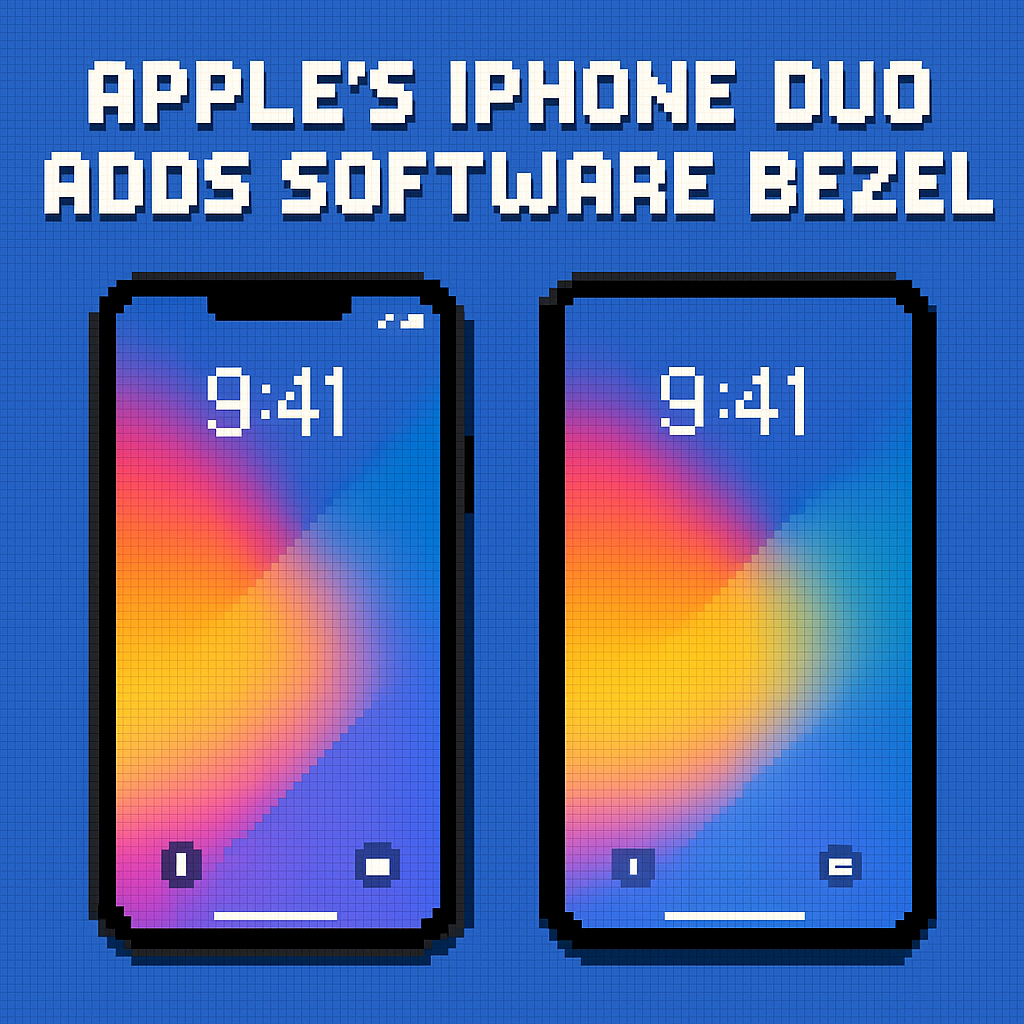
  • Apple added an iPhone Duo hidden display setting called “Shift Left Edge” that draws a thin black bezel on the outer screen so swipe‑back still works when a case overlaps the edge, first spotted by Nicolas Lellouche during September 2026 hands‑on time. [1][3]
  • This tiny toggle is a big tell: Apple is hardening the Duo’s day‑one UX against third‑party case variance while it seeds a $79–$129 first‑party case lineup announced alongside the $1,999 phone. [2]
  • Expect a domino effect—new accessory specs, mirrored options for RTL locales, and copycat “software bezel” toggles on Android foldables within 12 months.

What the source said

MacRumors reports a new “Shift Left Edge” option tucked in iPhone Duo’s Display & Brightness settings. Discovered by blogger Nicolas Lellouche during hands‑on time in September 2026, the toggle roughly doubles the black border along the left edge of the Duo’s outer screen so the iOS swipe‑back gesture functions properly even if a case slightly covers that edge. Apple will sell two official accessories—the iPhone Duo Case and a Folio with Kickstand—and it’s not clear whether they need the setting, which may be aimed at bulkier third‑party cases. Pre‑orders begin October 16 with availability on October 23, according to Apple’s 2026 launch timeline. [1][2][3]

Why it matters

The real stakeholders: buyers spending $1,999 on a first‑gen Apple foldable, and the accessory makers racing to wrap it in plastic, leather, and TPU. When a $40–$90 case interferes with a system gesture, returns spike and word‑of‑mouth sours across carrier channels like AT&T, T‑Mobile, and Verizon. A one‑line software shim that protects Apple’s signature edge‑swipe keeps Duo’s UX consistent across a wild west of cases and kiosks. [2][3]

It also signals how Apple will police foldable ergonomics. Duo’s outer 5.4‑inch screen mirrors the 7.6‑inch inner with the same aspect ratio for “visual continuity,” but continuity dies if a case lip breaks the gesture area on the left edge. This setting is Apple acknowledging, in software, the messy physics of third‑party accessories—before those accessories even ship in October 2026. [2][4]

Original analysis

Contrarian read

  • Consensus: “It’s a trivial, cosmetic bezel.”
  • My take: It’s strategic OS‑level scaffolding for the Duo accessory economy. Apple just carved out a protected gesture lane so thousands of case SKUs don’t break iOS navigation on a $1,999 phone; that reads like ecosystem risk management, not UI garnish. [2][3]

Three details back this up:

  • Timing. Apple is naming prices and colors for first‑party cases (sand/navy Case at $79, taupe/navy Folio with Kickstand at $129) six weeks before launch. A software guardrail today prevents customer‑service headaches on October 23, 2026. [2]
  • Scope. The toggle text explicitly references “a case that partially covers the left edge of the outer display,” which is rare frankness about third‑party hardware in Apple UI text shipped in Settings. [3]
  • Form factor stakes. Duo’s outer 5.4‑inch and inner 7.6‑inch displays share the same aspect ratio—Apple spent real design capital on continuity; it won’t let a case lip and a broken edge‑swipe ruin it on day one. [2][4]

Named‑stakeholder breakdown

  • Apple: Fewer “my swipe back is broken” returns; cleaner day‑one reviews; incentive to push buyers toward first‑party cases that don’t need the toggle and preserve margins in the $79–$129 range. [2]
  • OtterBox/Spigen/Casetify: A lifeline. They can build chunkier protective lips without killing the swipe area—market “Shift Left Edge compatible” and ship early SKUs in Q4 2026.
  • Carriers (AT&T, T‑Mobile, Verizon): Lower churn risk on ~$83/month installment devices when the primary navigation gesture “just works” even in a mall‑kiosk case. [2]
  • App developers: More predictable edge behavior for UIKit gesture recognizers and safeAreaInsets across case tolerances, which reduces regressions in iOS 27 betas. [5]
  • Users in RTL locales (Arabic/Hebrew): Today’s toggle is left‑edge only; pressure rises for an automatic mirror or a “Shift Right Edge” option keyed to locale and reading direction documented in the Human Interface Guidelines. [5]

Back‑of‑envelope economics

  • Assumptions, not facts: Suppose Apple sells 3,000,000 Duos in the first 12 months (a conservative slice of the premium foldable segment), and 60% of buyers attach a case. If 10% of those choose rugged cases with lip overlap, that’s 3,000,000 × 0.60 × 0.10 = 180,000 users. If even 1% of them would have returned or exchanged the phone over “broken swipe‑back,” that’s 180,000 × 0.01 = 1,800 incidents avoided. At a blended $400 logistics/refurb support cost per incident, the toggle shields 1,800 × $400 = $720,000 in service costs—before reputational drag. Meanwhile, a 25% attach rate to Apple’s own $79–$129 cases on 3,000,000 units yields 750,000 × $79–$129 = $59–$97 million high‑margin accessory revenue. [2]
  • The point: One unobtrusive display inset can pay for itself in weeks by reducing friction and steering demand to accessories that never need the toggle.

2×2: Edge protection vs. gesture reliability

  • Axes: Case lip coverage (low → high) vs. System gesture reliance (low → high).
    • Low/Low (“Vanilla”): Slim shells; gestures rarely hit the edge—no toggle needed (think thin TPU on budget Androids).
    • High/Low (“Armor but safe”): Rugged cases on devices with on‑screen back buttons—many Android OEMs like Samsung’s Galaxy Z Fold5 (2023) live here; lip overlap is tolerable.
    • Low/High (“Apple’s sweet spot”): Thin cases; iOS keeps the edge clean; swipe‑back feels native on iPhone 15‑series style edges.
    • High/High (“Frustration zone”): Chunky cases on iOS edge‑swipe UI; the Duo would live here—unless software draws a sacrificial bezel. “Shift Left Edge” moves Duo from this quadrant back into “Apple’s sweet spot.”

Historical analogue

In 2014, Apple introduced Display Zoom and Reachability alongside larger iPhones like iPhone 6 on iOS 8, admitting—with software—that bigger screens strain thumbs. Those features were preemptive ergonomics patches that normalized a hardware leap; “Shift Left Edge” looks like the 2026 foldable cousin of that approach. Apple’s HIG has long codified safe areas and reading direction, so this fits a decade‑long pattern of OS‑level ergonomics. [5]

What others are missing

The “Shift Left Edge” toggle isn’t just UI sugar; it’s a contract between iOS and the accessory ecosystem. Apple has long told case makers to respect system gestures, but Duo’s book‑style outer screen puts the back swipe millimeters from a hinge and a case seam on the left spine. The toggle formalizes a “gesture reserve” zone that Apple can standardize in updated Accessory Design Guidelines and, potentially, expose to developers as dynamic edge insets via APIs that align with safe areas. That matters because foldables multiply edge states—open, closed, half‑open—and a consistent, OS‑managed gesture lane across those states will make or break Duo’s day‑one usability while reducing QA chaos for app teams targeting iOS 27. [2][5]

What to watch next

  1. By October 23, 2026, at least three major case brands (e.g., OtterBox, Spigen, Casetify) will market Duo products as “Shift Left Edge compatible” or call out gesture‑safe lips in their product pages.
  2. By iOS 27.2, targeting December 2026, Apple will add a mirrored “Shift Right Edge” behavior automatically for RTL locales or surface a locale‑aware option in settings.
  3. By Q3 2027, at least one Android OEM will ship a book‑style foldable with an OS‑level “bezel shift” or “safe swipe area” toggle on the cover display, citing case compatibility in release notes or marketing copy.

My take

This toggle is classic Apple: fix the rough edge before it cuts anyone. On a $1,999 foldable, the back swipe must feel invincible—case or no case. I’d still buy a Duo case that doesn’t need the shim, but I’m glad the shim exists because it telegraphs OS guardianship of the accessory economy. It’s the clearest sign yet that Apple will treat foldables as software problems wrapped in hardware, not the other way around, starting with iPhone Duo’s October 2026 debut. [2][3]

Sources

  1. iPhone Duo Has a Hidden Display Setting for Case Compatibility — MacRumors — Breaks the news of “Shift Left Edge,” cites discovery by Nicolas Lellouche, describes purpose, and notes timing around hands‑on coverage.
  2. Apple unveils iPhone Duo — Apple Newsroom — Confirms $1,999 price, October 16 pre‑orders and October 23 availability, and the official Duo Case and Duo Folio with Kickstand (names, colors, prices).
  3. iPhone Duo can add fake bezel to the outside screen for better case compatibility — 9to5Mac — Details the setting’s on‑device description and shows that it widens the left black border for case clearance.
  4. 15 things we learned from Apple’s big iPhone Duo and iPhone 18 Pro launch — TechRadar — Notes Duo’s inner and outer displays share the same aspect ratio for visual continuity and lists key dimensions.
  5. Layout — Apple Human Interface Guidelines (developer.apple.com) — Establishes Apple’s emphasis on safe areas and reading direction, relevant to edge gestures and potential RTL mirroring.


Related update: We recently published an article that expands on this topic: read the latest post.


Related update: We recently published an article that expands on this topic: read the latest post.

Apple Watchs New Pride Luminance Face | Analysis by Brian Moineau

Bright colors on your wrist: Here’s the next Apple Watch face coming in watchOS 26.5

Apple’s annual Pride releases have become a small, colorful moment each spring — and here’s the next Apple Watch face coming in watchOS 26.5: a Pride-themed “Luminance” watch face and matching wallpapers arriving with the watchOS 26.5 update. The new face follows Apple’s recent habit of pairing limited-edition Pride bands with software extras that let users show support right from their wrists. (9to5mac.com)

This post walks through what the new face is, why Apple keeps leaning into Pride collections, and what the inclusion of a Luminance-style watch face signals about Apple’s design priorities for watchOS going forward.

What the new Pride Luminance face actually is

Apple is adding a new Pride Luminance watch face and wallpapers in watchOS 26.5 and iOS 26.5. The face uses vibrant, gradient-like color bands that pulse with layered luminosity — a visual language Apple has explored across recent watchOS releases — designed to work well on modern Apple Watch displays. Reports say the updates will roll out in the coming weeks. (macrumors.com)

This isn’t the first Pride face Apple has shipped; past Pride collections included animated Harmony and Unity faces, and Apple often ties the software to a physical Pride band and a charitable initiative. The pattern of band plus face continues to be Apple’s way of melding product, identity, and seasonal celebration. (apple.com)

Why this matters beyond a pretty face

A watch face is small, but its cultural reach is meaningful. Watch faces are one of the most personal parts of the Apple Watch experience — people choose faces to reflect mood, function, or identity. By shipping a Pride Luminance watch face, Apple does more than sell a seasonal skin; it creates a visible, everyday option for users to express solidarity. That matters because mainstream gestures like this help normalize LGBTQ+ visibility in consumer tech.

On a technical level, adding these faces also highlights how Apple continues to push visual polish in watchOS 26.x. watchOS 26 introduced Apple’s Liquid Glass aesthetic and a refreshed face gallery; the Pride Luminance face fits neatly into that visual evolution, showing Apple is still experimenting with color depth and motion on the wrist. (apple.com)

How Apple times and frames Pride releases

Apple’s Pride releases are annual and predictable: spring announcements tie into global Pride months and events. The company typically pairs physical Pride bands sold at Apple Stores with downloadable watch faces and wallpapers in an upcoming software update. A few years back, Apple’s Pride Harmony face and animated wallpapers shipped alongside a band and a newsroom post outlining charitable partners. The 26.5 release follows that established timetable and marketing cadence. (apple.com)

This approach balances product and message. The band is a tangible item you can wear; the face is digital and instantly sharable. Together they turn a retail launch into a cultural moment.

Design signals: Luminance and the future of watch faces

The Luminance face leans on layered gradients and subtle motion — a style that plays well on Apple Watch displays with high contrast and color fidelity. That tells us Apple is continuing to optimize watch faces for the hardware’s strengths (brighter panels, deeper blacks), while preserving the personal, expressive role faces play. Apple’s watchOS design updates over the last year — including Liquid Glass and new faces for Series/Ultra hardware — make the Pride Luminance face feel like a natural extension, not a one-off. (9to5mac.com)

Practically, these visuals also highlight how watchOS differentiates itself from competitors: small, refined touches in animation and color that elevate everyday interactions.

What to expect when 26.5 arrives

  • The Pride Luminance watch face will appear in the face gallery and as part of the watchOS 26.5 release.
  • Matching iPhone and iPad wallpapers should ship with iOS 26.5 and iPadOS 26.5, so your devices will coordinate.
  • Apple will likely promote a Pride-themed band alongside the software update, as in prior years. (9to5mac.com)

If you want the face as soon as it’s live, keep your Apple Watch and paired iPhone up to date and watch for the software update notification. The update timeline is expected in the “coming weeks” following the reporting. (macrumors.com)

A few practical notes

  • Compatibility: New watch faces sometimes take advantage of newer display tech; while Apple typically makes faces available broadly, subtle visual effects may look best on Series 9/10 and Ultra devices.
  • Personalization: Apple usually offers style and complication options, so you’ll likely be able to tweak the face to show complications like Activity, Weather, or Shortcuts.
  • Availability: Apple’s Pride collections often include charitable commitments; check Apple’s newsroom post and product pages for details on partners and proceeds. (apple.com)

What this release says about Apple’s relationship with cultural moments

Apple uses software updates to participate in cultural moments more reliably than many hardware launches allow. A watch face is a quiet but visible act of recognition: it’s wearable, optional, and highly visible in public. Releasing a Pride-specific watch face each year is Apple’s way of signaling ongoing support, even if critics will always debate the sincerity or commercial calculus behind such moves. The effect on users who want to see themselves represented is real.

Transitioning from the symbolic to the practical, these seasonal software touches also keep watchOS feeling fresh. They give users a reason to check the face gallery and explore new personalization options.

My take

Apple’s Pride Luminance face is a small thing with outsized meaning. It’s a gentle reminder that software updates are cultural instruments as much as technical ones; they shape how we carry identity into the world. Design-wise, it continues Apple’s trajectory toward richer, more expressive watch faces that highlight the capabilities of modern Apple Watch hardware.

Whether you’re after the colors, the coordination with a new band, or simply a refreshed watch face palette, watchOS 26.5’s Pride Luminance face is an easy — and earnest — addition to the collection. (9to5mac.com)

Further reading

  • For the original reporting on the watchOS 26.5 face, see 9to5Mac’s write-up. (9to5mac.com)
  • MacRumors also covered the coming face and its timing. (macrumors.com)
  • Apple’s official Pride Collection announcement provides company context and details on bands and charitable partnerships. (apple.com)

Sources