A helmet, a rule, and a rupture: what happened when remembrance met Olympic neutrality
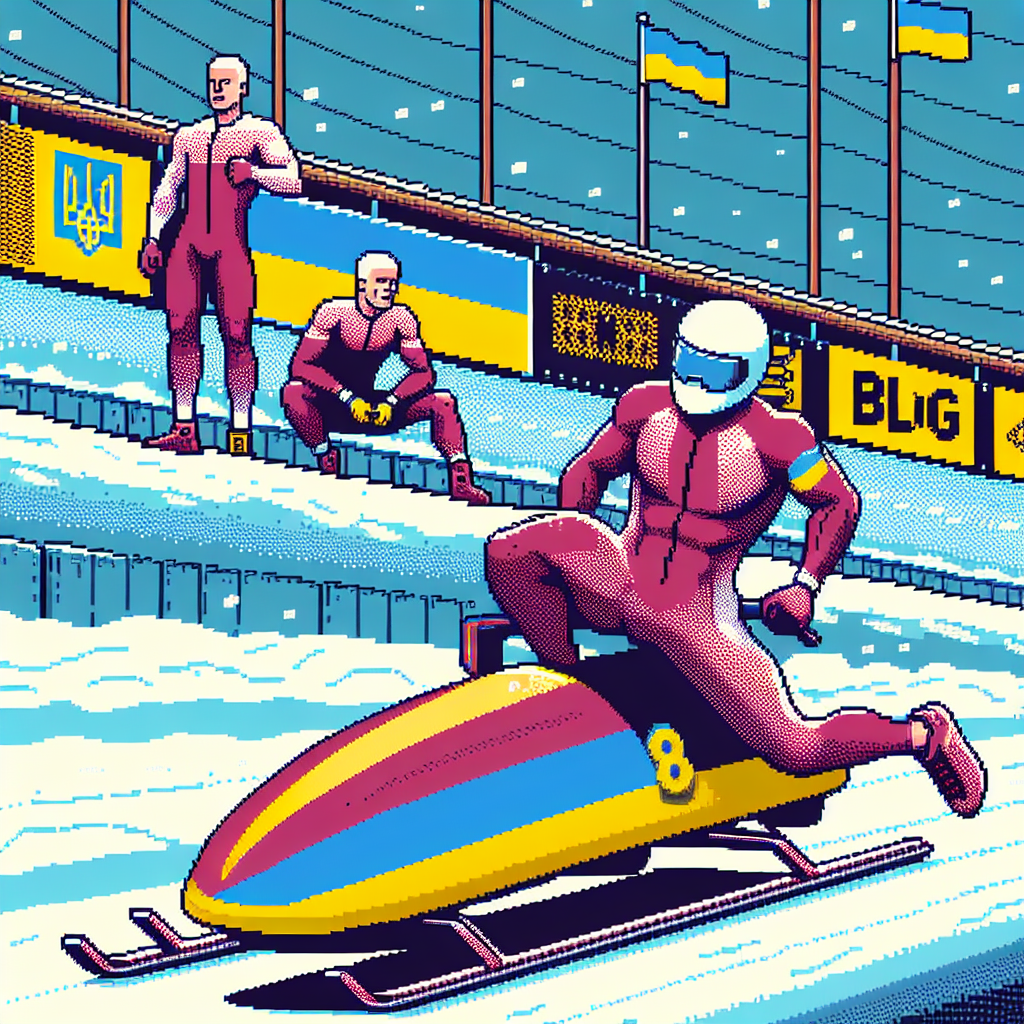
The image was simple and heartbreaking: a skeleton racer’s helmet covered with portraits of teammates and fellow Ukrainian athletes killed in the war with Russia. For Vladyslav Heraskevych, it was not a political banner but a personal memorial — a way to carry the names of friends onto the ice. For Olympic officials, it was a breach of the Games’ rules on demonstrations and athlete expression. The standoff ended with Heraskevych barred from the men’s skeleton event at the 2026 Winter Olympics, and with a debate that won’t disappear with the races.
Why this matters right now
- This wasn’t a slogan or a flag; the helmet displayed faces — people who died amid a war that remains very much alive.
- The dispute put the International Olympic Committee’s (IOC) rules on athlete expression — especially Rule 50 (no political demonstrations on the field of play) — under intense scrutiny.
- The episode presses on a hard question: where do remembrance and political expression intersect at an event that insists on being neutral?
The short version of events
- Vladyslav Heraskevych, a Ukrainian skeleton racer and medal contender, brought a “helmet of memory” to the Milano–Cortina 2026 Games. The helmet carried portraits of Ukrainian athletes and children who died during the conflict with Russia.
- The IOC and event organizers told him it violated their rules on demonstrations at Olympic venues. They offered a compromise (a black armband), which Heraskevych rejected.
- The International Bobsleigh and Skeleton Federation (IBSF) withdrew him from the starting list; he was not allowed to compete. Appeals and wider protests followed, but the decision stood.
- The case quickly drew political statements from Ukrainian leaders and public debate globally about whether honoring the dead counts as political speech.
What the rules actually say (and why interpretation matters)
- Rule 50 of the Olympic Charter is the headline: it prohibits “demonstration or political, religious or racial propaganda” in Olympic sites and during competition. The IOC has long used that to limit political messaging during events.
- But Rule 50 is not always applied the same way. Tributes, moments of silence, or black armbands have been permitted in some past cases, which is why many observers — and Heraskevych himself — saw his helmet as a non-political act of remembrance.
- The sticking point for officials was likely context: the portraits referenced deaths tied to a present, ongoing war. In an intensely fraught geopolitical moment, the IOC judged the images crossed from private mourning into a public reminder of a political reality.
Reactions and ripples
- Many in Ukraine — including President Volodymyr Zelenskyy — called the ban unfair and said it played into Russia’s hands by silencing a symbol of Ukraine’s suffering.
- Some athletes and commentators argued the IOC should be sensitive to human loss at Olympic events and allow discrete, dignified tributes.
- Others warned that allowing overt war-related symbols on the field of play risks politicizing a competition that aims to be a neutral meeting ground for nations.
Broader implications
- Athlete expression is evolving. Social media, wearable art, and on-field gestures make simple black-and-white rules harder to enforce consistently.
- The decision will likely set a precedent: organizers now have a recent, high-profile example of enforcing strict limits on political expression at the Games. Future athletes who want to make statements — even memorial ones — may face clearer pushback.
- The episode also highlights unevenness: some symbolic acts have been allowed in other moments; enforcement can look discretionary and fuel perceptions of bias.
What to watch next
- Will the IOC clarify its guidelines on tributes versus political demonstrations, or double down on strict enforcement?
- How will national committees and sports federations advise athletes planning symbolic gestures at global events?
- Will public pressure (from fans, fellow athletes, and governments) prompt any retroactive reassessments or policy tweaks before future Games?
Key takeaways
- The Heraskevych helmet controversy split a simple human act of mourning from the Olympics’ insistence on political neutrality.
- Rule 50’s application remains subjective, especially when symbolism evokes active conflicts.
- The case exposes a growing friction: athletes want to use high-visibility moments to speak to real-world suffering, while institutions aim to preserve a nonpolitical arena.
My take
Sport has always been a mirror for the world that surrounds it. That mirror can comfort, prophesy, and provoke. Heraskevych’s helmet was a raw, human attempt to bring names into a space where those names might otherwise be forgotten. The IOC’s role in preserving competitive neutrality is understandable, but so is the instinct to honor the dead in a way that acknowledges cause and context. If the Olympic movement wants both neutrality and moral relevance, it needs clearer, fairer rules about remembrance — and a framework that treats similar acts consistently, regardless of who they memorialize.
Sources
-
Ukrainian athlete barred from Olympic skeleton event over helmet images. The Washington Post.
https://www.washingtonpost.com/sports/olympics/2026/02/12/vladyslav-heraskevych-ukrainian-helmet-olympics-skeleton/ -
Ukrainian athlete's appeal for Winter Olympics reinstatement dismissed by CAS. The Guardian.
https://www.theguardian.com/sport/2026/feb/13/cas-dismisses-ukrainians-appeal-over-helmet-of-memory-disqualification -
International Olympic Committee secures big win on athlete speech limits ahead of 2028 LA Games. Associated Press.
https://apnews.com/article/fa49b4d9fb550c91fbc86dc5228df361 -
Ukrainian skeleton racer at Olympics says helmet tribute not allowed. NBC Los Angeles / The Associated Press.
https://www.nbclosangeles.com/olympics/2026-milan-cortina/ukrainian-skeleton-racer-helmet-tribute-not-allowed/3844296/ -
IOC bans Ukrainian Olympian’s helmet honouring war-fallen athletes. Euronews.
https://www.euronews.com/2026/02/10/ioc-bans-ukrainian-olympians-helmet-honouring-war-fallen-athletes
Related update: We recently published an article that expands on this topic: read the latest post.
Related update: We recently published an article that expands on this topic: read the latest post.