Tariffs Hit Home: Why U.S. Midsize Firms Are Suddenly Paying the Price
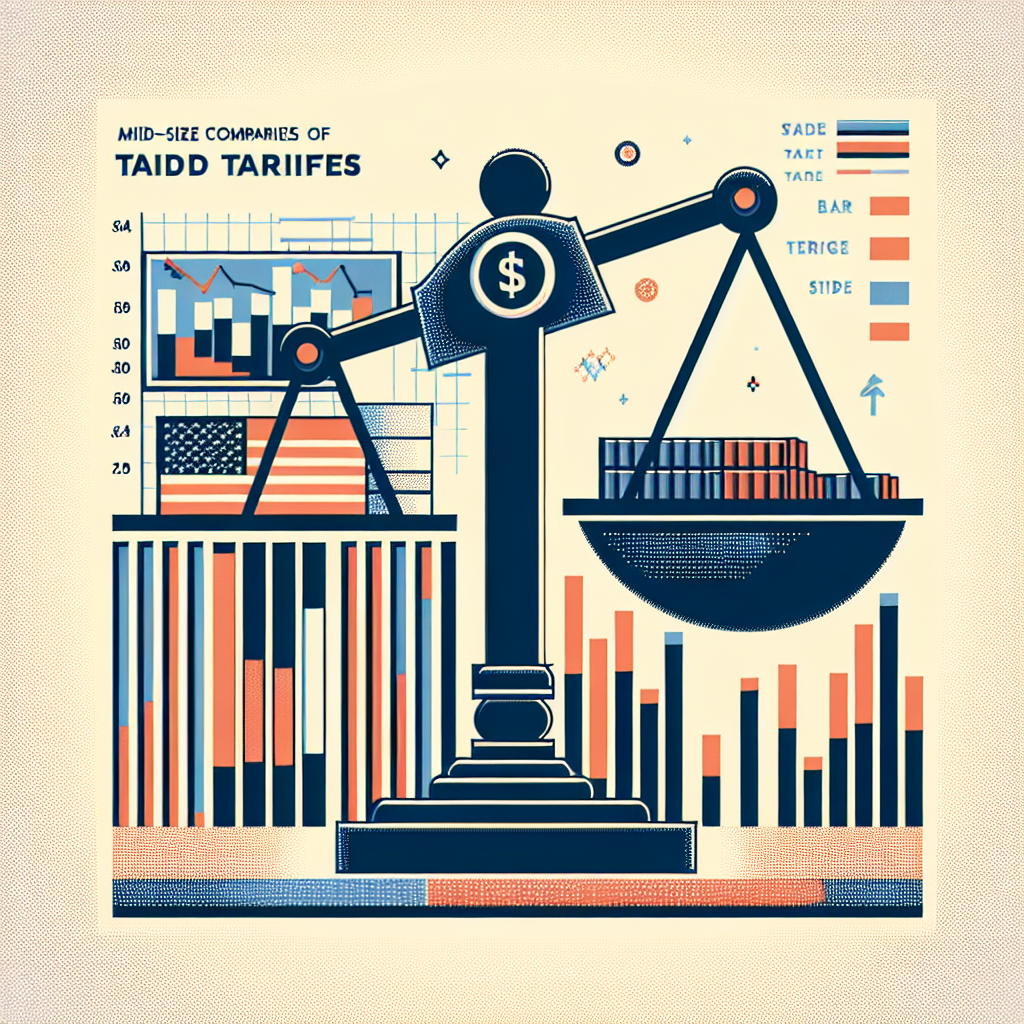
A year ago tariffs were a political slogan. Now they're a line item on balance sheets. New analysis from the JPMorganChase Institute finds that monthly tariff payments by midsized U.S. companies have roughly tripled since early 2025 — and the cost isn’t vanishing overseas. Instead, it’s landing squarely on American businesses, their workers, and ultimately consumers. (jpmorganchase.com)
Why this matters right now
- Midsize companies — those with roughly $10 million to $1 billion in revenue and under 500 employees — employ tens of millions of Americans and sit at the center of supply chains. A material cost shock for them ripples through local economies.
- The analysis comes amid a larger policy shift that raised average tariff rates dramatically in 2024–2025 and set off debates about who bears the burden: foreign suppliers, U.S. firms, or American consumers. The evidence is increasingly squarely on the U.S. side. (jpmorganchase.com)
Key points for readers pressed for time
- Tariff payments by midsize firms tripled on a monthly basis since early 2025. (jpmorganchase.com)
- The additional burden has been absorbed in ways that harm domestic outcomes: higher consumer prices, compressed corporate margins, or cuts in hiring. (the-journal.com)
- Some firms are shifting away from direct purchases from China, but it’s unclear whether that reflects true supply-chain reshoring or simple routing through third countries. (jpmorganchase.com)
The economic picture — beyond the headline
The JPMorganChase Institute used payments data to track how middle-market firms actually move money across borders. Their finding — a tripling of tariff outflows — is not just an accounting quirk. It reflects higher effective import taxes that many of these firms cannot easily avoid.
What that looks like on the ground:
- Retailers and wholesalers, with thin margins, face an especially acute squeeze; some will add markup, passing costs to shoppers. (apnews.com)
- Other firms will have to choose between accepting lower profits, cutting spending (including on hiring), or finding new suppliers. JPMorganChase’s data show some reduction in direct payments to China, but not enough to indicate a complete reorientation of sourcing. (jpmorganchase.com)
Why the distributional story matters: the policymakers who champion tariffs often frame them as taxes paid by foreign exporters. But multiple studies and payment-data analyses now point the opposite way — tariffs operate as a domestic cost that falls on U.S. businesses and consumers, with the burden concentrated on firms without the scale to absorb or dodge the charge. (apnews.com)
A few concrete numbers to anchor the debate
- The JPMorganChase Institute previously estimated that tariffs under certain policy scenarios could cost midsize firms roughly $82 billion; the tripling in monthly outflows is a complementary sign of how quickly those costs can materialize. (axios.com)
- Middle-market firms account for a large share of private-sector employment, so a change equal to a few percent of payroll can meaningfully affect hiring plans. (axios.com)
What firms are likely to do next
- Pass-through: Where competition allows, retailers and distributors will raise prices. Expect higher consumer prices in affected categories.
- Substitution: Some firms will seek suppliers in lower-tariff jurisdictions or route goods through third countries — a costly and imperfect fix that may increase lead times and complexity.
- Absorb: Many midsize firms lack pricing power and will instead accept smaller margins, delay investments, or cut labor costs.
- Hedge or pre-buy: Larger firms already stockpiled inventory during previous tariff surges; midsize firms can’t always do the same, which leaves them more exposed to sudden rate changes. (jpmorganchase.com)
Broader implications
- Inflation and politics: Tariffs operate like a tax that can nudge consumer prices upward. Even modest price effects matter politically when households feel pocketbook pain.
- Supply-chain strategy: The pattern of reduced direct payments to China suggests firms are adapting — but adaptation is slow and costly. Strategic decoupling from a major supplier nation isn’t instantaneous; it takes new contracts, quality checks, and often higher unit costs.
- Policy design: If the goal is to strengthen U.S. manufacturing, tariffs can help some producers while hurting downstream businesses and consumers. That trade-off underlines why empirical analysis of who actually pays the tariff is crucial to policy debates. (jpmorganchase.com)
My take
Tariffs are a blunt instrument. The new JPMorganChase Institute evidence makes a clear pragmatic point: when you raise the price of imports sharply and quickly, the economic pain shows up inside the country — not neatly absorbed by foreign suppliers. For policymakers who want to protect or grow U.S. industry, that doesn’t mean tariffs are useless, but it does mean they’re incomplete. If the aim is durable domestic job creation and competitiveness, tariffs should be paired with targeted industrial policy: investment in skills, R&D, logistics, and incentives that help midsize firms scale rather than simply shifting costs onto consumers or employees.
Sources
-
JPMorganChase Institute — Tracking international payments: How are midsize firms reacting to tariffs?
https://www.jpmorganchase.com/institute/all-topics/business-growth-and-entrepreneurship/tracking-international-payments-middle-market-firms-adapt-to-tariffs (jpmorganchase.com) -
Associated Press — Tariffs paid by midsize U.S. companies tripled last year, a JPMorganChase Institute study shows. Josh Boak, Feb 19–20, 2026.
https://apnews.com/article/ (AP article mirrored widely; see AP coverage via news outlets). (the-journal.com) -
Axios — Tariffs add about $82 billion in costs for midsize U.S. companies. July 2025.
https://www.axios.com/2025/07/02/trump-tariffs-costs-companies (axios.com) -
Associated Press (analysis) — Analysis shows Trump's tariffs would cost US employers $82.3 billion. July 2025.
https://apnews.com/article/6fef729ff39ce24fcd46bbb60134b032 (apnews.com)
Related update: We recently published an article that expands on this topic: read the latest post.