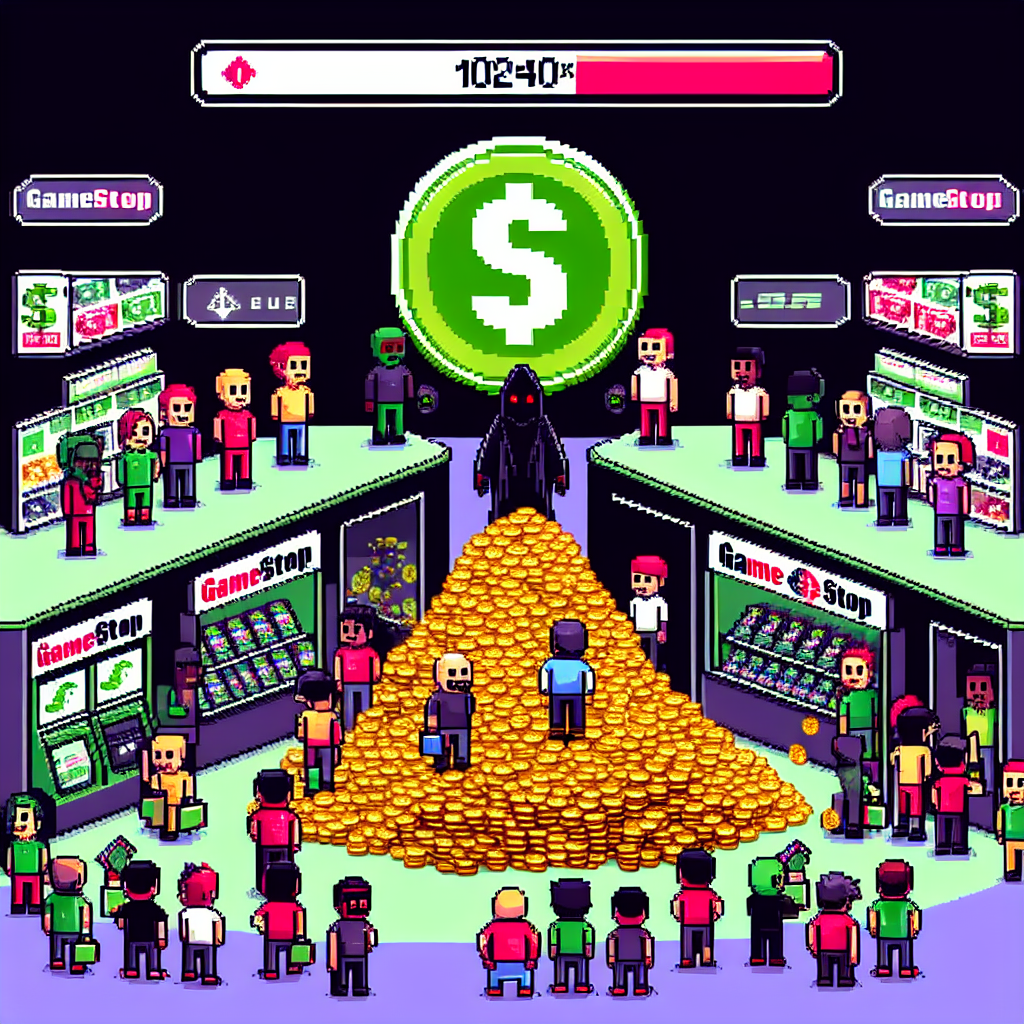
GameStop’s Trade-In Glitch Sparks Chaos | Analysis by Brian Moineau

Okay, wait, wait…not that much power to the players

Hook: Imagine walking into a store, buying a brand-new console, trading it back immediately, and walking out with more store credit than you paid for it. It sounds like a prank, a movie plot, or something cooked up by internet pirates — but for a few chaotic hours in January 2026, it was very real.

GameStop’s recently patched “infinite money glitch” became the kind of viral moment that makes corporate PR teams sweat and content creators grin. A smaller YouTuber named RJCmedia filmed a simple exploit involving Nintendo’s Switch 2 and a promotional trade-in bonus, and the internet did what it does best: amplified the loophole, turned it into a spectacle, and forced the company to respond faster than a patched video game bug.

How the exploit worked (so we all understand what happened)

  • GameStop had a promotion that applied a 25% bonus to trade-in values when a pre-owned item was included.
  • RJCmedia bought a Switch 2 for about $414.99, then immediately traded it in alongside a cheap pre-owned game. The promo incorrectly applied in a way that momentarily valued the combined pre-owned trade more than the new retail price.
  • That created a window where the trade credit exceeded what was paid, meaning you could buy another Switch 2 with store credit, repeat the process, and compound the credit.
  • The creator repeated this across stores, walking away with hundreds of dollars in value, a new console, and a pile of games — until GameStop publicly said it had patched the issue on January 20, 2026.

Why this felt so deliciously chaotic

  • It’s the perfect internet cocktail: small creator + obvious financial edge case + a company tone that’s part meme and part corporate. People love seeing a system—especially a big retail system—outsmarted by clever individuals.
  • The glitch exposed how brittle promotional logic can be when systems try to handle stacked discounts and odd workflows. Real-world commerce software often assumes rational, intended use; it rarely anticipates someone intentionally “gaming” promotions across transactions.
  • There’s schadenfreude too. GameStop has been a cultural meme for years (from trade-ins to GME stock mania). Watching the company get punked briefly felt like a callback to the days when retail felt less buttoned-up and more accidental theater.

Not everything about “power to the players” is positive

  • The story reads fun, but these playbooks can harm employees. Store associates had to process unusual trades, decide how to respond, and likely faced pressure from management after the PR hit. Systems that reward creativity in customers can punish frontline workers who must resolve the fallout.
  • Exploits like this can collapse quickly into damage: inventory confusion, financial reconciliation headaches, and potential policy changes that hurt normal customers who relied on promotions legitimately.
  • There’s an ethical line: documenting a vulnerability and reporting it is one thing; deliberately extracting value until the system breaks is another. The internet loves the clever hustle, but repeated exploitation has real-world costs and can be labeled fraud depending on company policy and local law.

A small lesson in systems design, promotions, and human behavior

  • Promotions are rules-coded in software. When you stack rules (base value + percent bonus + pre-owned flags + immediate resale logic), edge cases appear. Retail systems must handle transaction states carefully—especially when “pre-owned” status flips within minutes.
  • Companies should run simulated misuse cases, not just happy-path scenarios. The old tech adage applies: users will do things you never expected.
  • From a consumer perspective, the incident is a reminder that “good deals” sometimes come from accidents rather than good design. That can be exciting in the short term, but unstable.

Things people were saying (internet reactions)

  • Some praised the creator’s ingenuity and the thrill of a “real-life glitch.”
  • Others criticized the clip as “ruining” the fun for everyone, since GameStop patched it almost immediately.
  • A subset wondered whether the whole episode was a stealth marketing play — GameStop has leaned into meme-culture before — but available evidence (small creator, quick patch) points to an honest exploit that went viral.

What matters in these reactions is how quickly communities frame any corporate slip as either “victory for the little guy” or “irresponsible grifting.” Both narratives are emotionally satisfying, which is why this story took off.

A few practical takeaways

  • Don’t expect such glitches to last: major retailers monitor outliers and will patch holes once they spread.
  • If you find a promotional anomaly, be mindful of ethics and consequences for store staff.
  • For companies: test stacked promotions against adversarial behavior, and make frontline exceptions simple to resolve without dramatic manual overhead.

My take

This was a fun, perfectly modern internet moment: messy, amusing, and briefly empowering. But I’m wary of the romanticism around “beating the system.” Real people—store workers, managers, and other customers—bear the real costs when exploits are scaled. The magic here wasn’t that players had too much power; it was that an imperfect system briefly amplified smart, opportunistic behavior. That’s entertaining to watch, but not a sustainable model for either consumers or businesses.

Sources


Related update: We recently published an article that expands on this topic: read the latest post.
Related update: We recently published an article that expands on this topic: read the latest post.

Targets Black Friday Tote Backlash | Analysis by Brian Moineau

A free swag bag, long lines, and a whole lot of disappointment

You could smell the coffee (or the cheap energy drinks) from a block away: shoppers camping out before dawn, bleary-eyed and optimistic, clutching thermoses and playlists to pass the time. Target’s promise of a “limited‑edition iridescent holiday tote filled with festive goodies” pulled a crowd — some arrived as early as 3 a.m. — but when the first bags were opened, a surprising number of customers felt shortchanged. The viral fallout began almost immediately. (businessinsider.com)

Why people turned up so early

  • Scarcity marketing works. Target offered the first 100 customers at each store a free tote and sprinkled a small number of “golden bags” with higher‑value prizes (headphones, gift cards, small appliances). That promise — and the social‑media hype around being “one of the first” — drove lines long before opening time. (businessinsider.com)
  • Black Friday remains a narrative: for many shoppers the ritual of lining up, swapping stories, and scoring a surprise feels like part of the holiday season, even if the payoff is uncertain. Reddit threads show both glee and eye rolls about the tradition. (reddit.com)

What was actually inside the tote

For many recipients, the tote’s contents were underwhelming: fun‑size candy, a sample‑size shampoo, a deck of Uno cards, and small cosmetic or drink samples. A minority of bags contained the advertised higher‑value items, but those were rare — roughly 10 per store. Videos and posts from disappointed shoppers quickly circulated, calling the contents “chintzy” and “diabolical.” (businessinsider.com)

The social‑media reaction and why it mattered

  • Viral contrast. Lowe’s concurrent giveaway (a five‑gallon “pride of the DIY” bucket with tools, mugs, and high‑value “golden tickets”) was shared with glee online, making Target’s freebies look especially small by comparison. Social feeds amplified the contrast and framed Target’s effort as when marketing tone didn’t match reality. (businessinsider.com)
  • Expectation vs. reality. Many critics pointed out that Target’s wording — “filled with festive goodies” — created an image that didn’t line up with sample‑sized items. Even when the rules disclosed that only a fraction of bags contained valuable prizes, the visual and emotional promise of a “swag” item carried weight. (businessinsider.com)
  • Employee and community perspectives. Target employees and longtime shoppers on forums warned that social hype often inflates expectations; others defended the promotion as a harmless gimmick that did its job (drove traffic). The conversation shows how promotions can split audiences into those who play for the thrill and those who expect real value. (reddit.com)

What this episode says about retail marketing right now

  • Scarcity can be a double‑edged sword. Limited offers bring attention and foot traffic, but if the brand promise is perceived as misleading, the net effect can be reputational damage. Target clearly drove people into stores — but some left with social‑media grievances that turned a marketing win into a PR headache. (businessinsider.com)
  • The visual economy matters. In the age of TikTok and Instagram, what people see (the beautifully staged “golden bag” winners) often matters more than the fine print. Brands need to manage both the spectacle and the grounded expectations of a wide customer base. (businessinsider.com)
  • Promotions don’t live in a vacuum. Competitors’ campaigns, employee sentiment, and online communities will contextualize — and sometimes roast — whatever you put out. A “fun” giveaway next door can make your “fun” giveaway look stingy by comparison. (news.designrush.com)

A few practical takeaways for retailers

  • Be explicit in creative and collateral. If only 10% of bags contain big prizes, say that prominently — and show examples of normal contents so expectations are aligned.
  • Design for shareability, not just scarcity. If you want the social feed to celebrate the promo, make the “ordinary” gift feel Instagrammable too — size, packaging, or at least one clearly desirable sample.
  • Prepare employees. Staff on the ground should be equipped with talking points and contingency plans for angry customers who feel misled; that’s where reputational damage really spreads. (reddit.com)

My take

Target likely succeeded in one primary objective: getting people into stores. The gamble of scarcity marketing paid off in attention and traffic. The lesson — and the missed opportunity — is that attention can quickly turn into criticism if promotional language and on‑the‑ground reality don’t match. In an era when one TikTok clip can define a campaign, brands should either lean fully into the spectacle (with visible, tangible value for most participants) or frame promotions as playful gambles where the odds and typical contents are unmistakable.

Closing thoughts

Promotions are cultural moments now. They’re not just transactions; they’re narratives that get shared, compared, and joked about. For shoppers who camped out before dawn, the tote may have felt like a small holiday disappointment. For Target, the campaign was a data point: scarcity moves people, but brand trust is fragile — especially when the internet gets to be the referee.

Sources

Paul vs. Davis Fight Canceled, Paul Plans | Analysis by Brian Moineau

When the Main Event Vanishes: Jake Paul vs. Gervonta Davis Called Off

Boxing fans woke up on November 4, 2025 to the kind of headline that halts a sport’s chatterboard: the much-hyped Jake Paul vs. Gervonta “Tank” Davis fight, scheduled for November 14, 2025 in Miami, has been cancelled. What promised to be one of the most talked-about crossover bouts of the year — a size-and-celebrity mismatch that drew headlines for months — unraveled after a civil lawsuit was filed against Davis in Miami-Dade County. Promoters say Paul will still headline an event on Netflix later in 2025, but the original spectacle is officially off.

Why the bout was scrapped

  • The cancellation followed the filing of a civil lawsuit against Gervonta Davis on or around the end of October 2025. Local authorities have confirmed investigations and a restraining order connected to the allegations. (aljazeera.com)
  • Most Valuable Promotions (MVP), led by CEO Nakisa Bidarian, and Netflix decided to pull the plug on the Nov. 14 event in Miami. MVP said the team had worked “closely with all parties to navigate this situation responsibly” and that Jake Paul will be rebooked for another Netflix-streamed event in 2025. (espn.com)
  • The fight had already been controversial because of the huge weight disparity: Paul typically fights near cruiserweight (around 200 lbs), while Davis is a 135-pound lightweight champion — an unusual and headline-grabbing matchup. (aljazeera.com)

What this means for Jake Paul, Tank Davis, and boxing

  • For Jake Paul: the cancellation removes a high-profile payday and a marketing moment, but MVP’s statement signals Paul’s team wants to keep momentum and still deliver a Netflix headliner before year-end. That suggests Paul’s brand and promotional machine remain intact even if opponents shift. (apnews.com)
  • For Gervonta Davis: beyond the immediate professional setback, the lawsuit and related investigations create reputational and legal uncertainty. Davis’s fights and endorsements could be affected while the matter is unresolved. (reuters.com)
  • For boxing and fans: the event’s shelving underscores a balancing act promoters face — chasing blockbuster, eyeball-grabbing matchups while also managing legal and ethical risks that can derail shows at the last minute.

Quick snapshot

  • Fight: Jake Paul vs. Gervonta “Tank” Davis (exhibition)
  • Original date: November 14, 2025 (Kaseya Center, Miami). Moved from Atlanta earlier due to sanctioning issues. (aljazeera.com)
  • Status: Cancelled as of November 4, 2025. MVP/Netflix to rebook Paul on a later 2025 card. (espn.com)

What fans and ticket holders should know

  • Ticket refunds: MVP said tickets purchased through Ticketmaster will be refunded automatically — expect processing timelines (often 14–21 days depending on vendor). (aljazeera.com)
  • Replacement opponents were reportedly considered to keep the Nov. 14 date, with names floated publicly (from other crossover stars to established boxers), but the promoters ultimately decided to cancel rather than proceed without Davis. (espn.com)

Takeaways for the bigger picture

  • High-profile crossover fights are fragile: the combination of celebrity boxing, legal exposures, and public scrutiny means big cards can collapse quickly. (aljazeera.com)
  • Streaming partners tighten standards: Netflix’s involvement and the swift cancellation show platforms are wary of attaching themselves to events mired in legal controversy. (mmafighting.com)
  • Promotions will pivot: MVP’s immediate promise to rebook Paul indicates modern boxing promotions lean on flexible streaming deals and brand-driven cards rather than single-fight reliance. (espn.com)

My take

This cancellation is a reminder that boxing’s current era — equal parts showbiz, streaming strategy, and sport — can create spectacles that look unstoppable on paper and fragile in practice. Fans will be disappointed; fighters and promoters will scramble. But for Paul, whose appeal is as much about entertainment as about in-ring results, the infrastructure to pivot (promoter power, Netflix deal, audience curiosity) likely softens the blow. For Davis, the situation is more precarious: legal drama is a long-term reputational wildcard that can affect career options far beyond a single cancelled bout.

Sources


Related update: We recently published an article that expands on this topic: read the latest post.


Related update: We recently published an article that expands on this topic: read the latest post.