Here come the glassholes, part II – Financial Times | Analysis by Brian Moineau

Here come the glassholes, part II - Financial Times | Analysis by Brian Moineau

Title: The Return of the Glassholes: Will Facial Recognition in Smart Glasses Ever Be a Good Look?

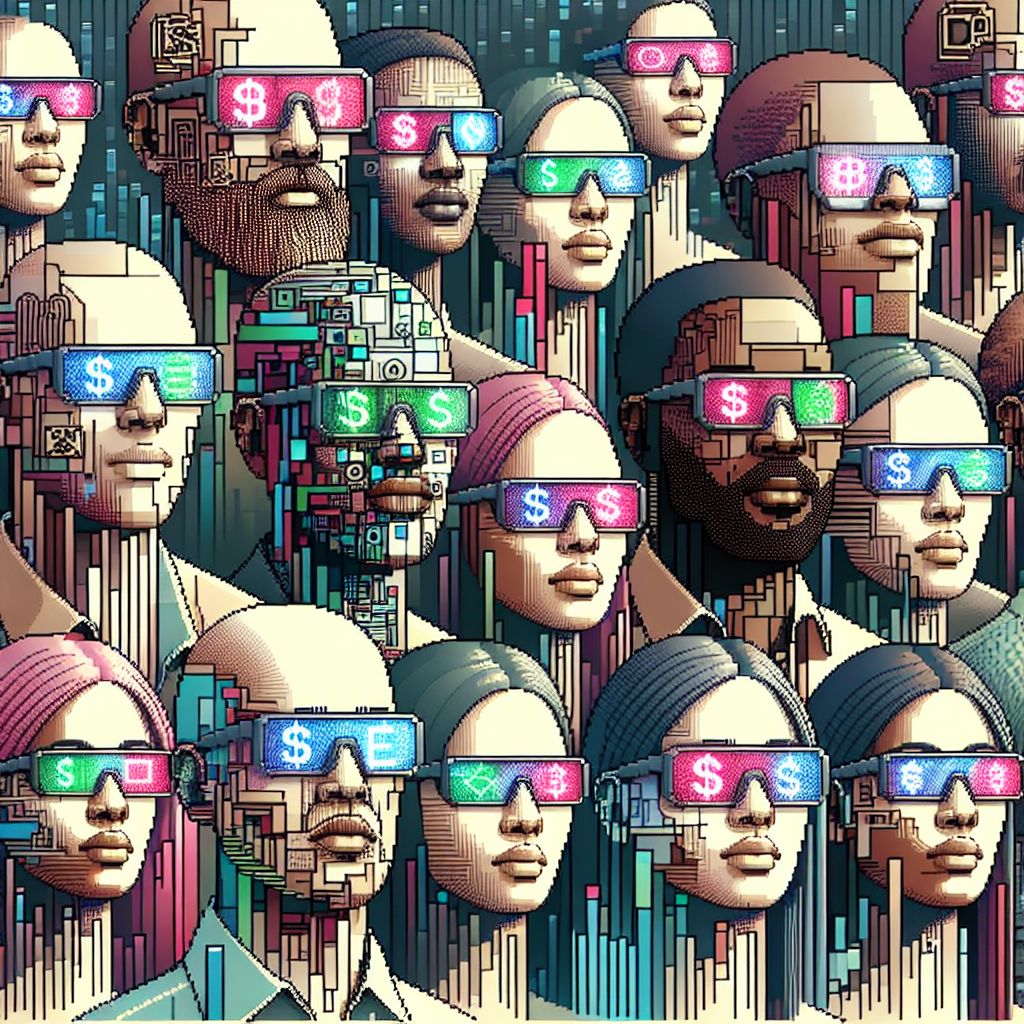
Ah, smart glasses. Remember the early 2010s when Google Glass promised to revolutionize how we view the world? Instead, it gifted us a new term - "glassholes" - for those who wore them with a bit too much enthusiasm, often at the expense of social norms. Fast forward to today, and we're on the brink of a sequel, thanks to the latest tech trend: integrating facial recognition into smart glasses.

Silicon Valley's dreamers are once again at the forefront, eagerly pushing the boundaries of what's technologically possible. But will their vision align with societal acceptance? If history has taught us anything, it's that the path from innovation to integration is often fraught with unforeseen twists.

The Tech Temptation


Facial recognition technology is no stranger to controversy. While its applications can be groundbreaking, such as aiding law enforcement or streamlining airport security, it also raises significant privacy concerns. Incorporating it into smart glasses could let users identify strangers on the street, an appeal to some, but a potential invasion of privacy to many others.

Consider the recent pushback against facial recognition in public spaces. Cities like San Francisco and Portland have already enacted bans on its use by government agencies, citing concerns over accuracy, bias, and civil liberties. If public sentiment is any indication, adding this feature to smart glasses may not be as warmly received as some tech enthusiasts hope.

A World Already on Edge


The timing of this innovation is particularly noteworthy. We're living in a world increasingly conscious of privacy, driven by revelations of data breaches and surveillance. The Cambridge Analytica scandal, which revealed how personal data could be weaponized, has made people more protective of their digital footprints.

Moreover, the COVID-19 pandemic has accelerated our dependence on technology, while simultaneously highlighting the importance of personal space and privacy. As we navigate this new normal, the idea of being constantly watched, even if just through a pair of glasses, might not sit well with the public.

Echoes of Innovation


This isn't the first time tech has faced resistance before eventual acceptance. The smartphone, now an indispensable part of daily life, was once met with skepticism. However, those devices offered clear, immediate benefits that outweighed privacy concerns for most users. Smart glasses with facial recognition, on the other hand, are yet to make a compelling case for how they will enhance, rather than intrude upon, our lives.

The Broader Implications


Beyond privacy, there's the question of social etiquette. How will society adapt to a world where anyone can know your name with a glance? The potential for misuse is high, from unwanted advances to more sinister applications like stalking or doxing.

Interestingly, this debate parallels discussions in other tech domains. Take, for example, the rise of AI-driven customer service bots. While they promise efficiency, they also risk depersonalizing interactions. Similarly, smart glasses must balance innovation with the human element, ensuring they serve rather than disrupt society.

Final Thoughts


As we stand on the precipice of another potential technological leap, it's crucial to remember that just because we can do something doesn't mean we should. The allure of smart glasses with facial recognition is undeniable, yet we must tread cautiously. Society must have a say in how this technology is developed and deployed.

In the end, perhaps the most significant lesson from the "glassholes" saga is that technology should enhance human interaction, not replace it. If smart glasses can find that balance, they might just avoid the pitfalls of their predecessors. Otherwise, we might find ourselves peering into a future where the promise of connectivity comes at the cost of our privacy.

Read more about AI in Business
Read more about Latest Sports Trends

Read more about Technology Innovations

Valve CEO Gabe Newell’s Neuralink competitor is expecting its first brain chip this year – The Verge | Analysis by Brian Moineau

Valve CEO Gabe Newell’s Neuralink competitor is expecting its first brain chip this year - The Verge | Analysis by Brian Moineau

Title: Gaming Meets Neuroscience: Gabe Newell's Ambitious Leap into the Brain Chip Arena

In a world where gaming and technology often intertwine, few figures stand as prominently as Gabe Newell, the visionary CEO of Valve Corporation. Known for revolutionizing the gaming industry with platforms like Steam, Newell is now setting his sights on an entirely new frontier: brain-computer interfaces. His company, Starfish Neuroscience, is reportedly preparing to unveil its first brain chip later this year, positioning itself as a competitor to Elon Musk's Neuralink. But what exactly does this mean for both the tech world and the gaming industry as we know it?

Gabe Newell: A Visionary Beyond Gaming


Gabe Newell's journey from a Harvard dropout to one of the most influential figures in gaming is nothing short of extraordinary. After a successful stint at Microsoft, Newell co-founded Valve Corporation, and the company has since become synonymous with innovation in gaming. With titles like "Half-Life" and "Portal," Valve has consistently pushed the boundaries of what games can be. Yet, Newell's ambitions clearly extend beyond virtual landscapes.

With Starfish Neuroscience, Newell aims to make science fiction a reality by directly interfacing brains with computers. This venture isn't just a side project; it represents a potential paradigm shift in how humans interact with technology. It's reminiscent of the leaps in human-computer interaction we've seen from the likes of Apple's Steve Jobs or Microsoft's Bill Gates.

Brain Chips: The Next Big Frontier


The concept of brain-computer interfaces (BCIs) isn't new. Researchers have been exploring this field for decades, and we've seen significant advances in medical applications, particularly for individuals with mobility impairments. However, the potential applications of BCIs extend far beyond healthcare. Imagine a world where gaming becomes a fully immersive experience where the player's thoughts and emotions directly influence the game. This could be the future that Newell is envisioning.

Starfish Neuroscience's brain chip is expected to rival Neuralink, which has made headlines for its ambitious goals and high-profile demonstrations. While Musk's company focuses on medical applications and augmenting human intelligence, Newell's gaming background could bring a unique perspective to the table, potentially integrating BCIs into entertainment and everyday tech applications.

A World of Possibilities and Challenges


While the potential of brain chips is exciting, it's also fraught with ethical and practical challenges. Privacy concerns loom large. If our thoughts can be read by machines, who controls that data? Similarly, the implications of such technology on mental health and societal norms are vast and largely unexplored.

In addition, the timing of Starfish's announcement is noteworthy, as it coincides with a global surge in AI innovation. From OpenAI's advancements in natural language processing to robotics breakthroughs, we are living in an era defined by rapid technological evolution. Newell's entry into the brain chip arena is yet another testament to this trend.

Final Thoughts: A Game Changer?


Gabe Newell's journey from transforming the gaming industry to potentially transforming human-computer interaction is an exciting narrative. While we await the release of Starfish Neuroscience's first brain chip, it's clear that this development could have profound implications. Whether it's creating new gaming experiences or addressing complex medical challenges, the possibilities are endless.

As we stand on the brink of this new technological era, it's essential to approach these innovations with both enthusiasm and caution. After all, the future of brain-computer interfaces will not only redefine technology but also the very fabric of human experience. And if history has taught us anything, it's that visionaries like Gabe Newell often have a way of making the seemingly impossible a reality.

Read more about AI in Business

Read more about Latest Sports Trends

Read more about Technology Innovations

Android 16 Beta lets more Pixels use screen-off fingerprint unlock – 9to5Google | Analysis by Brian Moineau

Android 16 Beta lets more Pixels use screen-off fingerprint unlock - 9to5Google | Analysis by Brian Moineau

Unlocking the Future: Android 16 Beta Expands Screen-Off Fingerprint Access to More Pixels

In the ever-evolving world of technology, Android users are eagerly embracing the latest developments, and the release of Android 16 Beta 3 (and Beta 3.1) is no exception. This update brings an exciting enhancement to the table: the ability for more Pixel devices to use screen-off fingerprint unlock. Originally a feature limited to the Pixel 9, it’s now making its way to a broader audience. This development not only enhances convenience but also aligns with broader trends in technology and security.

A Fingerprint on the Pulse of Innovation

Fingerprint technology has long been a staple in the realm of secure access, with its roots tracing back to early biometric systems. Apple made waves with Touch ID back in 2013, and since then, the technology has become a standard expectation for smartphones. Android's latest move to expand screen-off fingerprint capabilities to more Pixel devices is a testament to the ongoing commitment to user-friendly security.

This update is particularly significant in an age where cybersecurity is a growing concern. With more of our personal and financial data stored on our devices, the need for robust, yet accessible, security measures is more critical than ever. Android 16 Beta’s enhancement echoes a broader industry trend towards seamless security solutions, seen also in the rise of facial recognition and advanced encryption methods.

A Broader Context

Beyond the technical specs and user experience, this update is part of a larger narrative about how technology is evolving to meet user needs in real-time. As remote work and digital communication continue to dominate our lives, the demand for efficient and secure technology has never been higher. The expansion of features like screen-off fingerprint unlock is part of a broader push to make smartphones smarter, more secure, and ultimately, more aligned with our daily lives.

Interestingly, this development comes at a time when privacy concerns are at the forefront of public discourse. The debate over how to balance user convenience with data protection is ongoing. Companies like Google, with its Pixel line, are constantly innovating to ensure that user data remains secure without sacrificing functionality.

Connections to the World

This expansion of fingerprint technology also aligns with global shifts towards contactless solutions, accelerated by the COVID-19 pandemic. From contactless payments to touchless entry systems, the world is moving towards minimizing physical touchpoints, and screen-off fingerprint unlock fits snugly into this narrative. It’s a small, yet significant, step in a world increasingly focused on hygiene and convenience.

Additionally, we can draw parallels with the automotive industry, where keyless entry systems have become the norm. The seamless transition from physical keys to digital access mirrors what we're seeing with smartphones. Just as car manufacturers are enhancing security and ease of use, smartphone developers are doing the same, highlighting a cross-industry trend of innovation driven by user demand.

Final Thoughts

The Android 16 Beta’s expansion of screen-off fingerprint unlock to more devices is more than just a technical upgrade; it’s a reflection of a world increasingly reliant on and shaped by technology. As smartphones become ever more integral to our daily lives, the demand for intuitive and secure access methods will only grow. This update is a step forward in making technology work for us, seamlessly fitting into the fabric of our lives while ensuring that our data remains safe and accessible. In a rapidly changing world, it’s reassuring to see technology not just keeping pace, but setting the pace.

Read more about AI in Business

Read more about Latest Sports Trends

Read more about Technology Innovations